Stanbic Bank
Stanbic Bank
21 C
Kampala
Stanbic Bank
Stanbic Bank
Home Blog Page 1750

NSSF gets new Deputy MD

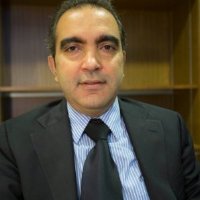
The new NSSF Deputy MD Patrick Ayota

Patrick Ayota has been appointed the new Deputy Managing Director of National Social Security Fund (NSSF), replacing controversial Geraldine Ssali Busuulwa.

In announcement to NSSF staff this afternoon indicated that the Minister of Finance, Planning and Economic Development, Matia Kasaija, had made changes, with Managing Director Richard Byarugaba and Corporation Secretary Richard Wabwire Wejuli reappointed to their positions for a five-year contract effective October 30, 2017.

“I hereby inform you that the Minister of Finance, Planning and Economic Development has made the following decisions on the employment contracts of the fund’s statutory appointees: The contract of Managing Director, Richard Byarugaba has been renewed for a period of five years effective December 1, 2017,” the statement that also contains details about Mr. Ayota’s appointment, reads in part.

‘The Minister has declined to renew the contract of Mrs Geraldine Ssali Busuulwa, the fund’s Deputy Managing Director. Her employment contract expires on October 29, 2017. Mr Patrick Ayota, the fund’s Chief Finance Officer has been appointed Deputy Managing Director effective October 30, 2017’, the release adds.

Mr Ayota has been the fund’s Chief Finance Officer and in 2011 emerged as the best candidate for the post of Deputy Managing Director in the recruitment exercise conducted by PriceWaterHouse Coopers (PWC), scoring 85 per cent.  During the interviews Ms Monica Rubombora came second with 82 per cent, while Ms Ssali, who was at the time outgoing Deputy MD, came third with 77 per cent.

However, Mr Ayota was never given the job as Ms Ssali was reappointed by Ms Maria Kiwanuka, the then Finance Minister who succeeded Ms. Syda Bbumba. Mr Ayota was however, retained by the fund as Chief Finance Officer to date.


Stories Continues after ad

How attractive is your project for funding?

By Josephine Lunkuse

Many people who would wish to source for funding for their projects often seek for lawyers’ assistance in documenting their project. Little do they know that, the lawyers do not have all the technical knowledge regarding project documentation. That is why most project proposals are rejected from ‘day one’.

Here is a step by step procedure of coming up with one of the best project and business plans for your company to access capital financing.

  1. Your business plan must have a brief Executive Summary. This describes your company and its mandate and highlights the main objective. It mainly summarizes your whole business plan. It should stand out and be attractive to the reader and written on not more than two pages. Most funders don’t have the time to read those 100+ pages of your business plan and are more interested in the Executive Summary because this is the face of your business.
  2. Company Overview: Speak for your company, who are you and what do you do? What is your mandate and objectives? To keep it attractive, what are your milestones in business so far? Many funders are interested in already existing projects; so what have you achieved so far and what is lacking? Where is the gap?
  3. Market Analysis: let us assume Josphine Maize Millersis an existent company dealing in maize farming and milling. A market analysis will cover the following: Who are our clients in this case? Our clients are the Schools, the prisons among others on the local market. We are positioning ourselves to grow further by becoming a main exporter of maize to Sudan, and we know our competitors are so good at the local market. We envision becoming a major supplier to renowned food security entities like World Food Programme. Are there some MOUs you have signed with renowned food entities? Are there possibilities of more supply contracts and can you list them? What’s the cost of farming and milling? Will the pricing against the cost provide the projected profits? etc. Your plans, projections and targets need to be realistic and achievable.

Regarding supplying the schools and prisons; what is the company’s relationship with these institutions? If it is already established, how sustainable is it? Can it stand competition and the price fluctuations? What are the tangible strengths and advantages to the company within the prevailing market?

If the plan cites having 100,000 maize out growers; how many have been contracted so far? Are the out growers contented with the contracts they have with the company? What measures has the company put in place to create confidence among the out growers to continue supplies even during some unavoidable periods of delayed availability funds?

With all these questions answered, funders will be more comfortable injecting capital in a secure and sustainable working environment.

  1. The Competitive Analysis: How much do you know about your sector? In this case the Agricultural sector, maize in particular visa-vis other foods, locally and internationally? Are you sure when the funder injects money in that product, it will pay back? How recent is the data you are using and what sources? In Uganda, you can be sure Uganda Bureau of Statistics (UNBS) provides recent data. Apart from the Websites and internet, what other sources have you used? Funders will look out for credible sources of information. Analyze your competition thoroughly and establish your position in this competitive environment. Funders are interested in knowing their competitors.
  2. Operations and Marketing Plan: This should clear to the Funders. You must know how your market operates both in and out of season and how you will operate. The location of all your raw materials as well as the outlets of all your produce is critical to managing a cost effective operations and marketing plan. Central to these is how and when you procure your materials, as well as the accountability measures in place?
  3. The Team: A technical team enables a company to fill the knowledge gap. It is important to note that funders are interested in working with professionals. So under this, clearly detail the makeup of the team (and their competences) that is to implement your project and its structure. What is the makeup of the Board of Directors (family, technocrats, etc), is it transparent? Etc
  4. Financial Projections: How do you develop your financial projections? Your lawyers are very important to have but they may not have the capacity to project financially? In this case you need to justify the figures, while taking into account the Capacity of your projects. If we say Josphine Millers is projected to produce 350 MT of maize flour per day and yet the capacity of the available machinery is 120MT, how realistic are the 350MT projections? Provide strong justifications. Are the workers going to work over time to increase output or a miracle is yet to happen? Be realistic in your projections according to your capacity.
  5. Lastly, how specific is your information?Most planners provide general information, yet funders need to know every detail of the project in which they are yet to invest their money. No funder puts money in something they do not clearly understand. Being detailed and specific does not mean being too wordy. Detail the right information appropriately.


Ms. Lunkuse works with Uganda Investment Authority (UIA)


Stories Continues after ad

Chinese firm wins Shs948b bid to construct Fort Portal-Hoima highway

UNRA ED Allen Catherine Kagina

Chinese construction firm, China Wuyi Industrial Company, has won Shs948.39 billion (951 million Chinese Yuan) bid to construct the Fort Port-Hoima Highway in western Uganda, the company announced Monday.

“All of the company and the board of directors guarantee that the contents of the information disclosure are true, accurate and complete without false record, misleading statement or material omission,” the statement reads in part. The statement was written in Chinese and this reporter had to use Google Translate application to turn it into English text.

The bid was awarded by Uganda National Roads Authority, which the company referred to as ‘Uganda National Road Bureau’. The 55 kilometre road will take 18 months to construct, with a warranty period of 12 months.

The company says the construction contract is yet to be signed. According to the announcement it made to shareholders, the company expects to make a profit of Shs800 million on the project.

Meanwhile, UNRA Executive Director, Allen Kagina has warned that the organisation will not give any more contracts to companies with a history of non-performance on its projects. Kagina was speaking at meeting with officials of the Chinese Embassy and Chinese contractors on UNRA projects.

“I would like to sound a stern warning to companies amongst you who know they have been non-performers. Please do me a favour and don’t bid for another contract, because you just will not get it” she said. “Our objective is to enhance a great working relationship with our contractors in the management of project works. This will make implementation of projects on both ends of the spectrum,” Mrs. Kagina added.


Stories Continues after ad

Eddie Kenzo to Ddembe FM: Stop playing my music or pay me

Eddy Kenzo

As musicians bench and pay radio stations to play their songs, Eddy Kenzo has blocked a station from playing his songs.

The ‘Sitya Loss’ hit maker has urged Ddembe FM to stop playing his songs or start paying him for every time his song is played.

Alternatively, if the station can’t afford the first two options, he wants them to drop its panelists on a weekend program ‘Talk n Talk’.

He accuses them, particularly Eddie Ssendi of bad mouthing him together with his co-presenters Isaac Katende (Kasuku) and Jenkins Mukama.

“I want to tell this to Ssendi that I’ve never been arrested but I am ready to go to jail for the first time simply because of him. Together with my boys, we will storm Ddembe FM studios and thump him to pulp,” he warns in a message that he shared on social media.

“He is lucky that I am not in Uganda at the moment…. Had I been in Uganda, he would understand what I am talking about. Despite growing up on the streets, I have never been to jail. Though, I’m ready to go there over Ssendi.”

Kenzo accuses Ssendi of have claimed on air that Kenzo was behind the recent death of celebrated music producer, Danz Ku Mapeesa.


Stories Continues after ad

EAC, EU in partnership to facilitate fish trade

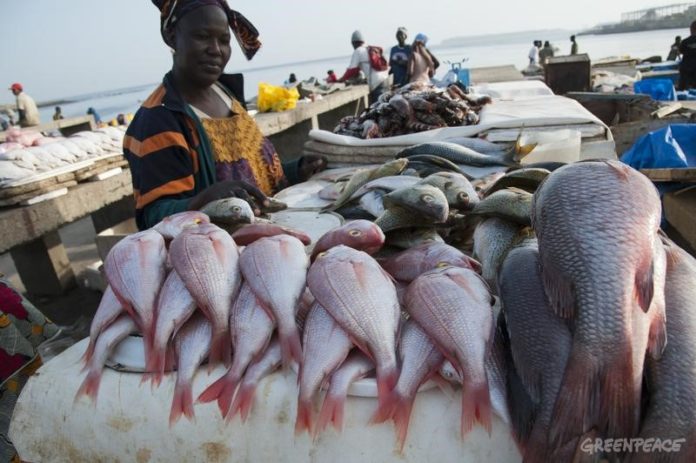
Fish at one of Africa's markets

The East African Community (EAC) states and the European Union (EU) have stepped up efforts to facilitate fish trade and safeguard public health in the region.

The EU, through the various EAC fisheries agencies, has trained about 200 border inspectors on how to make formal cross-border trade in fisheries more attractive than the current informal and unethical practices, press statement indicates.

According to the statement, the trainings are jointly conducted by the Indian Ocean Commission (IOC), through its EU-Funded Smart Fish program, and EAC to improve the quality and to ease fish trade in East Africa.

The program, according to the IOC is expected to develop a border fisheries inspector’s manual which will among other things improve food safety, a key component that is required for the export of fisheries products to the EU market.

The objective of the training that lasted one month was to improve the skills and capacity of fisheries officers, police officers, customs officers, immigration officers, port health officers and the standards officers of these countries.

“The BFI project is a stepping stone to promoting formal trade, thus ensuring public health and promoting ethical practices. In this context and in the near future, Regional Economic Communities would be called to play a major role,” said Satish Hanoomanjee, the IOC-SmartFish Fish Trade Expert.

“This initiative is audacious and is considered as a game changer in the cross-border fish trade in support to the regional economic integration in fisheries sector,” he added.

The IOC said the development of the Border Fisheries Inspectors’ manual was a milestone in enhancing regional fish trade.

It also facilitates formal cross-border trade of fish products, which, according to fisheries officials, is important in ensuring that proper documentation and quality controls are adhered to.

Godfrey Monor, Lake Victoria Fisheries Organization Executive Secretary, said the project has received high level support following the direct involvement of the Africa Union (AU).

“This project is inspired by the high level goal of the African Union, which is to advance regional integration of the African fisheries sector through smart trade and investments as a pathway to achieve the sustainable development goals,” said Monor.

Fish is the largest traded food commodity worldwide. An estimated 45 percent of the world catch is now traded internationally.

According to the United Nations Food and Agriculture Organization (UNFAO), the global inland production was estimated at 11.2 million tons.

Awaiting the imminent EAC Council of Ministers approval for the EAC Border Fish Inspector’s (BFI) manual, SmartFish has moved ahead to test through a series of five national training exercises at strategic cross border fisheries check posts between six EAC countries: Burundi, Kenya, Rwanda, South Sudan, Tanzania and Uganda.

Uganda and Tanzania are the leading fishing countries in the African Great Lakes Region. The volume of informal trade across these borders is estimated at 35 percent of total value.


Stories Continues after ad

Uganda to benefit from UN youth employment project

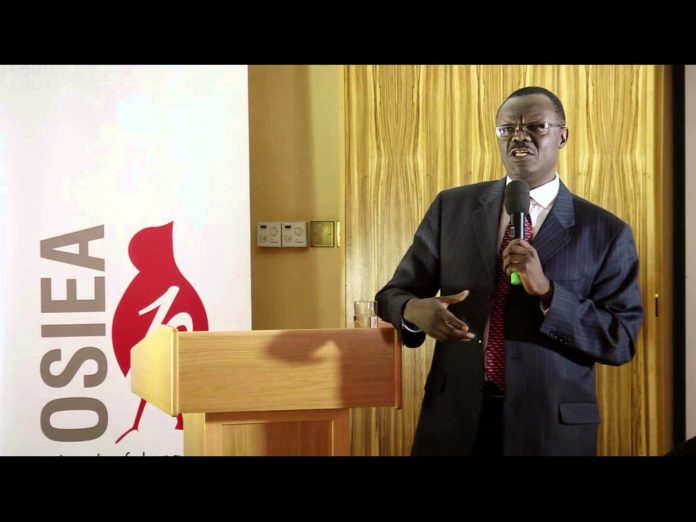
Borhene Chakroun, UNESCO’s head of the Section of Youth, Literacy and Skills Development


Five African countries including Uganda are set to benefit from the second phase of a United Nations project which seeks to strengthen national technical and vocational education and training, TVET, systems and boost youth employment.

The project dubbed Better Education for Africa’s Rise (BEAR) to be officially launched end of November is being spearheaded by UNESCO, and its beneficiaries include Uganda, Ethiopia, Kenya, Madagascar and Tanzania. The countries, according to reports, have been organizing validation workshops to conclude the planning phase at country level, and agree on concrete actions to strengthen the national TVET systems.

The workshops attracted UNESCO experts, representatives from ministries, TVET authorities and institutions, vocational training centres and enterprises to agree on how to achieve relevance, quality and improved perceptions of TVET.

According to a statement from UNESCO, the project will address specific interventions for TVET in a chosen sector.
“Interventions will focus on specific sectors that are carefully chosen in each of the beneficiary countries for their potential to create formal jobs,” part of the statement reads.

The project supports efforts in updating curricula, training teaching staff and engaging employers and enterprises to help create more effective TVET systems which will be linked to global efforts for implementing the UN’s Education 2030 Agenda, the Continental Education Strategy for Africa 2016-2025, and the UNESCO TVET Strategy 2016-2021.

Borhene Chakroun, UNESCO’s head of the Section of Youth, Literacy and Skills Development, said : “The overall objective of the BEAR project is to support national authorities together with the private sector through capacity building efforts to improve the relevance, quality and perception of TVET.”

Chakroun said the focus on TVET relates to the capacity to equip young people and adults with the skills required for employment, decent work, entrepreneurship and lifelong learning.

“The common issue identified in BEAR countries is that of a mismatch of skills supply and labour market demands, in addition to a general lack of demand for technical and vocational programmes among the youth,” he said.

In this regard, the BEAR project identifies the key need to improve the relevance, quality and perception of TVET in select beneficiary countries through specific sector interventions over a period of five years.

Chakroun noted that the major activities planned include in-depth labour market analyses for the chosen sectors, the development of updated curricula serving labour market needs, training of TVET trainers, development of career guidance structures and organising skills competitions at national levels.

The BEAR project, according to Chakroun, will be implemented in the beneficiary countries over a period of five years from 2017-21 in three phases: formulation phase (2017); inception and implementation phase (2017-20); and closure and scale-up (2020-21). At this stage, he said, we are nearing the end of the formulation phase.


Stories Continues after ad

WHO scraps appointment of Robert Mugabe as ambassador

President Robert Mugabe

Following worldspread criticism, the World Health Organization (WHO) has reversed its decision to appoint Zimbabwe President Robert Mugabe as a goodwill ambassador.

In a statement on Sunday, Tedros Adhanom, WHO director, said: “Over the last few days, I have reflected on my appointment … As a result I have decided to rescind the appointment.

“I have listened carefully to all who have expressed their concerns, and heard the different issues that they have raised.”

Mugabe, who is 93 years old, had been asked to serve in the role to help tackle non-communicable diseases (NCDs) such as heart attacks, strokes and asthma across Africa.

The decision led to confusion and anger among key WHO member states and opposition figures in Zimbabwe, who noted that the country’s healthcare system has suffered from challenges under Mugabe’s decades-long leadership.

Canadian Prime Minister Justin Trudeau was among those who had criticised the appointment, saying it was ‘absolutely unacceptable and inconceivable’.

Social media users celebrated the WHO’s decision on Sunday.

“Good news: Sanity restored,” tweeted Andrew Stroehlein‏ of Human Rights Watch.

“I’m relieved,” said columnist Nicholas Kristof, writing on Twitter.

“Mugabe’s appointment as a goodwill ambassador of WHO has been rescinded. Twitter again doing the Lord’s work,” said Twitter user J Papiki.


Stories Continues after ad

Onduparaka goes top of AUPL after win over Express

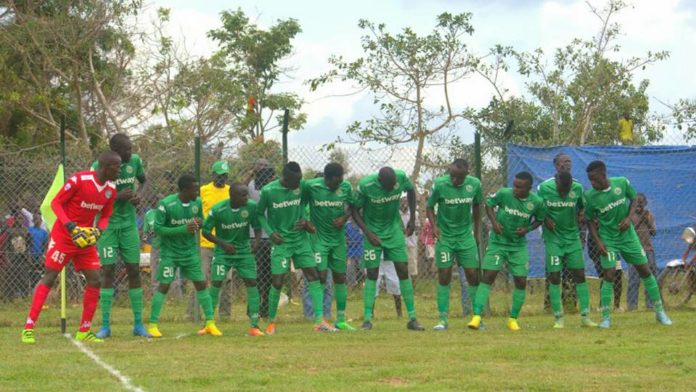
Members of the Onduparaka team

Arua-based team Onduparaka FC has topped the Azam Uganda Premier League table following a surprise win against Express FC at their home ground in Wankuluku.

An extra time goal by Samsom Caesar Okhuti, after opposing goals by Onduparaka’s Alfred Leku and Express FC Dan Serunkuuma, ensured the visitors attained three points.

This was Onduparaka FC’s their first win away and currently the team has won four games, one draw and a loss in the six games they have played, and face Vipers FC at the Green Light stadium in Arua next week.

Onduparaka, which is in its second AUPL season has just signed a shs390 million sponsorship deal with MTN Uganda.


Stories Continues after ad

Mourinho defends performance after Liverpool draw

Jose Mourinho

Manchester United manager Jose Mourinho has defended his performance his team drew with Liverpool 0-0 last Saturday.

The 54- year Mourinho was responding to attacks by critics, who say his way of work ‘is different from his rival managers’.

But the combative Mourinho said he is a victim of his success. “I think it is my fault because people are used to my teams getting good results and winning titles, other people have more time than I have and have different standards than I have and that’s not a problem for me at all,” Mourinho, who has been at United for three seasons now, said.

He added: “I would like to know when united last won two consecutive champions league matches away 2012. I would like to know the last time united won nine points from three matches in the champions League, we are doing ok.”

Meanwhile, Mourinho says he is not sure when Paul Pogba will return. The striker has been away following a torn hamstring injury got during the Champions League 3-0 win against Basel.

Stories Continues after ad

UCC gives illegal courier operators ultimatum

Outgoing UCC ED Executive Director Godfrey Mutabazi.

The Executive Director of Uganda Communications Commission (UCC) Godfrey Mutabazi has today warned postal and courier services operators to renew their licenses or halt operations until when they have obtained valid licenses.

In a statement, Eng. Mutabazi said the Commission will begin enforcing the directive across the country, beginning November 1. “The Commission shall starting from November 1 2017 embark on nationwide enforcement activities against illegal postal and courier operators,” he warned.

“All licensed postal and courier operators are therefore reminded to display their valid license at their places of work or businesses,” he added.

In accordance with section 5(b) of the Uganda Communications Act, the UCC is mandated to monitor, licenses, supervise, control and regulate all communication services, while Section 33 of the Act prohibits any person from conveying or distributing and postal article without a license.

Postal articles include books, packages, parcels and newspapers among others.

Stories Continues after ad