Stanbic Bank
Stanbic Bank
23.4 C
Kampala
Stanbic Bank
Stanbic Bank
Home Blog Page 1752

Blows as opposition MPs accuse Kibuule of entering parliament with gun

WITH GUN IN CHAMBERS? Water State Minister Ronald Kibuule

There has been tension during today’s plenary sitting when opposition Members of Parliament accused the State Minister for Water Resources Ronald Kibuule of smuggling a gun into the parliamentary chambers.

In the ensuing chaos Makindye East MP Allan Sewanyana, draped in a red bandana just like all his colleagues in the opposition, threw a chair at the government side, and then continued prodding Minister Kibuule.

If proved true, then Kibuule becomes the second MP accused of going to the parliamentary chambers with a gun, after Uganda Peoples Defence Forces MP General Elly Tumwine in 2002. At the time, fiery legislator Jacob Oulanyah, then an opposition politician representing Omoro County, engaged the General, prompting the latter to leave Parliament hurriedly after intervention by General Salim Saleh.

Meanwhile, today as Speaker Rebecca Kadaga entered into Parliament, she first ordered the opposition members to put off the bandanas donned on their heads.

“I know sometimes people enjoy colors, but let me call on members to remove their bandanas. It breaches Rule 73,” Kadaga said.

The opposition is against a private members bill sponsored by the Igara West legislator Raphael Magyezi, seeking the removal of presidential age limit cap of 75 years.

Opponents of the bill argue that the motion, once passed, will give a green light for President Yoweri Museveni, the Chairman of the National Resistance Movement (NRM) party to contest for the presidency in 2021 when aged  77 years.

Meanwhile, during the heated session, the Speaker introduced eight bills that came in to her office but only three of them sifted through including the private members bill.

And, by press time live transmission of the chaotic proceedings had been blocked.


Stories Continues after ad

ABS TV, NBS TV fight over Irene Namatovu’s song

Pastor Augustine Yiga of ABS TV.

The latest on our desk indicates that ‘Pastor’ Augustine Yiga’s ABS TV has threatened to sue NBS TV for playing Irene Namatovu’s song titled ‘Sanyu Lyamulenzi’.

The song is said to have played on NBS Tv’s ‘Omudigido’ program that is hosted by Omukunja, and Pastor Yiga says he has a copyright to the song and that no other TV station is supposed to play it apart from ABS TV.

Early this year Yiga signed several artistes including Mathias Walukaga, Irene Namatovu, Geoffrey Lutaya and Fred Sebatta.

Under the agreement, it was only his station, ABS TV that was reportedly supposed to play their music for a certain period of time.


Stories Continues after ad

IFC okays US$160m refinancing for Bujagali hydropower project

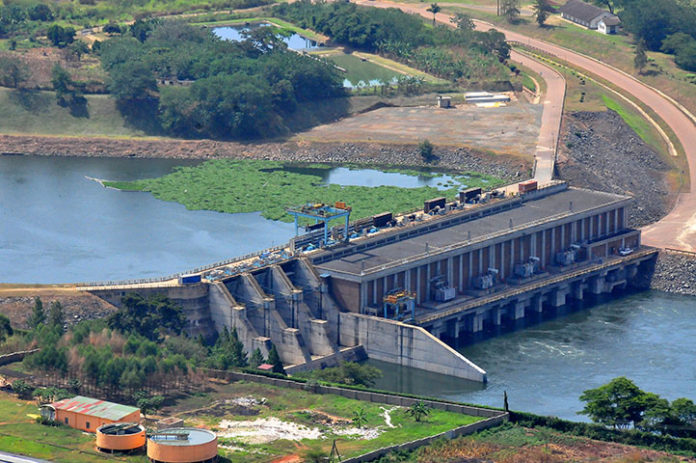
The Bujagali hydropower project

The International Finance Corporation (IFC) of the World Bank is to provide Bujagali Energy Limited (BEL) with a refinancing loan of US$160 million to help the company that manages the 250 MW Bujagali Hydropower dam repay the existing loans in a move that should see a reduction of electricity tariffs.

“IFC intends to provide an A loan of up to US$100 million and a B Loan of up to $60 million. In addition, IFC will also help raise the debt financing needed to complete the financing plan and will provide client risk management instruments,” reports say.

The company needs US$500 million to refinance its existing loans and to fund costs associated both with the prepayment of existing loans and the refinancing. The amount is expected to be financed through long-term senior debt.

The US$100 million will be utilised to refinance the company’s existing debt.

However, the new proposed refinancing investment is not expected to result in any change to the project’s physical or operational footprint or to its current power transmission arrangements.

“The refinancing will lengthen the tenure of the company’s existing loans and therefore reduce the amount of annual debt service and, in turn, lower the project’s tariff under the power purchase agreement with UETCL,” officials say.

The new loan is expected to make the electricity in Uganda more affordable and is expected to support the government’s increasing electricity access agenda in the country. Bujagali’s power generation tariff stands at US$0.13 (Shs467) per unit, to US$0.5 (Shs179) per unit.

Located on Dumbbell Island, on the Nile River 8 km north of Jinja, Bujagali was commissioned in 2012 and sells its entire output under a 30-year power purchase agreement with Uganda Electricity Transmission Company Limited. The project generated 44 per cent of Uganda’s electricity in 2016.

Large manufacturers under the Uganda Manufacturers Association (UMA), have consistently said the high electricity tariffs are causing local products to become non-competitive against foreign goods.

The government undertook to reduce electricity prices by granting of a five-year corporate income tax break to BEL. This measure alone was expected to reduce BEL’s generation tariff by US$0.87 (Shs31). But that meant government would have to sacrifice Shs80 billion (US$22 million) it would have collected from BEL in taxes.


Stories Continues after ad

SC Villa condemns the violence by their fans at St. Mary’s stadium

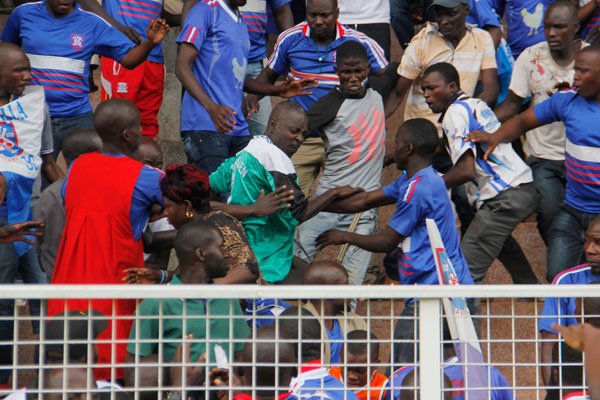
SC Villa fans fighting at the St. Mary's Stadium

SC Villa has condemned the violent acts by their fans during the match against Vipers in Kitende and labelled the culprits as people who want to destroy the club’s image.

Villa fans caused various damages to Vipers’ home ground including breaking the fence, after accusing referee Alex Muhabi of biased officiating. In addition, they threw bottles on the pitch and towards the VIP section. The damages are expected to be worth 10 million Uganda shillings.

The match was won by hosts SC Vipers following the lone strike of former KCCA FC player Tom Masiko 30 minutes into the first half.

SC Villa CEO released a statement explaining the unfortunate incident.

“SC Villa Jogoo wishes to condemn the acts of hooliganism at the concluded game against Vipers on Saturday, 23rd September 2017 at St. Mary’s stadium Kitende which ended 1-0 in favour of Vipers and as Sc Villa Jogoo wish to express our concerns as people masquerading as club supporters to dent Sc Villa’s image.” writes SC Villa CEO Valley Mugwanya.

“We blame the police for having failed to manage the few people who were ring leaders in the act of hooliganism, throwing bottles onto the pitch and VIP section which the police failed to arrests the culprits,” the statement further reads.

SC Villa host Mbarara FC tomorrow at Masaka Recreation Ground. They are seventh on the Azam Uganda Premier League table with just 4 points collected from their 3 league games.


Stories Continues after ad

MP Magyezi ‘private members bill’ on Order Paper

Igara West legislator Raphael Magyezi

Igara West legislator Raphael Magyezi will this afternoon table his ‘private members bill’ that is aimed at lifting the 75-year presidential age limit cap.

This development follows the late inclusion of the bill on the Order Paper.

Earlier today, the bill was not on the Order Paper and the MP had said he would petition Speaker Rebecca Kadaga seeking for explanations as to why it had not been included on the Order Paper for two consecutive plenary sittings.

In an interview at Parliament, Mr. Magyezi said he followed all the procedures to table the motion, which sections of the public say is aimed at paving the way for President Yoweri Museveni, who is currently constitutionally-barred from contesting for presidency, to stand again in 2021. Currently, President Museveni is 73 years.

“The Order Paper is the prerogative of the Speaker; she is the one to decide on what should be included on it. But I followed the right procedures, filed a notice for motion with a draft copy of the bill,” Magyezi said at the time.

According to Magyezi, his motion is intended to make Ugandans ‘happy’ in that they will have a chance to elect a leader of any age.

Last week Magyezi expressed worry that he is receiving threatening messages from Ugandans who are against the controversial age limit debate.


Stories Continues after ad

Central Bank urges public to report illegal charges

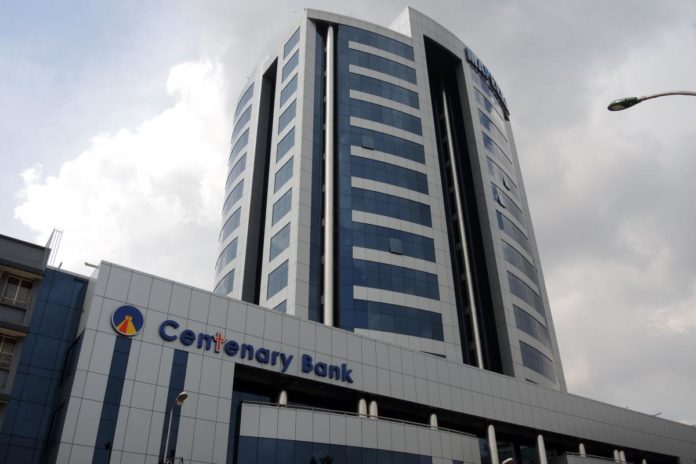
Centenary Bank, one of the local financial institutions

As tough economic times bite hard, the Bank of Uganda has urged the public to report commercial banks charging higher-than-official-service fees..

“Bank customers who are being offered/charged differently from what is published are advised to report to the Bank of Uganda,” the BOU said as it published the different interest rates and service fees charged by the various commercial banks operating in the country.

The Central Bank says the publication of interest rates and bank charges for personal accounts is one way of promoting transparency and competition in the banking services.

The publication shows that 24 commercial banks operate in the country, many of which are foreign-owned with mother banks in their home countries. Centenary Bank, Housing Finance Bank and Finance Trust Bank come up as the only commercial banks with a home base in Uganda.

The publication of the commercial banks’ services shows prime lending rates (PLRs) ranging from 19 percent to 25 percent as of July 1,2017. But Stanbic Bank, one of the largest by assets and capitalisation, currently has its PLR tagged at 18 percent.

Stanbic Bank and Bank of India offer cheapest PLRs compared to NC Bank’s PLR of 25 percent. Other banks offer PLRs of between 20 percent and 23.5 percent.

However, the PLRs offered by commercial banks do not match with the central bank rate (CBR) which stands at 10 percent.

BOU, which is the regulator of the fiscal policy as well as the banking sector wants commercial banks to cut their PLRs down towards its CBR of 10 percent to spur private sector credit growth.

However, commercial banks insist that their lending rates are cautionary given the high rate of the non-performing loans (NPLs) that has left many banks making huge losses.


Stories Continues after ad

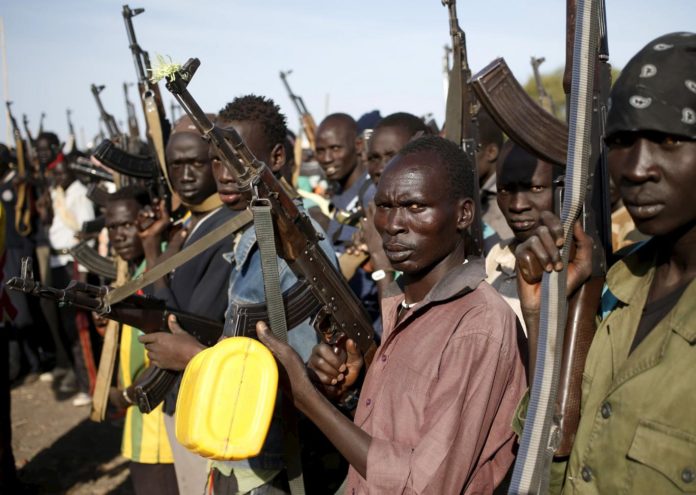
Report exposes UK company in illicit US$46m South Sudan arms deal

Section of South Sudan militias

Research released by human rights NGO Amnesty International has revealed how a shell company in the heart of London’s West End acted as an intermediary in huge prospective arms deals to war-torn South Sudan and other countries, thanks to regulatory gaps which are making the UK a hotspot for companies involved in illicit arms transfers.

Commercial documents name S-Profit Ltd, a tiny UK-registered company, as the ‘supplier’ in a 2014 deal to provide at least US$46m worth of small arms, light weapons and ammunition to the South Sudanese government. The report, From London to Juba: a UK-registered company’s role in one of the largest arms deals to South Sudan’, also reveals that the UK government has been aware of similar practices taking place on British soil for more than eight years, without taking effective regulatory action.

“South Sudan is awash with weapons that have been used to kill and maim thousands of civilians, causing Africa’s biggest refugee crisis. The UK government has been a vocal proponent of a UN arms embargo on South Sudan, yet is turning a blind eye to illegal deals taking place right under its nose,” said James Lynch, Amnesty International’s Head of Arms Control and Human Rights.

“Glaring gaps in UK company regulation mean a dealer of illicit arms can go online and set up a UK company to front its activities with fewer checks than joining a gym or hiring a car. The UK must urgently review its company registration procedures – right now it provides the perfect conditions to become a hotspot for the kind of irresponsible arms transfers that have devastated South Sudan.”

The weapons in question form part of a previously undisclosed 2014 contract between a Ukrainian state arms company and a UAE-based company to procure US$169m of weapons on behalf of South Sudan. These include thousands of machine guns, mortars, RPGs and millions of rounds of ammunition.

If fulfilled, the total deal would constitute one of the largest publicly disclosed arms transfers to South Sudan since the outbreak of fighting in December 2013.

Amnesty has not been able to determine whether some or all of the weapons listed in these documents have yet been delivered to South Sudan. However, a UK company may violate UK export control laws even by being involved in the negotiation of an arms deal to South Sudan. The involvement of the Ukrainian state-owned arms company and a UAE private company in weapons supplies to South Sudan also potentially contravenes the Ukraine and UAE’s obligations as signatories to the Arms Trade Treaty.

S-Profit’s director –a Ukrainian national based outside the UK – denied to Amnesty International that the firm had supplied military products to South Sudan, but has not responded to further questions, including whether it played an intermediary role.

As well as the South Sudan deal, documents seen by Amnesty show a sequence of commercial offers and contract negotiations involving S-Profit Ltd – some unfinished — for the prospective supply of armoured vehicles, weapons and aircraft to Egypt, Senegal, Mali, Rwanda, Ukraine and Peru, as well as to private companies in Serbia, Ukraine, Poland and Australia. Amnesty International has been unable to identify UK trade control licences for any of these negotiations or deals.

Amnesty International has provided UK authorities with the documents and information it has obtained. The report also reveals that the UK government has, for more than eight years, been aware of UK shell companies being used unlawfully as contract vehicles for weapons dealers to supply arms to human rights violators and embargoed destinations including Syria, Eritrea and South Sudan. The UK has made no regulatory changes to address these gaps.

The UK government has also failed to take any meaningful enforcement action against the companies involved, despite powers under UK company and insolvency law designed to allow the government to wind up companies acting unlawfully or fraudulently.

S-Profit Ltd is emblematic of how companies that wish to operate in the shadows can benefit from regulatory gaps at Companies House, the government body responsible for registering companies. Anyone in the world can set up a UK company online without needing to provide any identity documents.

The day after its registration, the shareholding of S-Profit Ltd was transferred to a Ukrainian national who lists a non-existent UK office address and a commercial ‘virtual telephone switchboard’ service for official communications.

“S-Profit Ltd’s company filings give no indication of its involvement in the arms trade – but then UK law does not require them to. This kind of weak regulation is seriously undermining the other robust domestic, EU and international controls which should make any UK involvement in arms transfers to a war zone like South Sudan unimaginable,” said James Lynch.

“This should be a wake-up call for the UK government to hold UK-registered companies accountable. Simple measures like checking the veracity of names and addresses and setting up a register of arms brokers would make it much harder for foreign arms dealers contributing to serious human rights abuses to set up shop in the UK.

“If they have not already reached South Sudan, these deliveries must be halted. In the meantime we continue to call for a comprehensive UN arms embargo on South Sudan that includes any brokering, financial or logistical activities that would facilitate these kinds of transfers. Without an embargo, weapons will continue to flow into South Sudan, and the consequences for civilians will continue to be catastrophic.”

S-Profit is one of three companies named in the documents, alongside the UAE-based International Golden Group and the Ukrainian state-owned arms exporter, Ukrinmash.

Amnesty International has repeatedly documented the devastating abuses against civilians in South Sudan since the 2013 civil war began, most recently in the report, ‘Do not remain silent’: Survivors of Sexual violence in South Sudan call for justice and reparations.


Stories Continues after ad

Joshua Seale back to defend his Uganda Open Championship

Joshua Seale shows off his trophy

South African pro golfer and defending champion of the Tusker Malt Uganda Open Pros Championship, Joshua Seale, is in town to defend the title he won last year during a thrilling showdown at the Kitante Golf Course.

Joshua Seale will be looking to emulate his good fortunes from last year and retain his trophy despite facing tighter competition.

He joins a number of more than 50 pro golfers from around Africa who have registered to take part in the 75th Tusker Malt Uganda Open.

Over 35 pro golfers from Kenya have arrived in Kampala to take part in this year’s Open. The tournament has also attracted players from other countries such as; Portugal, Zimbabwe, Zamiba, Namibia, Rwanda and Tanzania.

Some of the notable foreign pro golfers to look out for will be Ferreira Stephen from Portugal, Rwanda’s Dusabe Jules and Kopan Timbe from Kenya. Returning as a pro golfer, Zambia’s Aaron Simfukwe will be looking to make a mark once again in the Tusker Malt Uganda Open. Simfukwe played in last year’s tournament as an amateur and has since turned pro.

Some of Uganda’s star golfers will include Deo Akope, who won the tournament in 2006 and 2014, Phillip Kasozi and Fred Wanzala, whose recent form hasn’t gone unnoticed.

The pro golfers will be looking to have a lion’s share in the prize money which increased to Shs145 million from Shs110 million.

“The Tusker Malt Uganda Open pros tournament is going to be a captivating one as we have the top players from across Africa tussling it out at the Kitante Golf Course. We hope the best golfer wins and we shall be following closely,” said Grace Namutebi, Uganda Breweries Limited, Brand Manager Premium Beers.

Tusker Malt Lager injected over Shs500 million into this year’s tournament as assurance to show its support for the development of the game golf in Uganda. There has been an increase in the cash sponsorship from Shs230 million to Shs250 million.


Stories Continues after ad

Survey shows Ugandans want presidential age limit maintained at 75

Gen. Yoweri Kaguta Museveni

A survey by Afrobarometer shows that majority of Ugandans want the current constitutional presidential age limit of 75 years upheld.

The survey, conducted in December 2016 and January 2017, shows that 75 per cent of Ugandans ‘favour maintaining the age limit of 75 years on presidential candidates’ .The survey asked Ugandans about a number of electoral reforms.

Afrobarometer is a research network that conducts public attitude surveys on democracy, governance, economic issues among others, in 35 African countries.

In a press statement released on September 23, 2017, key findings show that 67 per cent of members of the ruling National Resistance Movement (NRM) party support maintaining the presidential age limit, while opposition FDC members support it by up to 90 per cent. Further, support for the age limit at 75 years is stronger among men and urban dwellers, according to Afrobarometer.

Dropping the existing age limit is the only one that failed to register majority support. In fact, popular support for the age limit is remarkably strong: The 75 per cent of respondents who want to keep the law include 62 per cent who say they feel ‘very strongly’ on the issue, and majority support holds across the political-party divide as well as across gender, age, education, and regional lines.

This comes in the wake of Igara West MP Raphael Magyezi (NRM) seeking to table a ‘private members bill’ today, in a move that is aimed at paving the way for the removal of the 75-year age limit cap from the Constitution, a development interpreted by many as leading to the ‘life presidency’ of incumbent President Yoweri Museveni.

Leading protagonists of the removal are led by State Minister for Investment Evelyn Anite and Arua Municipality MP Ibrahim Abiriga, while antagonists include almost all opposition figures among them Forum for Democratic Change (FDC) President Major General (rtd) Mugisha Muntu, Democratic Party (DP) President Norbert Mao, and MPs Ibrahim Ssemujju Nganda, Medard Lubega Ssegona, Allan Sewanyana, Betty Nambooze Bakireke and the Lord Mayor Erias Lukwago.


Key findings of the Afrobarometer survey

Three-fourths (75 per cent) of Ugandans favour maintaining an age limit of 75 years on presidential candidates, including 62 % who say they ‘agree very strongly’ with this position.

Support for maintaining the age limit is even stronger among men (78 per cent) and urbanites (81 per cent) than among women (71 per cent) and rural residents (73 per cent).

More than eight in 10 Ugandans with at least a secondary education favour maintaining the age limit, compared to about seven in 10 among less-educated respondents. Even among National Resistance Movement (NRM) adherents, support for maintaining the age limit is high (67 per cent), though considerably weaker than among supporters of the Forum for Democratic Change (FDC) (90 per cent) and respondents who don’t identify with any party, standing at 77 percent.

Support for the age limit is greatest in Kampala (90 per cent) and Central region (86 per cent), dropping to 67 per cent in the Northern region.


Stories Continues after ad

August coffee exports rise, fetch US$47m

Uganda’s year-on-year coffee exports increased 43.73 percent to reach 418,340 60-kg bags in August 2017 compared to 291,059 60-kg bags exported in the same period last year, the latest Uganda Coffee Development Authority (UCDA) report indicates.

The August 2017 exports fetched the country US$47.06 million, which was 56.4 percent higher than the 30.09 million earned in the same period in 2016.

However, on the monthly basis coffee exports in August were less compared to July’s 427,204 bags which fetched the country US$49.51 million.

Decline in the August coffee exports is attributed to the decline in the output on Arabica coffee whose delivery was affected by its biennal cycle of production.

Uganda, which grows both Robusta and Arabica coffee types, is Africa’s top exporter. Ethiopia is Africa’s leading producer of coffee though much of it consumed within the country, leaving less for export.

Uganda exports more Robusta than Arabica but the latter fetches a higher price due to its sweet aroma.


The destinations of Uganda’s coffee exports during the month of August 2017 were EU (295,590 bags) with a market share of 70.66% compared with 287,908 bags (67.39%) exported last month. EU was followed by Sudan (46,514 bags) or 11.12% compared to 58,184 bags or 13.62% the previous month.


India on the other hand, imported 27,320 bags (6.53%) compared to 15,555 (3.64%), USA -11,854 (2.83%) compared to 11,414 bags (2.67%), Morocco (10,879 bags) or -2.60% compared to 11,414 bags (2.67%) in July 2017.  Coffee exports to Africa amounted to 68,196 bags, a market share of 16.30% compared to 84,177 bags with a market share of 19.70% exported in July 2017.

“Unchanged positions of destinations reflect their confidence in Uganda coffee,” UCDA says.


Stories Continues after ad