Stanbic Bank
Stanbic Bank
21 C
Kampala
Stanbic Bank
Stanbic Bank
Home Blog Page 1752

Court of Appeal upholds MP Abdu Katuntu win

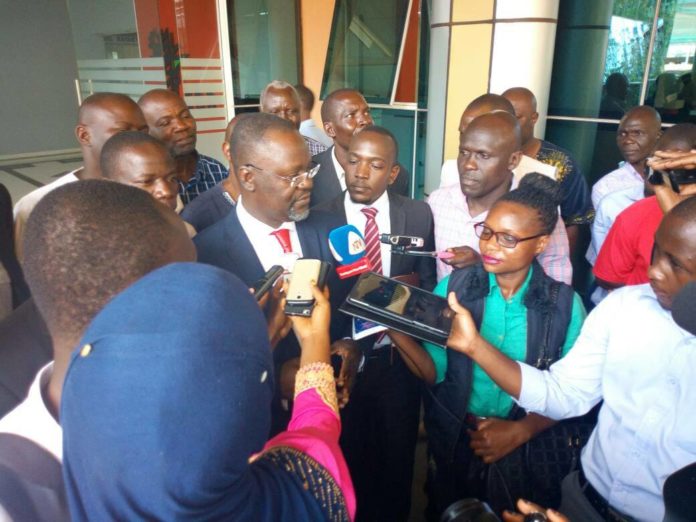
Bugweri MP Abdu Katuntu addresses the press after the Court of Appeal upheld his victory

The Court of Appeal has today upheld the election of Abdu Katuntu as the Member of Parliament for Bugweri County in Iganga district.

In a judgment read by Deputy Court Registrar Tadeo Asiimwe, the panel of three high court judges, retired Justice Stephen Kavuma, Justice Remmy Kasule and Justice Richard Buteera, dismissed National Resistance Movement candidate Daniel Ibaale’s case and ordered him to pay all costs incurred in the case since 2016, after it was filed in the Jinja High Court.

Last year Jinja High Court Judge Margret Mutonyi dismissed Eng. Ibaale’s case, ruling that he had not adduced satisfactory evidence to pin Katuntu for conniving with the Electoral Commission officials to utter false and defamatory statements as well as deface the petitioner’s posters in the 2016 general election.

A lawyer, Katuntu is one of the longest-serving MPs and heads Parliament’s committee on Statutory Agencies and Enterprises (COSASE).

Stories Continues after ad

Libya, Zimbabwe confirm CECAFA participation

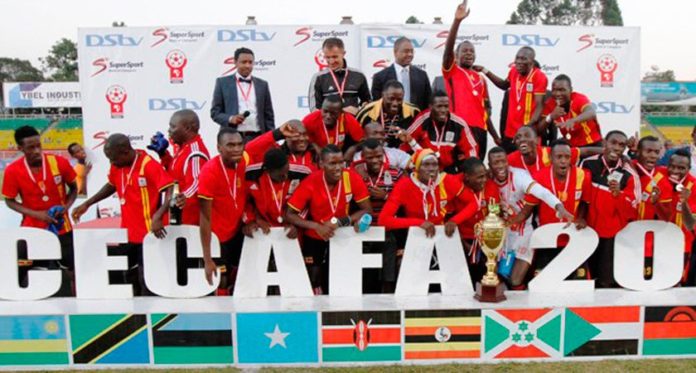
The Uganda CECAFA winning team 2015

The Confederation of East and Central Africa Football Associations (CECAFA) has confirmed that 12 nations will be taking part in the 2017 Senior Challenge competition, which will be held in Kenya.

Among the participants, will be north Africans Libya and southern Africa nation Zimbabwe, who were invited as guest teams and confirmed their participation.

The two-week event will take place from November 25 to December 9 with matches expected to be staged in Moi Stadium in Kisumu, Nakuru’s Afraha Stadium and Bukhungu Stadium in Kakamega County.

Last year the regional body failed to organize the Senior Challenge Cup after Sudan and Kenya both pulled out of hosting at the last moment.

Uganda Cranes are the defending champions of the CECAFA Senior Challenge Cup after they defeated Rwanda in the last event held in Ethiopia in 2015.

This time the Cranes hope to use the Challenge Cup to prepare the team head of the 2018 Africa Nations Championship (CHAN) that will take place in Morocco.

The two guest nations will join 10 other nations from the CECAFA region which are; holders Uganda, hosts Kenya, Sudan, Rwanda, Tanzania, Burundi, South Sudan, Ethiopia, Zanzibar, Somalia.


Stories Continues after ad

DP drags Parliament to court over suspension of opposition MPs

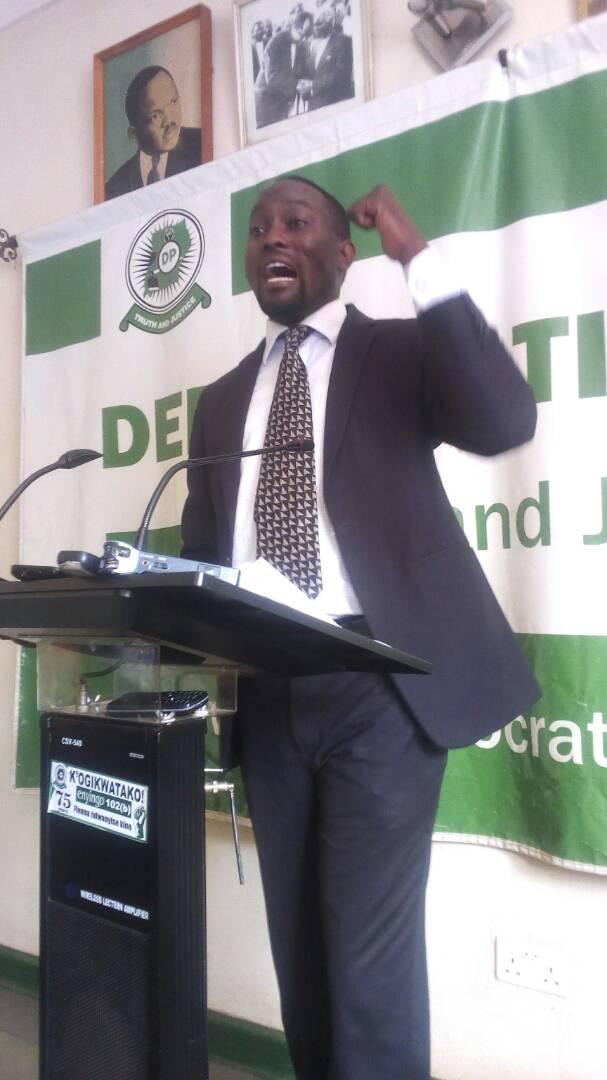
SUED PARLIAMENT: DP lawyer Alex Wasswa

The Democratic Party has today sued the Parliamentary Commission seeking for declarations of what happened in Parliament on September 27, when the Speaker Rebecca Kadaga suspended 25 MPs, citing indiscipline.

On the day Kadaga ordered 24 opposition MPs and one National Resistance Movement stalwart, the Water Resources State Minister Ronald Kibuule, not to appear in Parliament for three consecutive sittings after parliament descended into chaos following allegations by Kira Municipality MP Ibrahim Semujju Nganda that Kibuule had sneaked a gun into the parliamentary chambers, in contravention of the rules.

The suspended opposition MPs are against lifting the presidential age limit that is capped at 75 years, with arguments that it is aimed at paving the way for a (Yoweri) Museveni life presidency.

The MPs who were suspended include Ssemujju Nganda, Allan Ssewanyana, Robert Kyagulanyi, Monica Amoding, Sam Lyomoki, Moses Kasibante, Betty Nambooze, Francis Zaake, Ibrahim Kasozi, Nzaavu, Gilbert Olanya, Muhammad Nsereko, Odonga Otto, and Winfred Nuwagaba and Nandala Mafabi.

Others are Medard Lubega Seggona, Joseph Sewungu, Gerald Karuhanga, Gaffa Mbwatekamwa, Florence Namayanja, Moses Kasibante Theodore Sekikubo, Barnabas Tinkasimire and Ms. Osege.

However, according to DP lawyer Alex Wasswa, suspending the legislators for what happened in the previous sitting contravenes with the parliamentary laws and procedures.

“Ejecting them from parliament in that manner was an illegality, Inspector General Police (IGP) Kale Kayihura has no business whatsoever in Parliament,” Wasswa said at the High Court in Kampala.

He also demanded that the Commission explain why the Special Forces Command (SFC) stormed the parliamentary chambers, evicted the opposition MPs and in the process injured Mityana Municipality legislator Francis Zaake Butebi and Soroti Woman MP Angelina Osege..


Stories Continues after ad

AfDB President Akinwumi awarded the Nobel Prize for Agriculture

AWARDED NOBEL PRIZE FOR AGRICULTURE: Akinwumi Adesina, President of the African Development Bank (AfDB)

The World Food Prize is a great motivation which puts the wind behind the sails of what the African Development Bank is doing with its development priorities − the – especially Feed Africa, the President of the Bank, Akinwumi Adesina, has said.

Known as the ‘Nobel Prize for Agriculture’, the World Food Prize was founded by Nobel Peace Prize-winner Norman Borlaug and is considered the foremost international honour recognizing the achievements of individuals who have advanced human development by improving the quality, quantity or availability of food in the world. The Prize is presented each October on or around UN World Food Day that falls on October 16, in a ceremony in the Iowa State capital of Des Moines.

And Adesina, who spoke at a press conference ahead of the ceremony, stressed the need to put technology and information in the hands of farmers and pledged the Bank’s commitment to continue its development work in Africa.

“For me, the World Food Prize is a great honour and recognition for all of the work that I have done for decades of my life. But it also puts wind behind our sail as we now take off to feed Africa, because it is a job that has to be complete,” he stressed.

“Not only must Africa feed itself, it must feed itself with pride. Africa must also unlock the potentials of agriculture, turning agriculture from something that you use for managing poverty, to something that you use for creating wealth.”

He described the mobile phone as the most important tool in the hands of a farmer.

“With it, they will find out information about the market, about weather, and about to access finance,” Adesina said. “They will be able to get information about nutrition for mothers, for instance. That is very important. That was why when I was Minister of Agriculture in Nigeria, we launched this electronic wallet system that allows farmers to access fertilizers, and we reached well over 15 million farmers.”

Awareness and empowerment, he said, could only come through providing information, democratizing the access to information to farmers.

“I have never seen a farmer that wants to be poor,” he said.

In June, the World Food Prize announced African development Bank President Akinwumi A. Adesina as the 2017 Laureate for his work in improving the availability of seed, fertilizer and financing for African farmers, and for laying the foundation for the youth in Africa to engage in agriculture as a profitable business.

Under President Adesina’s leadership, the AfDB is accelerating agricultural development through its Feed Africa Strategy with planned investment of US $24 billion over the next 10 years. The prize also recognizes Adesina’s work over the past two decades with the Rockefeller Foundation, at the Alliance for a Green Revolution in Africa (AGRA), and as Nigeria’s Minister of Agriculture of Agriculture and Rural Development.

Stories Continues after ad

AfDB releases first report on Africa’s extractive industry

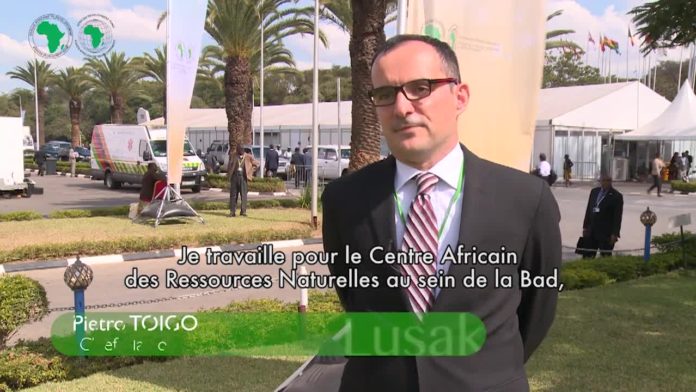
CO-AUTHOR OF REPORT: Pietro Toigo of the AfDB’s African Natural Resources Center

The African Development Bank (AfDB) and OpenOil, a Berlin-based financial analysis firm, have produced the first ever report on how African governments use financial models to manage oil, gas and mining projects as they interface with extractive corporate companies.

The report was launched at the 13th Annual General Meeting of the Intergovernmental Forum on Mining, Minerals, Metals and Sustainable Development (IGF) in Geneva, Switzerland, hours ago.

Over 150 experts and representatives of international development institutions, governments, civil society and extractives companies attended the launch. They included the World Bank, United Nations Environment Programme (UNEP), United Nations Development Programme (UNDP), United Nations Conference on Trade and Development (UNCTAD), Organisation for Economic Co-operation and Development (OECD).

Mining companies and miners’ associations such as Newmont Mining Corporation, AngloGold Ashanti, Anglo American and International Council on Mining and Metals (ICMM) also attended.

The joint report was presented by Pietro Toigo of the AfDB’s African Natural Resources Center and Olumide Abimbola from OpenOil.

“This report is the first of its kind in Africa and we hope that it will stir debate within the continent’s mining sector and contribute to countries getting more out of their mining projects,” the report’s authors say.

The report, ‘Running the Numbers: How African Governments Model Extractive Projects’, analyses the capacity of 19 African resource-rich countries, including Uganda to use financial models, which simulate a simplified version of a real-world project in order to determine their financial benefits to the countries.

AfDB and OpenOil conducted a survey of nearly 50 government officials and hope its results will be utilised to inform policy on extractive activities.

“Financial models are essential throughout the life-cycle of extractive projects,” said Johnny West, Director of OpenOil. “They are not just important during the development of the fiscal regime, but also for the negotiation of fiscal terms with companies, for revenue forecasting, and for auditing and tax-gap analysis.”

The report stresses the need for African governments to make efforts to close the information gap with extractive companies, and shows where there are capacity gaps and how those gaps could be addressed.

The report notes that there is a substantial gap in access to data that are key inputs for financial models in African countries, with the largest gaps in assessing information on capital costs and operating costs of projects.

In addition to the need to build in-house financial modelling capacity, the report suggests that governments need to improve internal business processes and address the large gap that the report shows exist between information available to different agencies, departments and ministries.

The authors of the report say the study will support African countries in realising the full potential of their natural resources. “How are countries supposed to enter into negotiations with extraction companies that use financial models  if the governments of such countries are not in possession of the latest and best models to calculate what a potential project is worth?” Toigo asked.

The report also encourages development partners to make capacity building in financial modeling a more significant part of their support to the management of attractive resources. Partners doing so already were encouraged to not just supply financial models as part of isolated technical assistance, but to also invest in equipping government officials with skills to create and use models.


Stories Continues after ad

French company acquires Ugandan solar giant Fenix International

Engie Africa Chief Executive Bruno Bensasson

French gas company Engie has bought Ugandan solar systems company-Fenix International, in a move aimed at expanding its presence in sub-Saharan Africa to provide power to millions of homes without access to electricity.

Engie said on Thursday that it had acquired Fenix International, which sells home solar kits financed through mobile money platforms in Uganda. It did not however disclose the details of the deal including the cost involved.

Engie has 3,000 megawatts of renewable energy and gas-fired power assets in operation or under construction in Morocco and South Africa. Its Tractebel business sells energy services across Africa, but the group has no retail customers in the region.

Engie Africa Chief Executive Bruno Bensasson said Engie will help Fenix to expand in 10 Sub-Saharan countries such as Zambia, Kenya, Ivory Coast, Senegal and Ethiopia among others. “Our ambition is to cover millions of clients,” he said.

Engie had revenue of 66.6 billion euros (US$79 billion) last year, but Bensassson said the company expects double-digit growth, with earnings partly from the new acquisition.

Fenix CEO Lyndsay Handler said its systems cost between US$175 and US$800 and the company has sold them to more than 140,000 Ugandan households in the past three years, bringing power to about 900,000 people.

Handler said there are many solar panel vendors in Africa, but most people are unable to buy the equipment outright.

People in regions without electricity spend 10-50 U.S. cents on energy per day, whether on candles, kerosene or wood, she siad. Fenix has structured its financing around that level.

Customers pay US$8 deposit to take home a basic solar system and are given seven days of free use, after which they must make their regular payments to unlock the system with a code sent by SMS.

“We match financing to what people can spend, this way they gradually replace kerosene with clean energy,” Handler said.

Fenix also provides loans for second or third solar panels, for batteries and even for lights, radios and TVs.

Late last year Engie competitor EDF announced a joint venture with Tanzania-based Off Grid Electric to sell solar panels and batteries in West Africa, also with payments through mobile phones.

Meanwhile, Kenya-based M-KOPA, has connected more than 500,000 homes to solar power and is adding 500 homes every day. It is a strong competitor in the market.

The International Energy Agency says that about 600 million people in sub-Saharan Africa have no access to electricity, as most countries have no enough hydropower dams to provide electricity.


Stories Continues after ad

Age limit debate: Finance Minister Kasaija worried economy will sink further

WORRIED OVER SINKING ECONOMY: Finance Minister Matia Kasaija

The Minister of Finance and Economic Planning Matia Kasaija has expressed concern over the heated atmosphere that has characterised the ongoing debate on lifting the presidential age limit, saying that if not contained, the violent flare-ups between proponents and opponents of the bill would further affect an economy that has been struggling for the last two years. .

“Money hates noise. Whenever it hears noise, it runs away. If we are to debate this bill, let’s do it quietly without the outside world getting to know but whenever we make noise, investors think the country is on fire. They will just run away,” Mr. Kasaija told journalists at his office.

His comments came just hours after a standoff between opposition leaders, their supporters and the police in Rukungiri district, over political mobilisation against the lifting of the presidential age limit that is capped at 75 years.

The scuffle left at least one person dead and others with serious wounds as police fired live ammunition and teargas to disperse opposition supporters.

Further, hours after his comments, there was again another confrontation between opposition leaders and police as the latter attempted to block an opposition rally in Natete, Lubaga North in Kampala.

The scuffle ended up in the arrest of opposition leaders including MPs Kato Lubwama, Allan Ssewanyana, Moses Kasibante and Muhammad Nsereko, and with police firing of teargas to disperse opposition supporters.

A similar incident happened on Tuesday in Kasubi, Lubaga North as police tried to disperse a consultative rally that had been hosted by the area MP Moses Kasibante.


Stories Continues after ad

VP Ssekandi joins calls for regional peace and security

Vice President Edward Kiwanuka Ssekandi, behind him are Ministers Sam Kutesa and Adolf Mwesige during the Heads of Sate and Government meeting in Brazzaville.

SADC and Great Lakes Region leaders have called on the leaders of South Sudan, DRC and Burundi to return to negotiations as part of the region’s resolve to address conflicts and maintain peace and security in the region.

During their 9th Heads of State meeting of the International Conference on the Great Lakes Region (ICGLR) that opened Thursday in the Congo capital Brazzaville, the leaders also asked fighting groups in active combat to cease hostilities or face a full military action.

Uganda Vice President Edward Kiwanuka Ssekandi, who led the country’s delegation to the ICGLR meeting said Uganda will continue supporting all efforts to the peace and stability in the region but also said that there was need for Kinshasa to honour the Nairobi declaration.

The declaration among others asked Kabila’s administration to repatriate, resettle and re-integrate M23 fighters who were given temporary transition status in Uganda as part of the peaceful package to pacify the Eastern DRC region.

On Burundi, Vice President Ssekandi called for an all-inclusive Government as a temporary measure to ease on the tensions in the country while on Sudan Ssekandi said that Uganda supports a political settlement between the warring factions.

He also said that Uganda is ready to support capacity building efforts for CAR security agencies to help the country become self-reliant in confronting some of the security challenges it currently faces.

Earlier, while opening the conference, Congo Brazzaville President, Denis Sassou N’guesso called on leaders in the region to prioritise regional mechanisms in addressing issues but warned of complacency and lack of commitment which he said have been responsible for some of the raging conflicts in the region.

In his speech, the African Union Vice Chairman Moussa Faki Mahamat called upon President Kabila to come up with a roadmap to the country’s next elections to ease the tension in the DRC and also asked him to ensure a sustained peaceful environment in the country to undertake democratic.

He said that DRC bordering nine others and with a quarter of the region’s population is a critical country adding that any instability in DRC generates ripple effects to the whole region. He also urged regional leaders to come-up with concrete plans to end the insurgency in DRC.

After the official opening, leaders went for four-hour closed door session to further deliberate on sensitive issues that among others concerned the political roadmap and security situation in the DRC, the human rights issues in Burundi, the security situation in the CAR and the warring factions in South Sudan.

The meeting is based on the 2013 framework agreement established to support the ongoing regional efforts to achieve peace and stability in the Great Lakes Region was to review earlier commitments and consider additional measures aimed accelerating pacification of the region.

It brought together Heads of State and Government officials from Angola, Burundi, CAR, Congo Republic, DRC, South Sudan, South Africa, Sudan, Tanzania, Rwanda and Uganda. Others are from the AU, the International Conference on Great Lakes Region (ICGLR), the South African Development Community (SADC) and the UN.

Kenya was absent at the summit due to the ongoing political uncertainty at home following the high court nullification of results which had indicated President Uhuru Kenyatta won in the August presidential elections.


Stories Continues after ad

Age Limit debate: MP Kato Lubwama arrested

Lubaga South MP Kato Lubwama has this afternoon been arrested from Nateete.

Lubwama was picked from Lorry Park where he had gone for a consultative meeting about the private members bill is aimed at removing the presidential age limit that is capped at 75 years.

Last week the Speaker of Parliament, Rebecca Kadaga sent off all legislators to their constituencies to seek people’s views about the bill however opposition MPs resorted to joint consultative meeting in a particular constituency every day. They started from Nakawa, preceded to Kalerewe and Kasubii where the meeting was disrupted by police with tear gas and live bullets as MPs ran to save their live.

Yesterday opposition MPs vowed to go on with their joint consultative meetings rubbishing police directives of banning joint meetings restricting them to their own constituencies. However in the afternoon, police besieged Nateete Lorry Park where Kato Lubwama was supposed to hold his rally about the controversial bill.

Earlier police said that they would only allow Lubwama to execute his constitutional duty in his own constituency.

However, they did acted centrally to what they preached yesterday of allowing MP to consult in their constituencies when they surrounded the place and arrested Lubwama to unknown destination.

Upon whisking him off, teargas and live bullets rocked the place as police continued to arrest Butambala MP Muwanga Kivumbi as it blocked Makindye East legislator Ibrahim Kasozi, Kalungu west Joseph Sewungu from accessing the venue for a joint consultation as people watched from distant place.

.


Stories Continues after ad

Age limit debate: NRM ‘rebel’ MPs take on Museveni, Nankabirwa

CELEBRATING: NRM 'rebel' MPs cut a cake to celebrate Busujju MP David Lukyamuzi Kalwanga's decision to defect from NRM pro-age limit removal group

The nine National Resistance Movement (NRM) legislators that were ejected from the party caucus meeting on the orders on President Yoweri Museveni have today petitioned NRM Secretary General Justin Kasule Lumumba to take disciplinary action against the party chairman and government chief whip, Ruth Nankabirwa.

Theodore Sekikubo, Patrick Nsamba, John Baptist Nambeshe, Gaffa Mbwatekamwa, Barnabas Tinkasimire, James Kaberuka, Patrick Nsamba, Sylvia Rwabwogo and Winfred Nuwagaba were ordered to leave by party Chairman Museveni after NRM Chief Whip Ruth Nankabirwa said they would leak party secrets.

The nine are against private members bill being peddled by the Igara West MP Raphael Magyezi, aimed at  removing presidential age limit the was set at 75 years in the 1995 Constitution. Observers say Magyezi’s move is to pave for way for President Museveni to contest in 2021 when aged 77 years, two years above the current cap.

In a press briefing held at parliament earlier in the day John Nambeshe confirmed writing to NRM disciplinary committee in protest against the ‘illegal and arbitrary suspension from the caucus’, saying President Museveni and Nankabirwa acted as ‘complainant and judge’ when they were thrown out without a hearing.

The nine say they expect the committee to take action basing on party Constitution saying none of the accused is a member of the committee that will influence its decision making.

They meanwhile, also celebrated Busujju MP David Lukyamuzi Kalwanga’s decision to defect from NRM pro-age limit removal group by cutting a cake.


Stories Continues after ad