Stanbic Bank
Stanbic Bank
20.8 C
Kampala
Stanbic Bank
Stanbic Bank
Home Blog Page 1774

‘Ugandan’ cited in US church shooting spree

Kidega Samsom being led away by police. Photo credit/MNPDNashville

Police have identified 25-year-old US-based Ugandan Emanuel Kidega Samson, as the gunman who shot a woman dead and injured six other churchgoers after he opened fire Sunday morning at a Tennessee church as services were ending.

Kidega Samson’s booking photo

The shooting at Burnett’s Chapel Church of Christ in Antioch, Tennessee, started in the church’s parking lot, according to police and the Nashville Fire Department. Nashville Metro police spokesman Don Aaron said emergency calls came in around 11:15 a.m. as services were letting out.

Suspected church shooter Emanuel Kidega Samson being transported to jail. All photos MNPD Nashville

Police said Kidega, wearing a neoprene half-mask and driving an SUV, arrived in the parking lot and first fatally fired at 39-year-old Melanie Smith, who was walking to her car.

After gunning down the woman in the parking lot, Kidega Samson went inside through the rear of the church and began “indiscriminately shooting at people,” police said, wounding six people.

A church usher, identified as 22-year-old Robert Engle, ran up and confronted Samson and was subsequently pistol-whipped by him, police said. Samson was at some point shot in the left pectoral, though police still don’t know if the gun discharged on its own during Engle’s struggle with the suspect.

At that point, Engle went to his car, where he got his weapon to confront the shooter again.

It was not possible to establish when Kidega Samsom, most probably from the Acholi tribe of Northern Uganda arrived in the US, but Police said he had attended the church within the past two years. He has been released from a local hospital and will be charged with one count of murder, with additional charges to come.

The Memphis FBI Field Office’s Nashville Resident Agency, the Civil Rights Division and the U.S. Attorney’s Office for the Middle District of Tennessee have opened a civil rights investigation into the shooting, the US Attorney’s Office said Sunday.

All seven of the wounded were taken to area hospitals. Five of them were sent to Vanderbilt Medical Center and one to Skyline Medical Center.

Vanderbilt Medical Center said in a statement after the shooting that its emergency medicine physicians and trauma center surgeons are caring for two critically injured gunshot victims, and another four individuals who are currently in stable condition.

Nashville Christian School released a statement on Sunday, saying, “As you may already know, one of our Bible teachers, Joey Spann, and his wife were both injured in the church shooting this morning at Burnette Chapel Church of Christ in Antioch. We do not have any additional information at this time but want to boldly ask you to pray. Please lift up Coach Joey Spann and his wife Peggy and all who have been injured or impacted by this tragic event.”

Nashville Mayor Megan Barry released a statement on Sunday: “This is a terrible tragedy for our city,” she said. “My heart aches for the family and friends of the deceased as well as for the wounded victims and their loved ones. Their lives have been forever changed, as has the life of their faith community at Burnette Chapel Church of Christ.

“My administration, especially the Metro Nashville Police Department, will continue to work with community members to stop crime before it starts, encourage peaceful conflict resolution, and promote non-violence,” she added.


Stories Continues after ad

Kadaga commissions paper processing plant

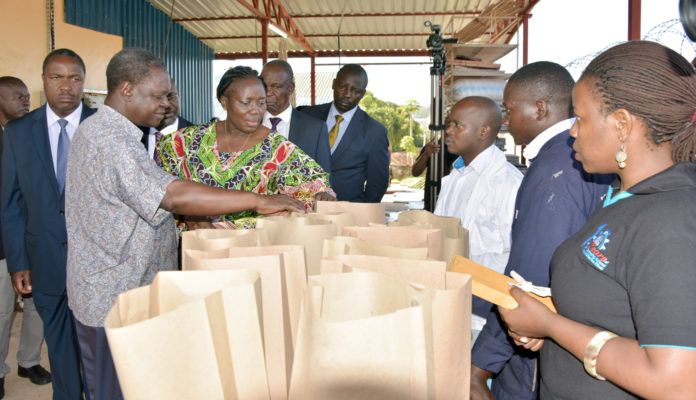
Speaker Rebecca Kadaga being shown some of the products made at UIRI

The Speaker of Parliament, Rebecca Kadaga, has launched a paper pilot processing plant at the Uganda Industrial Research Institute (UIRI) in Kampala.

Speaking at the launch recently, Kadaga lauded the Institute for the innovations it has initiated over time.
“My last visit here was five years ago and I must say I’m impressed. Parliament will celebrate this by inviting you to come and talk about your work,” she said, adding that Uganda has various organic raw materials that can be used to process paper.

“When I looked at the banana stems, I imagined how much money we can get from making paper from all the stems in the country,” Kadaga said.

She noted that because of the need to spur innovations in the country, Parliament made a resolution to create the Ministry of Science, Technology and Innovation.
“When I was in China, I noticed that every industry I visited had a research department. We need to inject more money and time in research in order to transform from a market-based to a producer-based nation,” she said.

The Speaker promised to arrange an exhibition at Parliament to showcase to the general population what the researchers at UIRI are doing.
“Let us support these products; let us market more of our products because they are good,” Kadaga said.
The Minister for Science, Technology and Innovation, Dr Elioda Tumwesigye, commended Parliament for ensuring that a sectoral committee responsible for science and technology was created to support local industrial innovations.
He also said government was committed to injecting more money into UIRI, saying that UIRI will soon be provided with Shs10 billion for more work.
“The President has asked us to work on existing innovations and convert them into commercial successes. The private sector can take on some of these technology innovations and build on them,” Tumwesigye said.
He said that government is impressed with how UIRI is contributing to the production of products from the banana value chain.
The UIRI Executive Director, Prof. Charles Kwesiga, said they have piloted a number of projects including the paper-making one.

“We have projects in confectionary, machinery, agriculture, among others,” he added.
The processing plant uses waste paper and banana fibres from stems to make paper and various paper products using a handmade paper-processing machine.


Stories Continues after ad

Makerere agricultural Phd programme picks new candidates

Sylvia Mkandawire, the programme manager for training and quality assurance at RUFORUM

Nine additional Doctorate candidates from six African countries have been selected to participate in the three-year in-region and in-country scholarship programme aimed at strengthening the capacity for agricultural teaching and research in African universities.

The programme, run by the Makerere University-based Regional Universities Forum for Capacity Building in Agriculture ( RUFORUM), in partnership with the German Academic Exchange Services, (DAAD), kicks off this September. This year’s awardees represent the sixth group of beneficiaries and will bring the total number of doctoral trainees to 29. They are drawn from Uganda, Kenya, Tanzania, Ethiopia, Zimbabwe and Rwanda.

Focusing on four disciplines – food science and human nutrition, agricultural and rural innovation, life sciences, and plant breeding and biotechnology, the programme aims at improving the capacity of universities to train skilled problem-solvers and generate relevant outputs, according to Sylvia Mkandawire, the programme manager for training and quality assurance at RUFORUM.

Many studies, Ms. Mkandawire said, have identified gaps and limited capacities in these disciplines to effectively managing research, training and outreach programmes in Africa.

It is expected to build a critical mass of agricultural scientists to support the generation of knowledge and innovations for development in Africa,” she said.

Mkandawire said the programme emphasises in-region mobility of students, enabling them to take courses not available at their home institutions, while at the same time providing for some in-country scholarships, in order to maintain a balance.

The programme is being implemented within the RUFORUM member universities. In 2013, member universities signed a memorandum of understanding with RUFORUM to jointly escalate postgraduate training in Africa. In terms of this memorandum, member universities agreed to waive education-related costs to allow training of staff at another member university in a cost-shared manner. This arrangement significantly reduces the cost of training within Africa.

Students recruited through in-region and in-country programmes are expected to complete the PhD programme within three years. Upon completion of the coursework and approval of their research proposal, they are allowed to conduct research either in their home countries or host university institutions.

Attempts are made to link the students’ research to the specific research needs of their country of origin. The arrangement gives the students opportunities to conduct research that addresses the needs of their home countries and to integrate the research recommendation effectively for the betterment of the communities they serve.

In addition to academic supervisors at host institutions, the students are also mentored by experts from the home country so as to keep them up to date with current trends in research back home and to ensure that the research remains relevant to the home institution. According to Mkandawire, this increases the chances of students settling down in their home institution upon completion to work on an issue of national importance.


Stories Continues after ad

Committee orders arrest of Amudat finance officer

Local Govt Accounts Committee field visit.

The Amudat District Chief Finance Officer, Mr. John Luchugi Bosco, has been arrested on the orders of the Local Government Accounts Committee of Parliament for allegedly mismanaging and illegally spending billions of monies meant for works in the district.

Luchugi, who appeared before the Committee sitting in Mbarara District headquarters on September 21, 2017, was accused of taking over the entire powers of all the portfolios of the district and illegally spending the money.

He was faulted for signing, paying and sanctioning of the said money.

“This officer has taken over everything in the district. He is the Engineer, Procurement Officer and the Chairperson, and everybody here can see how he takes over answering all the queries even when his team, headed by the Chief Administrative Officer, is seated here”. Reagan Okumu said.

Okumu highlighted that most the queries were criminal in nature and for that that matter, he ordered the finance officer to make a statement on the state of affairs about the management of funds in Amudat district.

“I am asking CIID to interact with him for further investigation so that the information they will get will help the committee to have a clear image about issues of Amudat, and also give recommendations,” Okumu said.

Daniel Muheirwe expressed dissatisfaction with Mr. Luchugi and asked the Amudat Chief Administrative Officer to crack the whip and take charge of her officers.

“Amudat gets more funds and grants compared to other districts but when we asked him, as the finance officer, how much he collects in local revenue, he arrogantly said, ‘zero’. This clearly showed us that the level of abuse of funds in Amudat was extreme,” he said.

Angel Mark Dulu informed the officials that the committee had many queries with local government officials from Amudat district including the fact that they even failed to attend over three committee sittings when they were summoned to Soroti last year.

“If we take real scrutiny of all these queries, Amudat would not pass the test and we would have referred the whole team to police”. Joseph Ssekabiito said.

Mr. Edward Ssembatya expressed gratitude over the decision taken by the committee to arrest Mr. Luchugi saying that serious sanction must be taken against corrupt civil servants and that it is the only way to help government fight corruption.

“We have been penalizing people for stealing Shs2 million but this finance officer has mismanaged millions and millions of funds. This must end, and this must end today,” he said.

The committee plans to conduct a special visit to Amudat to assess the impact of abuse of funds, fraud and mismanagement of the district monies by local government officers.

The Committee has completed its meetings with all district accounting officers and is going to finalise its work after meeting the Minister and Permanent Secretary of Local Government, National Medical Stores and President Museveni. The committee will then write a report, which will be tabled on the Floor of Parliament.


Stories Continues after ad

Gov’t inflexibility hurting opposition

MPs on study at the National Institute for Legislative Studies in Abuja, Nigeria.

The Opposition has failed to form a formidable force to hold government accountable due to inflexibility by government.

In a communique issued at the end of a five day benchmarking workshop held in Abuja, Nigeria, Opposition MPs observed that it remained difficult to actively ensure consensus in terms of policies and issues raised by the Opposition in the House.

The MPs who attended the benchmarking workshop included the Leader of the Opposition, Winfred Kiiza (FDC, Kasese district); the Chairperson, Public Accounts Committee,. Angelline Osegge (FDC, Soroti district); Silas Aogon (Ind., Kumi Munic); Santa Alum (UPC, Oyam district); Fred Tumuheirwe (FDC, Rujumbura); the Shadow Minister for Internal Affairs, . Muhammad Muwanga Kivumbi (DP, Butambala) and. Mathias Mpuuga (Masaka Munic.).

The MPs were concerned of the difficulties in meeting the expectations of the constituents’ vis-à-vis effectiveness in Parliament.

“There is need for strategic consensus building and enhanced relationship between the Opposition parties in and out of Parliament in order to form a common front,” reads part of the communiqué.

It added, “There is need to strengthen communication between Opposition MPs and their leadership for the purpose of strategic planning.”

The workshop was held at the National Institute for Legislative Studies (NILS) in Abuja, Nigeria from September 18 – 22, 2017. The purpose of the workshop was to strengthen the capacities of the Opposition in Parliament in undertaking oversight of government programmes/projects and offer a better alternative to the citizens.

MPs resolved to advocate and sponsor Bills and policies to provide alternatives and ensure dividends of democracy to the people of Uganda. They also resolved to improve the relationship between the Opposition parties, the civil society organisations and the media;

It was also agreed that there was need to prioritize and streamline the message packaging to sell to Ugandans, in line with their peculiarities and yearnings; and to ensure regular and continuous capacity building programmes for Opposition MPs in order to strengthen capacities and sustain effectiveness.

Participants also said that there was need to develop alternative strategies to tackle the myriad of problems in Uganda; and to continuously build the capacity and effectiveness of the Public Accounts Committee, which has the statutory mandate to provide oversight and ensure accountability by government.

Presenting a paper on ‘Managing Effective Communication by the Opposition,’ Dr. Ahmed Rufai Alkali urged the members to be sure and discuss party matters with only those persons they trust to avoid giving out their methods or tactics to their competitors. He advised the legislators not to allow their competitors to know or even predict their actions or programmes.


Stories Continues after ad

Kadaga commissions paper processing plant

Speaker Kadaga is taken on tour of some of the products made at the plant.

The Speaker of Parliament, Rebecca Kadaga, has launched a paper pilot processing plant at the Uganda Industrial Research Institute (UIRI).

While speaking at the launch on Friday, September 22 2017, the Speaker said that she was impressed with the work and innovations the Institute had come up with over time.

“My last visit here was five years ago and I must say I’m impressed. Parliament will celebrate this by inviting you to come and talk about your work,” she said, adding that “When I looked at the banana stems, I imagined how much money we can get from making paper from all the stems in the country. It is remarkable to see the use of various organic raw materials to process paper which we as a country have in plenty.”

Kadaga said it is because of the need to spur innovations in the country that parliament made a resolution to have the Ministry of Science, Technology and Innovation.

“When I was in China, I noticed that every industry I visited had a research department. We need to inject more money and time in research in order to transform from a market-based to a producer-based nation,” she noted.

The Speaker promised to arrange an exhibition at parliament to showcase to the general population what the researchers at UIRI are doing.

“Let us support these products, let us market more of our products because they are good,” Kadaga said.

The Minister for Science, Technology and Innovation, Dr. Elioda Tumwesigye, was grateful to parliament for ensuring that a sectorial committee responsible for science and technology was created because it will enable such important institutions.

“We appreciate staff of UIRI for all the work done under meagre resources. There is a lot of technology transfer and research and development. We thank them for their achievements,” Tumwesigye said.

He also noted that government is committed to injecting more money into UIRI, adding that “We got Shs30billion of which Shs10 billion will come to the Institute.”

“The President has asked us to work on existing innovations and convert them into commercial successes. The private sector can take on some of these technology innovations and build on them,” Tumwesigye said.

He said that government is impressed with how UIRI is contributing to the production of products from the banana value chain.

Prof. Charles Kwesiga, the Executive Director, Uganda Industrial Research Institute, said “The Institute has piloted a number of projects and this is just one of them. We have projects in confectionary, machinery, agriculture, among others.”

He expressed his gratitude towards the government for the support it has rendered to UIRI’s projects and work.

The processing plant, which is a pilot project, uses waste paper and banana fibres from banana stems to make paper and various paper products using a handmade paper-processing machine.


Stories Continues after ad

Fort Portal MP opposes age limit removal

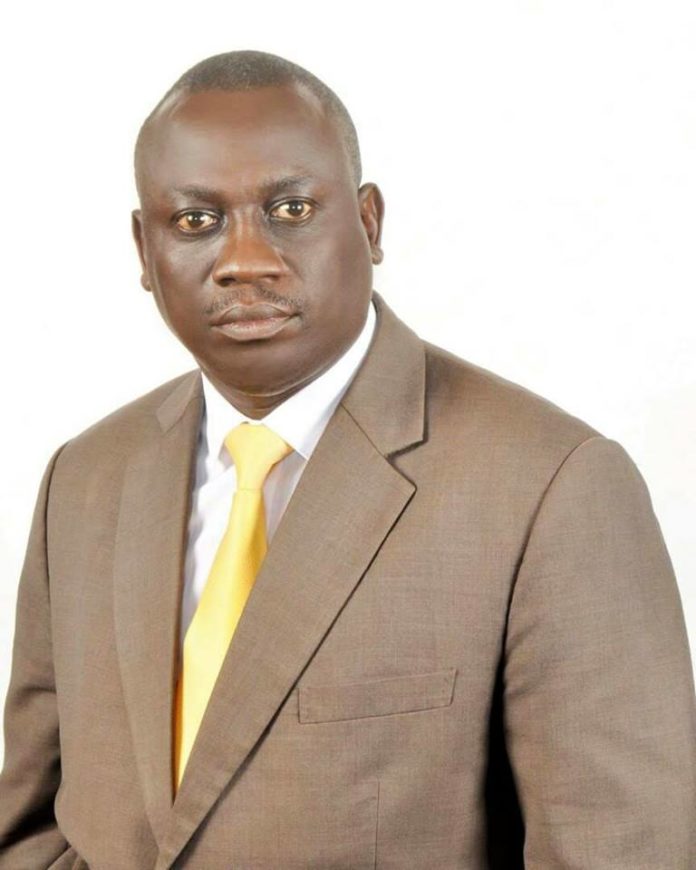
Fort Portal Municipality MP Alex Ruhunda

“The people of Fort Portal made it clear to me not to tamper with the Constitution by amending Article 102 (b). I will respect the people’s will,” the municipality legislator Alex Ruhunda, has said.

Ruhunda, a National Resistance Movement (NRM) MP was weighing in on the ongoing raging debate over whether to remove or maintain the 75-year age cap for the presidency, and becomes one of the first in the ruling party to openly state his position on the now thorny issue.

According to Ruhunda, the acrimonious arguments threaten to derail the gains registered by the NRM government, including among others the projected middle income status by 2020.

“I pray that we stop the overzealous of making a fundamental mistake that will create a huge political and security problem for our Country yet we were set to move out of poverty!” MP Ruhunda wrote, and appealed to President Yoweri Museveni to resist temptations by protagonists of the impending bill aimed at amending Article 102 (b).

“I have been reflecting on the future of my beloved Country Uganda the pearl of Africa especially after an emotionally heated atmosphere in Parliament on Thursday! I hope God will touch the heart of President Yoweri Museveni to avoid the temptation of listening to short term opportunistic individuals that are pushing for the removal of Age limit in our Constitution. This is the chance for NRM to plan for succession if the legacy of our beloved President Museveni is to remain like that of Mwalimu Nyerere. These were my words in the NRM caucus,” he added.


Stories Continues after ad

My Kitgum journey, 20 years later

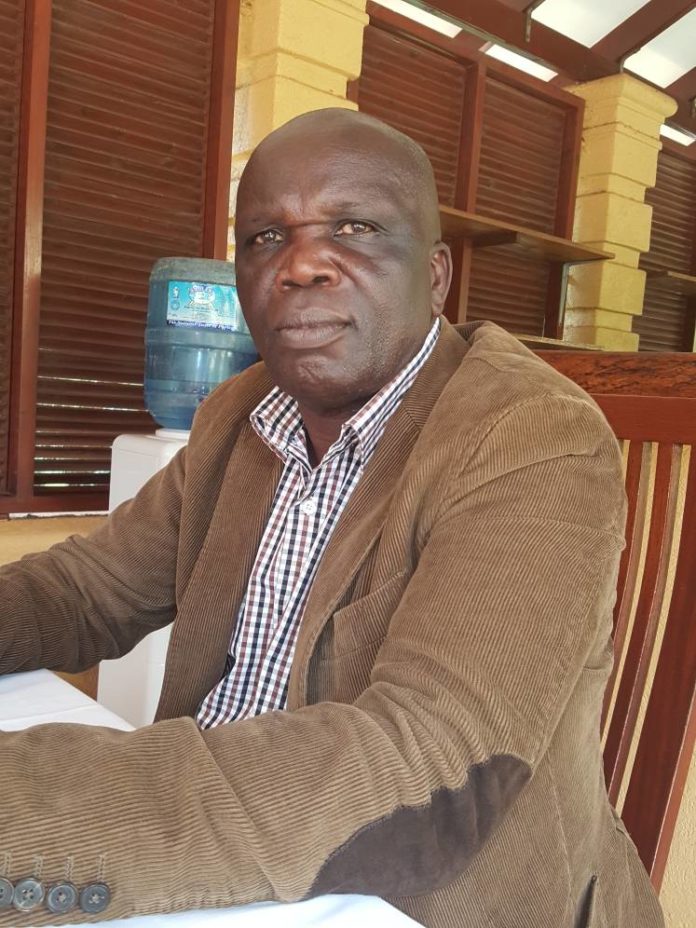
Mr Emmy Allio

By Emmy Allio

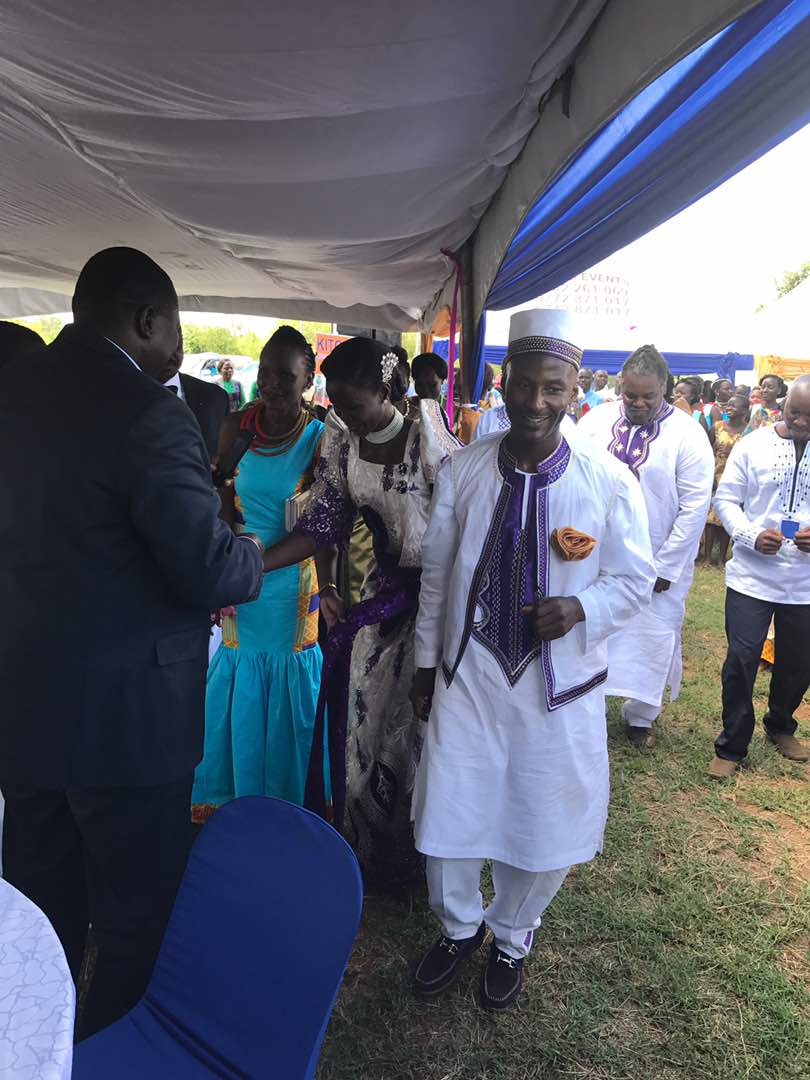
On September 16, 2017 I travelled from Kampala to Kitgum to join a richly mixed assembly of friends and relatives of Brig. Fred Tolit whose daughter Priscilla was marrying an African American called Gregory. That traditional marriage spoke volumes about the rich Acholi culture their energetic dancing strokes 🍇their delicious meals and their hospitality.

Alas, there was also this bravado that Tolit is from Acholi warrior clan! Instead of this warrior talk intimidating him, the bridegroom matched the occasion by dressing like another warrior!

This was my first time in Kitgum in 20 years. The Kitgum I left 20 years ago is now buried in painful and bitter memories. But the scars are all over

Until 1999, I had spent many years in the north as a journalist. Working in the north prepared my destiny because I learnt to see and feel pain.

I had always cherished the idea of preserving my memory of the north of two decades ago in anticipation to write a book. Also my notebooks of the time are preserved for the same reason. It has been my desire to sit and write the story of the Acholi people and how they endured pains of savagery brutal pseudo war between Sudan and Uganda. My hope has been to give the minute details of the killings, the plunder and tribulations of Acholi families destroyed by their own children abducted and forced to kill by a brutal psychopath called Joseph Kony whose Lord’s Resistance Army (LRA) was a tool by Khartoum to keep the Ugandan army too busy to help the Sudan People’s Liberation Army.

In later years, I have developed the mind that the narrative should touch on the role of Uganda in liberating the South Sudanese from the york of Arab Rule. And, maybe also explain the current predicament of how the Salva Kiir government has mismanaged the liberated Republic of South Sudan. Today, almost four million South Sudanese population have fled to exile escaping the plunder and savagery of their own army (SPLA). Another one million are displaced within the country where the presence of a government is only in the capital Juba.

The question I want to pose is: did Uganda send its soldiers to die for a vain cause! Indeed, the Juba regime has made the Arab north better devils!

Back to my journey to Kitgum town…..the rusty, dusty small town of Kitgum appears to be waking up from a long sleep. The travel from Karuma to Gulu and Kitgum on the beautiful tarmac road is a dream for a person who left the north 20 years ago. I remembered the late Justine Moro, the New Vision correspondent who braved the volatile situation to inform the world about Kitgum. The road from Karuma snaked through villages, swamps and trading centers once associated with stories of abductions, grass thatched houses being torched, killings and hunger.

I remembered my stories of those days that praised the National Resistance Army (NRA), now the UPDF, which used to fight an elusive enemy whose main target was not military targets but the civilians.

My host in Kitgum, Brig Fred Tolit paid dearly for supporting the National Resistance Army. Tolit’s father Yovan Ociti, his uncle and two nephews died a brutal death. They story being told is that Ociti and the three were tired with ropes to a cows that were beaten as they dragged the four along village paths until their flesh was “eaten” off by stones and soul. Their cries did not save them and they bled to death. Many Acholi had their ears, lips and legs cut off as LRA tried to teach the Acholi to turn away from the NRM/A.

But there is a lesson to learn from that bad experience. Where there is hope and faith, everything negative can change for the better.

The Acholi region has the tools and the capital to grow and become the richest region in the country. The region is blessed with huge tracts of fertile virgin land trans-crossed by many rivers. The region has a rich crop of educated people, many living in foreign capitals. Government has invested heavily in tarmacking of the roads, building schools and health facilities. With abundant peace and security in Acholi land, what remains is a new breed of sound development-minded leadership. A leadership that must drill and grill success stories and turn the expanse idle lands into huge commercial mechanized agriculture that will attract processing industries to the region. This is the best way the Acholi can redeem themselves out of the current poverty. The educated should lead by example and desist from the old ways of feeding the population on politics of rejection or opposing the government for the sake of opposing. Time and tide wait for no man!

In my view, with the right political leadership, hopefully Operation Wealth Creation (OWC) can be a partner in developing the Acholi region.

 Emmy Allio, a longtime New Vision war correspondent but now Director Investments, Operation Wealth Creation, Office of the President.

Stories Continues after ad

Uganda performs poorly in Africa Investment Index

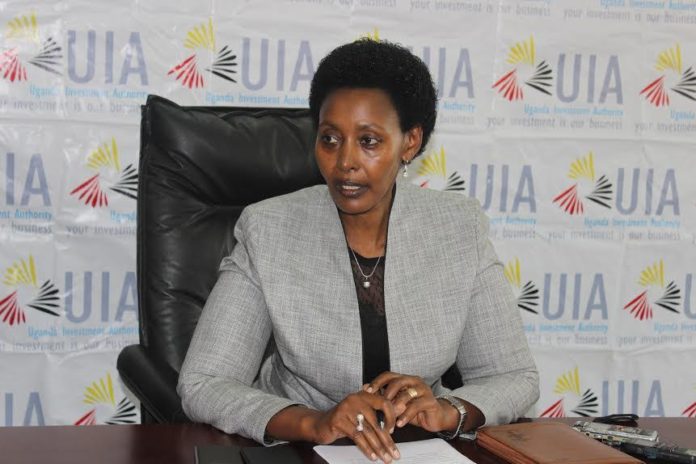
UIA ED, Jolly Kaguhangire .

Despite efforts by government to position Uganda as the best destination for direct foreign investment in Africa, the country could only come in 12th position during the year 2016, a survey by an Africa-based economic research institute says.

The report shows Botswana, Morocco and Egypt as Africa’s best nations for foreign direct investment (FDI). Botswana, its economy driven by its diamond mines, tops the list because of its stable democracy, improved credit rating, current account ratio, import reserves and ranking in the World Bank’s ease-of-doing-business index, according to the Africa Investment Index 2016.

The Index was created by the Quantum Global Research Lab, the independent research arm of investment firm Quantum Global Group. The Quantum Global Research Lab focuses exclusively on the African investment environment. The Index covers all 54 African nations.

The Index is designed to help guide investors in Africa about which countries and markets are most attractive for investment in the short- to medium-term. The Index is based on six factors: growth, liquidity, risk, business environment, demographics and social capital. Uganda performed badly as it had an average score of 19.462 for all the indicators.

Rounding out the top 10 behind Botswana, Morocco and Egypt as the best African destinations for FDI are South Africa, Zambia, Cote d’Ivoire, Algeria, Tanzania, Namibia and Burkina Faso.

“Many of the African nations are demonstrating an increased willingness to achieve sustainable growth by diversifying their economies and introducing favorable policies to attract inward investments,” said Professor Mthuli Ncube, Head of Quantum Global Research.

The top five nations in the Index attracted an overall FDI of US$13.6 billion in 2016.

“A new generation of African leaders is acknowledging the necessary link between democratic reforms and foreign investment that will spur much-needed economic development. As such, Africa is enjoying more free and fair elections and peaceful transfers of power than in the past, when ethnic and tribal violence regularly marred elections,” notes the report.

Two North African nations – Morocco and Egypt – followed Botswana in the Index, a sign of their resiliency and potential as they bounce back from political and economic turmoil.

Morocco was ranked second on the Index based on its solid economic growth, strategic geographic positioning, increased foreign direct investment, import reserve ratio and an overall favorable business environment. Foreign investment in Morocco rose 24 percent in May of this year compared to May 2016.

Egypt was ranked third due to an increased foreign direct investment and real interest rates, and a growing urban population. Foreign appetite for Egyptian debt has skyrocketed by nearly nine times this year compared to the previous fiscal year.

South Africa was ranked fourth on the growth factor of GDP, ease of doing business in the country and its significant population. South Africa remains the continent’s biggest recipient of foreign investment.

Zambia was ranked fifth due to its significant domestic investment and access to money supply. Foreign investment in Zambia in the first quarter of this year was up US$505 million compared to a rise of $218 million in the first quarter of 2016.

Some African nations showed substantial improvement compared to previous surveys. Burkina Faso, Rwanda, Swaziland and Tanzania are the current survey’s biggest climbers. Burkina Faso, which cracked the Top 10 for the first time this year, increased its position 13 spots compared to its average ranking over the past three years.

The Index also ranked the 10 worst African destinations for FDI. From worst to best, they are Somalia, Eritrea, the Central African Republic, South Sudan, Sierra Leone, Liberia, Malawi, Equatorial Guinea, Gambia and Madagascar.

“With a population of over USA$1 billion people and a rapidly growing middle class, Africa clearly offers significant opportunities to invest in the continent’s non-commodities sectors such as financial services, construction and manufacturing amongst others,” Mthuli , adding that structural reforms and greater private sector involvement are crucial to unlocking Africa’s true potential.”

Click here to read full report

Africa Investment_Index


Stories Continues after ad

UN report says Uganda needs external support for food

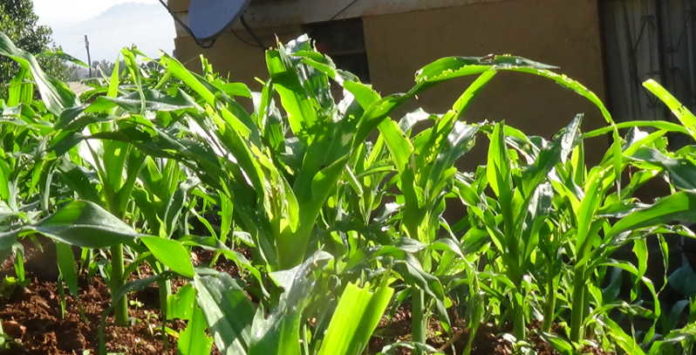
A maize garden infested by army worms. Uganda food security security has reduced due to such calamities.

Uganda is among 28 African countries that require external assistance for food, according to the latest quarterly Crop Prospects and Food Situation report released by the United Nations Food and Agricultural organization (FAO).

The report attributes Uganda’s situation to the current refugee influx as well the bad climatic conditions that hit the country in the recent past, worsened by the invasion of the Fall Armyworm on the farms. FAO is calling for a combined African response to fight the worm.

According to the report other countries that need the assistance  include, Burkina Faso, Burundi, Cameroon, Central African Republic, Chad, Congo, Democratic Republic of the Congo, Djibouti, Eritrea, Ethiopia, Guinea,  and Kenya. Others are; Lesotho, Liberia, Libya, Madagascar, Malawi, Mali, Mauritania, Mozambique,  Niger, Nigeria, Sierra Leone, Somalia, South Sudan, Sudan, Swaziland and Zimbabwe.

The report says conflict continues to intensely impact agriculture and food security in Central African Republic, Democratic Republic of the Congo, northern Nigeria, Somalia and South Sudan often have further effects – due to displaced persons and increased civil insecurity – elsewhere. Weather shocks in 2017, including droughts, have also compounded the impacts in some countries like Somalia and southern Ethiopia.

Elsewhere it says:  “While this is due to major gains in Argentina and Brazil, also of note is the expected rise in aggregate output in Africa by more than 10 percent this year, led by increasing maize harvests in Southern Africa, where farmers were hit hard last year by the El Nino weather phenomenon, and wheat output in North African countries,” the report says.

Aggregate cereal production in Low-Income Food-Deficit Countries (LIFDCs) is also expected to rise by 2.2 per cent this year, curbing import needs, according to FAO’s new estimates.

The report says global cereal production is forecast to reach a record level in 2017, pegged at 2 611 million tonnes.


Stories Continues after ad