Stanbic Bank
Stanbic Bank
20.8 C
Kampala
Stanbic Bank
Stanbic Bank
Home Blog Page 1775

Farming and rural non-farm activities can provide solutions to rising youth unemployment in Africa

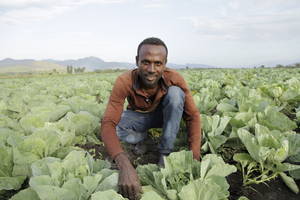
African youth in his cabbage garden.

Farming and rural non-farm-based activities still have untapped potential to generate employment opportunities for Africa’s rising youth population, FAO stressed today at a high level forum Harnessing Skills for Rural Transformation and achieving the Sustainable Development Goals”, held at the margins of the United Nations General Assembly.

Africa has the youngest population and the fastest growing population in the world, predicted to double by 2050. This has a major impact on the employment market.

Although ten to 12 million young people join the labor force in Africa each year, only around three million jobs are created annually.

In this context, the agricultural sector as well as rural non-farm activities in tourism, agro-industries, food storage and transportation have high potential to create more and better jobs, and build stronger rural communities.

“Investing in rural transformation and reaching a world free of hunger and malnutrition go hand in hand. Promoting better education, skills development and decent employment is vital for this transformation in Africa,” said FAO Director-General José Graziano da Silva, who is part of a group of world leaders at the high level forum, sharing experiences and best practice in creating and expanding employment and economic opportunities for Africa’s youth.

FAO carries out 32 youth employment projects in 20 African countries. It supports countries and the Regional Economic Communities (RECs) to enhance their youth policies, strategies and plans, and social protection measures.

It trains vulnerable rural youth not only in agricultural techniques but also provides them with business and life skills so that they can become more productive and active members of their communities.

“But more coordinated and systematic efforts are still needed to increase impact and expand regional and country-level action in Africa,” said Graziano da Silva.

“Adopting a territorial approach that focuses on strengthening the physical, economic, social and political links between small urban centers and their surrounding rural areas is equally vital. Let’s not forget that the small and medium-sized cities are the places where farmers buy seeds, send their children to school, and turn to medical care,” added Graziano da Silva.

Youth, in turn, can play a significant role in advancing their countries’ progress towards reaching the Sustainable Development Goals, and can act as innovators and networkers between rural and urban areas.

FAO recently launched a Special Programme to promote youth employment through enabling agriculture and agri-business jobs in Africa. The programme is another example of FAO’s long-lasting collaboration with the New Partnership for Africa’s Development (NEPAD) – an economic development program of the African Union – and of FAO’s efforts to strengthen partnerships.

 

Stories Continues after ad

MTN digital innovation awards back for grabs

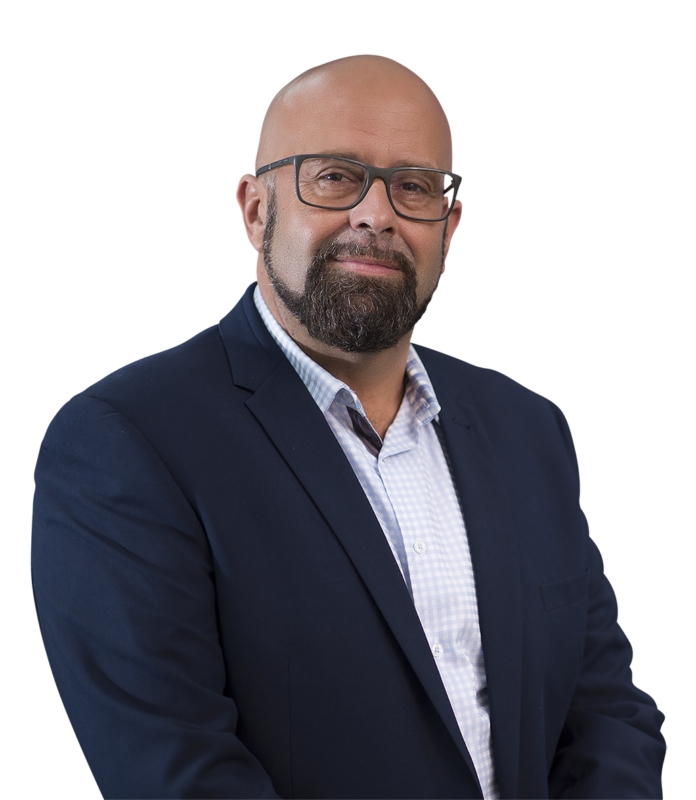
Olivier Prentout – Chief Marketing Officer - MTN Uganda.

MTN Uganda 2017 awards that recognize Ugandans who excel in digital innovation in the country are back on a high with each award winner assured to take home of US$3,000, says Olivier Prentout, the company’s Chief Marketing Officer.

During the awards, MTN will recognize both mobile and web-based applications developed by Ugandans. There are at least seven (7) categories to pick from. And among others they include; innovations in finance, agriculture and health. MTN Uganda’s commitment is to scale up sectors critical to the improvement of lives and communities through digital innovations, Prentout says.

Olivier Prentout says that recognizing and promoting local innovations is critical to the company’s vision to lead the “delivery of a bold, new digital world for MTN customers and the communities where we operate.”

“Technology is becoming an enabler in almost every sector of Uganda’s economy. In health, technology is leading to solutions on prevention. In education, people are coming up with ideas to ease the learning process. In financial services, technology is improving financial inclusion,” he says.

This is the second edition of the MTN Innovation Awards. The first awards were held in 2015, with eight projects being awarded for their outstanding contribution to society.

“The contribution to society is measured by impact especially in the long-term. Additionally, we are looking at positioning Uganda as having the innovation space and skilled individuals that can compete on the global stage,” Prentout adds.

The categories to apply for include: Best Health application, Best Education application, Best Financial Services application, Best SME application, Best Agriculture application, and Best Media and Entertainment application. The entries have to be made online.

The entry submissions will close on 6th October 2017. The awards place emphasis on applications that have been in operation since 2014. MTN will also recognize the outstanding woman in innovation, innovation achiever of the year and most innovative mobile app. The winners will be recognized at an Awards Gala to be held on November 8, 2017.

MTN Uganda has also increased the prize money from US$1,000 given to each category winner in 2015 to US$3,000.

In 2015, the winners included, ClinicMaster, BrainShare, Yo! Payments Gateway, Intelligent Works, Outbox, Fezah, Lyndsay Handler of ReadyPay – Outstanding Woman in Innovation and Solomon King of FundiBots – Innovation achiever of the year.

Facts about the awards:

  1. 1Best Health Application– This award seeks to recognise applications that aim to extend reach, accessibility and efficiency in delivering health services.
  2. Best Education Application– The award seeks to recognize applications that are transforming the Experience and Reach of education to ordinary Ugandans.
  3. Best Financial Services Application– This award seeks to recognize applications that are enabling any financial inclusion.
  4. Best SME Application– This award seeks to recognize applications that aim to address productivity improvement in the SME sector.

5. Best Agriculture Application – The award seek

Stories Continues after ad

Uganda pioneers new conservation investment

Giraffes in Kidepo Valley National Park.

President Museveni will on October 6, 2017 host the first Giants Club Conservation and Tourism Investment Forum in Kampala to showcase a series of opportunities for new conservation-compatible enterprises in both established and under-developed wilderness areas, a press release from Giants Club Uganda says. The one-day high level forum will take place at the Lake Victoria Serena Golf Resort and Spa.

During the forum, global businesses with focus on responsible tourism and conservation will be offered a unique chance to invest in Uganda’s unparalleled natural landscapes while bringing greater benefits to its citizens.

New tourism concessions are available in well-known locations like Queen Elizabeth and
Murchison Falls National Parks, as well as lesser-visited ones like Kibaale, with its
chimpanzees, or Kidepo Valley, on Uganda’s northern border.
All conservation-compatible business proposals will be considered, but it is expected the
majority will be new high-end or eco-tourism lodges whose developers pass strict Ugandan
government guidelines overseen by conservation specialists.

Central to those stipulations are that successful bidders will sustainably protect the natural
areas where they invest, and bring significant economic benefits to their local communities,
and to Uganda as a whole.

Other protected areas, including Kyambura Wildlife Reserve and Budongo Forest
Reserve, that need infrastructure or development to realise their enormous potential will be
offered as co-management opportunities, where Public Private Partnerships will attract
new international finance.
Many concession areas will not have been available for new investors for more than 30
years. What is also new is a conservation investment delivery unit supported by the Office
of the President and housed at the Uganda Investment Authority, where interested
businesses will find streamlined and centralised bureaucracy to speed their applications.

At the same time, significant incentives will be outlined at the Forum to illustrate the
Government’s commitment to welcoming the most responsible partners to take advantage
of this rare opportunity.

Uganda is one of Africa’s last great undiscovered destinations for today’s modern traveller
looking for a more adventurous tourism experience than that traditionally offered in the
regional market.

The country lies at the intersection of East Africa’s savannahs and Central Africa’s
rainforests. It hosts the Big Five, but also the world’s greatest variety and density of wild
primates and some of the most varied bird life. The River Nile flows from its Lake Victoria
shores, and Equatorial glaciers top its western mountains.

The Ugandan Government faces severe difficulties adequately funding the maintenance of
its protected natural areas among competing social and economic priorities.

In that climate, it is imperative that businesses that come to these pristine landscapes
should be chosen not because they bring the most immediate short-term financial gain at
potentially great ecological cost, but because they can prove they will maintain their
investment sustainably and responsibly over the long term.

Among those expected to attend are tourism operators, commercial and impact investors,
philanthropic and conservation organisations, development finance institutions, high net
worth individuals, and sector specialists and journalists.

President Museveni called for ideas of how to increase public-private partnerships to fund
Uganda’s conservation when he attended the Giants Club Summit in Kenya in 2016. The
Forum is the answer to that request.

The Giants Club, of which President Museveni is one of four founding Presidents, gathers
African heads of state, global financiers, scientists, and influential individuals, to help
achieve its mission to protect half of Africa’s elephants by 2020.

The forum is sponsored by the government of Uganda alongside African Wildlife Foundation, Space for Giants, UNDP.


Stories Continues after ad

MP Mbwatekamwa wants academic qualification scrapped for elective office

Mbwatekamwa Gaffa

Mbwatekamwa Gaffa, the Kasambya County Member of Parliament has filed a notice for a motion seeking leave of Parliament to table a bill that will require scrapping off of academic qualification requirement for elective office.

In the motion seen by EagleOnline that was received by speaker of Parliament Rebecca Kadaga yesterday received the notice.

In his argument, Mbwatekamwa argued that the education requirement is discriminatory and it was time the legislators got a cure for the requirement.

Mbwatekamwa who came out opposing the move by Raphael Magyzi to table a motion seeking leave of Parliament to table a bill to lift the Presidential Age limit said the move is in retaliation to the NRM move.

As per the current constitution, Uganda’s top elective positions, like President, Member of Parliament, District Leaders all have restrictions for contestants to have at least a minimum of minimum education of A’ Level or an equivalent.

However, even with this level, a number of Politicians have faced court battles due to questionable academic papers, with some having to go through the humiliation of battling to answer Primary three questions.

Once passed, noting will stop an illiterate Ugandan from contesting as Presidency. However, Gaffa’s Bill will have to cater for how those not fluent or conversant with English language will debate or transact Government business in English-which is the national language.


Stories Continues after ad

New Museveni succession bill in offing

Sam Lyomoki1

National Resistance Movement Rebel MPs have revealed plans of tabling a bill outlining on President Yoweri Museveni’s succession.

Sam Lyomoki, Workers MP made the revelation today at Parliament during a media briefing saying the new law is aimed at assuring Museveni of a peaceful retirement.

Named ‘The Museveni Succession, Transition and Immunities Bill 2017’, the new law if passed will give Museveni immunity from prosecution upon leaving office.

Lyomoki said that the retirement package will only stand if he leaves office peacefully.

Detailing the stage his Bill has reached, Lyomoki told journalists that he had already filed a notice with Speaker’s office to file a motion seeking leave of Parliament to table a private member’s Bill.

He explained; “I put a motion for what is called the Museveni Succession and Immunity’s Bill 2017. Because you see, our President is fearing and also other people. The Bill will cater for his retirement so that no one pursues him. But that’s if he goes peacefully.”

Although Lyomoki’s bill is likely to receive support from both the NRM and Opposition Members, it will need a constitutional amendment because the 1995 Constitution only gives the sitting President immunity from prosecution.


Stories Continues after ad

MP Anite wants breathalyzers in Parliament

Evelyn Anite

State Minister for Privitisation and Investment, Evelyn Anite has called on Parliament administration to procure breathalyzers to curb on the number of MPs who debate under the influence of alcohol.

Anite made the request this yesterday while responding to remarks by Aruu County MP, Odonga Otto who asked Deputy Speaker, Jacob Oulanyah to refer to the Minister to the Disciplinary Committee.

In his address, Odonga had accused Anite of leaking the list of NRM MPs supporting the removal of Presidential Age Limit, which saw rowdy voters beat up a woman down town Kampala, after they mistook her for Rakai Woman MP, Juliet Kinyamatama.

“I was going to ask the Speaker that we should get an alcohol mouth tester to taste the quantity of booze on their mouths,” the Minister said.

She also added; “Debating when you are drunk isn’t allowed. Drunk driving isn’t allowed. Drunk debating driving isn’t sober way of debating in the August House we will test their mouths.”

In her re-battle, Anite said that it wasn’t her but the disgraced Odonga that needed to be thrown out of the August House.

Anite also noted; “He doesn’t deserve the title to be called Honourable. A man that moves out a gun that is meant to protect himself and points it out to shoot at the civilian who is defenseless. No one raised the issue in this House.”

She dared Odonga to go ahead with the move threatening to awaken his earlier sins and have him thrown out of Parliament saying; “Now he has actually reminded us that we must dismiss him out of the House with disgrace for pulling a gun against a civilian.”

The Koboko Municipality MP also wondered under which capacity Odonga would move to censure her firing back that the people who sent her to the August House don’t come from Aruu but rather Koboko.

“They sent me here to represent them for five years. It will not be Odonga to casually say that Anite must be dismissed,” Anite remarked.


Stories Continues after ad

Zuena finally goes public on her wedding with Bebe Cool

Zuena Kirema has thanked her husband Bebe Cool real name Moses Ssali for guiding in to the right path for the past 14 years.

This has been contained in her message, celebrating their 14 years of marriage.

“Musa and Zuena.12-09-2003 was the day we said i do at Crane Chambers in a civil wedding, we are celebrating 14 years in marriage and we can’t hide our excitement.

We were so young but this Rasta man guided me to the right path and groomed me to the wife and mother i am today,” reads part of the message.

Like any other man, Zuena says that Bebe Cool promised heaven on earth. Nevertheless, she says she is glad that “he has delivered 90 per cent of what he promised”.

She goes further to reveal some of the promises among which included protecting her, taking care of her “and he’s one person I know that can take a bullet for me. Am the kind that will complain on unnecessary spending be it on myself but when it comes to me he’ll do anything to put a smile on my face”.

Stories Continues after ad

Uganda to host continental science and technology conference

Dr Elioda Tumwesigye, the Minister or Science, Technology and Innovation

The Ministry of Science, Technology and Innovation

Uganda will mid next week hold a three-day high level conference on the application of science, technology in harnessing African agricultural transformation.

Participants at the conference will among others, showcase the current and potential impact of application of science, technology and innovation for improved agricultural productivity, value-addition and poverty reduction.

They will also explore the status of Agriculture in Africa capturing the past, current and future trends.

The participants will comprise high-level policy makers, experts, farmers, investor, regulators, communicators, development partners and the media.

Dr Elioda Tumwesigye, the Minister or Science, Technology and Innovation said on September 22 that the conference at Speak Resort Munyonyo will be held under the theme ‘Integrating the path in Africa’s agricultural transformation’. According to the Minister, Uganda will share knowledge and experience in areas of biotechnology during the conference.

“Uganda needs urgent interventions to find ways of mainstreaming utilization of Science, Technology and Innovation (STI) to transform agriculture needs,” Dr. Tumwesigye said.

He said the use of Biotechnology in Sub-Saharan Africa has tremendously grown and that the yields are impressive, with South Africa and Sudan growing biotech crops on a large scale.

“We are proposing that Africa needs urgent intervention in innovation and technology in harnessing agriculture,” he said, adding that some small scale farmers in Uganda are already successfully using biotechnology.

He also said Uganda would use the conference to showcase how to fight some pests and diseases, which have of recent affected Uganda’s agricultural productivity, particularly the army fall worm that hit farms in the first season.

For Africa to benefit from cutting-edge science, technology and innovation to mitigate its challenges, key issues need to be addressed such as low technology access, low public investment in agricultural research and development as well as public perceptions, among others.

Such issues, according to the minister will be addressed during the conference in Kampala supported by other stakeholders such as The African Agricultural Technology Foundation (AATF), African Union Commission (AUC) and the Common Markets for Eastern and Southern Africa (COMESA).

Among the topics to be discussed are; The state of agriculture in Africa ,  Contributions of conventional science, technology and innovations to modern agriculture, Integrating modern biotechnology into Africa’s agriculture for food security, Securing smallholder farmers’ resilience to impacts of climate change, Fostering evidence-based policies for transformational change in Africa’s agriculture and the critical role of PPPs in transforming African agriculture.

Other topics to be discussed will be; strengthening intellectual property rights to catalyze transformational change in Africa’s agriculture, Inspiring a Climate for Change to enhance food security, Regional approaches to biotech adoption and trade in Africa, Winning political patronage/support to advances science in the age of ‘alternative facts’ and Repositioning agriculture in Africa towards agribusiness entrepreneurial ship.

President Yoweri  Museveni , former Tanzanian president-Benjamin Mkapa Ms. Gina Grey Ivey from the Bill and Melinda Gates Foundation, Dr. Hamadou Biteye the managing director Rockefeller foundation, Prof. Kevin Folta the University of Florida, Dr. C.D Mayee president Asian Biotechnology and Cyprian Ebong -Executive director ASARECA are expected to attend the conference.


Stories Continues after ad

Article 102(b) is not broken, don’t fix it

CCEDU Cordinator Crispin Kaheru

By Crispin Kaheru

At a time when Uganda is struggling with unresolved murders, widespread land evictions, natural disasters and unabated corruption, some politicians are busy promoting and sponsoring debate around the amendment of article 102(b) of the 1995 Constitution of Uganda to remove presidential age limit.  How unfortunate!

First, this not only demonstrates how non-empathetic the agents of that debate are but it also speaks volumes about the level of insensitivity that exists in Uganda as a whole.  With the hierarchy of issues that the country is facing, the discussion on age limit would ideally be at the lowest of the ladder.

But be that as it may, we have to contend with it, because it is now here before us.

To amend or not to amend article 102(b) is an issue of the Constitution.  In my understanding, once you move to touch the Constitution, then you have advanced to touching the heart and soul of the nation.  No discussion around the Constitution can be deemed complete without summoning the entire nation to pronounce itself on any alterations being made.  Therefore, any discussions on Constitution amendments must reflect the will of the people – not just the will of their representatives.

If there is going to be anything such as a discussions around the amendment of the Constitution, members of Parliament must in all honesty consult their constituencies and represent the voice of their electorate.  The bottom line is, citizens must stand at the centre of any discussions around the Constitution – if it is truly their constitution.  There must be a genuine consultative processes to determine if that soul of the nation must or must not be tinkered with.

Some of those in positions of influence seem to be preoccupied with fixing things that are not broken and leaving those that are (too) broken unfixed.

But from where we stand, there doesn’t seem to be any compelling reasons why we must amend article 102(b) and not any other articles in the Constitution.  There has been longstanding pursuits from nearly all quotas of society to amend article 105 of the Constitution to reinstate two-five-year term limits on the presidency – these calls have not been heeded; what makes the amendment of article 102(b) a matter of life and death?

Why amend it before it is tested to know whether or not it is defective?  American businessman Thomas Bertram Lance once popularised the expression, “If it ain’t broke, don’t fix it”.  Some of those in positions of influence seem to be preoccupied with fixing things that are not broken and leaving those that are (too) broken unfixed.

A few years ago, the country pronounced itself on the need to amend article 60 of the Constitution to have the Electoral Commission (EC) appointed through a public, transparent and competitive process – rather than it being appointed by the president. Several elections have come and gone and the mode of appointment of the EC has not been changed and here we are, confronted with elections that go challenged every time, leading to endless by-elections; by-elections where lots of money is injected with little or no return on investment.

Why don’t we deal with insecurity that is resulting into multiple murders and death of Ugandans every other day?  Why don’t we deal with the culture of impunity in both public and private spaces? How will amending article 102(b) foster peace and social cohesion in an increasingly divided and intolerant society that we are seeing?

What sort of loss will the country face if the presidential age limit is not tampered with?  Will global stock markets crash or will Uganda cease to exist?  How will the amendment of article 102(b) create more jobs for Ugandans, generate more power, fix the bad roads? Will it take the economy out of the debilitated position in which it currently is? Will it ease the terrible traffic jams in Kampala or reduce the cost of public administration, curb poverty, reduce the rising inequality and sort out the wave of disasters.

Those rooting for the amendment should show Ugandans how the change will create more investment opportunities, result into better quality social services, provide food to the hunger stricken or better still, drive the country to middle income status.

Where we stand now, there doesn’t seem to be any correlation between removing age limit from the Constitution and delivering on what Ugandans want and need most.

Proponents of the amendment could easily pass for self-seekers who are sightless to the plight of Ugandans. This is a sting project and the promoters are individualistic and opportunistic figures who may, for all we know, be exploring their own vested interests and personal gain out of this venture.

It ain’t broke, don’t fix it!

Mr Kaheru is the coordinator of Citizens’ Coalition for Electoral Democracy in Uganda (CCEDU)


Stories Continues after ad

Minister Sarah Opendi abused Islamic dress code

The Public Relations Officer of Uganda Muslim Supreme Council, Haji Nsereko Mutumba

By Haji Nsereko Mutumba

Last week on Thursday 14th, the State Minister of Health Sarah Opendi clad in a Nikab (an Islamic veil) stormed Naguru-China Friendship Hospital and caught two health workers in the act of soliciting for bribes from patients before offering them services,  which should be free.

Much as we laud her for taking action against corrupt medical workers, the Minister’s decision to turn an Islamic dress code into attire for her covert mission has not gone down well with in the Muslim fraternity.

In the Holy Quran Chapter 33 Verse 59, Allah says; “O Prophet, tell your wives and your daughters and the women of the believers to bring down over themselves [part] of their outer garments. That is more suitable that they will be known and not be abused. And ever is Allah Forgiving and Merciful”.

It was therefore wrong for Hon. Opendi, a known Christian to put an Islamic face on such a sensitive issue. Much as we are living is a country where people are free to dress any way they like, there are special attires that are meant for special occasions.

That is why combat soldiers do not dress like Priests; just as a Priest cannot preside over Mass in Police uniform.

The Minister’s act will undoubtedly damage the patient-doctor relations for Muslim women who will be viewed with suspicion.

It may open a trend in which even people with bad motives will use the same dress code to get what they want.

It also makes me wonder whether the minister has faith in the national spying agencies. The minister just needed to tip off the security agencies so that they could deploy not just in Naguru Hospital but in other public health facilities because it is public knowledge that soliciting bribes by health workers is the order of the day in such facilities.

It is my hope that such an act will not happen again bearing in mind the fact that it is an insult to Muslims and their faith.

The Writer is the Public Relations Officer of Uganda Muslim Supreme Council

Email: pro_umsc@yahoo.com


Stories Continues after ad