Stanbic Bank
Stanbic Bank
19.4 C
Kampala
Stanbic Bank
Stanbic Bank
Home Blog Page 1803

Lands ministry introduces new land system for Diaspora

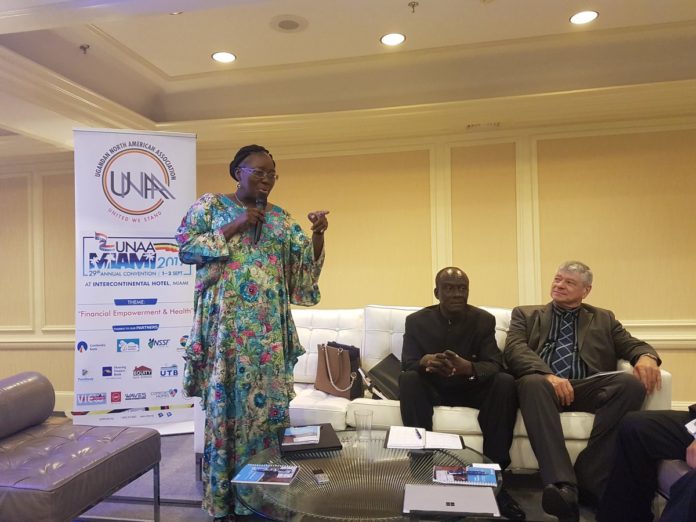
The Minister of Lands, Amongi Betty, making a presentation on Lands at the UNAA Convention in Miami, Florida

The Minister of Lands, Housing and Urban Development Betty Amongi has introduced a lands management system adopted by her ministry for Ugandans living in the Diaspora.

Addressing the land and housing forum at the Ugandan North American Association (UNAA) Convention on Saturday, September 2, 2017 in Miami, Florida, minister Amongi said the new system that includes an upgraded record keeping system of land titles, is aimed at minimizing land grabbing and any fraudulent related land dealings.

“We know you have issues related to purchasing genuine land, some of you have been cheated or given bad deals on land. We are working on verifying the right real estate dealers,” she said adding “We are establishing for you a Diaspora Desk in the Ministry on any land issues, whether buying property including verification of land.”

The Permanent Secretary in the Ministry of Lands, Housing and Urban Development, Dorcas Okalany echoed the Minister’s statements, noting that in a country where only 18 percent of land owners have registered title or certificate and with most land holders not having documentary evidence of their property rights, an integrated lands management system is key.

“The land information system is meant to digitize land that has been titled. This helps in minimizing fraudulent land deals. The process of digitizing all land in Uganda will go on until 2019,” Okalany noted.

She added that they have provided a systematic land demarcation system where land can be owned communally or through clans. Okalany said that the land around the country is going to be separated into regions referred to as zones.

Present at the meeting were the Government Chief Whip Ruth Nankabirwa, who represented the Prime Minister Dr. Ruhakana Rugunda; the Minister of Public Service Wilson Muruli Mukasa, the Minister for Presidency Esther Mbayo, the Minister for Kampala Beti Kamya and the Minister of State for Internal Affairs Obiga Kania.


Stories Continues after ad

US$1m raised for Soroti fistula hospital

Speaker Rebecca Kadaga addressing attendees at the UNAA17

The Speaker of Parliament Rebecca Kadaga has said that over US$1 million has been raised to actualize plans to set up a specialized hospital in Uganda to treat the increasing number of women who succumb to fistula.

The Terrewode Hospital and Rehabilitation Center will also serve as a centre of excellence and a demonstration facility for surgical training programmes that will offer psychosocial rehabilitation for fistula survivors.

Addressing Ugandans in the Diaspora who are attending the Ugandan North American Association (UNAA) Convention on Saturday, September 2, 2017 in Miami, Florida, Kadaga said that Parliament with support from partners, the fistula hospital that will be built in Soroti in 2018 would be the first of its kind on the African continent.

“In Kampala there are people who don’t understand our work and complain about us (legislators) coming to UNAA. We have been working with partners since 2013 and we are going to build a fistula hospital in Soroti,” she said adding that “over a million dollars has been raised and all this is coming out of the work of UNAA and the Uganda Parliament.”

Kadaga explained that fistula, if not managed well leads to death during childbirth. She added that the complication is also shrouded in stigma and most of the sufferers are isolated by the community.

According to UNFPA, Obstetric fistula is one of the most serious and tragic childbirth injuries. It is a hole between the birth canal and bladder or rectum caused by prolonged, obstructed labour, without access to timely, high-quality medical treatment or a caesarean section. It leaves women leaking urine, faeces or both, and often leads to chronic medical problems.

“Recently, I saw a man who has been with his wife who had fistula for 18 years. I nominated this man for an award of a hero because if he could look after his wife for 18 years, without abandoning her, he is a hero in the year of the family in Uganda,” Kadaga said.

It is hoped that the Terrewode Hospital will increase the number of surgeries to 1,000 per year, almost double Uganda’s current treatment capacity. Currently, a surgical operation to treat fistula is estimated at Ushs 2 million.

Besides offering cutting-edge treatment to sufferers, the hospital will rebuild the lives of fistula survivors through counselling, health education and training in income generating activities.


Stories Continues after ad

African airlines earn less from foreign tourists as they fight over open skies

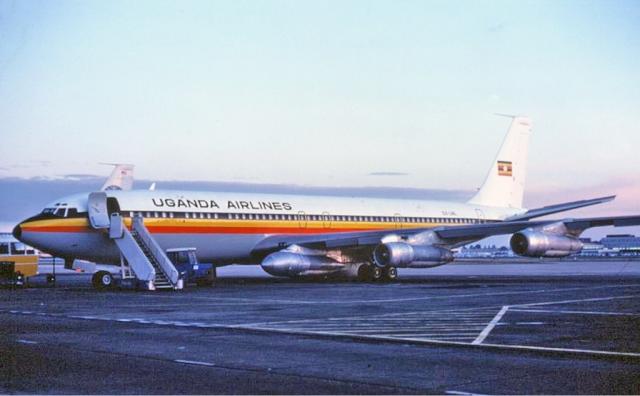
Uganda Airlines is expected to fly in tourists when it resumes operations

With positive targets to attract more tourists from the United States, Europe, and Asia to visit Africa, most African countries are lacking airline services oriented from the continent.

Most African countries with best tourist attractions have given up their skies to the Middle East and European-registered air carriers to fly there with full domination of the continent’s airspace.

Airline and tourism experts discussing the trends shaping travel and tourism in the ongoing Africa Travel Association’s 41st Annual World Tourism Conference in Kigali, Rwanda, said only a small percentage of African carriers fly international routes.

Foreign airlines had captured two-thirds of the capacity going in and out of Africa. They include Qater Aiways, Turkish Airways, British Airways among others.

ForwardKeys latest report, shows that bookings for flights to Africa are currently at 16.8 percent ahead of July 2016. However, it is notable that consumer demand and airline investment is greater in travel to African countries from outside the continent than it is between African countries,” said Olivier Jager, CEO of ForwardKeys.

On the other hand, African airline executives are pushing back against government intrusions, red tape, high taxes, and political meddling which all made African-registered airlines fail to grow under stiff competition over the African skies, experts noted.

Ethiopian Airways, Kenya Airways, and South African Airways were the only three top airlines registered on the continent with good performance on their flights outside the continent last year.

The three airlines connect the African continent to other key tourist markets in the United States, South America, Southeast Asia, and Europe. It is estimated that the 3 airlines have sold two-thirds of the estimated 9.2 million seats purchased for travel within sub-Saharan Africa, taking advantage of their direct connections outside the continent.

To make the air travel industry profitable, African countries need to liberalize air traffic, according to IATA and the African Union, aviation experts said.

Industry experts often criticize African countries for having more bilateral open sky agreements with partners outside the continent than with African partners.

The African Airlines Association (AFRAA), noted at the Aviation Africa conference in Kigali in February this year that airport passenger charges in Africa are 2 to 5 times higher than the global US$25 average. Aviation fuel is also 2.5 times more expensive in Africa than on other continents.

If African governments reduce charges and taxes, airlines and the aviation industry would bring more prosperity, creating jobs, contributing more to Gross Domestic Products and trade that would overcompensate for the reduction in charges.

Politically-motivated appointments at management levels at the expense of proven competence, a recurrent problem for state-owned enterprises, also plagues most national airlines.

AFRAA has declared Ethiopian Airlines the best in Africa for the fifth consecutive time last year, recognizing, in part, its “exemplary” cooperation with other African carriers.

Ethiopian Airlines’ successes appear to be showing the way forward for the entire aviation industry on the continent. While wholly owned by the government, the airline has an independent management team. It has embarked on an ambitious development program, which includes promoting travel hubs in East and West Africa with African partners.


Stories Continues after ad

Decades of trade opportunities at risk

Ben Robinson

By Ben Robinson

After years of low growth, world trade volumes are recovering and expected to increase throughout the third quarter of 2017, according to latest data from the World Trade Organisation.

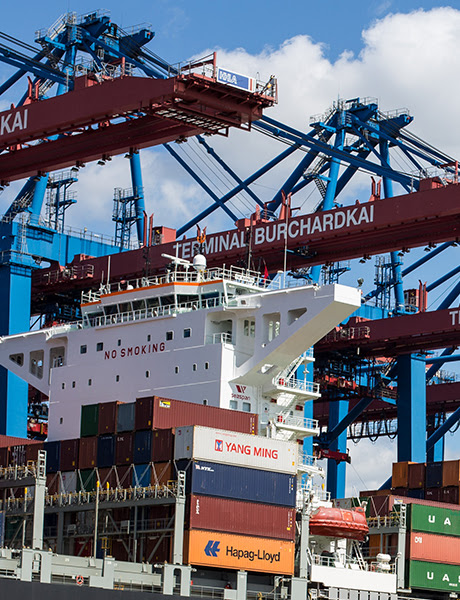
Containers at a yard ready for shipment

Air freight and container port volumes, good measures of overall demand, have seen year-on-year growth of around 10% and 7%, respectively. Trade in electronic components and agricultural raw materials is expanding after a period of below-trend growth, indicating strengthening activity in downstream industries that use these inputs to create more complex final products.

The increase in the WTO forecast is encouraging, but policy uncertainty and structural changes in the world economy hamper trade prospects. Countries facing problems from the trade slowdown need to adapt by changing their policy focus towards creating supportive domestic environments for developing competitive service industries and attracting foreign direct investment. This includes strengthening intellectual property protection and reforming education and skills training. The international framework for services trade, too, requires unprecedented modernisation to facilitate cross-border flows.

Last year was the first time in 15 years – and only the second time since 1982 – that trade grew below world GDP, at 1.3% against global output of 2.3%. That trade-to-GDP ratio of 0.6:1 is a marked reduction from the more than 2:1 averaged between the 1990s and mid-2000s.

Since the 2008 financial crisis world trade has grown at the same pace as world output. Low trade growth impacts overall demand, economic development, export prices, foreign reserves, government budgets and employment, among other issues.

The 1:1 ratio is partly the result of cyclical factors. These include the slow post-crisis recovery and a large fall in investment spending, which is the most trade-intensive component of import demand.

Another significant cause is structural change resulting from China. It has rapidly increased its productive capacity in everything from steel to semiconductors. Rather than simply assemble components made elsewhere, as in the past, China is drawing more of the value chain into its domestic economy and shifting production further into its interior provinces.

As a result, China is exporting goods with a higher portion of domestic value-added, which is impacting the amount of intermediate goods it imports from elsewhere and then re-exports as part of the production process. The expansion of trade in such intermediates as supply chains developed during the 1990s was a key cause of the earlier trade-GDP expansion.

Politicians are struggling to devise effective measures to deal with these challenges. The current focus on trade protection and economic nationalism in many leading economies fails to address the most important causes for these shifts.

Since the 1970s services have grown to over 70% of global GDP from 53%, and are still rising. In developed economies services contribute up to 85% of GDP. The manufacturing sector, meanwhile, has fallen as a share of global GDP to 16% from around 27%, and is still declining.

Despite these shifts, the amount of services in global trade has remained stable over the last few decades, at between 20%-25%. Manufacturing and goods trade still accounts for around 70% of total trade, despite contributing a declining share of global GDP. The result is a growing disconnect between GDP growth and trade expansion.

Unlike goods trade, services have yet to see a successful large liberalisation agreement at the multilateral level, in part because of the deep behind-the-border issues that services depend on. Moreover, some services are inherently non-tradable or require face-to-face interactions. Others are ’embedded’ in manufactured exports and are not captured by traditional trade statistics.

Crucially, many services are delivered directly into other countries by establishing a presence through foreign direct investment, which acts as a substitute for trade in these cases. Over 60% of the global stock of FDI is in services, according to statistics from the United Nations, with the value of foreign affiliate trade in services outweighing the value of cross-border service trade by more than 3:1.

All these factors suggest the global trade-to-GDP ratio is unlikely to reach previous highs, even if global growth starts to accelerate. Leading economies need to refocus on polices to facilitate higher trade growth. If they do not, the world faces decades of lost opportunities.

Ben Robinson is Economist at OMFIF.


Stories Continues after ad

Uganda to host continental summit on entrepreneurship

Ugandan youthful entrepreneurs and innovators will attend the summit

Uganda will host the African Summit on Entrepreneurship and Innovation (ASENTI) and an exhibition from October 24-26.

According to the statement by Asenti, the event to be held under the theme ‘Rethinking Innovation Africa’ will take place at the International University of East Africa (IUEA) and is expected to attract over 2000 delegates including 40 speakers from across the globe.

The summit that will attract over 100 exhibitors from across Africa will also be attended mostly by students, startups, micro enterprises, SMEs, representatives from the national chambers of commerce and professionals from across different industries in Uganda and other countries to focus on different pillars such youth empowerment through employability skills, energy, agribusiness, finance, media, science and mobile technology and new technology trends.

During the event, awards will be given to some of the best business ideas and startups in Uganda and other African countries.

The Summit’s main goals are to create a platform which enhances idea sharing and interaction among sectors in order for the entrepreneurs to be a catalyst for innovation and economic growth in Africa, organisers say.

ASENTI partners with brands and governmental ministries, and has previously partnered with Safaricom, KPMG East Africa and Communication Authority of Kenya among others, to execute its mandate.


Stories Continues after ad

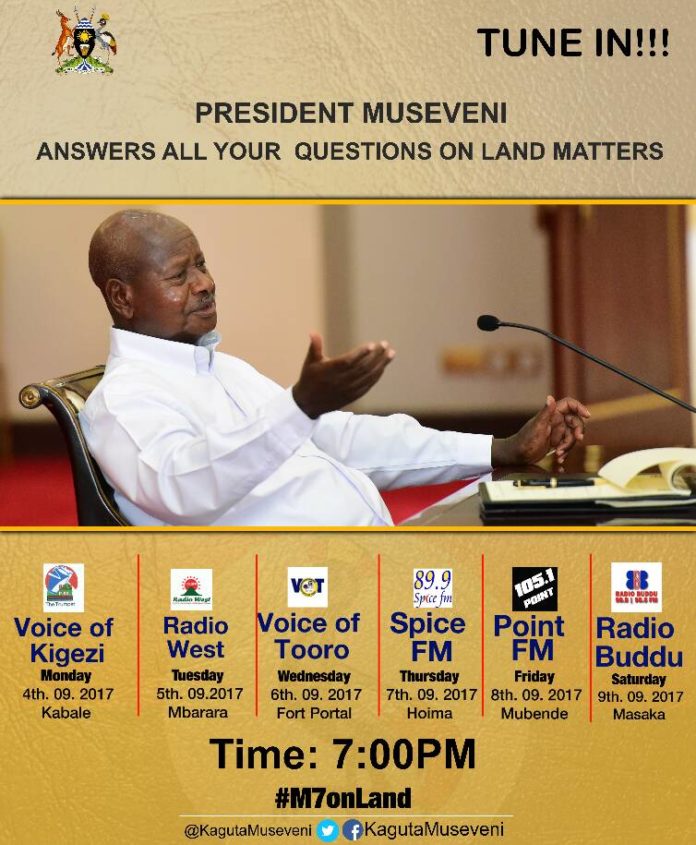
Museveni takes land awareness campaign to radio stations

TO ANSWER QUERIES ON LAND: President Yoweri Museveni

President Yoweri Museveni today will appear on the Voice of Kigezi as he kicks off a country-wide campaign to sensitise Ugandans on land issues, sources from State House say.

For this week, the sources say President Museveni will appear on other radio stations in Mbarara, Masaka, Mubende, Hoima and Fort Portal, among them Radio West, Voice of Tooro, Spice FM, Point FM and Radio Buddu.

Among the issues he will talk about as he appears on radio stations in Western and Central Uganda is the proposed Land Amendment Bill 2017 that has raised eyebrows within the Ugandan public, including Members of Parliament.

The President, according to the sources, is also expected to respond to queries from members of the public who will call direct into the studios.

In July the Deputy Attorney General Mwesigwa Rukutana, presented the Bill for its First Reading during a session chaired by the Speaker of Parliament, Rebecca Kadaga.

The Constitution (Amendment) Bill, 2017 intends to amend Article 26 of the Constitution which provides for the right of persons to own property and how it can be acquired by government.

The Amendment Bill, 2017 also provides for how government can acquire disputed land for infrastructural development and investment projects.

“The Bill seeks to enable government, or a local government to deposit with court, compensation awarded by the government for any property declared for compulsory acquisition,” said Rukutana as he presented the bill to Parliament in July.

At the time he stated that the purpose of the bill is to resolve the current problem of delayed implementation of government infrastructure and investment projects due to disputes arising out of the compulsory land acquisition process.

In 2014, eighty six refinery affected people in Hoima district moved to mount legal action against government for inadequate compensation rates and violations of basic land rights as guaranteed by the 1995 Constitution, the Land Act 1998, the Land Acquisition Act 1965 and other international treaties and policies applicable to Uganda.

The residents, supported by Africa Institute for Energy Governance and other local organizations, fault the government for moving ahead to acquire 29.34 square kilometers of their land in Hoima district to build an oil refinery without adequate compensation for land and other properties. They are also unhappy with the government’s delay in resettling those who asked for resettlement.

In the north residents of Amuru district are faulting government for wanting to give Madhvani group land measuring 10,000 hectares without their consent. The company wants to grow for sugarcane growing. Government says the project will give residents in the area jobs but also help the country boost sugar production.

In May this year, a 10-member Commission appointed by Museveni and chaired by Justice Catherine Bamugemereire kicked off its work to query into the efficiency of the laws, policies and the whole processes of land registration, acquisition, administration and management in Uganda.

The Commission will also investigate and inquire the effectiveness of the Uganda Land Commission (ULC) in administering public land and relevant bodies in the reservation of wetlands, forests, road reserves, national parks among other gazetted spaces.

The Commission is yet to finish its assignment from which it will write a report to be presented to President Museveni.


Stories Continues after ad

‘Uganda for All’: a pressure group that believes in promoting democracy

Mr. Michael Woira

On August 16, 2017, a group of youth, members of some Civil Society Organisation (CSOs), local and national leaders joined us at Hotel Triangle to launch ‘Uganda for All’ discussions, a platform whose major aim is to make sure that all Ugandans share the national cake equally and to also allow them have the freedom to fully express themselves as per the Constitution.

It turns out most Ugandans are not aware of their rights and responsibilities as citizens of this country.  We therefore organize dialogues in which we host members of the public and speakers from different sections of our society to freely share ideas and information on the different social, economic and political issues at hand in the country.

Part of the importance of our platform is giving the electorate information that allows it to exercise its political choice. “If voters are to make an informed choice at the polling station, then an active exercise of the freedom[of expression] is essential …,’ the UN Technical Team on the Malawi Referendum of 1993, which chose between a single and multi-party system, stated.

So, freedom of speech is no doubt the very foundation of every democratic society, for without free discussion, particularly on political issues, no public education or enlightenment, an ingredient so essential for the proper functioning and execution of the processes of responsible government, is possible.

Indeed, as youth under the umbrella of Uganda for All, we understand that real democracy and freedom of speech are tightly intertwined; freedom of speech enables each individual to crystallize his or her autonomous opinion in the decision-making process, something vital in a democratic state and Uganda for All is acting as a platform for Ugandans to freely express themselves and also to showcase great knowledge on how to transform the country.

On our very first day, we hosted the State Minister of Finance (General Duties) David Bahati and other discussants representing various forums and just last week we hosted Professor Augustus Nuwagaba and in his submission democracy was the main point of discussion though a very good number of media houses and social media have now totally changed his message to suit their agendas.

As organizers of these dialogues, we strongly disregard the social media hearsay alleging that Prof. Nuwagaba said that it’s only dictatorship that can change Uganda economically and lead to its development.

Michael Woira

Media Relations

Uganda for All


Stories Continues after ad

Don’t tax donations from abroad – Kadaga

Speaker Rebecca Kadaga hands Ndariho Nicholas his certificate of dual citizenship at the UNAA Covention in Miami, Florida

The Speaker of Parliament, Rebecca Kadaga, has called upon Ugandans living in the Diaspora to send more donations in form of medical and school supplies back home without any fear of them being taxed.

Kadaga said that with the right procedures, arrangements can be made with the Ministry of Finance to import donations tax free from the Diaspora.

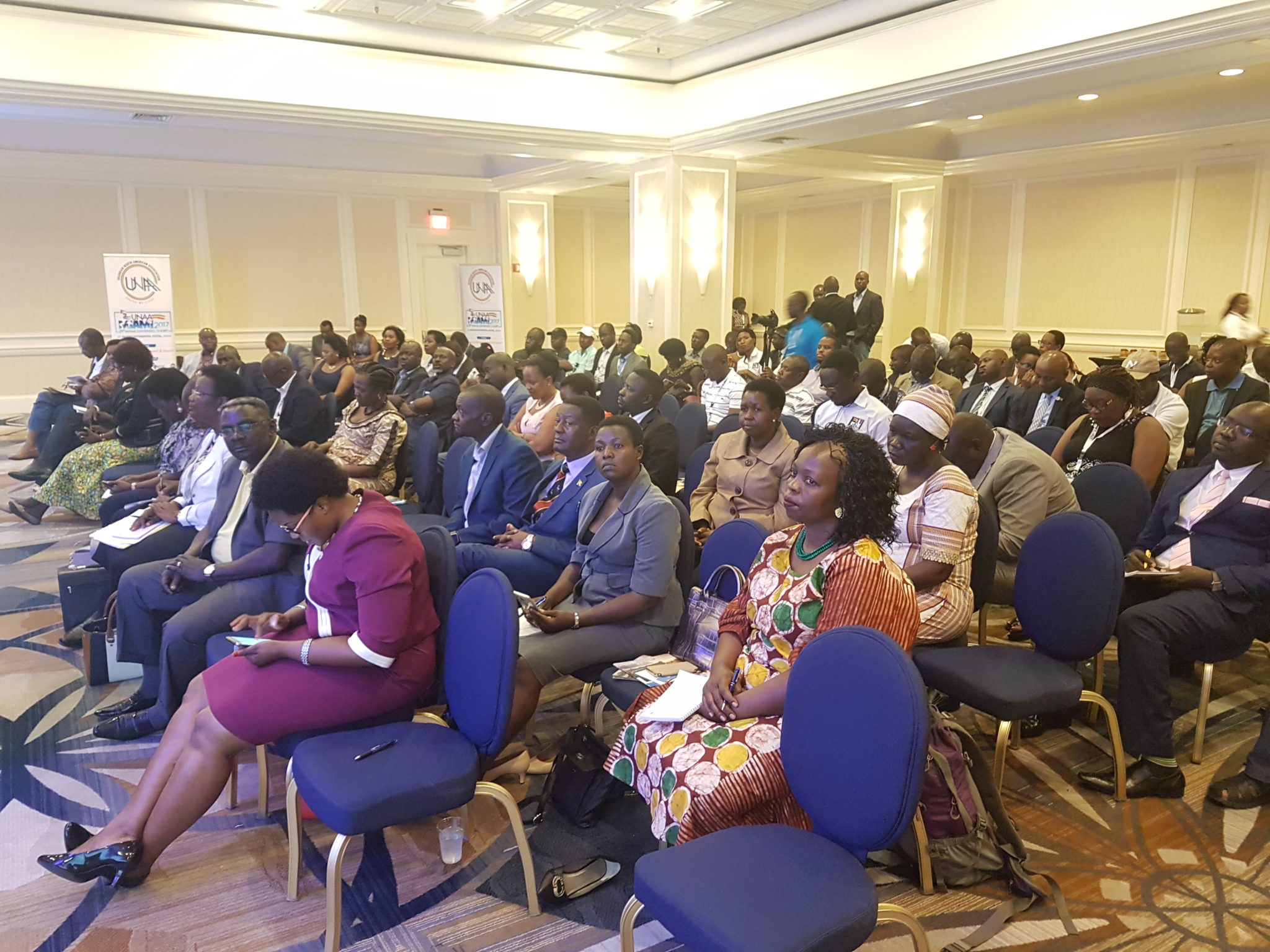
Some of the Members attending the UNAA convention in Miami

The Speaker, who was last week addressing a Technology, Trade and Investment Forum at the Ugandan North American Association (UNAA) in Miami, Florida, was responding to a comment that some philanthropists in the Diaspora have been frustrated by bottlenecks in Uganda when they donate medical, educational or other technological items.

“You should not hesitate at all to send us equipment that is both for education or medical use because of fear of it being highly taxed; with proper planning our colleagues in the central government can arrange for lifting of taxes because we need all the help we can get,” she said.

Kadaga said that in certain cases, the government might totally exempt the taxes without the line ministry having to pay.

The Speaker encouraged the government and Ugandans to take up the culture of having regular medical checkups.

“I have been to plenty of workshops and the doctors keep saying that if the non-communicable disease were diagnosed in time, it may have been controlled,” she said.

She urged Ugandans to make it a routine to have annual medical checks and asked government to make it mandatory.

The Government Chief Whip Ruth Nankabirwa said that the problem was with some Ugandans taking advantage of the system to import equipment that they intend to sell or use for private business.

“Ugandans misuse the opportunities set in place by the government for those who intend to use them well. When you want to send the equipment, inform the relevant Ministry which in turn can make an allowance in its budget to pay for the taxes of the equipment,” she added.

During the same occasion, the Speaker of Parliament asked commercial banks to set up a construction bank to support the housing sector in the country and provide friendly loan facilities for Ugandans both in the Diaspora and at home to invest in real estate.

“Most of the banks offer mortgage facilities that support building personal houses and this may not necessarily develop the economy to the level that we want. We want to see a construction focused bank that can support Ugandans in the Diaspora who want to invest home to build big housing estates,” Kadaga said.

She further said, “This construction will have a multiplier effect because we will have women supplying food to these building sites and companies providing cement and other building materials. Let us move the financing for construction to the private sector.”

Fort Portal Municipality MP Alex Ruhunda said the issue of high interest rates on the Ugandan entrepreneur needed to be addressed.

“The Chinese and Indians access better interest rates from their home banks which gives them an edge over Ugandans. Commercial banks should offer better interest rates, and this appeal goes out to the central bank, which is the regulator,” Ruhunda said.

The 29th Annual UNAA Convention, which is running under the theme “Economic Empowerment and Healthcare Transformation”, offers an opportunity for Ugandans to network and debate on trade and investment, technology, governance among other issues.

As part of the activities of the convention, there are exhibitions showcasing Uganda’s culture, art, textiles and cuisine. Various government institutions such as the National Identification and Registration Authority (NIRA) and the Immigration Department set up stalls to facilitate registration for dual citizenship and to accord Ugandans living abroad national identity cards.


Stories Continues after ad

Pride before the fall – Lest we should forget

Richard Norris

By Richard Norris

Maybe there was a certain pride, nay, smugness around the Oil and Gas industry a few years ago… and despite the last three years of ‘downturn’, remnants of this may even remain in some corners.

The reality now though, is that we are proud of an industry that is elsewhere perceived to be akin to tobacco, armaments and banking, vying for last place in the popularity stakes.  At drinks and dinners, say you work in ‘Energy’ not Oil… and feel the different reaction you get.

Currently, the O&G industry gets a good slapping at every opportunity, whether it be the Climate Change agenda (the producer’s fault, not the consumers…), the happy-clappy renewables industry, or even reporting the pain the oil-price collapse has brought to our industry – you can feel the schadenfreude seeping through the mainstream media.

So maybe its a moment to reflect on what we do, and what we have done.

In 1914 Winston Churchill was, at the age of about thirteen and a half, First Lord of the Admiralty.  His foresight and force-of-nature personality combined to radically alter the British Navy. In a now famous decision, he ordered the conversion of the British Dreadnaught fleet from the traditional fuel – coal – to the new combination of the internal combustion engine and oil. This was a bold decision as the tiny islands of the UK had abundant coal resources and (at that time) no known oil worth speaking of. This was, from a geopolitical perspective, an odd, and to some suicidal decision.

As we know, you get more bang for your buck with oil – the energy stored per unit volume is second only to nuclear power. Bigger, faster ships with longer ranges were possible, and this decision altered the balance of the WWI naval arena.

This transition to oil for planes, tanks and ships set the scene for WWII, which was dominated by oil.  Ironically at the start of the war, the USA was the biggest oil supplier to both Germany and Japan. In fact the US was by far the biggest producer in the world. Saudi oil wasn’t discovered until 1937.

Neither Germany nor Japan had any domestic supply. Germany went after the Romanian oil fields and then swept across the central European plains and North Africa in a pincer movement to try and dominate the then biggest centres of production – the Caspian and Mespotamia. It has been argued that Stalingrad (and the sideshow of attacking Moscow) halting the advance to the oilfields in Baku, and El Alemein stopping the advance on the Middle East, combined to be the key turning point in WWII. The Germans had to rely thereafter on synthetic fuels from coal, which was considerably more challenging than using natural oil.  There is a sad irony in the fact that the Afrika Corps and the British Desert Rats fought long and hard with a strategic view to Middle Eastern oil, all the whilst, driving back and forth in half-tracks and jeeps, right over the giant hydrocarbon fields of Algeria, Libya and Egypt.  Meanwhile Lawrence of Arabia may have been a military genius, but again, he was no petroleum geologist…

In the 1930s, Japan was reliant on US oil imports, but these were embargoed in an attempt to dissuade it from further military excursions – having invaded mainland Asia in the mid 1930s.  Japan reacted by making key resource related land grabs – Indonesia (as it is now known) had significant oil production (thank you Shell) as well as most of the world’s rubber, and then up to Burma.

About six years ago I visited the Yenangyaung Field in Myanmar – a field which first produced in 1887 – topping my visit to Baku and a field that first produced in 1894. Yenangyaung has thousands of wells drilled on it, yet now only a few are to be found. The well-heads were blown-up by the retreating British to prevent the Japanese from having direct access to the crude.

Meanwhile, the UK was supplied by tanker convoys from the USA.  The allies focused, rather belatedly in bombing German fuel supplies. Answering the need for ever increasing volumes, production in the USA increased by 1mmbbls/d from 1940-1945 – a huge undertaking at that time. The infrastructure to get that oil to the world’s war effort was built-out and new chemical processes developed to make synthetic rubber…  another useful by-product of petroleum is used in manufacturing explosives.

The ability of the US to ramp up production and literally fuel the Allied war effort is an unseen and unrecognized achievement. Just one part of the bigger picture of the war, but a key one nonetheless.   The Germans recognized this and targeted oil tankers as part of their U-Boat campaign.  A sequence of mis-identification, and sinkings of (neutral) Mexican tankers, such as the Faja de Oro, and the SS Potrero del Llano in May 1942 led directly to Mexico joining the Allied war effort.

As the war progressed, mechanized warfare was lubricated by American (and Soviet) oil for the Allies and became an ever increasing headache for the Germans.  The great centres of production, onshore USA and Siberia respectively were to all intents and purposes completely isolated from any frontline action and thus could be developed as quickly as human ingenuity could manage.

Whilst we think of the Nazi military as being highly mechanized, it was in fact only a small part of the war machine “only one-fifth of the Army belonged to mobile panzer and mechanized divisions”.  The German cavalry had been reduced from 18 regiments to 1 by 1939, but gradually increased in size, peaking at six cavalry divisions in February 1945.

In 1940, mechanization of the US Army was well under way, but the Army still had two horse cavalry divisions.  However, horses were totally replaced by mechanized transport with only four horses being procured in the 1943 fiscal year and none from then on through the end of the war.  The contrast in fortunes, with the allies amply supplied with petroleum products, and the Germans having to carefully manage supplies was further demonstrated in the Battle of the Bulge.

They had based their attack on a massive armoured onslaught that required massive amounts of fuel to maintain it and the Germans simply did not possess it. Allied bombing of fuel plants in Germany meant that such supplies did not exist.  By mid-January, the lack of fuel was becoming evident as the Germans had to simply abandon their vehicles. The 1st SS Panzer Division had to make its way back to Germany on foot.

Pipeline under the Ocean (actually the English Channel, but Operation Pluto sounded better that Operation PlutEc).  The original coiled-tubing was a massive feat of engineering, which was absolutely critical to the success of the D-Day landings.  Worth a chapter in itself – a great overview here.

So in a dinosaur industry, disproportionally dominated by middle-aged white guys, who seem to be universally loathed – lets take a moment to think about just one small part of the 20th century. Not the incredible growth in prosperity since WWII that is directly correlated to oil use, not the unnoticed facility of every aspect of modern life that is predicated on cheap oil, the cheap vacations abroad, the convenience of suburban living, but think for a moment about how the Oil Industry was every bit as key to the Second World War as the code breakers, atomic scientists, front-line infantrymen, the women of the home front and the front-line, the special forces and the elite airmen.

Just don’t hold your breath for a feel-good Hollywood movie about us.

Few, if any, give a nod to the good roustabouts, pipeline architects and petroleum engineers that made everything go. like our modern world, no one ever wants to admit that everything we enjoy floats on a sea of oil.

Richard Norris is an expert:  Oil and Gas


Stories Continues after ad

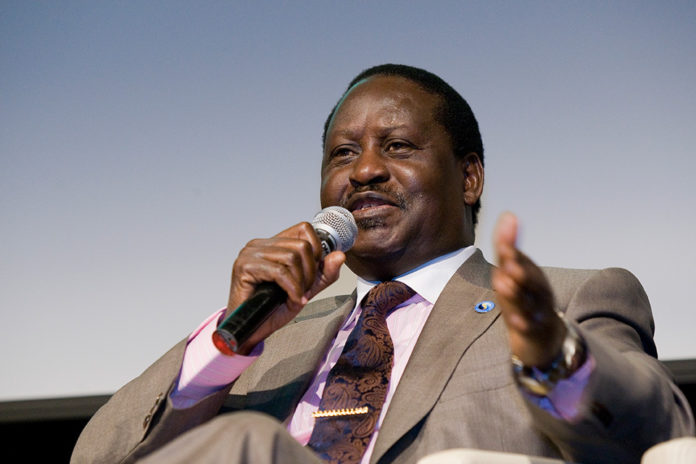
NASA will not share power – Odinga

Raila Amollo Odinga

Kenya’s opposition leader Raila Odinga said that his coalition will not share power, two days after the Supreme Court annulled last month’s presidential election and ordered a new poll within 60 days.

The court ruled on Friday that the election board had committed irregularities that rendered the Aug. 8 vote invalid, and overturned incumbent President Uhuru Kenyatta’s victory.

The ruling set up a new race between Kenyatta, 55, and veteran opponent Odinga, 72, and tension between the two camps has since been rising.

“We will not share power,” Odinga said, speaking in Kiswahili outside a church in Nairobi. “We will not divide the loaf,” he said, a local reference to power.

Odinga, who also contested the presidential election in 2007 and 2013, repeated his statement after Friday’s court ruling that the opposition would not participate in the re-run of the poll without changes to the election commission. On Friday he had called for the commission to resign and face criminal prosecution.

Speaking at a rally in Nairobi attended by thousands of his supporters, he said: “We have said that you cannot force Kenyans to go to the polls that (are) being supervised by thieves.

“We will not accept (this),” he said. “We will only go to the elections when we are sure that the ones organizing the elections are people who will not side with one side or the other.”

Kenyatta insists the poll should be re-run with the current electoral board.

Though Kenyatta pledged to respect the court’s ruling he has, since Friday, referred to justices as ‘crooks’.

Stories Continues after ad