Stanbic Bank
Stanbic Bank
17.8 C
Kampala
Stanbic Bank
Stanbic Bank
Home Blog Page 1839

Ugandan economy to grow at 5.2 percent

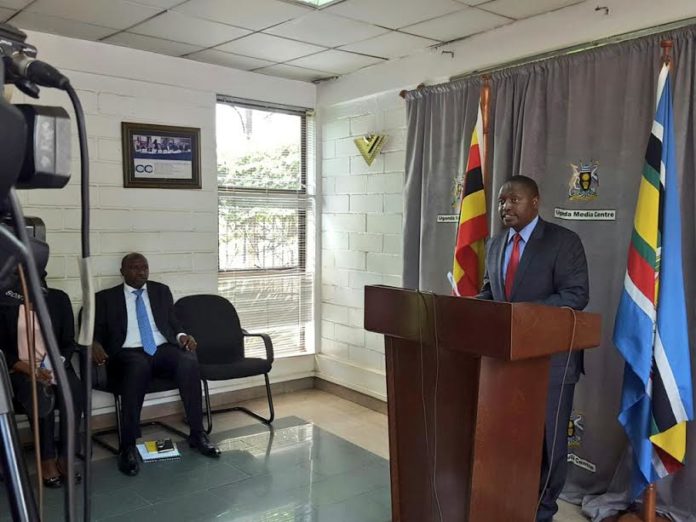
Minister David Bahati during the presser to at Media Centre early this year.

Uganda’s economy has started regaining from a slump and is expected to grow at 5.2 percent in the new financial year 2017/18, the latest Uganda Economic Update published by the World Bank and launched today in Kampala shows. If achieved, the new growth rate would better the 3.5 percent the bank awarded the country last financial year, much as the government of Uganda official economic growth stood at 3.9 percent as read by the finance minister in the new national budget in June.

The Economic Update, launched by the State Minister for Finance David Bahati at the ministry’s headquarters in Kampala, further projects that the country would realise a 6.0 percent economic growth in the financial year 2018/19 should all factors remain constant.

Commenting on the Economic Update, Minister Bahati said that it presents a positive picture of growth and that government is undertaking efforts to push the economy back on the right track. “We are pleased that the Economic Update has shown that the economy is growing,” Minister Bahati said of the report.

But for now, at the projected economic growth of 5.2 percent, the country’s private sector, which is a key engine of economic growth would continue to face challenges of low levels of business confidence, the strife in neighbouring South Sudan and the high cost of credit.

But the update on the positive note states that the overall investment growth is expected to be boosted as foreign directive investment in the extractive sector increases, more so, citing the recent oil pipeline agreement signed by governments of Uganda and Tanzania.

The Update which is calls for the public-private partnerships (PPP) to finance major infrastructural projects, suggests that government improve tax collection measures so as to collect more revenue for projects. “Revenues collected are to low to support large infrastructure base and this is further threatened by government’s renewed tendency to grant tax exemptions,” it reads.

Presenting the update, Ms Rachel Sebudde, World Bank’s Task Team Leader, Uganda Economic Update, said that Ugandan government must be careful to avoid circumstances that could lead to unnecessary hike in financing of infrastructural projects like roads and electric power dams.

Estimates show that Uganda loses US$ 300 million per year in inefficient infrastructure spending mostly through underpricing and inability to complete projects within the cost and on schedule. Currently it is estimated Uganda spends one billion US dollars annually on infrastructure, even as analysts say the country needs to spend US$1.4 billion per year in the medium term to bridge the infrastructure gap.

Ms Sebudde advises government to use the PPP arrangement, saying it’s the cheapest approach of financing infrastructural projects, but government, she says has to have capacity in negotiating contracts.

So far Uganda has had 24 projects financed through the PPP totaling US$1,830.69 million, but this represents 8.3 percent as Uganda’s share in sub- Saharan African region.

Ms Sebudde, however, says Uganda should ready itself for the PPP through training human resource, and putting legal frameworks such as policies, laws and guidelines, saying failure to do this would lead to a country losing out to the private sector who are out to make abnormal profits at the expense of government.

Stories Continues after ad

Europe, African ministers meets over illegal migration

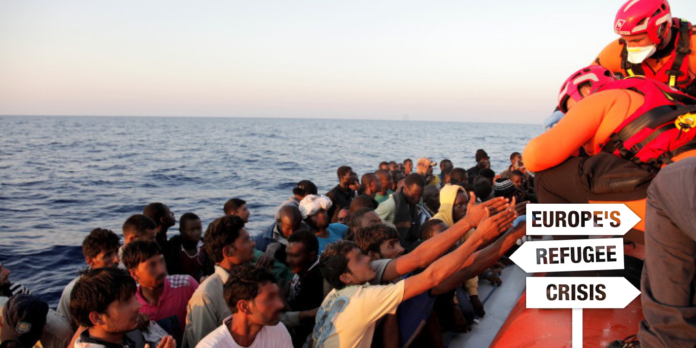
Desperate immigrants trying to find their way to Europe

European and African ministers have met in Tunisia about efforts to regulate the flow of refugees from Africa to Europe, primarily along the deadly central Mediterranean route originating in Libya.

In a declaration Monday in Tunis, the capital, the ministers said they agreed on a multi-pronged approach to the crisis, including informing people about the risks of illegal migration and the possibility of voluntarily returning home, addressing why migrants leave home and beefing up actions against human traffickers.

Participating in the meetings were interior ministers from Algeria, Austria, Chad, Egypt, France, Germany, Italy, Libya, Mali, Malta, Niger, Slovenia, Switzerland, Tunisia and Estonia, which currently holds the EU Council presidency.

Through the first half of 2017, nearly 84,000 migrants arrived in Italy by sea, 20 percent more than during the same period last year. Detention centers and temporary shelters that Italy has for migrants have reached their maximum capacity of 200,000 people, but there are many other migrants in the country working illegally.

The meeting in Tunisia focused on Libya, French Interior Minister Gerard Collomb said, since 95 percent of the migrants crossing the sea to Europe set sail from Libya. The ongoing political upheaval in Libya makes the problem worse, Collomb said, adding: “As long as a stable government is not in place, the control of this flux cannot be assured.”

The European Union has proposed training and financing to increase the capabilities of Libya’s coast guards, and last week the bloc also approved new rules for refugee-rescue ships operating in the Mediterranean. The vessels that charities operate to rescue refugees stranded on the open sea are now forbidden to coordinate their movements, either by phone or signal lights, with people-smugglers who pick up would-be migrants in Libya and sometimes leave them stranded at sea.

The refugee-rescue ships also are now required to stay out of Libyan territorial waters, where they previously have picked up asylum-seekers close to shore. Any vessel that breaks the new rules risks being banned from Italian ports.

Humanitarian ships now pick up more than a third of all migrants attempting the perilous Mediterranean crossing from Libya to Italy, compared to one percent in 2014.

Not all stranded migrants are rescued. More than 2,200 people died this year during unsuccessful attempts to cross the Mediterranean, according to the International Organization for Migration.

In their final declaration in Tunis, the ministers agreed that their countries should try to address “the root causes of irregular migration” and “strengthen the exchange of strategic and operational information on criminal networks for trafficking in human beings.”

The statement said public development aid is needed to fight the causes of migration and create more opportunities at home, as well as to help border authorities with training, equipment and infrastructure.

“We have to stick together,” said Dimitris Avramopoulos, European commissioner for migration. He insisted “Europe is not a fortress,” but added that legal migration procedures must be followed.


Stories Continues after ad

BOU top staff divided over Crane Bank

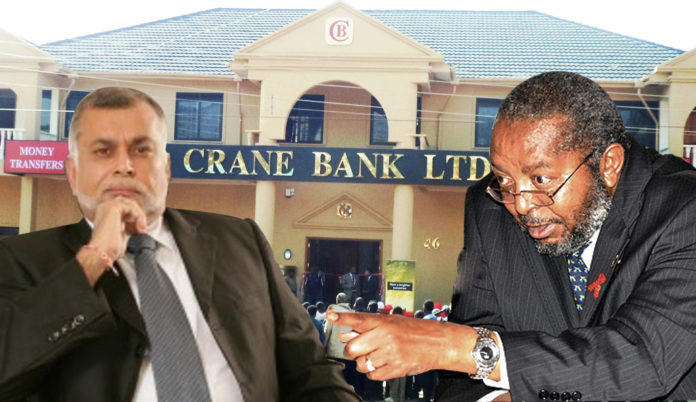
A photo montage of BoU Governor Emmanuel Tumusiime Mutebile, businessman Sudhir Ruparelia and Crane Bank

Top officials at the Bank of Uganda are divided over the procedures undertaken by the Central Bank that have led to the current stand-off between BoU and city businessman Sudhir Ruparelia, the owner of now-defunct Crane Bank.

According to sources, some top managers argue that the BoU, through its Bank Supervision Directorate headed by Ms. Justine Bagyenda, failed to execute its mandate, a development that partly culminated in the case that is currently before the Commercial Court.

Another issue, the Crane Bank protagonists at the Central Bank argue, is that the BoU had not exhausted all avenues that could lead to a negotiated settlement of the stand-off.

“Over the past many years the Crane Bank was intermittently awarded several accolades as the best-performing bank, so how can it all of a sudden become the worst?” a source, one of the top managers in BoU wondered.

The source added: “Clearly someone was not doing their job and that cannot be faulted on Sudhir alone; indeed, it seems like a shared omission of responsibility which can also be settled out of court.”

Through MMAKS Advocates and AF Mpanga Advocates, the BoU sued businessman Ruparelia and his business arm, Meera Investments, in efforts to recover US$93.8 million and Shs60.3 billion (over Shs300 billion) allegedly siphoned from Crane Bank, an accusation that is contested by the businessman.

Efforts to contact the BoU Director of Communication Christine Alupo were by press time, futile.

Last year the BoU took over management of the Crane Bank, and early this boarded it off to the dfcu Bank for a yet-undisclosed sum of money.


Stories Continues after ad

Garang widow ‘reconciles’ with President Kiir

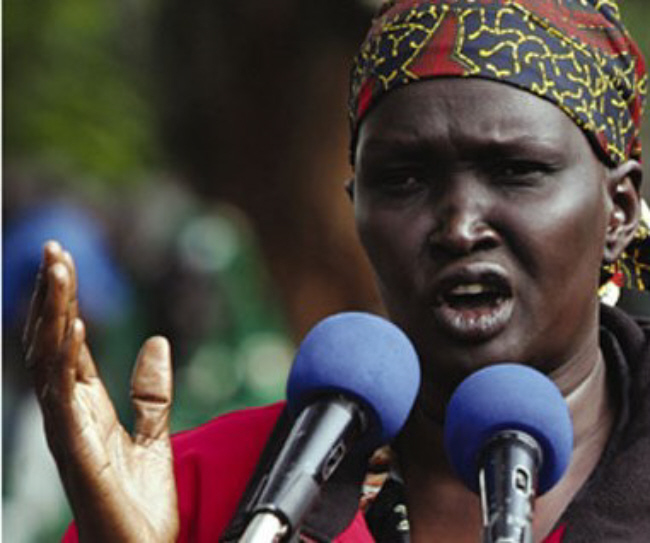
WANTS PRESIDENT KIIR OUT: Rebecca-Nyandeng-Garang

Rebecca Nyandeng, widow of South Sudan founding father John Garang and former adviser on gender affairs to the president, told South Sudan in Focus that in a meeting in Kampala last week between her, President Kiir, Ugandan President Yoweri Museveni, and former detainees, she and Kiir agreed to seek a solution to South Sudan’s political crisis.

Nyandeng, who a few months ago had called on government soldiers to lay down their weapons saying that would leave the President with no power, said it was Kiir who asked for reconciliation with her.

“For me, reconciliation between me and him; we don’t have any problem; our problem is how we can rescue people of South Sudan. It needs all of us to come together so we can see how we can mend the fence,” Nyandeng told South Sudan in Focus.

Nyandeng said despite her new relationship with Kiir, she will not return to the country until all of its political forces are reunited.

Asked about the terms of her reconciliation with Kiir, Nyandeng responded: “President Kiir called me mom, and if President Kiir call me ‘mom,’ then I am the mom of all people of South Sudan. If I am the mom of the people of South Sudan, I will not leave them out; I want everybody to be included. I want peace, comprehensive peace,” she said.

Asked how she will convince the doubting Thomases of South Sudan who only believe she has reconciled with Kiir if they see her in Juba, Nyandeng answered with a question of her own: “When they were doubting, what happened to them? Jesus Christ appeared to them!”

Pressed on when she will return to the South Sudanese capital, Nyandeng said, “When Jesus Christ appears to me, that is when I will be going back to Juba.”

Nyandeng said she wants her people to be reunited. “I want them to come together, and I pray for that. We need to see that all the people who are aggrieved come to the table,” she adds.

Nyandeng said South Sudan is her country and wondered “why should I not go back?”

“Mama Nyandeng,” as she is known in much of South Sudan, added, “I will not leave all those children outside. What am I going to do with the big son when the younger children are outside the country?”


Stories Continues after ad

Africans should learn to market themselves better

Ms Natasha

By Natasha Mariam

Africa is one of the most beautiful continents in the world with rich cultures, good weather, food, people and good natural sceneries.

With all these one would expect us to be one of the most developed continents in the world but due to lack of love and patriotism for our motherland Africa, we have continued to be one of the poorest continents in the world. I am specifically disappointed by the way some Africans especially those that have a chance to market the good things about our continent are instead demoting it.

Do we just don’t love our countries? One may ask, for example certain individuals when given a chance to speak to media both local and international media instead of saying the beautiful things about their countries they say things that paint a bad picture of their countries.  I believe we should learn to say positive things about our countries, we should be proud of our heritage despite the few challenges we have as a continent. Uganda hired international public relations firms to assist in the promotion of tourism which is a good thing; however it needs to be supported by individuals from Uganda that have physically experienced all the good things in Uganda and therefore are in a better position to market it.

In Uganda especially the opposition and even some media houses have a tendency of looking out for the bad things about an issue because they think it helps them sell their ideas forgetting that it is equally bad for them. There may be freedom of speech in Uganda where by people are free to say whatever they want however, they have  continued to take it for granted  and instead of using it positively to sell our country, they have continued to say things that demote the country. For example the recent Kasese killings, the opposition and media exaggerated the entire situation blaming the government for killing civilians yet it was doing the right thing, the international community was alarmed which I believe partly affected  Uganda’s  tourism given the fact that Kasese is a major tourism destination and this affected our revenues which hinders development.

Media is one of the major groups of people who should be doing the marketing but again it has done more harm than good because instead of telling the story to the rest of the world as it is, media houses on this African continent are again getting content from foreign media houses like the Associated Press, Agency France Presse (AFP), BBC and many others whose value and mission we don’t know. Some of the African news have often been decided in far-off Western capitals – London, Paris, New York – and written by dashing foreign correspondents that do not understand the local complexities and base their narrative on misleading generalizations. Sometimes the reports are wrong or distorted and far away from the situation on the ground.

One important thing we should know is that the countries  that are good at nation branding are the ones that have developed a very clear self-concept of their culture and have greatly developed and similarly all responsible governments, on behalf of their people, institutions, and companies, need to discover what the world’s perception of their country is” and develop a brand management strategy which I think countries like Uganda have done through their re-branding campaign but this cannot be successful if some other people are always showcasing the bad public relations in the media and wherever they go because of political differences.

Leaving that aside, I applaud countries like Rwanda which have continued to thrive due to the love its people have for their country. Rwanda is one of the few countries in Africa where its citizens are accountable for whatever they say against their country. Am not saying people should not come out to say the wrongs with their governments but they should be said exactly as they are and not exaggerated as this gives a wrong perception for the country.

I remember one of the great American journalists who said that “Truth is the best Propaganda and lies are the worst”. So, whoever lies in the guise of benefiting or gaining readership, listenership or viewership is doing injustice to our good continent Africa. Questions have been running through my mind and have been asking myself about what can be done to market our countries world over but this is kind of rhetorical because all Africans have the answer.

African governments should invest in patriotism lessons at all levels of education for their countries as this will educate people about their history and will also give them direction about the future, it will also deepen love and commitment to their countries, this is so because certain people do not know the benefits and challenges of being patriotic therefore if governments can invest in patriotism programs, certain problems will be controlled. People have tendencies of relating patriotism to ruling parties which is wrong because patriotism is non-partisan but rather looks at the good of the country as a whole.

Africans should be more optimistic than pessimistic about the different situations they are going through keeping in mind that some of them are part of the development process for example they should assist their governments build strong institutions that will make it hard for vices like corruption to flourish.

Finally, the Western media, opposition political parties and bad social media users who peddle lies cannot afford to ignore the progress that Africa is making without risking their relevance. Yes, Africa has problems, but the continent is on the move and as Africans we should tell our story to the whole world as it is.


Stories Continues after ad

Businessman ordered to pay step children Shs60M, surrender estate

Symbol of Justice

The Commercial Court has ordered a Kampala businessman, one Haji Wahab Semakula Kibuuka to pay Shs60million to his four step children after losing a case brought against him in regard to the administration of the estate of the late Sarah Wahab Wanyana.

Justice Percy Night Tuhaise, who was in charge of the case further declared Kibuuka not a widower of the late Wanyana and thus ordered for the revocation of the letters of administration issued to him.

She also ordered that the defendant’s name be cancelled from the certificate of title and land register in his capacity of the administrator of the estate of the late Sarah Wahab Wanyana, and the names of the deceased Sarah Wanyana are to be reinstated on the title; and that the defendant is not a beneficiary to the estate of the deceased.

It all began on June 11, 2011 when Wanyana who was cohabiting with Kibuuka died. At the time of her death, she had two children with him, though she had four other children before they met.The four children are; Pual Tumusiime, Irene Kamugisa, Godfrey   and Herbert Beitwa.

These dragged their step father to court accusing him of fraudulently petitioning the High Court on June 28, 2011 for letters of administration which were granted to him on November 4, 2011.

They told court that he intentionally left them out despite being children of the deceased and known to him. To them, he obtained the grant by fraud, illegality and concealment of material facts, and that he has committed acts of fraud and dishonesty prior to and since assuming administration of the estate.

In his defence, Kibuuka told court that he is the administrator of the estate of the late Wanyana to whom he was legally married.

He also informed court that he had sold off some of the properties of the estate to clear what he said loans accrued by the estate.

However, he failed to prove in court that the two were legally married at Bbutto Masjid Taqua Bweyogerere in which he claimed the couple was united was not in existence in the year he claims they got married.

“The marriage of 1982 could therefore, not have been solemnized by the said Mosque; and the Imam who purportedly signed it could not have existed in that Mosque as Bbutto Masjid Taqua Bweyogerere, the Mosque which purportedly issued the marriage certificate was built in 1986.”

Another contradiction was, Kibuuka claimed to have sold one of the properties of the estate at Shs100 million but it was later discovered that it was sold at Shs320 million.

“Kibuuka himself stated in paragraph 8 of his sworn witness statement that he sold land comprised in Kibuga Block 13 Plot 91 at Uganda Shillings 100,000,000/=. However, during cross examination, he testified that he sold it at Uganda Shs 320,000,000/=. Annexture “I” to Exhibit P1, the sale agreement between Ibrahim Ssemwogerere and Vincent Kasumba, an agreed document, shows that the land was sold at Uganda Shs 320,000,000/=.”

He claimed that he sold it to pay debts but failed to prove in court that debts he had paid off.

The late Sarah Wanyana estate included Kibuga Block No 13 Plot 81 land at Najjanankumbi; Kibuga Block 13 Plot 391 land at Najjanankumbi; Block 218 Plot 1611 land at Najjera; LRV 2288 Folio 6 Plot 57A land at Katalima Road; and 40% shares in Winston Standard Academy).

“Regarding general damages, there is evidence that the defendant (Kibuuka) obtained the grant by fraud and used it to sell off property that formed part of the estate of the late Sarah Wanyana to the prejudice of the plaintiffs who were beneficiaries to the estate.

The land sold was registered land situated in prime areas in Kampala. This would entitle the beneficiaries to general damages as beneficiaries to the estate. I would in the circumstances award general damages to the tune of Uganda Shs 60,000,000/= (sixty million).”

“New administrators should be appointed in a meeting of all beneficiaries to the estate of the late Sarah Wahab Wanyana Mukaka (the deceased) within two months from the date of this judgement. A permanent injunction restraining the defendant (Kibuuka) from dealing with the estate of the late Sarah Wahab Wanyana Mukaka (the deceased) is issued.”


Stories Continues after ad

Uganda to face Rwanda in CHAN qualifiers

Uganda Cranes progressed to the second round of the CHAN 2018 qualification after beating of South Sudan 5-1 in Lugogo on aggregate following a goalless draw in Juba.

Five goals from KCCA FC duo Paul Mucureezi (4) and one from Derrick Nsibambi helped Uganda secure the victory while Khamis Leon Uso pulled back one for the visitors.

The Cranes are now one step away from qualifying for the tournament with Rwanda in their way.

Rwanda qualified for the third qualification round of the 2018 African Nations Championship (CHAN) after eliminating Tanzania on 1-1 goals aggregate following a goalless draw in the second leg played on Saturday at Kigali Stadium.

Uganda and Rwanda will play two games home and away and the winner gets a place in the CHAN tournament that will take place next year in January.

Uganda has played in the CHAN competition for two times, in Sudan 2011 and Rwanda 2016 failing to leave the group stages i­­­­­­­­n both.

The CHAN tournament is reserved for players who feature in their respective domestic leagues across Africa, will be staged from January 11 to February 2, 2018 in Kenya.


Stories Continues after ad

Bobi Wine: I was voted to speak for my people not cutting cakes

Bobi Wine

Kyadondo East Members of Parliament, Robert Kyagulanyi alias Bobi Wine has spoken out about reports that he refused to join the Buganda Katikiro in cutting a cake at a recent function.

Whereas he admits having walked away when he had been called on, he blames this on his the tight schedule he had that day as well as the treatment he was subjected to by the organisers.

“To set the record straight, I was invited as area MP to attend Gayaza Junior School’s Day, celebrating 106 years! At the same occasion, the Katikiro of Buganda Owek. Charles Peter Mayiga was the Guest of Honour. I attended the function, received the Katikiro and together, we inspected different exhibition stalls for students’ products and activities. We also had a cordial chat!”

Though, it all began when he was denied an opportunity to speak at the event.

“I was at the function from 10 am to 3 pm (5hrs) and as protocol was being ‘observed’, many of the guests who were invited but didn’t show up had their representatives to speak on their behalf. Just at the point when the area MP was to be invited to welcome the Guest of Honour, the C.A.O’s representative was instead invited to perform that role.

“My assistant tried to find out from the MC whether it was a mistake and they were bluntly informed that they had strict instructions not to let me speak.”

He adds that the reason they stopped him from speaking was because they were not sure of what he was going to say. But to him, he says had prepared to use the occasion to suggest ways of improving our education system!

“I must say it was a humiliation to the people of Kyadondo East to have their elected representative seated at a function for almost five hours and not given any opportunity to say a word. I am not a ceremonial M.P. and would love to use every chance to speak for and to my people! Therefore, by the time the cake was cut, I was long gone and I think it was more important for me to say a word to my people rather than cut that cake. Had I been allowed to speak, perhaps what I was going to say would make a better headline than the cake.”

He apparently left for other functions at Kinaawa Secondary School, Nangabo Youth Bicycle race and the Uganda cranes vs South Sudan football match at Lugogo KCCA grounds where he had also been invited.


Stories Continues after ad

FUFA clears air on Micho’s future

Micho

The Federation of Uganda Football Association has responded to reports concerning the resignation of Uganda Cranes head coach, Milutin ‘Micho’ Sredojevic.

After a convincing 5-1 win over South Sudan on Saturday at Lugogo, Micho hinted about quitting over unpaid salary of four months in the post-match press conference.

FUFA has today released information after meeting with Micho on their website concerning the Serbian’s future in Ugandan football.

The statement from FUFA

The two parties, FUFA and the Uganda Cranes coach Milutin ‘Micho’ Sredojevic have today held meeting and held constructive discussions in which;

The past achievements, current and future of the Ugandan football were at the forefront during the discussions

The parties have agreed that FUFA CEO Edgar Watson talks to the agent of the Uganda Cranes Coach Micho over the matters.

FUFA and Micho will release a statement after the FUFA CEO has held discussions with the coach’s agent.

‘The meeting that also discussed the technical aspects of the just concluded 2018 CHAN qualifier match played between Uganda Cranes and South Sudan was attended by FUFA President Eng. Moses Magogo 1st Vice President Justus Mugisha, 2nd Vice President Darius Mugoye and FUFA CEO Edgar Watson’ said FUFA Communications Manager Ahmed Hussein

Following this statement, FUFA requests the public to disregard any speculations about this matter.

It is Our Game, It is Our Country.


Stories Continues after ad

Event’s organiser Balaam advises Desh Kananura on how to recover lost Panamera land

Kananura and his co-accused in Court during the hearing of the murder case.

Kampala socialite and businessman, Andrew Desh Kananura might have won the murder case that had been brought against him but that wasn’t the end of his woes.

Court recently ordered him off part of Naguru land on which Panamera Bar is located after it was found he had encroached on someone’s land.

However, Desh has vowed not to let go of the land and says he is to appeal the decision of the High Court.

“Panamera or I are not going anywhere. I will defend my property with all I have and all I can so guys ignore. We wait what three judges or seven at Supreme Court will have to say!!! No need for excitement,” he vowed.

Events promoter, Balaam Barugahara has since advised him and says “beef up your legal team with land expert counsel Yusuf Nsibambi at Court of appeal. That land was a swamp you have spent over US $4 million to make it usable people should go and claim for empty land in Masindi.”

The ruling came barely three months after Kananura had exited Court after close to six year battling the case of murdering of his former employee, Badru Kateregga whom he is accused of beating to death over accepting a tip of Shs30, 000 from a customer.

Desh and his brother was acquitted of the murder in April by  High Court judge Joseph Murangira but the decision was appealed by the Director of Public Prosecution (DPP) on grounds that the judge had failed to evaluate evidence on record and hence made a wrong decision.


Stories Continues after ad