Stanbic Bank
Stanbic Bank
17.8 C
Kampala
Stanbic Bank
Stanbic Bank
Home Blog Page 1840

iWayAfrica gets new boss

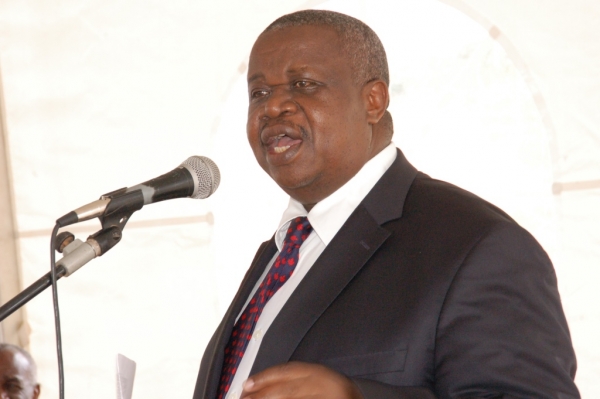
NEW APPOINTMENT: Godfrey Sserwamukoko, the new Managing Director of leading ICT solutions provider, iWayAfrica Uganda,

Leading ICT solutions provider iWayAfrica has appointed Godfrey Sserwamukoko as its Managing Director, an appointment that takes immediate effect.

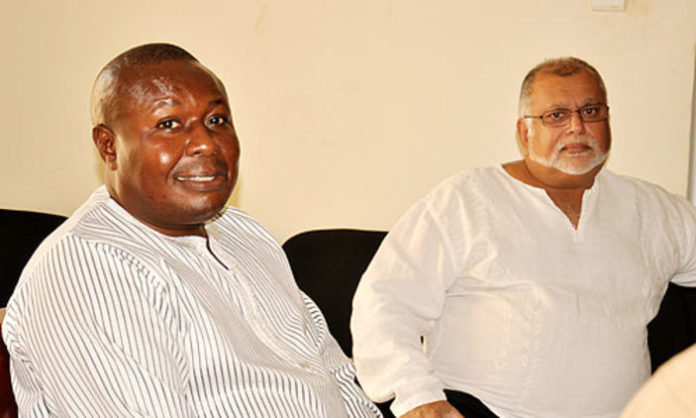
Mr Sserwamukoko’s appointment comes at a time when there is a significant growth within the local ICT market and an increased uptake of communication services in Uganda, and iWayAfrica Chairman John Nagenda is optimistic that the new MD will bolster the company’s growth.

“We are delighted to appoint Godfrey Sserwamukoko to the Board of iWayAfrica Uganda as Managing Director. Godfrey has already demonstrated his leadership capabilities as he rebuilt iWayAfrica over the past two years,” Nagenda, who is also President Yoweri Museveni’s senior advisor on media, said.

He added: “We are confident of his ability to nurture the great talent we have and take the company from strength to strength in Uganda.”

An iWay board member, Mr Sserwamukoko, who joined the company in 2001, has extensive communications experience and brings with him a wealth of experience across the ICT spectrum.

“I look forward to building an even stronger presence for iWayAfrica in Uganda. Focus and dedication to customer service will ensure we meet our goals and achieve significant growth,” he said.

iWayAfrica Uganda is part of the Gondwana International Networks group of companies operating ISP networks across Africa.

Stories Continues after ad
Why every farmer and big trader needs to embrace Warehouse Receipting

ON TOP OF THE WAREHOUSING GAME: Warehousing Receipt System boss Ms. Deborah Kyarasiime

It is almost a tradition that a farmer will harvest around 10 sacks of maize or sesame and because of the fluctuating market prices, rush to sell them off at usually unfriendly prices.

On some occasions, that farmer might even lack money to send children to school if there is no ready market for the farm produce.

However, dear reader, there is a savior in town— warehouse receipting.

A creation of the Warehouse Receipt System Act 2006, warehouse receipting helps a farmer or trader access finances—to run any quick offline errand— on the back of the items they have stored in the warehouse.

A receipt is like trading collateral security. And this is how it works.

You have your goods or items of value, take them for safe storage in a government recognized warehouse, you are given a receipt. The receipt provides details in terms of weight and value of the goods and also acts as proof that you own the said goods in the warehouse.

If you are a farmer or trader, it is that receipt you take to a bank and pick a loan to clear your bills as you wait for the prices to surge.

And Ms Deborah Kyarasiime, the Acting Executive Director of the Uganda Warehouse Receipt System Authority, says the system creates the perfect opportunity for farmers and traders to streamline their work and also plug the suffering from the vagaries of price fluctuation and harsh trading environment.

“We are the-go-to people if you mean to trade formally. Anybody can sell and buy but not everyone is involved in trading where there is informed participation with traders having information on the products on the market and the correct pricing. We promote structured trading,” Ms. Kyarasiime said in an interview with Eagle Online.

To benefit from the receipting system, you must store your goods in a warehouse. The authority however neither owns nor develops warehouses. They only license them and their keepers.

“We promote the use of warehouse receipts as a collateral for financing where the receipts are used as a security.

The Warehouse Receipting System Authority has been in place for three years now and already has warehouses across the country. However, the first receipts, Ms Kyarasiime said, will be issued by late August.

“Farmers can apply for the receipts through their cooperative unions and they will be able to tap into the opportunities the receipts bring,” she said before adding that the Authority is, for now, more focused on agricultural commodities.

“Someone says they have produced a lot of produce because of the Operation Wealth Creation but they have nowhere to keep and therefore they get the worst prices and at the end of the day don’t benefit.

“Why should one part of this country suffer from hunger yet another part does not. With Warehouse Receipting we would only call up a receipt number we know has enough in the storage to supply instead of government going to out to beg for food from donors,” she said.

Although it seems to focus more on those who store in the warehouses, the system has opportunities for the owners of the storage facilities too, but only if the warehouse is licensed by the Authority.

“Being licensed by Authority means that a warehouse will optimize its operations due to the massive businesses we shall be forwarding to them,” Ms. Kyarasiime said, adding that the licensing will also protect users from being exploited.

“As a public warehouse, we negotiate with you the prices you charge depositors based on the level of services you will offer them,” she said.

Asked whether there is plan to address dealers in perishable goods, Deborah said it will be the role of warehouse owners to ensure they bring in relevant services which can help in preserving perishable goods.

“Lack of infrastructure affects most of the warehousing work. We need specialized kind of storage to be able to keep perishables. But we shall in the future achieve all that.

For now, I call upon Ugandans to embrace the Warehouse Receipting system. It is the best for their business and farming,” she said.


Stories Continues after ad

Commercial Court issues tough regulations to lawyers

ADHERE OR FACE PENALTIES: Justice Geoffrey Kiryabwire, the Head of the Commercial Court

The Commercial Court has issued stringent regulations to lawyers who represent litigants in court, in a bid to guard against case backlogs.

Case backlog refers to court cases not resolved within two years, and in a communication to lawyers in private practice, Justice Geoffrey Kiryabwire, the Head of the Commercial Court, warned the lawyers face financial penalties should they fail to adhere to court’s standard legal practice to avoid the piling up of cases.

The Judge advised the lawyers to adhere to all the fourteen regulations issued that include among others, advocates following up cases, use of witness statements to avoid wasting time as well as use written submissions.

Available records in court indicate that advocates delay case hearings by failing to prepare in advance and calling for unwarranted adjournments.

“Penalties should be enforced for delaying trial,” Justice Kiryabwire wrote, in respect to the new stringent regulations introduced by legal experts, adding: “Advocates who fail to comply with the time limits as allocated by the court, would be penalised in costs.”

In a related development lawyer Sam Ogutti Gwapeto, who works with Kabugo, Tamale and Company advocates, when asked about the new regulations, admitted that they have helped advocates work faster. “In the past some of us used to delay cases just for the sake of it, but this is not possible now,” said Ogutti Gwapeto.

Another Kampala Lawyer Bob Mugume, of Mugume and Company Advocates, said the new regulations were agreed upon by the legal fraternity. “So far they have served us better and our clients are happy with the speed at which they are being served,” Mugume said.

Both Ogutti and Mugume told this reporter at the Commercial Court in Kampala that they have handled cases involving commercial banks and businesses, where the banks have attached properties for failure by their clients to pay loans and interest as scheduled.

Meanwhile, a recent official report released in March by Case Backlog Reduction Committee (CBRC), indicates there are more than 155,400 cases pending at all levels of courts as of January 31, 2017. Of these, 7,837, which have been in the system for at least two years, commercial cases constitute two percent.

The committee chaired by Justice Richard Buteera cited ‘incompetence and corruption’ as some of the reasons for backlog in their report.

The findings followed the 2015 National Court Case Census, which revealed that 114,809 cases had not been disposed of, with one in every four pending for more than a decade.

The Commercial Court’s jurisdiction covers civil cases including banking, insurance, securities exchange, maritime, law and arbitration issues.

The perceived corruption,  delays,  lack  of  specialised commercial  expertise  and  weak  enforcement  are  the  barriers  to  the  effective  operation  of  the Commercial  Court, legal experts say.

According to the World Bank and legal experts, faster resolution of commercial disputes is a good indicator of the ease of doing business in any country.

The Commercial Court, according to officials, was initially set up to hear relatively small value cases, before a  Ushs5 million threshold was introduced but in 2007 the threshold was raised to Ushs 50 million (US$15,000) to edge out smaller value cases.

Stories Continues after ad

Centenary Park Probe: Musisi wants the Nyakanas to pay Shs900m NWSC losses

NYAKANAS SHOULD PAY LOSSES: KCCA Executive Director Jennifer Musisi while appearing before the Centenary Park probe committee

The probe into the Centenary Park saga kicked off today with Kampala Capital City Authority (KCCA) Executive Director, Jenifer Musisi demanding that businessman Geoffrey Nyakana’s wife, Sarah Kizito, pays the Shs900m losses incurred by National Water and Sewerage Corporation because of their refusal to vacate the premises.

Appearing before the House Committee on Commissions, State Authorities and State Enterprises (COSASE), Ms Musisi accused Nalongo Estates of frustrating public projects by their continued ‘illegal’ occupation of the contested property.

“The financial loss occasioned to National Water and Sewerage Corporation caused by interference of the blockade by Nalongo Estates Ltd and who should bear the same,” Ms. Musisi said.

According to documents submitted to Parliament, the utility body has reported losses amounting to Shs979, 915, 047m, as of May 2017 and the NWSC boss Mr. Silver Mugisha has already warned Parliament that if the impasse between the Nyakanas and KCCA isn’t resolved the contractor on site will continue fining the utility body.

At the same hearing the Uganda National Roads Authority (UNRA), another body dragged into the Centenary Park mess, presented an artistic impression of the Kampala Flyover planned to pass through Centenary Park, saying the project cannot proceed if the Nyakana’s insist on staying on the property. UNRA needs 5.85acres out of the 7acres the contested property occupies.

The rest of the flyover land will come from Uganda Railways (8.7acres), Mukwano Industries (2.3acres), Police in Kibuli (3.8acres), Electoral Commission (2.702 acres) and Posta Uganda (0.65acres).

The ongoing Centenary Park investigations being chaired by Mr Abdu Katuntu (FDC, Bugweri) arose after a battle between KCCA and the Nyakanas, when the former refused to renew the lease of Nalongo Estates arguing the land is going to be used for the development of public projects.

Subsequently, it is said the proprietors of Nalongo Estates sought ‘protection’ from President Yoweri Museveni by asking him to order KCCA to unconditionally renew their lease. KCCA on the other hand sought help from the government Ombudsman, Irene Mulyagonja, who later asked Parliament to investigate the matter with arguments that her mandate does not stretch to private businesses.

At the Parliament hearing, Ms Kizito was accompanied by her husband, Godfrey Nyakana, a former NRM Kampala Chairman, who introduced himself as a ‘personal consultant’ to Kizito.

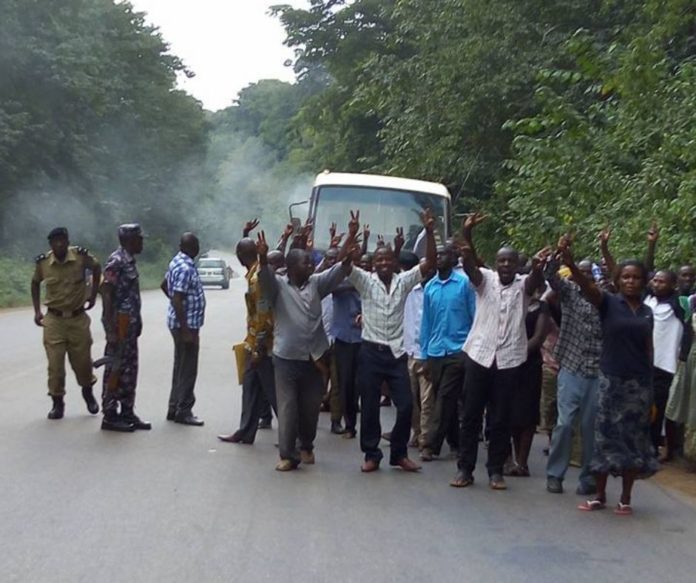
Meanwhile, Ms Musisi also pleaded with MPs to prevail over Nyakana, whom she accused of mobilizing goons to disrupt government works at Centenary Park.

Background

To jog the readers’ memory, KCCA and the Nyakanas entered into an agreement in May 16, 2006 on how to manage Centenary Park, with the latter party being given a 10-year lease.

The lease expired on May 2016 and the Nyakanas were meant to handover the now-contested land to KCCA but have since declined to do so, leading to the protracted battle between the two parties.

Further inquiry into the matter will continue tomorrow because appeared before the committee without any written responses to the allegations labeled against her.

Mr Katuntu’s committee has 10 days to dispose off the investigation.


Stories Continues after ad

Rugby Cranes climb two places in latest rankings after Gold Cup victory

VICTORS: The Rugby Cranes that beat Senegal

The Rugby Crane’s 17-16 victory over their hosts Senegal in Dakar has seen them climb up two places and also move to the top of the Gold Cup standings after two rounds with six points.

Uganda was the biggest climber improving by two places from the 40th to the 38th slot, but remaining 5th in Africa behind South Africa, Namibia, Kenya and Zimbabwe.

Senegal fall six places to 51st on the back of the defeat, making them the biggest ‘droppers’ in the latest rankings.

Neighbours Kenya remained unmoved, holding onto the 26th position as well as Africa’s top ranked team South Africa at 5th.

The best five countries in the world maintain their slots: New Zealand, England, Ireland, Australia and South Africa, respectively.

Uganda has one more point than Namibia and Zimbabwe ahead of their next game on July 15, 2017 against Tunisia in Kampala.

The Rugby Africa Gold Cup continues this weekend when Tunisia travel to Kenya and Namibia host Senegal.


The top ten in the world:

(1) New Zealand

(2) England

(3) Ireland

(4) Australia

(5) South Africa

(6) Scotland

(7) Wales

(8) France

(9) Argentina

(10) Fiji

Stories Continues after ad

Ssebaana accorded official burial

DEAD: Former DP President John Ssebaana Kizito

The government has accorded the former Democratic Party (DP) President General John Ssebaana Kizito an official burial in memory of his historical contribution to the development of Uganda before and after Independence.

Ssebaana Kizito succumbed to a stroke at Nakasero Hospital after spending two weeks in intensive care. The stroke affected his brain and his right side of the body.

Meanwhile DP Publicity Secretary Kenneth Paul Kakande, has said the party is mourning and celebrating the life of the late Ssebaana Kizito and has established a burial coordinating committee headed by MP Medadi Lubega Ssegona.

“He initiated a peaceful transition of power from people born before to those born after the Independence,” Kakande said.

Since Independence Ssebaana served in almost all successive governments, and had earlier represented Uganda in the East African Legislative Assembly (EALA) for 10 years starting from 1967 -1977. He also served as Mayor of Kampala.

Ssebaana, the first Ugandan to pursue a master’s degree in arts at the University of Oregon in USA,  together with his business associate Joseph William Kiwanuka, set up the first private insurance company in Uganda, known as Statewide Insurance Company of Uganda (SWICO).

Burial arrangements

Today, Ssebaana’s body lay in state in Parliament, after which there will night vigil at his home in Kansanga.

On Friday from 8:00 am there will be a memorial mass led by the Catholic Archbishop of Kampala Dr. Cyprian Kizito Lwanga at Statewide Insurance Company of Uganda (SWICO) headquarters on Sure House along Bombo road, and thereafter a memorial service will be held in his honour at Namirembe Cathedral.

Ssebaana’s cortege will then proceed to Mpande, Kalule Luweero district where he will be laid to rest on Saturday.


Stories Continues after ad

Onyango named in CAF Champions League Team of the week

CHOSEN AGAIN: Denis Onyango was named in CAF Champions League Team of the week

Ugandan shot-stopper Dennis Onyango made it to the team of matchday 5 after helping his club Mamelodi Sundowns secure a spot in the quarter final of the CAF Champions league.
This was the second consecutive time the Uganda captain was named on the team of the matchday.
Onyango kept a clean-sheet and managed to make outstanding saves including a penalty from Salahdin Said at the stroke of halftime.
The reigning champions left it late to pick three vital points off Ethiopian champions, Saint George, in a hotly contested duel in a packed Addis Ababa Stadium on Saturday.
The goal was scored by Liberian Anthony Laffor who struck the lone goal of the tie four minutes from time. The result saw the ‘Brazilians’ book a quarter final place alongside Group C leaders Esperance, who held AS Vita 2-2 in Kinshasa.
Sundowns play AS Vita in their last group stage game at home next weekend, while leaders Esperance will host Saint George.
Mamelodi remain focused on their aim for CAF success after missing out on the league to Bidvest Wits by 3 points.

Stories Continues after ad

Public Service ministry bans ‘miniskirts’ in offices

MINISKIRTS! Women in miniskirts

The Ministry of Public Service has issued ‘new guidelines’ to be followed in respect to how officers dress to office, in the process banning miniskirts.

ISSUED DIRECTIVE ON DRESS CODE: Public Service PS Catherine Bitarakwate Musingwire

According to a release titled: ‘Dressing for the non-uniformed officers in the Public Service’, signed by the Permanent Secretary Catherine Bitarakwate Musingwire, indicates that public servants are supposed to ‘dress decently and in the generally acceptable standards in the Uganda Community’.

According to Ms. Musingwire, some Public Servants seem to have negated their responsibility to dress decently.

‘It has however, been observed that public Officers have continued to dress in a manner that does not portray a good image of the service and does not fall in the generally acceptable standards of the Community’.

But quoting Section F-J (a) of the Public Service Standing Orders, 2010, Ms. Musingwire says the provisions therein provide for dress code for females serving in the Public Service. Under the same section F-J (b) provides for the dress code of men.

Among the prohibited issues is ‘a skirt or dress that is not above the knees’; ‘sleeves or transparent dresses’; ‘clothing that does not cover the cleavage’; flat shoes (except on Doctors’ advice); ‘bright-coloured hair’; and ‘tight-fitting dresses’.

Field Marshal Dr. IDI AMIN DADA

It should be recalled that in the 1970s President Idi Amin banned miniskirts in Uganda, and women found in breach of the directive were occasionally subjected to arrest.

However, with the ‘return to normalcy’ between 1979 and now, most women, even those in public service, have since thrown caution to the wind and dressed in a ‘provocative’ manner, a development that could have led to the directive by the Public Service PS.

Stories Continues after ad

HRW warns of threats against Jubilee opponents in Kenya elections

FRIENDS? Kenyan President Uhuru Kenyatta and Raila Odinga

With Kenya’s general election five weeks away, Human Rights Watch says some communities in the Rift Valley region live in fear of attacks if they vote against the ruling Jubilee party, and some people have left after young men warned them to stay away from polling centers.

The rights organization is calling on authorities to investigate and prosecute those behind the threats and intimidation.

“We also had some direct threat of people telling their colleagues, ‘Let us wait for August 8. We shall see where you will go. We shall be coming for you.’ Those kinds of utterances,” said Human Rights Watch researcher Otisieno Namwaya. “So people are afraid, people are leaving. Some of the families told us they were waiting for the schools to close and they will leave the area.”

The rights agency’s two-week investigation focuses on Naivasha in Nakuru Country, 90 kilometers from the capital, Nairobi. It was one of the areas hardest hit by violence after the 2007 election that was driven, in part, by ethnic divisions.

Kenya’s electoral risk mapping shows 17 counties out of 47 have been identified as conflict-prone areas. Nakuru County is expected to experience election-related violence.

In June, the Interior Ministry opened a command center to respond to terrorism and election violence. Hundreds of officers from security agencies are training around the country to prevent violence tied to the election, with the goal of having a ‘credible, peaceful election’ and stability in the weeks surrounding election day.

But Namwaya says police officers lack the ability to respond if violence erupts in August.

“We did not get the impression the police have done much,” he said. “There were incidences where people were claiming that they have met with police, and there was no response, but we also found that the relationship between the police and the community is not so good.”

Interior spokesperson Mwenda Njoka says security agencies are ready to stop electoral-related violence.

“We have mapped all the country,” Njoka said. “We know we have about 22 areas that we identify as potential hotspots where we have done additional deployment of security officers from various groups, both the civil and the military, in case there is need for military intervention in some areas.”

The head of the European Union Observer Mission, Maietje Schaake, told reporters that election violence is very possible.

“It’s no secret that there are concerns about the possible outbreak of violence,” Schaake said. “This is not inevitable. And it’s clear that it will create a situation where everybody loses. There is responsibility for each and everybody to grant each other the right and safety to vote.”

Kenya’s election is August 8. President Uhuru Kenyatta hopes to win a second term against several challengers, including former Prime Minister Raila Odinga.


Stories Continues after ad

Mugabe ‘donates’ US$1m to AU

Late Zimbabwean President Robert Mugabe

Zimbabwean President Robert Mugabe said he was donating US$1 million to the African Union (AU), hoping to set an example for African countries to finance AU programmes and wean it off funding from outside donors.

For years, about 60 percent of AU spending is being financed by donors including the European Union, World Bank and governments of wealthy non-African countries.

Mugabe, who has held power in Zimbabwe since independence from Britain in 1980, has said reliance on foreign funds allows big powers to interfere in the work of the AU.

The 93-year-old Mugabe told an African Union summit in Addis Ababa, Ethiopia, he had auctioned 300 cattle from his personal herd in May to fulfil a promise made to the continental body two years ago.

“Africa needs to finance its own programmes. Institutions like the AU cannot rely on donor funding as the model is not sustainable,” Mugabe said in comments broadcast on Zimbabwe’s state television.

“This humble gesture on Zimbabwe’s part has no universal application but it demonstrates what is possible when people apply their minds to tasks before them.”

The African Union’s 2017 budget is $782 million, increasing from $416.8 million last year. African leaders in July 2016 agreed in principle to charge a 0.2 percent levy on some exports to help finance AU operations.

Zimbabwe, whose economy was devastated by a drought last year, does not disclose its contributions to the AU. The top five African contributors are Algeria, Egypt, Libya, Nigeria and South Africa.


Stories Continues after ad