Stanbic Bank
Stanbic Bank
19.3 C
Kampala
Stanbic Bank
Stanbic Bank
Home Blog Page 193

Former KCCA officials granted bail over Kiteezi landfill tragedy 

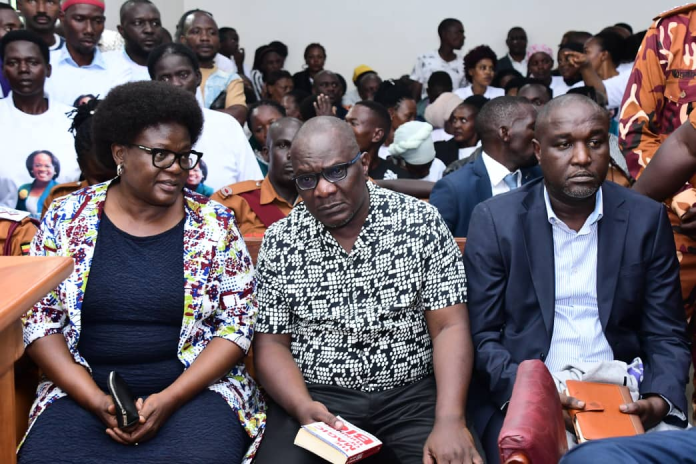
Former KCCA Executive Director, Dorothy Kisaka, her deputy, Eng. David Luyimbazi and former director of health and environment Daniel Okello appearing before Kasangati court.

Court has granted bail to three embattled former officials of the Kampala Capital City Authority (KCCA); Dorothy Kisaka, David Luyimbazi, and Daniel Okello following charges linked to the August 10, 2024, Kiteezi landfill disaster. The tragedy claimed 35 lives and left 21 others injured.

The court set cash bail of Shs5 million Ugandan for each of the accused, while their sureties are to execute a non-cash bond of 100 million shillings. Additionally, the former KCCA officials are required to surrender their original passports and are prohibited from leaving Uganda without prior court approval. The case has been adjourned until November 26.

Prominent media analyst Andrew Mwenda has criticized the arrests, suggesting that they serve more as a placatory measure than a genuine effort to address underlying issues.

Mwenda contends that the real cause of the disaster lies in the government’s persistent underfunding of waste management and its neglect of Kampala’s infrastructure.

According to KCCA, the Kiteezi landfill had long exceeded its capacity. Despite repeated requests from the authority for funds to decommission the site, no action was taken, leaving the landfill in a critical state.

However, a report by the Committee on Commissions, Statutory Authorities and State Enterprises (COSASE) implicated two Kampala ministers and the Permanent Secretary to the Treasury (PSST), Ramathan Ggoobi, in the Kiteezi Landfill disaster. The report attributed part of the blame to the ministers, citing lapses in oversight and poor management of the waste disposal crisis at Kiteezi, which has put residents’ health and safety at risk.

The COSASE report specifically highlights the ministers’ failure to address the longstanding waste management issues at Kiteezi, allowing the situation to escalate into a disaster. Furthermore, PSST Ggoobi is held accountable for withholding funds necessary for decommissioning the Kiteezi Landfill, a critical step in resolving the waste management problems. Despite repeated calls for intervention, the funds were allegedly withheld, causing delays in closing the site and exacerbating the hazardous conditions.

The Kiteezi Landfill disaster has been a ticking time bomb, with the site reaching its capacity as far back as 2015. The tragedy has claimed dozens of lives and highlighted the grave shortcomings of the government’s waste management and governance.

The former KCCA officials have since been arrested, charged, and remanded to Luzura prison until November 4, 2024. They face allegations of mismanagement, corruption, and environmental regulation violations contributing to the disaster.

The COSASE report’s findings sparked widespread outrage, with many calling for greater accountability and urgent reforms in Uganda’s waste management sector. As the investigation continues, the nation awaits justice for the lives lost and affected by the Kiteezi landfill disaster.

Stories Continues after ad

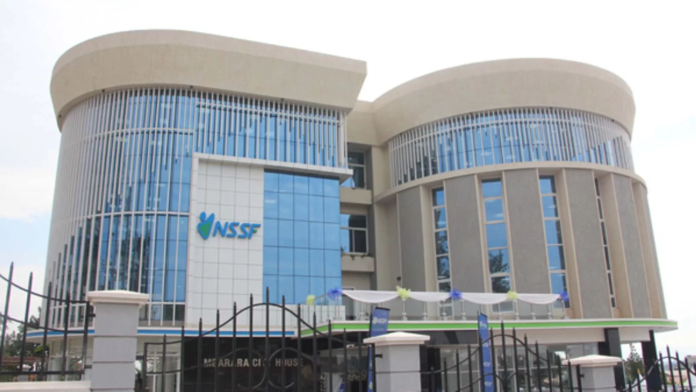
Court dismisses 26-year-old case against NSSF

The High Court in Kampala has dismissed a case in which Alcon International was seeking compensation from the National Social Security Fund (NSSF) for allegedly confiscating its machinery, equipment, and building materials used to construct the Workers House.
Alcon sued NSSF after the latter terminated its contract in 1998, claiming it was unfairly blocking them from retrieving its equipment and machinery at the Workers House site. When the matter went into arbitration, Alcon was awarded $2.78m.

However, the Supreme Court sent the case back to the High Court for retrial after NSSF rejected the award to Alcon. NSSF argued that Alcon International Kenya Limited had taken over the contract from Alcon International Uganda Limited without its knowledge, which was tantamount to fraud.

According to available court records, the retrial included matters which are claimed under this very suit. The Court also heard that NSSF entered into a contract for the construction of the Workers’ House with Alcon International Ltd, a company incorporated in Kenya and was under the impression that it was dealing with such.

However, NSSF said it only became aware that it was dealing with a different company upon a 2007 decision of the Court of Appeal where it established that Alcon International Limited had fraudulently assigned the building contract to the plaintiff without its knowledge and consent which was illegal and fraudulent.

Last Thursday, Justice Musa Ssekaana ruled that Alcon International had not established a cause of action in retinue against NSSF. Justice Ssekaana in his decision dated October 31st 2024 also said that the claim was time-barred under the Limitation Act, having risen twenty-six years ago.

“It is indeed true that the plaintiff [Alcon] was fraudulent when it entered onto the defendant’s [NSSF] premises well aware that it .. had no contract … as stated by the defendant, an illegality once brought to the attention of court overrides all questions of pleadings including any admissions made thereon. The plaintiff cannot seek to recover from a transaction in which he was illegally performing,” he said.

“Having upheld all preliminary objections raised by [NSSF] in respect of [Alcon’s] suit … this suit is dismissed with costs to the defendant,” he added.

Stories Continues after ad

NAGRC&DB aims at boosting animal feed and production with mechanization

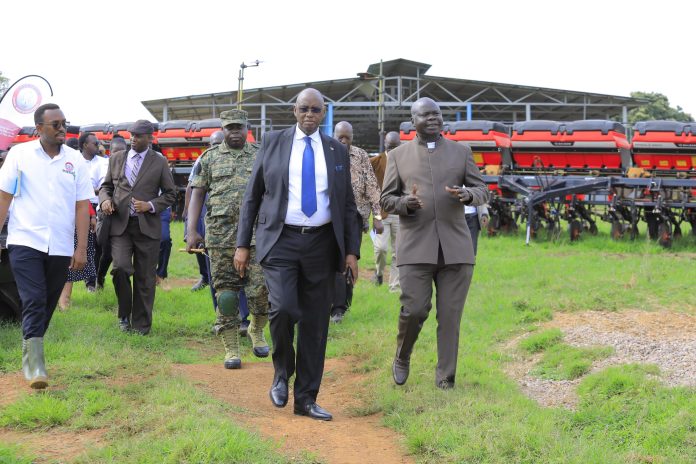
Minister Rwamirama.

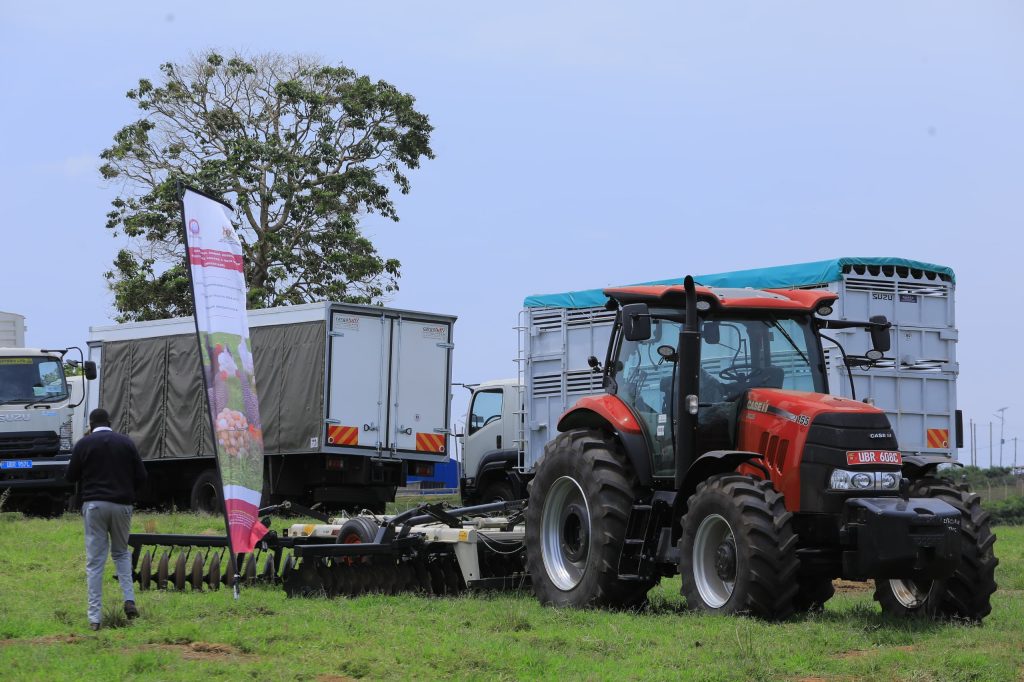
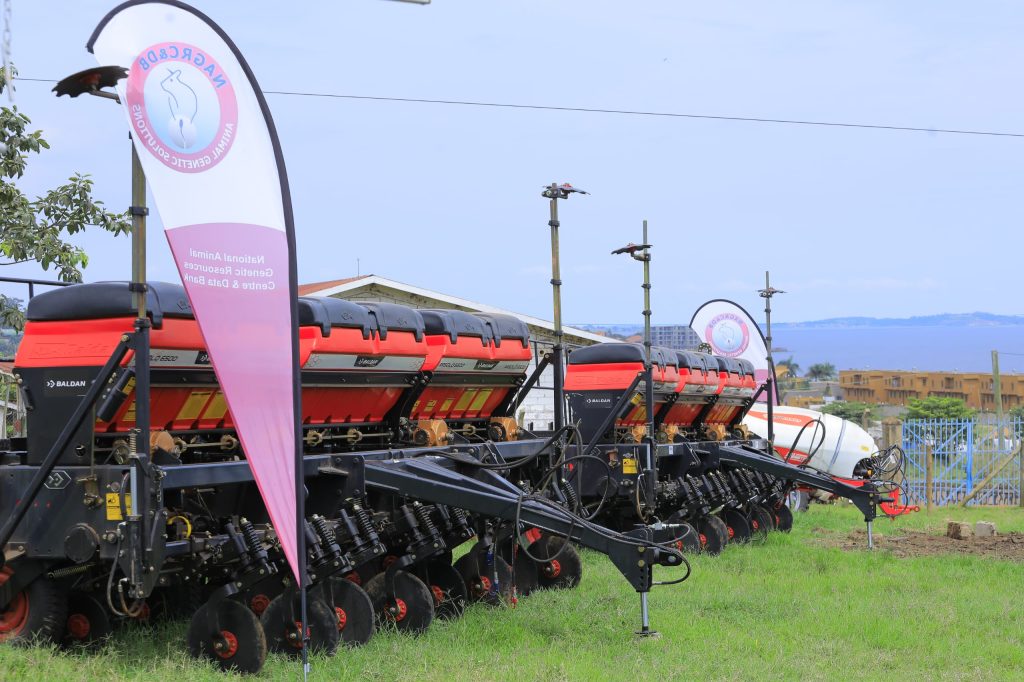
The Minister of State for Animal Industry  Bright Rwamirama has today  launched the state-of-the-art heavy-duty animal feed production, harvesting and manufacturing machinery at NAGRC&DB’s Entebbe-based livestock experimental station (LES ).

The machines include heavy-duty agriculture tractors, tipper trailers(10-tonne) capacity, heavy-duty primary disc harrows, heavy-duty secondary disc harrows, heavy-duty precision low planters, long-range boom sprayers, forage harvesters, poultry haulage trucks, animal feed distribution trucks, and animal haulage trucks among others. 

Uganda currently faces a growing high demand for quality pasture and value-added animal feed. This demand is fueled by a growing population that majorly depends on livestock as a source of food and income. 

The new machinery comes as a stitch in time when the agency is implementing the presidential directive on  Food and animal feed security. In 2022, the cabinet tasked NAGRC&DB with boosting the production of maize and soybeans using 30,000 acres of land that makes up a fraction of the agency’s land.

However according to the agency’s management, , among the key challenges they have been previously grappling with is hiring expensive machinery to use in  bush clearing which has always been costly especially during rainy seasons. 

Government through its various programs such as the Parish Development Model, envisions having a competitive, productive, and sustainable agriculture sector through agricultural commercialization. 

NAGRC&DB management hopes that with the help of the launched modern machinery, the agency will be able to leverage modern agricultural technologies over traditional means that will assist it in value addition and boosting production of animal feed benefiting not only the agency’s farms and ranches but also the neighboring communities. 

Through consistent and sustainable agriculture innovation and mechanization, the government will be making agriculture more attractive to youth that  make up the majority of Uganda’s population making them key players under the Parish Development Model.

As a government agency charged with livestock development and breeding activities, NAGRC operates fifteen regionally distributed center farms and ranches, including Rubona Stock Farm in Bunyangabu, Maruzi Ranch in Apac, Aswa Ranch in Pader and Lamwo, Got Apwoyo Ranch in Nwoya, Kasolwe Stock Farm in Kamuli, Njeru Stock Farm in Buikwe, Lusenke Stock Farm in Kayunga, Bulago Stock Farm in Bulambuli, the Livestock Experimentation Station, and the National Bull Stud in Entebbe, Ruhengyere Ranch in Kiruhura, the National Poultry and Piggery Development Centre in Wakiso, Nshaara Ranch in Kiruhura, and Sanga Stock Farm in Kiruhura. Each of these facilities has specific livestock production and breeding objectives aimed at producing superior breeding stock accessible to farming communities at subsidized rates. 

The above facilities have been instrumental in the progress of the NRM manifesto as they facilitate the use of AI and other assistant reproductive technologies for better breeding outcomes in communities. 

Since genetic improvement can not succeed without animal nutrition, nagrc&db is heavily producing animal feeds (silage, hay and compounded animal feeds) for subsidized access by farmers across the country. To ensure effective adoption of Technologies, Innovations and Management Practices (TIMPs), all the 15 animal breeding centers serve as skilling and training centers designed to equip  farmers with all the know-how needed to succeed at whichever livestock enterprise they choose. 

Stories Continues after ad

Central Bank records over 1.3t from treasury bonds in October

Government of Uganda through the Central Bank has raised over Shs1.3 trillion in the sale of treasury bonds for October 2024.

According to the results of the Treasury Bond Auction done on Wednesday, October 30, the Bank of Uganda collected over Shs330 billion from the bonds maturing in two years, about Shs550 billion from the 5-year bonds and about Shs480 billion from those maturing in 15 years.

The two-year bond is trading at 15.7% while that of 5 years is at 16% and is currently trading at around 15.5% in the secondary market.  The 15-year bond has reached 16.75% in the primary market, reaching levels of the 20-year bond in recent months. In the secondary market, it’s currently trading at 16.2-16.3%.

This comes after the government of Uganda through the Bank of Uganda generated Shs5.4 trillion from the sale of treasury bills and bonds in the three months of July, August and September.

Treasury auctions are designed to minimize the cost of financing the national debt by promoting broad, competitive bidding and liquid secondary market trading.

According to the Bank of Uganda’s Monetary Policy Report for October 2024, the Shs.5.4 trillion in the three months to September 2024 is about 69% higher than the Shs.3.2 trillion generated in the three months to June 2024.

According to the report, yields in the primary market for treasury bills and bonds rose across all tenors in the three months to September 2024, even with administrative cutoffs relative to the three months to June 2024, due to an increase in domestic financing of fiscal deficits.

Stories Continues after ad

Coca-Cola Beverages Uganda distribution partner celebrates growth

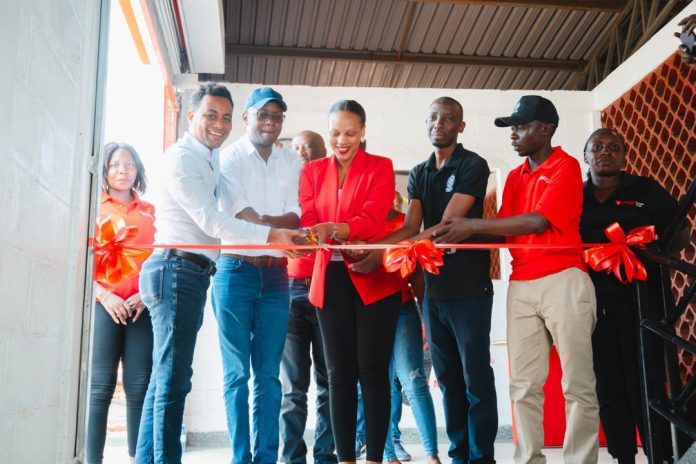
One of Coca-Cola Beverages Uganda’s (CCBU) Official Coca-Cola Distributors (OCCDs) marked its significant growth as a business partner by inaugurating new premises.

Bronze Logistics, an OCCD based in Kazo, Bwaise, has moved from a rented 116m 2 warehouse to a self-owned 500m 2 facility.

“Our partnership with Bronze Logistics shows what can be achieved when vision meets opportunity. This new warehouse sets the stage for greater efficiency and allows Bronze Logistics to meet growing customer demand,” said CCBU General Manager Melkamu Abebe during the ribbon-cutting ceremony.

“At CCBU we aim to create value for all our stakeholders – communities, consumers, customers, suppliers, employees, government and shareholders.

“Our goal is to help our partners grow sustainably while delivering excellent service that ensures product availability. Our Route-to-Market strategy is all about ensuring a smooth flow of products from production to final consumption,” said Abebe.

Bronze Logistics became an OCCD in late 2023 and has quickly demonstrated exceptional growth while maintaining CCBU’s world-class standards.

This transformation was made possible through CCBU's ongoing support. The company facilitated access to credit, provided training for sales staff and accelerated the distributor’s digital capabilities that enable real-time tracking and operational data.

“What started as a small operation has grown beyond our expectations. The support and capacity-building from CCBU have allowed us to dream bigger. With this new warehouse and advanced digital tools, we are ready to serve more customers and become a leading distributor in the region,” said Geoffrey Kisitu, proprietor of Bronze Logistics.

Bronze Logistics is on track to surpass its 2024 targets. Its improved capacity and digital readiness reflect how modern warehousing can unlock greater business potential.

“With over 96 OCCDs across Uganda, CCBU’s focus remains on empowering partners to reach new heights. Through continuous capability building, operational support and an unwavering commitment to customer-centricity, CCBU strives to partner for growth with all our distributors,” said Abebe.

CCBA is the 8th largest Coca-Cola bottling partner in the world by revenue, and the largest on the continent. It accounts for over 40% of all Coca-Cola products sold in Africa by volume. With over 18,000 employees in Africa, CCBA services more than 720,000 customers with a host of international and local brands. The group was formed in July 2016 after the successful combination of the southern and east Africa bottling operations of the non-alcoholic ready-to-drink beverages businesses of The Coca-Cola Company, SABMiller plc and Gutsche Family Investments. CCBA shareholders are currently: The Coca-Cola Company 66.5% and Gutsche Family Investments 33.5%. CCBA operates in 15 countries, including its six key markets of South Africa, Kenya, Ethiopia, Uganda, Mozambique and Namibia, as well as Tanzania, Botswana, Ghana, Zambia, the islands of Comoros and Mayotte, Eswatini, Lesotho, and Malawi.

Stories Continues after ad

Museveni consecrates new All Saints Cathedral as he pledges Shs1b towards its completion

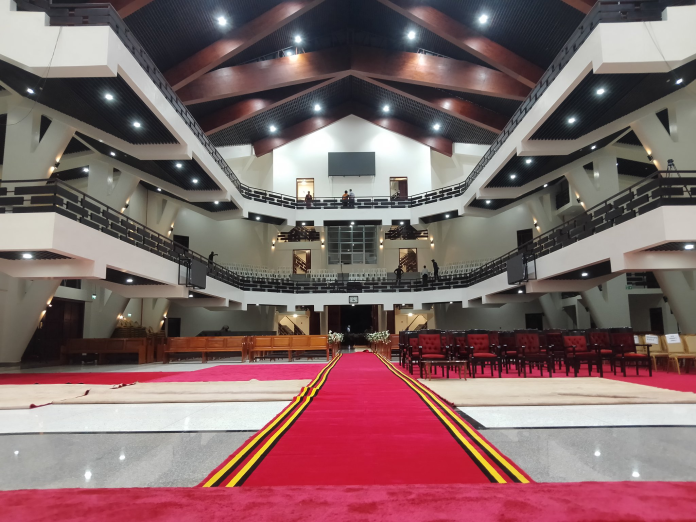
New All Saints Cathedral Nakasero.

President Yoweri Museveni has pledged Shs1 billion towards the completion of the All Saints Cathedral Nakasero. Museveni said while consecrating the All Saints Cathedral.

In 2011, Christian embarked on the construction of the 5,000-seat cathedral to accommodate the increasing numbers of believers in Kampala.

The multi-billion-dollar project includes four chapels, a 45-meter bell tower, offices for the Bishop of Kampala Diocese and the Parish, two-level underground parking, a coffee centre, and a library.

Archbishop Samuels Stephen Kaziimba Mugalu estimates that the project will cost more than Shs26 billion. Last month, Kaziimba said they still need Shs6 billion to fully complete the cathedral, particularly for the exterior, after they sunk in Shs18 billion.

“I discussed with Mama Janet Museveni, and we asked ourselves, what have we done towards the construction of this church? We have resolved that from our cows, not from the government budget, we contribute Shs100 million. That is our own money,” he said.

“Since I was elected as the president, I will use that authority in the coming budget to contribute Shs1 billion,” he said.

He congratulated the church for being part of the interreligious council, an association that brings together all religious organisations in Uganda.

“I want this to percolate down to the whole society so that you judge people by what they do, not denominations, that is to say, where they worship, “he said.

Museveni also offered a brand-new car to the newly concreted 5th Assistant Bishop of the Diocese of Kampala, Rev. Fredrick Jackson Baalwa.

Stories Continues after ad

EC to carryout nationwide exercise for identification and mapping of Persons with Disabilities

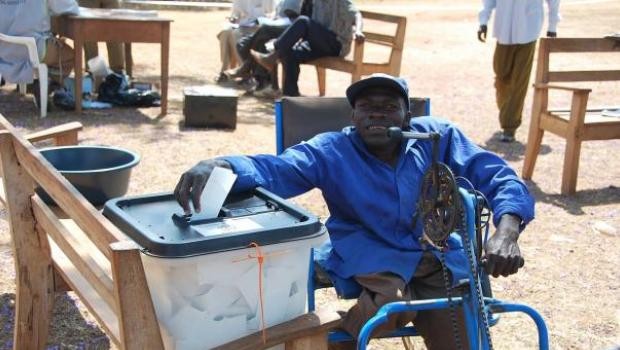
A disabled man casts his vote.

The Electoral Commission (EC) of Uganda has initiated a nationwide identification and mapping exercise for Persons with Disabilities (PWDs) on the National Voters Register (NVR).

The exercise is set to run from November 4 to November 13, 2024 with an aim of inclusive participation of PWDs in the upcoming 2025/2026 general elections.

Justice Byabakama Mugenyi Simon, Chairperson EC has emphasized the necessity of the exercise stating, “Our mandate under the Constitution is to ensure that every Ugandan, including those with disabilities, has equal and unhindered access to participate in the electoral process.”

Byabakama said that the exercise aims to address ongoing challenges faced by the EC in adequately capturing data about the PWD community across Uganda, including information on their locations, types of disabilities, and literacy levels.

“Unfortunately, in previous elections, we have lacked adequate information on PWDs in terms of their numbers, locations, and the types of disabilities. This gap has impacted our ability to create inclusive voting facilities and processes,” Byabakama noted.

According to him, this comprehensive identification exercise is vital for ensuring that the Commission can tailor the electoral process to meet the needs of PWDs.

The identification process will categorize PWDs based on various types of disabilities, including physical, visual, hearing, mental, and multiple disabilities.

Byabakama explained, “These categories are essential for us to understand the specific needs of each group. For example, those with visual or hearing impairments may require customized voter education materials to participate effectively in the elections.”

The Commission will work alongside Local Council 1 (LC1) representatives at the village level to conduct this exercise.

“Our Parish Supervisors will collaborate with LC1 Chairpersons to ensure accurate identification and verification. This will include holding village meetings where PWDs can confirm or update their details on the Voters Register. During these meetings, any complaints or issues regarding registration will be documented for follow-up action,” he said.

Justice Byabakama urged PWDs to take full advantage of this exercise, particularly those who recently applied for National Identification Registration Authority (NIRA) registration.

“This is a unique opportunity for all PWDs who wish to vote in the upcoming elections to confirm their inclusion on the National Voters Register,” he stated.

He also called upon the general public to support the exercise, stressing the importance of community involvement.

The exercise will produce a verified PWD register, which the EC will use to plan accessible polling stations and develop inclusive voter education materials.

“By the end of this exercise, we aim to have a credible register that reflects every village and parish across Uganda,” Byabakama said.

He added that this register will enable the Commission to plan more accessible polling locations, particularly for those with physical disabilities.

Byabakama appealed to all stakeholders and communities to support the initiative, urging, “Identifying PWDs at the village level is a fundamental step toward inclusivity and fairness in our democratic process. We encourage all citizens to assist in creating a reliable register to ensure that no one is left behind.”

The EC urges all Ugandans to support the effort, ensuring that every eligible citizen can exercise their right to vote in an environment that respects their needs.

Stories Continues after ad

Seed Global Health donates Shs346m worth of medical equipment to three hospitals in Uganda 

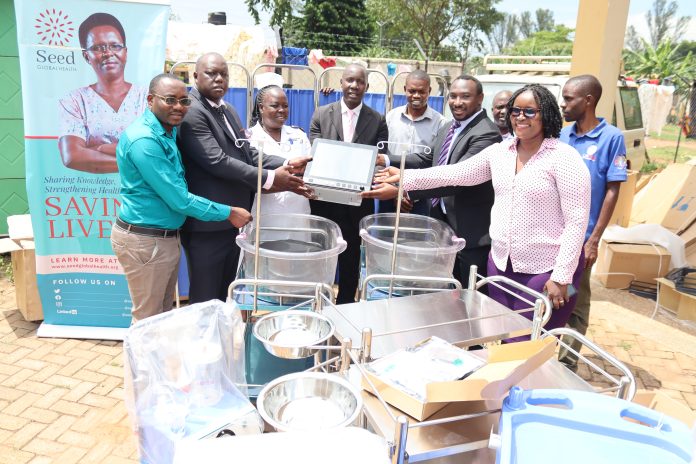
Seed Global Health donated medical equipment valued at Shs346 million to Arua, Lira, and Mbale Regional Referral Hospitals (RRHs) as well as Busitema University.

The donation includes essential tools such as patient monitors, blood pressure machines, suction machines, airway equipment, phototherapy machines, baby warmers, foetal dopplers, oxygen concentrators, and more. This equipment will significantly enhance service delivery in maternity and pediatrics departments and support clinical skills training at the university.

Despite recent progress, Uganda’s maternal and neonatal mortality rates remain high. According to the 2022/2023 National Annual Maternal and Perinatal Death Surveillance and Response (MPDSR) report, the maternal mortality ratio has improved from 336 deaths per 100,000 live births (UDHS, 2016) to 189 per 100,000 live births (UDHS, 2022). Neonatal mortality has also decreased from 27 to 22 deaths per 1,000 live births over the same period. 

However, too many women and newborns are still dying, with hemorrhage identified as the leading cause of maternal deaths. The donated equipment is expected to help in addressing these critical gaps in care, directly contributing to the prevention of avoidable maternal and child deaths.

Arua, Lira, and Mbale (RRHs) serve over 10.6 million Ugandans, along with patients from neighbouring countries such as the Democratic Republic of Congo (DRC) and South Sudan. 

Dr. Andrew Twineamatsiko, program manager at Seed Global Health, who led the handover to the partners, said, “Providing essential equipment ensures that health workers have what they need to deliver quality care and meet the needs of their patients.”  

Dr. Mulowoza Jude, head of obstetrics and gynecology at Mbale RRH, added, “This donation will allow us to apply our skills more effectively and deliver higher quality care to mothers. We are confident it will lead to better patient outcomes.” 

Dr. Andrew Odur, head of obstetrics and gynecology at Lira RRH, highlighted that the much-needed baby warmers and phototherapy machines arrived at a crucial time for the hospital.  

“This equipment will help our health workers perform better. We value the continued partnership with Seed Global Health and will work as a team to improve outcomes in all our maternal and newborn units,” he noted. 

Dr. Alex Andema, Director of Arua RRH, appreciated the donation and said, “We will ensure that the equipment is distributed to the maternity, pediatrics, and emergency wards and put to good use to enhance service delivery to patients.” 

Meanwhile, Busitema University received simulation lab equipment to support the practical training of students. Joshua Epuitai from the university’s nursing department praised the value of simulation in healthcare education: “Simulation is key to training healthcare workers. Students can touch, feel, and relate to real-world clinical practice. The equipment we have received will greatly enhance their learning experience.”

Professor Dan Kibuule, the Dean of the faculty of health sciences at Busitema reflected on the importance of collaboration.

 “In today’s world, collaboration is key, and as a university we are keen on building strategic partnerships. Collaborations like the one we have with Seed Global Health enable us to train health professionals who will provide excellent service to the community,” he said. 

Seed Global Health partners with hospitals and universities to educate healthcare workers, improve quality of care, and strengthen health systems. To date, over 9,000 health workers have been trained across nine sites, contributing to the reduction of Uganda’s healthcare workforce shortage and enhancement of the capacity of the health system to meet the needs of the population.

Stories Continues after ad

Museveni pledges to reform Uganda’s ‘parasitic’ Agencies and Authorities

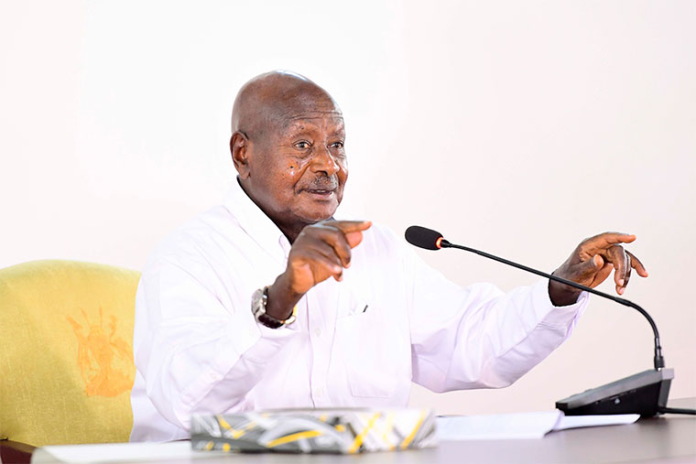
President Yoweri Museveni voiced serious concerns about the inefficiency and high expenditure by government agencies and authorities.

Museveni expressed frustration over what he termed “parasitic” government bodies, revealing that their costs had become alarmingly disproportionate to their output.

“I had given you the figures of money spent on ministries compared to the money spent on the agencies and authorities,” he noted.

Museveni revealed that by 2016, there was Shs2 trillion for the ministries and Shs2.2 trillion for the agencies and authorities but despite this heavy spending, the agencies employed only 3,905 people, while ministries excluding the soldiers had 18,532 employees. These numbers led him to call for a thorough examination of Uganda’s spending priorities.

The President also reflected on the growth of Uganda’s army over the years. “Our army was the smallest in number in 1991 after the reduction in force (RIF) of that time. At that time, it was 41,000. By 2016, when these figures were captured, it was more in numbers,” he explained.

Despite these changes, he noted that public servants continued to receive meager salaries, which, he argued, stemmed from an unbalanced allocation of government resources.

Addressing the inefficiencies in tax collection, Museveni criticized the Uganda Revenue Authority (URA) for its low performance.

“Our wonderful URA, on which we are spending so much, has, all this time, been collecting only about 11% of GDP as tax. There is a lot of tax evasion. We are insisting that they must collect, at least, 20% of GDP in taxes. If the URA collected 25% of GDP, Uganda’s financial position would drastically improve,” he said.

Concerning the complex public service budget, he noted that significant funds bypassed ministries and were channeled through local governments

“By 2016, these were getting Shs3.35 trillion,” Museveni revealed, explaining that this money supported critical roles, such as government teachers, health workers, and local government employees, totaling 192,160 individuals. He described this budget structure as “madness,” and that it hindered essential infrastructure and development initiatives.

He also expressed desire to see public servants emulate the discipline and efficiency of the Uganda People’s Defence Forces (UPDF).

“With improved pay, the Public Service will be as efficient as UPDF. That is why I do not accept the concept of contracts for our Public Servants. They should remain permanent and pensionable but the Standing Orders, like those of UPDF, should make them fully and promptly accountable. You do not work, you will be dismissed or worse, promptly,” he expressed.

He described a model for effective agricultural management, noting, “If you take agriculture, there will be a vet and an agricultural officer per sub-county or even more.” Recalling areas like Gombe, Kapeeka, and Ssemuto, he illustrated how these regions could thrive with proper support and resources.

“How can one vet and one agricultural officer fail to monitor crops and livestock in that area if they are equipped with a pikipiki (motorbike) each, with enough fuel?” he questioned.”

Museveni pledged to reform Uganda’s government structures, unifying Ministries, Departments, and Local Governments under revised Standard Operating Procedures (SOPs). He assured Ugandans that these changes would enhance accountability, reduce unnecessary spending, and ultimately support Uganda’s development goals.

“With such a public service, we shall not kwefuuza (regret losing something),” he declared, confident that these reforms would set Uganda on a path toward sustainable growth and efficient governance.

Stories Continues after ad

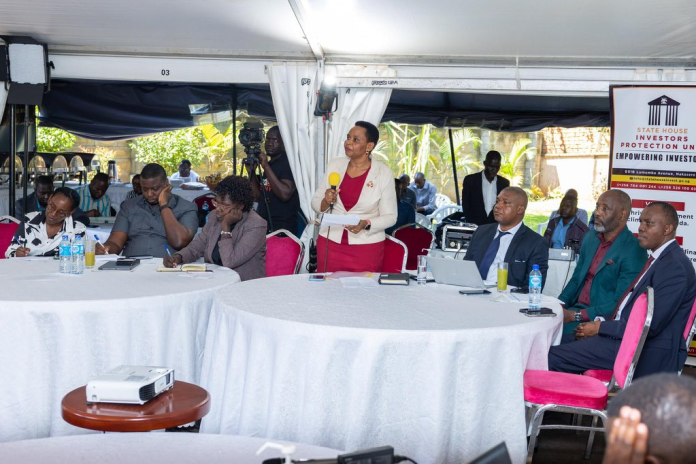
Col. Nakalema calls for investor protection to unlock Uganda’s mineral wealth

Col. Edith Nakalema, Head of the State House Investors Protection Unit (SHIPU), have urged stakeholders in the mining sector to focus on protecting investors in order to unlock Uganda’s mineral wealth.

Nakalema cited numerous complaints of fraud and other challenges faced by investors, highlighting the need for collective action.

“Today’s meeting is pivotal for Uganda’s mining sector. We must address challenges, seize opportunities, and promote responsible mineral sourcing practices,” Nakalema said.

SHIPU has registered several complaints related to fraud in gold trade and is working with anti-corruption agencies to address these concerns. Nakalema proposed government incentives for responsible mineral sourcing practices, investor protection, and elevating Artisanal and Small-Scale Mining.

Moses Kaggwa, Director Economic Affairs, revealed plans to grow Uganda’s economy ten-fold to $500 billion in 10-15 years, with minerals playing a key role.

“We have identified areas that will propel this growth, including Agro-industrialisation, Tourism, Minerals and Gas, and Science/Knowledge Economy,” Kaggwa said.

The government has established the Uganda Mining Company to act as the country’s investment arm in the mining sector.

“A law has been passed to ensure orderly exploitation of our resources,” Kaggwa assured.

Dr. Joseph Muvawala, Executive Director of the National Planning Authority, emphasized the need for Uganda to do things differently to achieve ten-fold economic growth.

“We must add value to our products, have technology and a leading plan,” Muvawala said.

Commissioner Mining Agnes Alaba noted Uganda’s rich mineral potential and the need for increased exploration. “We are prioritizing policies, regulations, and laws to regulate the mining sector,” Alaba said.

Prof. Gerald Karyeija, a Government Policy Analyst, advocated for a mining school to train technical skills and expertise. “Ugandans want their lives changed and jobs increased,” Karyeija said. “Mineral wealth should be public wealth, not personal wealth.”

CP James Ruhweza, Deputy Director of Operations Services, Uganda Police, pledged continued cooperation to protect the sector. ACP Tusingirwe Julius Caesar, Commander Police Mineral Protection Unit, noted concerns over fraud cases, particularly in gold trade.

Fred Sapong, CEO of Ghana’s Oheneba Poku Foundation, advised Uganda to adopt strict regulations, similar to Ghana’s, to prevent fraud and ensure transparency. “In Ghana, gold traders are registered, transactions are through banks, and everyone in the value chain is covered,” Sapong said.

Patricia Gulyetonda, Bank of Uganda Reserves and Investment Management Head, assured stakeholders of the Central Bank’s dedication to regulating the sector.

Humfrey Asiimwe, CEO Uganda Chamber of Mines and Petroleum, thanked Nakalema for organizing the meeting. “This is a step in the right direction,” Asiimwe said.

Stories Continues after ad