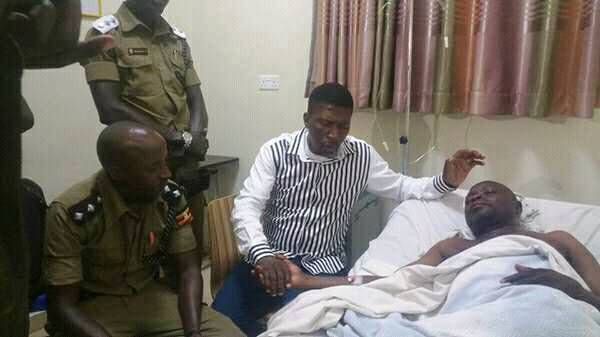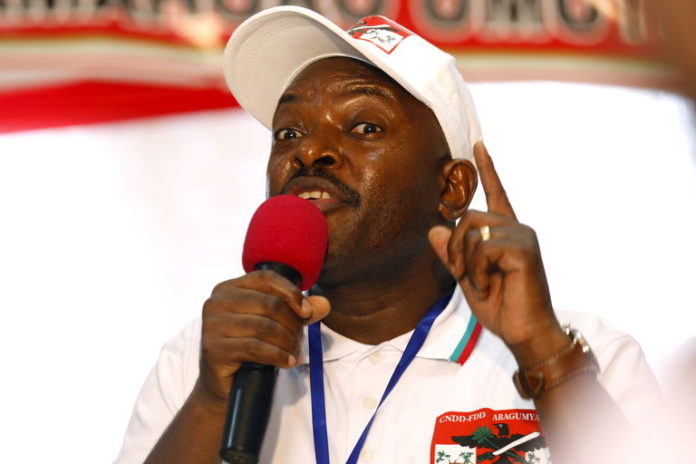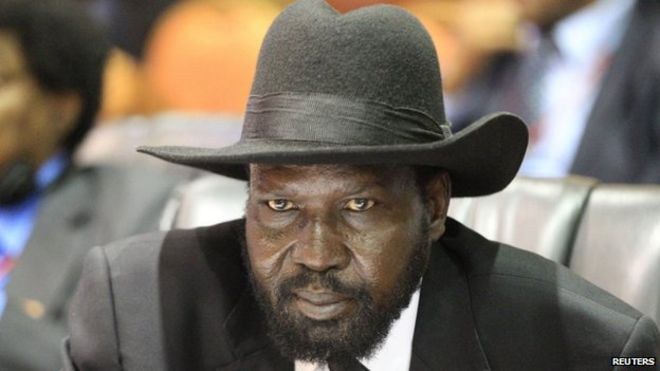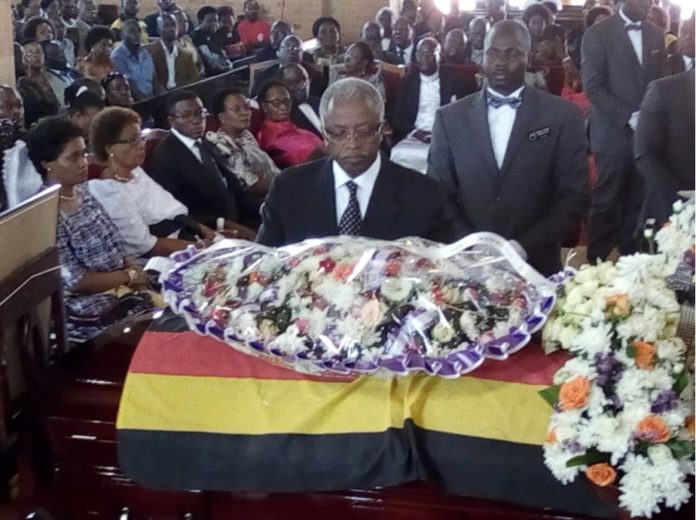
Royal-Suites-Hotel-bugolobi, where Opio died from.
Relatives of a woman who was burnt to death over four years ago at Royal Suites, a plush hotel in the leafy Bugolobi suburb, have cried foul over the way the proprietor of the facility is treating them.
Family sources said the proprietor Mathias Malanda Kizza had reneged on mutually-agreed-to promises of compensation, following the death of Harriet Christine Apio at his hotel in May 27, 2012.
“We have been trying to talk to this man but he is elusive, even the promises he has made for compensation are not forthcoming and he has resorted to threatening us,” the relative, who spoke to the EagleOnline on condition of anonymity, said.
Ms Apio had been hosted at the hotel by a German expatriate friend, Dr. Christoph Larsen, when a gas cylinder exploded, burning both of them and one hotel worker, Patrick Obbo. Unfortunately the woman died on June 7, 2012 while undergoing treatment at the Kampala International Hospital, while Dr. Larsen and Mr Obbo were later treated for severe burns in Nairobi and Kampala International Hospital, respectively.
In his submission Dr. Larsen said the hotel staff was not knowledgeable about firefighting and that the hotel’s firefighting equipment was not operational.
Since then Apio’s family, Dr. Larsen and Kizza are embroiled in a tripartite battle that has also drawn in the hotel’s insurers, AIG insurance company. The police also carried out investigations and made a report about the fire, citing the burns suffered by the three people.
However, when the EagleOnline went to the hotel in Bugolobi to see Mr Kizza and get his side of the story, he was adamant, telling his Secretary not to allow us in.
“I have no time to meet them; let them go and write,” he was overheard telling his Secretary.
Things are definitely heating up in the Big Brother Naija house!
After a week of excitement and a mock eviction which shook the housemates and brought some of them to tears, Big Brother Naija is set for the first real eviction come Sunday, February 5. The housemate with the least number of votes will be evicted from the house, cutting short the dream of winning 25 million naira and an SUV.
CANDIDATE FOR EVICTION: Miyonse
On Monday night, BBNaija fans witnessed the first live nomination show. The housemates were each given 45 seconds to nominate two fellow housemates for possible eviction. However, new housemates Bassey and Debie-Rise were exempted from nominating and being nominated this week. After the housemates’ individual sessions with ‘Biggie’, it was revealed that Miyonse, Soma and Gifty got the most nominations from other housemates. Perhaps the most shocking move was when TBoss, Miyonse’s on and off ‘girlfriend’ put him up for nomination!
FACING EVICTION: Efe
Then the moment came when Biggie asked the head of house (HoH), CocoIce to save one of the nominated housemates and replace with another. CocoIce then proceeded to save Gifty and replaced her with Efe.
The first eviction show holds on Sunday, February 5. To save your favoritehousemate, viewers in Nigeria should text the word “Vote” followed by the housemate’s name to 32052. While for the rest of Africa, follow the AfricaMagictv official account on WeChat and click on the menu option ‘BBNaija’ and select your preferred housemate. Voting closes at 19:00 CAT on Saturday February, 4.
The show is aired 24/7 in 45 countries from Nigeria through East, West and Southern Africa on DStv channel 198 and GOtv channel 29.
Uganda's foreign minister Sam Kutesa, Flanked by the Deputy Director of Uganda Media Centre Col. Shaban Bantariza.
The Minister of Foreign Affairs Sam Kutesa has refuted claims that while sitting in Ethiopia this week, the heads of African states under their umbrella body, the African Union (AU) resolved to quit United Nations International Criminal Court (ICC) en masse.
While addressing media Friday morning at the Uganda Media Center, Kutesa, the former President of the 69th United Nations General Assembly (UNGA) said there wasn’t any such resolution, though he admitted there were plans by African countries to pull out.
“With ICC, you join willing and you can pull out at any time of wish,” he said adding that countries are free to pull out. “We discussed about it but we never resolved to all pull out at once. We can pull out one by one.”
On why they are mooting plans to pull out, he said whereas they condemn impunity against Africans, they are pulling out because ICC ‘is a discriminatory court’.
He also said that despite the heavy funding, the ICC had failed to finalise more than four cases.
“I saw this for myself while I was president of the UN General Assembly,” Kutesa said adding that plans are underway by AU to start a court, the African Court of Justice and Human Rights, that will be trying similar cases like ICC.
“Once such a court is in place, we (Uganda) will be the first subscribers to it…..” This would be followed with the pulling out of ICC, he added.
Asked about government’s submitting Justice Solome Balungi Bossa as its candidate for the post of judge of ICC which Uganda doesnt believe in, Kutesa said: “there is no contradiction at all. We are still members at ICC. We haven’t pulled thus we are entitled to send any person of our choice to ICC”.
Justice Bossa is competing with two judges from Lesotho and Benin, and elections for the post will be held in December 2017.
Meanwhile, speaking out on the just concluded AU elections in which Kenyan foreign minister Ambassador Amina Mohammed was one of the candidates, Kutesa denied reports that Uganda had not voted for the Kenyan candidate.
He dismissed the claims as ‘not only baseless but also annoying’. “I personally was in Addis Ababa campaigning for Amina before elections. How then can she say we didn’t vote for her? Anyway, if we were not going to vote for her, we would have told her. It’s not a crime and it’s not a must for us to vote for her. It’s our choice but just to clear the claims, we voted for her.”
However, a high level diplomat in South Sudan, speaking on condition of anonymity, claimed on Tuesday that neighbouring Kenya could not get full support it requires from the leadership of the country to win the African Union chair due to difference between the team members.
He added that Burundi, Uganda, Djibouti, and Sudan voted against Kenya.
According to a South Sudanese diplomat, Juba also joined the East African countries that broke their pledges and supported the Chadian foreign minister of the central region at the expense of the candidate eastern region.
Amina lost by only three votes (28-25) with one abstention.
William Obote, a former Internal Security Organisation (ISO) operative who killed his wife Catherine Acan, is to spend the rest of his life in prison, the Supreme Court has maintained.
Obote was trying to challenge the same judgment in the Supreme Court, arguing that the Justices of Appeal erred in law and mixed facts to uphold the High Court’s decision to admit the charge and caution statement without appraising the evidence on which the findings were supposedly based. The statement in question is one in which he admitted to having shot his wife.
He also faulted the Justices of Appeal of having erred in law when they misdirected themselves to uphold the trial court’s refusals to avail the appellant the defence of provocation/self defence that appeared in evidence on record.
“The Learned Justices of the Court of Appeal erred in law to uphold the trial Court’s manifestly excessive sentence which was based on wrong principles and overlooked material factors,” he submitted.
Regarding the sentence, Obote submitted that the trial Judge applied the wrong principles when he sentenced him to life imprisonment. He stated that the Judges’ comments that he was still young, sharp, intelligent and could still be useful to society should not have attracted a life sentence. He wondered how he could be useful to society when he is condemned to spend the rest of his useful life in prison.
He also faulted the trial Judge for his remark that the appellant suffers from uncontrollable anger when he had no previous record of violence, was a first offender and had gone to the home of the deceased’s mother for a peaceful resolution of his domestic issues with the deceased. In his view, the sentence was manifestly excessive and harsh in the circumstances.
However, the Supreme Court’s ruling delivered by the Chief Justice, Bart Katureebe delivered Wednesday, stated in part: “Applying the above principle to the circumstances of this case, we are unable to find that the trial Court in exercising its discretion came to a wrong sentence that would warrant interference by this court.”
“The Court of Appeal was right to confirm the same. The appellant ended the life of the mother of his children with reckless abandon for which he could have suffered a death penalty and we see no reason for interfering with the sentence,” the five judges added.
DETAILS OF THE CASE:
Obote and the deceased, Catherine Acan lived as husband and wife and were blessed with two children. Their marriage was not a happy one, and by the time the deceased met her death she had run away from the appellant’s home and was living with her mother, Santo Okello. On the 5th March 2005 the deceased made a telephone call to the appellant informing him that he had sent for his mother to come and talk to Acan’s mother to allow her to return to matrimonial home.
The meeting between the two parents was to take place on March 6, 2005 and he asked her to be present.
On the said date the deceased was at home with her mother and younger sister, Genevive Apio and were joined by the appellant’s mother, who was accompanied by a young boy at 6p.m. The hosts and their visitors were seated on the verandah in front of the house.
The deceased was peeling matooke. A few minutes after the arrival of Obote’s mother, he arrived in his motor vehicle Reg. No. 474 UCC, Toyota Corolla, white in colour. According to Acan’s mother, he demanded for the deceased in the following words. ‘Mum I want Grace now.’ On receiving no reply, he rushed back to his motor vehicle from where he picked a gun, cocked it, took aim at the deceased whom he shot at several times. He then dropped the gun, picked the peeling knife and attacked her mother with whom they struggled for the knife. In the meantime his mother picked the gun and tried to flee the scene with it.
She was intercepted by a one Okello Acup, a security guard who was on duty at a neighbouring building. He removed the gun from her and later handed it in at Lira Police Station. Obote reported himself at Lira Police Station where he tried to explain the circumstances under which the deceased had been shot. A charge and caution statement was recorded from him.
After the shooting, the deceased was rushed to Lira Hospital where she died. A post mortem examination of the body performed by Dr. henry Yine revealed that ‘externally there were three entry bullet wounds on the mons pubic, left pelvis and left thigh exiting on the right loin and left loin. There was severe destruction of the pelvic organs, bone, right kidney, blood vessels and nerves. The cause of death was cardiac failure caused by severe internal haemorrhage as a result of gunshot wounds through the pelvis’.
The scene of crime was visited by Sergeant Sam Obua, who observed eight bullet marks on the front wall, near where the deceased had been seated.
There were two bullet marks on the floor of the front veranda. At his trial he made a sworn statement in which he admitted having gone to the home of the deceased’s mother on her invitation.
OBOTE’S DEFENCE:
He testified that his mother in law was responsible for the problems in their marriage with the deceased. On arrival at her home, she verbally attacked him calling him a thief and a gambler who she never wanted to stay with her daughter. He tried to plead with her but she attacked him with a knife with which she stabbed him on his right arm.
He tried to retreat but she followed him and stabbed him twice on the left wrist. He reached for his gun and wanted to scare her by firing in the air but because his hand had been injured he could not cock the gun. He tossed the gun up with his left hand but Acan’s mother who had dropped the knife grabbed the gun, and a struggle ensued. During the scuffle he accidentally touched the trigger and there was rapid gunfire. The deceased came running from behind the house and was hit by stray bullets.
The case was heard by a coram of Justices; Bart Katureebe, Jothan Tumwesigye, Stella Arach Amoko, Augustine Nshimye and Eldard Mwangusya.
Finance Minister, Matia Kasaija who is worried of the sinking economy.
So your ‘learned friend’, Uganda Revenue Authority boss Doris Akol received and accepted some tips on decent dressing from Abdu Katuntu in order to avoid dressing like ‘ villager’, Kamadhi said, while looking lawyer Rebecca Kagada aka Rebecca K, straight in the face.
The lawyer first composed herself and offered apologies for the absence of her ‘academic friend in crime’, Insect Professor Maurice Ladit Ogeng, who she said, had travelled ‘to outside countries’ for ‘some consultancy work on parasitic insects like leeches and lice’.
Rebecca K then turned looked Kamadhi straight in the face, giving an answer in support of Akol. “What did you mean? Right from university to Law Development Centre lawyers are inculcated with knowledge that allows them have a responsible dress-sense and I am sure my brother Katuntu meant no harm when he made the observation and communicated his thinking to Akol. Both know about our professional dress code.”
URA Commissioner General Doris Akol when she appeared before COSASE
However, Kamadhi protested: “But you mean Akol had forgotten about the lawyers’ professional dress code, just like she also forgot almost about everything that transpired during the transactions that led to the sharing out of the Shs 6 billion handshake from the President?”
Secretary to the Treasury, Keith Muhakanizi who is one of the top beneficiaries of the oil cash bonanza.
“Anyway, is it true that the URA Board was never informed about the ‘presidential handshake’? If true, then I think Akol has a lot to tell Katuntu’s committee because, according to communication from Keith Muhakanizi, the money was supposed to be drawn from the URA coffers and anybody conversant with money matters in public institutions will tell you that Shs6 billion was huge enough for the Board to at least get to know and sanction or offer guidance,” Yorokamu Bwambale, the man from the Rwenzori region, jumped into the fray, casting doubt on the ‘good faith’ over the handshake dealings.
He added: “Actually, can you imagine that on her second appearance before the COSASE committee, the MPs thought Akol was being economical with the truth and even asked her to take an oath?”
“Is it also true that the number of beneficiaries is changing every passing day like the fast-moving Monsoon winds?” That Akol has a list of 42 beneficiaries, while the former Attorney General Fred Ruhindi, who is also a beneficiary of the handshake, has a list of 24 beneficiaries?” Gaudence Mbaroraburora aka Club Belle made her lone contribution to the club debate that evening.
“But that aside, I think the interaction is progressing well and we are about to know whether, among other assignments, the URA boss can be delegated by the accounting officer in the finance ministry, the Permanent Secretary and Secretary to Treasury Keith Muhakanizi, to become a paymaster of sorts, moreover for funds not appropriated by Parliament,” lawyer Kagada told Club Belle, thereby zipping the mouth of the modestly-educated Club Belle, who then took solace in nodding whenever Kamadhi spoke. But before that Lawyer Rebecca K added: “It seems there is something stupid or foolish here.”
CHALLENGED ON PRINTING MONEY IN UGANDA: Central Bank Governor Prof Emmanuel Mutebile
Anyway, there must be something amiss with officials at the finance ministry; do you know that the Minister Matia Kasaija called Emmanuel Mutebile’s ideas ‘foolish’. Can you imagine a man with one degree and probably some post-graduate training calling ideas from a whole professor of economics ‘foolish’? It is possible our leaders and other senior government officials are getting obsessed with snide words like ‘stupid and foolish’, seeing as it is that they have used the words severally in the past three months since the ‘presidential handshake’ came to light.
“By any chance, are you talking about the proposal by some bureaucrats led by finance minister Kasaija that Uganda starts printing its own money?”
“Exactly! In fact according to the minister and another cabinet colleague of his, the development will save government of huge costs involved in printing money abroad, and will also help create jobs,” lawyer Rebecca K said, chidingly adding: “I can smell another presidential handshake coming up, purportedly in appreciation of the gallant sons and daughters at the finance ministry that will save Uganda the several millions of dollars annually in money-printing costs.”
PRINTING HUB IN KAMPALA: Nasser Road. Photo/Redpepper
Restless Kamadhi joined the debate. “Well, you said something is amiss at the finance ministry, can you imagine these fellows are not telling their boss that printing money is not an every-day job like the printing of campaign posters done at Nasser Road? In any case, what will happen when it comes to minting coins? If the idea is to save on costs, won’t these same people suggest that we carry out the minting of coins in one of the local steel-making factories like Casements, Roofings Limited or Steel Tubes? Can you also imagine they also lied to their boss that Uganda prints money every year? And again, did I hear someone say that the costs of introducing the money printing venture have been inflated by millions of dollars? There surely is something wrong with Uganda, cursed!” Kamadhi lamented.
AMBASSADOR? Kyabazinga of Busoga William Wilberforce Kadhumbula Nadiope Gabula IV addresses members of Busoga Lukiiko.
All this banter while Chairman Bonnabagaga Akalyamagwa was listening intently, only to interject with a ‘new’ topic.
“Bannange Rebecca K, as a lawyer and daughter of Busoga, what is your take on the appointment of Kyabazinga William Nadiope as Ambassador?” he asked.
“Well, I think there is need for all parties involved in this matter to scrutinize the Constitution, specifically Parts III, IV and V of the Institution of Traditional or Cultural Leaders Act 2011. Otherwise, I have heard that my learned friend and fellow tribesmate Asuman Basalirwa is planning to go to court to challenge Nadiope’s appointment,” Rebecca K, herself a self-avowed opposer of the appointment, said, before turning to ‘Busoga elder Kamadhi’ to seek his opinion on the matter.
“Well, as an elder from Busoga, I know the Kyabazinga cannot be someone’s servant; culture does not allow him take orders from someone else, even if such person is a royal, so I wonder what type of working relation he will have with his boss,” Kamadhi offered.
“I am also wondering how the Kyabazinga will appear before a vetting committee chaired by his subject, the Speaker of Parliament Rebecca Kadaga, to be confirmed as an Ambassador. It just tastes bitter in the mouth,” Kamadhi said, before reminding his audience of his years working as a public servant in several ministries, departments and government agencies.
Kamadhi added: “Chairman Akalyamaggwa, I am just wondering what would happen if the President appointed your Kabaka, Ronald Mutebi, a Minister or Ambassador!” Kamadhi’s remarks threw all the whole club members into uncontrollable laughter
But it was Hitler Eregu, the former rebel-turned government supporter from Teso, who returned calm to the club members, soberly weighing in on the debate, saying the issue of cultural leaders should be revisited altogether, with a view to further streamlining their relations with the Central Government.
“In Teso we also have a cultural leader called Emorimor; his actual names are Augustine Osuban. But even on some national occasions he is not invited, is that fair?
But before he could continue with his lamentations, lawyer Rebecca K said it was time for her to leave since Insect Professor was not around to give her company at the joint where they usually enjoy the ‘frothy stuff’ after the sojourn at the Mutungo Malwa Club.
MALWA DRINKING UNITING UGANDANS: Ajono,a magical-uniting drink in Uganda Photo/ Cultural safaris
And, with a hearty laughter, chairman Bonnabagaga Akalyamaggwa announced the sitting adjourned, promising to write a letter to President Yoweri Museveni, reminding him of the promise he made during the 2016 presidential elections, to give all Malwa Clubs in the country Shs2 million.
“I think we also need that small ‘handshake’ since we are some of the patriotic Ugandans who the President said promote unity,” Bonnabagaga Akalyamaggwa said and bade the club members ‘goodnight’.
DISCLAIMER: This is a burlesque column that runs on Friday.
NEW CAR: Spice Diana in her new car, a Toyota Noah.
Broke in January? Sorry, not for musician Spice Diana!
Days after her car was stolen at Freedom City, she has already replaced it. And replaced it in January, of course! She replaced the car with a Noah and she just can’t get over the car. She’s literally doing everything in the car apart from cooking and showering.
Even reading for her examinations has been in her car. She is a student at Makerere University. She was first spotted in the car recently at Serena Conference Center where she had gone for an interview at Spark TV.
Her stolen vehicle, a Noah Ordinary Field Touring UAQ 482X, silver in colour was stolen from Freedom City parking on Boxing Day, where she was performing.
“I am humbly requesting whoever comes across the vehicle. Please report to a nearby police station or contact 0704205173. A big reward awaits,” she said then.
Sadly, she has never got anyone contacting her in regard to her stolen car.
Meanwhile, a day later another car belonging to musician Roden Y popularly known as Kabako was also stolen from the same venue. It has never been recovered.
The Commercial Court in Kampala has ordered a company connected to the United States to pay a ugandan businessman, a one Barry Mpeirwe over Shs1billion.
Court was ruling in a case that Mpeirwe reported in 2014. In his submissions in court, Mpeirwe said he had been employed as a general manager by ALSACO International Ltd since April, 26 2013. ALSACO had secured a contract with the Client Global Integrated Security which holds a World Protection Services contract with the United States Government for provision of security at various United States installations.
At the commencement of this engagement, Mpeirwe and a one Alok Dheer, the CEO of ALSACO, had agreed that he would receive 30% interest in the shares and in the business proceeds in ALSACO in consideration of his role in securing the contract and as an employee managing the performance of the company.
However, Dheer violated the contract when he started channeling all company proceeds to his personal account instead of the company’s account.
Mpeirwe said that as a result, the company frequently found itself without locally available operational funds because Dheer had been deported from Uganda for lacking a work permit and coming into Uganda illegally upon which he (Mpeirwe) worked hard to process a work permit for him and manage company expenses in which he used his personal funds upon request by the Dheer with clear understanding that a refund would be forthcoming when he returned to Uganda. The sums had accumulated to Shs90, 000,000 at the time he filed the case but in spite his several demands to recover his money, the Defendants refused to pay.
In his response, Dheer denied some of Mpeirwe’s claims. However, he admitted some facts in the plaint particularly that he had refused to pay for his services. He told court that any work the Plaintiff performed was paid for.
And for the three months that he wasn’t paid, “the Plaintiff abandoned his employment with the 1st Defendant (ALSACO International Ltd) for other engagements in Somalia, taking with him company property despite attempts by the Defendants contacting him to come”. Though, Dheer denied ever granting Mpeirwe, who was an employee any authority whatsoever to manage the company, saying that even while he was in India, he would issue instructions by email to him and other employees in regards to matters of running the company.
In further reply, the Defendants aver that the Plaintiff neither spent his personal savings nor was he ever requested to do so on any of the company operations to be entitled to a refund and that the Plaintiff has never acquired any interest in the Defendant company so as to share in its business proceeds.
In court’s ruling delivered by Justice Christopher Madrama Izama, Dheer was ordered to pay Shs89.5million to Mpeirwe.
“I have considered his testimony in writing and cross examination as well as the various documents preceding the table of expenditure at pages 72 – 73 and my conclusion is that the Plaintiff (Mpeirwe) has proved that he incurred Uganda shillings 89, 561,400/= which is hereby awarded to the Plaintiff as money used by the Defendant for the benefit of the Defendants business from the Plaintiff.”
However, he was denied the 30% shares in the company which he had requested for on grounds that he failed to prove there had been such a contract between him and the company. Court heard the contract had been verbal, a thing he couldn’t prove.
“The prayer for arrears of salary at the rate of US$ 650 per month for the period January, February and March 2014 is allowed and the Plaintiff is awarded.”
Regarding the prayer for general damages, the Plaintiff did not prove what exact benefit he would have earned in the business arrangement with the first Defendant. He however had expectations in doing business with the first Defendant and the second Defendant acknowledged that he was like a partner and not just an employee.
“From the Plaintiffs testimony, the first Defendant was earning about US$ 80,000/= per month. In the premises, the Plaintiff is awarded general damages for expectation to earn from the deal of US$ 50,000. In the premises, the sums awarded will carry reasonable interest of 19% per annum on the awards in Uganda shillings 89, 561,400/= from the date the suit was filed till payment in full. The rest of the awards were made in US$ and carry interest at a date of 10% per annum on the damages in lieu of notice and salary arrears from the date of filing the suit till date of judgment. Awards in Uganda shillings carry interest at 19% per annum from the date of judgment till payment in full.”
The Plaintiff is represented by Titus Biterekezi while the Defendants were represented by Nelson Walusimbi.
Executive Director of UNAIDS and Under-Secretary-General of the United Nations Michel Sidibé meets President Yoweri Museveni
The Executive Director of UNAIDS and Under-Secretary-General of the United Nations Michel Sidibé wants President Yoweri Museveni to become a champion in the fight against HIV/AIDS world-wide, saying the world needs to eliminate HIV/AIDS and suppress the virus.
Dr. Sidibé was recently meeting President Yoweri Museveni at his residency at the National Palace in Addis Ababa, Ethiopia. The President was in Ethiopia to attend the 28th Ordinary AU Summit of the Heads of States and Governments.
President Museveni and Dr. Sidibé discussed a wide range of issues on HIV/AIDS focusing on the possible ways of eliminating HIV/AIDS and how to suppress the virus.
“We want you Mr. President to speak about the fight against HIV/AIDS. We want you to become a champion in the fight against HIV/AIDS in the world,” he said.
Dr. Sidibé told the President that HIV/AIDS can be controlled adding that soon, mother to child transmission of HIV/AIDS will be completely eliminated. He said the biggest problem of HIV/AIDS infection is now among adolescent youth aged between 15-19.
“Young girls are infected after sleeping with men aged between 25-40. They do not know if they are infected and they also infect young boys of their age. There is need for health education among the people particularly on HIV/AIDS,” he said.
President Museveni reaffirmed Uganda’s commitment to end the AIDS epidemic and said he would support all efforts in the fight against HIV/AIDS.
In the late 1990’s, Uganda was internationally recognized as a success story in Africa, having reduced high HIV infection rates and extended access to life-saving treatment for people living with HIV.
In 2012-2013, Uganda made breakthrough progress by scaling-up its national, evidence-based response to HIV. In 2012 alone 193 000 people living with HIV were newly enrolled in the national treatment programme.
The Ugandan Ministry of Health is also expanding its HIV prevention strategy to reduce the number of new HIV infections in Uganda.
MET: Hon. Patel was accompanied by the British Ambassador to Ethiopia Susanna Moorehead
President Yoweri Museveni has said the biggest challenge in handling and settling refugees is lack of resources that is hindering the provision of the support they need.
Uganda received more than half a million new refugees from South Sudan, the Democratic Republic of Congo and Burundi last year with South Sudan alone accounting for 238,145, Dr. Congo 215,309, Somalia 38, 176, Burundi 40,874,Rwanda 17,616, Eritrea 11,328, Sudan 3,103, Ethiopia 2,790 and others 1,034 bring the total number to 568,414 according to UNHCR Uganda office.
“Resources are a challenge. Otherwise these refugees are our people from Somalia, South Sudan and Rwanda. I thank the United Nations for supporting the education of refugees in Uganda. Education and skills are very important for refugees in camps,” he said.
Rt Hon Priti Patel the British Secretary of State for International Development at the Prime Minister with President Yoweri Museveni.
The President was recently meeting Rt Hon Priti Patel the British Secretary of State for International Development at the Prime Minister`s Palace in Addis Ababa, Ethiopia.
According to the WFP Uganda now hosts more refugees than any other country in Africa. At the beginning of the year, WFP was assisting 380,000 refugees in Uganda; by October that number had grown by 70 percent to 650,000 refugees. The food requirements are substantial – US$12 million per month – almost double the monthly requirement prior to the recent influx.
The President and his guest discussed various issues on the causes of conflicts in some of the African countries including Somalia and possible solutions that can lead to sustainable peace, stability and development.
President Museveni explained that many conflicts in African are ideological with incompetent groups only interested in identity of tribe or religion and not the legitimate interests of the people including prosperity, strategic security and development.
On behalf of the British government, Rt Hon. Priti Patel invited President Museveni to attend a conference on Somalia in the United Kingdom. She said that the British government is working on the Humanitarian challenges and on the issues of refugees adding that they need a peaceful approach to the conflict in South Sudan. She said Uganda has done a recommendable job in peace initiatives.
Hon. Patel was accompanied by the British Ambassador to Ethiopia Susanna Moorehead among others.
IMPRISONED: Pastor Hassan Taour (L) and Czech Christian aid worker, Petr Jasek (R). PHOTOS: WORLD WATCH MONITOR; INTERPOL
Petr Jasek, a respected Czech missionary who is also a journalist, was found guilty of espionage and sentenced to 20 years in prison by a Sudanese court, for taking video footage showing the persecution of Christians by government authorities.
A local pastor, Hassan Abduraheem Kodi Taour, and Darfuri graduate Abdulmonem Abdumawla each received a 10-year prison sentence for helping Jasek.
A release from the Jubilee Campaign said Jasek was found guilty by the court of espionage, purportedly for spreading rumors to undermine the state, conducting NGO work without a permit, inciting strife, photographing military areas and illegal entry into Sudan.
He was arrested by the Sudanese security service at Khartoum airport carrying video and written material about the armed conflict in the Nuba Mountains where the government is accused of targeting civilians in the rebel controlled areas.
Authorities alleged that he disseminated reports via an ‘American organization hostile to Sudan’ that reportedly showed persecution of Christians in the country. He was sentenced to 20 years in prison for the espionage charge, and received smaller sentences for the other alleged crimes. Jasek was also ordered to pay a fine equivalent to $16,000 for violating Sudan’s humanitarian law.
The Czech Foreign Ministry has rejected the ruling of the Sudanese court, charging that there was no evidence to support his conviction or sentence. The ministry said a deputy foreign minister will travel to Sudan in the coming days to try to negotiate Jasek’s release. If necessary, Foreign Minister Lubomir Zaoralek will also travel to the country as part of the negotiation process. Czech officials say Jasek was in Sudan to help local Christians and was arrested in December 2015.
According to Middle East Concern, Taour and Abdumawla were each sentenced to 10 years for abetting Jašek in the crime of espionage. They also received one year each for allegedly inciting strife between communities and spreading rumors that undermine the authority of the state, even though the legal maximum penalty for the last crime is six months in prison.
Release International said all Jasek and the Sudanese men have done is show compassion for a student from Darfur who was badly burned during a demonstration. Jasek had traveled to Khartoum to give the student $5,000 toward his medical expenses at a meeting organized by Taour and Abdumawla.
Security agents who searched Jasek’s bags at Khartoum Airport found the receipt for his donation signed by Taour and Abdumawla and detained him on the spot. The pastor and the graduate were arrested nine days later.
The allegation of rebel sympathies, according to Release International, appears to be based on the fact that the Sudanese men are from the Nuba Mountains in South Kordofan.
Jasek is said to have assisted the Christian mission organization Voice of the Martyrs on separate occasions to provide care for persecuted Christians in Sudan and Nigeria, including medical care for Christians attacked by Boko Haram. In the first letter Jasek sent to his family after his arrest in December 2015 he wrote, “God holds the key to my cell. He will open the door in his timing.”
After showing an English language video said to be recovered from Jasek’s laptop, the court in Khartoum postponed the hearing until later in October so that a translation into Arabic could be made. The video showed a foreigner talking with civilians from the Nuba Mountains area, which according to the prosecution, is evidence that Jasek and the two men tarnished the image of Sudan’s government by collecting information on persecution of Christians and on genocide for “other parties hostile to Sudan.”
In a recent statement, Voice of the Martyrs spokesman Todd Nettleton said, “These men are not spies, they were not inciting a revolt. They aren’t pushing a political agenda.”
In an Executive Order on Jan. 27, U.S. President Donald Trump suspended all refugee admissions for 120 days, indefinitely barred Syrian refugees, and blocked citizens of seven Muslim-majority countries from entering the U.S. for 90 days, namely: Iran, Iraq, Libya, Somalia, Sudan, Syria and Yemen.