Stanbic Bank
Stanbic Bank
18.5 C
Kampala
Stanbic Bank
Stanbic Bank
Home Blog Page 1976

Europe should not impose term limits on Uganda – Oulanyah tells EU

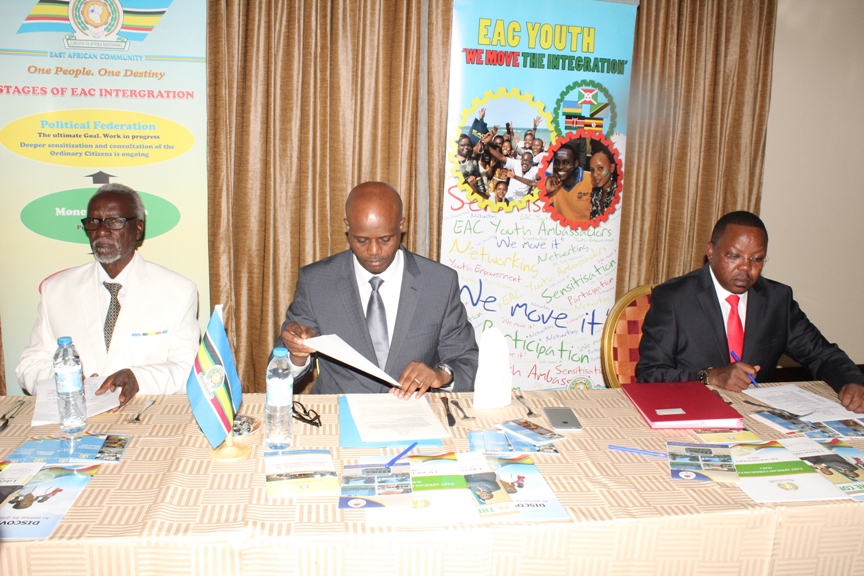
POURED COLD WATER ON TERM LIMITS DEBATE: The Deputy Speaker of Parliament, Rt. Hon. Jacob Oulanyah, at the meeting of European, Caribbean and African Members of Parliament in Nairobi, Kenya.

The Deputy Speaker of Parliament, Rt. Hon. Jacob Oulanyah, has told a meeting of European, Caribbean and African Members of Parliament that no one will pass resolutions that impose presidential term limits on Uganda.

He said Uganda’s Constitution has mechanisms through which political power can change hands and that the Constitution was the ultimate will of the people of Uganda which non-Ugandans should not undermine.

Oulanyah made the remarks as the Committee on Political Affairs resumed consideration of a motion on a resolution on constitutional limits for presidential terms on Friday, 16th December 2016 in Nairobi Kenya.

The Committee is part of the African, Caribbean and Pacific (ACP) Parliamentary Assembly.

The proposals for presidential terms limits are being advocated by Members of the European Parliament with support from some Members from the ACP.

Oulanyah advocated for the dropping of the whole motion on term limits following concerns that these were being dictated by the European Parliament.

He added that despite the fact that the Motion was agreed on by the ACP in its earlier stages, it was possible to have it dropped all together at this point.

“A thinking human being has a right to change his mind. We are not bound by any precedent. We can’t sit here and do what is not right for us,” Oulanyah stated.

There was a heated debate in the Committee with several delegations wondering why there was a call for withdraw of the Motion at a stage when they were considering amendments to it.

The Deputy Speaker however, stated that there was no precedence set that can stop the retraction of the motion adding that the decision to support it is undermining the will of the people who vote for them.

“What is not prohibited in law is allowed. I have never seen anywhere in the world where a motion cannot be withdrawn. This is a question of sovereignty and the will of the people,” he added.

A delegate from Rwanda, Hon. Evariste Kalisa, supported the Deputy Speaker’s position arguing that the citizens of the ACP and EU can decide on presidential term limits but not through motions passed by a few representatives.

“Our European counterparts pointed out that they don’t have term limits because it is the will of the people. We cannot vote for what is not good for our people,” he said.

On the withdrawal of the Motion, Kalisa added that, “I cannot be embarrassed if I discovered that I made a mistake in the first place.”

The argument for withdraw of the motion was received with serious resentment from MPs from Mali and Nigeria who noted that re-instating presidential term limits would eliminate dictators especially on the African  continent.

The two delegations then stated their position that they would vote with the European representatives when the matter is put to vote.

The final vote on the motion on term limits will be taken when the ACP and the EU representatives meet in a joint assembly on Wednesday, 21st December 2016.

The joint meeting of the two Committees on Political Affairs will however, meet before the vote is taken.

In the same meeting, the ACP Committee on Political Affairs called on President Yahya Jammeh of Gambia to respect the outcome of the recent elections and hand over power.

The Ugandan delegation in Nairobi included MPs Cecilia Ogwal (Dokolo), Juliet Kinyamatama (Rakai), Jack Wamanga-Wamai (Mbale Municipality) and William Nokrach (PWDs).


Stories Continues after ad

Kadaga calls for end to gender violence in elections

END GENDER VIOLENCE: The Speaker of Parliament Rebecca Kadaga addressed the Triennial Commonwealth Women Conference, part of the 62nd Commonwealth Parliamentary Conference in London.

The Speaker of Parliament, Rt. Hon. Rebecca Kadaga, has urged women Parliamentarians to end violence targeted at women during elections.

She said there are many incidents of women being  victims of election related violence compared to men, which indicates that women are often targeted not necessarily because of their political actions or affiliations, but simply because they are women.

Kadaga, who is also the Chairperson of the Commonwealth Women Parliamentarians, was addressing close to 150 women across the Commonwealth countries during a two-day Triennial Conference in London, United Kingdom on Friday, 16th December 2016 under the theme Political Violence Against Women’.

The Triennial Commonwealth Women Conference is part of the 62nd Commonwealth Parliamentary Conference taking place from 11th to 18th December 2016.

Kadaga informed the meeting that for every public violent incident known and recorded, there are more incidents happening behind closed doors and in private, with scanty documentation and, worse, without adequate services to respond to survivors’ needs and due process for perpetrators.

“These private and public incidents, no doubt discourage and prevent women from participating in the electoral process,” she said.

Kadaga appealed to electoral commissions, as national institutions, to ensure that electoral procedures safeguard women’s rights to inclusive electoral processes. She urged lawmakers to consider making laws to address harassment of women politicians and establish mechanisms to end impunity of such crimes.

Hon. Shirley Osborne from the Caribbean region observed that civil society organisations were doing commendable work to address the problem but that there was need for advocacy and a platform to address the issue.

While women parliamentarians from the Pacific region were in agreement that participation in elections was an important political process, they noted that the direct physical violence meted on women at home and in public greatly affected women’s ability to participate in the electoral processes.

The Secretary-General of the Commonwealth Parliamentary Association, Mr Akbar Khan, informed women Commonwealth Parliamentarians that he was committed to seeing that the CPA embodies diversity but also shares values of democracy, rule of law and human rights.

The 62nd Commonwealth Parliamentary Conference brought  together Speakers and Members of Parliament representing the nine regions of the CPA, namely, Africa, Asia, Australia, British Islands and Mediterranean, Canada, Caribbean, Americas and Atlantic; India, Pacific and South East Asia.

The Commonwealth Parliamentary Association provides a unique platform for inter-parliamentary dialogue to take place and given its diverse nature of membership, the Association is in a unique position to offer a comprehensive perspective on how to strengthen parliamentary democracy among member states.

Stories Continues after ad

ECOWAS leaders strengthen efforts to push Jammeh out of power

QUESTIONS ON HEALTH STATUS: Nigerian President Muhammadu Buhari, one of the leading voices against Yahya Jammeh's clinging on to power.

Fourteen West African leaders have announced they will travel to the Gambia in January for the inauguration of Adama Barrow despite the incumbent president Yahya Jammeh trying to cling to power.

The regional West African bloc also agreed to take ‘all necessary actions’ to uphold Barrow’s victory, leaving the door open for military intervention, as it met to discuss Jammeh’s refusal to accept the election result

A delegation of four African presidents from members of the Economic Community of West African States (Ecowas) had flown to the Gambia capital, , Banjul, last week but failed to convince the country’s autocratic leader to change his mind.

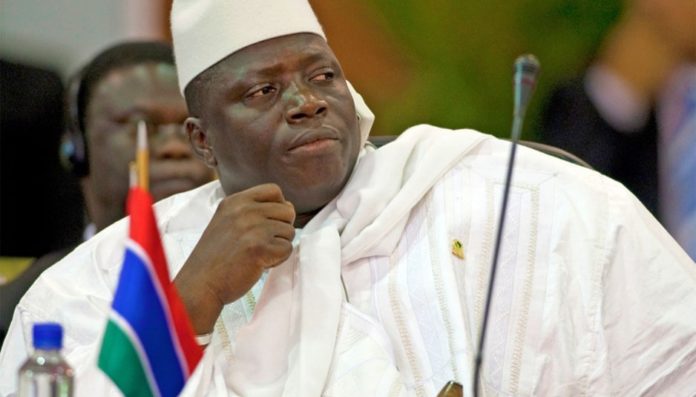
WARNED: Yahya Jammeh has been warned by ECOWAS that he stands to face resistance if he clings on to power in The Gambia, where he has been President for 22 years.

It came as a surprise to many Gambians when Jammeh conceded defeat on television after the 1 December election after ruling the tiny west African nation for 22 years. A week later, however, he took to the airwaves again and reversed his position, saying that the electoral commission, handpicked by him, was not independent.

Ecowas has no standing army, but could ask member states to send in troops, as it did in Guinea-Bissau in May 2012 after there was a military coup. Marcel de Souza, the head of the Ecowas commission, has said sending in troops was “a possible solution”.

Macky Sall, president of the Gambia’s only contiguous neighbour, Senegal, told French television that the use of force should be a “last resort”.

“There were certainly crimes. But if we engage in a showdown, it is clear that the consequences will be much more dramatic,” Sall said. “If it is necessary to dialogue and find a way out for Jammeh to be protected, why not? I am for dialogue and allowing him to leave quietly.”

Jammeh is becoming more isolated not just from other countries in the region but within the Gambia, as unions and civil society organisations have demanded he respect the vote and leave.

The bar association said that his volte-face was “tantamount to treason”, the teachers’ union said it was “a recipe for chaos and disorder which undoubtedly endangers the lives of all Gambians particularly our children”, and the press union, the medical association and the university added their voices to the clamour of condemnation.

On Sunday, the Supreme Islamic Council, formerly a strong ally of Jammeh’s, came out in favour of Barrow after meeting the president-elect, saying they were ready to work with him.

This was a significant departure for a president who last year declared his country an Islamic republic: now, it appears that only his ministers and the military remain on Jammeh’s side.

The head of the armed forces, Ousman Badjie, last week told the Guardian that Jammeh paid his salary and was the commander-in-chief and so he answered to him. It was not clear where his loyalty would lie after 19 January, when Barrow is sworn in as the new president. In the past two weeks, more soldiers have been posted to the streets of Banjul, rigging up camouflage shelters and balancing machine guns on sandbags.

Concerns remain over Barrow’s safety after Jammeh’s government put pressure on him to get rid of the Senegalese private security firm he had hired to protect him, and one of the main points on the Ecowas statement was an exhortation to guarantee his safety. It also called for support from the African Union and the United Nations, including “technical assistance”.


Stories Continues after ad

Uganda court orders Interpol to arrest WizKid

A Billboard announcing Wizkid's performance at the concert that was scheduled in Uganda on December 3, last year.

Renowned Nigerian entertainer Ayodeji Ibrahim Balogun aka Wizkid has had a bad year that began with his being relieved of an award during a ceremony in Rotterdam, The Netherlands.

And today Face TV through its lawyer Fred Muwema of Muwema and Company Advocates has obtained a warrant of arrest for the singer, who allegedly failed to honour a US$60, 000 contractual obligations to perform at a concert in Uganda on December 3.

The warrant, issued by the Buganda Road Court, has directed the International Police (Interpol) and Uganda Police to arrest Wizkid, the ‘Ojuelegba’ hitmaker.

“To: Any police officer, Uganda police force/international police (Interpol).  Whereas Sunday of Lagos Nigeria. Stands charged with the offence of; C1: Obtaining money by false pretence contrary to section 305 of the penal code act. C11: cheating contrary to section 307 of the penal code act.

You are hereby directed to arrest the said Sunday Are and produce him before me on or before the 16th day of January 2017.” The order has been issued today by Magistrate Baligeya Moses Mufumbiro.

According to Muwema, Wizkid’s manager Sunday Are was paid the full performance fee of US$60,000, a brokerage fee of $5,000 and $3,000 as per diem for the days Wizkid’s group was going to stay in Uganda.

“Our client then incurred substantial expenses in booking and re-booking flights, hotel, venue, advertising and promotions for the concert, which expenses grossed over $300,000. In the meantime, more than 25,000 Ugandans paid for tickets in advance in anticipation of the Concert.

“To our client’s dismay and utter shock, Wizkid and his troupe did not show up for the Concert despite assurances were made up to the very last minute. This misconduct by the accused has not only damaged the name and reputation of our client.”

In response, the court issued the arrest warrant against both Wizkid and his manager Are.


Stories Continues after ad

Children from rich families perform better – new report

Education officials at the launch of the report at Nakasero Primary School.

Although learning outcomes are generally poor across the country, there are stark inequalities between groups of pupils and locations, a new report by Uwezo, a non-government organisation that focuses on education, indicates.

According to the report titled: ‘Are Our Children Learning (2016)’ and released today by Uwezo at Nakasero Primary School, household, schools and locational factors impact either positively or negatively on learning.

The report established that P3 to P7 pupils who come from households with higher incomes have an advantage over their peers from poor families. It was also found that attending private schools boosts pupils’ competence over their government school peers.

Locational factors also appear to influence learning outcomes as children in urban areas out-perform their rural peers. Similarly, there was a big contrast in the availability of teachers between different locations, the report indicated.

For instance, it was established that the pupil-teacher ratio is; 36:1 in central Uganda, 41:1 in Western Uganda, 56:1 in Eastern Uganda and 58:1 in Northern Uganda.

In terms of learning materials, the availability of writing materials was sufficient but there are extreme shortages of textbooks. In half of the local languages, a third of the mathematics, and a quarter of the English classrooms, there were either no textbooks or only one for the teacher. Textbook availability is linked to learning outcomes.

It was further found that it is only in P5 and above that a majority of pupils are fully successful at the P2 level reading and arithmetic tasks that Uwezo assesses.

‘Even at P7, the final year of the primary education cycle, at least 2 out of 10 children are unable to complete reading and arithmetic tasks at P2 level. This implies that a substantial number of children continue to complete primary education without ever having acquired the basic numeracy and literacy competencies critical to further learning and independent and social living. This is a social and economic loss to the individual learners, their families and the nation at large. It must be a policy priority to ensure children are in school and learning,’ the report states in part.

The findings are from the sixth national learning assessment conducted in September to October 2015. Uwezo partners assessed over 94,000 children, aged 6 to 16, from all 112 districts in the country. Data were collected from more than 3,000 schools and 65,000 households.

Dr Mary Goretti, manager of Uwezo Uganda at Twaweza, said the data provides startling insight into the state of the education system in Uganda.

“As a new administration settles in, these data highlight a number of areas to focus on. First, learning outcomes must become the policy priority and the most important yardstick by which we measure success in education. Second, inequalities by socioeconomic status and location must be addressed. Education is supposed to eliminate these circumstantial inequalities not entrench them. In particular extra attention and resources must be dedicated to marginalised groups and areas. The shortage of teachers and classrooms in Northern and eastern regions must be tackled,” Dr Goretti said at the launch.

She added that a positive example of targeted government intervention is in the area of local language literacy.

“A number of programs have been initiated to provide learning materials and train teachers in this area. We look forward to the results of these interventions and encourage policy actors in education to provide similar support to tackle other systemic inequalities.”

John Mugo, Director of Data and Voice at Twaweza, added that the results present some sobering insights as “we begin our journey towards the Sustainable Development Goals. We need to go the last mile and focus on equity and inclusion.


“If we are to transform Uganda’s education system, we will need to examine the evidence for what works, ensure that we constantly track progress in learning outcomes and pay sufficient attention to people’s incentives,” Mr. Mugo said.

They recommended that successful learning should not be constrained by the circumstances in which children are born.

According to Mr mugo, children in poorer families, in rural settings and those in the Northern and Eastern regions continue to underperform relative to their peers in wealthier, urban households or in the southern and western regions of Uganda.

“When all children are able to learn, the whole nation succeeds. Government should ensure that its priorities and resource allocation in the education sector serve to mitigate inequalities of basic education outcomes rather than reinforcing them. This is why the National Integrated Early Childhood Development Policy initiative that aims to make preschool education more accessible and affordable for poorer families is an important step forward,” he added.

Among those in attendance at the launch of the report was Workers MP Margaret Rwabushaija, former UNEB chairman Professor Lutalo Bbosa and, Dr. Y K Nsubuga, the Director Basic and Secondary Education in the Ministry of Education.


Stories Continues after ad

NRM to determine EALA contestants by February, warns candidates

LINING UP: Uganda voters line up to cast their vote. The NRM supports the system , whch it says, is backed by the law and promotes transparency.

The ruling National Resistance Movement (NRM) will determine its candidates for the East African Legislative Assembly (EALA) by next February.

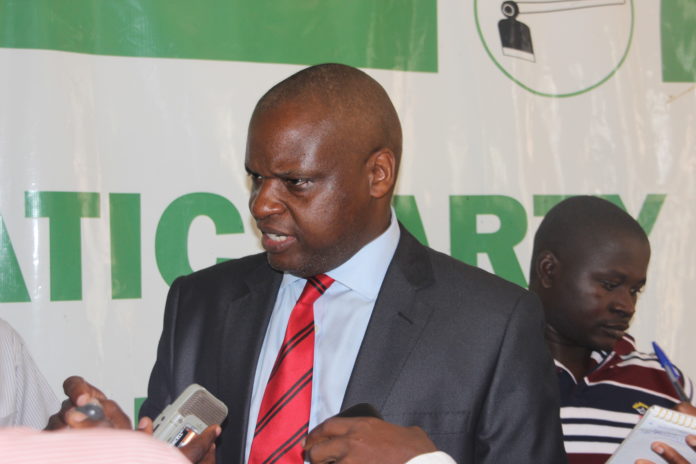
According to the NRM Electoral Commission chairman Dr Tanga Odoi, NRM EALA candidates who engage in early campaigning and energy-sapping speculation will be punished.

“We advise all stakeholders to remain calm and avoid speculations because we shall punish whoever gets involved in any form of campaigns before the designed time,” Dr Tanga Odoi said while addressing a press conference at the party EC headquarters on Kyadondo Road.

Dr Tanga Odoi also revealed that party primaries for all elective posts will cost the NRM Shs2 billion, before calling on members to get involved in the mobilization of the lower level elections of LC I, LC II and women councils.

“The party plans to sweep all the forthcoming elections including the residual party primaries and general elections for LC1 and LC 2s and women councils, Dr Tanga Odoi said, adding:

“There will be no academic qualifications for LC 1 elections but one needs to be a Ugandan, resident of that given area and an adult above 18 most preferably 35 years of age.

He however, cautioned party members against being ‘duped’ by the opposition over the system of lining up behind the preferred candidates. “Despite the initial communication from the FDC leaders condemning lining up to vote, they are busy in the villages mobilising people,” he said, adding that the system is backed by the law and would promote transparency.

Dr Tanga Odoi also said that the NRM would hold primaries for parliamentary candidates in the newly-created municipalities of Ibanda, Njeru, Apac, Nebbi, Bugiri, Sheema, and Kotido.

Primaries will also be held for candidates in the newly-created districts of Rubanda, Kagadi, Kakumiro, Kibaale, Omoro and Amudat which, he said, encountered a lot of challenges during the previous elections structure.

Stories Continues after ad

Egyptian president to visit Uganda on Sunday

Gen. Abdel Fattah al-Sisi

Egyptian President Abdel Fattah al-Sisi is to visit Uganda for  bilateral talks with his counterpart President Yoweri Museveni.

EagleOnline has exclusive learnt that the one day state visit will discuss among others the issue of the Nile waters. Egypt, controls over 50 per cent of the Nile waters.

Senior Presidential Press Secretary, Don Innocent Wanyama confirmed the visit.

Egypt and Ethiopia are at loggerheads over Addis Ababa’s plan to build a US $4.2 billion, 6,000-megawatt dam on a major tributary of the Nile River that Egypt says will greatly reduce the flow of water that is Egypt’s lifeline.

Tension between the two nations rose sharply two years ago after Ethiopia rejected Egypt’s demand it suspend construction of the Grand Ethiopian Renaissance Dam on the Blue Nile, the main tributary of the 4,130-Nile river, the world’s longest.

Egypt has vowed to protect its “historical rights” to the Nile “at any cost” and says it could lose 20 per cent of its water if the giant dam in northwestern Ethiopia, one of several hydroelectric projects planned by Addis Ababa, is completed.

Egypt, contribution towards Uganda include, technical assistance to the agriculture sector, removing of water hyacinth and recently opened an abattoir worth US $24 million (Shs80 billion) at Bombo.

This will be the second time in four that an Egyptian President  visits Uganda, the last time being 2012 when jailed former president, Mohamed Morsi came for celebrations for Uganda at 50 years.

Stories Continues after ad

‘I have not been paid for six months, I want to meet Museveni’, says Tanga Odoi

NRM Electoral Commission boss Dr Tanga Odoi.

The chairperson of the National Resistance Movement (NRM) Electoral Commission Dr Tanga Odoi and other commissioners have not been paid their salaries for the last six months.

According to Dr Tanga Odoi, he plans to meet NRM Chairman Yoweri Museveni over the salary issue of their salary arrears.

Dr Tanga Odoi made the startling revelation while addressing a press conference at the NRM EC headquarters on Kyadondo Road, while responding to a question or the about the source of Shs2 billion the NRM Electoral Commission intends to use to organize the party primaries.

“It is the responsibility of the party chairperson to look for resources,” he said.

He added: “We do not depend on national resources from the Bank of Uganda, but the role of the Secretary General is to help in mobilisation of resources that run party activities.”

Flippantly, Dr Tanga Odoi said he is not ‘poor’.

“If I was at Makerere I would have led the industrial action due to non-payments but I never came to the electoral commission to earn from NRM,” he said adding: “I have my personal wealth that is why I still look nice despite nonpayment for six months.”


Stories Continues after ad

NTV fires another Senior Reporter

YOU ARE FIRED! NTV boss Agnes Konde

NTV’s recent restructuring exercise saw over 15 employees of the Serena-based station exit.

The restructuring is back again, and according to a reliable source, the first victim this time round is Senior Reporter and Producer of NTV Akawungeezi, Ernest Wisdom Kiyonga.

The source further reveals that more are to be relieved of their duties effective early next year, and these will join Kiyonga, Rukh-Shana Namuyimba, Solomon Serwanja, Dean Saava who have exited NTV this year.

Meanwhile, as NTV Managing Director Agnes Konde tries to purge the newsroom, her stay is uncertain as word has it that a former Daily Monitor Manager and now a Manager at Nation Media Group in Nairobi is likely to replace her anytime from now.

And, sources say the axe is not limited to NTV alone as uncertainty looms at its sister companies, Daily Monitor, Dembe and KFM.

Apparently, all the media components are to merge so as to cut on operational costs. In the merger, reporters and staff will have to work for all the three Nation Media Group (Uganda) undertakings; the two radio stations, NTV and Daily Monitor.


Stories Continues after ad

Orange extends sponsorship for African soccer competitions

The logo for AFCON 2017 in Gabon

Starting with the Total Africa Cup of Nations (AFCON) in Gabon in January 2017, Orange has extended its sponsorship with the Confédération Africaine de Football (CAF) to include the 2019 tournament in Cameroon, the 2021 tournament in Ivory Coast and the 2023 tournament in Guinea.

The eight-year sponsorship also covers the Total U-20 Africa Cup of Nations, the Total Women Africa Cup of Nations, the Total CAF Champions League and the Total CAF Super Cup.

The Total Africa Cup of Nations (AFCON) is the biggest football tournament across Africa and the Middle East, and Orange has signed a new eight-year contract to be the Official Sponsor and CAF partner, extending a successful sponsorship partnership that dates back to 2008. Services to support the partnership will be provided by Lagardère Sports.

Bruno Mettling, Deputy CEO of Orange, and CEO of Orange Middle East and Africa, commented: “Football is the number one passion of our customers in Africa and the Middle East, and we’re delighted that our new partnership will enable us to bring them even closer to the events and things they love. These flagship competitions in African football generate an incredible spirit of unity across communities and people, and Orange is proud to reaffirm its commitment to supporting football, as we have done for nearly 20 years. Innovations that Orange has developed, like the Orange Football Club digital platform, are particularly popular in the countries where we operate and play a vital role in supporting football fans across the region.”

Orange will among others support: the Final tournament of the Total Africa Cup of Nations (2017, 2019, 2021 and 2023);  the Final tournament of the Total U-20 Africa Cup of Nations (2017, 2019, 2021 and 2023); the Final Phase of the Total CAF Champions League (2017 to 2024); the Final Tournament of the Total Women Africa Cup of Nations (2018, 2020, 2022, 2024) and the Total CAF Super Cup (2017 to 2024).


Stories Continues after ad