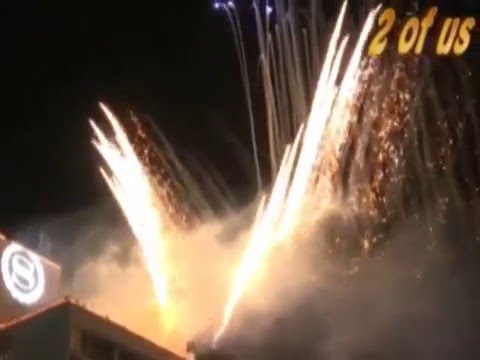
FIREWORKS! A display of fireworks by the Kampala Sheraton Hotel.
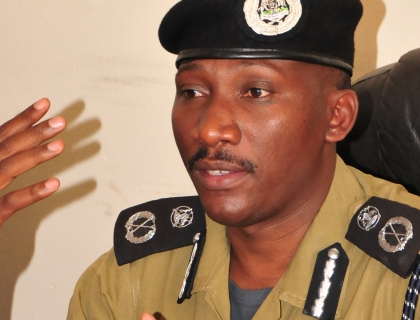
The Uganda Police has cleared 200 institutions and individuals to display fireworks on New Year’s Day, police spokesperson Andrew Felix Kaweesi has said.
BURNING TYRES PROHIBITED: Police Spokesperson Andrew Felix Kaweesi.
According to Kaweesi, all those cleared sought approval from the Inspector General of Police and have a registered supplier. Further, he said the burning of tyres, either in public or private (at home) is prohibited.
“No burning tyres to celebrate the New Year even in private homes. Burning of tyres is analog,” Kaweesi said, adding that the police will be on standby to offer assistance to those in need of help.
“All those that don’t have extinguishers, we provide stand-by fire extinguishing machines,” Kaweesi said while appearing on NBS TV talkshow, ‘Morning Breeze’.
The top display venues for fireworks in Kampala include the Hilton Hotel Kampala, the Serena Hotel and the Sheraton Hotel, among others and, sources close to police indicate that members of the force are on high alert at most of the authorised venues, ready to thwart any crimes, mostly those related to terrorism.
Captured ADF leader Jamil Mukulu being led from the special police detention facility at Nalufenya in Jinja to court .
The former commander of Allied Democratic Forces (ADF) rebel group, Jamilu Mukulu, is expected to appear before Jinja High Court today.
Mukulu is facing treason and terrorism charges following accusations of his commanding a spate of brutal attacks against civilians in Uganda and the Democratic Republic of Congo (DRC).
The rebel leader was arrested in April 2015 in Tanzania, and later extradited to Uganda, where he was detained at the special police detention facility at Nalufenya in Jinja.
In 2011 the UN issued sanctions against Mukulu for ‘destabilising’ the DRC, while a court in the same country sentenced him to death in absentia in 2014 for terrorism and murder.
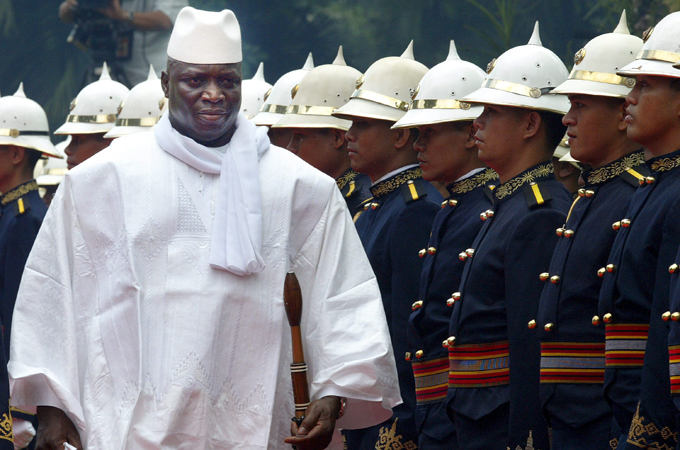
Leaders of the West African regional grouping have officially authorized the Ecowas Standby Force (ESF) to intervene militarily in The Gambia and enforce the outcome of a presidential election earlier this month if defeated President Yahya Jammeh refuses to give up power when his mandate expires on January 18.
Gambia’s President, Yahaya Jammeh, inspects a Guard of Hounour by the military. ECOWAS has put him on notice to quit or get ouste.
A leaked December 17 resolution mandates the ESF to deploy a Senegal-led military force to oust Jammeh who is challenging the election result after initially conceding defeat to Barrow and promising a smooth handover of power.
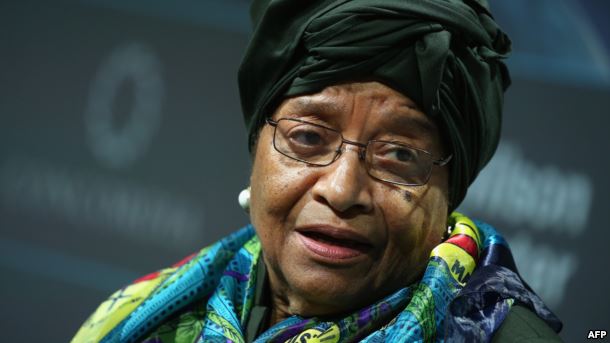
According to the resolution signed by Liberian President Ellen Johnson Sirleaf in her capacity as the current Ecowas chair, the ESF has been mandated to ensure the safety of President-elect Barrow, his inauguration in accordance with the country’s constitution and provide security to other political leaders and the Gambian population.
The mandate of the EFS whose composition has not yet been revealed enters into force after President Johnson-Sirleaf’s signature but will be subjected to a review depending on political events in The Gambia over the next few weeks as diplomacy is used to end the electoral deadlock.
The resolution made after the fiftieth Ecowas Extraordinary Summit of Heads of State and Government in Abuja, held on December 17 said the duration of ESF’s mandate will last from Barrow’s inauguration to realizing the necessary conditions for the effective exercise of his executive powers as the country’s new president.
The operations of the intervention force will be funded through the Ecowas community levy and financial support from the United Nations, the European Union and other donor partners.
The resolution followed an unsuccessful attempt by the leaders of Nigeria, Liberia, Ghana and Sierra Leone to talk Jammeh out of preventing a smooth handover of power to Barrow who had topped the polls with 43 percent ahead of the incumbent who polled 39 percent according to the revised figures of the results after the Independent Electoral Commission had corrected a collation error which did not alter the standings of the candidates.
Outgoing President Jammeh whose party’s petition challenging the results will be heard in The Gambian Supreme Court on January 10 has vowed to prevent Barrow’s inauguration on January 19, a day after his own mandate as the country’s elected leader will expire.
The head of the Independent Electoral Commission Alieu Momar Njai has rebuffed Jammeh’s claims of “vote-rigging and widespread irregularities” as nonsense.
President Jammeh who came to power in a bloodless coup in 1994 and won four elections before losing the December 1 poll has warned that any move to oust him would be regarded by his government as a naked external aggression.
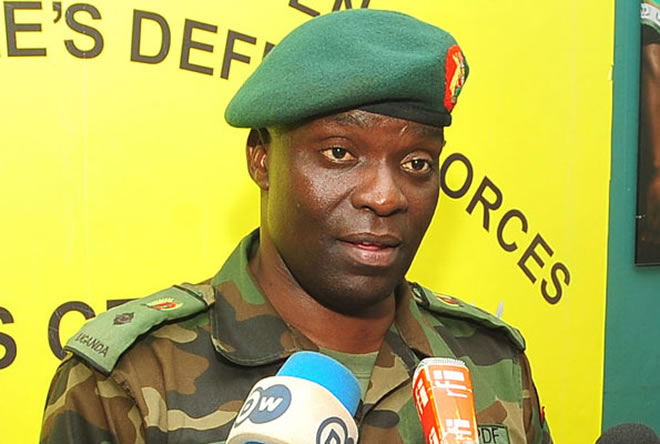
DENIED DEFYING COURT ORDERS: Defence and Army spokesman Lt. Col. Paddy Ankunda.
The Uganda Peoples Defence Forces (UPDF) and lawyers representing a soldier, who says he was tortured by the army, have inadvertently played it out in the public gallery.
The development follows the leaking of court documents indicating that the High Court had ordered the UPDF to halt the trial of Corporal Majibu Ssebyara, who was facing charges of ‘failing to protect war materials’, an offence punishable by death under the UPDF Act.
In her ruling on November 22, 2016 High Court Judge Justice Patricia Basaza Wasswa declared the trial of Cpl Ssebyara by the military court as ‘illegal, null and void’.
She subsequently issued a permanent order staying the proceedings in criminal case number UPDF/GCM/15/2015, in which Ssebyara was accused of failing to protect war weapons while on duty in Somalia while serving under Amisom.
Justice Basaza also ordered that the military court discharge the soldier and never to use evidence obtained through torture against him. This was after the judge admitted Cpl Ssebyara’s account of torture.
It is still not clear whether the ailing soldier still remains under detention, but following media reports highlighting his plight, coupled with the viral online photo of a tortured man in a way similar to that which Cpl Ssebyara said he went through, the army has finally spoken out on his fate.
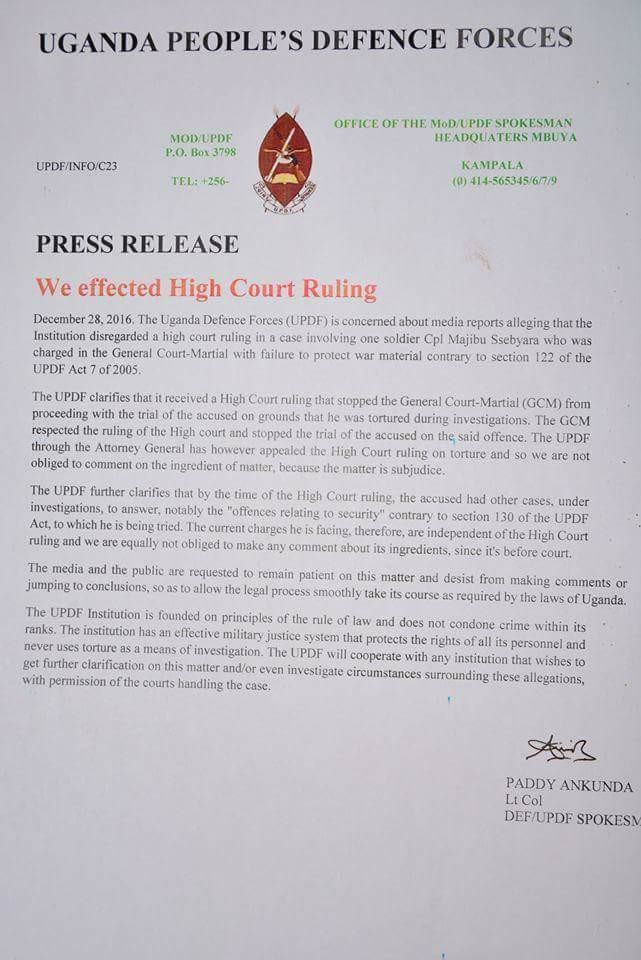
Lt.Col. Ankunda’s response.
Through a statement issued today by UPDF spokesman Paddy Ankunda, the army denies defying the orders of the High Court, which ordered that Cpl Ssebyara be discharged.
“The GCM (General Court Martial) respected the ruling of the High Court and stopped the trial of the accused on the said offence. The UPDF through the Attorney General has however appealed the High Court ruling on torture and so we are not obliged to comment on the ingredients of the matter, because the matter is subjudice,” reads part of the statement.
Lieutenant Colonel Ankunda adds that by the time of the High Court ruling, ‘the accused had other cases under investigations to answer, notably the offences relating to security contrary to section 130 of the UPDF Act, to which he is being tried. The current charges he is facing, therefore, are independent of the High Court ruling and we are equally not obliged to make any comment about its ingredients, since it’s before court’.
Lt. Col. Ankunda urged the media and public to remain ‘patient on this matter and desist from making comments or jumping to conclusions, so as to allow the legal process to smoothly take its course as required by the laws of Uganda’.
In a sworn affidavit presented to the High Court drawn by Bamwite and Kakuba Advocates and the Centre for Legal Aid, counsel for Cpl Ssebyara, the soldier narrated how he was tortured following his arrest in Somalia.
He told court that he was undressed, insulted and tied by the hands on a steel bar, a bag of about 15 kilogrammes tied and hanged on the penis and testicles. He was then moved to a metallic container, handcuffed for 24 hours and left for days without medical care.
This claim was supported by Medical records dated October 6 and November 2, 2015 from Nakasero Hospital and Bombo Military Hospital, respectively, which indicated that his right testicle had become smaller than the contralateral (opposite) testis [and] was non-tender and he has a chronic right testicular infarction and internal echogenicity with no flow.
In the affidavit, Ssebyara further narrates that: “I was tied with sisal ropes and told to stand on top of a sack of sand and ordered to put my hands above the head.” The hands were tied up on an overhead metal barrier and the sand was removed, leaving the feet hanging, he adds.
According to Ssebyara, he was told to plead guilty if he wanted the torture to come to an end.
A Photo allegedly that of Ssebyara being tortured went viral on social media on Tuesday attracting public outcry.
However, the army has pronounced itself on the ailing officer.
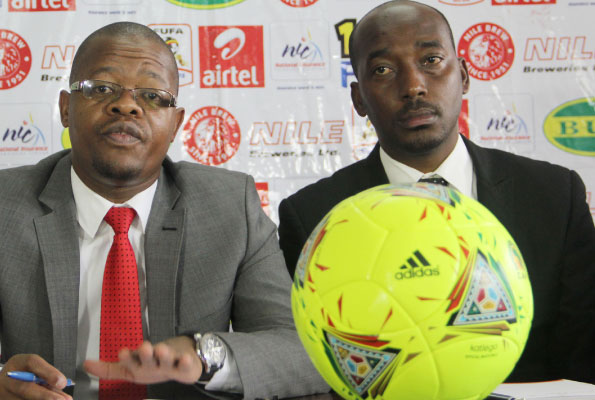
Fufa head Moses Magogo and federation spokesman Ahmed Hussein
The Federation of Uganda Football Associations (FUFA) has received US237.000 to assist the Uganda Cranes in preparations for the 2017 Africa Cup of Nations tournament in Gabon.
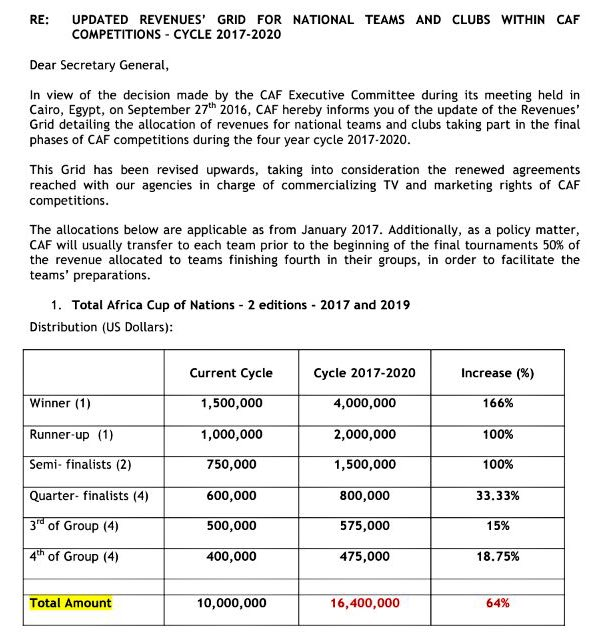
Each of the teams that emerged fourth in the group and qualified for Afcon is entitled to US$475.000 from the Confederation of African Football (CAF), meaning that the disbursement to FUFA represents 50 per cent of the CAF grant.
The Cranes qualified for the 2017 prestigious tournament after a 38-year lull, after their last qualification for the continental tourney held in Ghana in 1978, where they emerged runners-up. Efforts to get comment from FUFA about the developments were futile by press time.
The updated CAF Revenue Grid on disbursements.
Meanwhile, in a related development CAF has also released the ‘updated revenue grid for national teams and clubs within the CAF competitions cycle between 2017 and 2020’, a four-year cycle.
According to the updated structure, CAF will now part with US$16.4 million, up from US10 million, to cater for the disbursements to both national teams and clubs participating in its competitions.
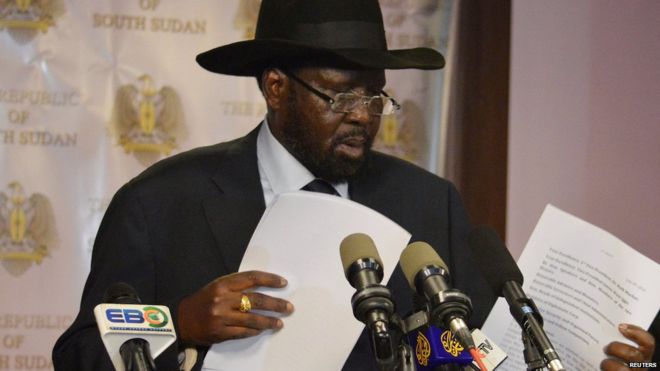
South Sudan President Salva Kiir has expressed disappointment with the global community for isolating his administration, claiming the young nation has been written off.
“I know that many in the world community have written us off and there are many out there who believe that the situation in South Sudan will never get any better. We have a simple message for them, South Sudan shall rise once again and it shall be triumphant against all the odds”, he said in a Christmas message to the nation.
The South Sudan leader said he was optimistic the war-torn nation would come out of the situation to which it has been thrown into after the 2013 political differences within the leadership of the governing Sudan People’s Liberation Movement (SPLM) over pushes for internal reforms and democratic processes-turned violent.
“Let the skeptics be reminded that the proclamation of South Sudan’s independence on July 9, 2011 was perceived as a mission impossible and yet you the people of South Sudan succeeded to make it possible,” said the South Sudanese leader.
He further added, “Therefore if you could accomplish such a feat, why would anyone question your ability to recover from the present predicament? This country shall emerge stronger, united and prosperous and we shall be the envy of the world”.
According to Kiir, the national dialogue he and his administration initiated as the only way to resolve differences would go down in the history books as the turning point when South Sudan regains peace.
“Peace and prosperity are within our reach and I challenge all of you to unite and work together to return the good days of South Sudan,” he stressed.
The clashes come barely a month after Kiir announced a national dialogue involving a bottom-top approach to address local grievances and political issues affecting the country. He formed a committee to lead the dialogue, a move critics say could derail the process.
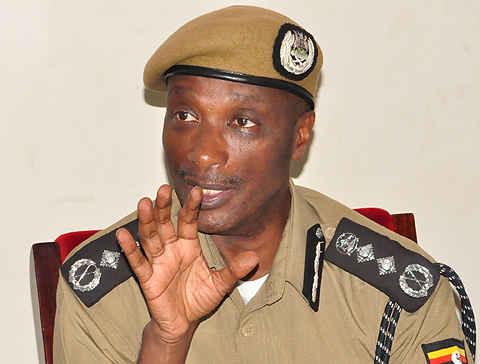
The Inspector General of Police (IGP) General Kale Kayihura has praised journalists, religious leaders and crime preventers, noting that their work has greatly contributed to peace and security in the country.
“We have gotten a lot of support from crime preventers, religious leaders and also the journalists,” Gen Kayihura said today while addressing a press conference at police headquarters in Naguru.
He added: “There is no doubt that crime preventers are of added value to the country. I want to appreciate their patriotic service.”
During the press conference IGP Kayihura also issued guidelines on the use of fireworks on New Year Day. “Display of fireworks and burning tyres near petrol stations and inflammable places is prohibited,” he said, and warned Ugandans against being lax during the festivities.
“We have different forms of terrorism these days. We have to be vigilant of all the people around us,” he said, adding: “We want people to have fireworks but since we are living in the era of terrorism, terrorists may use that savagely.”
Further, the police boss said Christmas-related cases, mostly those of homicide, had reduced in 2016.
“This year, we registered 33 homicide cases on Christmas Day compared to last year where we registered 50 cases,” he said.
Meanwhile, a raging fire has broken at Casablanca Bar and Restaurant in Kansanga and, according to police, the cause of the fire has not yet been determined.
Rwenzururu king Omusinga Charles Mumbere, has been sent back on remand till January 12, because his committal papers are not ready, court has said.
Mumbere and other suspects were appearing in the Jinja High court, where they were supposed to answer to multiple charges including treason, murder and aggravated robbery, following the clashes in Kasese in November.
Mumbere’s incarceration followed the attack on his palace, where over 100 people including security agents and the Rwenzururu Kingdom royal guards were reportedly killed.
On his arrest about a month ago, Mumbere was driven from Kasese to Jinja and detained at the Nalufenya Police Station, a designated Uganda Police holding facility for high profile prisoners like opposition politicians and dangerous criminals.
Prominent among the people who have been to Nalufenya include Forum for Democratic Change (FDC) presidential flag bearer Dr Warren Kizza Besigye, the party’s MP for Nakawa Division Michael Kabaziguruka, and notorious Allied Democratic Forces (ADF) commander Jamil Mukulu.
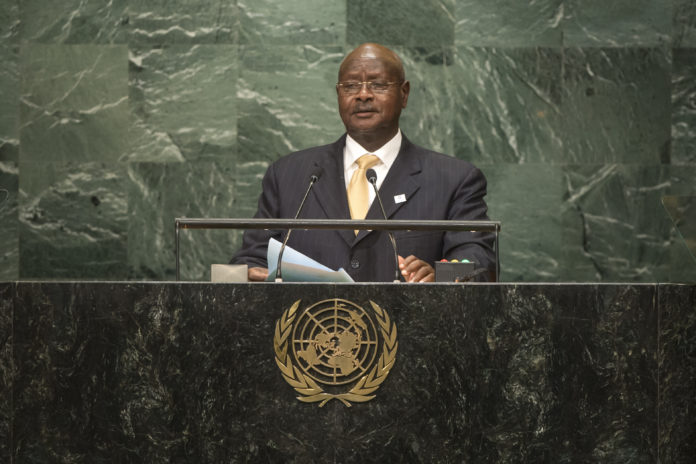
WON 2016 ELECTIONS: President Yoweri Kaguta Museveni
As we come to the end of this year we take time to look back at how the year 2016 faired generally given the various events that shaped Uganda and the world in general. As Ugandans, we are also optimistic of the future of our country and we want to own this future.
Ugandans queue to vote in the 2016 elections
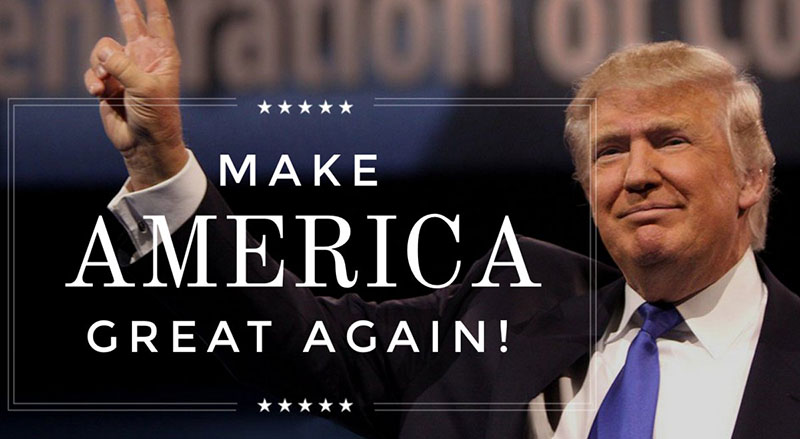
Republican Donald Trump after winning the US presidential elections this year.
That noted, some of the prominent news-making events in 2016, in no particular order, included the Ugandan contested presidential elections in February; the attack on King Charles Wesley Mumbere’s palace in Kasese and his subsequent arrest; the devastating attack on Syrians in Aleppo and the unexpected win of Donald Trump in the recent American elections.
Indeed, the year 2016 has been nothing short of a rollercoaster ride full of surprises; some as markers of progress and others reminders of how far we still have to go.
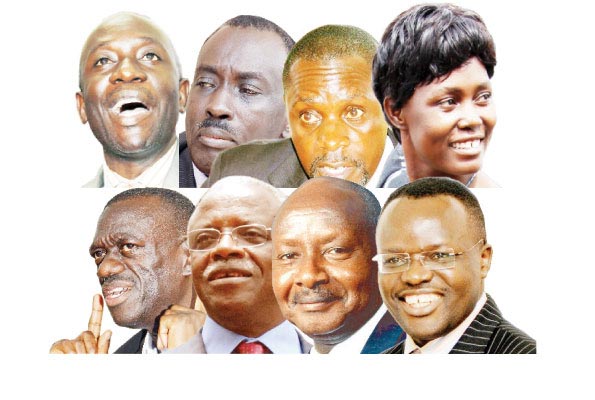
The eight Ugandan presidential candidates in the 2016 elections
In Uganda, this year’s starter was rather eventful, with the presidential campaigns setting the tone as President Yoweri Museveni faced off once again with archrival Dr. Kizza Besigye for the presidential seat. Other notable contestants inclded former Prime Minister and NRM Secretary General John Patrick Amama Mbabazi, seasoned contestant Dr Abed Bwanika; retired soldier-cum-politician Major General Benon Biraro Buta, Independent Prof. Venansius Baryamureeba and lone woman contestant Maureen Walube Kyalya.
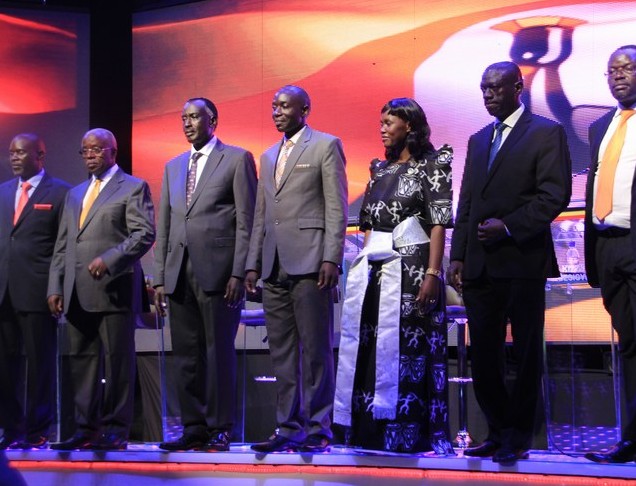
Presidential candidates that attended the first debate
Ugandans saw the drama and unrest that followed the elections as riots almost brought Kampala to a standstill on several occasions, and with businesses shut down at times. However, to the credit of the Inter-religious Council of Uganda (IRCU) and the Council of Elders chaired by retired judge, Justice James Ogoola Munange, the 2016 elections were one of a kind as millions of Ugandans got to witness the first-ever Presidential debate live on television, held at the Serena Hotel. Seven candidates attended the first debate, and President Museveni joined them for the second debate a week later.
The seriousness and comedy that followed the event left varying impressions on the minds of several Ugandans, but needless to say, some of the eight candidates acquitted themselves well. Eventually, one of them won.
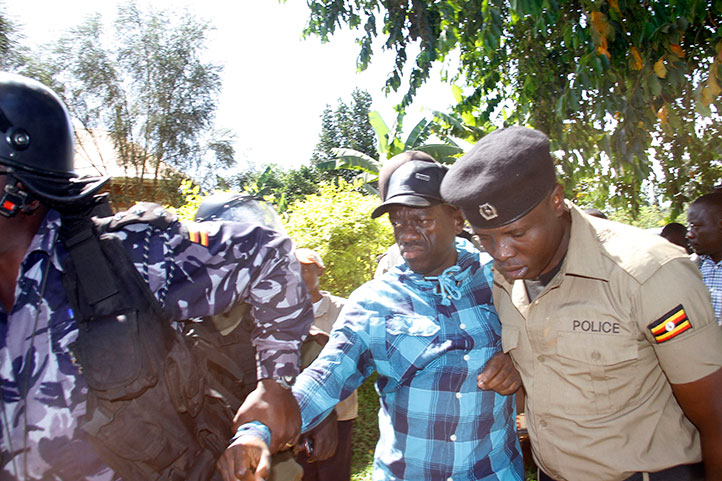
HOLED UP AT HOME: Police officers restrain Dr Besigye from leaving his home in Kasangati.
However, the win by NRM’s Museveni was followed by the arrest of Dr. Kizza Besigye on February 20, drawing mixed reactions from different stakeholders, with the opposition and international community emphasising on the need for free and fair elections and the end of all forms of oppression. Since then Dr Besigye has been a relatively ‘free’ man but this has not dampened his resolve to insist that he was cheated of victory in the election through a ploy involving Mr Museveni and the ruling National Resistance Movement (NRM) party, in connivance with the former Electoral Commission boss Eng Badru Kiggundu. To date, Dr Besigye is still promoting his ‘defiance’ campaign throughout the country as a way of demonstrating against his perceived robbed victory.
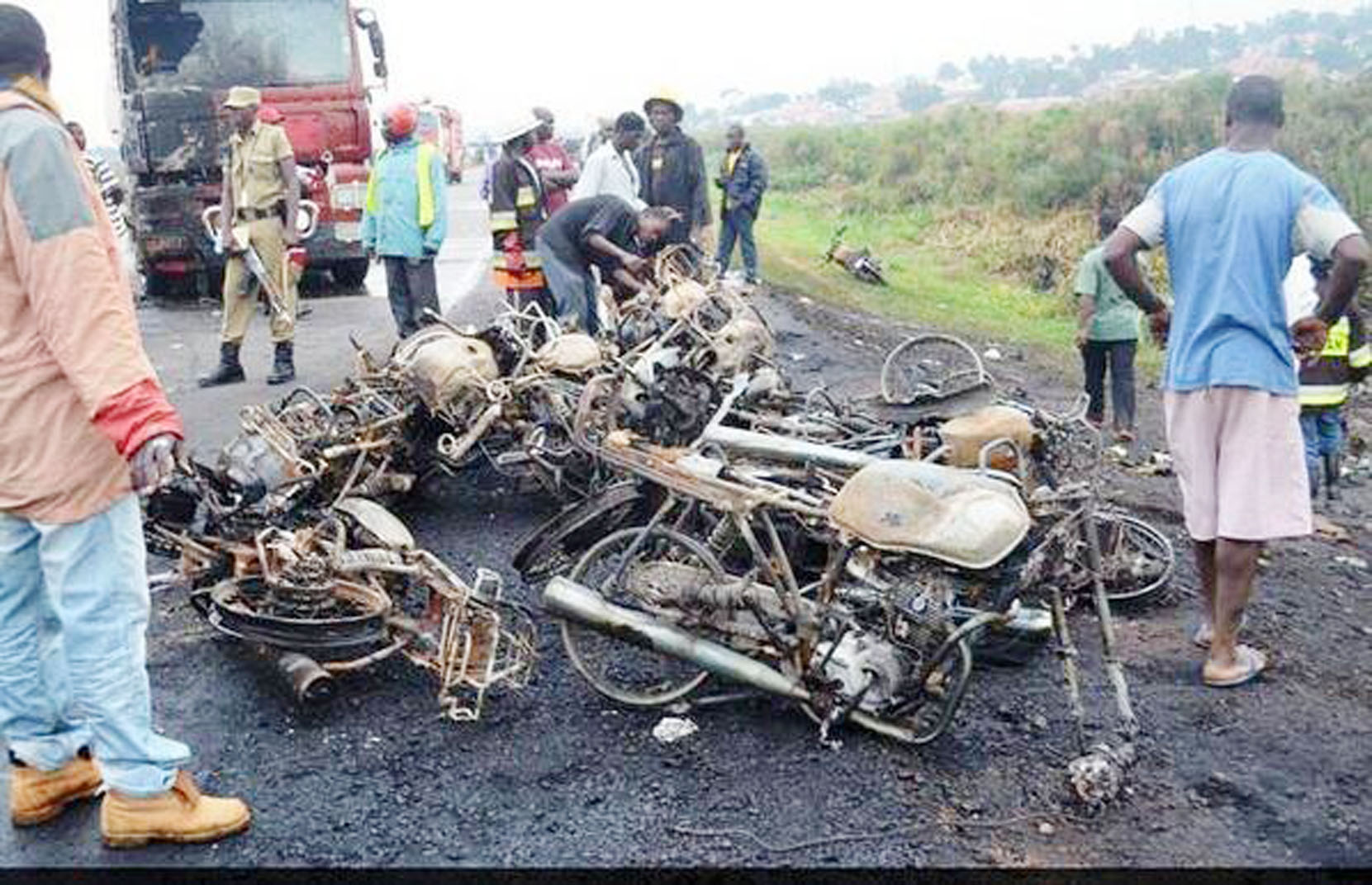
An accident scene involving boda bodas and a fuel tanker.
But amidst all the political hullabaloo, the Kampala-Masaka highway became a death trap claiming the lives of many travellers in freak accidents that occurred inexplicably, earning the road the unenviable moniker: ‘Highway to Hell”. The rising death toll along the road raised nationwide alarm, with the demand for a solution at a high. This prompted religious leaders of different dominations to intervene and encourage citizens to ‘pray for the road’ and the families of the deceased. Inevitably also, concern over the deaths gave birth to ‘Operation Fika Salaama’, a programme that was initiated by the police and the Uganda National Roads Authority (UNRA) to ensure road safety and also that Ugandans reached their destinations safe and sound. So far the accidents reported along that particular road have dropped considerably.
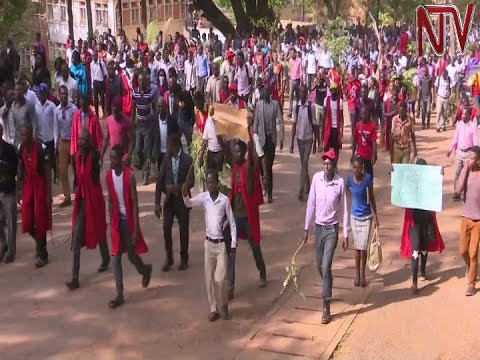
Makerere University students on strke.
Then in came the ongoing strikes and riots by both teaching, non-teaching staff and students of Makerere University over salary arrears and other issues, a development that rendered the vicinity a perceived bedlam, prompting the President to order for the shutting down of the varsity, citing concern for citizens and properties. Currently, Makerere has been closed for two months, with an ongoing investigation into its mismanagement. However, after several meetings it has been decided that it will open on January 2, for completion of the first semester, with only a one week hiatus that will mark the start of the second and last semester.
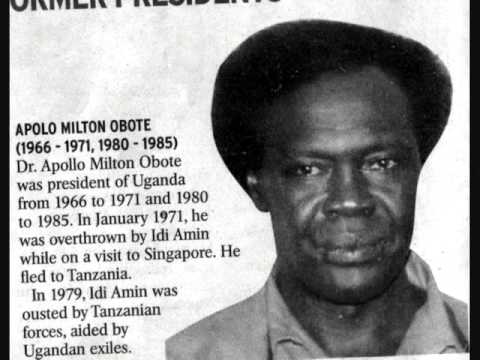
Uganda’s founding President and Makerere University alumni Dr Apollo Milton Obote. Dr Obote led a strike at makerere and was to be expelled from university before completion of his studies there.
However, despite issues being far from solved in regard to the administration of the university, issues like ‘sex for marks’ and incompetence that have long troubled the institution are being reportedly being scrutinised, much to the delight of many parents and students. Founded before independence in 1922, Makerere University is one of the most renowned institutions of higher learning in Africa for its quality education and notable alumni that includes six former East African presidents; Yusuf Kironde Lule; Godfrey Lukongwa Binaisa, Milton Obote (Uganda), Julius Nyerere and Benjamin William Mkapa (Tanzania), and Emilio Mwai Kibaki of Kenya.
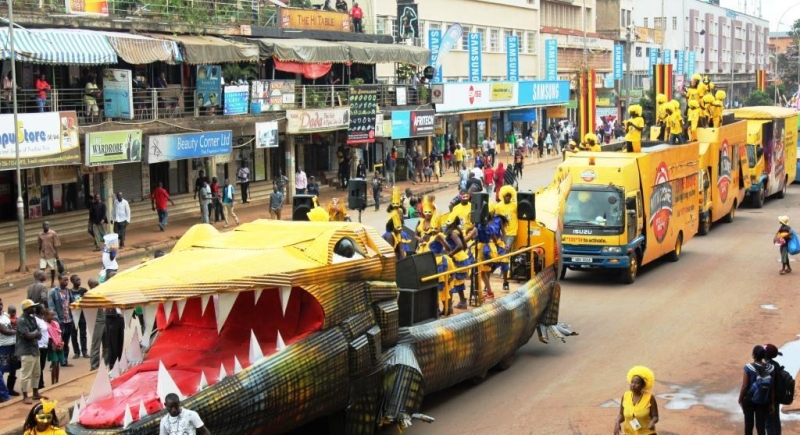
A procession during the Kampala City Carnival 2016
Then, there was something that put a smile on the faces of several Ugandans; the Uganda Cranes win against Comoros in September that marked their qualification for the African Cup of Nation, the first in 38 years! This joyous spirit was further preserved when KCCA held the ‘Kampala City Festival’ in October bringing together many citizens in Kampala to celebrate not only the progress Kampalans had made but somehow also inadvertently celebrate Independence from colonial rule in 1962. With a diverse culture and rich heritage Ugandans are never short of entertainment and a reason to fraternise. Indeed, from outrageous outfits to never before seen feats of elation and, despite the odds, many individuals still find time to fraternise making Uganda one of the friendliest and safest countries in the world.
KILLED: Kenneth Akena Watmon
But the Ugandan cloud with a silver lining came under threat on November 12, when the country awoke to the sad news of the death of Kenneth Watmon Akena, a social worker and child activist who at the tender age of 33 met his end.
IN COURT: Cyhthia Munangwari, Mathew Kanyamunyu and his brother Jpseph Kanyamunyu, while appearing before the Nakawa Magistrate’s Court. Photo/File.
His death came as the result of a gunshot wound reportedly fired by a one Mathew Kanyamunyu, an entrepreneur who is currently behind bars in Luzira awaiting trial alongside his co-accused; lady friend Cynthia Munwangari and his brother Joseph Kanyamunyu.
VOICE OF REASON: Ms Winnie Byanyima. She said her nephew Mathew Kanyamunyu should face the law over the fatal shooting of Kenneth Akena. (Courtesy Photo)
Akena’s death sparked off tribal outrage, something that highlighted the tribal tension that is ever prevalent in many African nations, as few took to social media to spread propaganda and hate. But there were also voices of reason and conscientious; Kanyamunyu’s aunt, the indefatigable Winnie Byanyima, wife to opposition icon Dr Besigye, came out and called for justice to prevail, even if it was her nephew on the receiving end. No wonder many have indicated Winnie can make a good President in future.
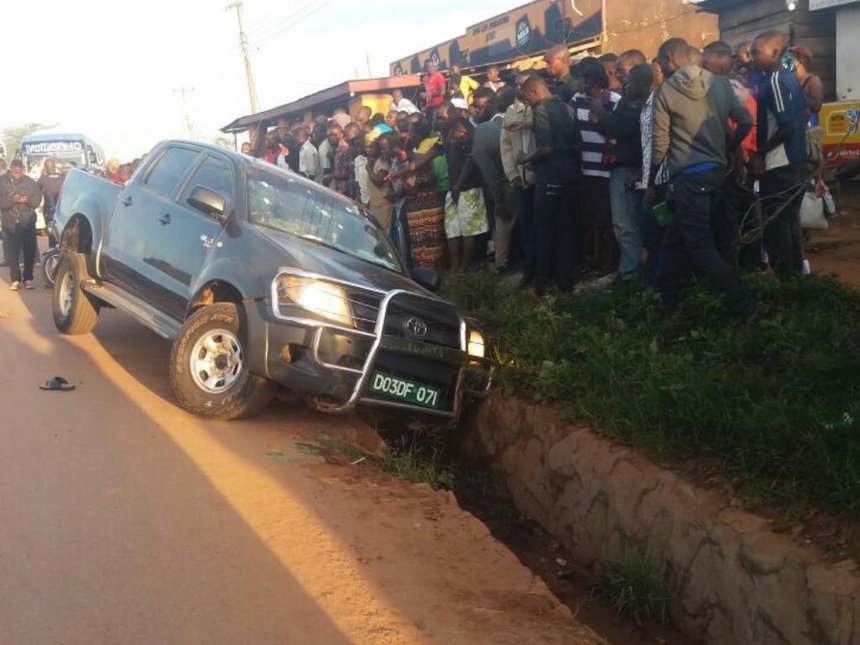
Major Muhammad Kiggundu’s vehicle in a ditch after he was shot dead by assailants on motorcycles.
Anyhow, as the country was still trying to come to grips with Akena’s death, military honcho Major Muhammad Kiggundu, who was also a state witness against Islamic clerics facing terrorism charges, was gunned down.
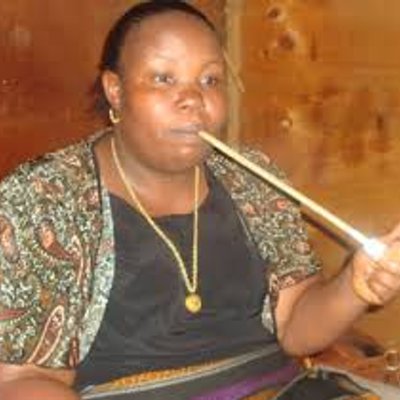
THREATENED TO ‘DEAL’ WITH HUBBY’S KILLER: Traditional herbalist Mama Fina, widow of slain UPDF officer Major Muhammad Kiggundu.
Maj Kiggundu was the husband to popular herbalist Sophie Nalubega aka Mama Ffina and father to 14. The death of Maj. Kiggundu came as a shock and reminded many of the death of former Army Commander Major General James Kazini.
Internationally, the world was shocked when images and footage of murdered African Americans (mostly male) at the hands of the US police surfaced, sparking off numerous riots across the country as thousands protested against ‘racism and prejudice in the American judicial system’ under the mantra #blacklivesmatter.
‘Brexit’, the astounding departure of the United Kingdom (UK) from the European Union (EU), was another game changer that left many Britons and other Commonwealth parties either saddened at the decision or ecstatic. Despite the UK being the only country to have exited the EU this year, some other countries in the EU agree with the idea and now exude tale-tell signs of following suit.
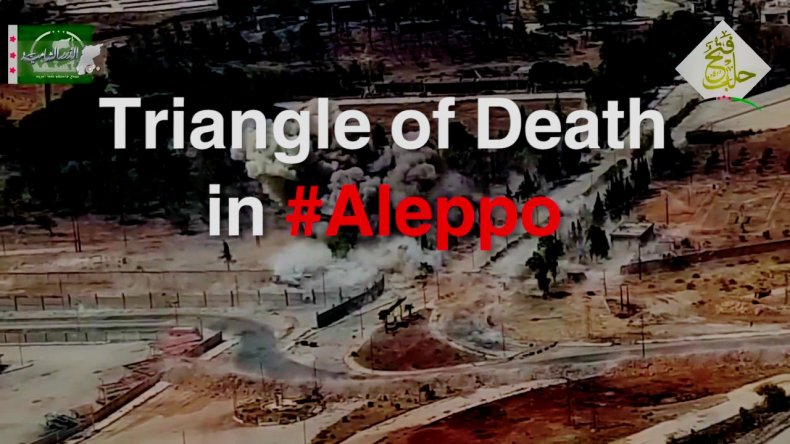
PICTURE TELLS IT ALL: A shot taken from the war torn Aleppo area in Syria
Meanwhile, the Middle East is known for being ravaged by war and death. The recent videos of bombed buildings and bloodied, orphaned children barely surviving death by airstrikes and stray bullets struck a chord not only in Uganda but the world as well as millions came together to bring awareness to the situation in Syria, Aleppo. With the recent assassination of a Russian diplomat to Turkey a ceasefire is highly unlikely in war torn Syria, although hope is given on discovery that ‘Twitter legend’ Bana Al-bed, who took to Twitter to report the situation in Aleppo and ask for help, was safely evacuated with her family from the jaws of death. Nonetheless, several people of good will continue to pray for Aleppo.
Anyway, as Ugandans tend towards the end of 2016, many can’t help but be grateful that they are able to see a new day with friends and family. And, true to their patriotic and resilient nature, Ugandans still continue to smile and make merry, ignoring or forgetting some of the dark clouds that enveloped this beautiful country.
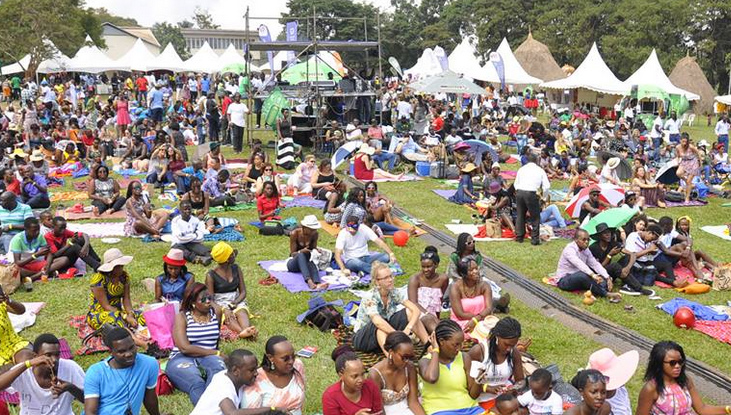
Revellers at the Blankets and Wine festival in Kampala.
And, as many will testify, the last Blankets and Wine concert held on December 18, 2016 is true testimony to the merrymaking, as individuals both local and foreign and regardless of tribe or religion, all came together to celebrate and toast to ‘another year’, in typical Ugandan fashion before heading to their respective homes for Christmas.
No one knows what the future holds in 2017 but Ugandans certainly want to focus on making Uganda great again; a Uganda where corruption, tribalism and chauvinism among other vices are non- existent would indeed be a country that would make both Ugandans and God proud.
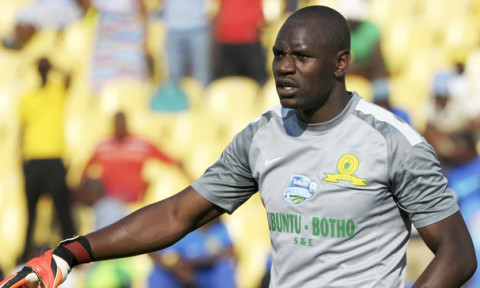
Uganda's goalkeeping legend Denis Onyango of Mamelodi Sundwins.
Uganda Cranes goalkeeper Denis Masinde Onyango has been ranked among the top 10 goalkeepers in the world as per the latest IFFHS ranking, making him the best goalkeeper in Africa.
In 10th position, Onyango, who turns up for South African Premier Soccer League club Mamelodi Sundowns, has also been ranked ahead of top goalkeepers Arsenal’s Petr Cech and FC Barcelona’s Ter Stegen.
Onyango, 29, started his goalkeeping career in 2004, aged 17. He was a member of the Mamelodi Sundowns team that lifted the CAF Champions League title this year.