Stanbic Bank
Stanbic Bank
23.9 C
Kampala
Stanbic Bank
Stanbic Bank
Home Blog Page 1991

US filmmaker killed in Ugandan festive season crash

David J. Steiner frames a shot while filming a documentary about Sudanese refugees in Uganda. Photo credit/Chicago Sun Times.

Despite the police stepping up anti-accident surveillance during the festive season, a Chicago filmmaker was killed in a crash in Uganda, where he had traveled with students from Barbara A. Sizemore Academy in Englewood after working with them on a documentary about their school.

David Steiner was traveling with his son, several students from the Englewood school and a film crew in Uganda to collect more international awards for their documentary. The group was together in a bus when they were hit head on and sent into a ditch.

Two eighth grade students and two other adults suffered non-life threatening injuries; Steiner was the only one killed; died on impact.
The group was in Uganda for the Nile Diaspora International Film Festival to screen their documentary, and school officials said they were working with the US Embassy and elected officials to get the students and adults back to Chicago as quickly as possible.

Steiner worked with Terrance Dantzler and Hayah Rasul on ‘Saving Barbara Sizemore’, an award-winning indie documentary about the successful quest by students to keep Barbara Sizemore Academy open after Chicago Public Schools voted to close it in 2015.

The group left for the trip last week. They had hoped to open even more eyes overseas and were set to work on another documentary on Sudanese refugee children.

“They were also going to be engaged in a second documentary where he was having them meet with Sudanese refugee children,” said Dr. Carol Lee, co-founder of Betty Shabazz International Charter Schools.

“David was incredibly passionate about this project. It was his life,” Greene said.

On Christmas, the filmmaker used his iconic silver hair to dress up as Santa to bring some holiday cheer to their traveling group.

“I last spoke to him on Saturday night and he was really happy,” Nachman said.

Steiner’s fiancée Diane Silverberg opted to stay behind for the trip. She released a statement, saying, “David died as he lived: Selflessly bringing joy to others, no matter the distance or complexity. In one of his last texts to me, he remarked that the joy they were bringing to the Sudanese refugees and to the children from Englewood who accompanied him had made all the challenges of the trip worthwhile.”

Sarah Giroux, a Chicago-based cinematographer on the trip with the group, posted a message on Facebook saying their van was knocked into a sewage ditch during the crash and as the group waited for help their bags were raided, their money was stolen and some of their passports taken. The remaining members of the group are now back at a hotel trying to figure out how to get back to the United States as soon as possible.

Betty Shabazz International Charter Schools, which operates the school, released a statement Monday saying in part, “We are extremely saddened to learn that filmmaker David Steiner, one of our committed school volunteers, died tragically in an automobile accident in Uganda… Our sincerest prayers and condolences are extended to the entire Steiner family, particularly his wife Diane and his father Joe. David was a rare cinematographer who loved our school and sought the goodness in all humanity. We will miss him.”

 

Stories Continues after ad

Burundi lifts ban on ‘anti-government NGOs’

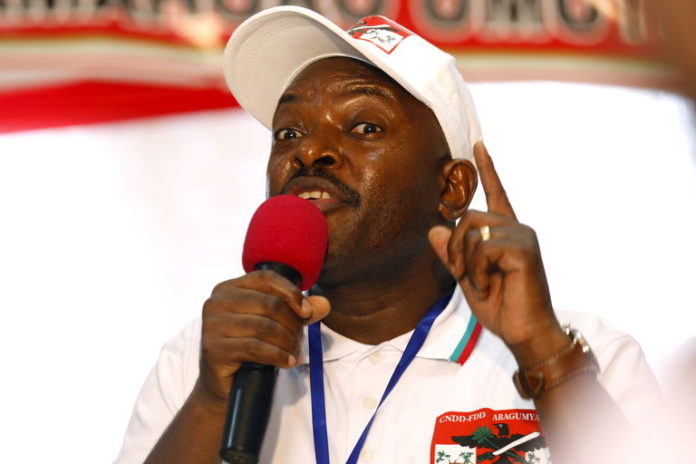
Burundi president Pierre Nkurunziza.

Burundi has halted legal action against 11 non-governmental organisations that were banned due to accusations they conspired with opponents of President Pierre Nkurunziza, the prosecutor general’s office has said.

Nkurunziza’s government has often accused civil society groups of working against it during a crisis that erupted last year over his disputed election for a third term. About 450 people have been killed in political violence.

“The Prosecutor General of the Republic informs the national and international community that he has terminated judicial proceedings against some civil society organizations,” Prosecutor General Sylvestre Nyandwi said in a statement.

It said the NGOs and non-profit groups had been suspended from operating in order to investigate ‘their share of responsibility in the insurgency movement launched in April 2015’.

The 11 organisations authorised to reopen include the Observatory for Government Action (OAG), which opposed Nkurunziza’s plan to seek another term in office on the grounds that the move was unconstitutional.

Opponents of the president said his re-election also violated a deal that ended a civil war in 2005.

The government, however, cites a ruling by the constitutional court saying the president could seek another term. It also dismisses allegations of human rights abuses.

Most of the groups’ leaders have fled the country fearing for their safety, and a representative of one of the entities said conditions remained difficult.

“It is hard to reopen and work as long as there are no acceptable conditions for us to fulfil our mission,” the representative said, speaking on condition of anonymity.

The violence in Burundi has alarmed a region where memories of the 1994 genocide in neighbouring Rwanda remain raw. Like Rwanda, Burundi has an ethnic Hutu majority and a Tutsi minority.


Stories Continues after ad

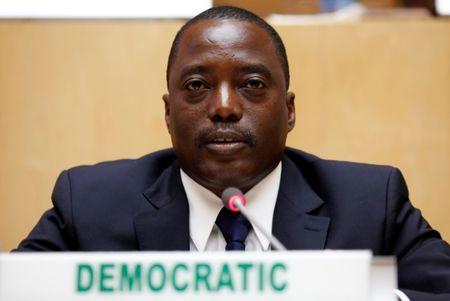
DRC deal on Kabila presidency signing set for Friday

LISTEN: Pope Francis I meets with DRC President Joseph Kabila. The Catholic Bishops in the country have demanded that elections be held


A deal to end the political stalemate in the Democratic Republic of Congo (DRC), in which incumbent President Joseph Kabila could stay in power for one year pending elections in 2017, is set to be signed Friday.

Media sources indicate that political parties involved in the talks led by the Roman Catholic Bishops in the country, say a breakthrough is imminent and that under the deal Kabila would stay in power for a year but the constitution not be changed to let him run again.

Catholic Bishops Conference president, Marcel Utembi told reporters that they have finished practically 95 percent of the work and that there remains a short way to go.

CLINGING TO POWER: DRC President Joseph Kabila

Kabila’s mandate expired on Tuesday but he has remained in office. A presidential election scheduled for last month was postponed until at least April 2018 because of what the government said were delays in registering voters. Scores of people were killed in protests calling for Kabila to step aside.
However, the DRC’s main opposition bloc warned that several significant differences remained and that if the divergences are not bridged, it will be difficult to sign the accord.

Divisions persisted over whether the prime minister will come from the main opposition bloc, and the composition of the electoral commission, which the opposition accuses of pro-government bias.

A deal could be a breakthrough for a country that has not seen a peaceful transition of power since independence from Belgian colonial rule in 1960.

It would also come as a surprise following a week in which security forces killed dozens of people protesting Kabila’s tenure.
There was no immediate comment from Kabila, whose representatives participated in the talks.
 

Stories Continues after ad

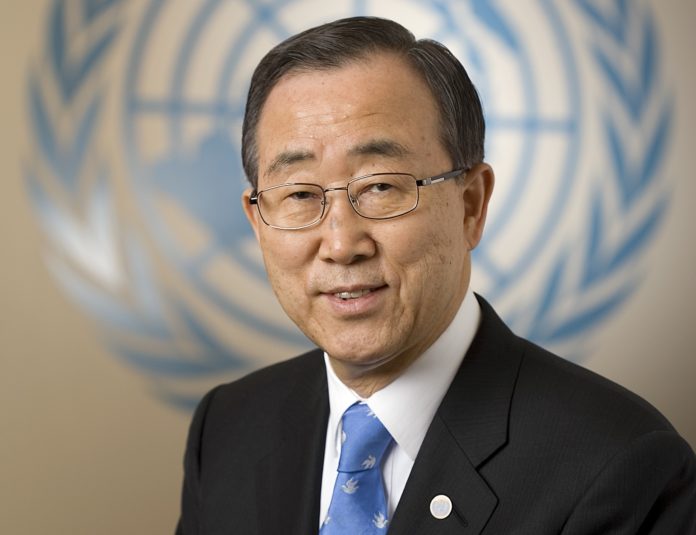
North Korea mocks Ban Ki-Moon Presidency ambition

Ban Ki-Moon

North Korea has mocked outgoing United Nations Secretary-General Ban Ki-moon over his apparent ambitions to run for South Korean president, calling him an opportunistic “chameleon in a human mask” who’s dreaming a “hollow dream”.

The North’s state-run Uriminzokkiri website said Mr Ban’s alleged presidential ambitions were absurd because the way he handled his job as UN chief for the past 10 years has left him living in “criticism and shame”.

The article said Mr Ban, 72, had a bad reputation in South Korea’s domestic politics because he was an opportunist who “sets sail wherever winds blow and changes colours by the circumstance”.

“There is an old saying that you stretch your feet no longer than your blanket will reach,” Uriminzokkiri said.

“His harbouring presidential ambitions despite living in all sorts of criticism and shame could only described as an incomparably hollow, silly dream.”

Mr Ban, who steps down as UN secretary-general at the end of the year after two five-year terms, has not officially declared an ambition to run for South Korean president, but he has not denied his interest either.

In a meeting with South Korean reporters in New York earlier this week, Mr Ban said he was ready to “burn” his body in devotion for South Korea, his strongest hint yet of a presidential bid.

The spotlight is on Mr Ban because there was a possibility South Korea could hold a presidential election in the coming months.

The country’s opposition-controlled parliament earlier this month voted to impeach President Park Geun-hye over a corruption scandal.

If Ms Park is formally removed from office, a presidential election must be held within 60 days.

If he does make a run for the presidential Blue House, Mr Ban is likely to represent a new conservative party created by defectors from Ms Park’s Saenuri Party.


Stories Continues after ad

Obey, J&M hotel among top tax defaulters

URA-Commissioner General, Dorris Akol

Uganda Revenue Authority has published a list of tax defaulters and asked them to clear their debts within seven days only from the time of publication.

Among the top defaulters is the confined former Principal Accountant at the Ministry of Public Service Christopher Obey and J &M Hotel.

“This serves as a warning and short of which they will be liable to relevant tax laws, however there is room for clarity and if a person has evidence that he or she cleared the payments , should present that evidence to avoid being a liability of law” reads the notice from the tax body.

Click the the link below

URA_shamelist_new


Stories Continues after ad

KAMADHI SERIES: MPs tax exemption irks Mutungo Malwa Club members

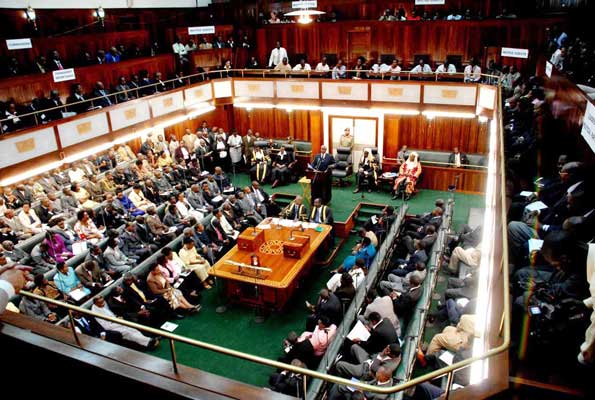
SITTING: Members of Parliament attend a plenary session.

Joel Kamadhi has been away for most of last week, recuperating from a bout of malaria.

But his return just yesterday filled members of the Mutungo Malwa Club with anxiety, and the sage did not disappoint.

“By the way, I have been suffering from Malaria, but can you imagine I had to struggle to get the appropriate drugs for my treatment from the nearest government health facility, and was referred to pharmacies in town which are run by the same doctors who referred me there!” he started off, sending members into a bout of laughter.

“Interestingly, all this is happening while our MPs lavish themselves with goodies including exempting themselves from having their allowances taxed,” Kamadhi, a hitherto self-avowed National Resistance Movement (NRM) diehard supporter, railed on.

According to Kamadhi, even President Yoweri Museveni, his party chairman, has fallen for the MPs’ antics and assented to the bill.

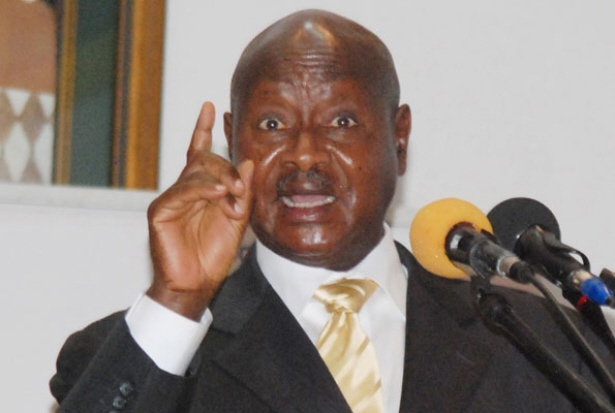
FALLEN FOR MPs ANTICS: Yoweri Museveni

“My Chairman has always insisted he is a pro-people leader and I just don’t understand how he can assent to such a bill that will see just 435 people swallow over 40 billion by dodging taxation,” he said before adding: “Perhaps it is because he (Museveni) is also spending several millions a day that he just can’t realize how bad the issue of tax exemptions on MPs allowances is for the country.”

Apparently, Kamadhi was in foul mood and wanted to hear nothing of his party and its MPs who he says, are intent on ‘bleeding the country to skeletal proportions’.

“For such a bill to pass it must have gotten support and you all know very well that the NRM has the majority MPs in the House. This makes them highly culpable! Unfortunately, there are no drugs in hospitals; children still study under trees; the roads are in a sorry state; and these fellows are just pillaging Uganda as if it is coming to an end tomorrow; so where are our leaders’ priorities for the country?” Kamadhi wondered, to the surprise of all other members who are aware of his political inclination.

Yorokamu Bwambale, Kamadhi’s hitherto ‘lifetime adversary’ in the club this time came in to his support, giving an example close to his home district of Kasese. “Even those who stole timber, gold and coltan from the Democratic Republic of Congo (DRC) did not succeed in making the country lose of its mineral wealth and other natural resources,” Bwambale submitted, citing names of various military officials from Uganda and Rwanda.

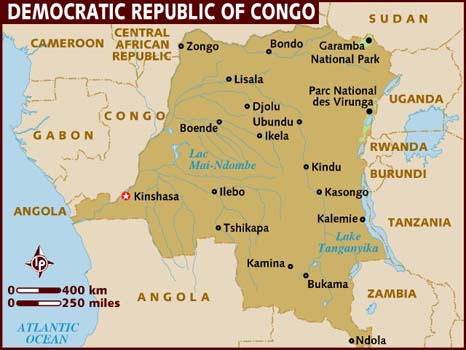
A map of the Democratic Republic of Congo (DRC).

“Some are dead but the DRC is still here with us!” Bwambale said, before giving the members what he called ‘a piece of advice’.

“My friends, we are here, poor men and women, but should one of us ever rise to a position of authority, please remember that your first duty is to serve the people of Uganda not yourself; none of us here came into this world with any property,” Bwambale said.

Shortly after Bwambale’s presentation, Joseph Lakony P’Orach, a member more known for his laid back attitude, spoke.

“Brothers, we live in a country where leaders seem to have lost it all; can you imagine one highly-placed leader told the people in a certain area to pack food for their school-going children in food flasks?” Lakony asked.

He added: “It is ironic; in a country where pupils still study under trees, how can a leader tell parents to pack food in a food flask? I find that strange given the fact that even most people in the major towns and in the city do not know or have never come in contact with a food flask,” Lakony P’Orach said, and summed up: “In times like these which are difficult, with despondency driven by poverty clearly setting in among the citizenry, leaders should mind what they say, otherwise the name ‘Marie Antoinette’ might just keep popping up during discussions like this one.”

Just after Lakony P’Orach’s submission, Kamadhi ‘reclaimed’ his position of being ‘an authority on matters of national importance’.

“Well I have heard that civil society organisations in the country are moving to court, seeking to reverse the position of Parliament taken by the MPs. I think this is a positive move which will also act as a benchmark when issues of separation of powers arise,” Kamadhi said, before bidding the members ‘good night’.

But just as he exited the door, Hitler Eregu, who had all along been immersed in The Daily Monitor newspaper, asked: “By the way Kamadhi, what happened to the proposed construction of the fruit factory in my home region of Teso?”

KNOWS MORE ABOUT SOROTI FRUIT FACTORY? Former Education Minister and Katakwi Woman MP Maj. (rtd) Jessica Alupo.

In haste, Kamadhi answered: “May be you need to re-elect Jessica Alupo as MP for Katakwi; she was the brains behind that project.”

“Good night’, we’ll meet after the festive season,” Kamadhi said as he announced he would have his Christmas and New Year in Itakaibolu, Busoga.


This is a burlesque column that will be running every Friday.


Stories Continues after ad

Justice Bamugemereire to head Commission of Inquiry into land matters

Justice Catherine Bamugemereire

After establishing herself as a competent and credible judge, Lady Justice Catherine Bamugemereire will now head a commission of inquiry into land matters in Uganda, expected to last six months.

The December 8 appointment of Justice Bamugemereire was made by President Yoweri Museveni, and she will serve with six other members among them Robert Sebunya, Ms. Mary Oduka Ochan, Ms. Joyce Habasa, Dr Rose Nakayi, former Justice and constitutional affairs minister Fred Ruhindi and Mr George Bagonza Tinkamanyire. Secretary to the Commission is Ms.Olive Karazarwe and Assistant Secretary Research is Dr Douglas Singiza, while Lead Counsel to the Commision is lawyer Ebert Byenkya, deputised by John Bosco Rujagaata Suuza.

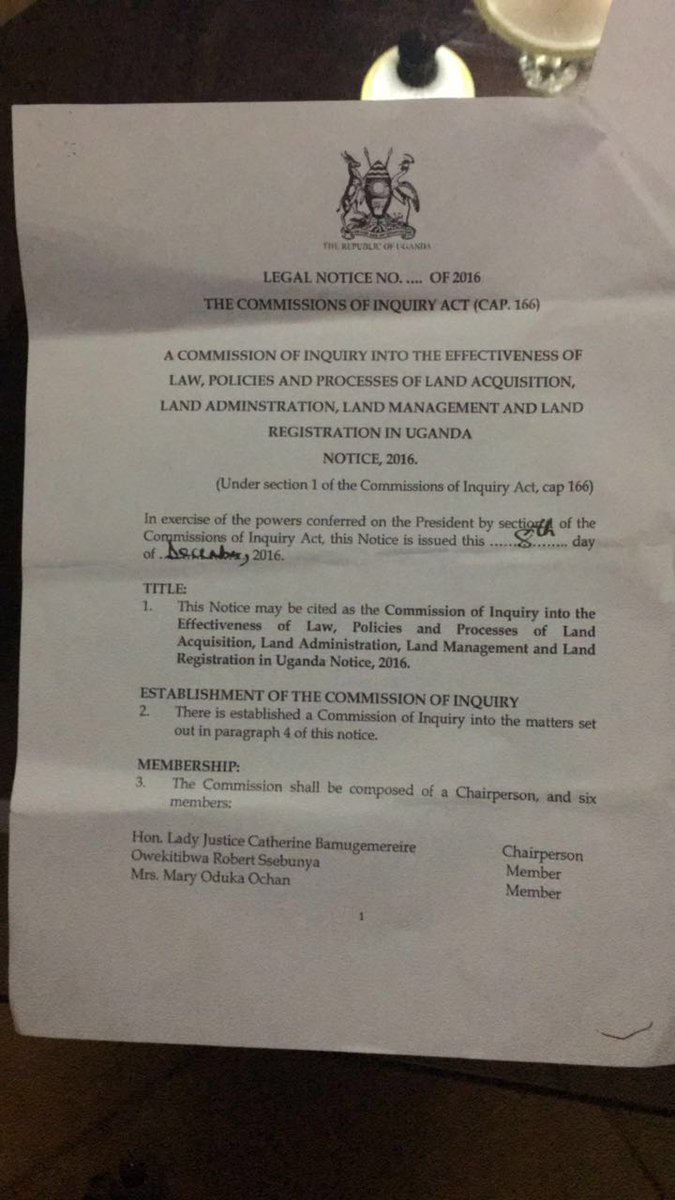
The letter appointing the team that will inquire into land matters in Uganda.

The six-man team appointed under the Commissions of Inquiry Act is tasked to, among other issues, ‘inquire into the effectiveness of law, policies and processes of land acquisition; land administration; land management and land registration in Uganda’.

Previously, Lady Justice Bamugemereire chaired KCCA Tribunal in 2013 which was tasked to probe fights at City Hall between Executive Director Jennifer Musisi and Lord Mayor Erias Lukwago, and she also chaired the Commission of Inquiry into the scams at the Uganda National Roads Authority (UNRA).

Meanwhile, over the past 20 years, land matters in Uganda have increasingly become a complex issue, with thousands of land grabbers reportedly securing false documents and wrongfully acquiring land, in exercises carried out in connivance with officials from the lands office and the District Land Boards.

Stories Continues after ad

Museveni, Kiir discuss South Sudan UN arms embargo

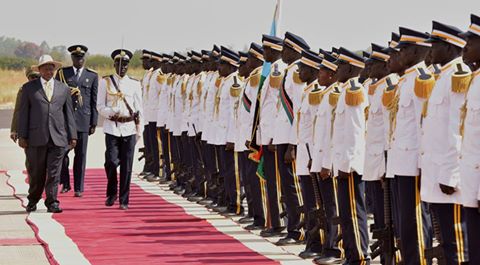
CONGS! President-Yoweri-Museveni-congraculates-President-Salva-Kiir-of-South-Sudan-for-signing-the-peace-agreement-as-Ethiopian-Prime-Minister-Haile-Mariam-Desalegne-applauds./ FILE PHOTO

Ugandan President Yoweri Museveni has held a closed door meeting with his South Sudanese counterpart, Salva Kiir, during which the two discussed the imminent arms embargo against the world’s youngest country.

The United Nations Security Council (UNSC) is due to hold a vote today to determine whether to impose arms sanctions against South Sudan, arising out of a motion sponsored by the US. Previous efforts at sanctions have been thwarted by Russia, but given the deteriorating situation in South Sudan, it might be difficult for the antagonists to carry the day.

Meanwhile, media sources also indicated the two leaders Thursday held talks about the over three year conflict in South Sudan, with Mr Museveni reportedly calling for inclusive dialogue involving all belligerent factions.

The Ugandan leader whose visit to Juba was unannounced did not speak to the media on arrival and no immediate release was made after the talks he had with president Kiir.

But South Sudanese presidential spokesperson, Ateny Wek Ateny said discussions involving two leaders focused on bilateral relations between the two nations as well as the upcoming United Nations Security Council vote on an arms embargo due today.

Highly placed sources at the presidency said that the Ugandan leader informed president Kiir that the region wants him to implement key provisions in the peace agreement in order to resuscitate the agreement and move the country forward.

President Museveni, the source said, told president Kiir to extend dialogue to both the armed and non-armed opposition figures to make it a broad and inclusive dialogue.

“You know President Museveni is our strongest and longest ally in the region. He is more than just a brother and so he came to consult his brother and to provide some advises which I know will definitely be taken into consideration by our President,” the source said.

Museveni reportedly emphasized the need for inclusive dialogue and asked Kiir to allow the church lead the process so that everybody feels included and have the opportunity to participate and be represented in the recent calls for national dialogue.

Since 2013 South Sudan has been engulfed in a raging civil war pitting President Salva Kiir against his biggest political rival Riek Machar Teny, in which over a million people have been displaced both internally and externally, while thousands have reportedly been killed.

Meanwhile, it has been established that during the meeting Presidents Museveni and Kiir also discussed and agreed on how to pay Ugandans who supplied South Sudan with food items between 2008 and 2010 but are yet to be paid, amounts reportedly close to Shs365 billion.


Stories Continues after ad

Museveni hold talks with Salva Kiir in Juba

President Yoweri Museveni on today Thursday December 22, visited South Sudan and held a closed door meeting with hiscounterpart, Salva Kiir, at State House in Juba.

The visit of the President Museveni to the war torn country was unannounced. Both Kampala and Juba did not make any statement. On arrival at Juba Airport,Gen. Museveni  was immediate driven to Plot 1 Juba  for talks with Kiir.

Museveni remains a regional key ally to the troubled Kiir whose government is embroiled in an internal disintegration between his forces and the those of the First former Vice President, Dr. Riek Macha who fail out with the Juba regime.

Museveni’s journey remains unclear on what the two leaders discussed behind the door.   South Sudan Presidential Press Secretary, Ateny Wek Ateny told reporters on Thursday that discussions between the leaders were based on bilateral relations and the upcoming UN Security Council   vote on arms embargo due to take place on Friday.

However, Don Innocent Wanyama, President Museveni’s Senior Presidential Press Secretary told EagleOnline that President Museveni was today, on the invitation of Salva Kiir, undertaken an official visit to Juba. The two leaders held bilateral talks on issues of mutual interest to their countries.

On the political situation in South Sudan, President Museveni advised that all warring parties should lay down arms and seek political authority through the ballot.

“My prayer is for the people of South Sudan to regain sovereignty through the vote. The fighting should stop and allow the people to regain their power which currently is with those with guns,” said President Museveni.


Stories Continues after ad

BOU warns on economy as debt burden rises

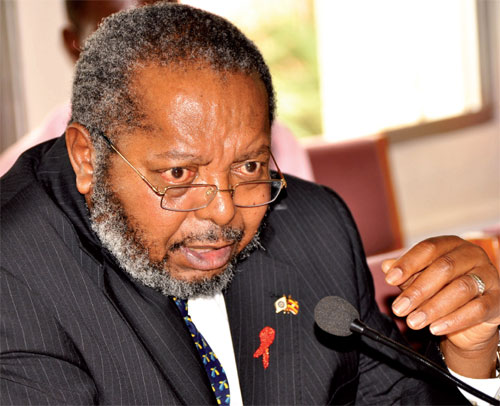
BoU Governor Emmanuel Tumusiime-Mutebile.

Bank of Uganda (BOU) predicts a tough period ahead for Uganda’s economy, a predicament mostly linked to among other factors low revenue collections by the Uganda Revenue Authority (URA).

According to the Bank’s statement for the month of December, the Bank notes that the implementation of the budget for FY 2016/17 faced challenges in the initial phase of budget execution.

During the first four months of FY 2016/17, URA revenue collections amounted to Shs3, 641.3 billion, representing a shortfall of Shs165.6 billion when compared to the target of Shs3, 806.9 billion.

Similarly, relative to the URA target as per the approved budget, domestic revenue registered a shortfall of Shs165.6 billion.

As a result, domestic financing requirement has been increased by Shs300 billion to Shs912 billion to cover the projected underperformance in revenue collections. This was further worsened by the World Bank withholding new lending to Uganda effective August 22, 2016 due to poor management. This, in addition to the cancellation and suspension of two loans is having ripple effects on the economy, BOU notes.

“If Government revenues continue to underperform, and there is recourse to the domestic market to salvage the revenue deficit, then PSC (Private Sector Credit) may be constrained further. There is also a risk that increased domestic financing will lead to a substantial increase in yields on Government securities, which may not only keep lending rates elevated, but also lead to an increase in interest costs,” reads the statement.

It also observes that Uganda’s public debt burden has risen to 38.6 per cent in 2016/17 from 25.9 per cent in 2012/13 and is projected to continue rising towards 45% of GDP by 2020.

“Debt as a percentage of revenues has risen by 54pp since 2012 and is expected to exceed 250 per cent by 2018. This has prompted Moody’s recent down grade of Uganda’s long-term bond rating by one notch to B2 from B1, but changed the outlook from ‘negative’ to ‘stable’. Moody’s said Uganda’s debt burden has “risen faster than the government’s own resources, resulting in a debt-to-revenue ratio of 236 per cent, one of the highest amongst B-rated sovereigns.”

The stock of reserves at the end of October 2016 was estimated at US$2.859.8 million.

In relation to that, lower commodity prices and a less-supportive global environment have also sharply decelerated economic activity in recent past.

Over the last five years, real GDP growth has averaged 4.5 per cent compared to an average of about 7.5 percent between 2000 and 2011. Growth in Private sector credit (PSC) has slowed markedly since October 2015. The slowdown in credit growth was reflected across sectors with the exception of lending to electricity & water and personal & household loans.

BOU attributes the slowdown in growth in PSC to bad loans, which has heightened risk aversion in banks.

“The demand for credit has remained relatively robust. On the other hand, the supply of credit has however remained subdued, an indication that the subdued growth in PSC could be driven by tightening credit standards. The nominal growth in PSC was affected by exchange rate changes.”

Shilling denominated loans grew by 7.9 per cent in the 12 months to October 2016 compared to 12.7 per cent in the previous 12 months period.

BOU further adds that despite the unfavourable international economic environment, the domestic economy has remained resilient.

“Macroeconomic stability has been maintained, with reasonable rates of growth, low inflation, and adequate international reserves. Nonetheless, the inherent risks in the global economy call for coherent domestic policies in order to manage market expectations and avoid erosion of confidence in the economy.”


Stories Continues after ad