Stanbic Bank
Stanbic Bank
17.2 C
Kampala
Stanbic Bank
Stanbic Bank
Home Blog Page 1992

Museveni, University VCs meet over curriculum development

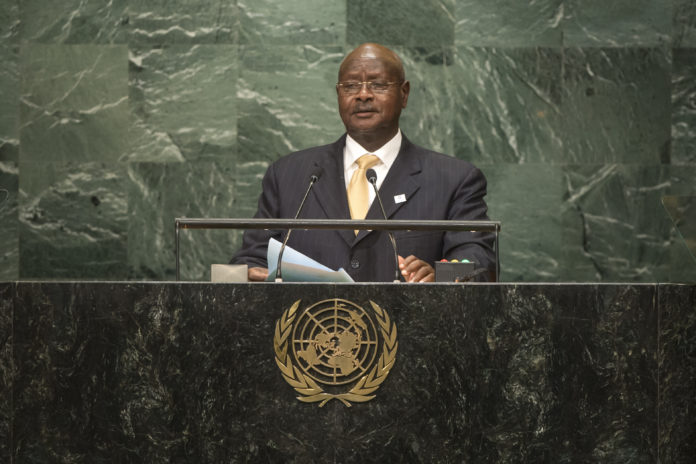
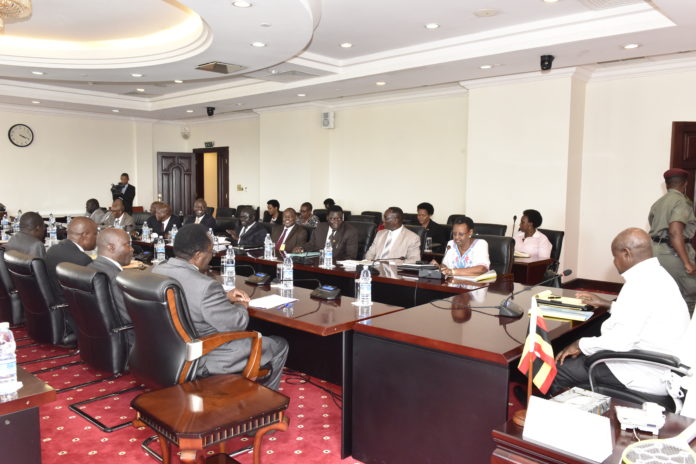
President Yoweri Museveni meeting the Vice Chancellors of public universities in Uganda.

President Yoweri Museveni has directed that each public university second a lecturer to work with National Curriculum Development Center on the proposed reforms of the Lower and Secondary education curriculum.

The President was yesterday meeting officials from National Curriculum Development Center (NCDC), Education Ministry Officials as well as Vice Chancellors of all Public Universities in Uganda.

The meeting, which was attended by the First Lady and Minister of Education and Sports Janet Kataha Museveni, took place at State House Entebbe.

The President emphasized the need to reduce the number of subjects taught in schools from the current 48 to 14 and urged the team to identify loopholes with a view to cut out repetition, duplication and overload of subjects on students. He said the move if well monitored will be easier in terms of content and work load for students. He noted that practical skills as well as linkages of knowledge to real life experiences should be emphasized

The meeting agreed to improve the current curriculum especially on reduction of subjects, linking subjects taught to real life and reducing on the time children spend at school to allow them have time to interact with home environment.

The Minister of Education and Sports Janet Museveni commended the committee that seeks to address the new challenges in the education curriculum, calling on all the stakeholders to work together to see that the revised curriculum helps Ugandan children reduce on the work load and perform better.

The meeting was attended by NCDC Director Ms. Grace Baguma, Ministry of Education officials as well as Vice Chancellors from Public Universities of Makerere, Kyambogo Mbarara, Kabale, Gulu, Lira, Busiitema and Soroti among others.



Stories Continues after ad

Jailed Kazinda calls out to StanChart bank boss

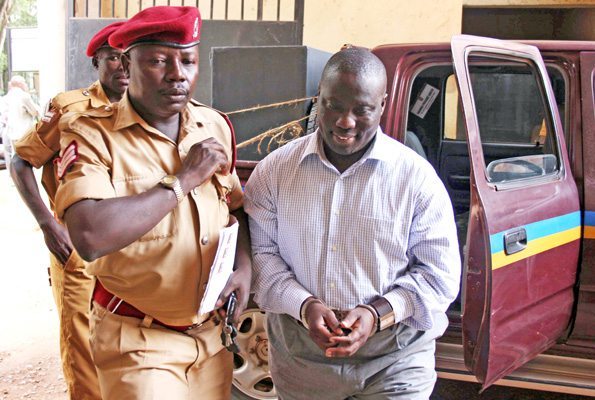
IN TROUBLE! Jailed former Principal Accountant in Office of the Prime Minister Geoffrey Kazinda

‘A friend in need is a friend indeed’ or so the old adage goes. But this seems not the case for the former Principal Accountant in the Office of the Prime Minister (OPM), Geoffrey Kazinda, who has written to his friends, accusing them of abandoning him in his hour of need.

Kazinda, who was sentenced to 5 years in Luzira Maximum Prison by the Anti-Corruption Court in 2013, was found guilty of abuse of office, forgery and unlawful possession of government stores and subsequently diverting Shs20billion public funds to his personal gain, has penned an emotive letter to among his other friends, Standard Chartered Bank, Herman Kasekende, for ‘forgetting him’.

In Kazinda’s December 19 letter to Kasekende titled ‘Festive Season greetings’, he also ‘sends regards’ to close friends Louis Alex Mubiru, Charles Makaayi, Anthony Masozera, High Court Judge Michael Elubu and Benjamin Bwanika.

The letter written by former Principal Accountant (OPM) to StanChart Bank boss Herman Kasekende.

“Kindly permit me to congratulate you upon the great work you are doing, which has come to my attention through the media and several friends of ours. After realizing that for the past four years I have spent in prison, you have not visited me or sent me someone on your behalf, which are the only ways I could speak or hear from you. I zeroed the cause to be either that you may not know how to find your way to prison, or you may perceive it as unlawful for you to visit someone in prison,” Kazinda writes to seasoned Economist Kasekende.

Kazinda adds: “I am writing to let you know that it is not unlawful to visit a prisoner and for that reason, there are designated official visiting days, unless a public holiday falls on such a day. The designated visiting days to prisoners incarcerated at upper prison Luzira are Mondays, Wednesday and Fridays, from10:00am to 3:30pm. However, for some of your status, with clearance from Headquarters located at Parliamentary Avenue, alternative arrangement for visit may be arranged.”

Alternatively, he advises Mr. Kasekende to pay him a visit at court if he can’t make it to prison.

“A prisoner may be visited at court within the prison arrangement supervised by the prison warder designated to take the prisoner for court business on that particular day. My nephew Ivan Tusuubira always knows my court programs and you may contact him on 0753957231 for any arrangements you may have for me….otherwise I have hope to see you or hear from you, and kindly pass my regards to Louis Alex Mubiru, Charles Makaayi, Anthony Masozera, Michael Elubu and Bwanika Benjamin.”

The letter comes just two days to Christmas, a time people check on their family and loved ones.


Stories Continues after ad

International community implore DRC forces to respect human rights

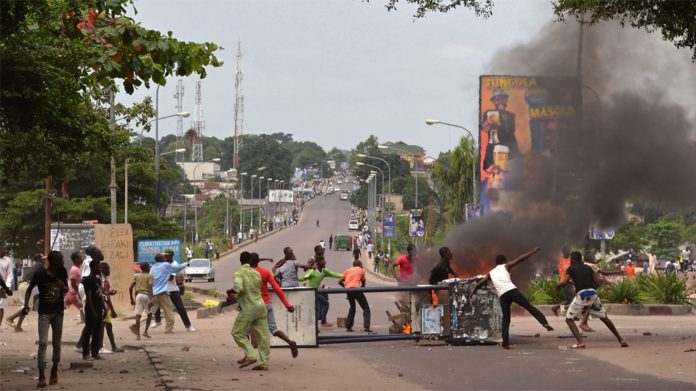
TROUBLE: Youths in the DRC block a road as they stage a demonstration against President Joseph Kabila's continued stay in power.

Security forces in the Democratic Republic of Congo have ignored intensifying international pressure to halt a wave of repression aimed at preventing any further protests against the government of President Joseph Kabila.

Police, paramilitaries and soldiers rounded up demonstrators and opposition activists across the vast central African country on Wednesday despite calls from the US, Britain, the European Union and the United Nations for authorities and security forces to respect human rights.

In a strongly worded statement, the US government said Kabila and local security forces had an “obligation to … respect the rights of Congolese citizens to assemble peacefully and express their opinions without fear of retaliation, retribution, or arbitrary arrest.”

But at least 20 activists from LUCHA, a campaign group calling for reform and political change in the DRC, were arrested in Goma when they gathered in front of government offices to call for Kabila to resign.

In Kinshasa the Guardian saw a military truck full of youths apparently under arrest being driven through the city centre, and in the south-eastern mining hub of Lubumbashi local activists said security forces had suppressed a protest, leaving 10 dead and more than 31 injured.

Kabila’s second five-year term in office expired on Monday night. The 45-year-old former guerrilla has said he will respect the constitution, which bars him from standing for a third term, but many fear he intends to remain in power indefinitely.

Supporters of Kabila say logistical and financial issues mean a fresh election cannot take place until 2018, and it is the president’s duty to remain in power in the interim.

Though sporadic gunfire was heard early in the day, normal life appeared to be returning to the Kinshasa on Wednesday, with some shops opening after almost three days of shutdown. There remained a heavy security presence on the streets, however, with hundreds of police and armoured vehicles deployed to key sites.

There is no reliable count of the people detained over recent days, but estimates vary from the 275 admitted by police to more than 600. Col Pierre Mwanamputu, a police spokesman, said 116 people were still being detained.

Human rights groups and the UN say they have evidence that between 19 and 26 people were killed on Tuesday during scattered clashes in the capital, Kinshasa, and in Lubumbashi on Monday night and Tuesday. Nearly 50 people were wounded, they say.

The protests started at midnight on Monday with a chorus of whistles, klaxons and banging of cooking pots, and intensified over the next 12 hours as protesters burned tyres and set up makeshift barricades that were cleared by security forces using live ammunition and teargas.

The US and European powers had already imposed travel bans and asset freezes on individuals close to Kabila. Most are senior security officials accused of human rights abuses. They include the commander of military forces alleged to have been involved in the deaths of more than 60 people when troops opened fire on an opposition demonstration in September.


Stories Continues after ad

Burundi leader, EU up in arms over unpaid AMISOM wages

IN FIGHT WITH EU OVER AMISOM WAGES: Burundi President Pierre Nkurunziza.

Embattled Burundi President Pierre Nkurunziza has announced that his government is to open judicial proceedings on the issue of unpaid wages of more than five thousand Burundi military personnel who are in the African Union Peace keeping Mission in Somalia, AMISOM.

The Burundian troops have not been paid their allowances for eleven months, from funding which is totally assured by the European Union.

In March, the EU had suspended direct aid to Burundi, including funds for its peacekeeping contingent in AMISOM, saying the Burundi government had not done enough to address the political crisis which has gripped the country for nearly two years.

But Nkurunziza said his government was not going to sit with ‘crossed arms’.

“Burundian interests cannot be hijacked. We will claim our rightful due, including compensation,” he said.

For several months the EU and Burundian government have been at loggerheads over the payment terms of the troops deployed in Somalia.

The EU announced it would now only pay the military personnel salaries directly into their own accounts, but this decision was rejected by Burundian authorities who believed it was an attempt to destroy the Burundian Army.


Stories Continues after ad

URA ‘deactivates’ KCB

STOPPED: the URA communication to taxpayers

The Uganda Revenue Authority (URA) has ordered taxpayers not to pay money through the Kenya Commercial Bank (KCB), ‘pending the resolution of key issues’.
The decision took effect December 21 and, in a brief communication, the URA advised its clients to use other banks on its portal to pay taxes.

Stories Continues after ad

Uganda won’t reach ‘middle income’ status by 2025 – UNCTAD

WON 2016 ELECTIONS: President Yoweri Kaguta Museveni

Only two countries in Africa, Angola and Equatorial Guinea, are expected to become ‘middle income’ countries in the next eight years, the United Nations Conference on Trade and Development (UNCTAD) has announced.

The information is contained in a report, ‘The Least Developed Countries Report 2016, titled ‘the path to graduation and beyond: making the most of the process’, that listed 13 developing nations expected to reach a middle income nation, and Uganda is not one them.

The report indicates that ‘a number of criteria were used to determine the findings by the UNCTAD, including the per capita incomes, human assets and economic vulnerabilities’.

According to the report, US$1035 (per capita of GNI) is considered for ‘possible cases of addition to the LDC list, and a threshold of $1,242 for cases of graduation from LDC status’.

‘The list of LDCs is reviewed every three years by the Committee for Development Policy (CDP), a group of independent experts reporting to the United Nations Economic and Social Council (ECOSOC)’ the UNCTAD report indicates in part.

Further, the report adds: ‘A country will normally qualify for graduation from LDC status if it has met graduation thresholds under at least two of the three criteria in at least two consecutive triennial reviews of the list. However, if the three-year average per-capita GNI of an LDC has risen to a level at least double the graduation threshold, and if this performance is considered durable, the country will be deemed eligible for graduation regardless of its score under the other two criteria. This rule is commonly referred to as the “income-only” graduation rule’.

Previously, a couple of Ugandan government officials led by President Yoweri Museveni and Prime Minister Dr Ruhakana Rugunda have said that Uganda will achieve middle income status by 2020, a development that puts their predictions at variance with the UNCTAD report.

Conversely, other officials including finance minister Matia Kasaija and the Chairman of the National Planning Authority (NPA) Dr. Wilberforce Kisamba Mugerwa have cast doubt on Uganda’s attainment of middle income status, citing several bottlenecks.

Currently, there are 48 countries in the world including Uganda that are categorized as LDCs, with 33 in Africa.

Others include Angola, Benin, Burkina Faso, Burundi, the Central African Republic, Chad, the Comoros, the Democratic Republic of the Congo, Djibouti, Equatorial Guinea, Eritrea and Ethiopia. Others are the Gambia, Guinea, Guinea-Bissau, Lesotho, Liberia, Madagascar, Malawi, Mali, Mauritania, Mozambique, the Niger, Rwanda, Senegal, Sierra Leone, Somalia, South Sudan, the Sudan, Togo, the United Republic of Tanzania and Zambia.


Stories Continues after ad

Appreciate positive gains of migration-EU Nations urged

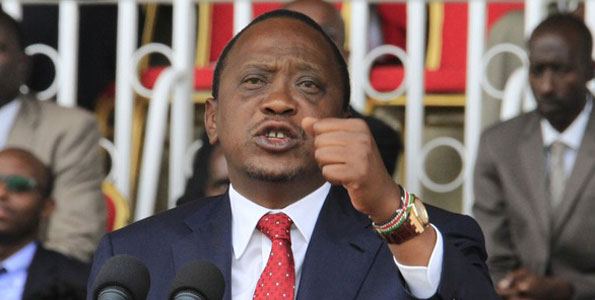
President Uhuru Kenyatta of the Republic of Kenya.

African, Caribbean and Pacific (ACP) countries are urging the European Union to look at migration as a development agenda and not a security matter. Members of Parliament from the ACP said that migration is a serious issue that needs to be tackled by opening up safe and legal means of entry, rather than sending the immigrants back to their countries of origin.

The MPs added that migrants are desperate to escape war and poverty yet the restrictions are informing the political choices being made by various governments across Europe. Speaking in a meeting of the Alliance of Liberals and Democrats of Europe, Pacific, Africa and the Caribbean (ALDEPAC), the Deputy Speaker, Right Jacob Oulanyah said that migration is not only based on security but also on economic reasons.

He said that persons who come to Africa from elsewhere overcrowd the little economic opportunities available forcing people to go looking in Europe. “When people migrate to Europe, they are called economic migrants and different rules apply. When Europeans come to Africa, they are called expatriates. We need to address this imbalance,” he said. Oulanyah added that there is need to address the underlying causes of migration like poverty, war and lately climate change.

He added that the governments also need to control the so called investors who come to Africa but end up doing work that would be done by the locals. Hon. Cecilia Ogwal (Dokolo) called on governments to have regulatory policies on foreign investors concerning employment.

“We must recruit locals to work in the investor’s establishments. These investors must not bring their untrained workers who take away opportunities that would be enjoyed by the locals forcing them to move,” she said. Hon. Catherine Bearder from the United Kingdom agreed that migration is an economic issue, citing the need to have more young skilled people working in Europe.

“Europe desperately needs migrants. We need young people to provide their skills,” she revealed. Bearder called on the European Union to implement the Blue Visa which is a temporary pass for the arriving migrants, allowing them to gain some skills before they are deported.

“When these young people arrive on boats, we should give them basic skills like plumbing and electrical skills before sending them back,” she added. Hon. Ibrahim Rassin Bundu from Sierra Leone weighed in saying ‘migration is as old as mankind’ adding that ‘Europeans came to Africa and took our raw materials.’

Bundu said that the young people migrating to Europe are looking to have some of the benefits accruing from the raw materials taken by the colonialists. “After graduating from university, these young people would like to go and see how the raw materials are being used and participate in the development,” he said.

While opening the ACP-EU Joint Parliamentary Assembly at the Kenyatta International Convention Centre on Monday, December 19 2016, Kenyan President Uhuru Kenyatta said that, “as long as the economic and political conditions remain dire, we shall continue seeing Africans drown in the Mediterranean Sea.’ ALDEPAC meets on the sidelines of the ACP-EU Joint Parliamentary Assembly.

The Assembly that has been meeting in Nairobi, Kenya will conclude with a debate on ‘How to support resettlement of migrants in their home country’. The Joint Assembly will also have a final vote on the motion for resolution on constitutional limits on presidential terms.

The Ugandan delegation in Nairobi included MPs Cecilia Ogwal(Dokolo), Juliet Kinyamatama(Rakai), Wamanga-Wamai (Mbale Municipality) and William Nokorach(PWDs).

Stories Continues after ad

ACP-EU MPs overwhelmingly reject resolution on term limits

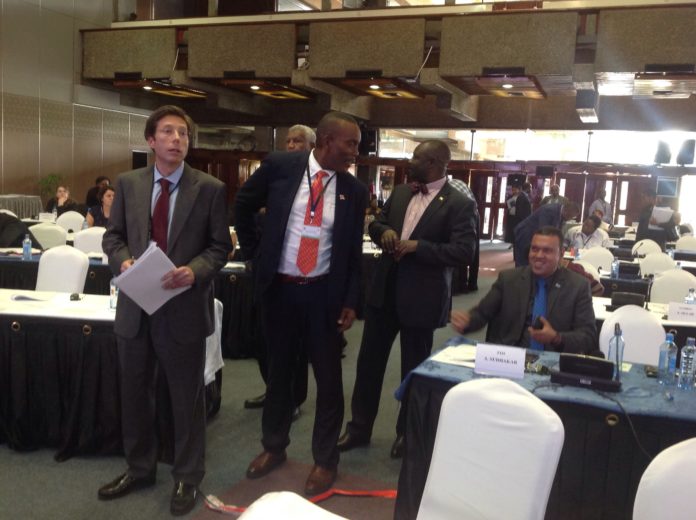
MOTION DEFEATED? Uganda's Deputy Speaker Jacob Oulanyah at the ACP-EU meeting in Nairobi this week.

A motion for a resolution on constitutional limits on presidential terms has been rejected after the African, Caribbean and Pacific (ACP) countries overwhelmingly voted against it.

The vote on the motion was taken during the plenary of the 32nd ACP-EU Joint Parliamentary Assembly that closes today.

The decision on the resolution comes following lengthy meetings of the Committees of Political Affairs of both the ACP and the European Union, which debated the reports in separate and joint meetings during the session of the assembly that has been meeting in Nairobi, Kenya from December 14, 2106.

The proposals for presidential terms limits were being advocated by Members of the European Union Parliament with support from some Members from the ACP.

During the course of the Committee meetings, there were heated debates on whether the European Parliament should dictate on the way sovereign countries should govern themselves.

Before the final vote on the motion, the ACP group met to harmonize its position with several members calling for the dropping of the motion altogether citing interference from the EU Parliament.

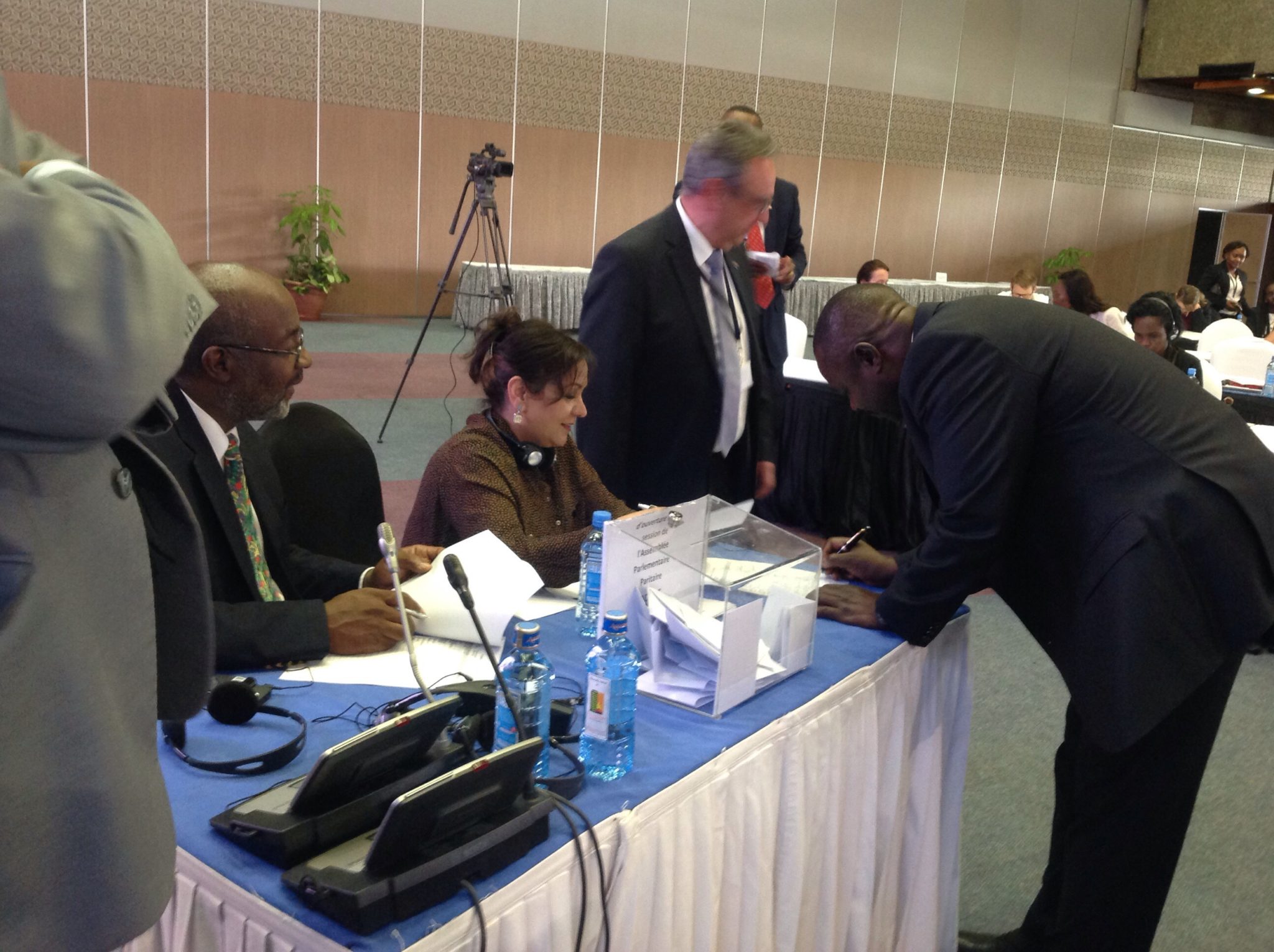
Uganda’s Deputy Speaker Jacob Oulanyah signs the motion as other delegates at the Nairobi ACP-EU meeting look on.

Uganda’s Deputy Speaker, Rt. Hon. Jacob Oulanyah, who has been strongly opposed to the motion citing sovereignty of countries, said that when the vote was taken at committee level, the ACP was not properly constituted and therefore lost the vote.

“We did not have numbers at the committee level; we now have the opportunity at joint assembly. The European side has brought back some amendments, which we rejected at the committee. Let us defeat the whole resolution,” Oulanyah said.

Hon. Tulia Ackson from Tanzania, who was the co-rapporteur for the Committee on Political Affairs, said that it would be unfortunate that the whole resolution would be voted down but added that the ACP agrees with the will of the people.

“Constitutions must be respected but these same constitutions can also be changed by the same people,” she added.

The delegates from Mali, Nigeria, Burkina Faso and Cape Verde expressed reservation on the decision that was agreed on wondering why there was a change in position at plenary yet they had voted differently at committee level. They said that this was unprecedented in the ACP and would cause a rift among the members.

Hon. Fitz Jackson (Jamaica), who chaired the ACP caucus, called for cooperation and reconciliation among the ACP countries urging members not to be divided.

“The last thing we want is refusing to support each other. If we don’t cooperate with colleagues today, we may not have support of the group next time,” he urged.

The co-president of the Joint Parliamentary Assembly, Netty Baldeh, from Gambia then put the matter to vote and 18 countries agreed to vote against the resolution with nine promising to vote for.

The motion for a resolution on constitutional limits on presidential terms was tabled in Brussels in December 2015.

The Parliament of Uganda delegation to the ACP-EU meet in Nairobi also had MPs Cecilia Ogwal (Dokolo), Juliet Kinyamatama (Rakai), Jack Wamanga-Wamai (Mbale Municipality) and William Nokorach (PWDs).


Stories Continues after ad

Over 1500 arrested without permits

LAYING STRATEGY: Police officers and an official from UNRA planning how to curb road carnage at Kampiringisa, along the Kampala-Masaka-Mbarara highway.

One thousand eight hundred drivers have been arrested for driving with the requisite documentation including driving permits, the Director of Traffic in the Uganda Police Force has disclosed.

The Director of Traffic Dr Steven Kasiima appearing on the NBS TV talk show ‘Morning Breeze’.

Appearing on NBS talk show ‘Morning Breeze’ dubbed: ‘Traffic Guidelines Ahead of The Festive Season’, Commissioner of Police Dr Steven Kasiima said those complicit were arrested during the Operation Fika Salaama, launched by the police and the Uganda National Roads Authority (UNRA) about four months ago, following a wave of fatal accidents on several roads in the country, most pronounced being along the Kampala-Masaka-Mbarara highway.

“We have so far arrested 1,800 drivers without permits during operation Fiika Salaama. That’s a big number, he said, adding: “Drivers arrested during Fiika Salaama for reckless driving and drink driving ‘sleep in our coolers’”.

According to Dr Kasiima, bus companies had also been issued with strict guidelines to follow during the festive season.

“There is no bus driver who is not vetted. After vetting, they are given badges. Now, these conductors have no chance of driving” Dr Kasiima said, adding that the companies had been cautioned on trying to make quick money at the expense of travellers.

“If bus companies have more accredited drivers, then they are allowed to make a return journey. We have set up check points,” he said.

Police sources indicated that over 200 people died on the Kampala-Masaka-Mbarara highway between January and August, prompting the force to launch ‘Operation Fika Salaama’ under the command of Assistant Commissioner of Police Sarah Kibwika.

By October police sources indicated about Shs2 billion had been collected in fines since the operation was launched.


Stories Continues after ad

Gambia’s foreign minister defects

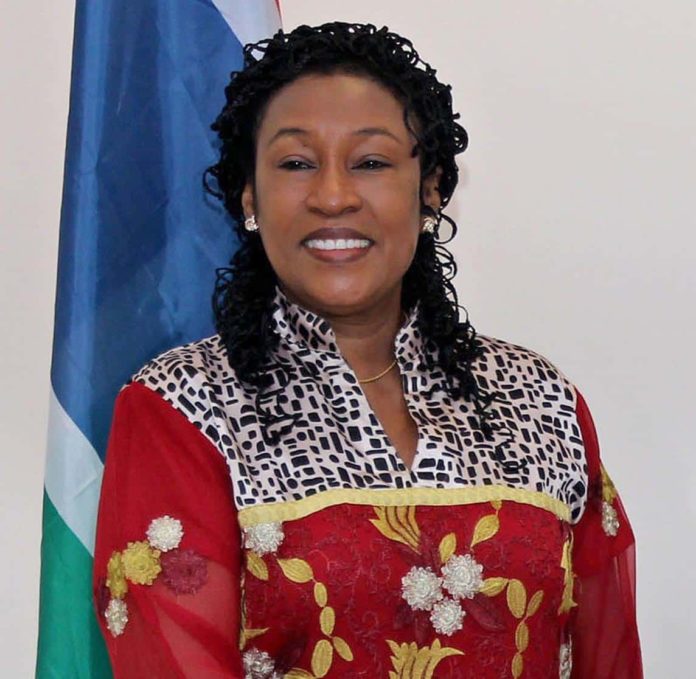
JUMPED SHIP? The Gambia's foreign minister Macdouall.

Gambia’s Foreign Minister Neneh Macdouall Gaye, has jumped ship, with sources indicating she is headed to the United States of America.

Media sources indicate Ms Neneh, who was supposed to be attending a conference in the Kingdom of Saudi Arabia, is the latest official to abandon Jammeh after the Gambia’s former Ambassador to the US Sheikh Omar Faye.

A good number of Gambia’s foreign mission officials have resigned from the government and have since rallied their support behind President-elect Adama Barrow, the sources add. Diplomatic missions fall under the purview of the Ministry of Foreign Affairs, which Ms Neneh is heading. She cannot effectively and efficiently operate in the absence of a functional Foreign Ministry. Hence, she decided to quit her job while on a foreign mission.

Media sources also indicate that there is a planned mass exodus of other Jammeh officials, who are planning to flee from the West African nation.

“I have just gathered from a very reliable source in the Gambian mission in Jeddah, Saudi Arabia, that Foreign Minister, Neneh Macdoull Gaye, has abandoned Yahya Jammeh’s sinking boat.  Madam Gaye, is currently in Jeddah to attend a meeting. She used the meeting to travel out of The Gambia.  Her destination is the United States,” the media quoted a source

Ms. Neneh Macdouall Gaye, used to live in Atlanta, Georgia, before accepting a job appointment from Jammeh. She was hired shortly before the December 30, 2014, failed coup.

Sheikh Omar Faye, the recalled Gambian Ambassador to the US, was very instrumental in convincing Ms. Macdouall to accept Jammeh’s job offer. Mr. Faye, visited Neneh at her Atlanta home, where the news of her appointment as Foreign Minister, was communicated to her.

She is a holder of a US Permanent Resident status otherwise known as (Green Card). Neneh’s departure from the Jammeh regime, will no doubt weaken his quest to cling onto power.

Sources close to Ms Neneh said the Minister has off late been complaining about the stress associated with her job, at some point contemplating quitting her job. She felt that Jammeh’s behavior towards her was becoming unbearable, sources intimated.

It was not long ago that Neneh was in the United States to visit her kids. Her husband Pa Gaye, the former MD of Gamtel, recently returned home from the US, to reunite with Mrs. Gaye.

Stories Continues after ad