Stanbic Bank
Stanbic Bank
17.7 C
Kampala
Stanbic Bank
Stanbic Bank
Home Blog Page 1993

Reopening Makerere now a waste of time– former Chancellor

REOPENING MAKERERE A WASTE OF TIME: Professor George Mondo Kagonyera

Amidst pleas from the Visitation Committee, requesting President Yoweri Museveni to reopen Makerere University, the institution’s former Chancellor Professor Mondo Kagonyera thinks otherwise.

Speaking on KFM radio, Prof Kagonyera said the opening the university is a waste of time if the lecturers are not willing to come back to work.

According to Prof Kagonyera, the problems of Makerere are not unique.

“The students are paying the biggest cost the more the institute remains closed,” he said adding however, that the University Projects which have a timeframe will also be adversely affected.

Early this month President Museveni ordered the closure of Makerere University and on 14th he appointed the Visitation Committee headed by Dr. Abel Rwendeire to probe the unending issues afflicting Uganda’s oldest institution of higher learning.

Speaking to journalists, Dr Rwendeire, confirmed his committee had pleaded with the President to re-open the university when they met him last week.

According to Dr Rwendeire, their work will be made difficult if the students and academic and non-academic staff are not at their workstation.

Stories Continues after ad

Ban Ki-moon troubled by gender-based violence

un Secretary-General Ban Ki-moon (left) and Phumzile Mlambo-

The UN Secretary General Ban Ki-moon has said that violence against women and girls continues to be a low priority on the international development agenda.

“The statistics almost defy belief. What is even harder to understand is why: why men prey on women and girls; why societies shame the victims, why governments fail to punish deadly crimes, why the world denies itself the fruits of women’s full participation,” Ki-moon told a UN Women-hosted ‘Orange the World’ event at UN Headquarters in New York to raise money to end violence against women and girls, and kick off 16 Days of Activism against gender-based violence.

The event began with remarks from Mr. Ban, UN Women Executive Director Phumzile Mlambo-Ngcuka, Karel van Oosterom of the Permanent Representative of the Netherlands to the UN, and UN Trust Fund programme participant Aiturgan Djoldoshbekova.

It also included a musical performance from The Color Purple, Tony Award winner for Best Musical Revival, and a panel discussion on sustainable financing to end violence against women and girls.

“The extent to which violence is embedded in society means that uprooting it is also a job for all of society. That includes men and women, the media and the religious community. We can work together to address the inequality and prejudice that enable and enflame violence against women and girls,” Ms. Mlambo-Ngcuka told the audience that wore orange in support of ending violence against women.

Mr. Ban, observing the Day for the last time as Secretary-General, thanked the audience for being a part of a decade of global activism to end violence against women and girls.

“You have defended the vulnerable and fought impunity,” he said. “The United Nations and I, personally, have stood with you.”

“This is truly a matter of life and death,” he added. “In some countries, as many as 70 per cent of women report having experienced physical or sexual violence from an intimate partner. In some countries, intimate partner violence accounts for between 40 and 70 per cent of female murder victims.”

Ms. Mlambo-Ngcuka thanked the Secretary-General for his advocacy and leadership, emphasizing that violence against women was not always discussed in the public domain. She called for improvements to laws and implementation, and said that while there are costs to such changes, “the price of no change is much higher, and unacceptable.”

She highlighted examples of recent improvements from Timor-Leste and Uganda and encouraged society to work together to address inequality and prejudice by scaling up prevention and services as well as working with allies throughout different sectors and civil society.

“Together, we can begin to bend the curve down and bring the scourge of violence against women and girls to an end,” the Executive Director said.

In his concluding remarks, Mr. Ban reminisced about his conversations with girls and women at the HEAL Africa hospital in Goma and meeting with “one of the world’s great advocates,” Malala Yusafzai.

“Some of the most impactful and inspiring moments of my entire term as Secretary-General occurred in the context of our struggle for women’s empowerment,” he declared.

The international campaign originated from the first Women’s Global Leadership Institute coordinated by the Center for Women’s Global Leadership in 1991, to galvanize action to end violence against women and girls around the world.

Meanwhile, this year the UN Secretary-General’s campaign, UNiTE, strongly emphasizes the need for sustainable financing for efforts to end violence against women and girls towards the fulfilment of the 2030 Agenda for Sustainable Development.

‘One of the major challenges to efforts to prevent and end violence against women and girls worldwide is the substantial funding shortfall. As a result, resources for initiatives to prevent and end violence against women and girls are severely lacking. Frameworks such as the Sustainable Development Goals, which includes a specific target on ending violence against women and girls, offer huge promise, but must be adequately funded in order to bring real and significant changes in the lives of women and girls,’ a release issued by the UNWomen states in part.

Stories Continues after ad

Burundi rejects UN rights commissioners

REJECTED BY BURUNDI: UN Commission of Inquiry into rights violations in Burundi Chairman Fatsah Ougergouz

The Burundi government has rejected the recently-constituted commission set up by the UN rights body to investigate human rights violations and abuse committed in the troubled central African state.

On November 22 the UN Human Rights body appointed three commissioners: Fatsah Ouguergouz (Algeria), Reina Alapini Gansu (Benin) and Francoise Hampson (United Kingdom) to investigate human rights violations committed in Burundi since April 2015.

But according to Martin Nivyabandi, the Burundi Minister of Human Rights, the commission is not necessary in Burundi since the Government can ensure the security for its citizens.

“Burundi government said it would not cooperate with that commission. Burundi Ambassador to Geneva said that Burundi was not ready to collaborate with the three commissioners when the UN Human right body set up the commission”, said Nivyabandi.

He said that the African Union had already deployed 40 military and human rights observers to monitor the human rights situation. “They are in the country and we collaborate every day,” he says.

But rights activists including Anchaire Nikoyagize, said the fact that Burundi government refuses to cooperate with the commission of inquiry is an act of ‘self-accusation’.

“We have repeatedly asked international observers to monitor human rights situation in Burundi. This commission gives us reason to hope that all those who are involved in crimes against humanity and other serious crimes committed in Burundi will ultimately be brought to justice,” says Nikoyagize.

He added; “Burundi is not isolated. The international community follows closely what is happening in the country”, he warns.

The Commission will be present during an oral briefing to the Human Rights Council at its 34th and 35th sessions, in March and June 2017, respectively, and a final report at an interactive dialogue at the Council’s 36th session in September 2017.

Burundi was plunged into a political crisis since April 2015 when President Pierre Nkurunziza decided to run for a controversial third term in office that he won.

To date, UN reports say that hundreds of people have been killed, more than 250,000 have fled the nation, and thousands more have been arrested and subjected to human rights violations.


Stories Continues after ad
South Sudan states could rise to 42 – FVP

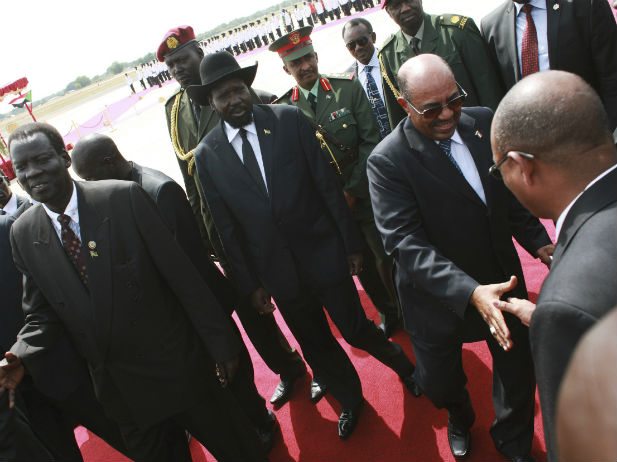
President Salva Kiir, his First Vice President Taban Deng Gai and Second Vice President James Wani Igga after the swearing in of Taban Deng as FVP. Photo credit/nyamile.com

The number of communities asking to be granted ‘new states’ in South Sudan is on the rise, and their demands could see the war-torn and impoverished country have a huge number of 42 states.

According to the First Vice President Taban Deng Gai, about 14 communities have gone to his office to express their desire for more states.

Currently South Sudan has 28 states but Gai, who was speaking at a meeting with religious leaders in Juba, said the number could reach 42 states if the presidency approved. He said was waiting the president to return from a foreign trip to hold a meeting with him and the Vice President, James Wani Igga to address the matter.

“I have finished with my work, I’m waiting for the president to return and when he comes we will discuss it. Because the sooner we resolved this issue of states is better, it will actually cement our peace,” he said.

“So you see this issue of more states of course it is a problem regarding the current economic situation in our country, but what is important is peace. If it can bring us peace, give them their states,” he added.

In a related development the South Sudanese presidency is yet to decide whether to reduce or increase the number of states, citing financial constraints and fear that it could spark new rebellion.

A presidential advisor on decentralization affairs and intergovernmental linkage said that consultations were still continuing to come out with a well-researched solution.

“There is no new information that I know to confirm to you now. I told you last time that the consultations are continuing. The first vice-president is still talking to the people. He has not yet finished with consultations. When he finishes, he will report back to the president and after that they will discuss it as the presidency and with other stakeholders. So let’s wait for the outcome of consultations,” Presidential Adviser on Decentralization and Intergovernmental Linkage, Tor Deng Mawien said.

The creation of states from 10 to 28 by President Salva Kiir Mayardit in 2015 was one of the sticking points that dogged the South Sudan peace deal with rebels allied to former Vice President Riek Machar protesting the increase. The peace deal was finally signed in in April 2015 in Addis Ababa, Ethiopia, but collapsed in July this year when rival forces of Kiir and Machar exchanged fire in Juba, resulting into Machar’s fleeing into exile.


Stories Continues after ad
Trump’s Hollywood star now guarded by secret service

Donald Trump’s star on the Hollywood Walk of Fame is back to its glory and it’s now getting Secret Service-like protection.

TMZ reports that LAPD will have 2 officers on foot patrol in the area 24/7, in addition to vehicle patrol.

It’s reported that a camera will be trained on Trump’s star, located near a shopping mall and private security has also been alerted to keep an eye out for vandals.

The Hollywood Chamber of Commerce which maintains the Walk has placed a protective barrier around Trump’s star it’s unclear when it will be removed.

The star had been covered by a wooden panel for several weeks after it got obliterated with the help of a sledgehammer. The vandal faces 3 years in prison.


Stories Continues after ad

Sudhir dismisses investigation reports

Tycoon Sudhir Ruparelia

City businessman, Sudhir Ruparelia has denied reports claiming that his businesses are being investigated over tax evasion.

His response follows reports that his Meera Investments Limited is being investigated over financial irregularities, including tax evasion.

According to the Red Pepper, the investigation was launched following the takeover of Crane Bank by Bank of Uganda.

It’s said that operations of Crane Bank had been fused in the operations of Meera Investment. This has prompted authorities to investigate whether Meera Investments Limited, a company under Ruparelia Group has been evading paying its taxes.

Speaking to EagleOnline said he wasn’t aware of any investigations and said if there is any, he gladly welcomes the investigations because he has never evaded taxes.

“I am surprised at allegations that one of  my business ventures is reportedly being ‘investigated’ but how would my businesses have grown to this magnitude without tax officials discovering that I don’t pay tax. I don’t want to engage in speculation and I don’t know where this is coming from” Sudhir said.

His response comes after Red Pepper said a team of operatives has been dispatched to China and Far East to establish the tycoon’s investments there.


Stories Continues after ad
Casualties of Western neo-imperialism and African weakness

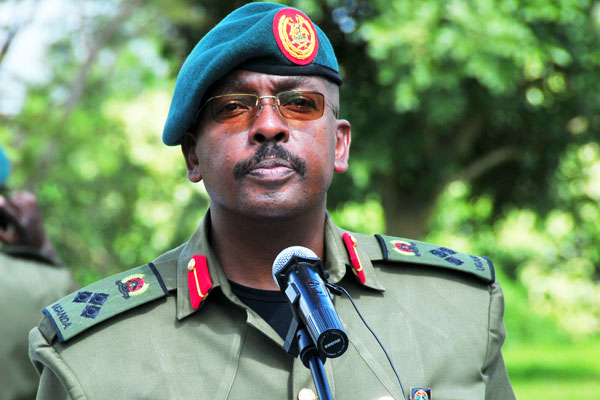
President Yoweri Museveni

In recent months, two western ruling groups have suffered defeat in the elections. Although it is not the culture of Africans to talk about other people’s “houses” (internal affairs of other people), I feel compelled to comment on the events in the USA, Britain and Hungary in recent times because they are somehow connected with Africa and the Middle East.

In the month of June, our friend David Cameron suffered a defeat in the UK in a Referendum as to whether to remain in the EU or not.  In the month of October, the Government of Hungary called a Referendum against immigration to the chagrin of elements of the elite in Europe where the voters rejected the refugee policy of the EU and, recently, Mr. Trump won the election in the USA against our longtime friend, Hillary Clinton. Although Hillary won the popular vote, Mr. Trump won the Electoral College vote.  That is their system which we must respect.

Although there are other reasons that we outsiders cannot easily know, there is one factor that has turned into a curse for the perpetrators. This is the factor of conducting wars of aggression against Sovereign States that are, moreover, members of the UN.  In the last 16 years, since the attack on the twin-towers, in New York in the year 2001, the USA and the other western countries have attacked Afghanistan, Iraq and Libya.  Of these wars by the West against Independent and Sovereign States, two were clearly wars of aggression; they were unjust wars.

It is only the war in Afghanistan that was a just War because some confused group, called Al-Quaeda, intoxicated with religious chauvinism, had carried out aggression against the USA.  It was correct that the USA responded and dislodged the Talibans and their allies, Alquaeda, from Afghanistan.  We all supported this.

It is the other attacks that were wrong and unjust.  These were the attacks on Iraq and Libya. In the case of Iraq, it was said that they had weapons of mass destruction (nuclear, biological and chemical).  In the end, those weapons were not there.   In any case, who is supposed to have the weapons of mass destruction and who is supposed not to and why? Why doesn’t the world concentrate on getting rid of those dangerous weapons rather than waging wars to maintain monopoly over those criminal and cowardly weapons?  Why do some countries want to maintain monopoly over those criminal and cowardly weapons?  In the case of Libya, it was because Gaddaffi was about to launch a counter-attack to recapture the City of Benghazi in an internal civil war. It was to “protect” the “people” against the “regime” ─ the same imperialist arguments that were used in the last-but-one century (“spreading civilization”, etc).  Cameron was about to add Syria to the list, when the UK Parliament rejected his efforts in 2013. In the end, these wars of aggression against Sovereign States, have generated human catastrophes that have few equals in the history of the world.  I, certainly, did not know that there were 1.5 million Christians in Iraq (2003).

Since the 2003 Iraq war, Iraq Christians have been relocated to Syria. Currently, apparently, there are 275,000 Christians in Iraq; 500,000 Yazidis in Iraq; 2.9 million Christians in Syria, etc.

Until the recent upheavals in those areas, these Christians and Yazidis were living in these areas.  The authoritarian regimes of the area notwithstanding, those groups were living there quietly.  Hundreds of thousands of refugees started heading for Europe.  In the USA, there was talk of allowing in the Syrian refugees.  Both the movement of refugees into the EU and the talk of them coming to the USA, generated a backlash from some of the locals, not without justification. With different and conflicting cultures, big infusion of refugees into countries, can, in the long run, create conflicts. In Uganda, we allow refugees from Africa because they are part of the Bantu, Nilotic or Cushitic communities that are already part of Uganda. In fact, you cannot easily tell the difference between these African refugees on the one hand and the Ugandans on the other. Middle Eastern and African groups flooding into Europe and the USA, could have a different impact.

Cynically speaking, though, the USA and EU should not complain about Africans and Arabs flooding into those countries as refugees.  They are the ones that had invaded our countries as imperialists, in the first place.  The USA was built by African slaves.  Be that as it may, the promoters of attacks in the Middle East and North Africa, provoked a human exodus that has caused the backlash bringing down Mr. Cameron and Mrs. Clinton. Although immigration is not the only reason that brought down those groups, it is certainly one of them.  The question then, is: “Were these deliberate imperialist designs or were they just mistakes?”  The Western countries and Africa need to scrutinize this issue and come up with correct answers.

When I was in Germany in the month of June, journalists from the Newspaper Die Spiegal asked me the following question: “Last year, 1.3 million refugees came to Germany, mainly from Syria, Iraq and Afghanistan, but also from Africa. Many believe this is only the beginning of an exodus to Europe.  What do you suggest to stop this wave of migrants?” I answered the questioner that I could not answer that question at that time. I knew that it was a delicate problem for people like Mrs. Clinton who had been involved in the attack on Libya that had turned into such a disaster.  I am now released from that obligation. That is why I have written this missive.

The present African leaders are, however, also co-guilty in this matter. We should never have allowed external powers to attack any part of the African soil without our permission. I had fought Gaddafi two times: 1972 and 1979.  I needed no lectures on the positive and negative points of Gaddafi.  However, to allow the former colonial countries to attack any portion of Africa without a response from us, was betrayal.  To be fair to the African leaders, one could say that we were taken by surprise.  Even me, I did not believe that Western leaders could be so reckless as to do what they did in Libya.

However, attack Libya, they did. What is the contingency for the future and how do we rescue Libya?  We recently had a meeting in Addis Ababa and told all and sundry that AU intends to rescue Libya and we also made it clear that future attacks on African soil without coordinating with AU are not acceptable, to put it mildly. Can Africa defend African soil?  Very much so.  In the 1960s, a few frontline States ─ Tanzania, Zambia and Botswana ─ supported by the socialist countries and working with the Liberation Movements in the occupied African countries, defeated Portugal in Mozambique and Angola, Ian Smith in Zimbabwe and, eventually, the South African racist regime which had manufactured nuclear weapons to intimidate us, as well as its colonial government in Namibia (SWA). All these colonial dictatorships (in Angola, Mozambique, Rhodesia ─ Zimbabwe, Namibia ─ SWA and South Africa), were either supported or encouraged by some of the Western countries.

The other countries that stood with the Liberation Movements were Algeria, Egypt and Guinea-Conakry; even Nigeria, under the Military Government, took a patriotic position. Africa today, the weaknesses notwithstanding, is much more capable than we were in the 1960s.  The problem is lack of consistent unity.  Lack of cohesion is Africa’s problem.  When the USA was still young, in 1823, one of their Presidents, James Monroe, in order to shield the Americas from the rapacious European countries, promulgated the Monroe doctrine which stated: “Further efforts by European nations to take control of any independent state in North or South America would be viewed as ‘the manifestation of an unfriendly disposition toward the United States’. At the same time, the doctrine noted that the U.S. would recognize and not interfere with existing European colonies nor meddle in the internal concerns of European countries”.  The AU needs to put out a “Monroe doctrine” of sorts to all and sundry. Otherwise, the present African leaders will have let down Africa like the pre-colonial chiefs did between 1400 and 1900 when the European imperialists slowly penetrated Africa while these chiefs could not unite to defend us against the slave trade and colonialism.

Before the Western countries killed Gaddaffi, Libya, in spite of its small population of only 6 million people, had the second biggest amount of electricity in the whole of Africa after South Africa and was becoming a big source of investments for the rest of Africa as well as a market for African products.  Hundreds of thousands of Africans were also working in Libya during that time. The destruction of Libya has also led to terrorist groups invading Mali, Cameroon, Nigeria, Niger, etc. Why should Africa tolerate such disruption on her territory caused, in part, by foreigners? That was one reason Uganda intervened in Somalia.  We could not tolerate the importation of the Middle Eastern nonsense of intolerance, allegedly on “behalf of God”, into Africa.

We had to let those confused people know that Africa has its owners, the Africans.  The same message needs to be sent to the Western aggressors. Our Lord’s Prayer says in part:“Thou shalt not lead us into temptation but deliver us from evil”.  Africans should not tempt greedy or confused foreigners into the temptation of interfering with us by being weak.

I cannot end this missive without talking about the foreign agents that masquerade as freedom fighters. This is a subject I talk about with alot of authority. Freedom fighters do not need foreign fighters to fight for them. They fight for themselves.  Who fought for us?  Genuine Revolutions do not need foreign invasions. Who caused the Russian Revolution in 1917?  Who caused the victory of the Chinese Revolution in 1949?  Who caused the changes in the Soviet Union?  Who has caused the recent Trump victory in the USA?  Which foreign actors caused the victory of the Brexit vote in the UK? Who caused the Iranian revolution in 1979? Did foreigners cause these changes? Not at all. On the contrary, the foreigners, in the majority of them, tried to stop these changes but failed. Therefore, the adventurism of some groups in the West, should not be camouflaged as fighting for freedom.

Many of the stooges of foreign interests or local oppressors spend alot of time looking for foreign sponsors rather than looking for ways of how to reconcile with their own people. That is the litmus paper test for pseudo-freedomism. Authentic freedom fighters will sustain themselves even if they do not have external support. They certainly do not need foreign troops.  Pseudo ─ freedom fighters, on the other hand, are always calling for foreigners to interfere in their affairs.

It is a vote of no confidence in oneself to call for foreigners to fight for you?  It is, therefore, wrong for foreigners to eagerly rush into local situations in support of local stooges or opportunists.  Those foreigners become part of the problem and not part of the solution. Local factions should be encouraged to reach compromise rather than getting foreign sponsors to suppress and ignore their domestic rivals.

Anyway, for now, the adventures of the Western countries into North-Africa and the Middle-East, have caused human disasters in those target areas but also political casualties in the countries of the aggressors, not to mention the nationalist backlash against “Western liberalism”.  “Whatever a man sows, that is what he will reap”, it says in the Book of Galatians, Chapter 6, verse 7.

Yoweri Kaguta Museveni Gen(rtd)


Stories Continues after ad

Former PPS Amajo hands over office

NEW PPS IN OFFICE: The New PPS Molly Kamukama with heads of units of State House at the Handover ceremony this morning at President's Office, Parliament

The former Principal Private Secretary (PPS) to the President Mary Amajo has handed over office to her successor Molly Nuwe Kamukama, who called on staff of State House to support to the President in order for him to effectively and efficiently perform his constitutional and administrative responsibility to Ugandans.

“I call upon all of you to work together in unity so that at the end, we have what to show. We are at the epitome of power and must live to the expectations of the President and the people,” Ms Kamukama, who was speaking to Heads of Units of State House shortly after the outgoing PPS Mary Amajo handed over office to her, said.

Amajo has been in office for five years, and Ms Kamukama thanked her for the service to the President and the country and said despite being a tough job, she did it and handed over.

“We all have to move in the same direction. I thank the President for entrusting me with this responsibility and look forward to working with all staff to ensure the President fulfills his responsibility to Ugandans,” she said.

Outgoing PPS Amajo, who is now the Senior Presidential Advisor on Public Service, said she was grateful to the President for giving her the opportunity to serve and called on staff to render support to the new PPS for effective service delivery.

She said the President has a lot of work to do and the office of the PPS is quite engaging which calls for hard work and dedication from all staff.

The Undersecretary Finance and Administration Hope Nyakairu, who presided over the short ceremony, described State House as a unique entity that has a lot of opportunities to serve the President and the people of Uganda and also challenges of meeting the many expectations from different stakeholders.

“We should all remain focused on our mission and on the tasks ahead,” she said.

She later handed over to the incoming PPS a code of conduct for the civil service, a Ministerial Statement on State House plans, budgets and staffing and the Public Service Standing Orders.


Stories Continues after ad

Maurice Kirya’s brother Saba Saba attacks ‘gold diggers’ in new song

COLLABO KIDS: Saba Saba with Fille, the wife of MC Kats

Before we got to know Elvis Kirya or Vampino alias Vampos and his younger brother, Maurice Kiirya, we knew about their elder brother, Alex Kirya aka Saba Saba.

Saba Saba and Babaluku were the pioneers of rap locally known as Luga flow in Uganda. Though, it has been over a decade since we listened to a song from the artiste ever since they left the country.

But on his return, Saba Saba hit the studio to do what he is best known for; he recorded three songs with his latest being ‘Kamunye’, the local name for a bird known as a kite.

‘Kamunye’ is commonly known for snatching chicks from mother hen, and in Saba Saba’s song he focuses on ‘preaching against gold diggers’. The song is about a lover who pretends to be in relationship yet his/her intention is to take away all wealth what the other person possesses.

The rapper also has another song titled ‘Songa Mbele’ that he recorded with Fille, the estranged wife of MC Kats.


Stories Continues after ad

MC Mulekwa’s new song inspired by Bwaise Ghettos

INSPIRED BY GHETTOS: MC Mulekwa

The list of Uganda’s finest rappers can’t be complete without MC Mulekwa’s name.

He is one of the finest rappers in the country and his music has dominated several local charts for over seven years now. And this year hasn’t been bad for him either. Following the success of his song ‘Bukokolo’, whose video garnered over 100k views in just two days, the rapper has ‘outted’ yet another song that he has titled, ‘Byawongo’.

Like most of his songs, Byawongo is a hilarious song that anyone will want to listen to over and over again! Speaking to Eagleonline, the rapper said the song was inspired by a true story “derived from Someone, Somewhere in East Africa”.

“Singing and staying down in the amazing Bwaise Ghettos was always going to be an exciting experience as the Pipo down there find always find a reason to make you laugh out Loud. This pays so less though,” he says.

Meanwhile, he adds that he has been able to record 24 songs this year.


Stories Continues after ad