Stanbic Bank
Stanbic Bank
17.2 C
Kampala
Stanbic Bank
Stanbic Bank
Home Blog Page 1994

Kanyamunyus to spend Christmas in jail

The Kanyamunyus and lady friend Cynthia Munangwari in Nakawa court. T

The prime suspects in the murder of Kasese child protection specialist, Kenneth Akena Watmon, Mathew Kanyamunyu and his two co-accused will spend the festive season in prison.

Nakawa Grade One Magistrate Noah Ssajjabi remanded the three to Luzira prison till January 3.

Mathew, his girlfriend Cynthia Munywangari and brother Joseph Kanyamunyu had appeared before the court for the mention of their case.

However, state attorney Rachael Nabwire told court that investigations into the murder are ongoing and asked for more time for completion.

The case was adjourned to January 3, 2017.

The trio is accused of murdering Social Worker Kenneth Akena Watmon on November 12, somewhere along the Kampala-Jinja highway near the Malik car bond opposite Uganda Manufacturers Association (UMA) in Nakawa Division.

Stories Continues after ad

Donald Trump confirmed as US President

POSTPONED UK VISIT: US President Donald Trump.

Billionaire real estate mogul Donald Trump was officially elected as the 45th US president Monday, his victory confirmed by the required vote in the Electoral College.

Americans have known since early November that Trump, a Republican running for elected office for the first time, would take over the White House when he is inaugurated January 20. U.S. presidential elections, however, are not determined by the actual vote on Election Day, but rather by the individual outcomes of presidential balloting in all 50 states and the nation’s capital, Washington, then with 538 electors voting in the Electoral College.

On Monday, in time-honored fashion, the electors from each of the states and the District of Columbia cast their ballots in their respective state capitals and Trump, as expected, surpassed the 270 majority figure to win a four-year term as the American leader.

​Die-hard supporters of his opponent, Democrat Hillary Clinton, had demanded that Trump-pledged electors drop their support of him, on grounds that Clinton defeated him by nearly 2.9 million votes in the popular count. Some protested Monday outside state capitals in a last-ditch effort to thwart Trump.

But as each state reported its Electoral College balloting, Trump’s pledged electors based on the state-by-state outcomes held firm, assuring him of victory.

Even with Clinton’s lead in the national popular vote count, Trump won, sometimes narrowly, where it mattered, in 31 of the 50 state contests, to claim the Electoral College majority.

After the Texas Electoral College put Trump over the 270-vote threshold, the president-elect thanked “the American people for their overwhelming vote to elect me as their next president of the United States.” He promised in a statement released late Monday to “work hard to unite our country and be the President of all Americans.”

With all states reporting, Trump won 304 votes while Clinton received 227. The other seven electors voted for someone other than their party’s nominee.

In most election years, voting in the Electoral College is little more than a formality. But that is not the case this year.

Because of the close and bitterly contested race, and continuing opposition to Trump’s victory by many Clinton supporters, thousands of Americans bombarded the 306 Republican electors with emails and phone calls, demanding they reject Trump, either by voting for Clinton or another, more acceptable Republican.

In the unlikely event that 37 or more Republican electors had defected from Trump and no candidate wound up with 270 or more, the Republican-controlled House of Representatives would have picked the president.

Electors in 29 states are bound by state law to vote for the candidate who won their state vote count, and often elsewhere, electors say they feel morally compelled to vote in the Electoral College the way their state voted.

Although the vast majority of Americans focused their ballot choice as between Trump and Clinton, they actually were casting ballots for slates of electors supporting the two candidates, often comprised of political activists in their respective states. Clinton’s husband, former President Bill Clinton, was an elector for her in New York.

Hillary Clinton piled up big vote margins in California and New York to give her the national popular vote edge, even as Trump scored impressive wins in states that Democrats have won in past presidential elections. It is the fifth time in U.S. history, and the second in the past 16 years, that the popular vote winner did not win the all-important Electoral College vote.

Faithless electors

Faithless electors – those who cast Electoral College votes for someone other than the presidential candidate who won their state – are not unheard of in American political annals, but they are relatively rare, with just 157 since the Electoral College was first used in 1789, and most occurred in the 1800s.

Several U.S. news media outlets who have interviewed at least some of the 2016 electors say the vast majority are planning to back the winner in their state, with only one known Republican elector, Chris Suprun in the southwestern state of Texas, saying he would not vote for Trump.

Suprun, however, said that the number of faithless electors was “more than just me,” but he failed to persuade at least 37 Republican electors to drop their support for Trump.

The country’s founding fathers debated how to pick the country’s presidents, deciding against using the popular vote for fear that mob rule might ensue or that the biggest states would have too much control over the ultimate outcome. It settled on the Electoral College, in part to give even the smallest states at least three electoral votes.

As it currently stands, seven states and the U.S. capital, Washington, D.C., have three electoral votes each. The Pacific coast state of California has the most, at 55.

U.S. President Barack Obama, who staunchly supported Clinton, described the Electoral College as a ‘vestige’ of American history.

But several congressional attempts to reform it or replace it with a popular vote have failed. Now, with Trump the beneficiary of its use and Republicans in control of both houses of Congress, there is no immediate chance that its use will end.


Stories Continues after ad

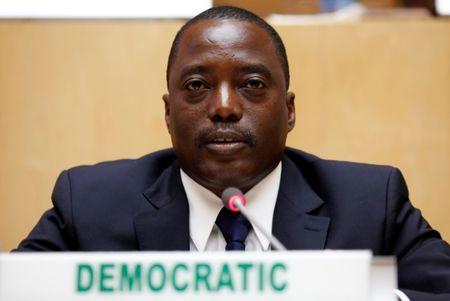
Shooting in Kinshasa as Kabila clings onto power

BACKTRACKING ON ELECTIONS? DRC President Joseph Kabila

Gunfire has erupted in several parts of Kinshasa early today as Democratic Republic of Congo’s long-serving President Joseph Kabila appeared set to stay on despite the expiry of his mandate today, and announced a new government.

Shots rang out in several parts of the sprawling city of 10 million, especially in two northern quarters after whistles – an opposition sign of protest – were heard in several areas.

Demonstrators blew whistles and beat on improvised drums, their gesture for a red card, asking the 45-year-old who has led the Democratic Republic of Congo since 2001 to quit the top job.

State television overnight announced the formation of a new government following an agreement between Kabila’s administration and a fringe opposition group.

The new cabinet will be led by Sami Badibanga, a defector from the party of the mainstream opposition party led by 84-year-old Etienne Tshisekedi.

Talks on a peaceful transition are in limbo, sparking fears of fresh violence in the unstable mineral-rich nation.

Kinshasa was a shadow of itself yesterday with barely any traffic on the main roads, public transport at a minimum, and soldiers and police outnumbering passers-by.

Shops were shuttered in the main square and there were tense scenes at Kinshasa University, where dozens of police and troops held back hundreds of angry students.

The UN rights office in Congo said 28 people were arrested in Kinshasa on Monday and 46 in the eastern cities of Goma and Bukavu.

Killings in volatile East 

In the volatile east, nine rebels, a South African peacekeeper, a Congolese soldier, a police officer and a civilian were killed when militia fighters attacked several buildings in Butembo, including the prison.

A supplier of minerals crucial for everyday items ranging from smartphones to lightbulbs — tantalum, tungsten, tin and coltan – the mineral trade in the east of the country has long been linked to armed groups and conflict.

Kabila, who has been in power for 15 years, is constitutionally barred from seeking a third term but under a recent constitutional court order, he may stay on until a successor is chosen.

The ruling party and some opposition leaders have agreed to schedule an election in April 2018 at the earliest, leaving Kabila in office until the vote. But the main opposition bloc rejects this plan.

In Kinshasa, security forces cordoned off the university but students reached by telephone said they had been planning ‘to march peacefully’ to parliament to demand Kabila step down.

Security was also tight in the second city, Lubumbashi, in the southeast, with most shops closed and very little traffic on the roads.

Social networks have been cut or filtered since midnight Sunday on government orders and police at the weekend banned gatherings of more than 10 people.

‘Kabila won’t cave in’ 

In a last-ditch bid to achieve a peaceful transfer of power, the ruling party and fringe opposition groups held talks last week with the mainstream opposition led by Tshisekedi.

But after a week of mediation, they were suspended and due to resume on Wednesday.

A democratic handover would break new ground for DRC’s 70 million people who since independence from Belgium in 1960 have never witnessed a democratic transfer of power following polls.

The president has been in office since his father Laurent Kabila was assassinated in 2001. He was elected in 2006, and again in 2011, in a poll the opposition decried as rigged.

Tshisekedi’s opposition grouping has threatened to bring people onto the streets from Monday if the talks failed.

“I don’t see (Kabila) caving in to pressure,” his diplomatic advisor Bin Karubi said on Monday.

Some two decades ago, DRC sunk into the deadliest conflict in modern African history, its two wars in the late 1990s and early 2000s dragging in at least six African armies and leaving more than three million dead.


Stories Continues after ad

Ugandan among top cancer researchers in Africa

UNESCO-MARS 2016 Award winners: (L-R) front row- ‘Best African Woman Researchers Award’ 4th place winner Maria Nabaggala, from Infectious Diseases Institute, Uganda; 5th place winner, Martha Zewdie, from Armauer Hansen Research Institute, Ethiopia; 2nd place Best Young African Researchers winner, Constantine Asahngwa, Cameroon Centre for Evidence Based Health Care; Best Young African Researchers 1st place winner Patricia Rantshabeng from University of Botswana; Best African Women Researchers 2nd place winner, Rogomenoma Ouedraogo, Laboratory of Biology and Molecular Genetics University, Burkina Faso; ‘Best Young Researcher Award’ 3rd place winner, Lamin Cham from National Aids Control Program, Gambia; 2nd row: 2nd place Best Young Researchers Award winner, Tinashe Nyazika, University of Zimbabwe; Best African Woman Researchers Award’ 1st place winner, Beatrice Nyagol from Kenya Medical Research Institute, together with Prof. Yifru Berhane, Minister of Health, Ethiopia; Prof. Dr Frank Stangenberg-Haverkamp, Chairman, Executive Board and Family Board of E.Merck KG; Prof. Afework Kassu Gizaw, Minister of Science and Technology, Ethiopia; Ahmed Fahmi, Program Director, UNESCO and Rasha Kelej, Chief Social Officer, Merck Healthcare.

Ugandan scientist Maria Nabaggala is one of the five best African women researchers on cancer related to women health, an undertaking related to bridging the gap of gender inequality in Science, Technology, Engineering and Mathematics (STEM) on the continent.

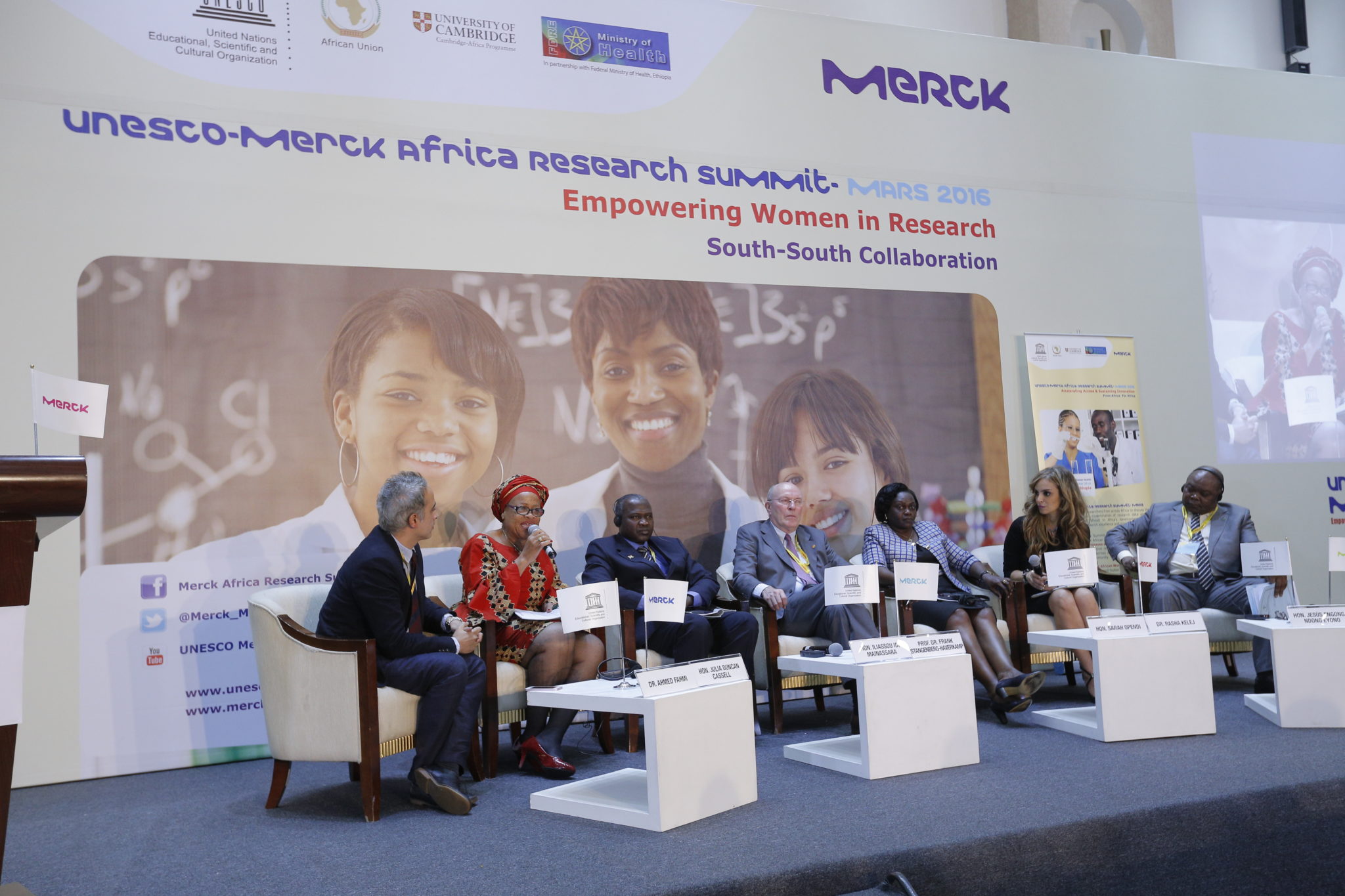
The first ministerial high level panel on “Defining interventions to advance research capacity and empower women in research to improve women health in Africa,” involved: Hon. Sarah Opendi, Minister of State for Health, Uganda; Hon. Idi Illiassou Mainassara, Minister of Public Health, Niger; Hon. Julia Cassell, Minister of Gender, Children and Social Development, Liberia; Hon. Jesús Engonga Ndong, Minister of Education & Science, Equatorial Guinea and Prof. Frank Stangenberg-Haverkamp, Chairman of Executive Board and Family Board of E.Merck KG.

Nabaggala of the Infectious Diseases Institute (IDI) emerged 4th in the ‘Best African Women Researchers Award’ category for her study on ‘understanding the outcomes of HIV positive patient tracking following a missed appointment in rural Uganda’.

The competition was sponsored by Merck Africa, and the four other winners of the presitigious award include Beatrice Nyagol of the Kenya Medical Research Institute; Rogomenoma Ouedraogo, of the Laboratory of Biology and Molecular Genetics, University of Ouagadougou; Sandrine Liabagui ep Assangaboua Ecole Doctorale Regionale d’Afrique Centrale, Franceville and Ethiopian Martha Zewdie, Armauer Hansen Research Institute.
Merck announced the five winners under the category of ‘Best African Women Researchers Award’ alongside four other winners from Botswana, Cameroon, Gambia and Zimbabwe for the ‘Best Young African Researchers Award’ during the recently held 2nd UNESCO-Merck Africa Research Summit in Addis Ababa, Ethiopia where the first ‘Best African Women Researchers Award’ was being launched.

The recipients of the awards are PhD students and young investigators based at African research institutes and universities and were selected based on the abstracts they submitted. These impressive abstracts were related to Infectious Diseases with the aim to improve Women Health, the focus of UNESCO-MARS 2016.

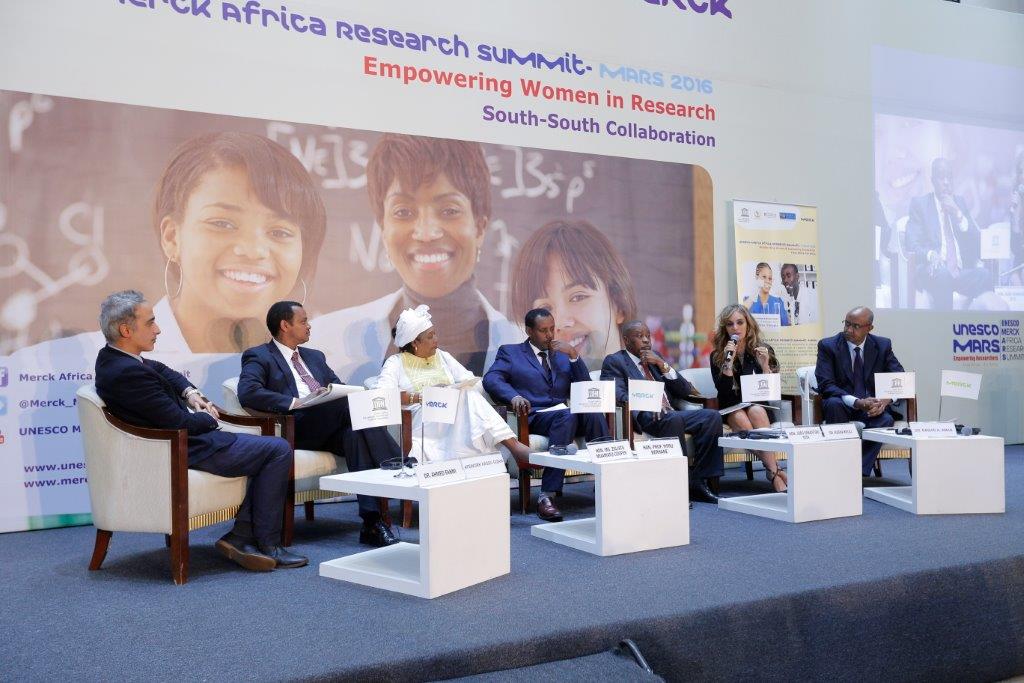
The second ministerial panel on “Research and policy making gap in Africa – challenges and opportunities – Africa as a new international hub for research excellence and scientific innovation,” included: Hon. Prof. Yifru Berhane, Minister of Health, Ethiopia; Hon. Prof. Afework Kassu Gizaw, Minister of Science and Technology, Ethiopia; Dr. João Sebastião Teta, Secretary of State, Angola; Hon. Zuliatu Cooper, Deputy Minister of Health and Sanitation, Sierra Leone and Rashid Aman, Chairman, Kenya National Commission for UNESCO.

‘Following the success of Merck Cancer Access Program to empower women in oncology field where they are underrepresented, comes another successful initiative for MERCK to empower African women in research to offer better health care to women,’ a release by Africa Press Organisation (APO) states in part.

The awards are linked to Professor Frank Stangenberg-Haverkamp, the Chairman of Executive Board and Family Board of E. Merck KG and a recipient of the ‘African Alliances HE for SHE’ award for women empowerment.

“Merck will work together with UNESCO to empower young researchers which raises the level of scientific research in Africa and encourages in particular young women researchers to pursue their dreams, work for improving access to health solutions and make a difference in the continent. Moreover, I am very pleased to offer my support to motivate female researchers and healthcare providers and recognize their excellent contribution to fields where they are underrepresented,” Prof. Stangenberg-Haverkamp told the awardees.

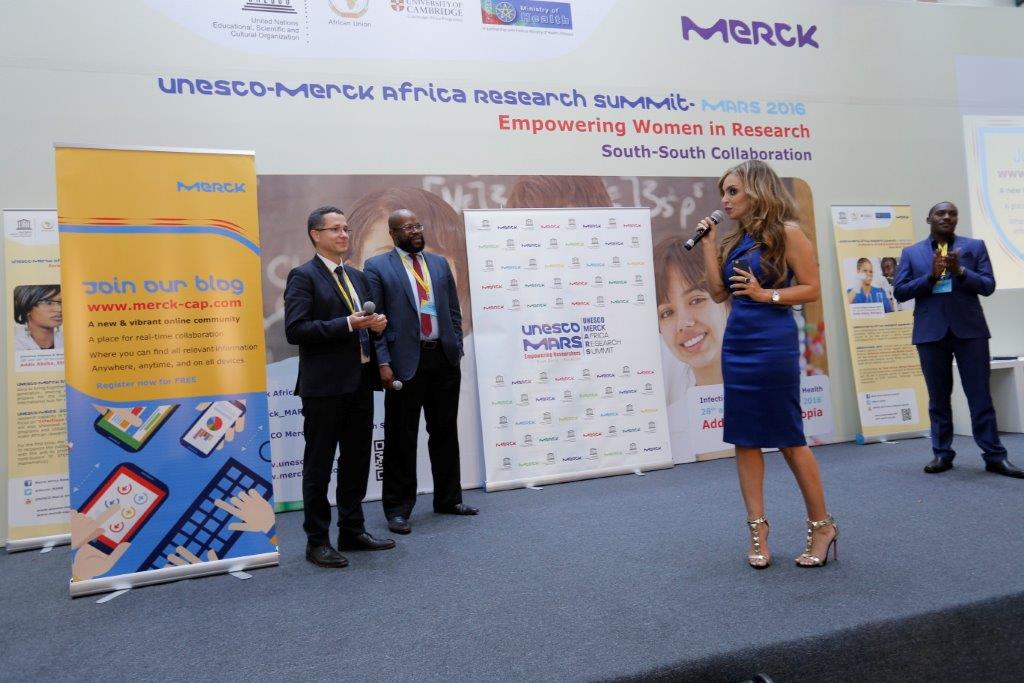
Dr. Rasha Kelej, Chief Social Officer, Merck Healthcare introduces the Merck CAP blog as Olivier Drury and Michael Johnson from Business Technology at Merck look on.

In her introductory remarks, Dr Rasha Kelej, Chief Social Officer, Merck Healthcare highlighted: “This is the second UNESCO-MARS we are holding after the successful one held in Geneva, Switzerland in 2015. Merck is committed to empowering women in STEM (Science, Technology, Engineering and Mathematics) which will consequently contribute to improving the quality of research and science in Africa.”

“Merck’s support for research and healthcare especially in the field of oncology where women are currently under-represented will help bridge the gender gap in STEM in Africa.  Merck have provided earlier this year Oncology fellowship program to African women doctors from Kenya, Uganda, Ghana and Tanzania. Not only that we have also supported women cancer survivors through access to information, awareness about prevention and early detection, health and economic empowerment through Merck more than a a patient initiative which focuses mainly on Cancer in women and its social misperception and stigma,” Rasha Kelej added.
Merck will provide the winners with training and mentorship opportunity to advance their capacity and helps bring them to the international standard. The winner of MARS Research awards will be appointed as Merck Ambassadors of Empowering Women and Girls in STEM in their own countries through several future initiatives to be announced in 2017.
‘Best African Women Researchers Award’ winners:
1st winner: Kenya
Beatrice Nyagol, Kenya Medical Research Institute for her study on: “Clinicians’ experiences and insights in conducting an intra-vaginal ring study among young women in Kisumu, Kenya, 2015 -Lessons learned” (see the video section: UNESCO-MARS 2016 ‘Best African Woman Researcher Award’ 1st place winner, Beatrice Nyagol, Kenya)

2nd winner: Burkina Faso
Rogomenoma Ouedraogo, Laboratory of Biology and Molecular Genetics University of Ouagadougou for her study on: “Molecular diagnosis of cytomegalovirus (CMV), the human herpes virus type 6 (HHV6) and Epstein-Barr virus (EBV) by real-time PCR in pregnant women infected or not infected by HIV at Ouagadougou, Burkina Faso” (see the video section: UNESCO-MARS 2016 ‘Best African Woman Researcher Award’ 2nd place winner, Alice Rogomenoma)

3rd winner: Gabon
Sandrine Liabagui ep Assangaboua Ecole Doctorale Regionale d’Afrique Centrale, Franceville for her study on: “Pro- and anti-inflammatory cytokines in children with malaria in Franceville, Gabon”

4th winner: Uganda
Maria Nabaggala, from the Infectious Diseases Institute for her study on: “Understanding outcomes of HIV positive patient tracking following a missed appointment in rural Uganda”

5th winner: Ethiopia
Martha Zewdie, Armauer Hansen Research Institute for her study on: “Ex-vivo characterization of regulatory T-cells in pulmonary tuberculosis patients, latently infected persons, and healthy endemic controls” (see the video section: UNESCO-MARS 2016 ‘Best African Women Researcher Award’ 5th place winner, Martha Zewdie, Ethiopia)

‘Best Young African Researchers Award’
The three categories of the ‘Best Young Researchers Award’ were given to two female and two male researchers from Botswana, Cameroon, Gambia and Zimbabwe.

1st winner: Botswana
Patricia Rantshabeng, University of Botswana for her study on: “Prevalence of oncogenic Human Papillomavirus genotypes in women with vulvar and cervical squamous cell carcinoma in Botswana (see the video section: UNESCO-MARS 2016 ‘Best Young African Researcher Award’ 1st place winner, Patricia Rantshabeng, Botswana)

2nd winner: Cameroon
Constantine Asahngwa, Cameroon Centre for Evidence Based Health Care for his study on: “The experiences of women living with trachoma in Africa: A qualitative systematic review” (see the video section: UNESCO-MARS 2016 ‘Best Young African Researcher Award’ 2nd place, Constantine Asahngwa, Cameroon)

3rd winner: Zimbabwe
Tinashe Nyazika, University of Zimbabwe for his study on: “Cryptococcus neoformans population diversity is not associated with clinical outcomes of HIV-associated cryptococcal meningitis patients in Zimbabwe” (see the video section: UNESCO-MARS 2016 ‘Best Young Researcher Award’ 3rd place winner, Tinashe Nyazika, Zimbabwe)

3rd winner: Gambia
Lamin Cham, from National Aids Control Program for his study on: ‘Qualitative detection of proviral-DNA of HIV-1 in neonates to determine the efficacy of antiretroviral therapy in the prevention of vertical transmission of HIV-1 in the Gambia’.

Stories Continues after ad

Embattled Jammeh sacks ‘rebellious’ Ambassador

SACKED: The Gambian Ambassador to the US, Sheikh Omar Faye.

President Yahya Jammeh of the Gambia has recalled his representative in the United States after the latter endorsed the election of Adama Barrow.

Sheikh Omar Faye, who was appointed to the top job in June 2015, is the first Gambian diplomat to openly recognise Adama Barrow, who was declared winner of the December 1 disputed presidential election.

His boss, President Yahya Jammeh who has governed the Gambia since July 1994, is disputing the election results and has petitioned the country’s Supreme Court to declare them null and void.

The letter written by Ambassador Faye to recalcitrant President Yahya Jammeh. The President has now sacked Ambassador Faye.

Commenting on his sudden sacking, Mr Faye wrote on his Facebook page: “I would like to inform my friends, colleagues, and all Gambians that I have been recalled for home service. I will handover in line with Foreign Service Regulations (FSR). At the same time, I hope and pray H.E President Yahya Jammeh will likewise handover to President Elect Adama Barrow and respect the will of the people of The Gambia and the constitution.”

While thanking Mr Jammeh for giving him the opportunity to serve as Gambia’s representative in the United States of America, he called on Gambian officials including civil servants and military personnel to protect the security, peace and prosperity of the country.

“We should all work together to ensure that the peace our beloved country is known for is not compromised. The Gambian people, its history, and above all God, the Almighty will judge us.  Let us all side with justice and the will of our people,” he added.

“On 19th January 2017 God willing, Mr. Adama Barrow will become the third President of the Republic of the Gambia and we all should rally behind him for the benefit of our beloved country. We should all forget personal ambitions and strive towards maintaining the peace and social cohesion of our beloved country.

“As a former military officer, I was taught loyalty to country first. I hope the armed and security forces will uphold the will of the Gambian people made on 1st December 2016. The current Chief of Defense Staff (CDS), Lieutenant General Ousman Bargie , the Deputy-Chief of Defense Staff General Yankuba Drammeh, and several  active and retired officers who served with me both in Yundum and Kudang camps can bear witness to the patriotism of our forces.

“I hope the Gambian Armed and Security Forces will do the right thing by standing with the People of The Gambia, maintain peace, and prevent any usurpation of power. They owe that to the people of the Gambia, to history, and to God, the Almighty.”

Ambassador Faye has held other senior government positions in the 22-year regime of Yahya Jammeh including minister of Youth, Sports, and Religious Affairs, deputy Chief of Mission in Mauritania and Chargé d’Affaires at the Gambian Embassy in Washington.

Prior to joining public service as a civilian, Ambassador Sheikh Omar Faye served in the Gambian military for 14 years, and retired in 1995 at the rank of major.


Stories Continues after ad

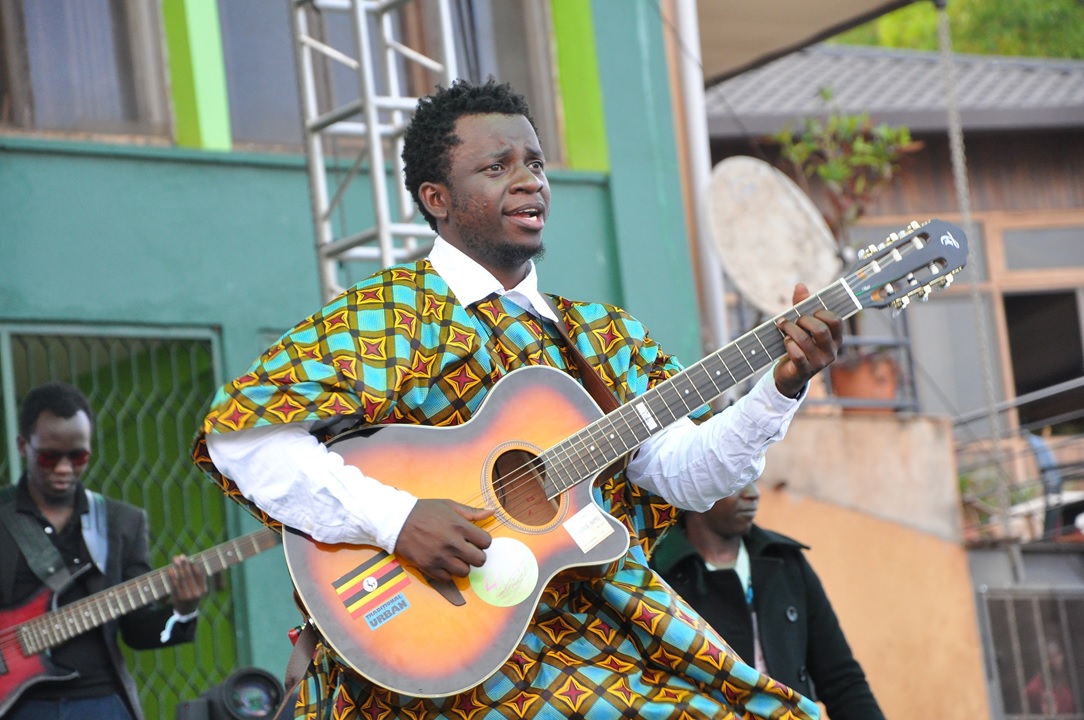
Alikiba shakes it all as Blankets & Wine Kampala winds up

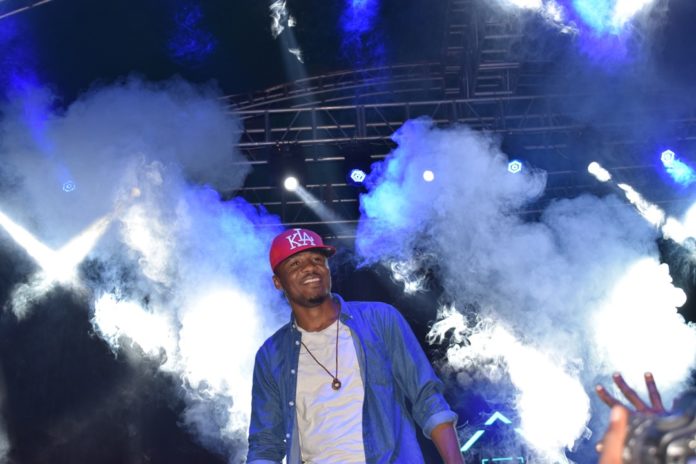
HERE I AM: Alikiba performing

As promised, the 15th edition of Blankets and Wine Kampala lived up to its billing. With a mild drizzle in the afternoon, the weather was just perfect for the event on this largely sunny day.

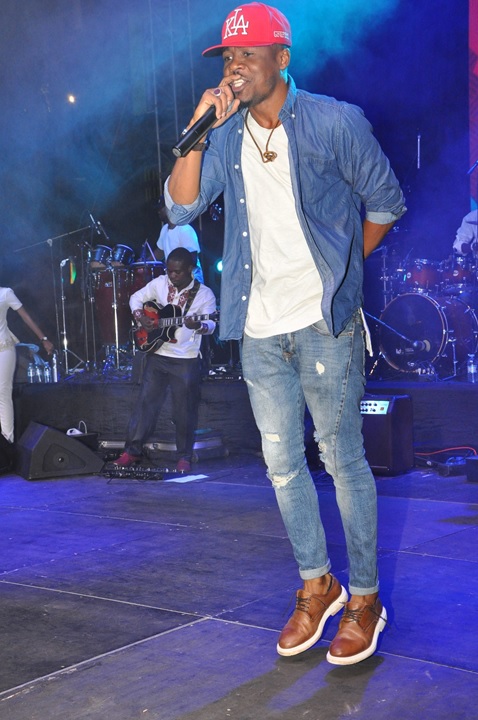
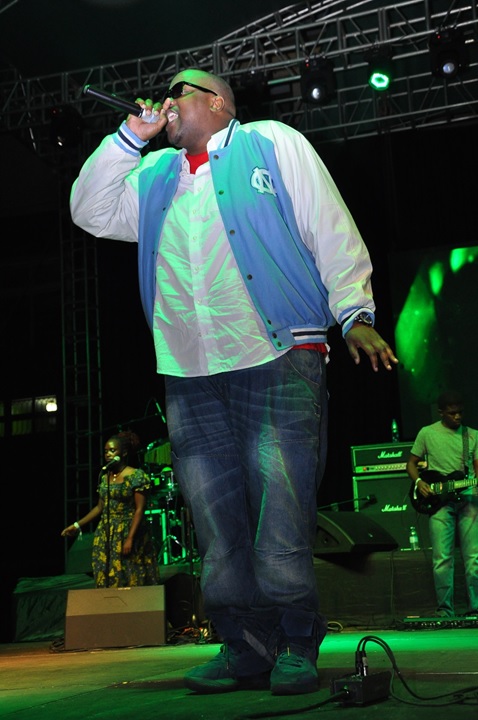
The Mith performing

From the lineup of artistes, the festivities, the guest list to the fashion sense; everything seemed to naturally fall in place. Multi-instrumentalist Giovanni Kiyingi, The Mith, Jemimah Sanyu, DJ Naselow and Alikiba from Tanzania were the headline acts.

The performances were kicked off by Jemimah Sanyu, who sang many of her songs off her ‘Amaaso go googera’ album.

Giovanni Kiyingi performing

Not only did Giovanni Kiyingi impress with the smooth sounds from his many instruments, he also showed vocal prowess. He sang some of the songs from his latest album as well as some from his highly anticipated album.

By the time Hip hop artiste, The Mith took to the stage, the crowd was on their feet. The rapper made his performance interactive as his band backed him up.

The day’s deejays, FEM DJ who kept the crowd entertained and dancing in between acts, and DJ Naselow who kept them dancing even after Alikiba’s performance, were a thrilling addition to the lineup.

The headlining act, ‘Alikiba’, famous for his songs like; ‘Mwana’ ‘Aje’ and ‘Chekecha cheketua’ showed just how much afro music is loved.

When he finally kicked off his performance, it was a case of ‘who could jump highest, who would bend lowest and who would shake best.’ The artiste, who also loves dancing, played songs like ‘Cinderella’, ‘Nakshi Nakshi’, ‘Usiniseme’, ‘Dushelele’ and ‘Single Boy’, which brought out some insane dance strokes from revelers.

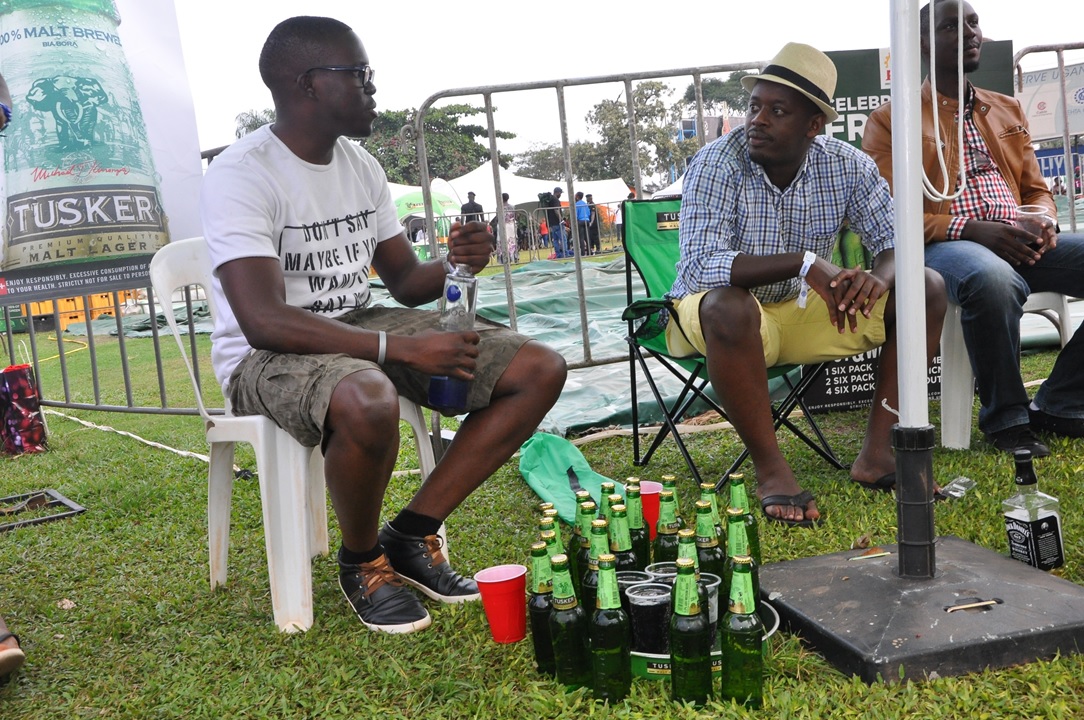
Revelers having a good time

“This year we wanted to bring in a new musical experience to the Blankets and Wine event. Alikiba, whose music is loved and danced to, and is dominating international airwaves, was the perfect choice. For Tusker Malt Lager, this is our way of showing our appreciation to our consumers by giving them the best,” said Alex Tusingwire, the Tusker Malt Lager Brand Manager.

A quarterly picnic style music festival, Blankets and Wine is sponsored by Tusker Malt Lager alongside other partners including House of DJs.


Stories Continues after ad

The University Makerere should be (PART III)

DEEP KNOWLEDGE ABOUT MAKERERE: Author Professor ABK Kasozi.

The creation of thinkers and the next generation of academics undermined

Lack of research funding has not only reduced the production of knowledge and reduced university academic staff to only a teaching role but has also negatively impacted on the creation of the next generation of academics and high-level thinkers for work in the general society. Indeed, in this global technical age, a major role of the university is to produce elevated thinkers with versatile minds that can adjust to changing market, political, social and adverse international forces. The country does not only need more qualified university staff but also well trained researchers to perform the triple functions of knowledge production, its dissemination and proper application in society. The people who perform theses triple functions are, in most cases, PhD holders. The PhD holders constitute the core of the academic and research communities in both universities and the general society. PhD holders undertake research, the creation of the next generation of academics and help in the application of researched knowledge in society. Researchers and innovators are linked and doctorate holders are needed to do both. PhD holders are key in executing tasks that need high level thinking power. The number of PhD holders in the country is so low that it is wishful thinking that the country can be transformed into a modern society by 2040 as the official plan would make us believe. The research I have done for the last two years has told me that there is an alarming shortage of PhD holders who should constitute the core of research communities in societies. This shortage cannot be bridged in the next one hundred years if current production rates of only 200 of these individuals a year are not accelerated. Surveys indicate that, currently, there are about 1,000 to 1,300 PhD holders. The most recent NCHE publication (2013/4) puts the number in higher education institutions at 1,096. In a population of 34 million people, the ratio is 1 PhD holder per 34000 people.


It is evident that these numbers are far below the country’s needs in both the education sector and the rest of society.  Uganda with about 250,000 higher education students, of whom more than 150000 are in universities, does not only have a low ratio of PhD staff to students, PhD training programmes are not well structured in our universities. Thus in 2011/2, the PhD to staff ratio was about 1:150, for universities and about 1:208 for the whole higher education sub-sector. None of Uganda’s universities had the NCHE ideal of 60% staff with PhDs although Makerere with about 40% was moving towards that ideal.


The average percentage of PhD holders in each of Uganda’s university was found to be 11.7% (NCS&T) and 11% (NCHE) of total staff. Assuming that all lecturers in universities are required to have a PhD, as Makerere has stipulated, the PhD deficit in the higher education sub-sector is alarming. In 2015, total enrolment for universities was 180,000 and other tertiary institutions 70,000. To achieve the NCHE ideal staff to student ratio of one PhD holder to fifteen students (1:15) in universities would need (180,000 divided by 15) or 12,000 PhD holders. But the current count of PhD holders is about 1,300 leaving a deficit of 10,700 individuals   needed in university institutions alone. To fill the gap and eliminate this deficit, the country needs to produce at least 1000 PhDs per year for the next ten to twelve years. Based on normal productive capacity of three PhD graduates per academic staff every five years (or 0.6 PhD per year), Uganda’s current PhD production capacity is no more than two hundred and fifty (about 212) PhD graduates each year. The Actual production in 2014/5 when I carried out this research was 100 (one hundred) only.  The dearth of academic qualified staff in our university system partly explains the commotions we are experiencing in the university sub-sector.  Overloaded, underpaid in comparison to their international counterparts, and unable to perform their preferred functions, a number of staff are pushed to the limits.


It is true, at lower levels of the higher education system the curriculum should be market driven and we may not need PhD holders in that area. But rigidity of the mind and training can be catastrophic because when markets change our trainees may not be able to change or use their skills.


  1. Where then should the money come from?


Anew model of funding that draws resources from multiple sources in the context of autonomy and accountability must be adopted. This is because neither the state, nor the parents, nor the non-government organisations, nor foreign donors, nor students nor other well-wishers can individually fund universities. But a combination of all these sources can. However, this can only happen when a new model of governance, or a new relationship with the Government, is established. I think universities should renegotiate with the government for a new relationship, most preferably through the granting of charters as have happened in Tanzania and Kenya. Each public university should, like private ones, get a charter or an agreement specifying its relationship with the government, and the obligations of the state and the institution to the public.  In this way institutions will be able to search for the truth unhindered by bureaucratic and Government red tape. Further, government should only give grants to universities through a central body, where all funds going to universities will be collected and disbursed on priority basis to each individual university. We should learn from Ghana, UK and Tanzania on this issue where such a system is working. No funds should be directly transferred from the treasury to universities because the latter might be tied to government regulations and red tape.

Table 1: Public and Private (Student) contribution to the funding of Makerere University, 1993-2005/6


Year


Govt

Stu –dents


Total Govt

Funding

% Govt

of total funding


Private

Students


Total Private funding


% Private of total fun ding


Total funding from both sources


Total students

%

Annual Growth rate


Makerere unit income per student

Preferred

Unit cost per student

1993/94 6,643 10,713,005,331 100 701 0 10,713,005,331 7,344 5.0 2,439,555
1994/95 6,494 17,660,738,900 100 1,412 0 17,660,738,900 7,906 7.7 2,567,953
1995/96 7,089 20,328,433,000 83 2,280 4,080,059,201 17 24,408,492,201 9,369 18.5 2,605,240 2,703,108
1996/97 6,710 19,255,308,734 72 7,902 7,561,493,114 28 26,816,801,848 14,612 56.0 1,835,259 2,845,377
1997/98 6,890 19,500,000,000 69 7,477 8,799,261,213 31 28,299,261,213 14,367 -1.7 1,969,740 2,995,134
1998/99 6,545 22,541,938,000 62 9,497 13,663,196,178 38 36,205,134,178 16,042 11.7 2,256,897 3,152,762
1999/00 6,103 22,990,000,000 60 14,265 15,080,261,764 40 38,070,261,764 20,368 27.0 1,869,121 3,318,697
2000/01 6,133 22,060,000,000 56 19,112 17,406,254,325 44 39,466,254,325 25,245 23.9 1,563,330 3,493,365
2001/02 7,712 26,650,000,000 58 22,650 19,030,439,000 42 45,680,439,000 30,226 19.7 1,511,296 3,677,226
2002/03 7,932 26,260,000,000 47 22,276 29,438,099,000 53 55,698,099,000 30,208 -0.1 1,843,819 3,870,764
2003/04 7,772 26,289,000,000 45 19,454 31,981,937,218 55 58,270,937,218 27,932 -7.5 2,086,171
2004/05 6,799 28,874,000,000 43 23,906 38,579,239,386 57 67,453,239,386 30,705 9.9 2,196,816
2005/06 6,948 38,472,472,000 41 23,879 56,181,463,787 59 94,653,935,787 30,827 0.4 3,070,488

Note: External donor funding money is not included in the above table but it is regarded as “private”.

Source: Computed by author from data obtained from the Academic Registrar, Bursar and Director of Planning,


  1. Makerere University should gradually focus on postgraduate training


To avoid the danger of turning out half-baked PhD holders from multiple and insignificant high school like institutions calling themselves universities, the country should develop the only institution with some research and postgraduate training capacity, Makerere University, to train PhD holders. Makerere University should gradually focus on postgraduate training to produce academics for the many mushrooming higher education institutions, the public and private sectors. The average PhD stock in each of our university, though moonlighting and consultancy involvement reduce their institutional effectiveness is only 12% instead of the 60% NCHE regards as ideal. Only Makerere has over 50%. According to a number of studies, every developing country needs at least one first class research and postgraduate training university (Altbach, 2013). Makerere is in position to focus on research and postgraduate training and it is in the country’s interest that it does so. Its undergraduate programmes should gradually be trimmed to accommodate more postgraduate students. Mbarara University of Science and Technology and, possibly, Uganda Christian University, Uganda Martyrs and IUIU could follow the same road as Makerere, a number of years down the road. But their capacity in terms of staff, infrastructure and global connections are still very far behind Makerere. While we have some idea of the number of PhD holders’ education institutions need, I am not clear of what the rest of the Uganda market needs. The National Planning Authority should embark on a study to provide the country with that necessary data. All I know is that the country needs these qualified individuals to constitute a thinking core for all high level activities. Unless a solution to the PhD holder deficit is resolved, the whole of Uganda’s higher education sub-sector will fall into disrepute and the country will not achieve its development goals.


  1. Conclusions


  • The whole of the Uganda higher education sub-sector must be studied in order to fully understand what is going on at Makerere. The staff strike at Makerere is a tip of an iceberg of problems within the system that could destroy our whole university sub-sector unless addressed.
  • Staff and student strikes are energized by political motives due to the assumption that Government is responsible for the financing and management of universities and it is deliberately denying universities money while it is funding what university groups see as not worth subsidizing. Their perceptions are reinforced by the state’s use of a model of university Governance that links the university directly to the state as a national institution in total disregard of the dual national and international nature of universities. To reduce strikes, the government must delink the university from the state, charter all public universities, transfer funding to, and through, a grants committee (e.g Pakistan) or through the NCHE (eg Ghana, Tanzania, Ireland etc). In this model, university managers take on full responsibilities of maintaining the university and the Government is relieved of constant irritations from university communities. In turn, the University acquires more autonomy and responsibilities to manage its affairs or die. Currently, the methods Uganda uses to fund universities is the most backward in the region.


  • To introduce a new model, a new act must be drafted, most preferably after a through study followed by a national dialogue on the type of university this nation needs. Merely drafting an Act without massive consultations might result into the mess we have with the current one.


  • The proposed funding model, which was published in my book (Kasozi, 2009), is the most appropriate for this country. If used, universities should stabilize their sources of revenue and hopefully we should have fewer strikes as Government will no longer be the target of staff and students’ pressure for more funds. Archaic methods of funding our public universities based on a law that makes universities solely national instead of both national and universal institutions is the author of the current financial problems of universities. Uganda should take a leaf of how Ghana funds its universities.


  • To improve on the qualifications of University staff whose PhD stock stands at 12% per university institution instead of the ideal 60%, Makerere University should gradually focus on teaching postgraduate students at a ratio of 40% post graduates to 60% undergraduates within the next five years. This will enable the country to fill the PhD gap and create the next generation of academics and high skilled thinkers the nation needs.


References:


Altbach P (1984) “Student politics in the Third World” Higher Education 13: 633-655

-do- (1999) ed. Student Political ActivismAn International Reference Hankbook.  New York:  Greenwood Press

Byaruhanga, Frederick Kamuhanga (2006).  Student Power in Africa’s higher Education:  A case study of Makerere University.  New York:  Routledge, Tailor and Francis Group.

Cloete, Nico, Peter Maassen, and Tract Bailey (2015 a). Knowledge Production and Contradictory Funtions in African Higher Education. Cape Town: African Minds

Kasozi, A.B.K (2009). Financing Uganda’s Public Universities: An Obstacle to Serving the Public Good. Kampala: Fountain Publishers

-do-        (2015). Political Lessons to Learn from the 1952 Makerere College Students’ Strike, Working Paper 22, Makerere Institute of Social Research.

Musiige, Gorgon and Maassen, Peter, 2015. “Faculty Perceptions of the Factors that Influence Productivity at Makerere University”, In Cloete , Nico, Peter Maassen, and Tract Bailey (2015. Knowledge Production and Contradictory Funds in African Higher Education. Cape Town: African Minds, pages 109-127, New York: Routledge, Taylor and Francis Group

Nkinyagi, J (1991) “Student protests in Sub-Saharan Africa” in Higher Education, 22 no.2 (September):  157 – 173.


  1. B. K. Kasozi


Makerere Institute of Social Research.


November 23, 2016

Stories Continues after ad

Bin Laden son denied entry into Egypt

TURNED AWAY: Omar Bin Laden, the fourth son of former Al Qaeda leader Osama Bin Laden.

Osama bin Laden’s son Omar was refused entry to Egypt on Saturday, airport sources said, giving no reason why his name was on a list of people banned from the country.

Omar, 34, Osama bin Laden’s fourth-eldest son, was travelling with his British wife Zaina al Sabah from Doha, and they asked to be sent to Turkey, the sources said.

The couple, who lived in Egypt for several months in 2007 and 2008, was previously denied entry to the country in 2008.

Omar bin Laden broke with his father in 2001 after living in Afghanistan for much of 1996 to 2001.

In an interview with Reuters in 2010, Omar said he was working with Saudi Arabia and Iran to end his separation from a group of brothers and sisters that dates back to the chaos in Afghanistan following the al Qaeda attacks of September 11, 2001.

Omar said bin Laden’s children were trying to be ‘good citizens of the world’ but suffered from the lack of a father and the stigma of being the al Qaeda leader’s children. None were part of al Qaeda, he said at the time.

“We are working with the Iranian government and with the Saudi government at the moment to have my mother’s children and grandchildren join us,” he said.

Osama bin Laden was killed at his Pakistani hideout by U.S. commandos in 2011 in a major blow to the militant group which carried out the Sept. 11 attacks.


Stories Continues after ad
UBC review report out tomorrow

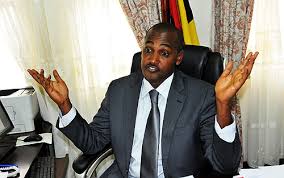
ICT and National Guidance Minister Frank Tumwebaze Kajiji.

The Information and Communication Technology (ICT) and National Guidance Minister Frank Tumwebaze will tomorrow receive the UBC Review Committee report, sources have indicated.

The committee chaired by the Executive Director of the African Centre for Media Excellence (ACME) Dr Peter Mwesige, was appointed in August, to carry out the review over one month that was aimed at revamping the national broadcaster, the Uganda Broadcasting Corporation (UBC).

Other members of the committee include former-journalist-turned-businessman Odrek Rwabwogo, who is also President Museveni’s son-in-law; journalism lecturer Adolf Mbaine; Human Resource expert Ms Peace Piwang; ICT expert Engineer Kata Bitarabeho; counsel to the committee lawyer Andrew Kibaya and journalist-cum-lawyer Peter Okello Jabweli.

In September, the Minister extended the terms of the review committee by another month. Sources close to the committee said its work focused on business and finance, programming and editorial content, human resource management and overall policy framework.

Before the Minister’s intervention, there were allegations of massive corruption at UBC, notably involving the disposing off of its land in prime areas like Nakasero and Bugolobi.

Formerly Uganda Television (UTV), the UBC was established in 2005 and currently operates one TV channel and five radio stations.


Stories Continues after ad
Court adjourns MP Kato Lubwama’s academic documents’ case to Jan 5

EMBATTLED: Lubaga South MP Kato Lubwama.

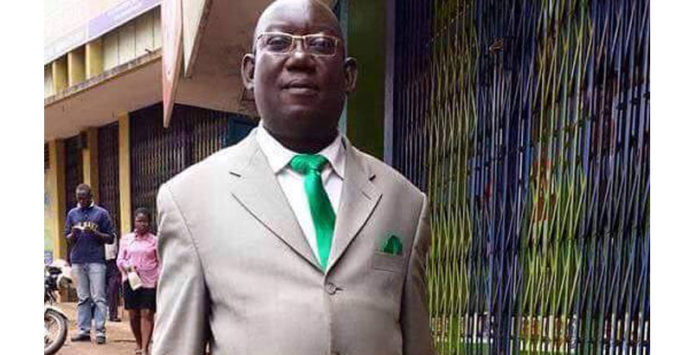
Embattled Lubaga South Member of Parliament Kato Lubwama has had a case against him for uttering falsified academic documents, adjourned to January 5.

Lubwama was dragged to court by a one Habib Buwembo, who avers that Kato Lubwama lacks the minimum academic credentials to be an MP. During proceedings the defence led by Samuel Muyizzi Mulindwa  and Asuman Basalirwa and opposite counsel Isaac Semakadde   had argued over several interpretations and points of law, including the making of oral application by the defence team, seeking ‘leave’ to make their case before the Court of Appeal.

The case is before Lady Justice Margaret Oumo Oguli, who was supposed to make a ruling today but had to adjourn following the presentations of both teams. Earlier in the day the judge allowed Buwembo to file an application seeking extension of the deadline to petition against the controversial comedian-cum-MP, who shot to the limelight as a parliamentarian for bragging that ‘he is not poor’.

“Some of us came to Parliament when we already had these cars,” Lubwama reportedly said in respect to the MPs demands for government to buy them SUVs valued at about Shs200 million each.


Evolving story

Stories Continues after ad