Stanbic Bank
Stanbic Bank
17.2 C
Kampala
Stanbic Bank
Stanbic Bank
Home Blog Page 1998

South Africa denies Machar under ‘house arrest’

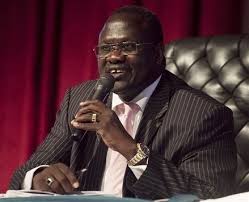
SPLM-IO leader Riek Machar Teny. The South African government has denied he is under house arrest.

Following reports that the South Africa was holding embattled South Sudan former First Vice President Riek Machar, the has denied he is under house arrest.

The Department of International Relations and Cooperation (Dirco) said in a statement that the SA government had ‘noted with concern some media reports claim that Dr Riek Machar is under house arrest in South Africa’.

The statement made reference to the fact that the SA government had issued a statement on October 13, 2016 announcing the arrival in the country of Machar, as well as the purpose of his visit.

In the October statement, Dirco said Machar was in the country on a ‘private visit for medical reasons’ and that the length of his stay was unknown.

“Indeed, Dr Riek Machar is still in South Africa and the South African Government is taking care of him, given his profile,” Dirco said on Wednesday. “Furthermore, the Government is in constant consultations with the Government of South Sudan and the IGAD countries about Dr Riek Machar’s presence in South Africa.

“South Africa wishes to reiterate her commitment to continue to work with the Government and the people of South Sudan in search of peace, stability and development. South Africa does this through her participation in the IGAD Plus mechanism, as well as the inter-party political dialogue which is facilitated by South Africa Deputy President Cyril Ramaphosa and the Chama Cha Mapinduzi of the United Republic of Tanzania,” the Dirco statement reads in part.


Stories Continues after ad

Tanzania police detain website manager, demand details of users

DEMANDED RELEASE: CPJ Africa Programme Coordinator Angela Quintal

Tanzanian security forces should immediately and unconditionally release Maxence Melo, the co-founder of popular online discussion portal, the Jamii Forum, the Committee to Protect Journalists (CPJ), has demanded.

Police raided the website’s office in the capital Dar es Salaam after detaining Melo.

Melo’s lawyer, Benedict Ishabakaki,  told the media that police detained his client yesterday for interrogation regarding a case police filed demanding his cooperation in determining the identities of several users of the online forum who have written about such controversial issues as corruption. The website reported that police raided its office, questioned employees about their duties, and took two additional employees, whom the website did not name, to a police station for further questioning.

Founded in 2006, Jamii Forum is among the most popular online discussion sites in East Africa, and hosts frank debates about such topics as graft in the public sector and government incompetence, mostly in Kiswahili.

“Maxence Melo and Jamii Forum give people across the region an important platform to discuss serious issues of public concern,” CPJ Africa Program Coordinator Angela Quintal said from New York. “The Tanzanian government would do better to investigate allegations of corruption, rather than pressuring a website to violate its users’ trust and privacy.”

Reporting the police raid, Jamii Forum attempted to reassure readers about the security of their personal information, which the website said was encrypted on servers located outside Tanzania.

Tanzanian President John Magufuli has taken a series of steps to limit media freedom since he was elected in October 2015.

On November 15, 2016, he signed into law new regulations that journalists and the political opposition fear will curb press freedom by requiring journalists and social media users to be licensed by a Media Services Council, whose independence free expression groups feared was not adequately protected, among other measures.

At least 10 Tanzanians have been charged with ‘insulting’ president Magufuli, including on the messaging platform WhatsApp. All have been charged under a tough cybercrimes law endorsed in 2015, and are at various stages of the legal process, the reports said.

Neville Meena, secretary of the Tanzania Editors Forum, told CPJ that the cybercrime law was being used as a tool to censor the public and the media and to limit criticism of the government. He said the organization backed a case filed by Jamii Media, which runs Jamii Forums, to have sections of the law overturned by the High Court of Tanzania. The court is expected to rule in February, Meena said.

Tanzanian authorities have also shuttered radio stations, halted live transmission of parliamentary debates, and taken dozens of newspapers off the streets for what the government described as licensing violations, according to news accounts.

Tanzanian government spokesman Hassan Abass did not immediately return CPJ’s calls and text messages requesting comment


Stories Continues after ad

Mumbere gets ‘baptised’ in Luzira

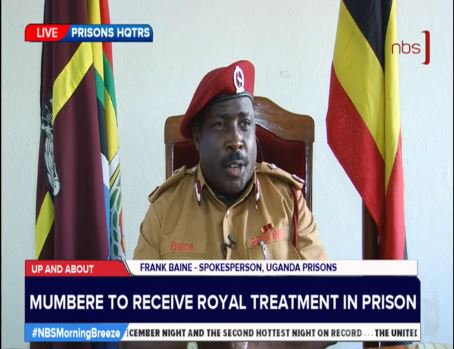
ANNOUNCED DEATH: Uganda Prisons Services spokesman Frank Baine.

Remanded Rwenzururu King Charles Wesley Mumbere has been given a prison number and a yellow uniform, an apparel worn by all prisoners in the different Uganda Prisons Services facilities across the country.

The revelation was made early today by the Prisons Service spokesperson Frank Baine, who also said Mumbere, who is currently remanded at Luzira Prisons till December 28, would be treated like any other prisoner held in their facilities.

“We have received Omusinga Charles Mumbere, we have already baptized him with a prison number and the yellow suit,” Baine said early today, while appearing on the NBS TV talk show ‘Morning Breeze’.

He added however: “For us in prison, we live as family. Everyone is treated equally.”

Mr Baine also acknowledged Mumbere would have access to a fridge as directed by court. “Court said Omusinga should have access to a fridge; but there are no sockets inside cells (so he can’t have it in his cell). We shall put the fridge somewhere else,” Baine said.

He however, noted that the Mumbere would not be exempt from other routine prison rituals. “Omusinga will be joining other inmates during ‘counting parade’, and of course, he will be squatting during the process,” Mr Baine said.

Mumbere is facing multiple charges including treason, murder and aggravated robbery and his incarceration follows the attack on his palace, where over 100 people including security agents and the Rwenzururu Kingdom royal guards were reportedly killed.

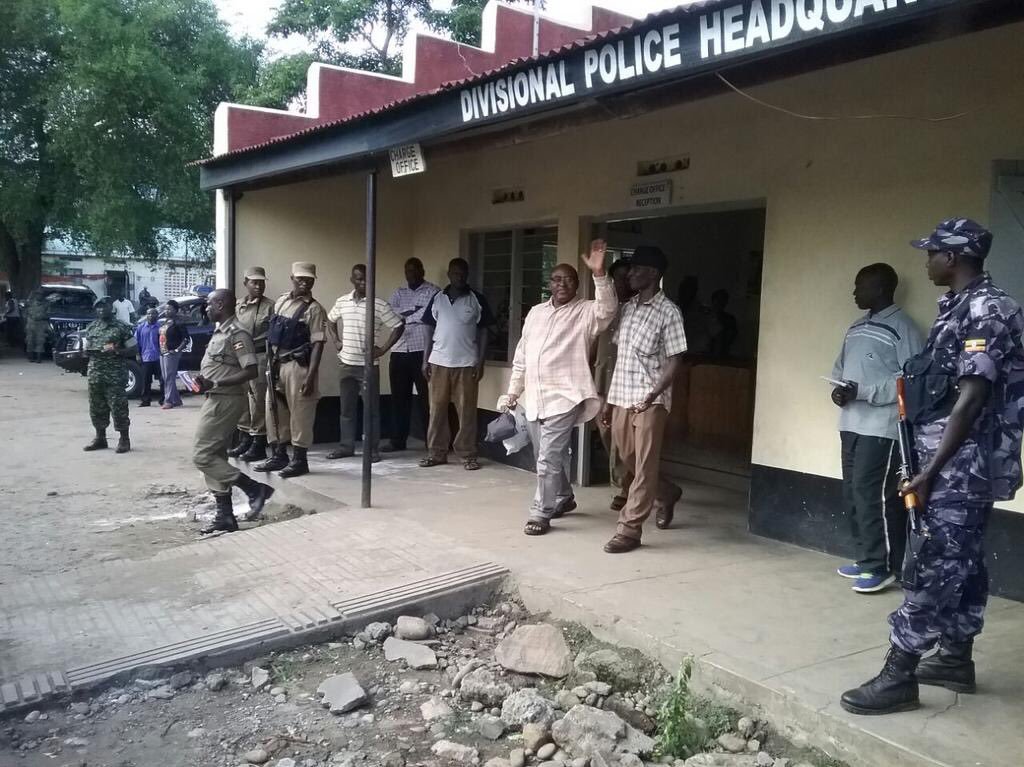
Omusinga Mumbere being taken from Kasese Police Station enroute to Nalufenya Police Station in Jinja.

On his arrest just over two weeks ago, Mumbere was driven from Kasese to Jinja and detained at the Nalufenya Police Station, a designated Uganda Police holding facility for high profile prisoners like opposition politicians and dangerous criminals.

Prominent among the people who have been to Nalufenya include Forum for Democratic Change (FDC) presidential flag bearer Dr Warren Kizza Besigye, the party’s MP for Nakawa Division Michael Kabaziguruka, and notorious Allied Democratic Forces (ADF) commander Jamil Mukulu.

Stories Continues after ad

1 billion Yahoo user accounts hacked into

HEADQUARTERS: The main office of Yahoo in Sunnyvale, California.

Yahoo has discovered a three-year-old security breach that enabled a hacker to compromise more than 1 billion user accounts, breaking the company’s own humiliating record for the biggest security breach in history.

The digital heist disclosed Wednesday occurred in August 2013, more than a year before a separate hack that Yahoo announced nearly three months ago. That breach affected at least 500 million users, which had been the most far-reaching hack until the latest revelation.

Both lapses occurred during the reign of Yahoo CEO Marissa Mayer, a once-lauded leader who found herself unable to turn around the company in the four years since her arrival. Earlier this year, Yahoo agreed to sell its digital operations to Verizon Communications for $4.8 billion — a deal that may now be imperiled by the hacking revelations.

Yahoo didn’t say if it believes the same hacker might have pulled off two separate attacks. The Sunnyvale, California, company blamed the late 2014 attack on a hacker affiliated with an unidentified foreign government, but said it hasn’t been able to identify the source behind the 2013 intrusion.

Yahoo has more than a billion monthly active users, although some have multiple accounts and others have none at all. An unknown number of accounts were affected by both hacks.

In both attacks, the stolen information included names, email addresses, phone numbers, birthdates and security questions and answers. The company says it believes bank-account information and payment-card data were not affected.

But hackers also apparently stole passwords in both attacks. Technically, those passwords should be secure; Yahoo said they were scrambled twice — once by encryption and once by another technique called hashing. But hackers have become adept at cracking secured passwords by assembling huge dictionaries of similarly scrambled phrases and matching them against stolen password databases.

That could mean trouble for any users who reused their Yahoo password for other online accounts. Yahoo is requiring users to change their passwords and invalidating security questions so they can’t be used to hack into accounts. (You may get a reprieve if you’ve changed your password and questions since September.)

Security experts said the 2013 attack was likely the work of a foreign government fishing for information about specific people. One big tell: It doesn’t appear that much personal data from Yahoo accounts has been posted for sale online, meaning the hack probably wasn’t the work of ordinary criminals.

That means most Yahoo users probably don’t have anything to worry about, said J.J. Thompson, CEO of Rook Security.

QUESTIONS FOR VERIZON

News of the additional hack further jeopardizes Yahoo’s plans to fall into Verizon’s arms. If the hacks cause a user backlash against Yahoo, the company’s services wouldn’t be as valuable to Verizon, raising the possibility that the sale price might be re-negotiated or the deal may be called off. The telecom giant wants Yahoo and its many users to help it build a digital ad business.

After the news of the first hack broke, Verizon said it would re-evaluate its Yahoo deal and in a Wednesday statement said it will review the “new development before reaching any final conclusions.” Spokesman Bob Varettoni declined to answer further questions.

At the very least, the security lapses “definitely will help Verizon in its negotiations to lower the price,” security expert Avivah Litan of Gartner Inc, predicted. Yahoo has argued that news of the 2014 hack didn’t negatively affect traffic to its services, strengthening its contention that the Verizon deal should be completed under the original terms.

“This just adds to fuel to the fire and it won’t help Yahoo’s cause,” said Eric Jackson, a longtime critic of the company’s management. Although he has in the past, Jackson doesn’t currently own Yahoo stock.

Investors appeared worried about the Verizon deal. Yahoo’s shares fell 96 cents, or 2 percent, to $39.95 after the disclosure of the latest hack.


Stories Continues after ad

Kiir launches national dialogue initiative

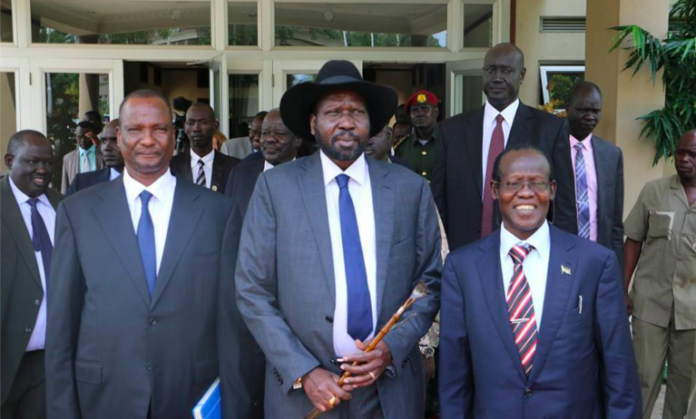
SOUTH SUDAN CENTRES OF POWER: L-R First Vice President Taban Deng Gai, Salva Kiir Mayardit (President) and Second Vice President James Wani Igga.

South Sudan President Salva Kiir has launched a national dialogue that encompasses all the troubled country’s rival political parties and groups, which will be led by eminent statesmen.

Addressing members of South Sudan national legislative assembly in the capital Juba on Wednesday, President Kiir asked for forgiveness for wrongs committed.

“National dialogue in my view is both a forum and process through which the people of South Sudan can gather to redefine the basis of their unity as it relates to nationhood and sense of belonging,” the South Sudanese leader told the country’s lawmakers.

“In the light of national endeavor, I am calling upon all of you to forgive one another, enter dialogue with one another in your personal capacities, embrace yourself,” he said adding “I am asking you, the people of South Sudan to forgive me for any wrong I might have committed.”

A national committee of eminent personalities and persons of consensus will be instituted to steer the process, Kiir said. The committee will work with independent experts from Juba-based think tanks such as the Ebony Center, Sudd Institute and Centre for Peace and Development.

The three institutions will also constitute secretariat work for the committee.

The process will have bottom-top approach with the first phase being ‘grassroots consultation’ to map out grievances unique to each community and the region. Second phase will convene regional peace conferences and the final phase will lead to convergence in Juba for the National Conference.

“The National Conference shall tackle remaining issues that are not addressed in the sub-national processes, which would have direct baring on national cohesion,” Kiir said, in what has been described by experts as his first detailed plans to address issues in a tribally divided, war torn country.

The resolutions adopted will aid writing of permanent national constitution. Kiir said experience has shown that South Sudanese can dialogue. He recalled his disagreement with late SPLM leader John Garang in 2004, return of Riek Machar to SPLM in 2002, SPLM convention of 1994 and Dinka and Nuer communities conference of 1999 as evidence of viability of local led peace initiatives.

President Kiir expressed disappointment with the economic and security situation affecting lives of the people, declaring that peace and reconciliation would be his priorities.

“My comrades, Taban Deng Gai, James Wani Igga and myself will do our part in National dialogue. We will hold peace rallies within Juba and across the Country to educate our people on peace and unity. I have directed the Minister of Finance and Planning to mobilize necessary resources”, Kiir told lawmakers.

Armed opposition groups, Kiir said, will be invited to take part in the dialogue. He did not say when the process will start but revealed having instructed the ministry of financé to avail funds.

Meanwhile, the South Sudanese leader also called for help from the international community and warned citizens against hate speeches that target Americans and the United Nations.

ECONOMIC CRISIS

He said he was particularly concerned with the rise in living costs because of the shrinking economy resulting from effects of war his administration struggles to end.

“I am deeply concerned about the parents who can no longer feed their children because of our shrinking economy”. I am also concerned about the growing number of street children and women who have lost everything due to the ongoing political situation. I am deeply concerned that all our citizens are distraught over the current political conflict and drastically declining economy”, said president Kiir in a prepared speech he delivered before legislators.


Stories Continues after ad
UN gets tough on Jammeh, warns of sanctions

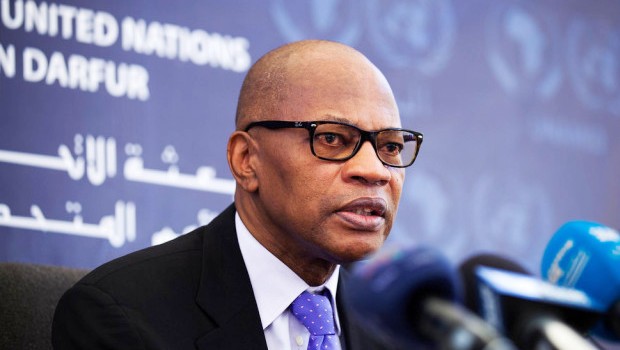
WARNED JAMMEH: UN Special Representative for West Africa Mohammed Ibn Chambas.

The United Nations representative for West Africa says under no circumstances can Gambian President Yahya Jammeh remain in power after losing the election.

Mr Jammeh seized control of the country during a coup in 1994, but narrowly lost the election to Adama Barrow in early December.

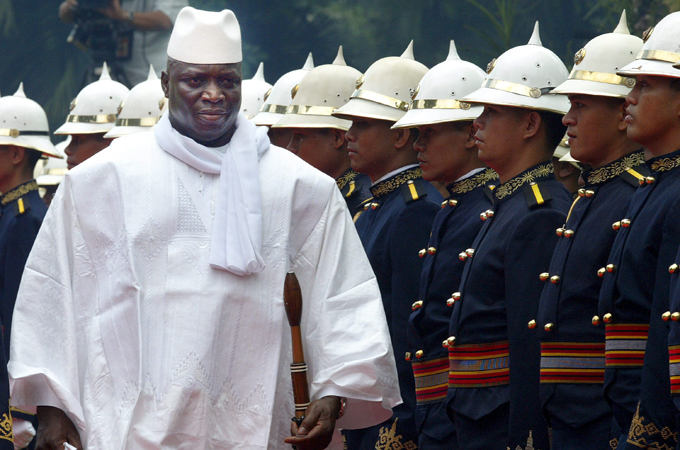
Gambia’s President, Yahaya Jammeh, inspects a Guard of Hounour by the military. The UN has warned he faces sanctions after he rejected the election results.

He initially agreed to hand over power but last week had a change of heart, saying the poll was not credible. His party is now challenging the outcome in Gambia’s Supreme Court.

UN envoy Mohammed Ibn Chambas warned the President would be strongly sanctioned if he clings to power.

“For Mr Jammeh, the end is here and under no circumstances can he continue to be President,” he said, adding: “By that time, his mandate is up and he will be required to hand over to Mr Barrow.”

Mr Chambas accompanied a delegation of Presidents representing the regional bloc ECOWAS who travelled to Gambia on Tuesday but failed to reach a deal that would see Mr Jammeh step down.

Instead, Gambian security forces stormed the Electoral Commission and forced its chairman to leave, a takeover described by UN Secretary-General Ban Ki-moon as an ‘outrageous act of disrespect of the will of the Gambian people’.

The building in the capital Banjul remained deserted on Wednesday aside from two armed security guards; its front gate and ground floor entrances were closed.

“No-one has gone to work. I didn’t even try. No-one has informed me that I can go back,” Elections Commission chairman Alieu Momarr Njai said.

New judges needed to hear legal challenge

The ruling Alliance for Patriotic Reorientation and Construction has filed a challenge to the election result in the Supreme Court, which has not held a session for a year-and-a-half.

Legal experts believe at least four new judges would need to be hired to hear the petition.

“We do not believe it will be heard by a credible court dedicated to ensuring the integrity of The Gambia’s democratic process,” a US Embassy statement said.

Analysts have suggested that the challenge in the Supreme Court — the legal channel for resolving election disputes — could put diplomats in a difficult position.

While such disputes are relatively common in Africa, the international community generally defers to established domestic legal mechanisms for resolving them.

However, in a notable exception, UN troops intervened militarily alongside France to oust Ivory Coast’s then-president Laurent Gbagbo after he used the constitutional court to overturn the 2010 election victory of Alassane Ouattara.

Asked whether military intervention was an option in Gambia if mediation failed, Mr Chambas said: “It may not be necessary. Let’s cross that bridge when we get there”.

ECOWAS leaders will discuss Gambia at a summit in Nigeria on Saturday.


Stories Continues after ad
Forest Cottages excites customers with Christmas discounts

Forest Cottages are owned by Sudhir Ruparelia. leading investor in the hotel industry.

The Christmas season is here; the period known for discounts on several products and services. And neither has Forest Cottages Hotel been left behind.

The luxurious hotel is offering a 15 per cent discount on accommodation till January 15.

The General Manager of the Naguru Hill based cottages, Dhaval Macchar, revealed that couples will only pay US $110 to get a full board offer that guarantees them accommodation, breakfast, lunch and dinner for a single night.

This offer has been reduced from the usual US $138 to enable couples enjoy this Christmas season.

“One can book for more than one night. Our customers are welcome and can stay for as long as they want. We have different rooms and pricing,” Macchar stated.

While at the hotel, customers this festive season will enjoy good serene music in the cool gardens and candle light dinners.

Standard Double Room costs US $72, one bedroom cottage, which can be occupied by a couple costs US $90, two bedroom cottage (with two bedrooms each with different double bed) costs US $120, the three bedroom cottage, which is good for a family or five people costs US $165 per one night.

“We are also looking at hosting families, domestic tourists and Ugandans going for holiday. This festive season we are mainly focusing on local travelers, we want them to enjoy the festive season affordably. The foreigners are out of the country.

On the eve of Christmas day customers will only pay Shs45, 000 for the three course Christmas meal. The meal will consist of a selection of starters, different selection of the main meal, and a wide selection disserts. The meal’s menu will be continental however local food can be prepared on group order of more than 20 people.

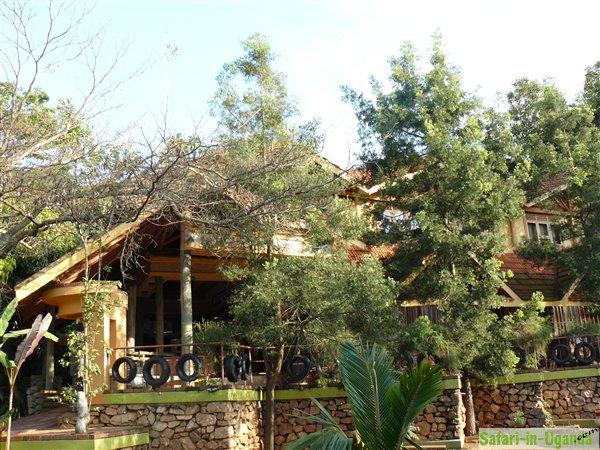
Forest Cottages is a designed luxury cottages set in a serene forest environment. The well kempt cottages are located at Naguru Hill, Bukoto – Kampala, Uganda. The accommodation facilities at the Cottages are carefully landscaped, huge, made in indigenous material.

The expansive Cottages offer customers comfort and entertainment away from their homes.

Forest Cottages has a swimming pool, health club facilities, conference facilities, restaurants and tour services. The natural rooms have wifi, telephones and locally made furniture.

“Our vision is to ensure memorable experience to all our guests in every aspect of their stay. We are committed to excellence. Our visitors come from different parts of the world and we here to cater to their needs”.


Stories Continues after ad

MP Nambooze: WBS TV will be remembered for breaking UBC monopoly

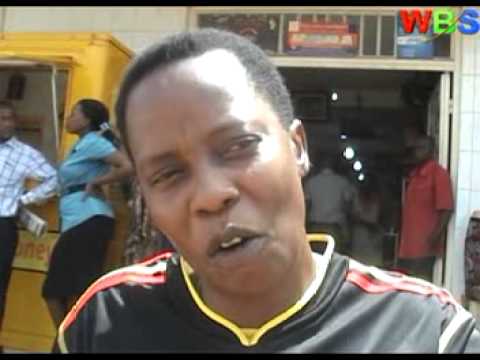
Mukono Municipality MP Betty Nambooze Bakireke while appearing on WBS TV. The station has been closed today.

WBS TV has ceased operating effective today, according to a statement signed by Kabiito Karamagi, the Receiver/Manager appointed by Uganda Revenue Authority (URA) to help recover a debt of Shs 7.2 billion owed to the tax body.

The station has been on air for 19 years and fans remember it for some of its popular programmes like; Jam Agenda, Face Off, Sport On, Omubala and Issues At Hand among others.
So, while remembering the station, viewers have taken to social media to react to the closure and among those to speak out is Mukono Municipality MP Betty Nambooze.
MP Bakireke Nambooze: Many businesses are closing down. Only that they are small and unknown….people will soon close down their homes because of loans. I know of many people selling off their properties. The economy of the country is doing stupid. We shall miss WBS. It brought the TV revolution and broke the UBC monopoly. Brother Wavah you shall always be remembered for now let’s just watch and see where this will leave us all.
Nnalongo Rose Bukirwa: I am proud to have been one of the pioneer staff of WBS, the experience I earned from there is unforgettable. On air since 1999.
Lynn Najjemba: We need to candidly discuss some of the issues that could have caused its downfall. How can a TV station ‘where quality matters’ just close like that. So, what will happen to others “Where Quality Does not Matter”!?
Fred Bbaale: It’s shortsighted for URA to hound businesses to closure. Its agreed that they cheated taxes; but hiw about the indirect taxes they were paying through consuming services, payroll taxes etc? The chaps at URA should strategically rather than trying to achieve those short term targets. Closing businesses is not strategic.
Allan Ssekamatte: Sad. I served there for 15 years.


Stories Continues after ad
Kyambogo to get V C next year

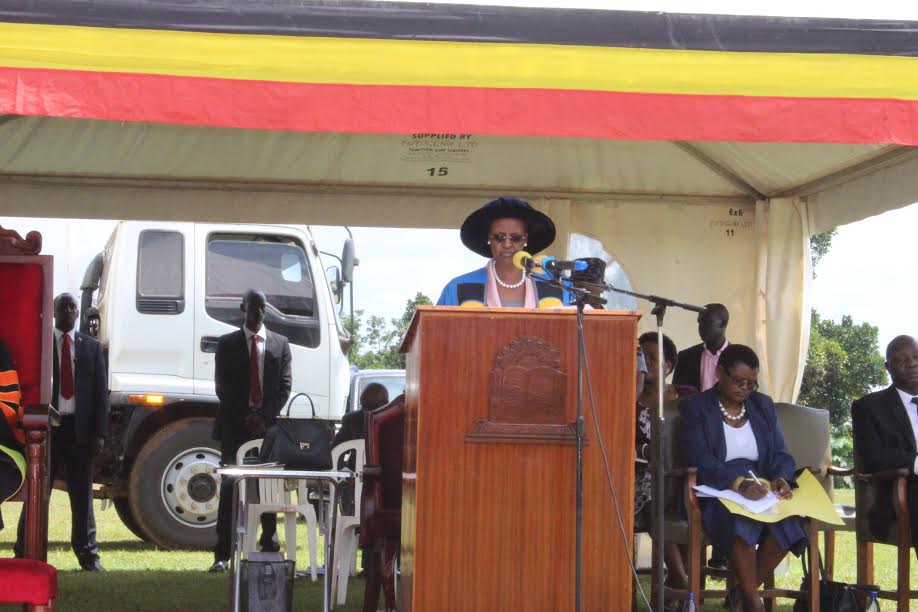
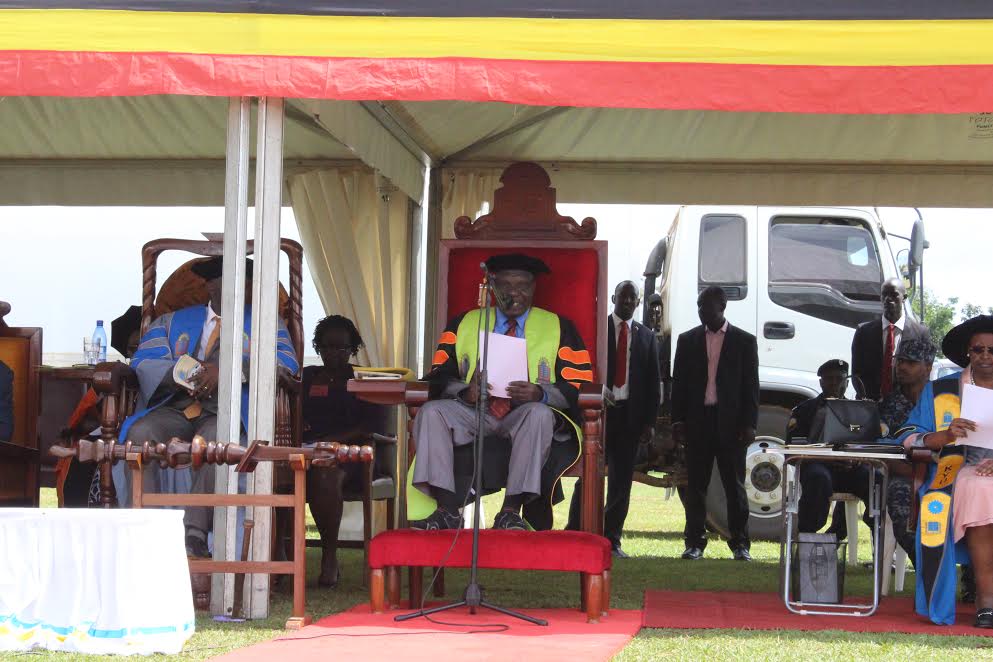
Kyambogo University Chancellor, Prof. Ssebuufu and Education Minister, Janet Museveni. All photos by Hussein Musisi.

Kyambogo University Council chairperson Prof. John Okedi disclosed that the university will get a substantive Vice Chancellor next year.

“We shall have a substantial Vice Chancellor before the End of April next year in case there is no other court injunction in the Kyambogo issues,’’ Prof. Okedi said, adding: “this will end the accusations against us for having failed to get a Vice Chancellor.’’


He also said all graduates will receive their testimonials and transcripts on the respective days of graduation.

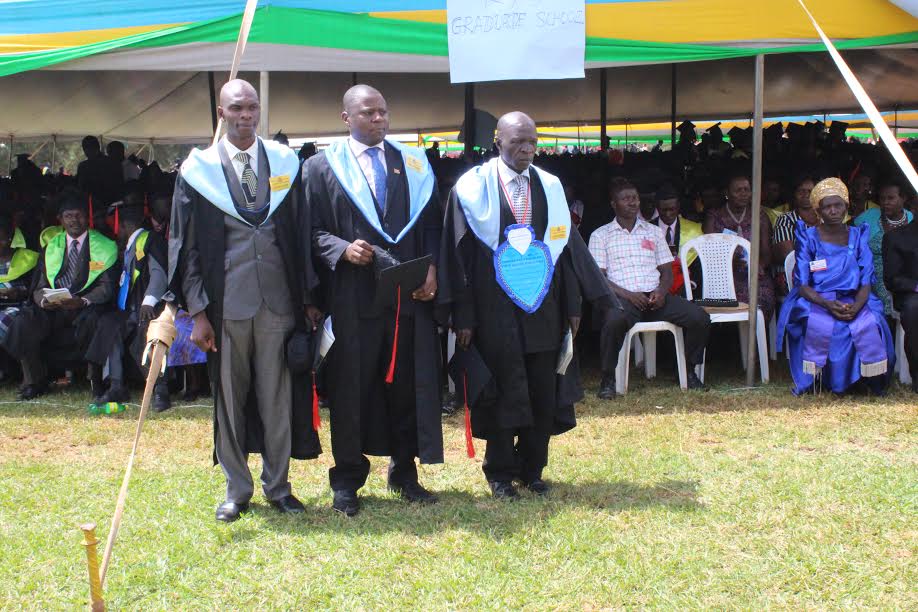
The council chairperson was speaking at the 13th graduation ceremony presided over by the Minister of Education Janet Kataha Museveni who lauded the academic staff for successfully reviewing of all academic programs and introducing new disciplines in both masters and doctorate (PhD) level.


Mrs. Museveni, also praised the university administration for initiating the ongoing construction works, the development of Information and communication technology that has enabled online admissions and long distance learning, and for marketing the university globally.

“I salute them for having considered availing all transcripts and testimonials in time since the graduands will receive them today,” Mrs. Museveni said, and thanked the parents and guardians who invested in their children’s education.


She added: ‘’2017 has been declared a year for the family by the President of Uganda and all people should secure a culture of a health living and say no to living in danger.”

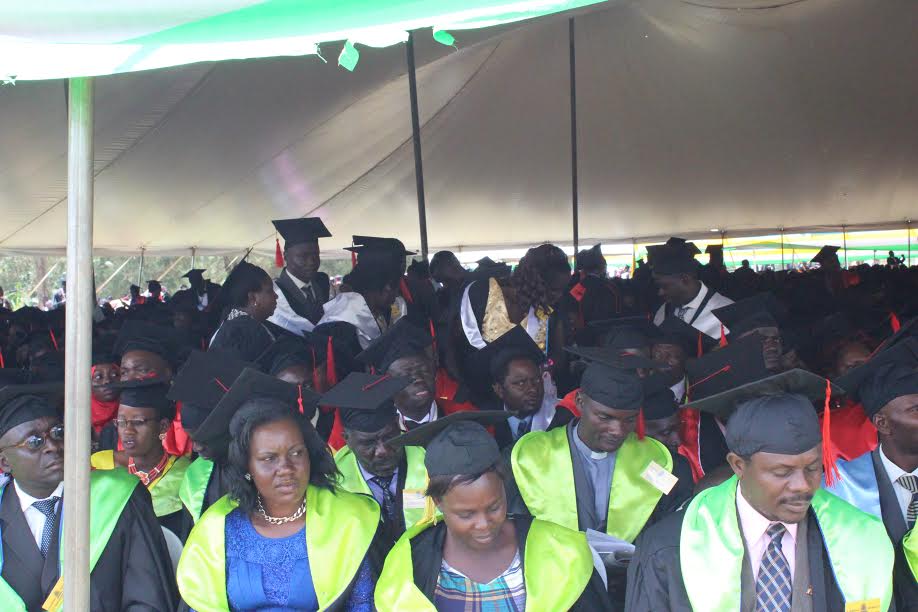
The ceremony will see 7157 students; 3590 females representing 50.2 per cent and 3567 males representing 49.8 per cent, graduate over three days.


Prof. John P M Ssebuwufu, the Chancellor of Kyambogo University, said the university was slowly improving its status to become one of the best educational institutions in Uganda, focusing on investing in research and innovations.

“The university is one of the cheapest in the country but not everyone can get here so all those who have acquired education from here should not take it for granted,’’ Prof. Sebuwufu observed, and advised the graduates to “get something to do for a living” as they hunt for their ‘dream job’. Kyambogo Acting Vice Chancellor Prof Eli. Katunguka Rwakishaya lauded the president for increasing the salaries of lecturers to Shs15 million, saying the increment “has attracted more people to join the teaching profession.’’


Stories Continues after ad
NSSF, Rotary partner to offer free dental care to over 1500 people

Dr.Annet Kutesa, a Senior lecturer at Makerere University, Barbra Arimi Head of Marketing and Communication NSSF, Margaret Nakajanko, President Rotary Kampala North at the Press Launch of the Dental Camp.

At least 1500 people in Kampala will benefit from an annual dental awareness camp sponsored by the National Social Security Fund (NSSF), in partnership with the Rotary Club of Kampala North and the Makerere University Dental School.

The camp started December 12 and will run until Friday December 16,  2016 at the Dental School in Mulago.

Speaking at the launch, the Deputy Principle of the College of Health Sciences Makerere, Dr. Isaac Okullo, said: “The Dental School is grateful to the Rotary Club for having spearheaded the refurbishment of the teaching facility worth millions of shillings since 2007. This facility led to the idea of the dental camp as a way of giving back to the community through more advanced dental services other than the usual emergency treatment carried out at outreach programmes. Research from the Mulago Dental School indicates that at least 90 per cent of Ugandans are suffering from the effects of poor oral hygiene.”

“We are grateful to the National Social Security Fund for the sponsorship of this camp as it provides an opportunity for many disadvantaged individuals to get free treatment and consultations,” Dr Okullo added.

The Dental Camp will comprise a series of community dental health outreach activities aimed at providing free dental services to those who cannot afford it, mainly in Kamwokya, Kyebando, Bwaise, Kawaala, Mulago, Kivulu, Katanda, and Kaleerwe and surrounding areas.

Barbra Arimi, the NSSF Head of Marketing and Communications, said the institution aims at improving the quality of communities.

“It’s our endeavour to improve the quality of life of our communities through the various health care initiatives we undertake from time to time. We are delighted with the positive response received from the past dental camps and we shall continue to undertake such initiatives in the future and contribute to the well-being of the communities.”

Over the last five years, the Fund has supported the Dental Camp, which has contributed to treatment of over 5,000 underprivileged people.

Dental treatment and health promotion services, according to Dr Okullo, will be provided by doctors from Mulago Hospital, Makerere University College of Health Sciences and other volunteer doctors from around Kampala. The camp is held in Mulago because of the facilities and high profile doctors available to offer the service.

Research shows that 90% of Ugandans suffer from oral-related illnesses and some of the free services provided during the clinic include screening, filling, tooth decay extraction, oral education among others.


Stories Continues after ad