Stanbic Bank
Stanbic Bank
17.2 C
Kampala
Stanbic Bank
Stanbic Bank
Home Blog Page 1999

The University Makerere should be

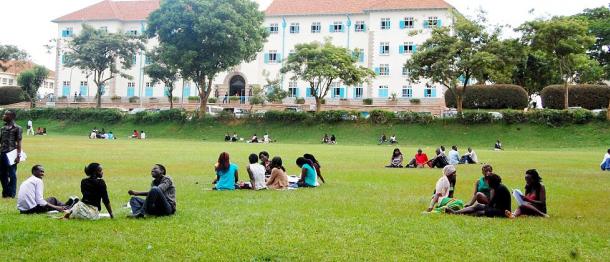
DEEP KNOWLEDGE ABOUT MAKERERE: Author Professor ABK Kasozi.

Over the years Makerere University has had to contend with several challenges, prompting the authorities in government to seek for solutions. In the process, several scholars have lent their expertise to that effort.

In a three part series The EagleOnline will serialise Professor ABK Kasozi’s ‘humble’ contribution to this noble cause.

With an academic career spanning over 40 years, Prof Kasozi is a former Executive Director of the National Council of Higher Education (NCHE), among other notable appointments.

By Prof. A.B.K. Kasozi


  1. The problem of staff and student activism are a tip of an iceberg


I am pleased to contribute to the discussion of the causes of student and staff activisms resulting in strikes at Makerere. I do believe, however, that what we are seeing are symptoms or tips of icebergs of larger problems beneath all the higher education sub-sector. Our higher education system needs thorough rethinking. I regard Inquiry Committees sent to fire fight striking university social groups as Band-Aid treatments. I have been on two of such Committees (McGregor and F. Mbaguta’s) and I know that the whole edifice of higher education in this country needs a thorough surgery, a comprehensive review in order to bring peace to the sub-sector and deliver proper education. I would like to see Makerere fulfilling its multiple functions of knowledge production, disseminating that knowledge, helping to apply such a knowledge in society, intellectually skilling the next generation of Ugandans and contributing to the global stock of knowledge. For me, the Humboltian model of a university, which combines research and teaching in the context of institution autonomy based on social responsibility and financially supported by the state, seems to be the most relevant university for African countries. Such a model has internal mechanisms to absorb causes of activisms and strikes. The most ranked universities in the world exhibit characteristics of this model. Most Anglophone African universities, however, especially those established as a result of the Asquith report (of 1945) have followed the Oxbridge collegiate system of emphasising teaching in an atmosphere of collegiality. As a result, few of these institutions are engines of development for their nations, which we would like Makerere to be. The American research university is private but publically driven in the way it is financed but may not be acceptable to African politicians. The French model of state driven institutions seems to attract few followers, as it is outmoded for the C20th. Uganda must therefore, this time, define the roles and type of university it needs to establish if our universities are to stabilise and become engines of development.

A thorough review of higher education should therefore be done and the data used to inform a national dialogue to discuss the nature of the university this country needs, its linkage to production, government, other sectors of education and the general society. It is important to discuss the nature of the university that will help the country produce the necessary knowledge and human resources who can contribute to the realization of our development plans while at the same time linked to the global knowledge production processes. I feel the problems of Makerere cannot be understood in isolation with the state of higher education in the country and the global forces impacting on higher education. To understand what is happening at Makerere we need to study and review the whole higher education delivery system in this country. This may not be part of the mandate of this group, body or committee but you can point out this matter as it crucial. 


  1. The governance model of the public university system is faulty.


The major problem of Makerere seems to be funding. But the real cause of underfunding is the governance model this country is using to manage its university system. Unless the governance model is addressed, the public university system will not stabilize. Neither will sufficient money come into the system to lubricate university operations. The current governance model, including the state at the apex followed by university, council plus the senate, university managers, academic and administrative staff and students in that order, is partly to blame for the qualitative stagnation of the university in Uganda and the cause of staff and student activisms and strikes. Although the 2001 UOTIA act improved the lot of public universities, the components relating to the finances of public universities of the 1970 Makerere Act were not changed and the Government has legal optional control of public university finances. Due to this model, staff and students think, and perceive that the government is, or should be, responsible for all the expenditures and problems of public universities. In short, the model creates, the impression, or the perception that the Government owns and is in charge of the university and striking is, to many stakeholders, aimed at the owner, the government. When strikes are organised, the organisers think they are hitting at the Government. Indeed, studies show that strikes in universities often have political motives. According to Philip Altbach, “ student movements emerge from their own social and political environments” where the university is located (Altbach, 1984). Byaruhanga’s impressive study of student activisms and strikes at Makerere between 1952 and 2005 indicates that 40% of student strikes in that institution were either motivated by politics or included political motives (Byaruhanga, 2006). My study of the 1952 Makerere Strike comes to the same conclusion (Kasozi, 2015). In Third World countries, particularly in the 1970s and 1980s, students often aimed not only at changing the structures of their education institutions and those of the state but also, in number cases, the incumbent government.

The current model is most inappropriate in the financing of universities. By using the current model of governance to manage public universities, the state is reinforcing the perception that since universities are considered “government institutions”, the government must directly govern them and is responsible for solving the financial problems of the university. Although universities must respond to both national and internal forces, the current governance model manages the university as a parastatal body which does not respond to external forces such as rankings, competition for international research funding, good staff and students.

The current model involves government linkage and financial oversight. But most of the money is privately obtained. Although government financial contributions to the running of public universities declined from 100% in the 1980s to an average of 40% from the early 2000s to the present, the governance of universities did not change to reflect the shift. The current model permits the financial control of public universities by the state to a level where the latter determines areas and levels of university policy and expenditure.  Having privatized major parts of the Public University system, the state should complete this exercise and grant these institutions autonomy to manage their finances. For example, Makerere has been increasingly getting private since 1992/3 and applying neoliberal practices while being controlled by the state (Table 1). The state should only put conditions on funds remitted from government sources but leave these institutions to manage other funds as they see fit. To retain academic staff, public service regulations and laws governing personnel such as the Pension Act, should not apply to universities. Universities are not only national but also international institutions. Laws governing their behavior should respond to their dual nature. As such, they must, like other universities, be allowed to get foreign funds, most of which is locked in partnerships, use such funds, and only report to the Auditor General. Putting grants and foreign donor money into the Consolidated funds will block this line of funding, as it did Makerere from 1970 on wards.   However, the institution must be accountable to the public and the Auditor General should continue to audit its accounts—and if possible—the academic processes of the University. Within universities, there is a lot of work to do. University councils should have more authority on financial affairs as the MacGregor report recommended. Senates should have final say on all academic matters and funds for academic activities. The Mcregor Report pointed this issue out.

The following parts of the ACT are some of the sections that reinforce the current model which enables the Government to retain ultimate control of public universities. These should be amended or eliminated if a new act is not enacted. These include:


  • The Amendment Act, Section 6A, which gives government a freehand to intervene in university matters whenever it feels like it. With enlightened leadership, this section may be harmless but can be misused by unwise leaders.
  • Section 62(3) which forbids public universities to spend any money not approved by parliament.
  • Experience has shown that public universities cannot fix levels of fees. Although under section 41c, a university council has powers to “fix scales of fees and boarding charges”, Makerere council’s attempts to increase fees in 2004/5 and subsequent years were halted by government.
  • Section 59(5) of the Act does not give public universities the right to invest any of their funds without approval of the minister.
  • Section 44(4) of the Public Finance and Accountability Regulations which allows Government treasury to ask public universities to remit to the government monies collected at source using Section 44(4) of the Public Finance and Accountability Regulations.
  • Like the civil service, public universities must use the single-spine structure when paying staff. This is very strange, as universities recruit academic staff globally, and often employ many foreign workers who cannot be fitted into a country specific structure such as Uganda’s. Forcing academics to adhere to civil service structures not only excludes good non-Ugandan staff but increases the temptation for marketable Ugandans to seek jobs elsewhere – and many have done so.
  • Under the Pension Act, academics in public universities must retire at 60 years of age. As a result, universities lose the very seasoned academics they need to supervise and mentor the next generation of researchers and professionals. Globally, academics are paid for the vibrancy of their contribution to knowledge not their age.
  • Areas of sections 31 to 34 of the law which disempower the Vice Chancellor and blur the responsibilities of top officials should also be amended.

To be continued Friday.

Stories Continues after ad

South Sudan gets new UN representative

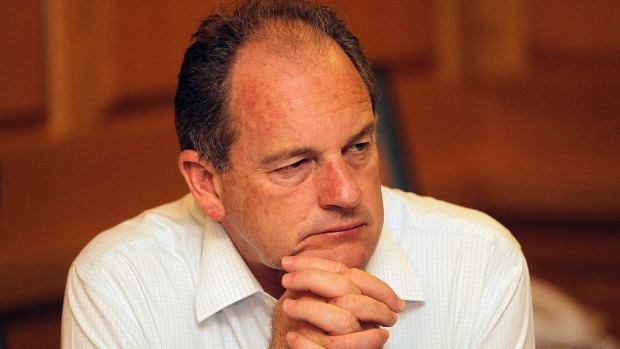
David Shearer to head the UN Mission in South Sudan

The United Nations Secretary-General Ban Ki-moon has formally appointed David Shearer of New Zealand to head the UN Mission in South Sudan.

The announcement came just six days after Ki-moon notified UN Security Council of his choice.

Last week, a UN diplomatic source familiar with the process was told that UN Secretary-General Ki-moon has picked member of New Zealand parliament to head the United Nations Mission in South Sudan (UNMISS).

Shearer, who is set to succeed Ellen Margrethe Løj who resigned last month, will serve as the Secretary-General’s Special Representative and head on UMISS in 2017. He is expected to assume his post in early 2017.

According to a UN’s statement, Mr. Shearer served as the Secretary-General’s Deputy Special Representative, Resident Coordinator, and Humanitarian Coordinator in the United Nations Assistance Mission for Iraq (UNAMI) (2007-2009).  Previously, he held several senior positions with the United Nations, including head of the United Nations Office for the Coordination of Humanitarian Affairs (OCHA) in the Occupied Palestinian Territory.

Humanitarian Coordinator in Lebanon, senior humanitarian adviser to the United Nations Assistance Mission in Afghanistan (UNAMA) and Chief of OCHA in Belgrade among others. He has conducted various assignments with the International Institute for Strategic Studies, the Save the Children Fund, and the International Crisis Group, and is the author of numerous publications in the areas of conflict resolution, effective interventions for peace and humanitarian affairs.

Mr Shearer holds an MSc in Resource Management from the University of Canterbury, Christchurch, New Zealand.


Stories Continues after ad

Besigye son admitted to Harvard

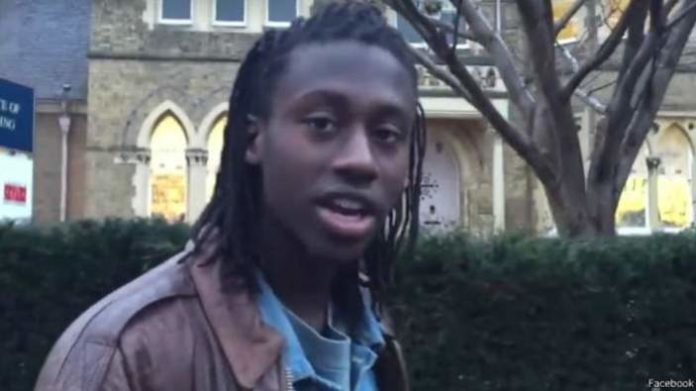
ORGANISED PROTEST: Anselm Besigye, the only kid of FDC strongman Dr Kizza Besigye and his wife, Winnie Byanyima, the executive Director of Oxfam.

“I am speechless! Anselm has been admitted to Harvard Univ. Proudest Mum! Thanking God,” Winnie Byanyima, the wife to former Forum for Democratic Change (FDC) presidential candidate tweeted the news Wednesday morning.

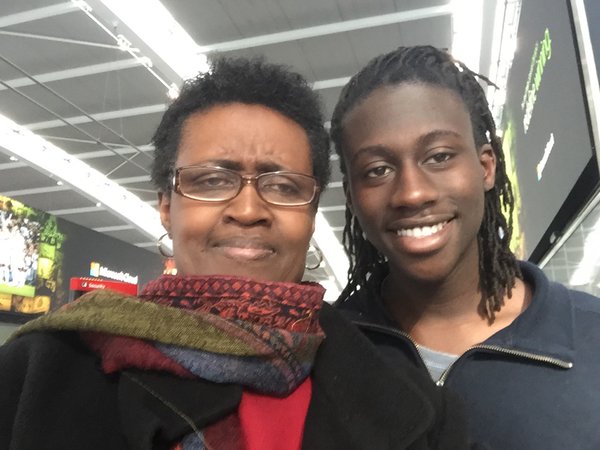
Winnie Byanyima and son Anselm Besigye, who has been admitted to Harvard University.

Her only son Anselm Besigye has been admitted to Harvard University, popularly known to be a place for the brightest people in the world. It was established in 1636, and its history, influence, and wealth have made it one of the world’s most prestigious universities.

It operates several arts, cultural, and scientific museums, alongside the Harvard Library, which is the world’s largest academic and private library system, comprising 79 individual libraries with over 18 million volumes.

Harvard’s alumni include eight US Presidents, several foreign heads of state, 62 living billionaires, 359 Rhodes Scholars, and 242 Marshall Scholars. To date, some 130 Nobel laureates, 18 Field Medalists and 13 Turing Award winners,  have been affiliated as students, faculty, or staff.

A few Ugandans to have made it to Harvard and notables include former presidential candidates; Ambassador Olara Otunu and Aggrey Awori, Former Vice President Dr. Specioza Wandira Kazibwa, Prof. Joe Oloka Onyanga, Dr. Sylvia Tamale, Dr. Emmanuel Bagenda, Prof Mahmood Mamdani, also former ministers Betty Bigombe and  Capt Mike Mukula who did a one month certificate programme, Presidential Assistant Morrison Rwakakamba and lawyer Dr Busingye Kabumba.

Sanjay Tanna@STanna444: Excellent..Well done. .. God bless…

Musinguzi Goodluck R@2008gomu: I hope his tenure gives him skills that will benefit humanity.


Congs Anslem!


Stories Continues after ad

SMACK, Seeta High dominate 2016 DStv Eutelsat Star Awards

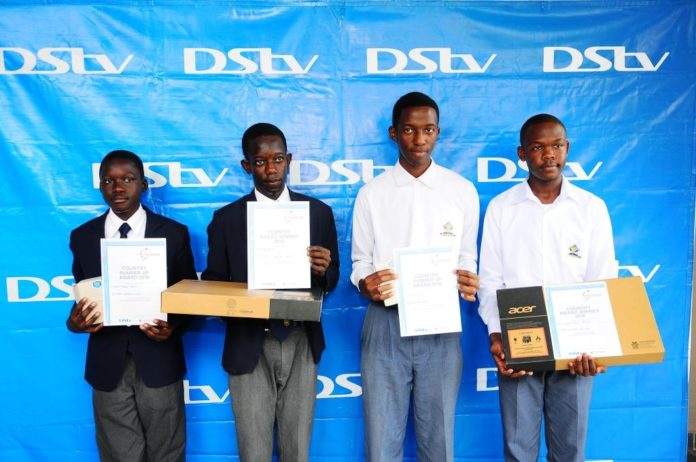
Dennis Mitala from St Mary’s College Kisubi, winner of the essay category, while Gordon Brian Alemo from the same school was runner up. Seeta High School dominated the poster category with Ronald Musinguzi as overall winner and Edwin Ira as runner up.

MultiChoice Uganda has announced winners of the 2016 DStv Eutelsat Star Awards competition at a prize giving ceremony held at their head offices in Kololo today.

The sixth segment of the science and technology based competition saw Dennis Mitala from St Mary’s College Kisubi as winner of the essay category, while Gordon Brian Alemo from the same school was runner up.

Seeta High School dominated the poster category with Ronald Musinguzi as overall winner and Edwin Ira as runner up.

The DStv Eutelsat Star Awards are a product of a partnership between Eutelsat and MultiChoice Africa, aimed at stimulating interest in science and technology, and to inspire innovative thinking among secondary and high school students across the continent in 42 countries.

This year students across the continent participated both in essay-writing or designing a poster to portray themselves into the future as scientists, design a new age satellite that will help improve the lives of Africans and depict the different roles and functions the satellite would play in Africa and its future.

During the event, MultiChoice Uganda’s PR & Communications Manager Tina Wamala noted that the DStv Eutelsat Star Awards is a Corporate Social Investment Strategy for the company which is held annually.

“MultiChoice understands that to develop and shape today and the future of our generation, technology and science play a vital part that is why we invest in this competition. Our partnership with Eutelsat is passionately based on our common belief that the two fields are great contributors to digitalizing Africa,” Ms Wamala said,

Over 23 schools in Uganda submitted a total number of 165 entries, vetted by a carefully selected panel of judges to determine the winning applicants.  The winning essay and poster will enter into the overall Africa awards and represent Uganda at the continental competition where the best overall in both categories will win a trip to Eutelsat offices in Paris, France and onward to witness a rocket launch for the essay winner and a satellite construction site for the poster winner.

The overall two runners up for the best essay and poster respectively, will win trips to MultiChoice offices in Johannesburg and the South Africa Space Agency at Hartbeesthoek.

Uganda is no stranger to winning in the continental competition of the DStv Eutelsat Star Awards, producing the runner up poster in 2015, best overall poster winner in 2014, runner up overall poster in 2013, the best overall essay and runner up overall poster in 2012 and best overall essay in 2011.

The panel of judges this time round included; Ms. Sarah Agaba Kabahuma, Frequency Planner at Uganda Communications Commission and head judge for the competition, Mr. Geoffrey Agoi, Principal Broadcasting Engineer, Ministry of Information and Communications Technology,  Mr. James Amatre, an English Teacher at Nabisunsa Girls school representing the Ministry of Education, Dr. Roseline Nyongarwizi Akol, Lecturer and Head, Department of Electrical and Computer Engineering, College of Engineering, Design, Art and Technology, Makerere University, Ms. Adrine Twinamatsiko, branches manager of Multichoice Uganda.


Stories Continues after ad

Gambian diplomat to US abandons Jammeh, implores him to step down

SACKED: The Gambian Ambassador to the US, Sheikh Omar Faye.

The Gambian ambassador to the US, Sheikh Omar Faye, is the latest to official to jump ship from the government of Yahya Jammeh, calling on him to step down.

The letter written by Ambassador Faye to recalcitrant President Yahya Jammeh

In a letter addressed to Jammeh, Mr Faye enunciated that the recent announcement annulling the results after initial concession had come as a huge disappointment to him.

He added: “I am supporting the will of Gambian people by recognizing Mr Adama Barrow as the president-elect of The Gambia out of my personal decision and desire to safeguard the peace and social cohesion of our beloved country”.

The Gambia’s chief diplomat in Washington maintained that he did not discuss his decision with any member of the coalition, noting that it was indicted purely by national rather than personal interest.

Stories Continues after ad

Stanbic Bank Uganda injects 25m into Xmas charity activities

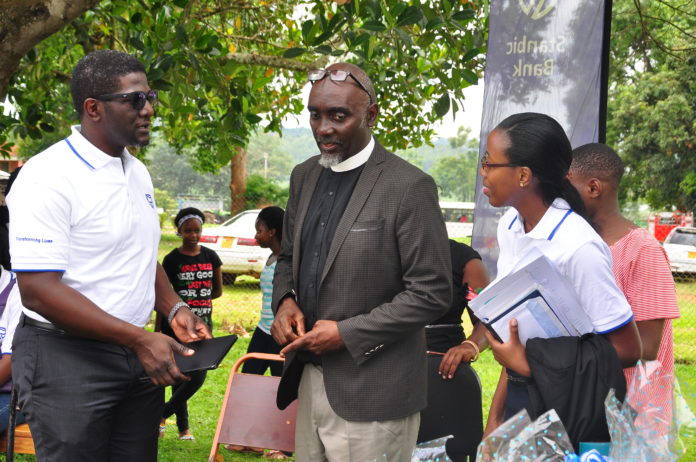
CSO: Stanbic Bank Uganda CEO Patrick Mweheire hands over some items to Rev. Dismus Bwesigye, the Chaplain of Butabika Hospital.

As part of its Corporate Social Responsibility, Stanbic Bank Uganda is giving back to society this festive season, injecting a whopping Shs 25 million towards various charitable activities.

According to officials five orphanages and homes are to benefit from part of Stanbic Bank’s donations that aim at transforming lives through supporting the less privileged and vulnerable in society.

Stanbic Bank Uganda officials donate items to Missionaries of the Poor in Kisenyi, in a city downtown area.

These recipient institutions include Missionaries of The Poor, Teresa Home, School for the Disabled, Butabika Hospital and Rahab Girls, with 528 beneficiaries.

Today, Stanbic’s Senior Executives and volunteering staff visited Missionaries of the Poor in Kisenyi and Butabika Children’s Ward in Luzira to make physical donation of items for the children.

The donated items included Rice, Sugar, Soap, Cooking Oil, a Goat, Biscuits, sweets and a Christmas cake, books and children’s reading materials.

Speaking at the donation handover ceremony, Stanbic Bank’s Chief Executive Officer Patrick Mweheire said: “We are very pleased to spending time with the children and sharing the joy of giving this Christmas season. We hope that our contribution will be touching the lives of the most vulnerable in our communities and bring smiles to the children during this festive season.”

Stanbic’s total contribution of Ugshs 25 million has been raised as part of the support to the Kampala Christmas Carols Festival which will be taking place on Sunday December 18 at the Kampala Serena, where the less privileged children will be part of the celebrations and will enjoy a Christmas meal and other festivities.


Stories Continues after ad

Makerere lecturers agree to call off strike

Makerere-University

Lecturers at Makerere University have agreed to call off their strike over delayed payment of incentive arrears, a development that led to the closure of the university two months ago.

This development comes in the wake of a meeting held between members of the University Council led by Chairman Dr Charles Wana Etyem, and the lecturers.

Details of the Monday meeting were scanty by press time, however, it seems the two parties reached consensus on the modalities of how payment would be effected.

The lecturers put down their tools after both the university and government failed to honour commitments to pay them Shs32 billion in incentive arrears.

At the time of the lecturers strike, the students also went on strike, protesting against not being taught, a situation that prompted President Yoweri to order the closure.

‘Pursuant to the powers vested in me by the Constitution of the Republic of Uganda and Section 26(2) of the Universities and other Tertiary Institutions Act 2001 as amended, decided to close Makerere University with immediate effect, until further notice, in order to guarantee the safety of persons and property’, the President wrote on October 30.

Subsequently, the President appointed a Visitation Committee led by Dr Abel Rwendeire to investigate the Makerere impasse and come up recommendations on how the university’s operations can be streamlined.


Stories Continues after ad

Tycoon Wavamunno’s WBS closed

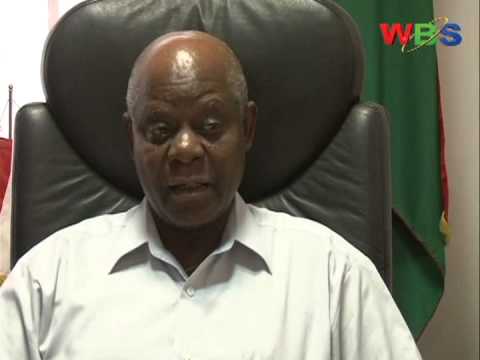
Gordon Wavamunno.

Wavah Broadcasting Services (WBS) TV has today stopped operating as a public broadcaster.

The logo of WBS TV, a station formerly belonging to tycoon Gordon Wavamunno

In a communication signed by the Receiver/Manager Kabiito Karamagi, all existing contracts for the troubled WBS have been terminated effective today.

In April this year, WBS TV, which belongs to tycoon Gordon Wavamunno of the Spear Group of Companies fame, was put under receivership after it failed to clear tax liabilities of over 7 billion shilling to the Uganda Revenue Authority.

The debt also reportedly includes interest accrued on tax liabilities over 10 years.


Stories Continues after ad

Machar ‘held’ in South Africa

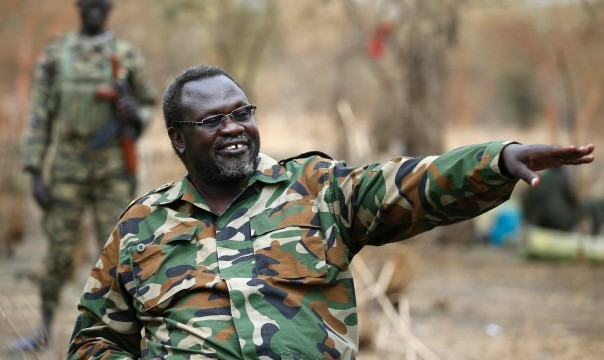
HELD? SPLA-IO chief Riek Machar.

South Sudanese rebel leader Riek Machar, who fled to Democratic Republic of Congo in August after fierce fighting, is being held in South Africa to stop him stirring up trouble, diplomatic and political sources said on Tuesday.

Removing Machar from circulation would be a blow to his rebel SPLA-IO faction in its three-year war with President Salva Kiir’s mainstream SPLA, and could sway a conflict the United Nations fears is tilting towards genocide.

Over a million people have fled the world’s youngest nation since conflict erupted in late 2013 when Kiir, an ethnic Dinka, fired Machar, a Nuer, as his deputy. The cross-border exodus is the largest in central Africa since the 1994 Rwanda genocide.

In South Africa, a well-connected regional political consultant said Machar was being held “basically under house arrest” near Pretoria with his movements restricted and his phone calls monitored and controlled.

“If he wants to go to the toilet, he has to hand over his phone and a guy stands outside the cubicle,” the source said.

Foreign ministry spokesman Clayson Monyela denied Machar was being held against his will, describing him instead as a “guest” of Pretoria as South Africa tried to prevent the civil war sliding into genocide.

“Him being our guest here is part of our responsibility as a mediator,” Monyela said, adding that it was “difficult to predict” the duration of his stay. “It’s very hard to put timelines on these peace and security situations.”

Dickson Gatluak, a Machar spokesman in Ethiopia, denied there were any restrictions on Machar and dismissed the reports as misinformation. “This is not true. It’s baseless and unfounded,” Gatluak told Reuters in Juba.

“Dr. Machar is safe and doing his normal duties as usual. He is communicating to us daily, including his field commanders in the entire country.”

Attempts by Reuters to speak to Machar in South Africa via his spokesman there were unsuccessful.

Kiir visited his South African counterpart, Jacob Zuma, on Dec. 2 to “review… the latest regional political and security developments on the continent”, according to a South African statement that gave no further details.

Refugee accounts and human rights reports point to both sides in South Sudan targeting civilians along ethnic lines.

JUBA OR JOBURG – YOU DECIDE

Machar reached a peace deal in 2015 with Kiir but the agreement fell apart in July, leading to several days of intense fighting in Juba, the capital of the five-year-old nation.

Machar himself was wounded and after fleeing to Congo went to Sudan – a long-term supporter of his rebel faction – for medical treatment. He then turned up in South Africa in October for more treatment.

A diplomatic source said the Intergovernmental Authority on Development, an eight-country East African group, had asked Pretoria to make sure Machar did not leave. The United States, Britain and Norway had supported that request, the source added.

“He keeps going back and mobilising his people and stirring up problems,” the source said. “It’s best to keep him here for a while.”

Machar flew two weeks ago to Ethiopia, which has also tried and failed as a mediator, but was refused entry and given a stark choice: go back to South Africa or get dumped in Juba, to be left at the mercy of Kiir’s troops, two of the sources said.

“The Ethiopians told him there were two planes sitting on the tarmac – one heading to Juba and one heading to Joburg – and told him he had 10 minutes to decide,” the political source said. “It didn’t take long.”


Stories Continues after ad

Gambia troops ‘hijack’ electoral commission offices

FEARS FOR HIS LIFE: Gambia's IEC chairman Alieu Momar Njie

Gambia’s security forces have entered the building of the Independent Electoral Commission, instructed its chairman to leave and barred other employees from entering, according to the commission chairman.

Tuesday’s developments came as West African heads of state began arriving in the country to try to convince long-term President Yahya Jammeh to relinquish power after losing an election this month.

WHAT NEXT? Gambian President Yahaya Jammeh seems to be pondering on what step next after he rejected presidential poll results.

“The military came to my office and said I am not to touch anything and told me to leave,” Alieu Momar Njie, the electoral commission’s chairman, said, adding: “I am worried for my safety.”

The Independent Electoral Commission had announced the news of Jammeh’s defeat at the hands of Adama Barrow.

The delegation also includes Nigerian President Muhammadu Buhari, Sierra Leone leader Ernest Bai Koroma and outgoing Ghanaian President John Dramani Mahama.The delegation is headed by Liberian leader Ellen Johnson Sirleaf, a Nobel Peace laureate and the current chairwoman of the Economic Community of West African States (ECOWAS).

The African Union said in a statement late on Monday that it also planned to send a high-level delegation, led by Chad’s long-ruling President Idriss Deby, to facilitate a “peaceful and speedy” transfer of power.

The streets of the Gambian capital Banjul were calm on Tuesday, with a high security presence, witnesses said.

Armed guards surrounded a hotel where the delegation was due to meet Barrow, Gambia’s president-elect, yesterday.

Barrow has said that he will annul Jammeh’s declaration of Gambia as an Islamic republic.

Irregularities alleged

Jammeh initially conceded defeat after official results showed that Gambians voted in Barrow on December 1.

However, last week Jammeh said that he no longer accepted his election loss and called for another vote, saying there were irregularities.

Jammeh’s ruling party said late on Saturday that his statement was simply a prelude to the party challenging the results in a petition to the Supreme Court.

By law, election results can be contested up to 10 days after the vote.


Stories Continues after ad