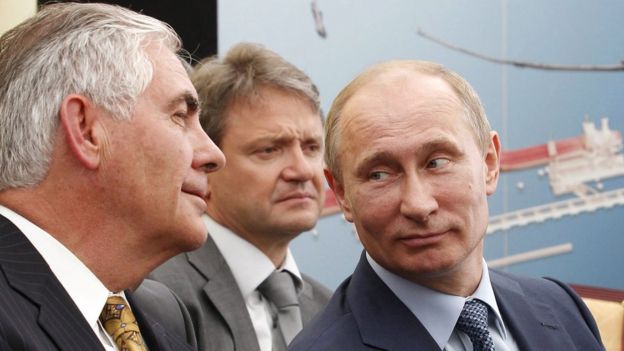
OIL DEAL ON: Sudan President Omar Bashir and his South Sudan counterpart Salva Kiir during Bashir the former's visit to Juba. Photo credit/sudantribune.com
President Omar al-Bashir has described the South Sudanese government as Sudan’s “enemy”, in a sign of growing tensions over slow implementation of the joint agreements between the two countries.
Addressing the force of the Sudanese Intelligence on Sunday, President Bashir said that South Sudan is still targeting his country and that it does not want to implement the 2012 Joint Cooperation Agreements signed by the two countries.
Separately, the Sudanese leader stressed that any peace agreement signed with the Sudan People’s Liberation Movement-North (SPLM-North) would not include the integration of its fighters in the Sudanese Armed Forces (SAF), saying the SPLA-North rebels are still part of South Sudan army.
“Those who are in Blue Nile are still part of the SPLA, and those who are still in South Kordofan are still part of the SPLA which is South Sudan’s army,” he said.
“They were supposed to be given their rights and then hand over their guns so that they come to us with their hands, but they didn’t do so. They want us to negotiate with them, but there will not be any integration of rebels,” he added.
President Bashir also rejected any new initiative for dialogue, saying whoever wants to join the National Dialogue must come and register his or her name, while calling on those taking up arms for political ends to join the peace process.
NO NEED FOR PEACEKEEPERS: South Sudan Defence Minister Kuol Manyang Juuk
South Sudan’s President Salva Kiir has reportedly granted amnesty to 750 troops loyal to his main political rival and the country’s former First Vice-President Riek Machar.
Those pardoned crossed in to neighbouring Democratic Republic of Congo (DRC) when fighting erupted in the capital, Juba in July this year.
Local media reports quoted South Sudan’s Defence Minister Kuol Manyang saying the Juba regime was ready to welcome the armed opposition forces residing in refugee camps in DRC.
“The President of the Republic made an amnesty for those who will be ready to come back and this is the message we were carrying to the authorities in DRC,” Manyang was quoted as saying.
A team, the minister disclosed, would be sent to convey the amnesty message to the rebels, whose leader declared armed resistance against President Kiir in September.
“Those who will want to go back to the army; we will send them to contentment sites where they will be screened. And those who will want to be in the police, will be re-trained,” added the minister.
Violence broke out in South Sudan’s capital in July when the two rival forces clashed, leaving hundreds dead and thousands displaced. The incident forced Machar to flee Juba into the DRC.
The Defense Minister, however, said Machar who is currently in South Africa, would have to denounce violence before he is allowed to return into the young nation.
Tens of thousands of people have been killed and millions displaced since conflict erupted between South Sudan’s main rival political factions in December 2013.
Meanwhile, the South Sudanese armed opposition (SPLM-IO) forces Wednesday claimed the capture of three localities in southern and northern parts of the country following heavy fighting.
In a statement to Sudan Tribune, SPLA-IO Spokesperson William Gatjiath Deng said their fighters clashed with the government army and captured Bazi at the South Sudan-DRC border, Morobo in Central Equatoria and Kaljak in Unity state.
PROGRESS? South Sudan leader Salva Kiir meets UN Secretary General Ban Ki Moon. Moon lauded the South Sudan authorities for accepting foreign troops to resore calm in his troubled country.
The United Nations Security Council (UNSC) will today discuss the situation in South Sudan. The development comes in the wake of a report released to the UNSC yesterday, in which UN Secretary General Ban Ki-moon has warned of ‘very real risk of mass atrocities’ in South Sudan that peacekeepers deployed in the war-torn country will not be able to stop’.
And according to Ban, the United Nations must clearly define what actions it is prepared to take in the event of mass killings.
“There is a very real risk of mass atrocities being committed in South Sudan, particularly following the sharp rise in hate speech and ethnic incitement in recent weeks,” Ban said.
While UN peacekeepers will resort to ‘all necessary means’ to protect civilians, “it must be clearly understood that United Nations peacekeeping operations do not have the appropriate manpower or capabilities to stop mass atrocities,” he added.
Nearly 14,000 soldiers and police are deployed in the UN mission in South Sudan (UNMiss), but a recent report showed the peacekeepers failed to protect civilians during an outbreak of heavy fighting in the capital in July.
Ban plans to dispatch a delegation to the African Union in Ethiopia’s capital Addis Ababa to agree on a joint plan to confront a possible outbreak of mass violence in South Sudan.
The plan could include the creation of an over-the-horizon force that would quickly deploy in a crisis.
The world’s youngest nation, South Sudan descended into war in December 2013, leaving tens of thousands dead and more than 2.5 million people displaced.
The country won independence from Sudan in 2011, with strong support from the United States.
A peace deal between President Salva Kiir and rebel leader Riek Machar in August last year had raised hopes of peace, until clashes erupted in Juba four months ago.
The UN Security Council agreed to deploy a regional force to Juba to improve security, but the government has balked at the deployment of the 4,000 troops.
Previously, the UNSC has also threatened to impose an arms embargo on South Sudan for its refusal to cooperate, but it has yet to take action.
“South Sudan is inundated with weaponry, which is often turned on defenseless civilians,” Ban said in his report, adding that “under the present circumstances, stopping the flow of additional arms into the country is critical for the protection of civilians”.
President Yoweri Museveni has appointed Maj. Gen. Lakara Nakibus to replace departed Maj. Gen. Julius Oketta.
Gen. Nakibus has been appointed as Deputy National Coordinator Operation Wealth Creation. Until his death,a fortnight ago, Gen. Oketta was a holder of this post. He was deputy to Gen. Salim Saleh.
Until two weeks ago, Gen. Nakibus was a Deputy Commander of the Africa Union Mission to Somalia (Amisom) peacekeeping troops where he served for 18 months in Mogadishu.
Vodafone Uganda’s winners of the #ICreateTomorrow competition artist and student Darsan Ainembabazi, filmmaker Chris Lutanga and health care administrator Cathy Namubiru – have departed for London on a once in a lifetime trip.
During their time in London the lucky winners will each visit key tech hubs, influencers and leaders in their respective fields, equipping and inspiring them to build and brighter tomorrow. Chris Lutanga says, “This trip will give me an insight into how professional film making is done and not to settle for less but to aim for more.”
According to John Ndego, CEO Vodafone Uganda the purpose of the #ICreateTomorrow campaign is to connect new people and new ideas, to inspire Uganda to build a future that we’re proud of. “We are giving our winners different experiences so they come back renewed, motivated and ready to create their own tomorrow in Uganda,” John Ndego adds.
This competition forms part of a re-launch of Vodafone in Uganda and a renewed focus towards the Youth and SMEs. With over 65% of Uganda being under the age of 25 there is potential to unleash a highly productive generation of people.
“Vodafone believes that we do not only have a role to play, but a responsibility, to be an immovable force for progress in Uganda. Our simple philosophy is that every Ugandan has the potential to do, and to build incredible things. And with our network and technology we hope to make this journey of success a little easier,” noted Ndego.
During the trip Lutanga will work with filmmakers to produce his own short film to be showcased at the prestigious Somerset House studios. Ainembabazi will visit famous galleries and artistic hubs that are relevant to Africa and Namubiru will meet medical care experts and health administrators as well as tech start-ups.
Ndego comments, “We hope that she brings back knowledge and experience that can be used to create efficiencies in the health care system making her a pioneer in Ugandan health care.”
Russia has announced it is formally withdrawing its signature from the founding statute of the International Criminal Court (ICC), saying the tribunal has failed to live up to the hopes of the international community.
In 2000, Russia signed the Rome Statute setting up the ICC, the world’s first permanent war crimes court, but never ratified the treaty.
Russia’s foreign ministry said in a statement it is withdrawing its signature on President Vladimir Putin’s orders.
“The court did not live up to the hopes associated with it and did not become truly independent,” Russia’s foreign ministry said, describing its work as ‘one-sided and inefficient’.
Moscow said it was unhappy with the ICC’s treatment of the case on Russia’s short war with its neighbour Georgia in 2008, saying the court ignored aggression by Tbilisi against civilians in South Ossetia – a pro-Moscow separatist region of Georgia.
“In these conditions one cannot speak of trust in the International Criminal Court,” the ministry said, adding that the decision to ‘not be a participant in the ICC statute’ was taken by President Putin and entails ‘withdrawing the signature from this document’.
“The court did not live up to the hopes associated with it and did not become truly independent,” Russia’s foreign ministry said, describing its work as “one-sided and inefficient”.
Moscow said it was unhappy with the ICC’s treatment of the case on Russia’s short war with its neighbour Georgia in 2008, saying the court ignored aggression by Tbilisi against civilians in South Ossetia – a pro-Moscow separatist region of Georgia.
ADDRESSING DELEGATES: Hon. Eriyo addressing the NASA-USAID side event at the COP22 in Marrakech, Morocco
The East African Community (EAC) region is developing a robust climate information network that bridges climate service providers, producers and users, the Deputy Secretary General in charge of Finance and Administration, Jesca Eriyo has said.
The process involves partnerships with key stakeholders such as Feminine Early Warning System Network (FEWSNET), Regional Centre for Mapping of Resources for Development/SERVIR, IGAD Climate Prediction and Application Centre, through the support of United States Agency for International Development (USAID).
Taking part in a Panel Discussion in a side event themed ‘Innovative Adaptation: How African Leaders are Tapping State-of-the-Art US Climate Science and Data to build resilience,’ Hon Eriyo said EAC is an agricultural economy whereby about 80% of the population live in rural areas and depend on agriculture for their livelihoods.
Panelists at the NASa-USAID side event
The Deputy Secretary General also applauded the USAID Support especially underFeed the Future programme which is implemented in line with agriculture and food security action plan.
She said the USAID supported interventions seek to improve the policy and regulatory environment for agricultural transformation and realization of the EAC regional integration agenda. “This illustrates how the regional economy is vulnerable to climate change and therefore the need to implement adaptation measure,” she said.
Hon. Eriyo meeting Ms. Silvia Mancini, the Operational Officer of the Washington-based Adaptation Fund to discuss progress on the accreditation of EAC to the fund.
The discussion was organized by National Aeronautics and Space Administration (NASA) and United States Agency for International Development (USAID) at the US Centre in the ongoing 22nd Session of the Conference of Parties (COP22) to the United Nations Framework Convention on Climate Change (UNFCCC) in Marrakech, Morocco.
Other Panelists included Mr. Issifou Alfari from West Africa’s Agrometeorology, Hydrology, and Meteorology (AGRHYMET) Center; Mr. Birama Diarra from Mali’s National Directorate of Meteorology; and Ms. Fatoumata Nafo-Traore from the International Federation of Red cross and Red Crescent Societies.
Meanwhile, the EAC Team at the COP22 in Marrakech led by the Deputy Secretary General Eriyo today held bilateral meetings with several partners that included the Washington-based Adaptation Fund, and the Swiss-based International Union for Conservation of Nature (IUCN).
Hon. Eriyo discussed with the Adaptation Fund officials the progress on EAC Accreditation application. She also discussed with the IUCN officials areas of deepening cooperation between the two organizations.
SIGNING: EAC Secretary General Amb. Liberat Mfumekeko (seated right) signs the five-year EAC-USAID Regional Development Objective Grant Agreement together with Ms. Karen Freeman (USAID Mission Director for East Africa (left) and Ms. Virginia Blaser, the Chargé d’Affaires of the US Embassy in Tanzania.
The US Government and the East African Community (EAC) have today launched a US$194 million Regional Development Objectives Grant Agreement at the EAC headquarters in Arusha, Tanzania.
According to a release, the United States Agency for International will, on behalf of the US government, contribute the money over a five year period to shared development goals, deepening the partnership between the two organizations.
About $30 million will fund institutional strengthening within the EAC Secretariat, while the remainder will support other development partners in their efforts to contribute to the EAC regional integration agenda.
EAC Secretary General Amb. Liberat Mfumekeko exchanges signed copies of the five-year EAC-USAID Regional Development Objective Grant Agreement with Ms. Karen Freeman (USAID East Africa and the Chargé d’Affaires of the US Embassy in Tanzania, Ms. Virginia Blaser (centre).
Chargé d’Affaires of the US Embassy to Tanzania and US Representative to the EAC Virginia Blaser, USAID Mission Director for Kenya and East Africa Karen Freeman, and EAC Secretary General Ambassador Liberát Mfumukeko signed a memorandum of acknowledgment to affirm the agreement.
Chargé Blaser noted the tremendous value of fostering regional cooperation, saying that the United States supports “governments and regional bodies such as the EAC in their collaborative efforts to unlock this region’s full potential for the benefit of its people.”
USAID Mission Director Freeman emphasized the joint achievements of the EAC and USAID over the past two decades. “By simplifying customs and border procedures, we have facilitated faster, more affordable and predictable trade. We have increased investment by facilitating the closure of more international deals, which are expanding local industries and manufacturing.”
Under this agreement, the EAC and the United States will work together to (i) advance regional economic integration, (ii) increase trade and investment between member states and with the United States, (iii) improve the sustainable management of natural resources in the Lake Victoria Basin and Mara River ecosystems, (iv) improve access to integrated health services in border areas and (iv) strengthen the EAC’s organizational leadership.
In his remarks, EAC Secretary General Amb. Liberat Mfumukeko thanked USAID for its continued support to the EAC integration agenda.
Amb. Mfumukeko said that EAC’s partnership with the United States dates back to the Community’s inception.
“The partnership continues to expand and be strengthened through mutual development objectives and funding for programmes such as trade and investment, biodiversity, climate change, agriculture, food security, water supply and sanitation, and institutional support,” said Amb. Mfumukeko.
The Secretary General said that the new EAC-USAID Regional Development Objective Grant Agreement (RDOAG) 2016-2021 would deepen integration, improve cross-border risk management and strengthen regional institutions leadership and learning. He added that the RDOAG would support harmonization of policies and standards, and scale up technologies and best practices in trade, investment, agriculture, energy, and environmental and natural resource management.
Other initiatives to be supported by the agreement are climate change, gender, livelihood, population and health threats.
Also present at the ceremony were the Ms. Candace Buzzard, Deputy Director at the USAID Mission and Mr. Charles Njoroge, the EAC Deputy Secretary General in charge of Political Federation.
BARRATT HOMES: A beautiful tree-lined boulevard and network of paths and green spaces cleverly link the properties at the heart of the development
Barratt Developments says it has cut the cost of its most expensive new homes in London by up to 10% as the property market cools.
Britain’s biggest housebuilder said in a trading update covering July 1 to November 13 that it had taken the pricing action at a ‘number of our sites’.
It added: “Further actions to de-risk London delivery include an exchanged build and sale agreement on a bespoke development of 39 apartments for a total value of £47m.”
The company said, ahead of its AGM on Wednesday, that overall market conditions remained healthy and it was on track to meet its targets as sales were robust.
But it pointed to stamp duty increases, a greater supply of new homes and uncertainty arising from the EU vote for troubles in London.
It said foreign buyers had also been pushing for price cuts – despite the collapse in the value of sterling since the referendum which would make a pound-priced property more attractive.
Chief executive David Thomas told the Reuters news agency: “We do recognise that at price points about £600,000, particularly at price points once you move above £1m, the market is clearly slower.
“You are seeing commentary about prices backing off year-on-year on a 5 to 10% basis so I think that it’s in that sort of order,” he said, when asked about the degree to which the builder was cutting prices.
While estate agents Savills and Knight Frank have pointed to a hit to the London market from Brexit, Mr Thomas said an increase in the supply of homes coming to market was a greater factor at this stage.
In the trading statement he added: “We are mindful of the potential for economic uncertainty created by the outcome of the EU Referendum.
“However, market fundamentals are robust, and we remain a housebuilder of choice.”
Official figures released on Tuesday showed London’s house prices still rising at a rate of 10.9% in the year to September.
FIGHTING BAD TAXES: Ugandan Musician Bobi Wine and other members of a group that say they want to eliminate 'bad taxes'.
We all know that Bobi Wine went back to school this year, isn’t it? Well, like what lawyers are known for, the musician lately thinks like a lawyer too, a career he is pursuing at university.
He is now into fighting against bad tax policies and together with other law students from 10 universities around East Africa and members of the civil society, the group launched a campaign against tax flows.
Dubbed the ‘Stop Bleeding Campaign’, it is aimed at tackling illicit financial flows mainly through bad tax policies.
“I personally have a problem with the unjustified tax incentives to the so called investors where at the end of the day, for every dollar we attract from them, we lose three (according the Mbeki report),” said the musician whose property was once impounded over failure to pay taxes.
The campaign calls on African governments to unite for progressive tax reform and challenges the rest of the world to make tax systems fairer to help end poverty and inequality.
According to (Thabo) Mbeki’s report, released this year, it was found that once adequate revenue flows are aligned to a well-articulated structural transformation strategy, they can assist Africa to curtail dependency on aid, provide better public services to the people and to gain stronger control of the path to sustainable development in Africa.