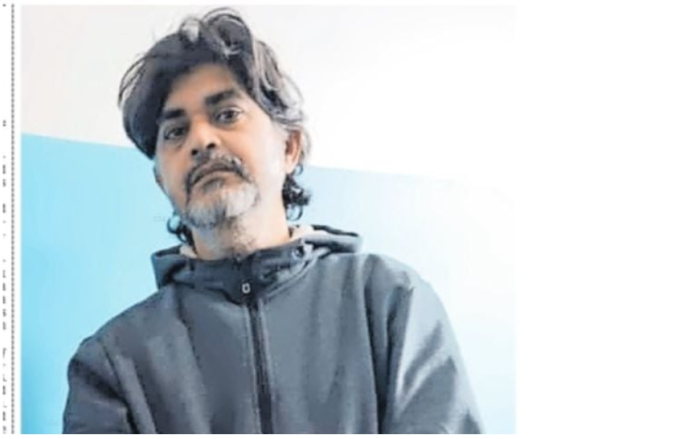
Chef Kumesh Menaria who was kidnapped and dropped in Tanzania.
The chef was found in Tanzania after kidnapping scandal linked to wealthy family. It is said that Pankaj Oshwal and Basundra Oshwal smuggled the chef from the Ugandan border side illegally to the Tanzanian side of the street.
Indian chef Kumesh Menaria, who was allegedly kidnapped in Uganda, has been found near the Mutukula border in Tanzania, in what appears to be a case of blackmail and extortion.
Menaria’s family confirmed his location to local media, sharing recent photos, following his disappearance.
The case, first reported by NTV Uganda, involves a wealthy family headed by Pankaj Oswal, Menaria’s employer, who claims the kidnapping is linked to a ransom demand.
In an open letter to President Yoweri Museveni, Oswal accused the kidnappers of extortion, leading to the arrest of his daughter, Basundhara Oswal, and their lawyer, Rita Ngabire. Both were remanded to prison on October 11, charged with kidnapping Menaria with the intent to kill.
Menaria is currently being held by Tanzanian authorities at Shaka police station, roughly 20 kilometers from the Uganda-Tanzania border. The exact circumstances of his disappearance and how he ended up in Tanzania remain unclear.
Before relocating to Uganda, Menaria had reported mistreatment and restrictions on his personal freedom to Swiss authorities. After arriving in Uganda, he lost contact with his family, prompting a frantic search.
Authorities traced Menaria’s disappearance to an Oswal-owned factory, but by the time they gained access, he had already been moved. A vehicle linked to the kidnapping was later found near the Uganda-Tanzania border.
Adding to the complexity of the case, Oswal has accused Menaria of stealing valuable jewelry, raising questions about the chef’s legal situation in Tanzania.
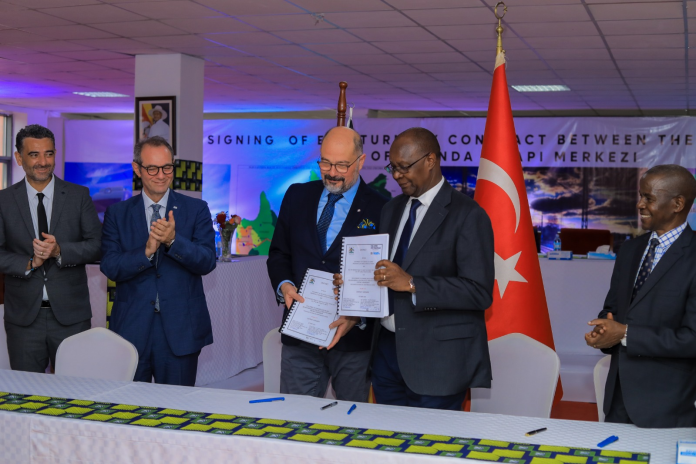
The Permanent Secretary Ministry of Works and Transport, Waiswa Bageya and Turkish officials during the signing of the contract today October 14, 2024.
Government of Uganda has officially signed a contract with Turkish contractor Yapi Merkezi for the construction of the first 272 kilometers of the Standard Gauge Railway (SGR) in Uganda at a total cost of 2.7 billion euros (about Shs10.8 trillion).
Partly financed by the Government of Uganda, the railway will be connecting Malaba to Kampala is expected to be complete in 48 months, (4 years) from the date of groundbreaking.
Speaking at the contract signing ceremony in Kampala on Monday, the Minister of Works and Transport, Gen Edward Katumba Wamala, said this is a significant step in the history of Uganda.
“The 16-year long wait is over. It’s true the project has taken so long to be implemented. However, we are here today to deliver a contract and very soon, we shall invite you and others to the physical ground breaking at the start point of the project,” he said.
“The contractor, Yapi Merkezi, has already proven their expertise having efficiently constructed the Tanzanian SGR and we therefore trust them to conclude the first 272km in time and on budget,” Gen Katumba added.
The minister further explained the government of Kenya is also working on making the connection from Naivasha – Kisumu – Malaba.
“The SGR Uganda is a seamless project and our Kenyan counterparts are hard at work ensuring that they complete the Nivasha-Malaba section,” he said.
The Engineering, Procurement and Construction (EPC) contract will see Yapi Merkezi build the railway line, station buildings and electrification infrastructure and also procure the Rolling stock.
The project will have 40% local content and the minister called upon Yapi Merkezi to make use of local contractors.
“Ugandans have supplied material during projects such as construction of Nile bridge e.t.c. Make use of them so that they have a feel and benefit from the project,” he said.
The minister also said the existing metre gauge railway (MGR), which is being rehabilitated, will complement the SGR once completed.
“It’s not a waste of money, but a calculated decision to have both systems,” he said.
Fatih Mehmet, the Turkish ambassador to Uganda, said: “The SGR is a catalyst for regional integration and economic transformation. The Railway will increase the flow of goods along the Kampala – Mombasa route, and make Ugandan exports more competitive in the regional and global market.”
The total length of the SGR in Uganda will be 1,700 km. So far, land has been acquired for the first 150 km up to Jinja. The project will be implemented in phases, beginning with the 272 km stretch from Kampala to Malaba.
During a meeting of the Joint Ministerial Committee on SGR held in Mombasa, Kenya, early this year, Kenya, Uganda, Rwanda, and the Democratic Republic of Congo agreed to step up the mobilisation of funds to fast-track the development of the Standard Gauge Railway (SGR) project.
In a communique issued after the meeting, the transport ministers from the four counties reaffirmed their commitment to expediting the completion of the remaining SGR sections from Naivasha in Kenya to Uganda, Rwanda, South Sudan, and DRC.
Specifically, Kenya committed to resume the construction of the Naivasha-Kisumu-Malaba and Kisumu-Malaba SGR sections.
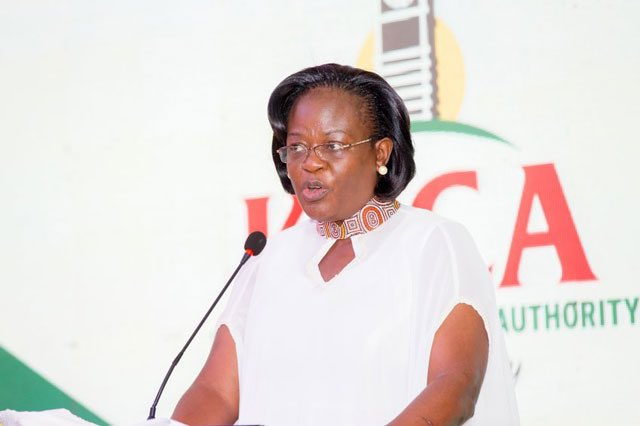
Sacked Kampala Capital City Authority (KCCA), Executive Director, Dorothy Kisaka, her deputy David Luyimbazi and Director of Public Health, Dr Daniel Okello are expected to appear to CID headquarters on Wednesday, October 16, 2024 for questioning over their alleged criminal negligence that led to the tragic death of 35 people after the collapse of Kiteezi landfill.
The revelation was made by the police spokesperson ACP Rusoke Kituuma during the Police weekly press conference.
“They weren’t drafted today like the news says. They are expected at the CID headquarters on Wednesday. As you all are,” he said.
According to him, the summons followed a directive from President Museveni who dismissed the three.
“We are moving smoothly in that direction. On Wednesday we will have their statements taken and hear their version of what happened,” ACP Rusoke said.
The trio was dismissed by President Museveni following the findings of the Inspector General of Government (IGG) concerning the Kiteezi Landfill disaster in September.
Museveni’s directive called for a thorough probe into the incident, focusing on potential criminal negligence.
They are accused of negligence that contributed to the August 10 collapse of garbage at the Kiteezi landfill, which claimed 35 lives. Others remain trapped under the garbage, and many more were injured.
The three officials have been criticized, specifically Kisaka, who allegedly ignored warnings about the landfill’s safety hazards to residents living nearby.
Dorothy Kisaka took over the role of KCCA Executive Director in June 2020, succeeding Jennifer Musisi, who left amid her own controversy.
The probe is expected to lead to formal charges in court, with investigators compiling evidence to be presented to the Director of Public Prosecutions (DPP).
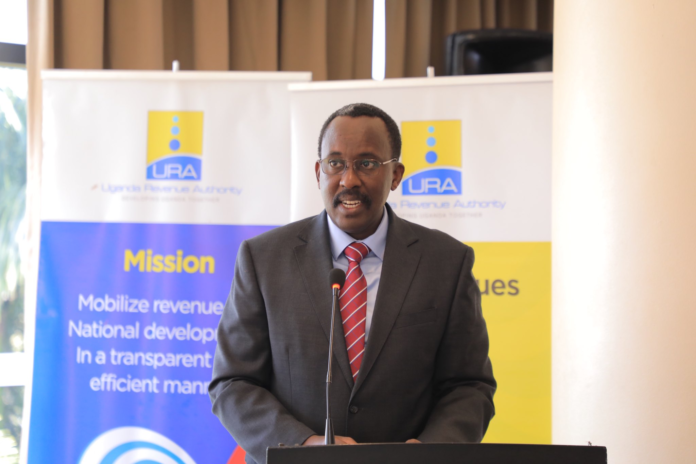
State House is set to investigate a company contracted by Uganda Revenue Authority Safari-Tech after results have confirmed that the Shs1.5 trillion which Safari-Tech had promised have bore no fruits.
MTN was erroneously accused of manipulation of data by Safari-Tech in order to come to a tax liability of Shs1.5 trillion which was reduced to Shs260 billion which has also proved that Safari-Tech was making some triple fake entries on a monthly data which when deducted brings MTN tax liability to zero for this particular liability to Safari-Tech.
It has been proved that Safari-Tech did not collect $750 from MTN Ghana as they had claimed an even lied the president of Uganda on these facts.
The government of Uganda is very concerned how Shs15 billion used to advance Safari-Tech to buy servers hasn’t brought any money to government.
The initial investigative team found out that Safari-Tech had no office in Kenya and their contact person Mr Andrew Chege has dodged the investigative team. The main focus of the investigation will be how money was disbursed, which servers were bought and how cash withdraws were affected. This will definitely involve the Financial Intelligence Authority and if proved correctly, they will have implications of corruption and money laundering.
They are also concerns about how data with security sensitivity could have been transferred to a third party whose dealings have been shoddy and a proper security due diligence had not been under taken.
The investigators want to carry out a security threat analysis and also wonder why URA did not use the data which government uses and which is secure but decided to put the country at risk.
Uganda has annulled a back-tax demand of Shs280 billion ($75.45 million) levied on MTN, following an assessment by the Kenyan consultancy firm Safari-Tech.
The move has ignited discontent among senior officials who had cautioned against employing the firm, citing parallels with a similar debacle in Ghana.
The back tax was dismissed after being deemed frivolous, echoing the experience in Ghana, where Safari-Tech was involved in a $773 million (GHS8.2 billion) tax dispute with MTN.
That case also ended with the tax claim being written off, raising concerns about Safari-Tech’s practices, including its registration status and the methods by which it secured contracts. The firm, established by Kenyan tax expert Andrew Gathuo Chege, came under scrutiny in Ghana for its dubious operations.
In Uganda, Brendan Adiru Wadri, Head of Revenue Intelligence at the State House, had reportedly advised President Yoweri Museveni against contracting Safaritech, warning of its controversial track record.
Despite protests from some of his advisers, President Museveni had sanctioned the involvement of Safaritech, swayed by assurances from the firm and its alleged supporters within the Uganda Revenue Authority (URA) that they could recover more than Shs1.5 trillion ($404 million) in undeclared taxes.
This scenario bears a striking resemblance to the events in Ghana, where the Ghana Revenue Authority (GRA) proceeded with a tax claim against MTN, despite warnings from internal stakeholders and a critical reassessment by KPMG. The GRA’s decision to move forward ultimately led to the dismissal of the tax demand.
The Government of Uganda is set to invest Shs400 billion in transforming the Sino-Uganda Mbale Industrial Park which employs approximately 7000 Ugandans in different manufacturing and processing factories.
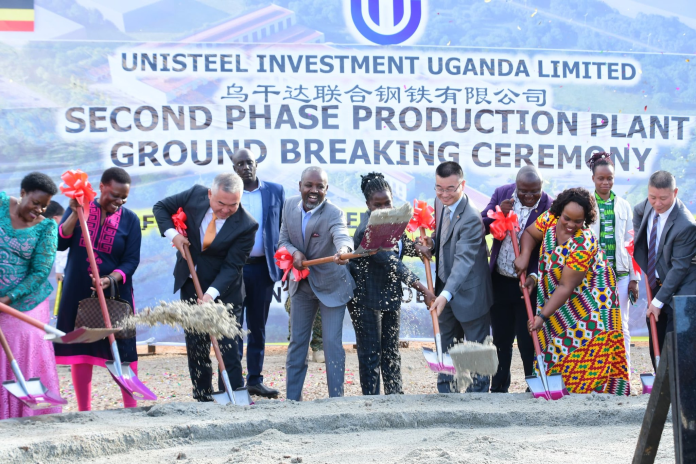
Deputy Speaker, Thomas Tayebwa, made the commitment on Friday, 11 October 2024 while officiating at the ground breaking ceremony for the second phase production plant of Unisteel Investment Uganda Limited in Mbale City noting that the government is committed to supporting the manufacturing sector especially through legislation and policies that will provide a more conducive investment environment.
“We have already signed the contract with China Railway No.3 Engineering Group. Every quarter, we are supposed to give you about Shs 135 billion and the payments have not been going well but when I go back [Parliament], I am going to follow this up so that we release money for transforming the park,” Tayebwa said.
Tayebwa commended Mr. Paul Zhang, the Chairman of Tian Tang Group and for investing heavily in the manufacturing sector which he said has created jobs for the people in Mbale and surrounding areas.
“I am going to engage the leadership of the Uganda Investment Authority so that we have a full one-stop centre in this industrial park where an investor can process Uganda Revenue Authority, National Social Security Fund and other necessary permits easily,” he added.
Deputy Speaker Tayebwa (in white hard hut) is taken through iron ore processing at Tembo Steel Ltd in Iganga
Citing electricity as a key ingredient for the manufacturing sector, Tayebwa pledged to push forward the presidential directive to enable factories access power at five US cents per kilowatt hour.
“This industrial park has the capacity to consume 200 megawatts and to ensure there is reliable power here, the Electricity Regulatory Authority and Uganda Electricity Transmission Company Limited will install a 50MVA transformer which will stabilise power in the industrial park,” he said.
The State Minister for Karamoja Affairs, Hon. Florence Nambozo urged the investors to set up product outlets within Mbale to enable area residents to easily procure products manufactured at the Mbale Industrial Park.
In a related development, the Deputy Speaker proposed a government policy to reward investors that maximise value addition to Ugandan raw materials.
He said this following a tour of the Direct Reduced Iron (DRI), Scrap to Electric Furnace system at Tembo Steel Mills Limited in Iganga Municipality which minimises carbon dioxide emissions by 70 per cent.
“Manufacturers who use Ugandan raw materials should be supported to pay a certain percentage compared to those importing raw materials,” Tayebwa said.
The Deputy Speaker added that to ensure the use of Uganda’s raw material for manufacturing in steel factories, the government needs to support all dealers manufacturing with iron ore, to acquire mining licenses.
“The target of the leadership of Parliament is to pass proposals and funding based on pro-business interventions. We want to support the President in his message on value addition and this can be done by reducing the cost of doing business,” Tayebwa said.
Milton Muwuma (NRM, Kigulu County South) urged the government to expedite tarmacking of the Iganga-Walugogo-Luuka-Kamuli road, which he cited as a key business route.
“In December 2020, the President commissioned the tarmacking of this road but it has not yet been worked on. These investors lose a lot of business because trucks bringing raw materials and taking finished steel often break down on that road,” Muwuma said.
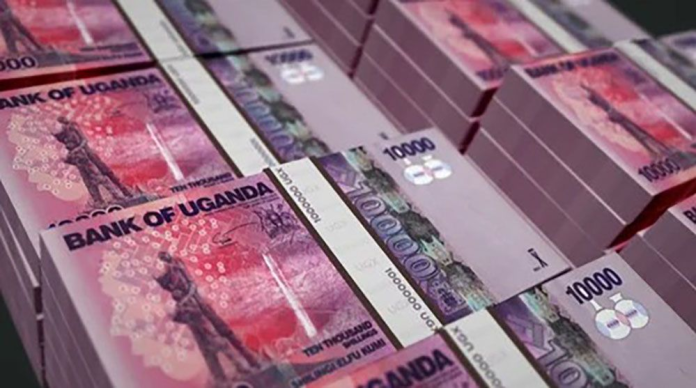
Assets for commercial banks and microfinance deposit-taking institutions (MDIs) grew by 8.9 percent and 2.1 percent to UGX 52.6 trillion and UGX 882.6 billion, respectively in the last financial year, the Bank of Uganda annual report shows.
According to the Bank of Uganda report for FY2023/24, the performance of supervised financial institutions (SFIs) improved in the year to June 2024, owing to improved macroeconomic conditions and stronger liquidity and capital buffers in the banking sector.
Total SFIs’ assets grew by 8.4 percent from UGX 49.7 trillion as at 30 June 2023 to UGX 53.9 trillion as at 30 June 2024.
“The increase in assets was mainly driven by holdings of Government securities, loans and SFIs’ deposits in foreign financial institutions which increased by 10.1 percent, 6.8 percent and 33.2 percent to UGX 15 trillion, UGX 22.6 trillion and to UGX 4.17 trillion, respectively,” the report reads in part.
However, Credit Institutions (CIs) recorded a reduction of 21.5 percent in assets from UGX 490.6 billion to UGX 385.2 billion, following the closure of Mercantile Credit Bank Limited on 18 June 2024, which accounted for 26.7 percent of CIs’ assets as at that date.
On the liabilities side, SFIs continued to be mainly funded by deposits, which grew by 4.2 percent from UGX 35.0 trillion to UGX 36.4 trillion in the year ended June 2024 and accounted for 83.2 percent of total liabilities.
The growth in deposits was mainly on account of savings and time deposits which increased by 4.7 percent and 5.7 percent while demand deposits grew by 3.2 percent.
The report notes that lending activity by SFIs improved in the year to June 2024, with loans growing by 6.8 percent from UGX 21.0 trillion to UGX 22.6 trillion, higher than 5.0 percent recorded in the previous year to June 2023.
“This growth was mainly attributed to increased net credit extensions which amounted to UGX 1,338.0 billion for the year ended June 2024, compared to UGX 650.1 billion for the year ended June 2023,” the report states.
Overall, credit growth remained below the long-term trend and projected growth target of 13.0 percent. This moderate growth partly reflects a measured response by SFIs and borrowers in adapting to the tight financing conditions during the period.
On a positive note, asset quality improved, and the aggregate ratio of NPLs to total gross loans (NPL ratio) reduced from 5.8 percent as of 30 June 2023 to 4.9 percent as of 30 June 2024. NPLs declined across most sectors, notably business services and real estate.
“The outlook for credit conditions is increased lending and improved asset quality as the effects of monetary policy easing by BOU pass through to the real sector,” the report states.
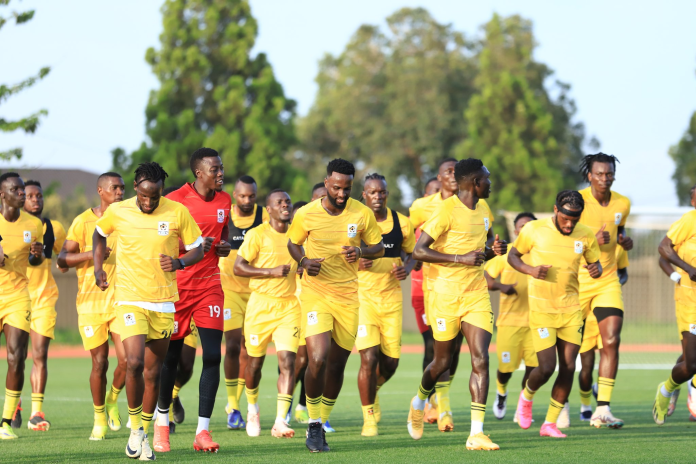
Uganda Broadcasting Corporation (UBC) has announced that it will be unable to air the highly anticipated Africa Cup of Nations (AFCON) qualifier match between Uganda Cranes and South Sudan, scheduled for today at Mandela National Stadium, Namboole.
In a statement issued earlier today, UBC management explained that their broadcasting partners were unable to provide the necessary parameters to ensure coverage of the match.
The issue is expected to persist until October 15, affecting the scheduled matches during this period.
UBC expressed its regret to fans and stakeholders, citing that efforts are underway to resolve the situation as soon as possible.
“We sincerely apologize for this inconvenience and are working closely with our partners to resolve the issue as soon as possible,” the statement read.
Fans seeking further information have been directed to reach UBC’s Public Relations Officer through contact details provided in the release.
This development has been met with disappointment by football fans, who were eager to watch the Uganda Cranes in action as they strive to qualify for the 2025 AFCON tournament. Many will now be waiting to see if the broadcaster manages to restore services for upcoming games.
UBC promised to keep stakeholders informed of any developments in the coming days.
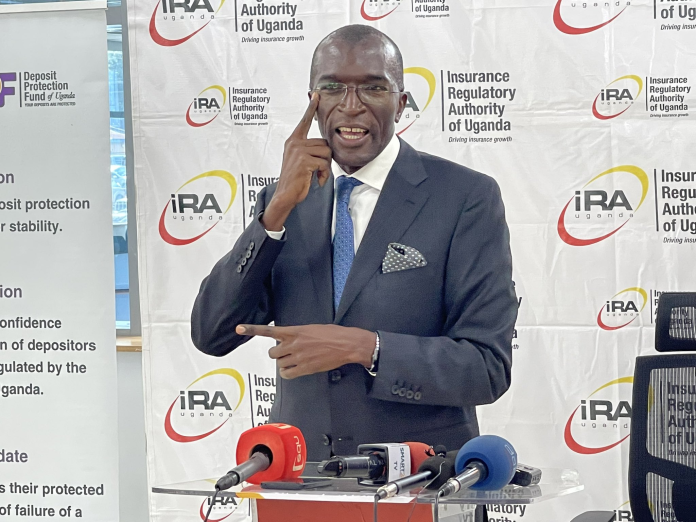
Insurance companies operating in Uganda generated a total of Shs933.8 billion in gross written premiums in the first half of 2024, according to the Insurance Regulatory Authority (IRA) report. This marks a 12.65% increase from Shs828.9 billion registered during the same period in 2023.
Speaking at the official release of the Insurance Industry performance results for the half year (January-June) 2024, Al Hajji Ibrahim Kaddunabbi Lubega, the IRA CEO, said overall, the insurance industry saw robust growth.
“This surge reflects heightened business activities, underscoring the sector’s resilience and its pivotal role in the country’s economic landscape,” he said.
Of the shs933.8 billion in gross written premiums, non-life business generated shs542.3 billion representing a 6.30% growth from the shs510.1 billion the same period last year.
Life insurance business generated Shs357.8 billion which was 22.97% growth from the shs291 billion during the same period last year while Health Membership Organisations generated shs33.1 billion up from shs27.3 billion, representing a 21.24% growth.
The sector performance report also shows that microinsurance generated shs0.613 billion up from shs0.463 billion, indicating a 32.52% growth.
Health Membership Organizations accounted for 3.54% of the Market Share, up from 3.30% in the first half of 2023.
The sector performance report shows that during the half year ending June 2024, the gross written premium collected through the brokerage distribution channel was Shs298.3 billion, up from Shs257.8 billion generated in a similar period in 2023. This represented a 15.63% growth.
In relative terms, brokers business accounted for 31.9% of the total insurance premium, an increase by 0.79% from 31.11% share during the same period last year.
On the other hand, bancassurance reached shs107.5 billion in gross written premiums, up from shs83.6 billion, reflecting a 28.59% growth.
Lubega described this growth as a remarkable performance which underscores the tremendous potential of mutual partnerships in expanding access to insurance and enhancing financial security for customers.
In terms of market share, non-life continues to dominate with 58.07% of the aggregate industry written premiums. However, the 58.07% is lower than the 61.54% during the same period last year.
UPC Secretary General, Fred Ebil and party whip, Sandra Alum Santa before Legal and Parliamentary Affairs Committee
within opposition’
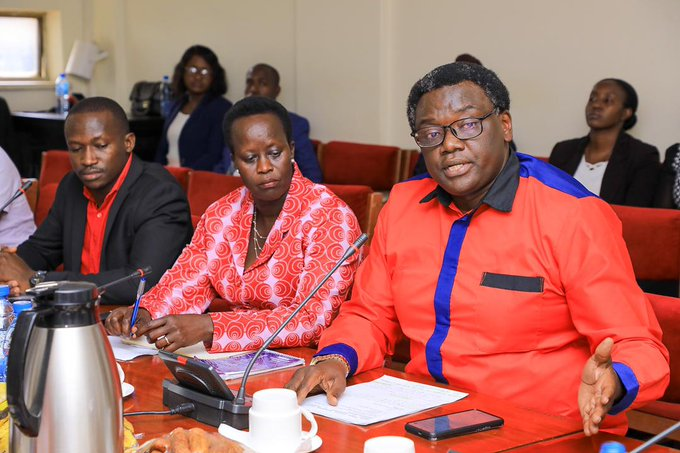
Opposition political parties have opposed the proposals in the Administration of Parliament (Amendment) Bill, 2024 that was moved by Mityana South County Member of Parliament, Richard Lumu Kizito noting that it will cause opposition within opposition and chaos.
The bill seeks to among others provide for the election of the Leader of the Opposition (LoP) and other positions reserved for the Opposition in Parliament.
The Forum for Democratic Change (FDC), Uganda Peoples’ Congress (UPC) and the Alliance of National Transformation (ANT) argued that the bill is in bad faith, undermines multi-party democracy and seeks to destroy the opposition.
The three parties presented their proposals to the Legal and Parliamentary Affairs Committee on Thursday October 10, 2024.
The President of ANT, Maj. Gen. Mugisha Muntu who appeared before the Legal and Parliamentary Affairs Committee said the bill should not be passed.
“It is a recipe for disaster; when you elect the LoP different from the one preferred by the leading party in the Opposition, you are creating two power centres and weakening the party,” he said.
Muntu argued that by passing the law, Parliament will have interfered in fixing internal issues of political parties proposing that parties should be left to apply their manifestos, constitutions and other internal arrangements and select their leaders.
“If there are any internal challenges within National Unity Platform, it should be left to deal with those internal contradictions as long as it is applying methods consistent to good governance.
The environment is not even ripe for political parties to thrive, we should be very careful with this law,” he said.
The President of the FDC party, Eng. Patrick Amuriat decried the already shrinking civic space for the opposition in exercising their fundamental rights and stated that the bill will worsen the situation.
“The bill is seen as part of a broader attempt by government to stifle political participation. The more you reduce the already little space for the opposition to thrive, you are pushing them to look at alternatives. This is dangerous for both democracy and the stability of the country,” Amuriat said.
FDC contested the bill which Amuriat said goes against the well-known and time tested best practices of good governance of the Commonwealth.
“Our contestation is on why we want to depart from the known norms practiced everywhere in the Commonwealth. As FDC, this makes us suspicious,” Amuriat said.
The UPC Secretary General, Fred Ebil said the bill is a distraction at a time when the country should be discussing electoral reforms and the 2026 general elections.
“In his bill, Lumu thinks there will be cohesion within the opposition but in UPC, we believe it will be more divided as those who will lose in the race will go to court. For the sake of the multi-party system, we should let the appointment of the LoP remain as it is,” said Ebil adding that, ‘the bill was brought in bad faith, it is redundant, it undermines multi-party democracy and destroys the opposition as it causes division’.
The UPC party whip, Sandra Alum Santa said the political party with the highest numerical strength should be left to choose the LoP.
“We want to respect the party with the numerical strength to select the LoP. We feel that if you allow an election by all opposition MPs with several contestants it will create chaos and division. This is not what we want in the opposition,” Santa said.
Bukooli County MP, Solomon Silwany reiterated that there are opposition MPs who say they need accountability from the LoP and that it can be obtained when they participate in his or her election.
Lumu in his bill, wants the Leader of the Opposition elected by all opposition MPs because he or she superintends all members of the opposition in Parliament and leaving the selection to the opposition party with the highest numerical strength, would disadvantage other parties.
The bill also seeks to provide additional grounds upon which the LoP my cease to hold office, requires the Shadow Cabinet to be approved by members of the opposition parties in Parliament and further requires the LoP to consult opposition political parties represented in Parliament when appointing chairpersons and deputy chairpersons of standing committees of Parliament, among others.
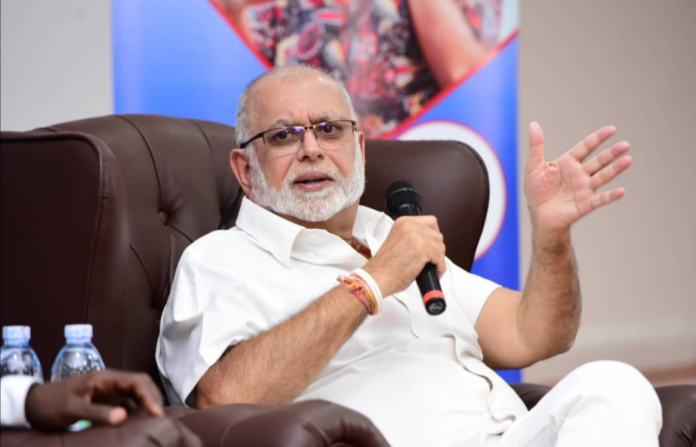
City Tycoon Sudhir Ruparelia has called for the legal recognition of the Asian community as one of Uganda’s tribes.
His call stems from the deep-rooted history and significant contributions made by Asians, particularly of Indian descent, in Uganda. Despite their expulsion in 1972 by then-president Idi Amin, many returned after his fall, reestablishing businesses and contributing to the economy.
Ruparelia’s proposal reflects a desire for the Asian community to be fully integrated into Uganda’s national identity and legal framework, acknowledging their long-standing presence and cultural impact.
In the video, Ruparelia highlighted that Asians have been part of Uganda’s society for over 120 years, making up 0.001% of the population. He stressed their significant contributions to the country’s economy, saying, “We need an identity in this country just like others who migrated to Uganda and got recognized.”
Dr. Ruparelia pointed out that while Asians make up a small fraction of Uganda’s population, they contribute significantly to the country’s revenue.
“Asians are 0.001% of the total population of the country, but we contribute 60 to 65% of Uganda’s revenue,” he said.
When asked about his deep connection to Uganda, Ruparelia said, “Uganda is my home, and that alone shows how much I love it. I can live anywhere, but Uganda is always my first home. I have homes in England and Dubai, but Uganda remains my first choice.”
Recently, while receiving the Pan Africanist Entrepreneur Award of the Year at the PAP Global Awards 2024 gala night in Kampala, Sudhir Ruparelia echoed that Indian recognition as a tribe will show a sign of respect, unity and honor for their contributions to Uganda.