Stanbic Bank
Stanbic Bank
20.1 C
Kampala
Stanbic Bank
Stanbic Bank
Home Blog Page 2013

Pallaso speaks out on Ray Signature’s beating, prayers for AK47 held today

MEGA LOSS? Pius Mayanja aka Pallaso

To very many music fans Pius Mayanja aka Pallaso is known as a violent person because of his previous fights with other musicians including his brothers Weasel and Jose Chameleone. However, Pallaso denies having beaten singer Ray Signature as alleged.

In fact, he says that he has great respect for the ‘Kasenyanku’ hitmaker and adds that Ray is his good friend and “I have respect for him and his works.”

However, Pallaso doesn’t rule out that the person who beat up Ray might have been from his crew.

“I hear rumors going around that a member of my crew attacked Ray Signature. I don’t know the whole truth about it but if it happened…that’s too bad. If it’s false then that is good. So, I ask everybody to please not create a situation out of this and my name out. Stop getting people confused with false allegations. People disagree every day and if I am not part of it; that’s their business not mine. I hope Ray comes out and makes this clearer. But like I said me and him are friends and never had any problem,” Pallaso wrote on his wall.

Ray had earlier claimed that Pallaso and his colleagues had beaten him up on Monday morning.

“Am one artiste who respects every one coz am respected. Today morning Pallaso’ kiffesi attacked me n did a lot to me beating n minimizing me but yooo the case is at police as i talk ryt now my car was damaged but God is good am not please please I need peace but this was too much. My God is greater than me n u Pallaso just know,” Ray shared on social media.

However, the good news is the two appear to have resolved their differences and Pallaso even attended Ray’s video launch last night.

“My brother Pallaso we good now that he cleared every thing to the public thanks for coming through FAM I love you all. Peace n love!” he responded to Pallaso’s clarification.

Meanwhile, prayers for Pallaso younger brother, singer Emmanuel Mayanja aka AK47, have been held today at Lweza Catholic Church.


Stories Continues after ad

UBC workers threaten to strike

The home of UBC

Just a few days after Makerere University workers laid down their tools, a development that has led to the closure of the biggest university in the country, there are reports that workers at Uganda Broadcasting Corporation (UBC), the state-owned TV and Radio station, will go on strike until they are paid their salary arrears.

According to a statement circulating on social media, reportedly authored by the workers, they will lay down their tools beginning Friday, November 4, if payment of their salaries is not cleared by tomorrow.

The UBC is currently undergoing restructuring and in the statement the workers expressed fear that many are likely to be fired without receiving their pay, which they put at six months.

But contrary to that, the station’s management says the workers haven’t been paid for only one and a half months; initially, an official at UBC said, the workers were demanding for two months but were recently paid a quarter of their salary arrears.

Also, the source, speaking on condition of anonymity, said there is a clique of workers who are afraid of the ongoing restructuring process and have set out to damage the image of the institution.

In a related development, there are reports that some of the station’s top officials including the Marketing Manager Denis Mbidde have resigned, leaving the UBC management in panic.

The threat by the UBC workers comes at a time President Yoweri Museveni ordered the closure of Makerere University following a sit down strike by students and their lecturers, with the latter demanding payment of their arrears.

In his directive, the President said the decision was taken ‘to guarantee the safety of persons and property’.


Stories Continues after ad

Germany gives Euros 67m for EAC health programmes

COURTESY CALL: (L-R) The Head of EAC Regional Cooperation at the German Embassy in Dar es Salaam, Ms. Lena Thiede, the German Ambassador to Tanzania and the EAC, H.E. Ergon Kochanke, GIZ Programme Manager; Bernd Multhaup, and the EAC Deputy Secretary General in charge of Productive and Social Sectors, Mr. Christophe Bazivamo, when the German envoy paid a courtesy call at the EAC Headquarters.

The German government has over the past two years extended 67 million Euros to the East African Community (EAC) region for three years from 2015, channeled to finance various initiatives within the health and pharmaceutical sectors as well as LVFO projects among others.

(L-R) EAC Deputy Secretary General in charge of Productive and Social Sectors; Mr. Christophe Bazivamo, and the German Ambassador to Tanzania and the EAC, H.E. Egon Kochanke at the EAC Headquarters.

The revelation was made by Hon. Christophe Bazivamo, the EAC Deputy Secretary General (DSG) in charge of Productive and Social Sectors, while receiving the German Ambassador to Tanzania and the EAC, Egon Kochanke, who had paid a courtesy call at the EAC Secretariat.

The envoy congratulated Mr. Bazivamo on his recent appointment as DSG at the Heads of State Summit held in Dar-es-Salaam on 8th September, 2016, and the two later discussed, among other things, how to strengthen the EAC-German cooperation for purposes of accelerating the integration process.

He expressed his country’s willingness to support the integration agenda by contributing to the Partnership Fund, which he described as a good instrument that enables EAC to directly access funds to facilitate myriad activities and programmes within the region.

Commenting on the progress of the dialogue process for Burundi Peace Talks, the German Ambassador hailed the Facilitator of the Inter-Burundi Dialogue, former Tanzanian President Benjamin William Mkapa for being able to mobilize a large number of representatives to attend the dialogues.

On his part Hon. Bazivamo briefed his guest on the status of EAC-EU-EPA; peace and security restoration and mediation dialogues in Burundi; as well as the status and procedure of integrating the Republic of South Sudan into the EAC.

He noted that the Community was working to achieve the most important milestones within the Customs Union (Single Customs Territory) and the Common Market protocol, which milestones he added, would enable the benefits of integration to trickle down to the people of East Africa. He noted that the trickle down effects would enable the people to appreciate and embrace the integration process.

“This is the only way they will be fully aware of the integration process,” Mr Bazivamo said.

Amb. Kochanke was accompanied by Ms. Lena Thiede, Counsellor/Head of EAC Regional Head of Cooperation at the German Embassy in Dar-es-Salaam, and Mr. Bernd Multhaup, GIZ Programme Manager at the EAC Secretariat.


Stories Continues after ad

Museveni, Mkapa to meet over Burundi

CORDIAL: EALA Speaker, Rt. Hon. Daniel F. Kidega yesterday pays a courtesy call on the former President of the United Republic of Tanzania and the Facilitator of the Inter-Burundi Dialogue, H.E. Benjamin William Mkapa,

President Yoweri Museveni will next week meet with former Tanzanian president Benjamin Mkapa, to hold discussions on the crisis in Burundi.

President Yoweri Museveni, the Mediator of Inter-Burudi Dialogue meets the Facilitator, former Tanzanian president Benjamin Mkapa.

The disclosure was made by Mr Mkapa, the Facilitator of the Inter-Burundi Dialogue, while meeting the Speaker of the East African Legislative Assembly Rt Hon Dan Fred Kidega in Dar es Salaam, Tanzania.

Former Tanzania President Benjamin Mkapa meets with EALA Speaker Dan Fred Kidega.
Former Tanzania President Benjamin Mkapa holds talks with EALA Speaker Dan Fred Kidega.

The discussions between Mr Mkapa and Rt Hon Kidega centred on peace and security in the region with the former president saying the Inter-Burundi dialogue remained a priority of the EAC. He also stated his intention to meet with the Chair of the Summit of EAC Heads of State, Tanzanian president Dr John Pombe Joseph Magufuli, for consultations in the coming week.

FACILITATOR: Former Tanzanian President Benjamin Mkapa addressing delegates at the just-concluded Inter-Burundi Dialogue

He expressed hope that the Dialogue process would bring all Burundians to a common understanding that will result in peace, democracy and prosperity in the country.

According to Mr Mkapa, the region had no option but to ensure tranquil is sustained for its progress and development and reiterated the need for the Partner States and the Community to stand by each other and to harness the strengths in order for the bloc to progressively move forward.

On his part, the EALA Speaker said that the EAC had a fundamental role to ensure sustenance of peace in all the Partner States.  He remarked that Burundi was showing signs of tranquility, but added that there was increasing need to re-integrate all its citizens.

The Speaker reiterated that one of the issues that underpin integration is that of finding solutions to the problems that may bedevil the Partner States, which he termed as “part of enhancing the bonds of sisterhood”.

He lauded the Summit of EAC Heads of State for recently directing that additional resources geared towards the Inter-Burundi Dialogue be availed. He informed Mr Mkapa that EALA was eager and keen to debate and approve a Supplementary Budget on the same.

The Speaker said EALA would also dispatch a team of Members from two Committees, Committee on Trade and Investments and that of Regional Affairs and Conflict Resolution to the border of Burundi and Rwanda to investigate on claims of restriction of goods and movement of persons at the border-point.


Stories Continues after ad

South Sudan aid workers’ rape report out

SCARED: A woman 'takes cover' with her baby amid fighting in Juba near the Terrain Hotel. Photo/un.org

The committee that investigated attacks on Terrain Hotel, a luxurious facility for expatriates in Juba, where foreign humanitarian workers, mainly Americans, were raped by members of the South Sudanese army (SPLA) said it has presented to South Sudan President Salva Kiir the outcome of the investigation.

Matison Otoromoi, the chairperson of the investigation committee formed by President Kiir in July to unearth circumstances under which government forces attacked the hotel, killed a local journalist on ethnic grounds and raped women and looted properties, said their work is comprehensive.

“This is the final phase of our work and what is now left is to address the public on how we conducted our work,” said Otoromoi, who is also the Deputy Minister of Justice.

Terrain Hotel was attacked on July 11 by gunmen believed to be government soldiers. Despite being close to United Nations peacekeeping base in Juba, there was no rescue from the blue helmet men.

An intervention by National Security Services of South Sudan ended the looting and harassment several hours later. The incident occurred on the last day of fierce battle between government forces loyal to President Kiir and soldiers loyal to former first vice president Riek Machar.

Machar fled the capital on July 11, according to his aides, after the rival forces reportedly continued to violate a cessation of hostilities.

Otoromoi did not say if their report will lead to any criminal charges against government soldiers.


Stories Continues after ad

Foreign students told to seek shelter at embassies following closure of Makerere

NEXT DESTINATION? Students ponder over their next course of action after they were ordered to vacate Makerere 'immediately'.

Foreign students pursuing studies at Makerere University have been told to seek shelter at their respective embassies following the closure of the varsity.

Yesterday President Yoweri Museveni ordered Makerere closed as a lecturers and students strike went into its second day, with the former refusing to teach before being paid their arrears, while the latter complained about not being taught.

Heavily armed security personnel deployed at Makerere to ensure all students leave the campus following a directive by President Yoweri Museveni.

As a result, this morning the Inspector General of Police Kale Kayihura rushed to Makerere University to oversee the operation to have all students including those from other countries leave the campus immediately. But according to the lecturers, they will not go back to class before being paid their arrears, collectively amounting to over 32 billion shillings.

By press time it was not possible to know the exact number of foreign students at Makerere but a source at the university estimated them in the hundreds. The source, speaking on condition of anonymity, said it was ‘unfortunate they are just being told to go to their respective embassies’.

“These (foreign students) come here after paying their dues; it is unfortunate to just send them away like that,” the source said, adding that for each foreign student to be admitted to pursue a course at Makerere, one is required to pay an initial registration fee of US$75 (Shs172.000)

It was also not possible to establish whether the embassies of the affected foreign students had been notified, and the financial implications it would have on their budgets.


Stories Continues after ad

Kayihura oversees Makerere students’ eviction

LIVE COVERAGE: An NBS TV cameraman records events unfolding at the university as students are ordered to leave campus. Photo credit/NBSTV.

The Inspector General of Police Kale Kayihura is at Makerere University, overseeing the operation to have all students leave the campus immediately.

Gen. Kayihura’s rush to Makerere follows a directive by President Yoweri Museveni issued yesterday, ordering for the closure of the university indefinitely after lecturers and students went on strike, with the former protesting non-payment of their arrears, while the latter were complaining that their lecturers had abdicated responsibility to teach.

But the lecturers are also resolute they will not go back to class before being paid their arrears, collectively amounting to billions of shillings.

By press time Gen Kayihura, Vice Chancellor Prof. Ddumba Sentamu and other officials were holding a closed-door meeting in the Main Building trying to find a solution for the standoff, while sections of students are saying they have ‘no where to go’.

Meanwhile, opposition presidential candidate Dr Warren Kizza Besigye has urged the students to defy the President’s directive, describing it as a ‘ridiculous order’.

According to Dr Besigye, the government is acting sloppily by failing to pay the lecturers while it can afford to bail out a private bank (Crane Bank) that is ailing.

Established in 1922, Makerere University is Uganda’s leading institution of higher learning and has produced alumnae including four Presidents for all the three original members of the East African Community (EAC).

The Presidents are Yusuf Kironde Lule, Godfrey Binaisa, Emilio Mwai Kibaki (former president of Kenya) and Julius Kambarage Nyerere, the founding president of Tanzania.

Stories Continues after ad

Mandela Foundation steps up Zuma sacking tempo

WANT ZUMA's HEAD: A plaque at the heqd offices of the Nelson Mandela Foundation.

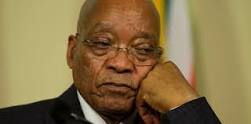
The Nelson Mandela Foundation (NMF) has joined several political activists linked to the Africa National Congress (ANC) and called for South Africa’s President Jacob Zuma to be sacked.

He had ‘failed the test’ of leadership and South Africa needed to hold to account those who were ‘looting’ state resources, it said.

Mr Zuma has been dogged by allegations of corruption for more than a decade.

SOUTH AFRICAN ICON: Nelson Mandela

The call by the NMF, which is run by colleagues of South Africa’s first black president, is the latest sign of growing discontent with his rule.

Its intervention came as a court began hearing a bid by Mr Zuma’s legal team to prevent the release of a report by former anti-corruption chief Thuli Madonsela.

She investigated allegations that he let the wealthy Gupta family wield undue influence in his government. Both Mr Zuma and the Guptas have denied any wrongdoing.

In a statement entitled ‘Time to account for crippling the state’, the NMF said the governing African National Congress (ANC) needed to take steps to put the government back in “safe and capable hands”.

“Twenty years since Nelson Mandela signed South Africa’s constitution into law and as the third anniversary of his passing approaches, it is painful for us at the Nelson Mandela Foundation to bear witness to the wheels coming off the vehicle of our state,” the NMF added.

Mr Mandela spent more than 27 years in prison for fighting white-minority rule and became South Africa’s first democratically elected leader in 1994. He stepped down five years later and died in December 2013 at the age of 95.

The NMF said South Africa’s democracy was now under a ‘real threat’, with key government institutions being used to advance ‘private interests’.

“We are reaping the results of a political trend of personalising matters of state around a single individual leader. This in a constitutional democracy is to be deplored,” it added.

Ms Madonsela’s investigation was triggered by allegations in March by Deputy Finance Minister Mcebisi Jonas that the Gupta family had made ‘a mockery of our hard-earned democracy’ by offering him the finance minister’s post last year.

Mr Jonas said he rejected the offer; the Guptas accused him of political point-scoring.

Former ANC MP Vytjie Mentor also alleged that the family offered her the powerful public enterprise minister’s post in 2010 in exchange for business favours.

Ms Mentor alleged that Mr Zuma was in another part of the Gupta’s family home in Johannesburg when the offer was made. Mr Zuma’s office said at the time that he had no ‘recollection’ of Ms Mentor, while the family strongly denied her allegation.

Ms Mentor and opposition parties, including the Democratic Alliance (DA) and Economic Freedom Fighters (EFF), are challenging Mr Zuma in court, insisting that the report be released.

Mr Zuma’s court action prevented Ms Madonsela from publishing the report before she stepped down as public protector at the end of her term last month.

He said it would be unlawful to release the report as he had not been given enough time to respond to the allegations.

This was the second time Ms Madonsela investigated Mr Zuma during her seven-year term.

In March, South Africa’s highest court upheld her findings that Mr Zuma “unduly benefited” from government money used to upgrade his private rural home.

It led to widespread calls for Mr Zuma to resign, but he survived a DA-sponsored impeachment vote in parliament after ANC MPs rallied behind him.

The president is also at the centre of another case and is trying to overturn a unanimous ruling of a High Court that he should stand trial on 783 counts of corruption in relation to an arms deal negotiated in 1999.


Stories Continues after ad

Ban sacks Kenyan UNMISS Commander

Former Kenyan UNMISS Commander Lt Gen Johnson Mogoa Kimani Ondieki.

UN Secretary General Ban Ki-moon has sacked Kenyan Lt Gen Johnson Mogoa Kimani Ondieki, the commander of the UN force in South Sudan after a report said it had failed to protect civilians in July.

The report backed claims by aid workers that the UN troops refused to respond when government soldiers attacked an international aid compound in Juba.

In the fighting between the army and former rebels, a local journalist was killed and aid workers were raped.

The clashes derailed efforts to form a unity government and end the civil war.

The fighting began with clashes between President Salva Kiir’s guards and bodyguards of the sacked Vice-President Riek Machar.

Mr Ban “has asked for the immediate replacement of the force commander”, UN spokesman Stephane Dujarric announced.

The independent special investigation into the violence on 8-11 July in South Sudan’s capital was commissioned by the UN.

In three days of fighting, at least 73 people were killed, including more than 20 internally displaced people who had sought UN protection. Two peacekeepers also died.

Among the targets of the attack by government troops were a UN peacekeeping base, known as UN House, and the nearby Terrain Camp.

The report found that ‘a lack of leadership on the part of key senior mission (UNMISS) personnel culminated in a chaotic and ineffective response to the violence’.

It said the peacekeepers ‘did not operate under a unified command, resulting in multiple and sometimes conflicting orders to the four troop contingents from China, Ethiopia, Nepal and India, and ultimately under-using the more than 1,800 infantry troops at UN House’.

“This included at least two instances in which the Chinese battalion abandoned some of its defensive positions,” the document said.

It also said a Nepalese police unit had ‘performed inadequately’ in its efforts stop looting.

During the attack on Terrain camp, the report said that “civilians were subjected to and witnessed gross human rights violations, including murder, intimidation, sexual violence and acts amounting to torture perpetrated by armed government soldiers”.

UNMISS has 16,000 peacekeepers deployed in South Sudan.

Both President Kiir’s and Mr Machar’s followers have been accused of perpetrating atrocities during the country’s bitter civil conflict.

More than 2.5 million people in South Sudan have been displaced since the fighting first began in December 2013.


Stories Continues after ad

Nigeria, Tanzania back ICC

BURUNDI INVESTIGATIONS TO CONTINUE: ICC Chief Prosecutor Fatou Bensouda

Many countries including Nigeria and Tanzania have pledged support for the International Criminal Court following the announced withdrawal by three African nations, but Kenya, which the tribunal is investigating, was sharply critical and questioned its long-term survival.

Many in the General Assembly called for talks between the ICC and the African Union in hopes of addressing the continent’s concerns and reversing the decisions to leave by Burundi, South Africa and Gambia.

Kenyan Ambassador Tom Amolo didn’t say whether his country would also leave, but he told the 193-member world body that his country was monitoring the withdrawals “with very keen interest.”

Nigeria, Africa’s most populous country, as well as Senegal, the first country to ratify the Rome Statute that established the court, and Tanzania reiterated their support for the ICC, stressing the court’s importance in combatting impunity for the world’s most atrocious crimes, including genocide.

The ICC has been accused of bias by some African leaders because since the Rome treaty came into force in 2002, only four people have been convicted of war crimes and crimes against humanity. Three were from Congo and one from Mali. So far, it has indicted only suspects from Africa, and of the 10 full-scale investigations currently underway, nine are in Africa and only one elsewhere — in the former Soviet republic of Georgia.

But the ICC is expanding its global reach. It is currently conducting 10 so-called preliminary examinations — probes to establish whether to open a full investigation — in countries including Afghanistan, Ukraine and Colombia, as well as the Palestinian territories and alleged crimes by British forces in Iraq.

ICC President Judge Silvia Fernandez de Gurmendi, presenting the court’s annual report to the assembly, said two trials are under way and another is set to start soon. And following convictions, she said, proceedings for reparations for victims are under way in four cases.

But Kenya’s Amolo called the ICC’s “dismal output of tangible results … disheartening and simply confounding.”

He accused the court of having lower standards than national courts and warned that “something radical and urgent must be done if this court is to stand any chance of long-term survival as a viable and credible international institution.”

The ICC indicted Kenyan President Uhuru Kenyatta on charges of crimes against humanity for 2007 post-election violence in which more than 1,000 died. The case collapsed because of what the ICC prosecutor called threats to witnesses, bribery and lack of cooperation by Kenya’s government, but it remains open.

Amolo said African countries “have tried to engage constructively” with the ICC with little success.

Tanzania’s U.N. Ambassador Tuvako Manongi said the court’s “particularly tumultuous relationship with Africa … has engendered fear of an African exodus from the court.”

But he said “that need not be the case,” pointing to the African Union’s commitment to justice and the rule of law.

Manongi called for “confidence building measures” on how the ICC functions and interacts with the 124 countries that have ratified the Rome Statute.

“All too often avoidable misunderstandings, when left unattended or dismissed as inconsequential, grow into regrettable outcomes,” he said. “Lectures and claims of high moral ground from outside the continent are unhelpful.”

Senegal’s Minister Counsellor Abdoulaye Barro called for dialogue and expressed hope “that a consensus can be found so that Africa will continue to play a major role in the fight against impunity.”

New Zealand’s U.N. Ambassador Gerard von Bohemen said “better engagement” with the AU and African nations is needed. And he expressed hope that in the coming year, before the withdrawals take effect, “there is room for meaningful dialogue on a potential resolution and to provide for a pathway back to the court.”

Joao Vale de Almeida, the European Union’s U.N. envoy, put the challenge succinctly: “The world needs the ICC, and the ICC needs all countries to support it.


Stories Continues after ad