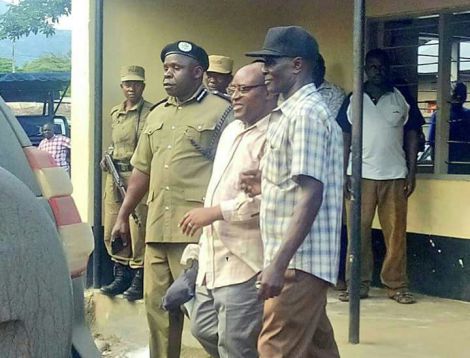
Journalist Joy Doreen Biira at the police station in Kasese earlier today. Ms Biira has not yet been released despite assurances by AIGP Andrew Felix Kaweesi that she would be released on bail.
KTN Television, current employers, of Joy Doreen Biira and one of the biggest stations in Kenya has vowed to fight what it has called violations of journalists’ rights.
“We must stand up against dictatorship and journalists’ violation #FreeJoyDoreen,” the station tweeted today.
“It’s so sad what I’ve witnessed today with my own eyes — part of the palace of the kingdom I’m from, the Rwenzururu Kingdom, burning down. It felt like watching your heritage deplete before my eyes…..” KTN journalist, Doreen Biira wrote on Facebook yesterday, reacting to the invasion of the Rwenzururu palace that left over 60 dead. Ms Biira posted and it is what has earned her to coolers curtsey of both Uganda police and the army
In addition to the post, she shared with her followers photographs of some of what she had seen and this brought her on collision with security.
She was arrested last night together with five others including her fiancé who she had just introduced to the family in a traditional ceremony. Despite earlier promise to release her by police, she is still under detention at Kasese Police station.
Earlier in the day there was some hope of releasing her when the Flying squad police took her to her parents for a house search, though after the search, she was returned to the station where she is still under detention.
“Thing is men have been killed. Not just men but possibly bread winners of families from both sides – the army and the royal guards. Importantly I have watched part of my heritage burn up in flames from nearby…..” she added.
The ongoing violence in Kasese and the attendant behavior of Rwenzururu King Charles Wesley Mumbere has re-ignited debate on the relationship between Uganda’s royalty and the Executive led by President Yoweri Museveni.
It is important to note that since Independence in 1962, the monarchs in Uganda have had a not-so-cordial relationship with the central government, the climax of this antipathy resulting in the attack on Mengo on April 24, 1966 that led to Kabaka Edward Mutesa of Buganda being deposed (Uganda Crisis) and the subsequent abolishment of the kingdoms by then President Apollo Milton Obote in 1967. Other kingdoms affected by Obote’s directive included Ankole under Omugabe Charles Gasyonga, Bunyoro-Kitara under Omukama Tito Winyi Gafabusa IV, Toro under Omukama David Mathew Patrick Olimi Kaboyo VII and Busoga under Kyabazinga Wilberforce Kadhumbula Nadiope, Uganda’s first Vice President under Obote from 1962 to 1966.
Yoweri Museveni who has persistently blamed Obote for abolishing kingdoms is now faced with the same problems of traditional institutions.
Partly because of his recalcitrant character and loose oversight over the army, Obote was deposed by Colonel Idi Amin Dada, a former Army Commander of the Uganda Army. However, much as Amin did all in his power to appease Ugandans during his early days at the helm of government, he did not pretend about monarchism and conspicuously refused to reinstate the kingdoms during his 8-year rule between January 1971 and April 1978 that was characterized by brutality. And when the Tanzanians and a few Ugandan exiles finally drove Amin out of Kampala, the two subsequent short-lived governments under Yusuf Kironde Lule, a former pro-monarchist, a Godfrey Lukongwa Binaisa, a former adherent to republicanism and both Baganda, turned a ‘deaf ear’ to calls for the reinstatement of Kingdoms. Indeed, it was Binaisa who, while serving as Attorney General, drafted the ‘pigeon-hole Constitution’ of 1967 that abolished the kingdoms.
Then enter Obote II under the Uganda Peoples’ Congress (UPC) in December 1980, and there was no talk whatsoever about the reinstatement of the kingdoms for all the five years Obote was in power. This was not surprising as he was the one responsible for their abolition in 1967.
However, the fire for regal reinstatement in Uganda received a boost with the assumption of power in 1986 by the National Resistance Movement/Army (NRM/A). According to reports, many Baganda decided to support the bush war against Obote on the understanding that on attainment of power, the NRM/A would restore the Buganda kingdom. In his submissions on the ‘Buganda Question’ one of the pro-Buganda advocates, NRM/A veteran and Minister without Portfolio Hajji Abdul Nadduli, has attested to this development. He is nonetheless not a lone voice as Presidential Advisor John Nagenda, one of the instrumental personalities that introduced then Prince Ronald Muwenda Mutebi to the NRM/A will tell you.
And so it was in 1993 that NRM/A Chairman Yoweri Museveni convened a High Command meeting in Gulu in 1993, and introduced the subject of the return of kingdoms in Uganda, otherwise known as the Restoration and Restitution of the Kingdoms 1993 Bill. At the time, the move elicited some opposition and the notable voices included among others then Brigadier David Tinyefuza (now General Sejusa); then NRM/A Chief Political Commissar Lieutenant Colonel Dr Kizza Besigye, then Presidential Private Secretary (PPS) Lt. Col. Serwanga Lwanga and former pro-monarchist, the late AlHajji Abubaker Kayama Mayanja who, even at one time reportedly asserted that the Baganda had sold then ‘Republic House’, the former seat of the Buganda Kingdom that was called Bulange.
Milton Obote, turned Uganda into a republic before abolishing kingdoms.
But despite all the said protestations, the NRA High Command okayed the restitution of the kingdoms, and their position was reinforced when the 1995 Constitution fully recognized the kingdoms and the ‘powers of their Kings’. However, under the new law there was a catchphrase; cultural leaders as they were called then were not to indulge in politics; they were to remain apolitical!
This unforeseen development took the pro-monarchists by surprise, with the Buganda group saying they had been given ‘byoya bya nswa’, literally meaning that little or nothing had been achieved out of the engagement the pro-monarchists had had with the NRM/A government. However, the government insisted that Buganda would get back all its properties, piecemeal, as this would allow for a smooth reclaim without necessarily rocking the political status obtaining in the country then. Both groups were dissatisfied with the offers accorded each other, resulting into lingering questions on the good faith of the negotiators. Further, the lack of appreciation for what was on offer would lead Baganda pro-monarchists officially led by then Katikiro Joseph Mulwanyamuli Semwogerere to advocate for a Federal (Federo) status, while the government through the local government ministry insisted on having a ‘regional tier’ system, hitherto an obscure amalgam of the two political systems.
However, talks about the two political systems stalled when Kabaka Ronald Mutebi appointed diehard monarchist Dan Mulika as the new Katikiro, replacing moderate Mulwanyamuli, a one-time close confidant and Dar es Salaam University Old Boy (OB) of Museveni, who even served as a Special District Administrator (SDA) in the early NRM/A administration. Mengo went cold, so did the Kabaka who, at the time, was also blocked from accessing parts of his kingdom including areas in Buruuli and Kayunga, home to the antagonistic Baruuli and Banyala, respectively. The blame for the woes encircling the Kabaka as an individual and the Buganda kingdom as an institution was laid at the door steps of government and at the time, somewhere in 2009, President Museveni lamented that the Kabaka had even refused to take his calls. Apparently, it is not only Kabaka Mutebi who has refused to take Mr Museveni’s call when there is a stalemate between the traditional leaders and central government and sources say the current standoff between the Rwenzururu King Mumbere and Mr Museveni’s government saw the former at one time refusing to take the President’s successive calls shortly before he was arrested.
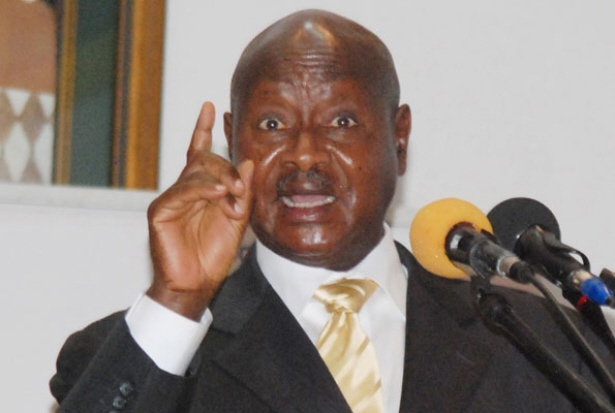
President Museveni greeting Buganda king, Ronald Muwenda Mutebi. Kabaka Mutebi was once stopped to travel to Kayunga part of his kingdom.
Meanwhile, in an almost similar protest, in July 2014 Tooro King Oyo Nyimba Kabamba Iguru IV started fasting, ostensibly protesting against Mr Museveni’s perceived decisions to create more ‘kingdoms’ out of his kingdom. At the time it is not known whether King oyo alsao rejected taking Mr Museveni’s calls but the then Tooro Prime Minister Steven Kaliba said that the king was ‘disappointed’ by the creation of the Obusinga Bwa Rwenzururu and the Obudinghiya of Bwamba, which had ‘divided and weakened the power and supremacy of the Tooro Kingdom’. Mr Kaliba also said that King Oyo was disappointed by the government’s failure to return Tooro Kingdom’s assets.
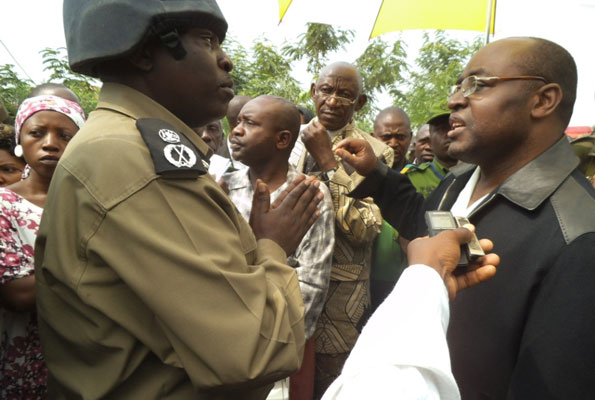
King Mumbere telling off the police during the earlier violence.
Another interesting tale about Uganda’s hierarchical executive powers and traditional leadership has it that one elderly King from western Uganda allegedly close to the powers that be when he gave a ‘restricted number’ to one of his prominent subjects who had been involved in a land dispute and wanted the standoff resolved in his favour. After placing the call which allegedly rubbed the ‘powerful man’ the wrong way, phone communication between the ‘powerful man’ and the royal was called off indefinitely!
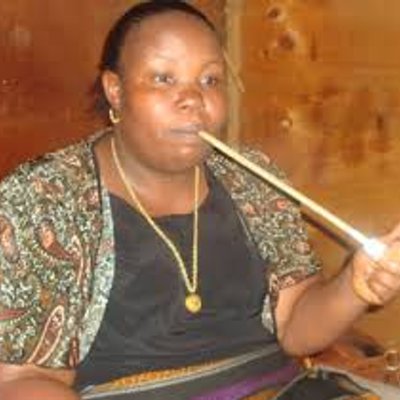
THREATENED TO 'DEAL' WITH HUBBY'S KILLER: Traditional herbalist Mama Fina, widow of slain UPDF officer Major Muhammad Kiggundu.
Major Muhammad Kiggundu and his bodyguard sergeant Steven Mukasa were on Saturday morning shot dead in Masanafu, Kampala.
Maj. Kiggundu was husband to the leader of herbalists in Uganda, Sylvia Namutebi popularly known as Maama Fiina, who has now threatened to deal with those responsible for the death of the deceased Islamic cleric-cum-soldier.
“I will make them (the killers) crawl to me…….” she said and implored police to speed up investigations related to her husband’s death. At the time he met his death, Kiggundu was heading to Pearl FM, where he has been a preacher of Islam.
Meanwhile, speaking in a hoarse voice occasioned by persistent wailing since the demise of her husband, Maama Fiina has promised to take care of her late husband’s family including the children of her co-wives.
Maj. Kiggundu is believed to have left behind over 14 children from different wives though he had none with Mama Fiina.
The couple wedded last year with Mama Fiina, changing her name from Sylvia to Sofie, an Islamic name of the religion which her late husband subscribed to.
The fifth annual media challenge awards was conducted yesterday at Victoria hall Serena hotel Kampala.
The function that saw competitors vie for top honours in reporting news beats in both English and Luganda bulletins; essay writing, one minute of fame presentation, camera works and editing among others, attracted several many media personalities.
Participants, including students from different universities showcased their talents.
These were categorized and included Hasfah Ntambi from Kampala University (Best Political Reporter, Luganda) Best Political Reporter (English) Joseph Oluka followed by Herbert Mwesigwa and Winnie Patience Ndinawe of Makerere University; Best Health News Reporter was Hope Kihembo of Uganda Christian University (UCU) followed by Cuthbert Kigozi and Bridget Mutumba.
Others were Best Business Reporter that went to Umar Ssenyonjo of Makerere University, followed by Sharon Kanola; Best Entertainment News Reporter Luganda Category- Miriam Anzaire; Best Technology Reporter English Philip Ssentamu Philip (UCU) and Luganda category winner David Matovu (MUK); Best Gender Reporter (Luganda) Shamim Kafuko and Best Gender Reporter (English) Sheenah Namutawe of Kampala University.
The award for Best Sports Reporter in Luganda went to Steven Mayombwe, while the Best Sports Reporter for English was Sapphire Nahabwe from UCU.
Journalist Joy Doreen Biira at the police station in Kasese earlier today. Ms Biira has not yet been released despite assurances by AIGP Andrew Felix Kaweesi that she would be released on bail.
After a long time while out of the country, former NBS TV journalist, Joy Doreen Biira, who now works with KTN TV in Kenya was finally in her home town, Kasese, the scene of macabre killings that have attracted nationwide attention and condemnation.
The gorgeous lady news anchor had returned for her traditional wedding on Saturday and at this time anyone would be enjoying blissful moments but that isn’t the case with Biira. She is in prison! Biira was arrested last night with five others including her husband for taking photos of the killings in Kasese and sharing them on social media.
The gruesome photos of Rwenzururu King Charles Wesley Mumbere’s guards have since gone viral on social media.
But despite an earlier promise made by Assistant Inspector General of Police (AIGP) Andrew Felix Kaweesi to have her released today morning, she is still behind bars and we have since learnt that police is now searching the house in which her in-laws were staying.
“Flying Squad is doing the search in presence of Joy Doreen Biira and fiancé,” says her lawyer and human rights activist Nicholas Opiyo.
So far 55 people had been confirmed dead by Sunday morning prior to the attack of the army on the Rwenzururu King’s palace. The number is believed to have doubled after the attack on the palace that also saw Mumbere arrested.
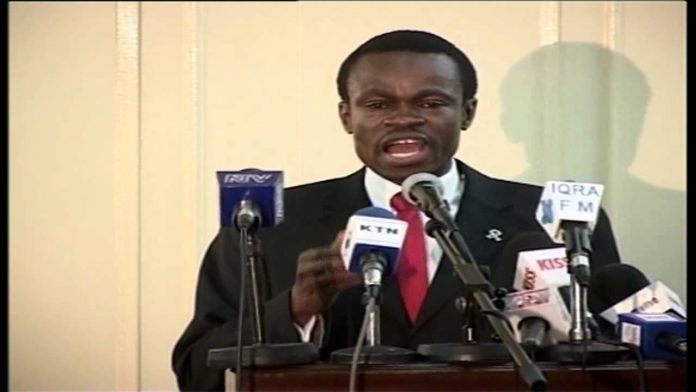
NO MORE FOREIGN STUDENTS: Kenya School of Law boss PLO Lumumba
Ugandan post-graduate law students and those from other East African countries of Tanzania, Burundi and Rwanda will not be admitted to the Kenya School of Law, beginning next year.
“We have received a letter dated October 25 from the Council of Legal Education informing us that non-Kenyans are not eligible for admission to the Advocates Training Programme (ATP) at the Kenya School of Law,” reads a memo by the Kenya School of Law Chief Executive Officer Patrick Lumumba.
In an internal memo dated November 17, Prof Lumumba said the decision was made following a directive from the Council of Legal Education (CLE).
“In light of the contents of the letter, non–Kenyans should stand informed that the admission committee has not considered their applications.”
CLE Chief Executive Officer Kulundu Bitonye said the decision was arrived at after noting an error in the procedure of admitting foreigners to the institution.
Prof Bitonye said the issue was discussed at a meeting on legal sector reforms convened by the office of the Attorney-General and the Department of Justice.
But Uganda Law Society (ULS) President Francis Gimara, in a letter dated November 22 to Law Society of Kenya President Isaac Okero, said the directive is inconsistent with the spirit of liberalizing legal services in East Africa.
“Specifically, it (Kenya) made commitments on free movement of legal services and representation services in judicial procedures concerning other fields of law with no restrictions or exceptions,” the letter states.
It adds: “Further, Kenya took the lead and autonomously amended its Advocate Act to recognize and permit advocates from the region to practice law in Kenya, an act that was progressive and demonstrated good faith.”
Mr Gimara called on LSK to engage the relevant government departments in order reverse the development.
By press time it was not possible to ascertain whether there are Kenyan students pursuing their post-graduate studies at the Law Development Centre (LDC) in Kampala, and what their fate would be after the pronouncement.
Rwenzururu king Wesley Mumbere being arrested before being taken to Nalufenya Police Station in Jinja.
Former presidential candidate in 2016 general elections and FDC strongman, Kizza Besigye has condemned the recent violence in Kasese and called for international investigation to reveal the truth about a matter that has reportedly left over 70 people dead.
In an exclusive interview with EagleOnline, Dr. Besigye said the government ought to own up and address the real issues afflicting the ‘Banyarwenzururu’.
“It was not necessary to exterminate the people. I condemn the actions of government and I think there should be international bodies to investigate and reveal the truth,” Dr. Besigye said.
Besigye also said it was “unfortunate that public institutions like police and army are being used to commit crime like what has happened in Kasese.”
Dr Besigye said the problems of Kasese are three: lack of respect for the traditional leader by government, the land question and politics. He added that “having installed Mr. Charles Wesley Mumbere as king, government thought they would manipulate him like in other areas but Mr. Mumbere turned out to be no-nonsense individual.”
“The people of Kasese and wider Banyarwenzururu have several grievances that have been mismanaged. Mr Museveni and other NRM people thought they would grant and manipulate the king just like Buganda where they set up other traditional leaders but after having realized that Mumbere was not easy to manipulate, they instead started divide and rule by setting up other traditional leasers like Omudingiya and among the Basongora,” he said.
On land, Dr. Besigye said the donation of land for the prison farm at Mubuku and the other land given to national parks left the Banyarwenzururu landless, a development he said, was compounded by the recent land redistribution where cultivators were allotted less land as compared to pastoralists.
“The government has also been discriminatingly giving much land to Basongora as compared to other groups,” he said, adding that politics had also led to the divide in Kasese.
“Above all, the politics of Kasese has been supporting and voting for Forum for Democratic Change (FDC) party and that voting consumed people like Crispus Kiyonga (former Minister of Defence) and Dura Muhindo Mawa (former Kasese district LCV chairman) and some of these politicians have been trying to say FDC is subversive,” he said of the current volatile situation in Kasese.
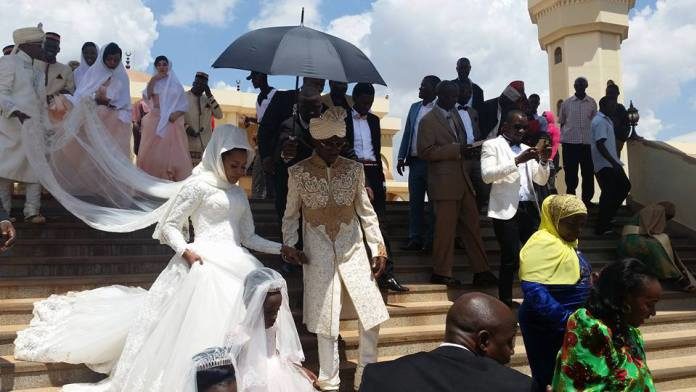
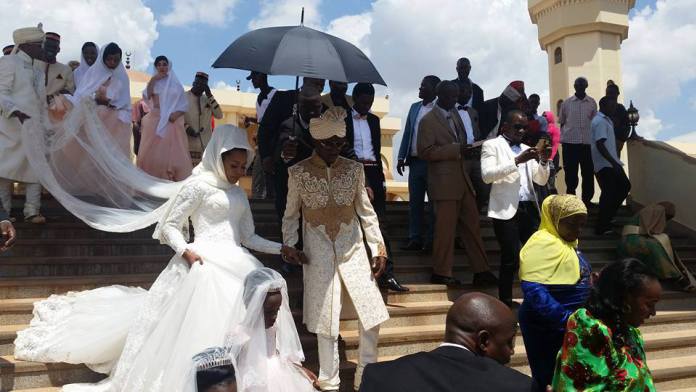
FINALLY: SK Mbuga and wifey Jalia and their guests
“Jalia and I want to thank all of our friends and wellwishers for taking the time to celebrate with us our memorable moments. Indeed, it was a long but blissful week and we understand that being there for us was an honor given the number of events we organised for you before our wedding,” city socialite, Suleiman Kabangala Mbuga writes two days after his wedding.
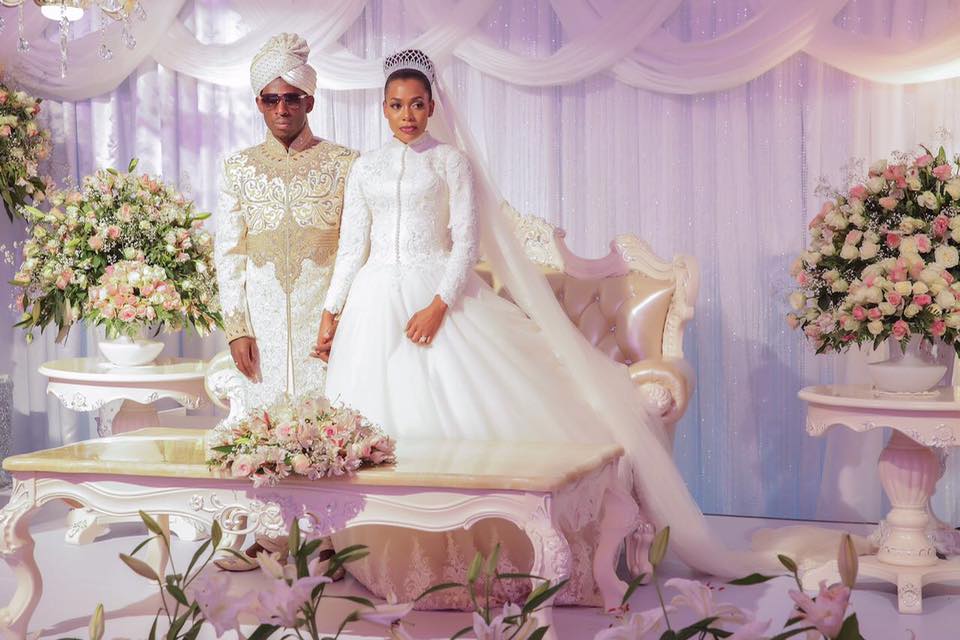
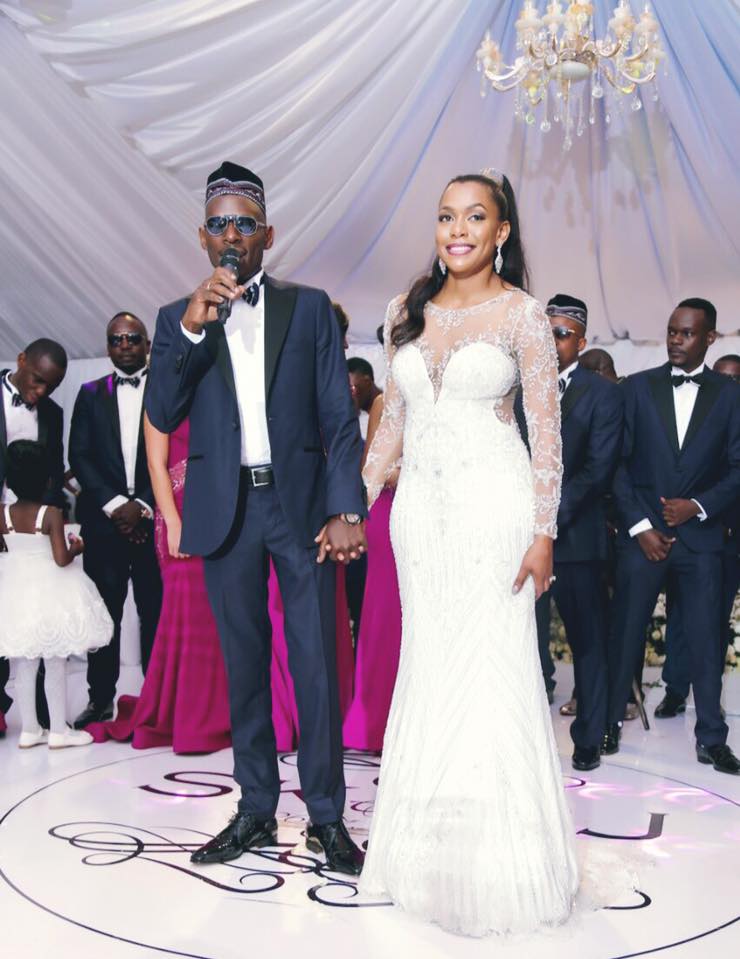
GRAND: Tycoon SK Mbuga and wife Jalia Mbuga
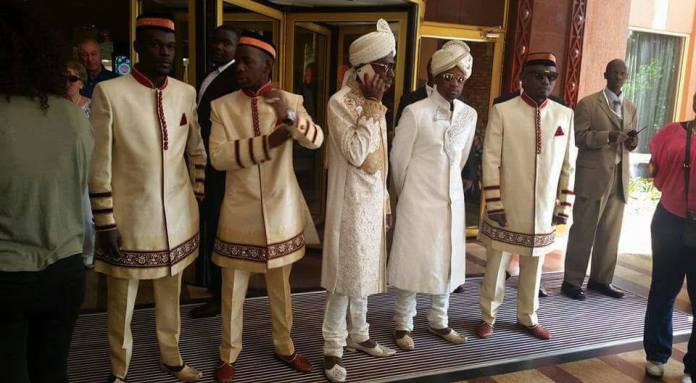
Mbuga and his new wife Vivianne Birungi (now Jalia Mbuga) exchanged vows at Old Kampala and Kibuli mosques on Saturday before hosting their guests to a lavish reception at Serena Hotel, Kampala.
FINALLY: SK Mbuga and wifey Jalia and their guests
What a day it was! In attendance were city socialites, people from the entertainment fraternity and the religious world who included Sheik Nuhu Muzaata.
“It was indeed a special day for Jalia and I, and I hope that the support that you’ve shown us will continue as we embark on our new life together, we are committed to staying married for the long haul, and we know it will be so much easier with all of you by our sides,” he adds.
SK Mbuga and his bridal entourage of groomsmen
Below we bring you the day in photographs.
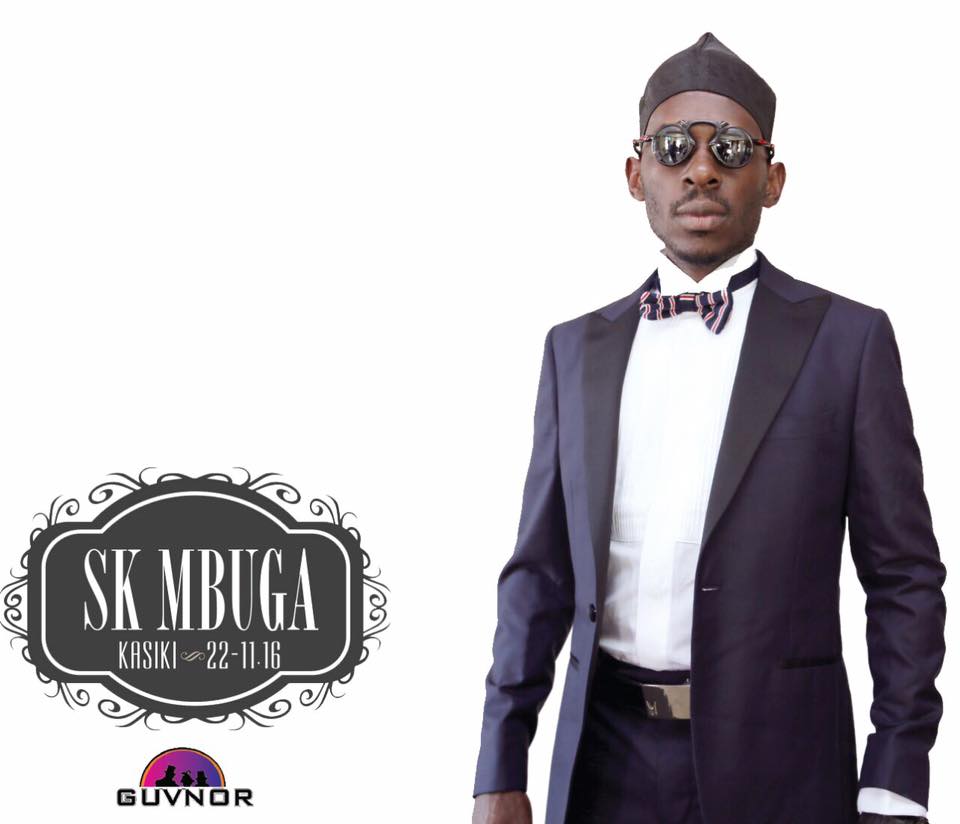
HUSBAND AND WIFE: The Mbuga’s pose to give a speechTHERE I GO: SK Mbuga just before his wedding
Fireworks Advertising Group was the biggest winner at the 6th Annual PRAU Excellence Awards after it scooped four awards; three of which are from its PR arm – brainchild Burson-Marsteller.
The awards at the Golf Course Hotel in Kampala last Friday were organised by the Public Relations Association of Uganda (PRAU), and recognised top PR agencies, professionals and corporations that have excelled in the execution of PR, digital and communications functions over the last one year.
Brainchild Burson-Marsteller emerged best PR Agency, had the best crisis management execution and also managed to organize the best event between November 2015 and October 2016 – the Vodafone Power Talks. Fireworks advertising won the best media management campaign for the Pepsi Sala Puleesa promotion.
“We are extremely happy to have won several awards tonight. We thank PRAU and our clients for giving us the opportunity to showcase our work and professionalism. Our success at these awards demonstrates the effectiveness of our PR campaigns in solving our clients’ business challenges. I thank the teams at Brainchild Burson-Marsteller and Fireworks Advertising that made this happen,” said Walter Wafula, the Business Unit head, Brainchild Burson-Marsteller.
This year the PRAU Excellence Awards were organized under the theme ‘PR Excellence in a Competitive and Digital World’ and were graced by ICT and Information Minister Frank Tumwebaze and the UN Resident Coordinator and UNDP Resident Representative in Uganda, Rosa Malango, who gave a keynote speech.
“We have witnessed increased competition in the public relations industry with more and more companies keen to sustain a good image in the eyes of their stakeholders. However, company resources to support this has not come easily with more professionals citing budget cuts, forcing them to scale back on public relations activities or cancel them all together,” said PRAU president Cynthia Mpanga.
The other winners on the night were Airtel (Best Corporate Social Responsibility Campaign), Umeme (PRAU Sheppard Honors) and MTN (People’s Choice Award) and Hon. Mary Karooro Okurut (PRAU Golden Honors).
The 2016 PRAU Excellence Awards submissions were judged by an independent panel of senior practitioners who delivered the results with clear explanations for each winner, making it one of the most credible professional awards in the region.
Meanwhile, Burson-Marsteller Africa, which Brainchild Burson-Marsteller is affiliated to, was named 2016 African Network Agency of the Year for the second consecutive year at the 2016 Financial Mail Annual AdFocus Awards ceremony, last Wednesday in Johannesburg.
“I would like to congratulate all the winners for their contribution to the industry and for the great achievements within their respective agencies over the past year. A big thank you also goes to the agencies that went the extra mile in packaging their submissions and making the task of the judges so much easier. Good luck to all again for next year’s entries,” says AdFocus Jury chairman, Craig Page-Lee.
Big Music boss, Ibrahim Mayanja popularly known as Big Eye has a concert on December 3 but all seems not well.
And as the date for the show draws near, the ‘self-contained’ singer won’t take any chances and has reportedly sought the blessings of his parents.
Culturally, parents are the ‘earthly Gods’ and late last week the father of one headed to his ancestral home to seek the parents’ blessings so that his show succeeds.
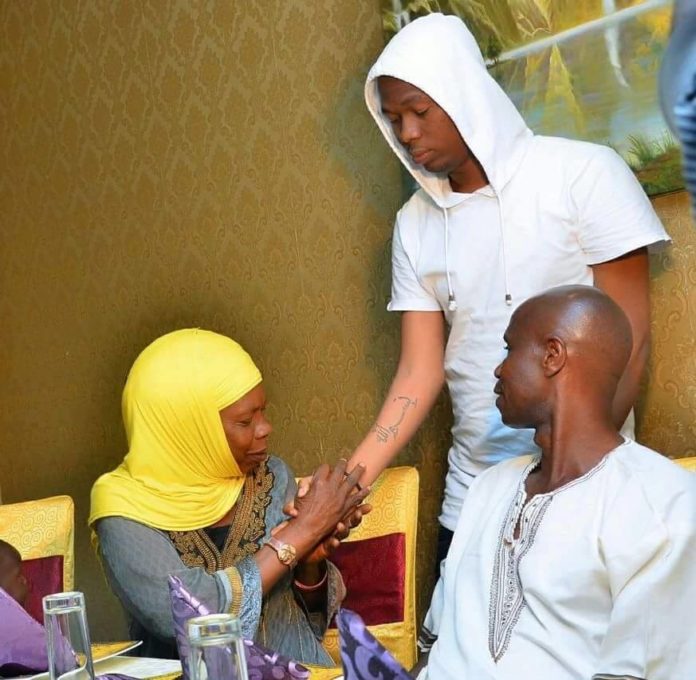
And going by the photographs posted on his social media platforms, Big Eye’s parents were happy to see him for they have been used to seeing him only during the Christmas festive season and a few other public holidays.
His show dubbed ‘Nkuziniremu/Self Contained’ is scheduled for this Saturday at Hotel La Grande, Bwaise.