DEPARTING: Burundi troops in single file as they head for the plane to return home.
Burundian troops from the 32nd and 33rd battalions are returning home after a year in Somalia, serving under the African Union Mission in Somalia (AMISOM).
The first batch of 1,891 officers left Somalia for home on last Thursday and others will leave the country in the course of this week.
“Our relationship with the Somali National Army has been good because we shared information about the enemy – Al-Shabaab. Also, during reconnaissance patrols, we were together. And it was the Somali National Army helping us because of the language barrier. It was them who told us the names of the localities, helped us with information and taught us how to communicate with the Somali populations,” said the commander of the 32nd Battalion Major John Manirakiza.
Major Richard Nikoyagize, the commander of the 33rd Battalion attributed the success of the Burundian troops to high discipline and a good working relationship with the Somali National Army.
Burundi is one of the troop-contributing countries to AMISOM, mandated to support the Federal Government of Somalia in defeating the militant group Al-Shabaab. Other troop contributing countries are Uganda, Djibouti, Ethiopia and Kenya.
The Burundi National Defence Forces are responsible for keeping security in Sector 5, which comprises areas such as El Baraf, Mahaaday, Balcad, Helman, Walshiq and Quorolow. The troops are also present in sector Kismayo as part of a multinational military deployment.
The troops participated in various projects in liberated areas, including providing medical services and safe drinking water to vulnerable communities.
Russian track and field athletes will remain banned from the Olympics following claims the country ran a state-sponsored doping programme.
The Russian Olympic Committee (ROC) and 68 Russian athletes attempted to overturn the suspension, implemented by the body that governs world athletics.
But the Court of Arbitration for Sport (Cas) has ruled it can stand.
A handful of Russian athletes ‘could still compete’ as neutrals at the Rio Games, which start on 5 August.
The International Association of Athletics Federations (IAAF) said it was ‘pleased Cas has supported its position’, adding that the judgment had ‘created a level playing field for athletes’.
IAAF president Lord Coe added: “This is not a day for triumphant statements. I didn’t come into this sport to stop athletes from competing.
“Beyond Rio, the IAAF taskforce will continue to work with Russia to establish a clean safe environment for its athletes so that its federation and team can return to international recognition and competition.”
Separately, the International Olympic Committee (IOC) is considering calls to ban all Russian competitors across all sports from the Rio Games following a second report into state-sponsored doping.
Some Russians athletes could compete in Rio as neutrals if they meet a number of criteria, including being repeatedly tested outside their homeland.
WHISTLEBLOWER: Yuliya Stepanova of Russia
At least two – 800m runner and doping whistleblower Yuliya Stepanova and US-based long jumper Darya Klishina – have gone down that path.
Now the Cas ruling has cleared the way for more to follow.
Cas said the ROC could still nominate athletes to compete as neutrals. However, there appears to be little time for athletes to comply with the criteria.
Russia was suspended from global track and field events by the IAAF in November 2015.
That followed the publication of an independent World Anti-Doping Agency (Wada) report that showed a culture of widespread, state-sponsored doping.
IN TROUBLE? Russian Sports Minister Vitaly Mutko
Sports minister Vitaly Mutko apologised for Russia’s failure to catch the cheats but stopped short of admitting the scandal had been state-sponsored.
However, another Wada-commissioned report delivered earlier this week- the MaClaren Report- contained more damaging allegations and suggested senior figures in Russia’s sports ministry were complicit in an organised cover-up.
The report implicated the majority of Olympic sports in the cover-up and claimed that Russian secret service agents were involved in swapping positive urine samples for clean ones.
Following Monday’s publication McLaren report, the IOC faced calls to ban all Russian competitors from the 2016 Olympics.
It held an emergency meeting on Tuesday but said it would wait for Thursday’s judgment from Cas before announcing any sanctions.
The IOC is expected to hold a second emergency meeting on Sunday.
The Russian authorities have already suggested that they will look at ways to continue legal action.
Following the ruling, sports minister Mutko said Cas had set ‘a certain precedent’ by punishing a collective group for doping offences by individuals.
Kremlin spokesman Dmitry Peskov added: “The principle of collective responsibility cannot be acceptable. The news is not very good.”
London 2012 pole-vault gold medallist Yelena Isinbayeva – one of the 68 to appeal to Cas – said the ruling was ‘a blatant political order’.
“Thank you all for this funeral for athletics,” she said.
The digital world was affected immensely on Wednesday when a popular and classy US$1 billion website, KickAsstorrents(KAT), was brought down following the arrest of its Ukrainian founder and alleged owner Artem Vaulin, 30, who was arrested in Poland.
Vaulin, for who the US is seeking extradition, is facing several charges among them conspiracy to commit criminal copyright infringement and conspiracy to commit money laundering, and if convicted faces up to 25 years in jail.
KAT is popular with many internet users around the world for its fast and efficient capability that allows its visitors download as many videos, music and files as possible.
Sources say that Vaulin tried to evade capture by using various and different servers in different countries across the globe, before the KATS website, believed to have been run under the company name ‘Cryptoneat, was rendered inactive, with the US grabbing several of its domains.
Aniva with a root which he grinds up and adds to water to drink before sex
In some remote southern regions of Malawi, it’s traditional for girls to be made to have sex with a paid sex worker known as a “hyena” once they reach puberty. The act is not seen by village elders as rape, but as a form of ritual “cleansing”. However, as Ed Butler reports, it has the potential to be the opposite of cleansing – a way of spreading disease.
I meet Eric Aniva in the dusty yard of his three-room shack in Nsanje district in southern Malawi. Goats and chickens graze in the dirt outside. Wearing a grimy green shirt, and walking with a pronounced limp (he’s been lame in one leg since birth, he says), he greets me enthusiastically. He seems to like the idea of media attention.
Aniva is by all accounts the pre-eminent “hyena” in this village. It’s a traditional title given to a man hired by communities in several remote parts of southern Malawi to provide what’s called sexual “cleansing”. If a man dies, for example, his wife is required by tradition to sleep with Aniva before she can bury him. If a woman has an abortion, again sexual cleansing is required.
And most shockingly, here in Nsanje, teenage girls, after their first menstruation, are made to have sex over a three-day period, to mark their passage from childhood to womanhood. If the girls refuse, it’s believed, disease or some fatal misfortune could befall their families or the village as a whole.
“Most of those I have slept with are girls, school-going girls,” Aniva tells me.
“Some girls are just 12 or 13 years old, but I prefer them older. All these girls find pleasure in having me as their hyena. They actually are proud and tell other people that this man is a real man, he knows how to please a woman.”
Despite his boasts, several girls I meet in a nearby village express aversion to the ordeal they’ve had to go through.
“There was nothing else I could have done. I had to do it for the sake of my parents,” one girl, Maria, tells me. “If I’d refused, my family members could be attacked with diseases – even death – so I was scared.”
They tell me that all their female friends were made to have sex with a hyena.
Aniva appears to be in his 40s (he’s vague about his precise age) and currently has two wives who are well aware of his work. He claims to have slept with 104 women and girls – although as he said the same to a local newspaper in 2012, I sense that he long ago lost count. Aniva has five children that he knows about – he’s not sure how many of the women and girls he’s made pregnant.
He tells me he’s one of 10 hyenas in this community, and that every village in Nsanje district has them. They are paid from $4 to $7 (£3 to £5) each time.
An hour’s drive down the road, I’m introduced to Fagisi, Chrissie and Phelia, women in their 50s and custodians of the initiation traditions in their village. It’s their job to organise the adolescent girls into camps each year, teaching them about their duties as wives and how to please a man sexually. The “sexual cleansing” with the hyena is the final stage of this process, arranged voluntarily by the girl’s parents. It’s necessary, Fagisi, Chrissie and Phelia explain, “to avoid infection with their parents or the rest of the community”.
I put it to them that there’s a much greater risk that these “cleansings” will themselves spread disease. According to custom, sex with the hyena must never be protected with the use of condoms. But they say a hyena is hand-picked for his good morals, and therefore cannot be infected with HIV/Aids.
It’s clear, given the hyena’s duties, that HIV is a huge risk to the community. The UN estimates that one in 10 of all Malawians carry the virus, so I ask Aniva if he is HIV-positive. He astounds me by saying that he is – and that he doesn’t mention this to a girl’s parents when they hire him.
As our conversation continues, Aniva senses that I am not impressed. He stops boasting and tells me that he does fewer cleansings than before. “I still do the rituals here and there,” he confides. Then he tells me: “I am stopping.”
All of those involved in these rituals are aware that these customs are condemned by outsiders – not just by the church, but by NGOs and the government as well, which has launched a campaign against so-called “harmful cultural practices”.
“We are not going to condemn these people,” says Dr May Shaba, permanent secretary of the Ministry of Gender and Welfare. “But we are going to give them information that they need to change their rituals.”
Parents who have had more education than others may already choose not to hire a hyena, I am told. But the female elders I spoke to remain defiant.
“There’s nothing wrong with our culture,” Chrissie tells me. “If you look at today’s society, you can see that girls are not responsible, so we have to train our girls in a good manner in the village, so that they don’t go astray, are good wives so that the husband is satisfied, and so that nothing bad happens to their families.”
From left to right; Aniva, Fanny with their youngest child, Fanny’s sister and a former client
According to Father Clause Boucher, a French-born Catholic priest who’s lived in Malawi for 50 years and is now its pre-eminent anthropologist, the rituals date back centuries. They stem from age-old beliefs about the need for children to be passed into the “heat” of adulthood by a sexual act, he says. In the past, when girls tended not to reach puberty until they were 15 or 16, this would often have been carried out by a selected future husband. Today it’s more likely to done by a paid sex worker, a hyena, and there’s no shame attached to that.
Father Boucher points out that the efforts to change this sexualisation of children have been stubbornly resisted in remote southern areas, despite more than a century of Christianity and 30 years of the Aids epidemic. In most of the country – and particularly in areas close to the cities of Blantyre and Lilongwe – “sexual cleansing” is rarely if ever practised.
In Malawi’s central Dedza district, hyenas are only ever used to initiate widows or infertile women, but the Paramount Chief Theresa Kachindamoto – a rare female figurehead in Malawi – has made the fight against the tradition a personal priority.
She is trying to galvanise other regional chiefs to make similar efforts. In some other districts, like Mangochi in the east of the country, ceremonies are being adapted to replace sex with a more benign anointing of the girl.
In Nsanje, though, there is little effort to bring about change. With Malawi one of the poorest countries in the world, and suffering from growing reports of rural hunger, it’s not a policy priority.
In a remote village, I meet one of Aniva’s two wives, Fanny, along with his youngest baby daughter. Fanny was herself widowed before being “cleansed” by Aniva with sex. They married soon after.
Their relationship looks strained. Sitting next to him, she admits shyly that she hates what he does, but that it brings necessary income. I ask her if she expects her two-year-old to be undergoing initiation too in perhaps 10 years from now.
“I don’t want that to happen,” she says. “I want this tradition to end. We are forced to sleep with the hyenas. It’s not out of our choice and that I think is so sad for us as women.”
“You hated it when it happened to you?” I ask.
“I still hate it right up until now.”
When I ask Aniva too whether he wants his daughter to undergo sexual cleansing, he surprises me again.
“Not my daughter. I cannot allow this. Now I am fighting for the end of this malpractice.”
“So, you’re fighting against it, but you are still doing it yourself?” I ask.
Over the years, the thick vegetation that was covering the countryside of Uganda has gone down by almost 50%. Every year, the country loses a huge chunk of forests is lost to encroachers which has created an imbalance in the weather seasons that Uganda experiences throughout the year.
There are of course several reasons that have led to the encroachment:
Land grabbing, population increase that have started destroying one of the most diverse ecosystem on the continent.
Between the early 90s and 2000s, Uganda has lost over 5 million hectares of forest cover throughout the country which number increases by the year.
Most of the forest reserves are handed over on a silver plate to future investors that have squandered away the forests and destroyed the rest around the factories with the residue from their activities.
Do we understand why forests are important to our environment though?
Reduction of carbon footprint
In any healthy environment, there has to balance between the carbon dioxide and Oxygen compounds. Trees help and can assist prevent catastrophic climate change by absorbing carbon dioxide which is mostly stored below the ground within the roots and exhaled by human beings. Oxygen is important, given it is what human beings rely on to live.
Regulates landslides
When you see a forest’s root network, you will notice that it stabilizes half of the soil, holding together the entire ecosystem’s foundation against erosion by wind or water. Not only does deforestation disrupt all that, but the ensuing soil erosion can trigger new, life-threatening problems like landslides and dust storms.
Medicinal and food properties
Most of the tree species in our forests provide the general population with food that has been eaten for generations, as well as provide ingredients for the natural healing products in our medicines that keep us healthy and well. For example, the commonest “mululuza,” mango trees are used for medicine and food respectively. Mango tree leaves plus it’s berk can be boiled and drunk for medicine.
Homes to nature
Yes, to us trees are just the many leafy plants but they are homes to a variety of different animals on the Earth, the act as nesting grounds for bird, wild animals such as wolves. This means destruction of forests renders all these creatures homeless.
Flood control
Tree roots are key allies in heavy rain, especially for low-lying areas like river plains. They help the ground absorb more of a flash flood, reducing soil loss and property damage by slowing the flow.
Provides material
Half of the world’s raw materials come from our forests; the timber we use in construction, woodwork used for furniture, art among so many other. Using them means we have to cut down some of the trees but that doesn’t mean we do not plant many more others to take their place.
The National Forest Association and the other concerned bodies in charge need to take a stand and educate several Ugandans as to why the forests shouldn’t be cut down. The laws put into place should also be also properly implemented and understood by the people.
Evelyn Masaba is the Public Relations Manager at Jumia Travel Uganda an online hotel booking service with offices in Kampala (Uganda) Lagos (Nigeria), Nairobi (Kenya) and Dakar (Senegal)
Rev Rachel Carnegie of the Anglican Alliance. Photo/anglican.ca
The Anglican Alliance is helping to co-ordinate the response from Anglican churches and agencies around the world to the ongoing violence in South Sudan.
A few days ago, they convened a conference call for partners across the Communion to hear from and speak with the leadership of the Episcopal Church of South Sudan and Sudan (ECSSS) and its relief and development arm, the Sudanese Development and Relief Agency (Sudra).
CENTRE OF REFUGE: The All Saints Cathedral in Juba, South Sudan. Photo/winnowed.blogspot.com
During the call, Sudra outlined its initial need for support for the 200 families seeking shelter in the All Saints’ Cathedral compound, and the Episcopal Relief & Development of the US-based Episcopal Church confirmed it would provide the necessary assistance.
Yesterday, Sudra issued a second proposal to address the food needs of some 14,400 internally displaced people (IDP), as they assess the emerging needs. The proposal focuses on highly vulnerable children, women and elderly people in Juba, Kajokeji, Yei, Lainya, and Rajaf.
“Sudra aims to meet the survival needs of the most vulnerable in the first month while it advocates with humanitarian agencies to meet other needs and explore long term solutions till peace is implemented,” the co-executive director of the Anglican Alliance, the Rev Rachel Carnegie said, adding: “This proposal has been shared with partners within the Anglican Alliance family, and already the Anglican Board of Mission in Australia has indicated its support.”
During the conference call, the ECSSS leadership told their Anglican Communion partners that nearly 42,000 people were initially displaced in Juba, many turning to the churches for sanctuary. They explained that many people may be afraid to go back as they are uncertain if the ceasefire will hold. Some who want to return have seen their homes looted or destroyed and need further assistance.
Markets have also been looted, so there may be imminent food shortages particularly as the borders are closed and there are limited imports of food supplies. There have been similar outbreaks of violence in Lainya, Yei, Kajo Keji, and Wau.
“It is inspirational to witness the courage and commitment of the bishops and provincial team responding so quickly and effectively to the crisis when many of them have themselves been driven from their homes by the violence. We urge prayer for peace and for protection of the Church and communities. The Anglican Alliance also commends support to the Church’s humanitarian response,” Rev Carnegie said.
TO CO-CHAIR SOUTH SUDAN PARTNERS' TALKS: China Special Envoy for Sudan and South Sudan Zhong Jianhua. Photo/reuters.com
Veteran Chinese diplomat Zhong Jianhua, a special envoy on Africa, is set to visit Uganda, Ethiopia and Kenya, to help with efforts to resolve the political crisis in South Sudan.
According to the Chinese foreign ministry, Mr Jianhua will meet the ‘relevant parties to support African mediation efforts and urge the factions in South Sudan to implement the peace agreement’.
“China has always been an active participant and staunch promoter of the peace process in South Sudan,” the ministry said. China has energy interests in South Sudan, and the China National Petroleum Company (CNPC) said it had evacuated the bulk of its workers from the war-torn country but that its operations were unaffected.
South Sudan, the world’s newest nation, which is still recovering from a two-year civil war that started in 2013, recently erupted into violence orchestrated by armed supporters of President Salva Kiir and his rival Vice President Riek Machar, in which about 300 people were killed in just four days.
The Uganda national football team will share a bonus of about Shs1 billion for qualifying for 2017 African Cup of Nations finals in Gabon, as Micho Sredojevic’s squad look to break a 39-year jinx, a local soccer governing body insider, has said.
The Cranes are favourites to defeat South African minnows Comoros in their last Afcon qualifying match at Mandela National Stadium Namboole on September 3.
Micho’s men will go all out for victory and triumph for Group G leaders Burkina Faso over Botswana on September 3 will leave both victors on 13 points.
Any Cranes victory and failure for Burkina Faso to pick maximum points would see Uganda qualify automatically.
But, should things fail to work out, there is also hope for the Cranes to qualify as one of two best second-based teams. After the last round of games, Tunisia top that race with 10 points (+10 goal difference). That was after Liberia, who earlier edged Tunisia 1-0, drew 2-2 with Togo to top Group A. Benin, eight points and a game in hand, are the other threat to Cranes.
Should Uganda go on to clinch what would be their first continental appearance since 1978, it would trigger Fufa bonus payment of Shs 759,000,000 to be shared between the 23-man squad on a pro-rata basis, equating to a bonus of Shs33,000,000 for any player who will be in the match-day squad at Namboole.
Uganda Cranes technical crew including the head coach, his assistants, team manager and the two medical officials would be in line for a total payment of Shs150, 000,000 if Uganda were to clinch qualification in the first week of September– a total Fufa payout of Shs909, 000,000.
The latest pay agreement dispenses with previous rewards for one-off victories, with an increased match fee reflecting the desire to reward sustained success, were on Tuesday presented to representatives of President Museveni’s advisor on security Gen Caleb Akandwanaho aka Salim Saleh by Fufa president Moses Magogo, accompanied by Sports Minister, Charles Bakkabulindi and NCS officials. Overall, Fufa reportedly tabled a Shs3b budget to government to prepare the team for the match.
Fufa’s payment structure for the Comoros match contrasts the previous match payouts: $2000 (away), $1000 (away draw) & $500 (home). However, the insider said players and officials have been forced to sign MOUs before games not to disclose how much and when the payments are to be made.
Currently, training allowance per player each day is a measly Shs20,000 and Shs40,000 per technical committee member while match allowances are $500 per player and $600 per technical committee member. The head coach pockets $700.
Even with questions about accountability at Fufa House, President Yoweri Museveni gave Shs771m to Cranes last year ahead of their 1-0 away win over Comoros and another cash donation of Sh300 million for their away encounter against Burkina Faso in March (2016).
In fact for the Comoros away win, Fufa Financial Director Decolas Kizza boasted in the media about giving out a rare additional $500 on top of the mandatory $2000.
Fufa publicist, Hussein Ahmed when contacted about the matter told EagleOnline that the federation was currently engrossed in preparing for the Cranes versus Nakasongola Select charity match to be played this Saturday at St Lawrence Primary School in Migyera, Nakasongola and would communicate officially about the Comoros bonus bonanza at the right time.
The charity match is an initiative of 97.3 fm Simba Radio, Nakasongola District Football Association, Buganda region Football Association and Fufa, all giving back to the communities through football.
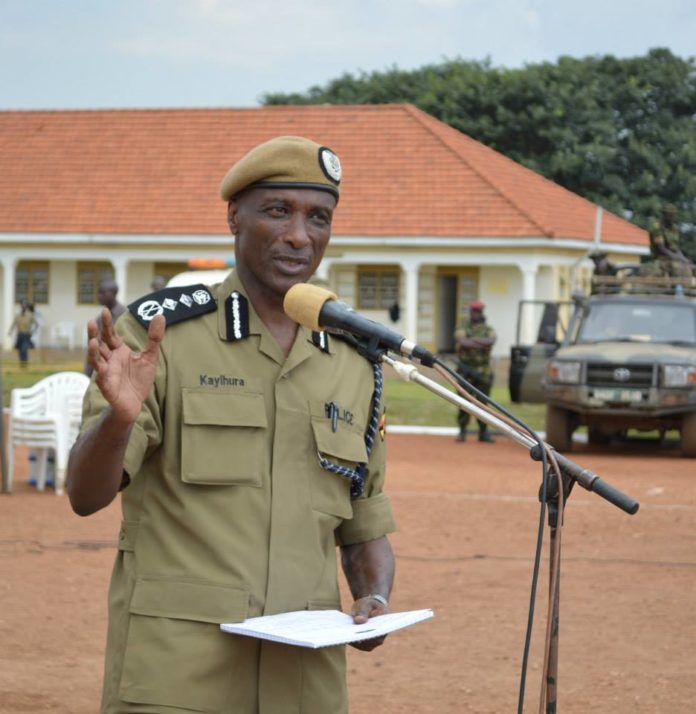
“The Inspector General of Police General Kale Kayihura has also joined the CSR activity by asking his team to provide enough security for this match,” Mr. Hussein added.
Meanwhile, coach Micho, who returned on Tuesday from holiday, took time to name his squad after thorough consultations with clubs that provide the players.
The players will not undergo any training sessions but will continue at their respective clubs or with personal training sessions monitored by the Cranes technical team.
Goalkeepers: Odongkara Robert (St George, Ethiopia), Yasin Mugabi (Sc Villa Jogoo)
Other players: Nicholas Wadada (SC Vipers), Joseph Nsubuga (Sc Villa Jogoo), Joseph Ochaya (KCCA FC), Martin Kizza (Sc Villa Jogoo), Hassan Wasswa (Al Shorta, Iraq), Isaac Isinde (St George, Ethiopia), Khalid Lwaliwa( SC Vipers), Rashid Toha (Onduparaka FC), Ivan Ntege (KCCA FC), Bernard Muwanga (Sc Villa Jogoo), Kezironi Kizito (SC Vipers), Yunus Sibira (BUL FC), James Otim (Kirinya Jinja SS), Erisa Sekisambu (SC Vipers), Edrisa Lubega (Proline FC), Shaban Muhammad (Onduparaka FC), Derrick Nsibambi (KCCA FC), Norman Ojik (Sadolin Paints FC), Musa Esenu (Soana FC), Abdulrahman Rajab (JMC Hippos FC).
The Uganda Cancer Institute at Mulago. Photo/kplu.org
Mulago, the only hospital with a fully-fledged cancer treatment centre in Uganda will get relief if government pushes through its pledge to have all referral hospitals in the country get cancer treatment centres.
Answering questions in Parliament during the ‘Ask the Prime Minister’ session yesterday, Prime Minister Ruhakana Rugunda said: “We have decided that all regional referral hospitals become cancer treatment centres.”
Currently there are two National Referral Hospitals, Mulago and Butabika, and 13 Regional Referral Hospitals including Arua, Fort Portal, Gulu, Hoima, Jinja, Kabale, Lira and Masaka. Others are Mbale, Mbarara, Moroto, Mubende and Soroti.
However, out of the 15 national and regional referral hospitals, it is only at Mulagos’ Uganda Cancer Institute (UCI) that patients can access proper cancer treatment.
In March this year cancer patients receiving radiotherapy treatment in Uganda were recently thrown into desperation when the cancer treatment machine at Mulago broke down, forcing government to seek alternative referral for patients at the Aga Khan hospital in Kenya.
Meanwhile, available information indicates that a new machine, the Cobalt 60, will be installed in a newly-constructed Shs100 billion bunker sometime next year.
The CBA Vintage & Classic Auto Show today announced the 5th edition of what is billed as the classiest event of the motor and social calendar.The now annual event will be held at the Sheraton Hotel on July 30th 2016 where over 70 vintage and classic cars and 20 motorcycles will be on display for car enthusiasts. The CBA Vintage & Classic Auto Show will be showcasing some of the fanciest, oldest, showiest cars that Uganda has to offer.
Commercial Bank of Africa (CBA) who also sponsors a similar show in Kenya has come on board as the title sponsor of the CBA Vintage & Classic Auto show 2016.
Speaking at the launch event at the Sheraton Hotel, the Chairman of the Uganda Vintage & Classic Auto Show Dr. John B. Niwagaba said that this year, the show is attracting some of the biggest names in the vintage car collection including Sudhir, Wavammuno and many others.
This year, expect to see some very exciting cars. We have already received entries of cars like Mr. Bill Farmar’s 1951 Citroen 15/6 and Kalvin Kagwa’s 1934 Wolsely and we have some new entries like Kakooza Wazir’s Bimula Limo and Ham Mukasa’s Heritage Car
“We are very excited about the show and we keep growing every year in terms of numbers and the experience at large. This year, we shall be having some Kenyan Vintage car fans showcasing here for the first time. Our intention is to grow this into an international tourism sensation to have vintage car lovers flock in from all parts of the continent and indeed the world to come and have a feat of great vintage cars we have here in Uganda from decades past.” Dr. Niwagaba said.
The Vintage and Classic Auto Show that started under four years ago has become a trendsetter in Uganda in a big way. The last few years have seemed more and more people importing vintage cars in an unprecedented way as well as others restoring their old cars. The show will have a good mix of the newly imported vintage and classic cars as well as the perfectly maintained or restored models.
The Vintage car show celebrates people who are passionate about cars, and the history behind these cars and we shall be hearing some of these stories of the exciting times the cars have had to experience through the years.
“Uganda has a very rich history that we cannot tell without including the vehicles that have transported the great men and women and the moments we celebrate today. So these cars in a way lend themselves to our rich history and our passion is to preserve them for generations to come.”
As has been the practice, there will be awards for some of the most outstanding cars on display that day including; Best Car, Car with the most intriguing history and to spice it up a bit, there will also be some social categories like best dressed. “For this edition, we are bringing in guest judges from the Kenyan Concours d’Elegance car show who have also been mentoring us and guiding us on how to continue to make this event successful”
He added that this year the Vintage and Classic Auto Show was observing strict rules, regulations and standards. For example, to qualify for the show, cars manufactured less than 25 years ago would not be allowed to enter the competition. The car has to be in good decent condition and also be pleasing on the eye.
To precede the car show, the Vintage and Classic Auto Show has organized a snail trail drive through town on 29th July where the cars that will be showcased at the Sheraton will drive through town to give people a sneak peak of what they should expect.
The Vintage & Classic Auto Show is a family event with activities for everyone. There will be a performance from Lillian and the Sundowners, children’s play area, a food court and hospitality tents with bites and drinks and so much more fun and games. The events have year on year attracted big and bigger crowds and this year, the organizers are expecting thousands to turn up for a fun filled day.
Some of the other partners of the event include MOGAS, Sheraton Kampala Hotel, Events Warehouse, Sanyu FM, NBS TV and Nile Gold. The show is endorsed by the Automobile Association of Uganda (AAU)
The family event has year in year out attracted big and bigger crowds and this year, the organizers are expecting thousands to turn up for the fun filled day with activities for everyone.There will be a performance from Lillian and the Sundowners, children’s play area, a food court and hospitality tents with bites and drinks and so much more fun and games.