Stanbic Bank
Stanbic Bank
19.2 C
Kampala
Stanbic Bank
Stanbic Bank
Home Blog Page 2106

Former Minister advises Museveni to retire

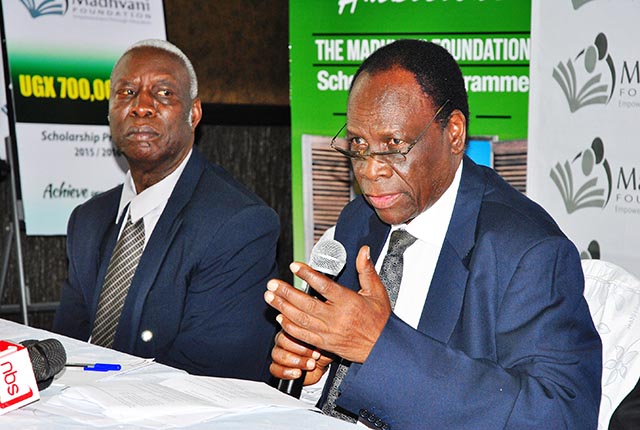
TALKED ABOUT MUSEVENI RETIREMENT: Former minister Gabriel Opio (R)

A former minister who served in different ministries in President Yoweri Museveni’s government has advised the president to consider calling time on the presidency.

In an interview with a local newspaper, Gabriel Opio, who served as minister in various ministries including planning, education and gender, said Mr Museveni should now begin preparing someone to take up the task.

‘He should listen to the people, and if I were him this would be my right time to start preparing someone so that I can retire. But we need to come together. We can’t run this country when we are not united,’ Mr Opio said.

He added: ‘At the beginning of his (Museveni) rule, almost everyone was there and he was accepted even by Buganda, Bunyoro and Tooro. However, at the moment we don’t get that feeling. People have started feeling that attitude of ‘it is theirs’ not ‘ours’. Of recent the issue of Museveni’s retirement has rebound to prominence, given that he is serving his last constitutional term. According to the 1995 Constitution, one is not eligible to run for presidency after clocking 75 years, and by 2021 Mr Museveni, who was born in 1944 and turns 72 in August this yeasr will have surpassed the presidential age limit.

Meanwhile, Mr Opio, who spoke about several issues during his time in government, also gave a brief detail on the thorny issue of the burning of the Buganda royal tombs, the Masiro, in March 2010. According to the former state minister, who at the time served at the gender ministry, the matter was investigated and a report handed over to the President.

‘The investigations were done and a report was submitted to the President… I don’t know why they have not released it to the public. If they haven’t, then it is unfortunate,’ Mr Opio, who currently chairs the Madhvani Scholarships Committee, added.

Stories Continues after ad

Yahoo sold for $4.83 billion in cash

Verizon, seeking to bolster its meager web content business, announced on Monday that it was acquiring Yahoo’s core internet business for $4.83 billion in cash.

The deal, which was reached over the weekend, unites two titans of the early internet, AOL and Yahoo, which were surpassed by Google and Facebook long ago and struggled to compete on their own. Verizon bought AOL for $4.4 billion last year and intends to pair it with Yahoo’s content and advertising services to create a stronger No. 3 challenger.

The purchase does carry risks for Verizon, which is one of the nation’s largest telecommunications companies but has little experience in the cutthroat business of digital content. Yahoo’s leadership team, led by its chief executive, Marissa Mayer, spent four long years trying to create a viable strategy for the company without success.

“Yahoo is a company that has changed the world, and will continue to do so through this combination with Verizon and AOL,” Ms. Mayer said in a statement.

Verizon said it was optimistic about Yahoo’s prospects under its ownership.

“Just over a year ago, we acquired AOL to enhance our strategy of providing a cross-screen connection for consumers, creators and advertisers,” Lowell C. McAdam, Verizon’s chairman and chief executive, said in a statement. “The acquisition of Yahoo will put Verizon in a highly competitive position as a top global mobile media company, and help accelerate our revenue stream in digital advertising.”

The sale of Yahoo’s business ends the company’s 22-year run as an independent entity. Founded in a trailer in 1994 by two Stanford graduate students, it was the front door to the web for a generation of internet users but failed to keep up with Google in search technology and then missed the social media and mobile revolutions.

After the close of the deal, which is expected to occur in early 2017, Yahoo shareholders will still own shares in what is left of the company, which will essentially be an investment fund with two holdings: a 15 percent stake, worth about $32 billion based on its recent share price, in the Chinese internet company Alibaba and a 35.5 percent stake, worth about $8.7 billion, in Yahoo Japan.

The sale also does not include Yahoo’s cash and Yahoo’s noncore patents, which it is trying to sell separately.

Stories Continues after ad

NSSF not giving workers’ money to bail out indebted ‘tycoons’ – Byarugaba

GOOD PERFORMANCE: NSSF boss Richard Byarugaba

Workers’ body, National Social Security Fund (NSSF) Managing Director Richard Byarugaba has joined Finance Minister Matia Kasaija in denying President yoweri Museveni’s proposed bail out of heavily-indebted city tycoons with Shs1.3 Trillion, saying the fund doesn’t lend money to companies.

The 66 companies and individuals listed borrowed money from commercial banks and have fallen back on debt obligations. Experts say ownership and influence on the economy of companies on the list is questionable.

Mr Byarugaba in an interview with NBS TV on Monday said the laws of Uganda don’t allow NSSF to lend money to companies.

“It is very clear in the constitution and the laws that we follow doesn’t allow NSSF to lend money to companies,” Byarugaba told NBS’ Solomon Sserwanja.

“We (NSSF) can only deal with companies quoted on stock exchange and as far as we are concerned, the companies listed for bail out are not quoted on stock exchange,” he continued.

The Ministry of Finance has made it clear it is not ready to dish out Shs1.3 trillion. NSSF has more than Shs6.5trillion in assets and money, most of which is held in fixed accounts in banks.

The fund also collects at least Shs60billion every month. So, government could turn to this to extend a helping hand.

Stories Continues after ad

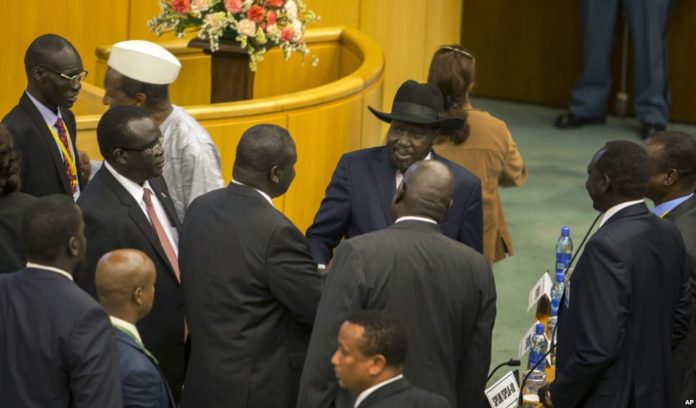
Machar warns Kiir on Deng Gai’s ‘appointment’

IN 'HAPPIER' TIMES: President Salva Kiir and rival, First Vice President Riek Machar

South Sudan’s First Vice President Riek Machar has urged President Salva Kiir not to violate a peace accord signed last year by recognizing and confirming Taban Deng Gai as his replacement.

Machar spokesman James Gadet Dak says Gai’s nomination as first vice president could scuttle the peace process and create unnecessary discomfort and tension.

Efforts to replace Machar came after Kiir’s 48-hour ultimatum for Machar to return to Juba expired Saturday. Kiir had invited Machar, the leader of the Sudan People’s Liberation Movement in Opposition, for a meeting to resolve recent clashes between opposing groups loyal to the two men that have left at least 300 people dead.

The Joint Monitoring and Evaluation Commission that oversees the implementation of the peace accord issued a statement sharply opposing news of Kiir’s replacement as first vice president.

“We recognize First Vice President Riek Machar as the legitimate leader of the SPLM-IO.  A change to the leadership depends on the IO itself, and we are not here to speculate as to any change of leadership,” the commission was quoted as saying.

Machar’s spokesman, Dak, says it is illegal to nominate Gai because he was fired from his post in the SPLM-IO. The peace agreement stipulates that if the first vice president is away for any reason, he would delegate a person to act on his behalf, according to Dak.

Supporters of the president say Kiir needs a partner to work with in the implementation of the peace accord, and the refusal by Machar to return to Juba inhibits the process. They also say the first vice president appears not to be working to resolve issues with the president.

Dak disagreed, saying Kiir should have accepted a proposal by both the African Union and the Intergovernmental Authority on Development (IGAD) to have a third and impartial force involved to improve security.

Meanwhile, South Sudan Information Minister Michael Makuei said Friday that a coup attempt led to the recent clashes in Juba, but he did not say who was to blame.

“There is no doubt that it was a coup,” Makuei said. “There are some ministers and civil servants who have not reported to work since the fighting started. … The council of ministers has directed that those people report to work this coming Monday [July 25] or face some consequences.”

But Dak says there wasn’t any attempt to overthrow the government.

“They like the word ‘coup,’ he said. “If it were a coup, I think it was the force loyal to President Kiir who attempted the coup, because they are the ones who fired the first bullet at our forces.”


Stories Continues after ad

It is wrong economics to consider a bailout for ‘vendors’

A lot has been said and written about the ‘bailout’ allegedly being sought by over 60 Ugandan ‘limping’ companies. This topic is currently trending amongst the elite Ugandan society, with most largely critical of anything that countenances a bailout of the said distressed companies, most of which are involved in retail trade or vending.

The issue of bailouts first found its way in the country’s lingua franca in 2003 when government advanced hides and skins tycoon Hassan Basajjabalaba with billions of shillings to save his then flailing businesses. Then, just before hosting the Commonwealth Heads of Government (CHGM) meeting in November 2007, government gave millions of dollars to several local companies, to boost their capacity to provide the services needed to ensure that the meeting was a success. The two moves elicited parallel reactions from the Ugandan community: the CHOGM move, through which several hotels were given cash and tax holidays to facilitate speedy construction and the importation of crucial construction materials, was hailed by Ugandans while the Basajjabalaba ‘bailout’ was castigated by several people including experts, who argued against bailing out individual businessmen, some of them largely lavish, to ‘unfairly’ benefit from the taxpayer.

Then enter the current ‘bailout’ of the 65 companies. First, many people are wondering how the list of companies that are claiming to be almost insolvent, was arrived at. Second, what is the economic advantage of bailing out companies, most of which are just involved in retailing? Call them vendors! For instance, what is the strategic economic value of bailing out an airtime vendor or discotheque operator who, on the other end, is unapologetically lavish?

Needless to say, if Uganda is to attain middle income status as envisaged, the country needs to have its priorities carefully selected. For instance, such huge monies can be injected in sectors like education, health and agriculture, areas that that benefit majority of Ugandans. Closer scrutiny would inform one that if those sectors are boosted even the limping companies would get ‘naturally resuscitated’ through increased sales. This is not rocket science, its just ‘prioritised thinking’, a panacea for development.

Stories Continues after ad

How Michael Kiwanuka knocked DRAKE off no. 1 album spot in U.K.

Ugandan born British soul artist Michael Kiwanuka’s sophomore album Love & Hate (Polydor/Universal) on Friday debuted at No. 1, his first in the U.K. singles chart knocking off American rapper Drake’s “One Dance” (Cash Money/Republic/Universal), featuring Wizkid & Kyla, which had started a 15th week atop.

Kiwanuka, whose debut album Home Again reached No. 4 in the U.K. in 2012, debuted at the top with the follow-up, staying ahead of Adele’s 25 (XL Recordings). That remained at No. 2 as Christine & the Queens reached a new peak with an 8-3 climb for Chaleur Humaine (Because Music). Drake’s Views fell 3-4 and Coldplay’s A Head Full Of Dreams (Parlophone/Warner Music) 4-5.

His songs purr along at leisurely tempos, harking back to the kindly, folky soul of 1960s and ’70s songwriters like Bill Withers, Van Morrison and Terry Callier, and more recently Beth Orton. They set a few words within a gentle vamp, often with a touch of jazz or blues, and linger over them until they become liquid incantations, melting into the music and finding refuge there. With his breathy baritone and imperturbable tempos, Mr. Kiwanuka could at times be taken for someone in the John Mayer camp.

Stories Continues after ad

Kenyan betting firm sponsors Hull City

English Premier League football club Hull City have announced their new sponsor is a Kenyan betting company, reports Hull Daily Mail.

Simon King, the club’s commercial manager, says on the Hull City official site that the deal with SportsPesa is the most lucrative the club has ever had.

The site adds that this is a “multi-million pound” deal for three years.

The betting firm is replacing a theme park near Hull called Flamingo Land as the sponsor.

The company already sponsors  the Kenyan Premier League, which is known as the SportsPesa Premier League.

Stories Continues after ad

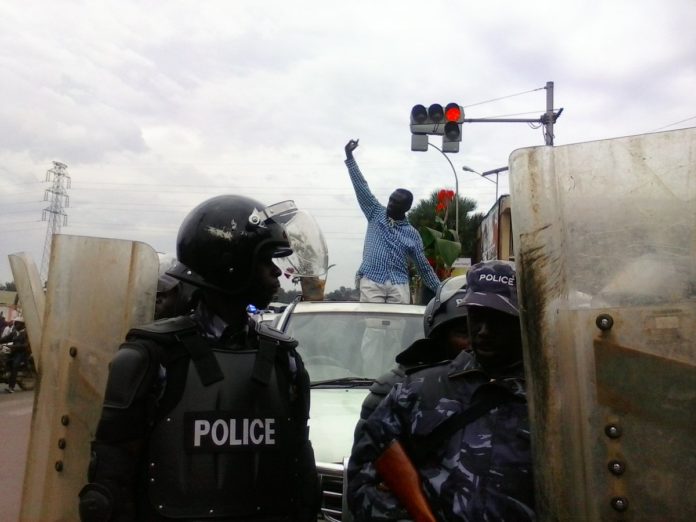
Police re-arrests Besigye | VIDEO

Uganda Police has arrested opposition leader Kizza Besigye moments after charges of disobeying lawful orders against him were dropped.

Mr Besigye, who is currently out on bail, was returning from Makindye court when his car was blocked by Police at Clock Tower before being towed to Jinja Road Police station where he is currently detained.

The case was opened against Mr Besigye and his colleagues, including Kampala Lord Mayor Erias Lukwago, for holding a meeting in the city in May 2015, to allegedly discuss electoral reforms.

They are said to have disobeyed the Kampala South Metropolitan police commander’s orders to disperse from the meeting venue.

The magistrate today dropped the charges after the prosecution had failed to produce witnesses.

Stories Continues after ad

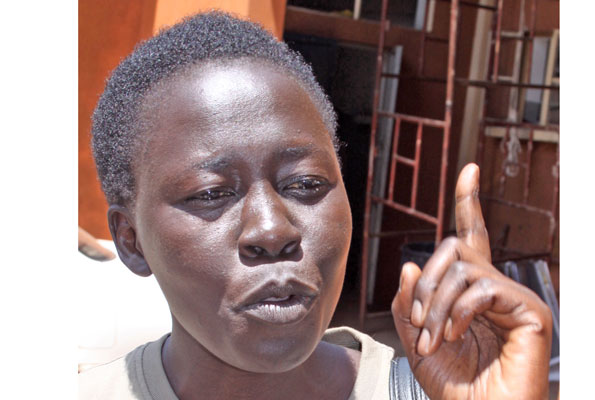
FDC’s Alice Alaso wins polls petition

Forum for Democratic Change strongwoman Alice Alaso, who lost the Serere district woman parliamentary seat by a huge margin, has won a petition she filed against Hellen Adoa at the Soroti High Court.

Following the February 18 parliamentary elections, Serere district returning officer Atim Awori declared Adoa, the National Resistance Movement (NRM) candidate, the winner with a huge margin of 16,111 votes.

But in April, Alaso, the FDC deputy president Eastern, went to court seeking fresh elections, a wish which was on Monday granted by Justice David Batema, who nullified Adoa’s election.

Ms Adoa’s ouster follows in the shadow of Masindi municipality MP, also Minister of State for Bunyoro Affairs Ernest Kiiza who last week lost his parliamentary seat after the High court found him guilty of electoral malpractices. He became the second minister in President Museveni’s post election cabinet to lose a parliamentary seat after the ouster of defence state minister Col (rtd) Charles Okello Engola.

Meanwhile, Alaso, the former chairperson of the parliamentary Public Accounts Committee (PAC) last week said senior government officials tried to offer bribes to MPs to kill investigations into corruption scandals.

On Friday, while handing over the new leadership to Angeline Osegge, the Soroti Woman MP, Alaso claimed she turned down Shs a 2.1 billion bribe.

Stories Continues after ad

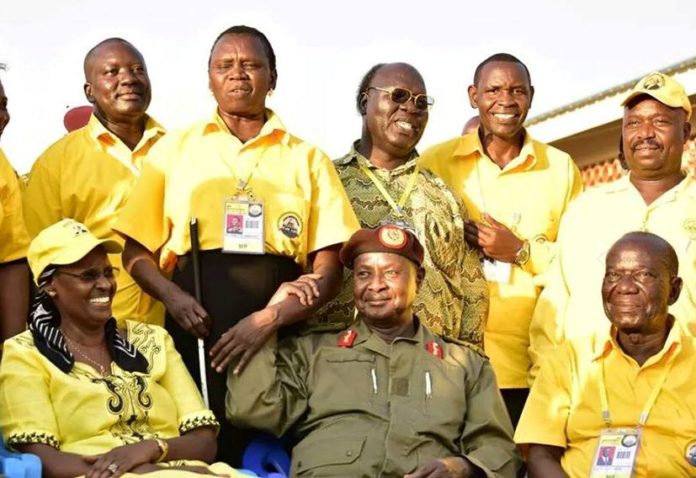
Kyankwanzi NRM retreat to ignore ‘age limit’ debate

The ruling party, National Resistance Movement’s retreat starting today at the National Leadership Institute in Kyankwanzi will steer away from  debating the contentious issue of removing the Presidential age limit.

In recent weeks, there has been a serious push by the NRM for constitutional reforms, which the party stifled last year, and the opposition says the move is a deceptive manoeuvre by the ruling party to muscle through Parliament the lifting of the 75-year presidential age limit. This, they argue, is supposed to pave way for President Yoweri Museveni, who is constitutionally barred from offering himself for presidency again, to stand.

However, Information and ICT minister Frank Tumwebaze insists that the debate on age-limit is not on the retreat agenda.

“The debate about scrapping the Presidential age limit isn’t on the Kyankwanzi Retreat agenda. The time for politicking ended and it is time for business,” Tumwebaze told NBS TV on Monday morning.

“It is not one of the amendments that President Museveni’s new cabinet is interested in but instead like the Prime Minister said, the NRM is always renewing itself and its commitment to Ugandans and deliberate on how to deliver a middle-income status by 2020,” he added.

The week-long retreat to be attended by party MPs, ministers and permanent secretaries aims at charting a course in this term which runs up to 2021, starting with an audit of the NRM failures in the last five years.

On July 4, the Kyankwanzi district NRM conference took the lead and passed a resolution urging its MPs to move a motion in Parliament for the amendment of Article 102 (b) of the Constitution, which caps the maximum age for one to be elected president at 75.

EagleOnline understands that the Kyankwanzi district resolution has been debated by the party’s top policy organ, the Central Executive Committee (CEC) which is chaired by Museveni, the NRM chairman.

The proposal to amend Article 102(b), which caps the maximum age for one to be elected president at 75, was supposed to be part of last year’s amendments but was removed after a stormy cabinet meeting on March 20, 2015.

Stories Continues after ad