Stanbic Bank
Stanbic Bank
16.6 C
Kampala
Stanbic Bank
Stanbic Bank
Home Blog Page 2126

Zuma to review wives’ transport benefits

The new Range Rover 2016

President Jacob Zuma will be reviewing the transport benefits of his wives, and those of former presidents and deputy presidents.

This comes after police Minister Nathi Nhleko this week revealed in a parliamentary reply that the Saps had spent R8.6m buying luxury cars for Zuma’s wives in the last five years.

The presidency said in a statement today that they would engage the Saps to ‘discuss the harmonisation of benefit policies in light of the recent announcement of the procurement of vehicles for the spouses of the President’.

This would be part of an ongoing review of government benefits in light of the depressed economic climate, the presidency said.

It would be in the spirit of spending public finds prudently.

“The discussions will take into account the transport benefits of spouses of serving principals and also those of former presidents and deputy presidents.”

In a Parliamentary reply published on Tuesday, Nhleko told Democratic Alliance MP Zakhele Mbhele that the cars were bought in 2013, 2014 and 2016.

These included four Range Rovers, two Land Rover Discoveries, two Audi Q7s and three Audi A6s.

They were bought to ‘provide comprehensive protection of VIP Spouses’, Nhleko said.

The Presidency was also reviewing the security benefits of Presidents and Deputy Presidents, it said in the statement.

This was in light of the report by Public Protector Thuli Madonsela and the recent Constitutional Court judgment on Zuma’s Nkandla homestead.


Stories Continues after ad

Crown Beverages UEFA promo winners denied Italian visas

One of the winners of the 'Drink and Peel' promo

Uganda winners of the Crown Beverages-sponsored ‘Drink and Peel’ promotion, who were set to travel to Milan, Italy to watch the UEFA Champions League final on May 28, have been denied visas by the Italian Embassy in Uganda.

It has come to our attention that the winners, who were preparing for the trip, were denied visas by the Italian Embassy in Uganda despite Pepsi having footed all the expenses for accommodation and air fare. The Embassy raised concerns about the documents they submitted as part of the visa application process. Crown Beverages Limited respects the decision of the embassy as the power to issue or deny visas is under its discretion. We do appreciate the assistance the embassy provided the winners, during the application process’, a release by Jeff Sekandi of Crown Beverages Limited (CBL), says.

According to the CBL release, entrants who fail to satisfy visa requirements is deemed not to have qualified for the grand prize.

‘Clause 9 of the Terms and Condition of the promotion stipulates that an entrant (winner) whose entry has been drawn and/or the entrants partner, at any time be refused a Schengen visa to travel to Europe and/or the European country of the Promoters discretion for any reason whatsoever, such an entrant will be deemed not to have qualified for the prize and/or have forfeited the grand prize, the trip to Milan,’ the release states but consoles the winners.

‘We regret any inconvenience this situation may have caused to the affected customers,’ the release adds.


Stories Continues after ad

Ugandan tycoon partners in African multi-billion dollar infrastructure ventures

INVESTMENT IN AFRICAN INFRASTRUCTURE: Ugandan billionaire Ashish Thakkar

Mara Group of Ugandan tycoon Ashish Thakkar together with General Electric and Atlas Merchant Capital are leading an initiative to create a joint venture dedicated to investing in the highly underdeveloped African infrastructure sector.

The joint venture will seek to invest in infrastructure equity projects in selected countries throughout Africa to address rapid urbanisation and a growing middle class devoid of infrastructure.

“Africa is a continent of 54 countries, but there is very low connectivity between them. Intra-African trade, a key driver for economic growth, represents only a fraction of Africa’s total trade over the past decade and this is largely due to a growing shortfall in infrastructure development. Through our joint venture with GE and Atlas Merchant Capital, we hope to tackle the funding deficit by creating a platform that has the power to truly change the lives of those living on the continent,” Thakkar, who is also the Mara Group founder, says.

‘Africa presents high growth prospects in power generation, transport, oil & gas and other infrastructure areas including mining the joint venture will focus on this broad set of segments by facilitating access to capital, thus offering the ability to execute and fully finance both advanced and early development stage projects’ a release by the Africa Press Organisation (APO) , states in part.

It further states that Africa needs to spend $90bn a year for the next decade in order to upgrade and maintain its existing infrastructure alone.

Jay Ireland, the CEO of GE Africa

“This joint venture unifies three businesses with a strong commitment and expertise in infrastructure in Africa. The joint venture is our response to an integrated infrastructure approach in Africa. We are proud to partner with the expertise and talent of Atlas Merchant Capital and Mara Group, who have an extensive footprint in Africa, to address the necessities of the African continent. We have been significantly involved in social enterprises to date and will seek to further enhance and promote social and community development in the region to complement their expertise, knowledge and entrepreneurial spirit,” Jay Ireland, the President and CEO of GE Africa says.

Africa Development Bank (AfDB) President Akinwumi Ayodeji Adesina says the partnership will have real impact on infrastructure development in Africa.

“We are delighted to see this partnership between three world-class players who, together, can have a real impact on infrastructure development in Africa. We all know painfully well the imperative to fill Africa’s annual $50 billion infrastructure funding gap. Partnerships like these are a crucial part of the development agenda as we seek to promote social and economic development and fight poverty in Africa,” Adesina says.

AfDb President Akinwumi Ayodeji Adesina
AfDB President Akinwumi Ayodeji Adesina

‘More than 50% of our African nations including Nigeria, Kenya, Ethiopia, Tanzania and the DRC, don’t have access to electricity and an infrastructure investment of US$360bn in power production, power transmission, water storage, modern railways, port capacity and modern highways will be required until 2040,’ the APO release states.

Stories Continues after ad

EAC US$100m budget presented to EALA

Hon Dr Susan Kolimba, Deputy Minister, Foreign Affairs and East African Co-operation, Dr Susan Kolimba holds the Budget Speech. She is flanked by the EAC Secretary General, Hon Amb Liberat Mfumukeko

The EAC today presented Budget estimates for the Financial Year 2016/2017 totaling US$101,374,589 to the East African Legislative Assembly sitting in Arusha.

The Deputy Minister for Foreign Affairs and East African Co-operation, Hon Dr Susan Kolimba presented the Budget speech to an attentive House on behalf of the substantive Minister and Chair of the EAC Council of Ministers, Dr Augustine Mahiga.

The deputy Minister of Foreign Affairs and East African Co-operation, Hon Dr Susan Kolimba presents the Budget Speech to the House. At back is the EALA Speaker, Rt. Hon Daniel Fred Kidega

The 2016/2017 Budget that prioritises full implementation of the EAC Single Customs Territory, enhanced implementation of the EAC Common Market Protocol especially additional commitments and interconnectivity of border immigration systems and procedures across Partner States and enhancement of productivity and value addition in key productive sectors is a drop down from $110,660,098 Million presented to the House in the previous Financial Year.

The budget also takes cognisance of development of cross-border infrastructure and harmonisation of laws, policies and standards in respective sub-sectors, implementation of a liberalised EAC airspace, enhanced implementation a One Area Network in telecommunications and the implementation of EAC Peace and Security initiatives.

Hon Dr Susan Kolimba presents the Budget Speech to an attentive House

According to the Minister, other key specific priorities are strengthening of the legal and judicial systems, enhancement of Information, Communication and Education to promote popular participation of the citizenry in the EAC integration process and promotion of education, science and technology for creative and productive human resources.

The Budget is allocated to the Organs and Institutions of the EAC as follows; East African Community Secretariat ($57, 872, 785), East African Legislative Assembly ($16,034,324) and the East African Court of Justice ($4,286,477).
The Inter-University Council for East Africa shall receive ($4,553,890), Lake Victoria Basin Commission ($11,214,708) while $ 2,131,422 is earmarked for the Lake Victoria Fisheries Organization.   On their part, the East African Science and Technology Commission shall receive ($ 1,161,438), East African Kiswahili Commission ($ 1,134,542) and the East African Health Research Commission ($ 1,397,438). The East African Competition Authority is to benefit from $587,565 in the Financial Year.
The 2016/2017 Budget is to be financed by Partner States contributions ($47,565,377) compared to USD 47 566,973 in the current Financial Year; Development Partners support ($46,717,601) which is a significant drop from USD 58,555,635 of the previous year, and the Member Universities will inject USD 431, 923, General Reserves USD 6, 354, 248 and miscellaneous revenue USD 305, 440.


Stories Continues after ad

WB gives US$140m for African Excellence Centres

Prof. Alexandre Lyambabaje(L) exchanging documents with Dr. Helmut Blumbach after signing the Memorandum of Understanding for collaboration in the next five years.

The World Bank has provided US$140 million to governments in Africa to establish regional Excellence Centres in 15 countries in East and Central Africa in Uganda.

Making the revelation the Executive Secretary of the Inter-University Council for East Africa (IUCEA), Prof. Alexandre Lyambabaje said the money will serve as incentive for students’ mobility within the region.

The Eastern and Southern African Centers of Excellency (ACE II) project, includes among others Ethiopia, Kenya, Malawi, Mozambique, Rwanda, Tanzania Uganda, Zimbabwe and Zambia, with each country in East Africa set to get US$6 million to establish one centre. There are 24 established Centers of Excellency, with 15 in the East African Partner States.

Meanwhile, Prof Lyambabaje has called upon universities to take a further step from publications to development of innovative products and policies.

Prof Lyambambaje was addressing a High Level Dialogue Meeting of Vice-Chancellors, Deputy Vice-Chancellors and Heads of Commissions/Councils for Higher Education and members of East African Higher Education Quality Assurance Network (EAQAN). The meeting was the culmination of the EAQAN Forum which kicked off on Monday May 16, 2016, followed by EAQAN General Assembly on May 18.

Prof. Alexandre Lyambabaje, IUCEA Executive Secretary awarding a certificate of participation to one of the EAQAN Forum and training

Both meetings held at the Imperial Golf View Hotel in Entebbe, Uganda were also attended by participants from Ghana, Ivory Coast and Somalia, whosought to learn from the East African countries on the development of quality assurance systems in universities.

“We need also to assess how effectively the developed tools in quality assurance are used in our institutions,” said Prof. Lyambabaje citing an example of the current trend where many parents in the East African region are sending their children to study in universities outside East Africa especially abroad.

On supporting of East African innovative ideas Prof. Lyambabaje revealed to the participants that IUCEA is holding its Annual Meeting under the theme “Research and Innovation towards Socio-Economic Transformation of East African Community” where key note presentations and experiences will be shared from Makerere University on   Kiira Car Project, Nelson Mandela African Institute of Science and Technology on Low Coast Water Filter and M-PESA on growing financial inclusion from Kenya which has proved to be the best tool in transferring money within the East African region and beyond.

In his remarks to the conference, Prof. John Opuda-Asibo, the Executive Director, National Council for Higher Education, Uganda, urged EAQAN to be more effective by going beyond from what it is doing currently and play the role of advising university senates and even present papers which can be discussed at senate levels. He urged QA Committees in universities to promote academic freedom and research and building staff capacity in quality assurance matters. Prof. Opuda observed the need for Senior Professors to support young university staff so that they grow in their fields.

Commending the work done in collaboration with IUCEA, Dr. Helmut Blumbach, the Germany Academic Exchange Service (DAAD) Director, Regional Office for Africa, said that DAAD and IUCEA are in the process of signing the Memorandum of Understanding whose thematic areas for future collaboration will include: strengthening partnership and collaboration between industries and universities in curriculum development, training and applied research and internationalization of higher education. At the end of the meeting, Dr. Helmut Blumbach and Prof. Alexandre Lyambabaje signed that Memorandum of Understanding for collaboration in the next five years.

The Forum and Dialogue meeting were organized by IUCEA in collaboration with the National Council for Higher Education, (NCHE), Uganda, the Germany Academic Exchange Service (DAAD) and the Germany Rectors’ Conference (HRK).


Stories Continues after ad

Tanzania hosts inaugural Africa plastics exhibition

Khaled Abu Makarem of Africa PPB EXPO

The first plastic, rubber, petrochemical and building materials exhibition is scheduled to take place at the Mlimani City Conference Centre in Dar es Salaam from May 27-29. The event, dubbed Africa-PPB-EXPO Tanzania 2016, will feature exhibitors and visitors from all over East and Central Africa as well as matchmaking opportunities.
Speaking during a press conference in Dar es Salaam today, Ahmed Barakat, the General Manager of EXPO ONE, the company that’s organizing the EXPO, said that ‘Africa-PPB-EXPO will be an exceptional platform to showcase latest products and give transparency to unexplored markets’.
Africa-PPB-EXPO is an Egyptian international exhibition for plastic, rubber, petrochemicals and building.
“The exhibition has been created to promote African unity through strengthening trade relations between Egypt and Tanzania as well as putting both markets on the map”, said Barakat and noted that Tanzania is the first of the series of African nations Africa-PBB-EXPO plans to cooperate with.
Aramex Africa is the official logistical partner with Africa-PBB-EXPO and will be playing a major role in providing logistics and transportation services from Egypt to Tanzania.
Through Aramex and in coordination with TanTrade and Tanzania Private Public Sector Foundation (TPSF), Africa-PBB-EXPO offers an exclusive edge to its exhibitors with a detailed database delivered once registered. The database includes all product placements within the Tanzanian market and their value with accurate import and export figures. This gives a sharper opportunity for strategic B2B meetings and successful matchmaking upon arrival.

The EXPO ONE GM called on businesses and traders to participate in the EXPO and ‘explore partnership opportunities in virgin markets and network with potential clients and peers’.
EXPO One, the organizing company, is a medium-sized exhibition and conference management firm that focuses on organizing and providing services for international trade fairs as well as promoting Egyptian pavilions in local and international exhibitions.
Other organizers include Aramex and Tanzania Trade Development Authority (TanTrade) under the auspices of the Ministry of Industry and Trade, Chemical and Fertilizers Export Council, Egyptian plastic Exporters and Manufacturers Association (Epema) and the Tanzania Private Sector Foundation (TPSF). Others are Kenya Private Sector Alliance and China Chamber of International trade.
Africa-PPB-EXPO’s next destination is scheduled to be Senegal followed by Angola.

Stories Continues after ad

Kenya approves tougher anti-doping laws

Kenyan athletes in a 1-2-3 sweep at the 2015 World Athletics Championships

Kenya’s parliament has approved changes to anti-doping legislation in the hope of avoiding a ban on its athletes attending the 2016 Olympic Games in Rio.

New anti-doping measures were signed into law last month but the World Anti-Doping Agency (Wada) later said they fell short of international standards.

MPs were recalled for special sitting yesterday to push changes through.

Kenya topped the medal table at the 2015 World Athletics Championships in Beijing with seven gold medals and if it were to be excluded from the Games, some of the world’s top athletes would miss out on medal chances.

“Sport is very critical to this country and the athletes have added a lot of value in this country in terms of marketing,” opposition MP Chris Wamalwa told Parliament.

The new legislation must be approved by the Senate before being signed into law by President Uhuru Kenyatta.

Wada had demanded changes after a spate of drugs scandals involving Kenyan athletes.

Since 2011, more than 40 of its athletes have failed drugs tests.

As of January 2016, 18 Kenyan athletes were suspended for doping. The best known is Rita Jeptoo, who won the Boston and Chicago marathons.

Last November, former Wada president Dick Pound said it was “pretty clear that there are a lot of performance-enhancing drugs being used” in Kenya.

In April, Kenya introduced new criminal laws as part of an anti-doping bill, creating a national testing authority and making doping an offence punishable by imprisonment.

It was widely assumed that the measures would satisfy Wada but the agency later cited “inconsistencies” in the legislation and declared Kenya ‘non-compliant’ on May 12.


Stories Continues after ad

Gbagbo wife loses sentencing appeal

LOST APPEAL: Simone Gbagbo

Ivory Coast’s former first lady Simone Gbagbo has had her appeal against a 20-year prison sentence rejected by the country’s Supreme Court.

The jail term was handed down last year for Mrs Gbagbo’s role in the violence which followed the refusal of her husband, Laurent, to accept defeat in the presidential election of 2010.

Mr Gbagbo himself is currently on trial at the International Criminal Court in The Hague, accused of war crimes linked to the unrest, in which more than 3,000 people were killed.

Stories Continues after ad

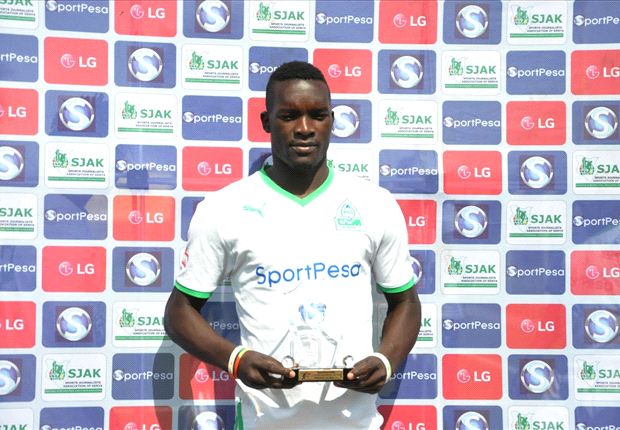
Who will win the Uganda golden boot, Ssentongo or Ssekisambu?

Either Robert Ssentongo and Erisa Ssekisambu or will take the Uganda Premier League topscorers boot on final day

Just one game remains and just one goal separates the three contenders for this season’s Azam Uganda Premier League golden boot award. Robert Ssentongo is looking to win it for the forth time and  second season in a row, while Erisa Ssekisambu will be hoping to be the first at Vipers.

But who will come out on top?

Robert Ssentongo

Robert Ssentongo (C) battles Joseph Ochaya and Lawrence Kasadha of KCCA during their Uganda Premier League encounter on February 23 at Nakivubo Stadium

Since bursting onto the scene almost a decade ago, Ssentongo hasn’t stopped scoring. The Uganda Revenue Authority FC forward with sixteen goals to his name has led this year’s Golden Boot race since December following then topscorer Ceaser Okhuti’s drought after his switch from Express to KCCA. Ssentongo has in the second round missed several games due to disciplinary issues.  He will have a chance to clinch the boo when the taxmen play relegated SC Victoria University who have conceded the most goals. SCVU will be fortunate to survive a massacre at Lugazi. The focus will be on Ssentongo who will be eager to create space between him and Ssekisambu who closely follows him on the goal scoring charts.

Erisa Ssekisambu

Ssekisambu (R) gets the better of Enyimba defender Ojo Oluna during a CAF engagement

Vipers’ Ssekisambu had been in the mix for the majority of the season but has failed to add to his tally of 15 since April, firing blanks in his last four league appearances before he add one more goal against URA on Tuesday during their 1-1 draw. That drought will have to be forgiven by Buikwe fans considering he has been the only outstanding player after the departure of then skipper Faruku Miya who joined Belgian side Standard League at the t beginning of the second round.

Vipers who sit second on the log with 52 points are likely to maintain same slot even if the draw against The Saints who they beat 3-0 on opening day. Moses Basena’s side is already safe from relegation but will seek to end season a high.

Elsewhere, Maroons though already relegated will be eager to go down with pride and are targeting a win against SC Villa who need to win the game to make it four out of four as the season concludes.

After 20 years in the top division, Simba will also love to sign off with victory as they play JMC Hippos at Kakindu. The army side went down despite winning 2-0 against The Saints on Tuesday thanks to Lweza’s 2-1 win over SC Victoria University but against JMC, one of the sides to let in the fewest goals, it will be a big task.

In Kavumba, Wasswa Bbosa’s Express go into their final game against Police with their target of finishing in the top fouralready achieved.

Lweza play at home in Wankulukuku to Jinja side Bul, a side formerly coached by their current Coach Joseph Mutyaba.

After sealing their 11th league title on Tuesday, KCCA target to be crowned in winning fashion with a home tie against Sadolin Paints at Nakivubo.

The Kasasiro go into the game as favourites being at home and under no pressure but must treat the visitors with care as they want to spoil the party.

KCCA awaits to lift the 11th league title this Friday after playing their last fixture with Sadolin FC at Nakivubo Stadium.

Last season, Sadolin Paints won this fixture 2-1 at Lugogo to hamper the hosts’ title charge then but KCCA beat them 3-0 on day one.

Friday May 27, 2016 Fixtures [Kicked Off at 4.00pm]

KCCA Vs Sadolin Paints – Nakivubo Live on TV

The Saints Vs Vipers – Namboole

Police Vs Express – Kavumba

Lweza Vs Bul – Wankulukuku

JMC Hippos Vs Simba – Kakindu

URA Vs SC VU – Lugazi

Maroons Vs SC Villa – Lugazi

Bright Stars Vs Soana – Mwerwere

Stories Continues after ad

Two dead in DRC over anti Kabila demos

HIRED PR FIRM: DRC President Joseph Kabila

Rallies called by dissidents to oppose Kabila’s plan to stay on as caretaker president after expiry of his second term.

At least one police officer and one protester have been killed as thousands of people take to the streets in nationwide protests against incumbent President Joseph Kabila in the Democratic Republic of Congo (DRC).

The deaths occurred in the eastern city of Goma on Thursday, according to Jose Maria Aranaz, director of the UN’s Congo-based Joint Human Rights Office. Two others were injured by gunfire, he said.

In the capital Kinshasa, security forces fired tear gas and charged at several thousand stone-throwing protesters.

Police said although the Kinshasa demonstration had permission from the authorities unlike other parts of the country, the crowds had deviated from an agreed route.

“In these cases we don’t negotiate, we disperse,” national police spokesman colonel Pierre Rombaut Mwanamputu told the AFP news agency.

Al Jazeera’s Haru Mutasa, reporting from Lubumbashi, said the situation developed in a different way in that city.

“Opposition supporters said they were waiting for their leaders to come out to say ‘start marching’ [without a permit] but the leaders did not come out so people did not start marching,” she said.

“Some people said they were afraid to do so because in the past few weeks when the police clashed with the opposition supporters some of them were injured.”

Opposition groups called for the protests after the country’s Constitutional Court ruled earlier this month that Kabila, in power since his father’s assassination in 2001, could remain in a caretaker capacity beyond the expiry of his second term in December.

Feeling disillusioned

With Kabila’s powerful rival, Moise Katumbi, 51, all but pushed into exile in South Africa, some dissidents in the central African country feel disillusioned.

With many dissidents seeing in Katumbi a rightful potential leader for the country, the Citizen Front has defied the ban on protests in North Kivu and Lubumbashi.

Political unrest has hit the country for months over concerns that Kabila intends to extend his rule.


Katumbi


There are fears at home and abroad that Kabila will delay elections due to be held late this year.

Kabila’s supporters want the election delayed for two to four years due to logistical and financial difficulties, but the opposition accuses Kabila of planning to amend the constitution to extend his rule.

Despite opposition support for Katumbi, many rank-and-file dissidents are disappointed that he left the country on May 20, ostensibly to undergo treatment at a South African hospital.

His departure came a day after he was charged with “threatening the internal and external security of the state”.

‘Respiratory problems’

Katumbi’s followers say he was injured in clashes between police and thousands of his supporters in Lubumbashi on May 13, with a source saying he was suffering from “respiratory problems” after being tear-gassed.

Katumbi draws part of his popularity from his ownership of TP Mazembe, one of Africa’s biggest football clubs.

Less than a week into his departure to South Africa, one of his supporters criticised him for leaving them to face police “harassment” alone.


Stories Continues after ad