Uganda will earn US$2.1 billion from the annual export of 200.000 barrels of oil produced per day.
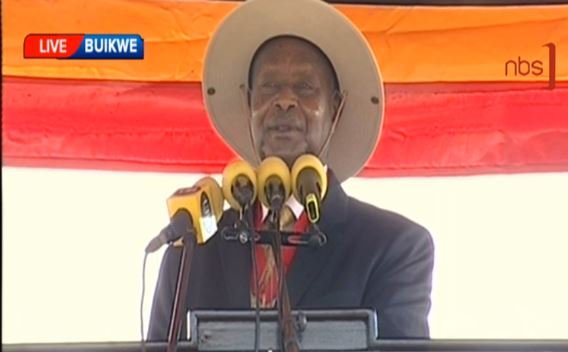
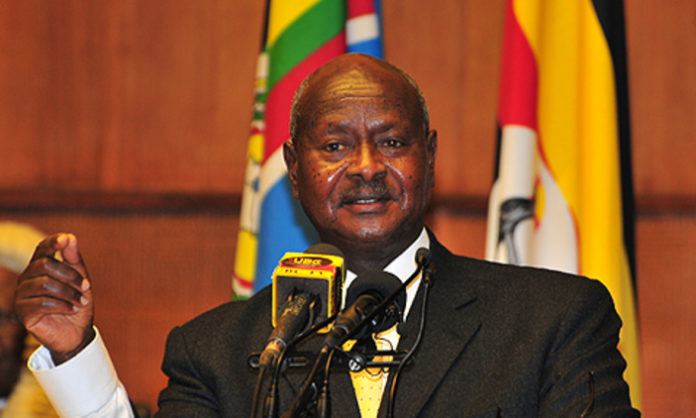
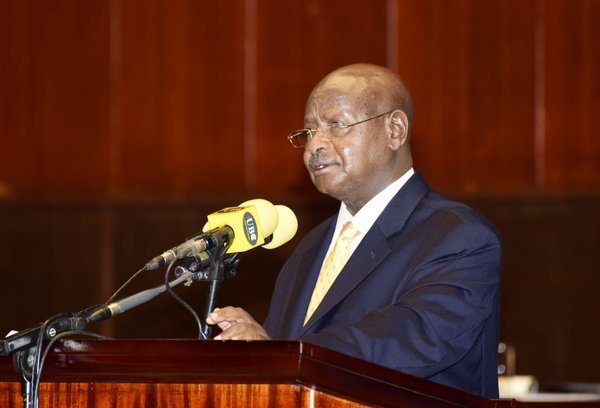
Making his 2016/17 Budget Day introductory speech at the Serena International Conference Centre earlier today, President Yoweri Museveni said the money, to be earned by pumping oil through the pipeline and also through refining, will represent seventy per cent of the gross revenue of US$3 billion.
‘By 2020, we shall start pumping out our oil. Even at the low price of US$50 per barrel, if we shall be pumping 30,000 barrels per day for the refinery and 170,000 barrels per day for the pipeline and the total will be 200,000 barrels per day that will give us an additional income of US$3 billions per year. The Government portion of that money will be US$2.1billions which is 70%,’ Mr Museveni said.
The president disclosed that the oil earning would among other things, fund scientific innovation; capitalize the Uganda Development Bank (UDB) and the National Housing Finance Banks; to support the manufacturing, agriculture and infrastructure development projects.
In the brief speech, the president however, decried the low levels of growth now standing at 4.6 per cent, saying the country needed to work towards a double-digit growth rate.
‘I am, however, not satisfied with the 4.6% rate of growth that we achieved this financial year. Even the rate of 7% is not satisfactory to meet. We must go to double digits rates of growth in order to transform our society rapidly,’ the President said.
2016/17 Budget speech read by Buyanja MP Matia Kasaija on behalf of President Museveni
1. Madam Speaker, in accordance with Article 155(1) of the Constitution of the Republic of Uganda and the Public Finance Management (PFM) Act 2015 as amended; and in exercise of the power delegated to me by H.E the President of the Republic of Uganda, I have the honour to present the budget statement for the Financial Year 2016/17.
Section 14(1) of the Public Finance Management Act 2015, requires that Parliament shall, by 31st May of each year, consider and approve the budget for the next financial year. This being a year when general elections were held, the budget for Financial Year 2016/17 was approved by the 9th Parliament on 3rd May 2016.
My presentation today is therefore, a summary of the budget as approved by Parliament. I thank all the Honourable Members of the 9th Parliament, for the excellent cooperation in the preparation and the approval of the Budget.
2. Madam Speaker, next year’s budget has been finalised and approved by Parliament when Ugandans have once again renewed the mandate of the NRM Government. I wish at this juncture to heartily congratulate H.E. the President upon his resounding victory and thank him for entrusting me with the responsibility to deliver this landmark Budget Statement.
I also extend congratulations to you, Madam Speaker and your Deputy, for your re-election to the high offices of Speaker and Deputy Speaker of Parliament, and to you Honourable Members for your election to the 10th Parliament.
3. Madam Speaker, Government’s policy, priorities and programmes as well as resource allocations are all aligned towards achieving the commitments in the Second National Development Plan (NDPII), and the 2016 NRM Manifesto.
In addition, the 2014 National Population and Housing Census (NHPC) provided evidence that has informed a sound basis for the formulation of the strategic policies and priorities spelt out in next financial year’s budget.
The overall national goal is to achieve a middle income status through commercialization of agriculture, acceleration of industrialization, and increasing production and productivity in all sectors of the economy. Accordingly, the theme for the financial Year 2016/17 Budget is ‘Enhanced Productivity for Job Creation’.
4. Madam Speaker, in my presentation today I will: –
i). Report on the performance of the economy, and the challenges faced in the financial year now ending, but also the future Prospects;
ii). Update Parliament on the Performance of the Financial Year 2015/16 Budget and progress made in the key selected sectors, implementation of measures to address challenges and priorities for the next financial year;
iii). Elaborate the medium term strategy underpinning the Financial Year 2016/17 budget, and
iv). Highlight the Financial Year 2016/17 revenue and expenditure framework and measures for enhancing domestic revenue mobilization.
C. ECONOMIC PERFORMANCE AND OUTLOOK
5. Madam Speaker, Uganda’s economy has remained resilient amidst a volatile global environment. Total national economic output is estimated to have expanded by 4.6% in the financial year ending, supported by robust growth in the services and construction activities. Although this is lower than the growth target of 5.0%, it is significantly higher than the projected growth for sub-Saharan Africa of 3% projected the same period.
6. Lower growth of the economy arose from three main factors:
i. the sharp fall in international commodity prices such as coffee, tea, minerals, which form the bulk of our exports. For example, Tea prices have dropped from US Dollar cents 403.03 per Kg in July 2015 to US Dollar cents 237.99 per Kg in April 2016; and Copper from US$ 5,456.75 per tonne to US$ 4,872.74 per tonne. The shift to Services in China’s economy, has also contributed to the fall in global demand for minerals and other commodities;
ii. the decline in private sector credit growth as a result of high interest rates, which have constrained domestic activity; and
iii. the strengthening of the US Dollar as a result of the recovery in the US economy which led to depreciation of our shilling. This caused domestic inflation. The strong Dollar also made imports more expensive, constraining business cash flows.
7. Madam Speaker, despite these challenges, Services continued to grow strongly rising by 6.6% from 4.5% last financial year. Agriculture, which is the back-bone of our economy, expanded by 3.2% in real terms compared to a growth rate of 2.3% the previous year. Meanwhile Industry grew by 3.0% which is lower than the 7.8% recorded a year before.
8. Economic activity in sub-Saharan Africa, including Uganda, has been lower than anticipated, primarily as a result of the sharp decline in commodity prices, which negatively affected export earnings.
Uganda, unlike other Sub Saharan African countries, was able to mitigate these external shocks through investments in infrastructure and a lower import bill resulting from the decline in international oil prices. Our Import bill for the 12 months ending March 2016 was US$ 4,618 million compared to US$ 5,095 million a year before.
9. Madam Speaker, Uganda’s earnings from exports are far less than what we spend on imports resulting in a large trade imbalance vis-à-vis our trading partners. In the 12 months to March 2016, Uganda’s imports were worth US$ 5,647 million; compared to export receipts of just US$ 2,669 million, less than 50% of our import bill.
10. Madam Speaker, a combination of factors including the strong US Dollar, the stagnation in export receipts, and speculative tendencies in the run up to the 2016 General Elections led to rapid weakening of the Uganda Shilling. The Shilling lost 39% of its value vis-à-vis the US Dollar between September 2014 and September 2015.
However, prudent fiscal and monetary policy as well as the successful completion of the General Elections, have as we speak now restored confidence in the economy, with the Shilling recovering its strength to Shs. 3,326 per US Dollar by April 2016, a 10% improvement compared to the position in September 2015. Government’s efforts to bolster exports will further strengthen the Shilling. I will later elaborate specific actions to tackle this starting next financial year.
11. Madam Speaker, the country’s foreign exchange reserves remain adequate, estimated at US$ 2,925 billion representing 4.4 months of future imports of goods and services in April 2016. The target recommended in the East African Community is 4.5 months of imports.
12. Madam Speaker, inflation has remained stable and in single digit as planned. Annual headline inflation was recorded at 5.4% in May 2016. However, in the first half of the year, inflation peaked at 8.5% in December 2015, due to the pass-through effects of the sharp weakening of the Uganda shilling against the US Dollar.
This also caused an increase in prices including electricity tariffs which adversely affected both manufacturers and domestic consumers. However, Government implemented prudent fiscal and monetary policies that reduced inflation and therefore restored, as I speak now, price stability in the economy.
Interest Rates and Private Sector Credit
13. Madam Speaker, commercial bank lending rates have remained high largely due to the limited availability of long term capital, resulting in the mismatch between the commercial bank financing products and the nature of the investments being undertaken.
14. The growth of credit to the private sector has also declined to about 8% in March 2016 compared to about 17% during the same period a year before. This is primarily on account of constraints in private sector cash flows because of high debt service payments arising from the consequences of increased inflation. The risk of higher interest rates has now reduced as inflation is now around the policy target of 5%, following the Bank of Uganda’s implementation of appropriate monetary policy.
15. Madam Speaker, while interest rates will continue to be determined by the market, Government will ensure fiscal and monetary policies prevent a significant rise in interest rates that crowd out the private sector. This will be complemented with strengthening consumer protection measures to address any misconduct, such as the manner in which collateral is sold in case of loan default, by some financial institutions.
16. Madam Speaker, provisional outturn for domestic revenue for the financial year 2015/16 is Shs. 11,598 billion equivalent to 13.2% of GDP. This is higher than the planned target of Shs. 11,333 billion.
The Shs. 11,598 billion is accounted for as follows: provisional outturn for tax revenue is Shs. 11,192 billion, non-tax revenue is Shs. 282 billion. Oil capital gains tax revenue Shs. 124 billion.
External and Domestic financing
17. The provisional outturn for total external financing during the year is Shs. 5,602 billion, of which project loan disbursements is Shs. 4,355.4 billion and grants Shs. 1,247 billion. The provisional outturn for non-concessional loan disbursements is Shs. 3,041 billion while concessional loan disbursements is Shs. 1,315 billion.
The non-concessional loans are financing major priority projects such as Karuma and Isimba Hydropower plants and other projects in the transport and ICT areas. Budget support loans were Shs. 120 billion. Government domestic borrowing is projected to be below the amount planned of Shs. 1,384 billion for the financial year.
18. Madam Speaker, provisional outturn for total Government expenditure excluding domestic debt refinancing during the financial year will amount to Shs. 18,666 Billion equivalent of 21.2% of GDP. The increase in total expenditure compared to last year reflects a deliberate commitment to improve our infrastructure in preparation for the take-off to the medium income status.
The development budget is estimated to account for 53% of total expenditure largely to finance key infrastructure projects such as Karuma and Isimba HPPs, and roads while the recurrent budget share of the budget balance of 47%. This reflects good business management by investing more in long term assets than in consumption.
19. Madam Speaker, the fiscal deficit is estimated at 6.4% of GDP in Financial Year 2015/16. The deficit was largely financed by external borrowing both concessional and non-concessional, and to a lesser extent by domestic borrowing equivalent to 1.6% of GDP.
Given our financing requirements for infrastructure development coupled with limited availability of concessional loans, non-concessional borrowing has risen. Given that non-concessional borrowing is a little more expensive, efficiency and effectiveness in the utilization of these loans is paramount. I will announce measures to deal with efficiency in resource allocation, use and monitoring later.
20. Madam Speaker, gross nominal public debt is estimated to be Shs. 29,984 billion by 30th of this June. Out of this Shs. 18,665.7 billion is external debt (equivalent to US$ 5,382.9 million) and domestic debt Shs. 11,319 billion. In nominal terms, our total public debt is equivalent to 34% of total economic output (GDP).
The corresponding Present Value of our debt is 30.5% of GDP, after discounting for time value of money. This ratio is far below the Public Debt Management Framework threshold for sustainability and the East African Community Monetary Union convergence criteria requirement of 50%. These benchmarks show that our public debt remains sustainable over a long period in the future.
21. The increase in public debt financed priority infrastructure investments like the Karuma and Isimba Hydro power projects, Rehabilitation and expansion of Entebbe Airport and Phase three of the National Transmission Back Bone Project, is meant to enhance productivity in all sectors of the economy. Government will therefore borrow in future for highly productive fixed capital investments that can generate financial and economic returns to ensure debt sustainability.
22. Madam Speaker, I now turn to the economic outlook. Uganda’s economy is projected to grow by 5.5% next financial year. Over the medium term, GDP growth is projected to average 6.3% per annum.
This outlook is premised on the Government commitment to fast track implementation of key public investments in infrastructure to facilitate private investment.
23. Madam Speaker, in this regard, Government will continue to implement appropriate fiscal and monetary policies to ensure macroeconomic stability. In the medium term, we will prioritise the reduction of the trade deficit by increasing our revenue from exports by adding value to our primary commodities, harnessing the largely untapped tourism potential, and continuing to attract foreign direct investment. I will later explain the details of how we shall achieve this later in my presentation.
D. SECTOR PERFORMANCE AND PRIORITIES
24. Madam Speaker, I now turn to the performance of selected key sectors during the Financial Year 2015/16, and the planned interventions for next financial year.
I. ENHANCED PRODUCTION AND PRODUCTIVITY
Agriculture Production and Productivity
25. Madam Speaker, I wish to remind the august House that agriculture is key to creating wealth and employment. The 2014 Population and Housing Census indicates that household reliance on subsistence farming has risen to 69% from 68% between 2002 and 2014.
This represents a higher number of households reporting Agriculture as their main source of livelihood, even as Agriculture’s contribution to the national output has declined to only 26%. In addition, commercialisation in agriculture remains low, with only about 119,000 or 2.3 per cent of the 5.2 million farming households being engaged in commercial farming.
26. Madam Speaker, declining productivity in this sector is therefore a major challenge. The low productivity is caused by limited access to appropriate technologies, declining soil fertility and poor farming methods.
Farmers do not use high yield seed and animal inputs, and there is limited use of fertilizer. Farmers also lack the requisite skills training, apply ineffective land management practices and suffer from poor farm-to-market infrastructure. All these render agriculture highly vulnerable to exogenous shocks including low prices and climatic changes, which ultimately reduce the welfare of the households.
27. Notwithstanding challenges of declining productivity, the Agriculture sector achieved the following progress through Government’s concerted interventions during the financial year now ending: –
i. In the area of agricultural inputs provision; the following performance has been recorded: –
1. Under Operation Wealth Creation, planting materials distributed include 65 million coffee seedlings, 48 million tea seedlings in 16 districts, 4.4 million citrus seedlings in 76 districts, 2.7 million cocoa seedlings in 13 districts, and 12 tons of rice seed to establish 480 acres in four local governments of Koboko, Maracha, Nebbi and Yumbe and 1,316 metric tons of de-linted and graded cotton planting seedlings in 59 districts in Eastern, Western, West Nile, Mid-West, Central and Western regions
2. The Animal Genetics Resource Centre and Data Bank (NAGRC&DB) has installed a new hatchery with capacity of 13,000 chicks per week to support rearing poultry including the resilient Kuroiler Chicken.
ii. In the areas of pest and disease control, the following performance has been achieved: –
1. There has been a significant reduction in the Banana Bacterial Wilt, now estimated at less than 5%. Surveillance also reveals reduced incidence of Coffee pests and diseases with the Black Coffee Twig Borer now standing at less than 7% in most parts of affected areas.
2. In the livestock sub-sector, the outbreak of Foot and Mouth Disease was contained in Apac, Kiryandongo, Nakasongola, Luwero, Nakaseke, Kyankwanzi, Wakiso, Mpigi, Mukono, Sembabule, Isingiro, Rakai, Kapchorwa, Kween, Bukwo, Kampala and Masaka.
iii. In order to increase the provision of water for production, 6 valley dams were constructed in Karamoja sub-region; and 46 Valley Tanks in Rakai, Isingiro, Lyantonde, Mubende, Kiboga, Kamuli, Kumi, Apac and Kitgum.
28. Madam Speaker, the Agriculture sector requires total overhaul and re-organisation. This will involve reforming land ownership and use, farmer training, input delivery, extension service provision, irrigation financing and marketing. These reforms are absolutely necessary if we are to ultimately commercialise agriculture.
29. Madam Speaker, Government will next financial year continue its thrust to transform the agriculture sector by facilitating mechanization, efficient access to inputs and appropriate technologies, increased storage and market access. Specifically, Government will continue to implement the following: –
i. Provision of improved breeding and planting materials, and pesticides;
ii. Intensification of regulation through increased disease surveillance, improved disease diagnostics and enforcement of animal laws and regulations at both central and local government levels;
iii. Conducting agricultural research and development;
iv. Construction of irrigation infrastructure including on-farm valley tanks, valley dams and medium to large scale irrigation schemes for communities. The cumulative water storage will be increased from the current 29.1 million cubic metres to 55 million cubic meters.
v. Financing post-harvest handling facilities for commodity storage through the Agricultural Credit Facility.
vi. Developing and implementation of a comprehensive National Agriculture Finance Policy and Strategy to support private sector investment in agriculture; and
vii. Establishing an Agriculture Insurance Scheme to reduce farm risks and attract investment in agriculture.
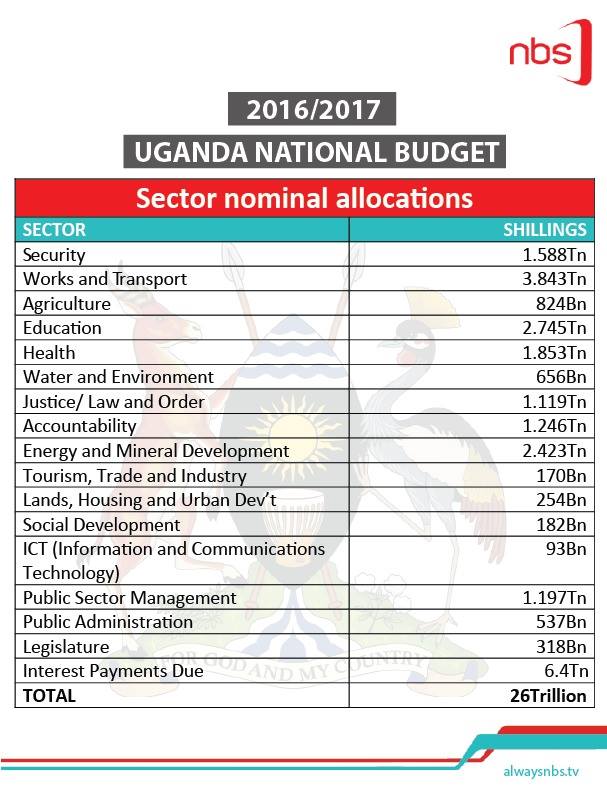
30. To this effect Madam Speaker, Ì have increased the Agricultural Sector’s budget by Shs. 343.46 billion to Shs. 823.42 billion, an increase of 65% compared to the Financial Year 2015/16. Together with funding to rural development interventions including rural electrification and feeder roads, funding to Agriculture and Rural Development is now Shs. 1,985 billion, equivalent to 9.6% of the non-debt, non-discretionary budget.
31. Madam Speaker, the medium term goals in Agriculture aim to ultimately increase production and productivity, improve household food security, increase farmers’ income and increase the value of exports.
Consequently, coffee production is targeted to rise from 3.6 million bags today to 20 million bags by the year 2020, valued at approximately USD 2.4 billion; for Tea, 135,000 Metric Tonnes valued at approximately USD 190 million; Rice 680,000 Metric Tonnes, valued at approximately USD 376 million; Milk exports at USD 300 million and Fish at USD 300 million.
Unlocking Uganda’s Tourism Potential
32. Madam Speaker, Uganda as we should be aware, offers a highly compelling combination of wildlife safaris and primate tracking, combined with the continent’s highest mountain range, the source of the Nile, and African Great Lakes.
Tourism adds US$ 2.5 billion to our GDP and approximately USD 1.5 billion in foreign exchange earnings annually. This translates to 9% of national output and 26% of export earnings.
In the recent past, Uganda has hosted several tourism promoting events including the visit of His Holiness Pope Francis last November, and the Barcelona Football Club legends to Bwindi Impenetrable Forest and Murchison Falls National Parks. These events, among others, have for sure boosted Uganda’s international image.
33. Madam Speaker, despite these developments, the Tourism sector still faces serious challenges. Uganda ranks low in terms of leisure and holiday visitors, as a result of weak targeted destination marketing. At a regional level, security threats and disease outbreaks such as Marburg, lead to negative media and adverse travel advisories.
Other challenges include poor air transport and inadequate hospitality industry skills. Consequently, tourist visitors to key tourism locations has declined. For instance, despite the increase in visitations to National Parks from about 203,000 visitors in 2014 to 216,000 visitors in 2015, there has been a 13% decline in the number of foreign non-residents over the same period.
34. Madam Speaker, Government will continue to implement the 2015-19 Tourism Development Plan. The Plan aims to diversify tourism products, aggressive promotion, nature conservation, skills development, infrastructure development and the regulation of the sector. Key interventions next year include the following: –
i. Participating in international tourism fairs and expos, and implementing the single East Africa Tourist visa;
ii. Upgrading heritage sites such as the Namugongo Martyrs Shrine; promoting cultural theme events, and developing regional tourists circuits in Buganda, Bunyoro, Toro, Ankole and Kigezi, Busoga, West Nile, Acholi, Rwenzori, Ssese Islands, Teso and Karamoja.
iii. Skilling tour operators, hoteliers and tourism industry workers to deliver world class hospitality services;
iv. Grading of an additional 200 hotels and restaurants, and increasing inspection of tourism enterprises in Wakiso, Kabarole, Jinja, Mbale, Kabale, Mbarara, Masindi, Jinja, Gulu and Lira; and
v. Developing strategic tourism infrastructure with emphasis on tourism roads to improve visitor experience, and attract private investment in tourism.
35. I have allocated Shs. 188.8 billion to the sector next financial year up from Shs. 158.5 billion in Financial Year 2015/16.
II. DEVELOPMENT AND MAINTENANCE OF STRATEGIC INFRASTRUCTURE
36. Madam Speaker, funding strategic transport, energy and Information Communications Technology (ICT) infrastructure has been a key priority of Government. Infrastructure development contributes immensely to increased productivity by facilitating efficient connectivity; and eases the movement of goods and the provision of services.
It ultimately leads to the creation of jobs. As a result of Government’s prioritisation of these sectors, their funding currently constitute about 32.8% of the total Government expenditure every year. For instance, in the Financial Year 2015/16 alone, the total budget allocation to Works, Energy and ICT amounted to Shs. 6,287.66 billion. With these resources, we have made significant progress towards improving the stock and quality of our physical infrastructure.
37. Madam Speaker, to this end, Government has upgraded numerous gravel national roads to bitumen standard, and rehabilitated, reconstructed and maintained roads throughout the country. Consequently, the proportion of national paved roads in fair to good condition increased from 64 per cent in 2011 to 70 per cent in 2015. The share of unpaved National road network in fair to good condition improved from 74 per cent in 2011 to 80 per cent in the same period.
38. Madam Speaker, during the year, the following road projects have been substantially completed: – Atiak-Nimule (35Km), Maracha and Koboko town roads (6.9Km), Kamwenge-Fortportal (65Km), Kafu-Kiryandongo(43Km), Bundibugyo Town roads(6Km), Rwentobo-Kabala-Katuna road(65Km), Ishaka-Kagamba (35Km), Seeta-Namugongo (7.2Km), Kyaliwajala-Kira(3.5Km), Naalya-Kyaliwajala(2.5Km), Namugongo ring road(1.8Km) and Shrine Access(1.8Km).
39. In addition, there has been good progress completion of construction of the following roads: Kampala-Entebbe express way with a spur to Munyonyo (51Km)–68%; Mpigi-Kanoni(65Km) – 68%; Kampala Northern by-pass(17Km)- 37%; Kanoni-Sembabule-Villa Maria (110Km) – 33%; Mukono-Kayunga-Njeru (94Km) – 23%; Pakwach-Nebbi (54Km) – 68%; Karuma-Kamudini Road– 93%; Olwiyo(Anaka)-Gulu (70Km) – 96%; Kiryandongo-Karuma – 93%; Ntungamo-Mirama Hills (37Km) – 60%; Musita-Mayuge-Lumino-Busia/Majanji (104Km) – 40%; and Namunsi-Sironko-Muyembe (32Km) – 27%.
40. Madam Speaker, urban road infrastructure and traffic congestion has also been addressed with the reconstruction of road networks in Kampala City, Mbale, Arua, Jinja, Hoima, Masaka, Entebbe, Soroti, and Kabale Municipalities. Government appreciates the support of our development partners especially the World Bank for this programme. However, implementation of this programme has encountered a few challenges in contract management leading to unnecessary delays.
41. Next financial year, Government has maintained financing of ongoing road projects, with special focus on those that directly boost value addition and exports. The objective is to complete these projects in time and also provide sufficient resources for proper maintenance of completed ones.
An additional Shs. 494 billion has been allocated, increasing the allocation to the Works and Transport sector to Shs. 3,827.54 billion. Details of roads for which construction will commence next year are provided in the Background to the Budget.
42. Madam Speaker, the construction industry in Uganda is largely dominated by foreign owned companies, mainly on account of a weak domestic construction industry.
This is because of capacity constraints, limited access to adequate financing and weak coordination among the local contractors. Government will work closely with the private sector to support the development of local contractors through capacity building and facilitate increased local content in the road construction industry.
43. Madam Speaker, as regards bridges during the financial year ending the following were completed: Goli-Nyagak-3 (Nebbi), Apak bridge on Lira-Moroto road, Ntungwe Bridge on Ishasha-Katunguru road (Kanungu), Mitano Bridge Rukungiri-Kanungu road.
The construction of the New Nile Bridge at Jinja that commenced in the last year is 21% complete. Details on the additional bridges across the country that are either under design or procurement next financial year are contained in the Background to the Budget.
44. Madam Speaker, in the financial year ending, Government proceeded with the development of the railway network, in order to reduce damage to our roads, lower cost of freight especially for bulky cargo, and increase competitiveness of the economy. Construction of the Eastern Standard Gauge railway will commence during coming financial year.
In addition, designs for the Kampala Light Rail Train (LRT) covering Eastern, Sothern and Northern Kampala Metropolitan areas will be completed, with a view to commence construction in 2019. I have provided Shs. 118 billion for acquiring land for the construction of the Malaba – Kampala Eastern Standard Gauge Railway.
45. Madam Speaker, we congratulate of our brotherly Government of Kenya for the progress on construction of the Mombasa – Nairobi Standard Gauge railway now at 75% completion, and welcome plans to start construction of the Narobi-Kisumu-Malaba section.
Our desire is to synchronise the completion of Malaba – Kampala Standard Gauge railway with the completion of the Kenya sections, in order to gain maximum benefits from these heavy investments. As a continuation of the Northern Corridor Standard Gauge railway, the preparatory work for the development of the section up to Mirama Hills will also continuenext financial year.
46. Madam Speaker, in order to improve water transport, new ferries were commissioned to ply the Wanseko-Panyamur, Namasale-Lwampanga routes and Sigulu Islands in Bugiri district. Currently, the designing of landing sites at Buvuma, Bule and Gaba are underway. An investment Plan for interconnectivity of islands in Lake Victoria has been formulated and is due for implementation.
47. Government will also improve existing marine infrastructure so as to reduce the cost of transportation and increase connectivity. Construction of the Bukasa Port will commence next year.
New ferries will also be commissioned to serve Amuru-Rhino Camp, Lake Bisina, Lake Bunyonyi, Bukungu-Muntu. The previously ferry plying the Bukakata-Bugala route will be rehabilitated and redeployed on the Buvuma Island-Mainland route. In order to make water transport safe and environmentally friendly, there will be increased enforcement of regulations.
48. Madam Speaker, Government is developing air transportation infrastructure in order to enhance inter-modal transportation of people and goods. The upgrade of Entebbe International Airport has commenced. Works will include remodelling of the existing passenger terminal building, and the construction of a new cargo centre complex.
In addition, several regional aerodromes are being improved including construction of Watch Towers, the community access road and the perimeter fence at Kasese Airport. Works for improvement of Arua, Pakuba, Masindi, Kidepo, Moroto, Lira, Tororo, Jinja, Mbarara, Kisoro, Soroti and Gulu aerodromes were either completed or are on-going.
49. Other interventions include the construction of Kabaale airport in Hoima, which will support Oil Refinery development. Extensive maintenance works on Arua, Pakuba, Masindi, Kidepo, Moroto, Lira, Tororo, Jinja, Mbarara, Kisoro, Kasese, Soroti and Gulu aerodromes are programmed and in other cases ongoing.
Electricity Infrastructure
50. Madam Speaker, the 2014 National Population Census reveals that access to electricity has more than doubled from 7.8% to 20.4% since 2002, and the use of local paraffin candles reduced by nearly 20 per cent. Government’s objective is to increase the availability of reliable and affordable electricity for both domestic and industrial use, in order for access to double to 40% by 2040.
51. Progress towards this goal includes the increase in hydro power generation capacity to 830 Mega Watts from 596 Mega Watts in 2010. The number of distribution connections increased by 143,000 to 790,000, an annual increase of 13%.
Energy losses have also been reduced from 21.3% to 19.5 per cent. In addition, the Karuma HEP is 27% complete with project completion scheduled for 2019. Construction works at the Isimba hydro power project are 25% complete, scheduled for commissioning by August 2018. Institutional arrangements for supervision of these projects have also been streamlined.
52. In the transmission and distribution segments, construction of about 1,900 Km of Medium Voltage lines and 1,600 Km of Low Voltage distribution lines were completed. A total of 108 of the 112 of district headquarters are now connected to the national grid. An additional 150 rural electrification schemes are almost complete in 50 districts.
53. Madam Speaker, next financial year, works will commence for the connection to the national grid of Nwoya, Kaboong and Kotido districts. The feasibility study to connect Buvuma district to the national grid is also underway, with support from the Islamic Development Bank (IDB). This will bring to 100% coverage of district headquarters.
Works will also continue on 2,000 Km of transmission lines, 8,000 Km of Medium Voltage and 4,000 Km of Low Voltage networks located in over 98 districts. In addition, works at four (4) new substations will also commence at the Namanve South, Luzira, Mukono and Iganga Industrial parks. Details of power sector projects underway and programmed to be implemented next financial year are contained in the Background to the Budget.
Oil, Gas and Mineral Development
54. Madam Speaker, the commercialization of oil and gas resources is one of the key objectives of Government. To this end, negotiations with the Lead Investor for the Oil Refinery project are expected to be concluded by September 2016. Land acquisition for the Refinery Development is 97% complete and 533 acres of land have been acquired in Kyakaboga, Buseruka sub-county, Hoima district for the physical resettlement of the Project Affected Persons who opted for resettlement. In addition, the Hoima-Tanga crude oil pipeline will be developed as a private investment, for transporting Uganda’s crude oil to the East African Coast.
55. Madam Speaker, I have allocated Shs. 188.2 billion to implement programmes for oil and gas development, and institutional and skills development including operationalizing the National Petroleum Authority and establishment of the National Oil Company.
56. Madam Speaker, with respect to mineral development, the Sukulu Phosphate and Steel Project commenced, which will manufacture both fertilizer and steel when complete in 2020. In terms of developing other mineral prospects, exploration for Uranium was undertaken in Ndale, Fort Portal and Rusekere; and for rare earth metals such as cobalt, nickel and chromium in Karamoja; Iron ore in Kabale, and gold in Busia.
Information Communication Technology
57. Madam Speaker, Information and Telecommunications Technology (ICT) supports development of the financial services sector, telecommunications, public financial management and scientific research and innovation and e-Government. ICT contributes 2.5% of GDP (2015), employs approximately 1.3 million Ugandans and raised Shs. 484.4 billion in tax revenue collection in 2015.
Telephone subscribers have increased from 19.5 million in 2013 to 23 million in 2015, while internet users grew from 8.5 million to 13 million in the same period. In further support for ICT development, land for construction of the ICT Park at Namanve Industrial Park has been secured and the feasibility study completed. In addition, larger land space has been acquired in Entebbe where a mega ICT park will be set up starting next financial year.
58. Madam Speaker, starting with next financial year, the sector will improve access to high speed broadband services from 512 Kilobytes per second to 4 Megabytes per second and 30Mbps for rural and urban households respectively. This will support business productivity and facilitate communication.
The National Backbone Infrastructure (NBI) will be extended to cover West Nile and Karamoja Regions under the Regional Communication Infrastructure Project, with support from the World Bank. The Backbone will also be extended to neighbouring countries (Kenya via Malaba and Busia, Tanzania via Mutukula, Rwanda via Katuna, South Sudan via Nimule and Democratic Republic of Congo via Mpondwe to further improve regional interconnectivity.
III. HUMAN CAPITAL AND SKILLS DEVELOPMENT
59. Madam Speaker, as we all know, human capital development is core to any country socio-economic transformation Uganda included. A healthy population, equipped with relevant skills for innovation and entrepreneurship is necessary towards this end.
Government’s approach to human capital development has been to ensure access to quality social services that improve the wellbeing, knowledge and skills of the population. Improving access to quality Education and Skills Development, Health, Water and Sanitation is central to this objective.
Education and Skills Development
60. Madam Speaker, the education sector seeks to increase access to quality primary, secondary and tertiary education, with better learning and skills outcomes. This will ensure proficiency in numeracy and literacy of the entire population and enhance productivity of the labour force. The 2014 Census revealed that 72% of the population were reported to be literate.
61. During the year now ending, access to basic and secondary education increased with enrolment rising from 8.5 million to 8.8 million pupils at primary school level; and from 1.36 million to 1.39 million students at secondary school level. Primary school level pass rates were recorded at 88.3%, and pass rates at secondary at 91% in the 2015.
From a gender equity perspective, the ratio of girls to boys at the primary school level reached 100 per cent. However, at the secondary and tertiary levels, there is still some work to be done, as the ratio of girls to boys stands at 88.3% and 79.1% respectively.
62. In order to enhance tertiary level education, salaries of teaching staff in Public Universities have been increased with a Shs. 50 billion allocation during the financial year now ending, in line with His Excellency’s pledge to increase wages in a phased manner. I have provided a further Shs. 78 billion in next year’s budget for this purpose, including increases for salaries of Non-Teaching Staff in public universities.
63. Madam Speaker, the education sector still faces challenges in delivering quality education in an efficient manner. At Primary level proficiency in numeracy has declined from 45.2% to 40.8% between 2012 and 2013. Proficiency in literacy have as also declined from to 39.4% and 38.3% in the same period.
The survival rate from Primary 1 to Primary 5 declined marginally from 60.6% to 59.9% per cent between 2014 and 2015, and that from Primary 5 to Primary 7 declined from 32.9% to 30% in the same period. At secondary level, the proficiency level of Senior 2 student in mathematics has declined from 46.9% in 2013 to 41.5% in 2014. This calls for concerted action if improved learning outcomes are to be realised.
64. Madam Speaker, during next year, priorities for implementation in the formal education sector will include the following:
i. Recruitment of tutors for the 20 Technical Institutes started this financial year. I have provided Shs. 6.672 billion for this purpose;
ii. Operationalising three Public Universities in Soroti, Kabale and Lira which are to offer Science related programmes which are critical to the Economic Development of the Country. For this, a total of Shs.14.09 billion has been allocated;
iii. Expand the Student Loan Scheme to cater for the Second Cohort of 1,000 University students and 200 students of Diploma courses to improve access to higher education. An additional Shs. 6 billion has been provided for this purpose;
iv. Increase of salaries of Primary teachers by 15% which will be the last instalment in Government’s commitment to increase teachers’ salaries by 50% in a phased manner. For this, an additional Shs. 122 billion has been provided.
65. Madam Speaker, in order to justify these salary increases, school teachers, including head teachers must forthwith desist from absenteeism, late reporting and early departure from work.
66. Madam Speaker, improving the employability of graduates from the education system is a key aspect for Government. Business and Technical and Vocational and Education and Training (BTVET) institutions play a critical role in the development of employable skills and competencies in the labour market. The following interventions were undertaken during the financial year now ending to improve access to vocational skills training and education:-
i. Construction, equipping and operationalising of 12 new technical institutes in Amuria, Hoima, Kamuli, Masaka-Lwengo, Mukono, Nakasongola, Namutumba, Pader, Yumbe, Kyenjojo, Lyantonde and Kiboga districts have been completed. Nakaseke technical institute was also completed, but is awaiting handed over to the district officially;
ii. The rehabilitation, expansion and equipping Uganda Technical Colleges at Lira and Elgon, and the National Teachers College at Unyama in Gulu district, has been completed. Civil works are still ongoing at the Uganda Technical Colleges at Bushenyi, Kichwamba and Kyema. Civil works also commenced at four Technical Institutes:- Ahmed Seguya in Kayunga, Tororo, Kalongo and Kibatsi in Ntungamo.
67. Madam Speaker, Government will continue to strengthen institutional capacity of BTVET institutions to narrow the gap between the formal education and the labour market. This will enable skills development to be streamlined towards private sector labour market requirements. Government will also increase awareness of BTVET career opportunities. In the forthcoming year, Government will undertake the following interventions:-
i. Finalize the update of national curriculum for Business, Technical Vocational and Education and Training courses;
ii. Complete six technical and vocational national certificate assessment guides;
iii. Complete orientation manuals for 6 technical and vocational programmes; and
iv. Train 237 instructors on the 6 technical and Vocational national Certificate programmes.
68. Madam Speaker, access to inclusive quality healthcare services is key to ensuring the wellbeing of Ugandans. During the financial year now ending, Government has sought to improve quality access to health by constructing and equipping hospitals and health centres. Consequently, health outcomes have improved resulting in a decrease in the disease burden.
Reported cases of Malaria have reduced from 460 per 1,000 persons in 2013 to 367 per 1,000 persons in 2015. There has been a decline in the risk of a mother dying in the health facility while giving birth. Facility-based Maternal Mortality has reduced from 168 per 100,000 live births in 2013 to 146 per 100,000 live births in 2015.
Similarly, infant mortality declined from 87 deaths per 1,000 live births in 2002 to 53 deaths per 1,000 live births in 2014. The proportion of deliveries in health facilities stood at 44.4 per cent in 2014 and is expected to reach 56 per cent in 2017. New HIV infections have also reduced from 137,000 in 2014 to 87,000 in 2015.
69. Madam Speaker, key achievements in the financial year now ending in terms of health infrastructure include commencement of the rehabilitation and expansion of Mulago Hospital, completion of which is scheduled for December 2016. Its construction will include a specialized Maternal, Neonatal and Women’s Hospital scheduled for completion in June 2017.
The reconstruction and equipping of nine regional referral hospitals was also completed in Moroto, Mityana, Nakaseke, Kiryandongo, Nebbi, Anaka, Entebbe and Iganga and Mubende. The expansion of Hoima and Kabale Hospitals and construction of Kawempe and Kiruddu hospitals in Kampala will be completed by end June 2016.
70. Madam Speaker, Government has also prioritised development of centres of excellence in order to increase local access to specialised medical treatment, reduce the cost of travel abroad for healthcare and enhance medical tourism. The Aga Khan Development Network will complete establishment of a teaching hospital by 2020 at Nakawa, and construction of an International Specialized Hospital at Lubowa by Italian developers will be operational by 2018.
To enhance national capacity to handle specialised ailments, the Uganda Heart Institute [UHI] installed cardiac catheterization facility that can handle at least 1000 operations per year when fully operational. The capacity of Uganda Virus Research Institute (UVRI) has also been enhanced to enable detection of new viruses that cause endemic outbreaks of diseases such as Ebola and Marburg.
71. Madam Speaker, in the next financial year, focus will be placed on accelerating interventions to improve availability of healthcare workers at health centres, and enhancing Maternal, New born and Child health in order to reduce the high number of deaths. Government will also continue to prioritise implementation of the National Prevention Strategy of HIV/AIDS and also expand Anti-Retroviral Treatment (ART) coverage to 80%, with an emphasis on testing and treatment of the ‘most-at- risk’ population, and elimination of Mother to Child Transmission.
72. Madam Speaker, adequate financing healthcare provision is an important facet to achieving our ultimate goal of a healthy population. The National Health Insurance Bill 2016 which aims to improve financing of healthcare through mandatory contributions of monthly salary deductions by both employers and employees, is awaiting consideration of Parliament.
Water, Sanitation and Environment
73. Madam Speaker, access to safe water and sanitation is critical for maintaining hygiene at the household level, and impacts on health and ultimately labour productivity. Adequate safe water and sanitation is therefore a major determinant of the health status of the entire population.
74. To improve access to safe water and sanitation, Government’s priority has been to improve key water and sanitation infrastructure by expanding piped water schemes, urban sanitation facilities, and facilities to improve rural water access facilities including boreholes, protected wells and gravity flow. The 2014 National Population and Housing Census indicates that 71% of the population has access to an improved water source. 85% of the urban population has that access while this is true for67% in rural areas.
75. During the year, 6 solar mini powered piped water supply Systems and 6 toilet facilities were constructed in 6 Rural Growth Centres (RGCs). Piped water systems in 19 towns were also constructed to improve urban water supply. Details can be found in the Background to the Budget.
76. Madam Speaker, in the next financial year, the target is to increase access to safe water to 79% in rural areas and reach 100% coverage in urban areas. Construction of 33 town water supply schemes and 147 sewerage and sanitation facilities (public and household) in various towns will also be started. This will increase functionality of water supply systems, and raise sanitation and hygiene levels in both rural and urban sanitation to only 30%.
77. Madam Speaker declining environment and climatic conditions require special focus to protect, restore and maintain the integrity of the increasingly fragile ecosystem. Government shall protect 20 Km of banks of the River Nile, restore 50 Hectares of the degraded section of River Nile protection zone, and complete the demarcation of 150 Km of wetland boundaries of five districts in Eastern Western and Southern Uganda.
Government will also strengthen compliance with environmental standards and improve enforcement. We shall strengthen overall coordination of climate change related activities across Government.
IV. IMPROVING GOOD GOVERNANCE
78. Madam Speaker, promoting good governance in all aspects including peace stability and national security, the rule of law, improving the efficiency and accountability of the public institutions, and tackling corruption, are essential for national building. Government has made progress on all these fronts over several years of reform and concerted action.
Peace and National Security
79. Madam Speaker, peace, stability and national security are the bed-rock for socio-economic transformation. The achievements, Uganda has witnessed over the last 30 years is due to the NRM Government’s understanding and effort to strengthen national defence and security and re-establish the rule of law.
80. Madam Speaker, during the last financial year, there was continued modernisation of defence and security forces to maintain peace and security. Interventions include the procurement of modern equipment, the recruitment and training of armed and other security forces, and improvement in the welfare for the armed forces. The Uganda Peoples Defence Force (UPDF) participated and is still participating in community service programmes and national development projects such as Operation Wealth Creation (OWC).
81. Madam Speaker, Ugandans continually appreciate the sacrifices made by our gallant sons and daughters to safeguard national and territorial integrity. The forces have and continue to protect Uganda from insecurity and acts of terrorism, so that we can all peacefully engage in economic activities and enjoy life. We commend their patriotism.
82. Madam Speaker, in the forthcoming year and the medium term, Government will continue to build the capacity of the security forces to enable maintain security both national and across the region. I have allocated a total of Shs. 1,588.023 billion in the next year’s budget to the sector to continue with the on-going interventions.
83. Madam Speaker, the Justice, Law and Order sector (JLOS) plays a critical role in the rule of law. Over the year, there was increased access to justice. Today 75% of people traverse shorter distances to access Justice Law and Order services, and institutional coverage has improved with 84 districts out of 112 each having a complete chain of service points.
Recruitment in the Uganda Police Force, Uganda Prisons Service, and the Directorate of Public Prosecution and other major institutions, resulted in improved investigations and growth in conviction rates that now stand at 64 per cent. Police Human Rights Desks were also established in 16 of the 26 Police Regions, a coverage of 62%. In addition, functional complaints handling mechanisms, have been established.
The sector recorded a 13.7% reduction in the rate of adult reoffending as a result of strong rehabilitation and correctional programs, as opposed to a punitive prison approach.
84. Madam Speaker, in the forthcoming year and over the medium term, Government will continue to strengthen the legal reforms, ensure harmonization of justice delivery standards.
In support for productivity the judiciary will enhance efficiency to reduce commercial case backlog by introducing new technology. Plea bargaining makes legal progress procedures faster including instituting small claims procedures. The sector will also reduce regulatory requirements for starting a business, including expediting of business licensing reform. I have allocated Shs. 1,159.77 billion to the sector to carry out its mandate.
Improving Government Effectiveness in Service Delivery
85. Madam Speaker, the effectiveness of the public sector in delivery of public services depends on the efficacy of the systems and processes of public institutions. In addition public servants are supposed to facilitate private sector entrepreneurship and deliver quality services to the public. Government has over the years’ implemented legal, institutional and administrative reforms to increase efficiency in Government operations.
These include, among others, fiscal decentralisation to bring services nearer to the people. Strengthening public financial management, budget transparency and accountability to fight corruption, performance contracting of Accounting Officers and salary enhancement of frontline service delivery workers are now being entrenched into the system.
86. Over the last three financial years, public financial management reforms have been implemented including the introduction of Treasury Single Account that eliminated over 3,000 bank accounts and allowed savings to be made from unnecessary borrowing when some accounts had balances. In the fight to eliminate graft, the Auditor General reports have shown a remarkable improvement with a remarkable decrease in qualified audits.
The decentralisation of payroll and pensions management has enabled salaries, pensions and gratuities to be paid on time. This reform has led to an estimated Shs. 300 billion annual saving on the Government wage and pensions bill. I would like to commend all the Ministers of State, the Secretary to the Treasury and staff at the Ministry of Finance, Planning and Economic Development for this tremendous achievement.
87. Madam Speaker, in order to enhance efficiency E-Government has progressed with the completion of the second phase of the National Backbone Infrastructure (NBI) and an additional 14 Ministries, Departments and Agencies (MDAs) connected, bringing the total number of agencies connected to 72.
The integration of the National Identity Card System, the Integrated Financial Management System, the Integrated Personnel and Payroll System and the Computerised Education Management System (CEMAS) also commenced and a comprehensive national database will be ready by September 2016. The National Identity Card Project was also used to update the Voters Register in the recently concluded General Elections.
88. Madam Speaker, however, further effort is still required in order to improve the efficiency of Government operations. The abilities, capacity and work ethic and attitudes of public officials must also be seriously addressed. The following measures will be implemented next financial year:-
i. Government will restructure Ministries, Departments and local governments to enhance the efficiency and effectiveness of their systems and processes;
ii. Further consolidate the decentralized payroll and pensions’ management system by integrating payroll system with the Budgeting System and strengthening the Human Resource Management function;
iii. Deepen Fiscal Decentralisation by devolving more financial decisions closer to the frontline service delivery units including consolidating the decentralised budgeting and payment of salaries, pension and gratuity;
iv. Cross payment of allowances between Ministries, Departments Agencies and Local Government will not be permitted forthwith, with the exception of Local Government officials required to attend Central Government organised workshops; and
v. In an effort to save public funds on workshops and seminars, these must be held in Government facilities, unless not to do so is absolutely unavoidable. In addition, benchmarking trips abroad should be limited and conducted under respective Votes. Any Accounting Officer funding benchmarking trips outside their institutions will be held responsible for mischarging expenditure.
89. Madam Speaker, in order to improve the entire Government project cycle, the processes including identification, design, appraisal, and approval of Government projects will be revamped with special focus on major projects in sectors like transport, energy, water and agriculture. Continued poor absorption of funds, particularly borrowed resources, which lead to suspension or cancellation of loans will not be entertained.
Accounting Officers will forthwith be penalised for unsatisfactory performance of externally funded projects under their charge. The most affected sectors in terms of poor absorption have been Education and Water sectors where the proportion of projects with unsatisfactory performance was at 100%, followed by the Energy Sector at 92%, Health Sector at 86%, Agriculture at 80%, and Public Sector Management at 77%.
In order for expeditious Parliamentary approval of externally funded projects, I appeal to you, Madam Speaker, under your new mandate, to have Parliamentary approvals for projects within 45 days.
90. Madam Speaker, enhanced supervision and monitoring of Government programmes is necessary to strengthen accountability for public service delivery. The Strategic Result Matrix will be used to monitor the implementation of the strategic interventions presented in the budget. The Matrix will be used to hold Accounting Officers responsible for the achievement of results under their mandates.
Across Government enhanced political and technical inspection especially for key service delivery sectors including education and health facilities will also be undertaken in order to address challenges such as shoddy works, staff absenteeism, and late coming.
Parish and Sub-County Chiefs, and Chief Administrative Officers will be required to show what actions they have taken for poor service delivery in their areas. Increased accountability for service delivery will also be achieved by implementing mechanisms that use citizen feedback to report poor service delivery and corruption.
91. Madam Speaker, Domestic arrears comprise pensions and gratuity liabilities, unpaid sundry suppliers’ bills and water, electricity and telephone utilities that remain outstanding at the end of a financial year. Domestic arrears owed by Government agencies to private sector entrepreneurs are causing financial distress and increased indebtedness of several companies to their financier.
In order to eliminate outstanding salary and pension arrears and in accordance with His Excellency’s directive in the State of the Nation Address, verified domestic arrears owed to suppliers of goods and services will have the first call on the resources starting with the first quarter of FY 2016/17.
In addition, Accounting Officers should migrate all energy and telephone utilities from the post-paid to the prepaid systems by 30th June 2016. Thereafter, no funds will be released to non-compliant Ministries and Agencies and Accounting Officers will face disciplinary action including termination of their appointments.
92. Madam Speaker, corruption is multifaceted and appears in both grand and petty forms, impacting our people and country differently. Government is committed to combating corruption in all its forms.
Government’s approach to Anti-corruption has been to put in place institutional, administrative and legal measures to enhance its prevention, detection, investigation and deterrence. In order to improve service delivery, Government will in the next financial year adopt the following measures to fight corruption:
i. Strengthen the capacity for prevention and detection of corruption through implementing risk management and enhancing internal controls across Government in accordance with the PFM Act 2015. All Accounting Officers are required to implement effective systems of internal controls, risk management and internal audit;
ii. Enhance Multi-Sectoral collaboration consisting of the Inspectorate of Government, PPDA, Office of the Auditor General, Internal Auditor General’s Office (Under MoFPED), DPP, CID, Financial Intelligence Authority (FIA), Anti-Corruption Court, OPM, Public Service Commission (PSC) and the Ministry of Public Service has been put in place to strengthen Anti-Corruption measures. This will enhance capacity to detect, investigate and successfully prosecute cases of corruption;
iii. Accounting Officers who do not account in full and in time for funds provided under their respective Ministries, Agencies and Local Governments will be recommended for removal in public interest.
iv. Deterrence of corruption will be enhanced through increased support to the Judiciary and other similar organisations for custodial sentences, plea bargain and asset recovery of ill-gotten wealth.
E. MEDIUM TERM ECONOMIC STRATEGY
93. Madam Speaker the priority interventions I have enumerated are anchored on a Medium term Strategy that is built on three pillars: (i) a sound Macroeconomic policy framework; (ii) Productivity Enhancement Programme and Employment; and (iii) Employment and Job Creation interventions. These will enable the attainment of a middle income status for Ugandans by 2020.
94. Madam Speaker, the Macroeconomic Policy Framework seeks to deliver sustained average GDP growth rate of at least 6% per annum. The Framework will also maintain single digit inflation, a stable and competitive exchange rate, adequate foreign exchange reserves, and prudent debt levels. These objectives are consistent with the requirements of the East African Monetary Union Protocol.
95. As highlighted in His Excellency the President’s State of the Nation address, Government is committed to increasing Uganda’s export earnings through increasing export volumes, industrial production and value addition in agriculture and minerals.
Government is also developing energy infrastructure to reduce the cost of electricity in the medium term to facilitate manufacturing and value addition. In addition, Government will implement the local content policy, and strengthen institutions responsible for promotion and quality standards of our export products.
Productivity Enhancement Programme
96. Madam Speaker, consistent with next year’s budget theme, Government will enhance productivity in primary growth sectors of the economy. Primary growth sectors include agriculture, tourism, manufacturing and the mining sectors. Enhancing productivity will be achieved through the following three broad strategies: – First, Increased Commercialisation, Secondly through Enhanced Private Sector Capacity, and thirdly by Improving Public Institutional response to private sector needs.
97. Enhancing commercialization of primary growth sectors will be achieved by addressing constraints in the entire value chain. This will involve conduct of research and development, providing business advice including industrial incubation and provision of extension services. In addition, improving product quality by enforcing standards, and building storage and marketing infrastructure will be supported.
Private Sector capacity will be achieved by increasing access to affordable long-term capital financing, provision of work space and building industrial parks and operationalizing Free Trade Zones. Finally, an improved Public Sector institutional response to private sector entrepreneurs will be undertaken by reorienting public sector agencies including Investment and Export Promotion agencies, such as Uganda Investment Authority, Export Promotion Board, and Uganda Registration Services Bureau, and Missions Abroad, among others.
Employment and Job Creation Strategy
98. Madam Speaker, evidence from the 2014 Population and Housing Census reveals that households relying on employment income as the main source of livelihood have declined from 22% in 2002 to 16%. In addition, only 10% of households reported that commercial activities such as business, commercial farming and cottage industry, are their main source of livelihood.
99. Madam Speaker, increased employment and jobs will be achieved by creating opportunities for self-employment, skills development and promotion of Value addition. This will not be achieved overnight. The employment strategy will involve skills development including apprenticeship, together with the promotion of Value addition to projects that ultimately absorb excess labour. Government will:
i. continue with affirmative action with the Youth Livelihood Programme. To date, the Programme has developed skills of 83,000 youth and provided financial support to implement almost 6,500 projects worth Shs. 45.5 billion. The programme builds the capacity of Youth to invest in their own innovative projects, and eventually develops them into entrepreneurs
ii. economically empower women by rolling out the Uganda Women Enterprise Programme (UWEP). This already been piloted in 20 Local Governments
iii. Value addition through Micro, Small, and Medium sized enterprises;
100. These interventions will bring more households into employment and the money economy, by economically empowering the Labour Force, especially the Youth and Women.
F. FINANCIAL YEAR 2016/17 REVENUE AND EXPENDITURE FRAMEWORK
101. Madam Speaker, I now turn to the revenue and expenditure framework that will finance the budget priorities for financial year 2016/17. As we all should be aware, demands on the budget remain much higher than our revenue effort which calls for careful prioritization of Government interventions before new initiatives are taken on. It is therefore critical that a coordinated approach is undertaken in the implementation of the budget priorities.
102. Madam Speaker, the total approved budget for the FY 2016/17 is Shs. 26,361 billion. Out of this, Shs. 18,407.7 billion is allocated for spending by Ministries, Departments, Agencies and Local Governments. Shs. 4,977.7 billion is domestic debt refinancing for maturing domestic debt; Shs. 169.18 billion for external debt repayments; Shs. 2,022.9 billion for interest payments; Shs. 111 billion for settlement of domestic arrears; and Shs. 672 billion is Appropriation-in-Aid (AIA), which is the amount of funds generated by MDAs and authorized to be spent by the same institutions.
103. Madam Speaker, domestic revenues are projected to increase to Shs. 12,914.3 billion up from this fiscal year’s projected outturn of Shs. 11,598 billion. This will be achieved by improving efficiency in tax administration including enforcement of collections; increasing the tax base by reducing the size of the informal sector; and increasing investment in tax collection infrastructure.
104. Madam Speaker, in Financial Year 2015/16, it was projected that the budget would be partly financed by issuing Government securities worth Shs. 1,384 billion. In the Financial Year 2016/17, Government domestic borrowing will be significantly reduced and will amount to Shs. 612 billion. This is meant to provide more space for private sector credit growth.
105. Madam Speaker, total external financing of the budget will amount to Shs. 6,524.5 billion in loans and grants, equivalent to 24.8 per cent of the total budget. This will comprise of Shs. 2,520.8 billion in concessional loans, Shs. 2,513.7 billion in non-concessional loans and Shs. 1,490 billion in grants. A significant proportion of these funds are for financing Government’s critical infrastructure investment projects. Implementing agencies should ensure that the country gets value for money for every shilling spent.
G. DOMESTIC RESOURCE MOBILIZATION
106. Madam Speaker, the strategy for Domestic Revenue Mobilization in the Financial Year 2016/17 is to expand the tax base by gradually formalizing the large informal sector, improving efficiency in tax collection and compliance. Government will aggressively mobilize additional sources of revenue by raising the revenue effort from the current ratio of 13% of GDP to 16% by Financial Year 2019/20.
Madam Speaker, this will be done through implementing tax policy reforms that align the tax regime with best practice, both in the regional and global context, in order to generate necessary resources to finance the budget and also promote private sector investment. In the forthcoming year, Government will continue to simplify the tax regime, enhance compliance and eliminate tax avoidance and evasion.
107. Madam Speaker, the Financial Year 2016/17 tax measures approved by the 9th Parliament will facilitate investment, including emerging industries, particularly in the petroleum, mining and construction sectors. These measures include the following:-
i. taxpayers who merge or acquire loss-making businesses and continue to operate this same business after this transaction, will be allowed tax relief for such losses in order to promote Uganda’s investment climate and facilitate mergers and acquisitions.
ii. VAT relief will be granted in respect of supplies procured from the domestic market for aid-funded projects, in order to cure the imbalance suffered by domestic suppliers and producers.
iii. Producers of solar, wind and geothermal energy will be allowed relief on VAT incurred on their business inputs, in order to reduce the cost of production of alternative sources of energy.
iv. VAT imposed on imported services used by Business Process Outsourcing (BPO) companies will be refunded at the time of export or offset if the services are consumed in Uganda.
108. Madam Speaker, additional tax measures approved by Parliament include the following:-
i. Increase in Excise duties on:-
1. diesel and petrol by Shs.100/=;
2. soft cup cigarettes to Shs. 50,000/= per 1000 sticks and Hinge Lid cigarettes to Shs. 80,000/= per 1000 sticks;
3. sweets and confectionaries to 20%
ii. Increase from 1% to 1.5% in Stamp duty on transfer of property.
109. Increase from Shs. 5,000,000/= to Shs. 20,000,000/= Registration Fees for personalized number plates. Details of the new tax measures can be found in the respective amendment acts that will become effective on 1st July 2016.
110. Madam Speaker, the performance of non-tax revenue remains low, accounting for only 1 to 2% of total revenue collection, despite concerted reforms over the last five years. This compares poorly with other developing countries in Latin America, where NTR collections are as high as 10% of total government revenues. Non-Tax Revenue is mainly fees and other payments for government services charged by state-owned enterprises.
All Accounting Officers with the responsibility for collecting levies and fees will be held accountable for collection and accountability of Non-Tax Revenue in accordance with the Public Finance Management Act 2015.
111. Madam Speaker, furthermore measures to enhance capacity for tax administration will be implemented. These include the completion of establishment of One Stop Border posts (OSBPs) at Malaba, Mutukula, Busia, and Mirama Hills border points to facilitate faster and simplified clearance of goods at border posts.
Next year the Uganda National Single Window which allows lodging standardized documents at a single point to fulfil all import, export and transit related regulated requirements, will be fully operationalised. This will reduce the cost of doing business, create transparency in the supply chain and increase Government revenue. Electronic Fiscal Devices (EFDs) which record business transactions and share this information with the tax authority will also be rolled out in a phased manner.
112. Madam Speaker, I have provided Shs. 8 billion to implement the Taxpayer Registration Expansion Project (TREP) to enhance coordination between institutions such as the Uganda Revenue Authority (URA), Uganda Registration Service Bureau (URSB), Kampala Capital City Authority (KCCA) and other local authorities.
The program will help businesses to formalize their operations through business licensing and registration. I have also increased the budget of the Uganda Revenue Authority by Shs. 40 billion to rollout taxpayer education programs to increase tax awareness, compliance and remedial mechanisms, as well as cover other operational activities. The scope for revenue improvements are detailed in the Background to the Budget.
113. Madam Speaker, pre-Budget Consultations of the East African Community Ministers of Finance were held on 7th May 2016. Among the issues considered at the Consultations was implementation of the EAC Summit directive on industrialization with a focus on the development of the Motor Vehicles, Textiles and Leather industries in the Community. The Consultations also agreed to adjustments in Common External Tariff (CET) rates, details of which will be gazette by the EAC Secretariat.
114. Madam Speaker, Government has also developed a new policy to guide Double Taxation agreements. We will forthwith be commencing the process of re-negotiating Double Taxation Agreements that do not comply with this policy.
115. Madam Speaker, in conclusion, I wish to commend this budget to all Ugandans in our quest for the country to attain middle income status. The strategic choices we have made in the budget for next year concretize the foundation for the prosperity of future generations. Uganda’s Vision 2040 aspires for “A transformed Ugandan Society from a Peasant to Modern and Prosperous Country by 2040”. This budget represents yet another milestone towards this goal.
116. For Ugandan households, next year’s budget seeks to make you all healthy and wealthy.
117. To school teachers and university staff, together with health workers, His Excellency the President has fulfilled his pledge, and the Uganda people now demand a quid-pro quo in service delivery.
118. To the youth I implore you to engage in production, as activities like sports betting have no future for you and the country.
119. To private sector entrepreneurs, seize the vast opportunities that abound in agriculture, agro-processing, tourism, mining and other sectors in Uganda. Please invest, make profits, expand your businesses, become millionaires, multi-millionaires and multi-billionaires; while creating jobs and ultimately making a significant contribution to the growth of our economy.
Madam Speaker, I beg to submit.
Stories Continues after ad