Stanbic Bank
Stanbic Bank
20 C
Kampala
Stanbic Bank
Stanbic Bank
Home Blog Page 2168

Devil worship and its impact on the Ugandans’ psyche

An image of one of the symbols of the underworld groups such as the Illuminati

From the beginning of time we have heard the tales about our ancestry and how on multiple occasions our forefathers claimed so many attributes and achievements due to the involvement or intervention of a higher power or source that is unnatural or ‘super-natural’.

Yes, as a country full of diverse cultures and different ethnicities, Uganda can only but become a country that adheres to the ever present alchemy that is religion; from the very motto of Uganda, ‘For God and My Country’, to the various different institutions that represent different walks of faith right down to the very households that practice what a Reverend or Sheikh taught during that congregating hour.

Any Ugandan (here or abroad) can relate with the statement that: ‘Uganda is a highly religious country’ and with the freedom of worship we have seen, many faiths come up and openly practice without hindrance from society. However, it all becomes a bit muddled when some sects don’t adhere to the stereotypical norms that shape most faiths in Uganda.

Countless times an average citizen has walked by a newsstand and read an article in one of Uganda’s prominent tabloids and gotten ‘enriched’ with the knowledge of a new practice that goes solely against the beliefs, values as well as the practices that define various faiths in the community. Also, countless times many prominent figures, businessmen, socialites, celebrities and now politicians have been accused of indulging in such actions that blaspheme the religious institutions, despite many of them openly claiming an affiliation to various religious organizations.

Indeed, we can take a moment and revisit the past to a time when child sacrifices had become a trend in Uganda, with a number of families falling victim to this gruesome practice all in the name of attaining wealth. Then along came the irreparable damage of the homosexual antics; some public figures indulged that sparked off the anti-homosexual campaign that was led by individuals such as Pastor Martin Sempa and finance and planning minister David Bahati (MP)among others, forcing many western influences in Uganda to either pull back or stop entirely functioning within Uganda.

In the year 2011, a number of videos and articles were released claiming the existence of a secret society commonly known as the ‘Illuminati’ and its agenda to turn or persuade as many people (particularly talented youth) to the practice of worshipping the devil.

Despite the level of fear that these texts ignited within so many Ugandans they were still dismissed as baseless, hearsay and well just rumours and nothing more due to the lack of substantial evidence or  a public figure testifying openly to being associated with these secret societies thus confirming its true existence.
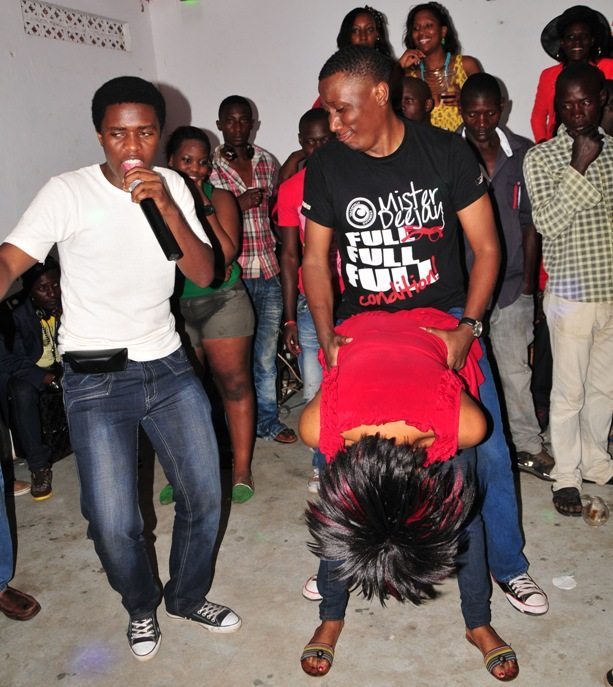
ROGERBefore we had Roger Mugisha and his confessions of worshipping the devil together with his Shadows Angels, witchcraft has always been practiced amongst us for a long time dating even back to the time when Jesus and his disciples walked the earth. However, it was always engaged and practiced within the shadows; relying on discretion and secrecy as keys to its survival over time. Which leads to the question as to where the sudden boldness and courage these secret societies have recently mustered in order to come out and declare their existence and influence in so many sectors of society, be it in politics, the economy or even in the ordinary Ugandans’ day to day life. Why now?

Recently, the nation witnessed the Speaker of Parliament Ms Rebecca Kadaga visit her ancestral home and paying homage to her ancestors in respect to her winning the NRM primaries, somehow contradicting her image as a strong believer in the age old faith of Christianity that abhors any form of worship that isn’t directed to God or Jesus.

The Speaker of Parliament on her visit to her ancestralshrine on Nendha Hill. Photo/ugandachristiannews.com
The Speaker of Parliament on her visit to her ancestral shrine on Nendha Hill. Photo/ugandachristiannews.com

Shortly after that a one Jeff Kiwa, a city socialite, was implicated in the murder of a six-year old boy from Busia, who was beheaded by his older brother allegedly at the imploring of Kiwa on promise that the said killer Herbert Were would join the Illuminati and thus attain a humongous amount of wealth.
One of the symbols of the underworld socities
One of the symbols depicting the underworld societies like the Illumnati

It is easier for one to dismiss such rumours and hearsay about ritual sacrifices and witchcraft when one reads or hears about it all the way from Hollywood that is also famous for its involvement in satanic worship and having the most number of people claimed to be members of secret societies that are also based on satanic ideologies.

The level of awareness of so many individuals concerning these occult rituals and secret societies has grown to an extent that it has corrupted the notion that ‘hard work pays’; any new form of prosperity or wealth attained instantaneously by any individual puts him/her in the spotlight as a new recruit to the worship of the devil or the ‘selling of one’s soul’, as most people put it.

Indeed, many artistes both local and international have been accused of selling their souls for money and fame and having had to sacrifice their kindred as pre-requisite to join these cults and then gain whatever it is their hearts desire, as was the case with a naïve Were of Busia. In an article released earlier this year Breitbart writer Frances Martel writes about the increase in child sacrifices by witch doctors during election season.

Shelin Kasozi, who works with Kyampisi Childcare Ministries, stated that cases of child sacrifice was more common during election time due to beliefs that blood sacrifices would bring wealth and power. Also, in Tanzania officials had to warn against the sacrifice of albinos, a vice that is believed to provide wealth and power. At the time of the warning about 70 albinos had been sacrificed, prompting the Tanzanian government and other organizations to forge an iron fist in order to stop the killings of albinos.

So, when a citizen of Uganda wakes up to the ‘breakfast’ of Ms Kadaga’s visit to a shrine, should they rejoice at the fact that their vote counted in ensuring her victory or fear that somewhere in this blessed land of Uganda a family weeps at the loss of a loved one at the hands of witch craft and its self preservation? Should we appreciate the music and art that so many talented artistes produce today without having to feel guilty that we might be indirectly participating in the mockery of God and the church?

Many, especially Christians, have likened the re-occurrence of these events to the coming of the ‘end times’ or the ‘second return of the Messiah’, when the world was plunged into the darkness and the worship a different ‘god’ depicted as the anti-Christ or beast in the Bible. Others have mainly focused on the inhumane nature of these practices and attributed it to the moral decay of today’s generation and society whilst some others refuse to acknowledge the existence of such cults or societies and refuse to accept the idea that they might indeed coexist with others capable of such evil and abominations.

However, with the constant discoveries of these new practices and their new initiates one cannot help but stop to think and ask as to what really runs their country? Community? Or home? Are the values and teachings instilled in to so many of us from a very tender age been the all for the sole purpose of maintaining the façade of democracy that we live today? Another good question would be to ask where Uganda is headed five or more years down the line.

Ivan Mpiira, 31, a counselor at a Transformative Centre in Kampala and senior member of Victory City Church in Ntinda states that the only reason as to why an individual would wake up one morning and involve themselves wholeheartedly into such extremities in order to attain wealth and fame is because they lack the idea of ‘self’. Because of that, he adds, so many people have placed value in so many externalities other than themselves in order to gain significance and identity.

“Someone will value themselves basing on the car they drive or the amount of money they earn. If someone, let’s say valued themselves by just who they were and not the materials they possess, they would begin to see others under that same light causing them to value them as humans like themselves not a means to an end,” Mr Mpiira notes.

He also blames the new age of technology and social media as another catalyst to the growing degradation of society, saying that it has disillusioned so many youths.

“They (youth) have become so dependent on the media and gadgets of the era that one has become so distant from themselves that one forgets who they are; that they are capable of doing anything as long as it is ‘trending’”, he adds .

Asked about human sacrifice, Mr Mpiira explained: “As humans we are naturally born selfish. Even Adam and Eve were selfish when they ate the fruit and thus the lust, the need to have more and more can easily drive someone to do what was previously deemed unimaginable.”

This he also attributed to a mindset, exemplifying by referring to the colonial times when the Europeans colonized many African colonies. “When the colonialists took over back in the day, not only did they destroy any traces of self esteem, they also brainwashed us in that they become our masters and a servant tries their best to always emulate their superior, because master knows best. And we see it today, with so many of our youths trying to align themselves to whatever it is that the West throws at them. It’s no wonder that these Illuminati theories are beginning to trend and take form and shape,” Mr Mpiira notes.

 

Stories Continues after ad

MPs Munyagwa, Ssewanyana protest, walk out on Museveni

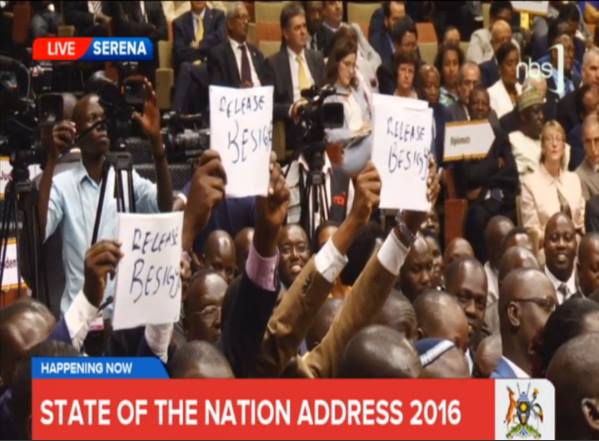
Controversial city legislators Allan Ssewanyana (Makindye West) and Mubarak Munyagwa (Kawempe South) have today protested over opposition kingpin Dr.  Kizza Besigye’s continued detention.

The two walked out on President Museveni as he addressed MPs during the State of the Nation Address at the Kampala Serena Conference Center.

The duo, close associates of Dr. Besigye and Kampala Lord Mayor Erias Lukwago, were part of a section of opposition legislators who had earlier held placards with inscriptions demanding for the release of the former presidential candidate.

Placards

The messages on the placards read: “Release Besigye… Release Besigye” but when Speaker Rebecca Kadaga asked the holders to put them down, Mr. Ssewanyana and Munyagwa walked out of the venue in protest.

This also marked the beginning of the first session of the 10th parliament for the two lawmakers.

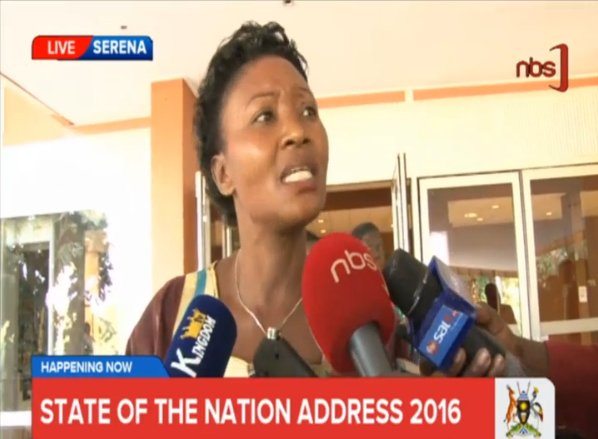
The new Leader of Opposition in Parliament Winnie Kiiza joined them in protest after the occasion and revealed that President Museveni had hurt the opposition’s ‘feelings’ by ignoring Besigye’s case.

She said: “We expected President Museveni to talk about Dr. Kizza Besigye’s arrest but he didn’t.  We are hurt.”

When NBS TV asked about the contradictions surrounding her new role asLoP, the Kasese Women MP was straightforward

“Yes, the party [FDC] made a final decision, there is no doubt about that. What the Speaker meant about ‘Leader of Minority’ was an omission of the title “Leader of Opposition”: ‘It will be corrected’

New LoP Winnie Kizza

The opposition had asked the president to instead of delivering the address, handover power to Kizza Besigye who allegedly won the 2016 general elections.

Addressing press at the party head offices in Najjanankumbi on Monday, FDC spokesperson Ibrahim Ssemujju Nganda said handing over power and releasing Besigye from Luzira prison is what they expect of Museveni.

Stories Continues after ad

What if Uganda gets five presidents visiting in two weeks?

It all started with Pope Francis’ visit last year, when several roads around the city suburbs of Namugongo and Mbuya had restricted access. This was followed by the swearing-in of President Yoweri Museveni held on May 12 at the Kololo Ceremonial Grounds.

At the function attended by about 12 Heads of State, almost all roads around Kololo were closed to ordinary traffic. Similarly, the police announced the closure of the Entebbe Highway and diverted traffic to some feeder and access roads; this was all done to clear the way for the visiting delegations.

This is a new development because in the days gone by Ugandans were usually encouraged by the government to line the streets and wait to welcome the guests, ululating.

Of course there is need to appreciate the security concerns of those involved in ensuring that the guests are safe over the period of their stay in Uganda. But the security officers must avoid becoming overzealous and instead come up with more innovative ways of maintaining security during such visits.

It is worth mention that in African culture a visitor is a special person and is normally accorded privileged treatment. However, the visitor is not supposed to inconvenience his host by way of having privileges that might negatively affect the existing status quo at the host’s house.

But what would the visitor do if the host decided to extend such privileges beyond the guest’s expectations?

Well, over the past week Uganda has received two high profile guests: the President of South Korea and that of Turkey. During their visit that cumulatively came to five working days, several Ugandans were inconvenienced while others lost millions of shillings in business opportunities, because of security concerns.

Certainly, this is no good for an economy that is still trying to find a footing, so it is better for our security officials to come up with better security arrangements that favour both the visitors and the ordinary Ugandan who is trying to eke a living.

Otherwise, one would not love to imagine what would happen if we got five presidents visiting Uganda over two weeks!

Stories Continues after ad

Line-ups: Uganda – Zimbabwe (Harare City)

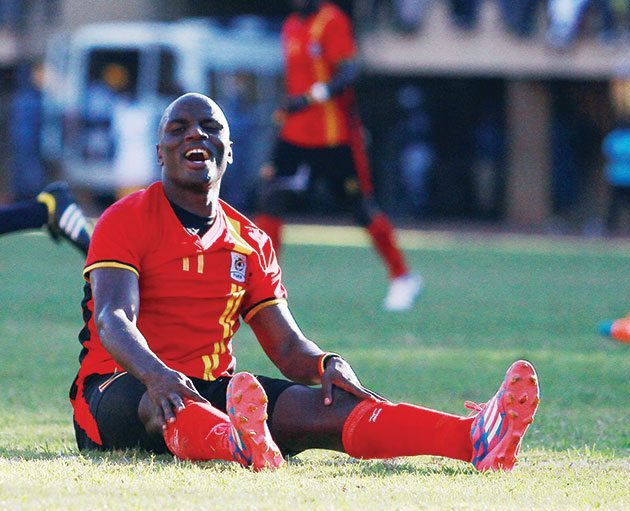
Bremen forward Lorenzen Melvyn makes their Uganda debut against Zimbabwe this evening as Cranes coach Micho names an experimental line-up.

Locally based players who were involved in league ending games over the weekend all start from the bench while foreign based players who joined to team late (today) due to late games and late flight connections, Uganda go with St. George’s Robert Odongkara in goal and a back four of Denis Iguma on the right, Godfrey Walusimbi on the left and Isaac Isinde and Murushid Juuko in the middle.

Hassan Waswa Mawanda and Yassar Mugerwa then act as a double pivot in the middle of the park for Luwagga William Kizito, the Foriense man having led the Portuguese side to promotion, Lorenzen Melvyn and Emmanuel Okwi to support lone striker Geofrey Massa.

Zimbabwe, meanwhile, are no pushovers as they start with proven pedigree in numerous foreign based stars.

Uganda Cranes XI: Robert Odongkara (G.K), Denis Iguma, Godfrey Walusimbi, Isaac Isinde, Murushid Jjuko, Hassan Waswa Mawanda, Luwagga William Kizito, Yassar Mugerwa, Geofrey Massa, Lorenzen Melvyn, Emmanuel Okwi

Subs: Denis Onyango, Joseph Ochaya, Aucho Khalid, Tonny Mawejje, Edris Lubega Erisa Sekisambu, Davis Kasirye


Stories Continues after ad

Etihad opens world class lounge in Abu Dhabi

Pictured flanked by Etihad Airways First Class lounge staff are, from left: Shane O’Hare, Etihad Airways Senior Vice President Marketing; Mohammed Al Katheeri, Acting Chief Operations Officer of Abu Dhabi Airports; Peter Baumgartner, Etihad Airways Chief Executive Officer; and Khaled Almehairbi, Etihad Airways Senior Vice President Abu Dhabi Airport Operations, celebrating the opening of the new First Class lounge at Abu Dhabi International Airport today.

Etihad Airways has today officially opened its new flagship First Class Lounge & Spa at Abu Dhabi International Airport’s Terminal 3. The spectacular new space showcases the airline’s commitment to providing unparalleled and aspirational hospitality experiences.

Entrance to the lounge. All photos/courtesy

The new facility adds to the airline’s expanding collection of 14 Premium Lounges including those recently launched in New York and Melbourne in addition to Premium Lounges in Abu Dhabi (Terminals 1 and 3), Frankfurt, London, Manchester, Dublin, Paris, Washington DC., and Sydney. At Abu Dhabi Airport, Etihad Airways also operates a dedicated Premium Lounge within the unique US Preclearance facility, and a Premium Arrivals Lounge. A new First and Business Class Lounge at Los Angeles LAX airport will follow in the coming months.

Inspired by the world’s most prestigious hotels, private members’ clubs and fine dining establishments, the lounge is an ultra-exclusive lifestyle environment which tells the airline’s acclaimed guest experience and hospitality story with unrivalled design, style and comfort, world class dining, and bespoke beauty and relaxation services.

Exquisite Lounge at Abu Dhabi Airport

The lounge features 16 unique zones designed to ensure that guests can relax, re-energise and be entertained in total luxury before boarding their flight. An à la carte restaurant, showcase bar, fitness room, cigar lounge, Six Senses Spa, Style & Shave barbers, nail bar, TV room, secluded relaxation room, prayer room and children’s play room ensure that all guests receive a highly personalised experience and intuitive service.

Peter Baumgartner, Etihad Airways’ Chief Executive Officer, said: “Our new First Class Lounge & Spa is the jewel in the crown of our new lounge offerings worldwide and represents the best of our home city of Abu Dhabi. It is a showcase of intelligent product design, innovation, ‎and superlative hospitality and service. This is not just a lounge but the ultimate airline hospitality experience and one which perfectly mirrors Etihad Airways’ evolution into the best airline in the world.

“Continuing our journey of innovation, this new dedicated First Class environment demonstrates our on-going commitment to developing world-class products as we continue to reimagine travel.”

Measuring just under 1,700 m², and boasting expansive views of the airport, the new facility is open round-the-clock for the exclusive use of guests of The Residence, Etihad First Class, Etihad Guest Exclusive, Etihad Guest Platinum members (plus one guest), Etihad Airways Partner (EAP) airline First Class guests, EAP ‘Invitation only’ members (plus two guests) and EAP equivalent Platinum members (plus one guest).

“We are reimagining service and hospitality. Whilst this physical environment is truly remarkable, we have placed special emphasis on creating an aspirational luxury lifestyle space in line with our legendary inflight service offering. The result is the finest airline lounge and spa experience in the world,” Shane O’Hare, Etihad Airways’ Senior Vice President Marketing, said.


Stories Continues after ad

Kenya covers up military massacre

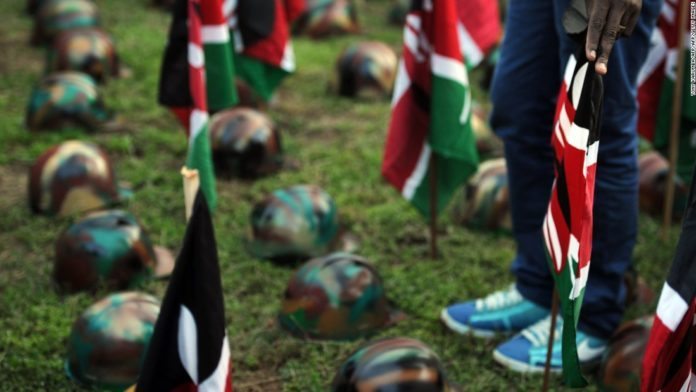
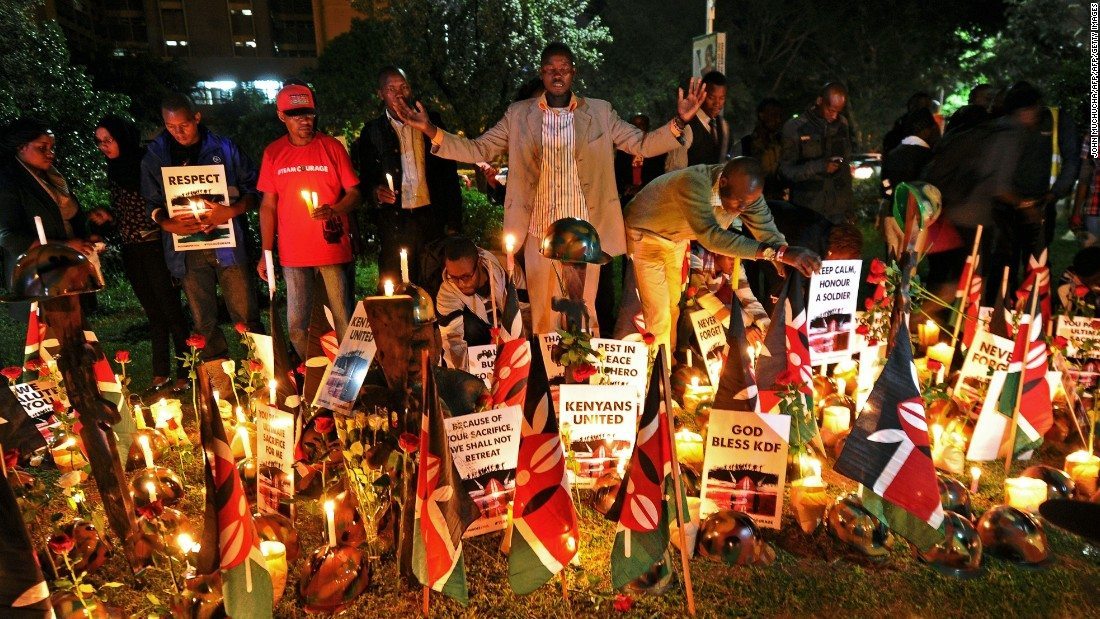
Mourners attend a vigil in Nairobi in honor of Kenyan soldiers killed at El Adde base in Somalia.

Nairobi, Kenya –On January 15, a massive blast shattered the dawn calm at El Adde military base. A suicide bomber had detonated a truck loaded with explosives, the cue for hundreds of fighters clad in camouflage gear to attack.

The raid lasted the entire day; thousands upon thousands of bullets fired by some 300 Al-Shabaab militants in a brutal assault on Kenyan soldiers stationed in Somalia to fight the terrorist group.

By the time the sun set, as many as 141 Kenyan soldiers were dead — some shot at point-blank range. That figure would make what happened at El Adde Kenya’s largest military defeat since its independence in 1963.

But in the months since, there has been no national day of mourning, no roll call of honor, and no explanation.

The only clues to what happened are contained in a propaganda video made by Al-Shabaab itself.

Al-Shabaab hits African Union base

Kenyan authorities silent

The exact details of what went on at El Adde — and just how many Kenyan troops died there — remains shrouded in mystery.

The Somali government says 200 Kenyan soldiers, key to the African Union’s fight against al-Qaeda-linked Al Shabaab, were at the base that day.

Al Shabaab, which is known to exaggerate its figures, claims to have killed 100 Kenyans.

This time, though, the terror group may actually be underestimating: Two officials familiar with the recovery operations have told CNN that the Kenyan death toll from that day is at least 141.

Kenya’s government is yet to release official figures. On the day of the attack the Kenyan Defense Force (KDF) first said its soldiers were helping to repel an attack on a Somali National Army base before stating that the KDF had incurred unspecified losses.

But as the hours wore on and rumors intensified of just how fierce and bloody the fight for El Adde was, the press releases stopped and the KDF’s media wing went silent.

Information surrounding the attack needed to be handled “carefully” and “meticulously,” Cabinet Secretary for Defense Rachael Omamo explained, “for the benefit of the families of our soldiers.”

The KDF did not respond to CNN’s repeated requests for comment and information about the attack.

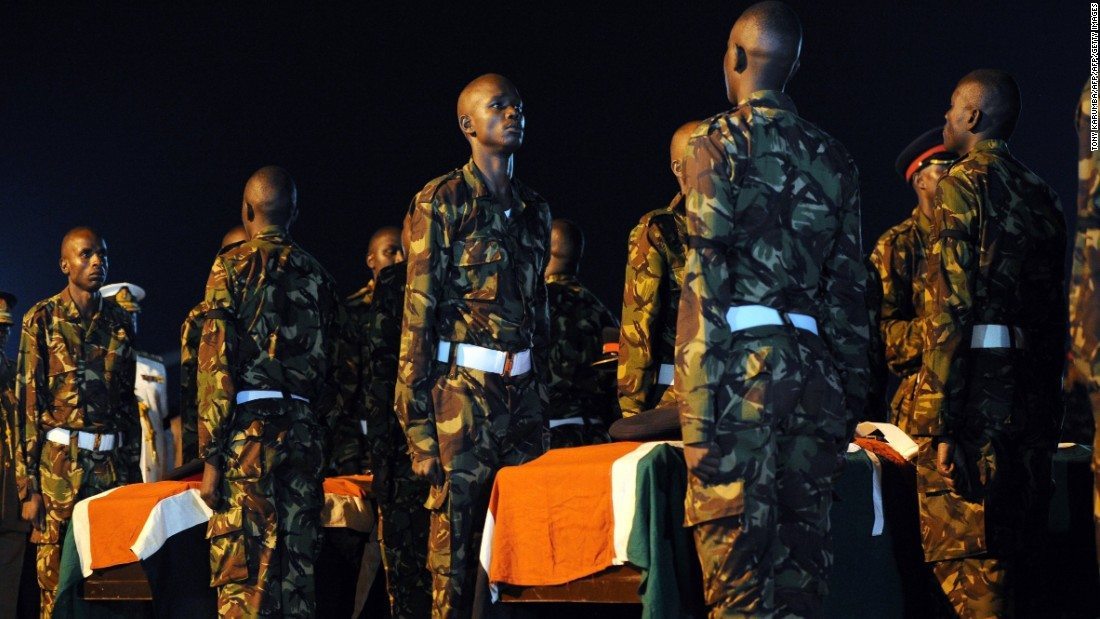
Its only public admission of what happened at the base since then has been the return of four flag-draped caskets home to Kenya.

Kenyan President Uhuru Kenyatta paid tribute to the four acknowledged casualties from the raid as they were brought home: “Their bravery is undimmed. And for this, we as a nation are grateful to all of them.”

In the months since, more coffins, more bodies have been quietly handed over, one by one, to the soldiers’ grieving families, often bringing with them more questions than they do answers.

Kenyan soldiers stand over caskets bearing the remains of four slain comrades.

What is Al-Shabaab, what does it want?

Remains ‘missing’ for weeks

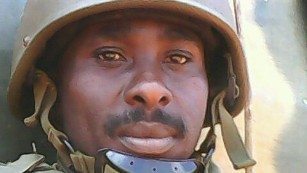
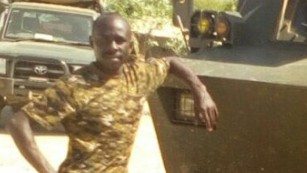
Corporal James Saitoti Kuronoi’s remains were subjected to seven DNA tests before they were finally identified and handed to his loved ones for burial, three months after he was killed.

As his body was lowered into a grave near that of his mother, in a quiet farming village near Narok, his eight siblings — their faces wet with tears — clutched each other for support.

Kuronoi’s was one of some 30 burials linked to El Adde that have been reported by local media in Kenya, but there are said to have been many more services that they could not cover.

Corporal James Saitoti Kuronoi was killed when Al-Shabaab militants attacked El Adde military base.

A tank driver and father of two, Kuronoi sent photos and talked regularly to his wife, brothers and sisters from his “new home” at El Adde. He was on his second deployment to Somalia.

“[He was] our baby brother,” said Kuronoi’s sister Jackqueline. “He was always jolly. He had a permanent smile … And I don’t know, even in the family, who will ever fill that gap.”

A week before the attack, Kuronoi sent a message to his family asking them to pray for him. It was their last contact; after Al-Shabaab attacked the base, there was no news from him, he was nowhere to be found.

A KDF tank driver and father of two, Kuronoi was on his second tour of duty in Somalia when he was killed.

Jackqueline Kuronoi says the family went through weeks of uncertainty in the wake of the raid.

“You are looking for somebody … you don’t know where,” she told CNN.

“You hear that some people were taken by Al-Shabaab, others are still in hiding, others were hiding and killed, some were burned beyond recognition, and you don’t know where you belong. Where is our person?”

She praises the Kenyan Defense Force for its support of their family in the aftermath of her brother’s death, but with no official information released by the government, she has many questions about what happened that day.

“We would like to know who these people are? They died together. How many were they?” she said.

“It is a question that will live in our minds forever, because even if you have the body, what about the rest? How many were they? How many were rescued? You don’t know.”

Why Al-Shabaab is a growing threat


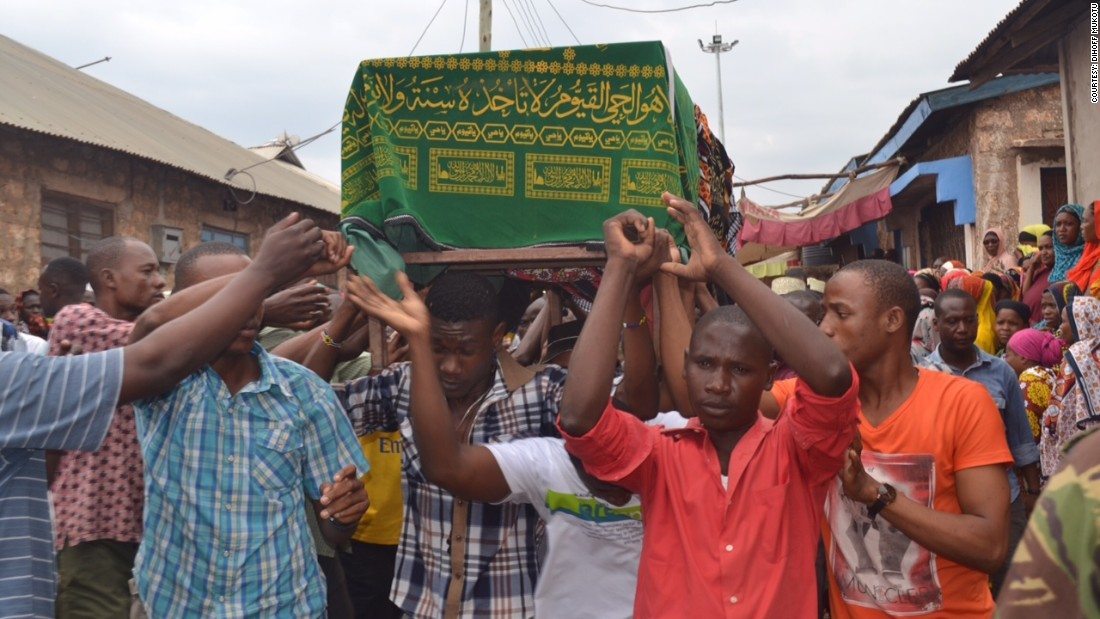
The coffin of Sergeant Juma Zahoro, who died at El Adde, is carried to his funeral in Mombasa.

Sergeant Juma Zahoro, 41 and a father of three, served in the Kenyan Defense Force’s intelligence unit. He was approaching his tenth year of service on that fateful Friday in January.

Weeks later, his family offered prayers over his body at a mosque in Mombasa, before burying him in the city’s Mshale cemetery in a funeral attended by hundreds of family members, friends and fellow soldiers.

His father-in-law, Mwalim Rama, told those gathered at the steamy burial ground that young people should not be put off joining the military because of attacks like the one in which Zahoro was killed.

“Fighting and dying for your country is something one should be proud of,” he told the mourners. It is a message echoed by military commanders and Kenya’s Commander in Chief, President Uhuru Kenyatta.

But with so few details of the raid out in the open, it has been left to the attackers themselves to tell the story of El Adde.

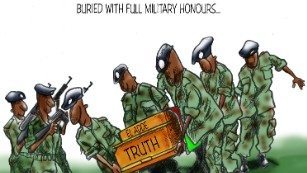
Cartoonist Patrick Gathara believes the truth about El Adde is being hidden from the Kenyan public.

Well known for sophisticated propaganda techniques, Al-Shabaab released a flashy, high-definition video three months after the attack.

It shows tracer rounds lighting up the sky as a massive firefight for the base begins: Al-Shabaab militants fire AK-47s, rocket-propelled grenades and machine guns at the Kenyan troops.

The bodies of 50 soldiers can be counted; many of the men are killed execution-style on camera, while others are seen surrendering in terror. A soundtrack of gunfire is laid over the entire 48-minute long film.

"Who died for you in El Adde?" Gathara believes there is a deliberate attempt "to avoid accountability."
“Who died for you in El Adde?” Gathara believes there is a deliberate attempt “to avoid accountability.”

In one heart-wrenching scene, a Kenyan soldier stands and tries to climb out through the hatch of his burning tank, arms raised in surrender, eyes wide as the enemy army encroaches. Al-Shabaab’s cameraman focuses on the man as he is shot multiple times, sliding back inside the tank.

Al-Shabaab faction pledges allegiance to ISIS

Tactical disaster’ for Kenya

The apparent ease with which the militants breached barriers at El Adde has surprised many security analysts — especially since the same style of assault had been seen before in bloody attacks on AMISOM forces.

One Western diplomat based in the Somali capital, Mogadishu, told CNN this was clearly a “tactical disaster” for the Kenyans.

“How can two hundred Al-Shabaab walk across a field in broad daylight without the Kenyans noticing? Where were the KDF’s machine guns?” he asked. “This is contrary to everything they have been taught, and should be doing in a hostile environment.”

Tactical disaster’ for Kenya

The apparent ease with which the militants breached barriers at El Adde has surprised many security analysts — especially since the same style of assault had been seen before in bloody attacks on AMISOM forces.

One Western diplomat based in the Somali capital, Mogadishu, told CNN this was clearly a “tactical disaster” for the Kenyans.

“How can two hundred Al-Shabaab walk across a field in broad daylight without the Kenyans noticing? Where were the KDF’s machine guns?” he asked. “This is contrary to everything they have been taught, and should be doing in a hostile environment.”

Added Gathara, “It is all very deliberate and designed to avoid public demands for senior officials and officers to be held responsible for failures.

“The truth about El Adde is being hidden from Kenyans, not from Al-Shabaab.”

U.S. ups pressure on Al-Shabaab in Somalia

Tellingly, Al-Shabaab’s propaganda video uses the Kenyan authorities’ own words against them, highlighting the inaccurate KDF press release sent in the immediate aftermath of the attack, and accusing the KDF of “distorting the truth and blatantly lying to their public.”

Analysts say the KDF’s lack of transparency has only provided more fodder for Al-Shabaab’s ideological battle.

“Although they cite national security reasons, what they end up doing is creating an opportunity for Al-Shabaab to propagandize their victories, perhaps exaggerate them,” said Peter Pham, director of the Atlantic Council’s Africa Center.

“But there’s no way of countering that narrative because there is no real narrative coming from the government.”


Kenyans in Nairobi pray at a candlelit vigil in honor of Kenyan soldiers on January 21, 2016.

“The AU [African Union] would be better served by contesting the Al-Shabaab narrative, not ceding ground to it,” said Paul D. Williams, Associate Professor of International Affairs at George Washington University, who specializes in reporting on peacekeeping missions.

“Silence is not a winning strategy in the world of strategic communications,” he told CNN in late January, shortly after the attack.

James Saitoti Kuronoi, Juma Zahoro and dozens of their comrades died — unassisted and outnumbered — at El Adde. Four months on, however, their own government refuses to acknowledge their sacrifice.

Their families remember them by name as soldiers, sons, husbands, and fathers. But to the country they served, they remain only uncounted and unknown.


Stories Continues after ad

Zimbabwe to launch ‘new currency’ in August

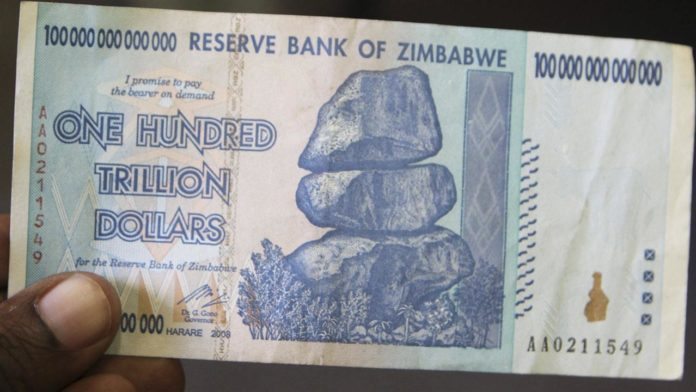
A 'One Hundred Trillion Zimbabwe Dollar' note issued at the time when inflation in the country hit the 500 billion mark

There has been a mad rush for the banks after the government of Zimbabwe announced that it will issue a new unit for business transactions called the Bond Note between August and October this year.

According to the Central Bank of Zimbabwe (CBZ), the Bond Notes will be printed by a ‘German company’ after the Bank accessed a US$200 million from Afreximbank to back the loan.

Following the announcement of the introduction of the Bond Note, there was public outrage in Harare, with Zimbabweans running to the banks to withdraw their ‘hard dollars’ and saying they were ‘returning to the dark past of Zimbabwe Dollars’.

‘Many fear that Mr Mugabe’s latest decision will trigger economic catastrophe all over again. And they are rushing to withdraw their US dollars from the banks while they still can,’ The Daily Telegraph wrote.

According to the newspaper, the authorities in Zimbabwe have imposed withdrawal limits for as low as US$20, and ‘banned anyone selling a house or business from sending the proceeds out of the country’.

But CBZ Governor John Mangudya has denied the Bond Note will replace the US Dollar as the national currency. Instead, he says, the new currency is to facilitate export business.

Since 2009 when inflation in Zimbabwe reportedly hit the 500 billion mark, sending the citizens in abject poverty, the former Southern African food basket has been using the US Dollar as ‘convertible currency’.


Stories Continues after ad

Uganda accused of ‘redeploying’ in South Sudan

South Sudan’s armed opposition has accused Ugandan troops of allegedly crossing back into South Sudan and redeploying inside the country this week in violation of the August 2015 peace agreement which demanded their withdrawal from the territories of the war-ravaged nation.

According to the Sudan Tribune, a local daily in the world’s newest state, the development was relayed by a senior military official of the Sudan People’s Liberation Army in Opposition (SPLA-IO) under the leadership of the First Vice President, Riek Machar.

By press time efforts to contact Uganda’s Defence and Army Spokesperson Lt Col Paddy Ankunda over the matter were futile, as he did not pick his phone.

However, the newspaper quoted the SPLA-IO official as saying convoys of hundreds or thousands of forces of the Ugandan People’s Defense Forces (UPDF) were seen sneaking back into South Sudan on Tuesday and Wednesday.

“Ugandan troops have crossed the borders back into South Sudan. We don’t know about their intention. This is a serious violation of the peace agreement. They were told to withdraw, and they did, then now why should they come back? To do what again?” the anonymous senior SPLA-IO military officer, who is also a member of the Joint Monitoring Ceasefire Committee (JMCC) that monitors implementation of the permanent ceasefire and security arrangements, said.

He further explained that the Ugandan forces have allegedly re-entered South Sudan through Parjok payam in Magwi county of Eastern Equatoria state, east of the national capital, Juba, and another convoy crossed the border through Paluar payam of Keji-Keji County of the newly created Yei state of Central Equatoria, south of Juba.

Eyewitnesses in Magwi County also confirmed seeing Ugandan forces crossing the border again back into South Sudan, five months after their withdrawal from the territories of the northern neighbor.

They however said the foreign troops claimed to be hunting for suspected Uganda’s opposition forces being allegedly trained inside South Sudan.

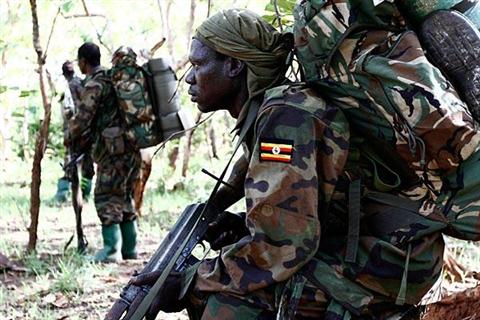
The South Sudanese peace agreement brokered by the East African regional bloc, IGAD, and signed by top rival leaders, President Salva Kiir and opposition leader, Riek Machar, only allowed Ugandan troops based in Western Equatoria under the African Union (AU) mandate to continue hunting for rebels of the Ugandan Lord’s Resistance Army (LRA) under the leadership of Joseph Kony.

The opposition’s official of the SPLA-IO said the sudden and illegal redeployment of the UPDF inside South Sudan is a violation of the country’s territorial integrity and sovereignty which he also said raised suspicion about their intention this time of peace.

He said the regional and international bodies, such as IGAD, AU and the United Nations (UN) should put pressure on Uganda to withdraw its forces and stop ‘meddling’ in the internal affairs of South Sudan.

Before the civil war, UPDF crossed the border into South Sudan days before the December 15, 2013 crisis and eventually took part in the direct combat against the opposition forces of Machar in assisting President Kiir’s forces.

When strategic Bor town, the state capital of Jonglei state was overrun and captured by the opposition forces in January 2014, three weeks after eruption of the war, it took the Ugandan troops to recapture it and took control of the town for almost two years.

Thousands of Ugandan forces backed by helicopter gunships, tanks and other armoured vehicles pushed back poorly armed opposition forces, mainly of armed young civilians from the Lou-Nuer community in Jonglei state.

The troops of the southern neighbour also provided much of the security for the capital, Juba, including the airport and protection of the top leadership in the capital during the 21 months of the civil war.

Uganda argued that it sent troops in order to avoid genocide from occurring in South Sudan.

But opposition faction of the SPLA-IO accused the UPDF of instead taking sides in the internal war and prolonging it.


Stories Continues after ad

LRA rebel commander Ongwen trial schedule revealed

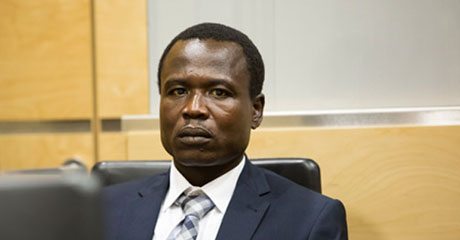
Mr Dominic Ongwen

The International Criminal Court (ICC) has scheduled the opening of the trial of ex LRA commander Dominic Ongwen for December 6, this year.

On May 2, 2016, the Presidency of the ICC constituted Trial Chamber IX to be in charge of the case of The Prosecutor v. Dominic Ongwen, who faces seventy charges of crimes against humanity and war crimes, including murder, enslavement and pillaging in Lukodi IDP Camp in 2004..

Ongwen will be tried by Judge Bertram Schmitt from Germany, Judge Peter Kovacs of Hungary and Philippines national Raul C. Pangalangan.

Background

Earlier this year (from January 21 to 27 2016), three judges at the Hague, Netherlands based court held a pre-trial chamber II hearing.

Then on March 23, 2016, Pre-Trial Chamber II confirmed 70 charges brought by the Prosecutor against Ongwen, an alleged former Commander in the Sinia Brigade of the Lord’s Resistance Army (LRA), and committed him to trial.

The confirmed charges concern crimes against humanity and war crimes allegedly committed during attacks against the Pajule IDP (October 2003), Odek IDP (April 2004) Lukodi IDP (May 2004) and Abok IDP camps (June 2004). He is also accused of sexual and gender-based crimes; crimes of conscription and use in hostilities of children under the age of 15, committed in northern Uganda between July 1 2002 and December 31, 2005.

Mr Ongwen was surrendered to the ICC on January 16, 2015 pursuant to an ICC warrant of arrest and transferred to the ICC custody on January 21, 2015.

Stories Continues after ad

Ugandans extravagant yet poor, says Museveni

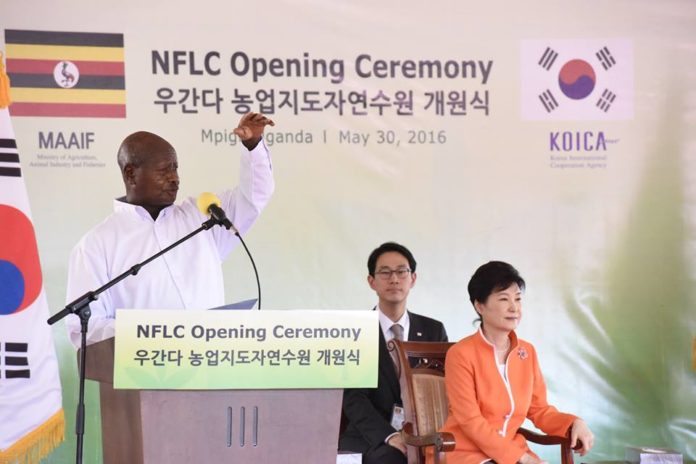
President Museveni gestures during his speech at the launch of National Farmers Leadership Centre at Kampiringisa a Shs9 billion rural project in Mpigi District. (Photo/PPU)

Local entrepreneur and activist Frank Gashumba has been given a lot of stick for referring to Uganda’s youth as ‘fantastically’ lazy.

But we doubt he would want to use the same superlatives when talking about a narrative from the head of state, that in the world, Ugandans are among the most extravagant and ‘are spendthrift when they are poor’.

When it comes to such subjects President Yoweri Museveni is a man whose opinion carries most weight.

Mr. Museveni has always been worried about the pace at which rural and agricultural development policies in Uganda progress.

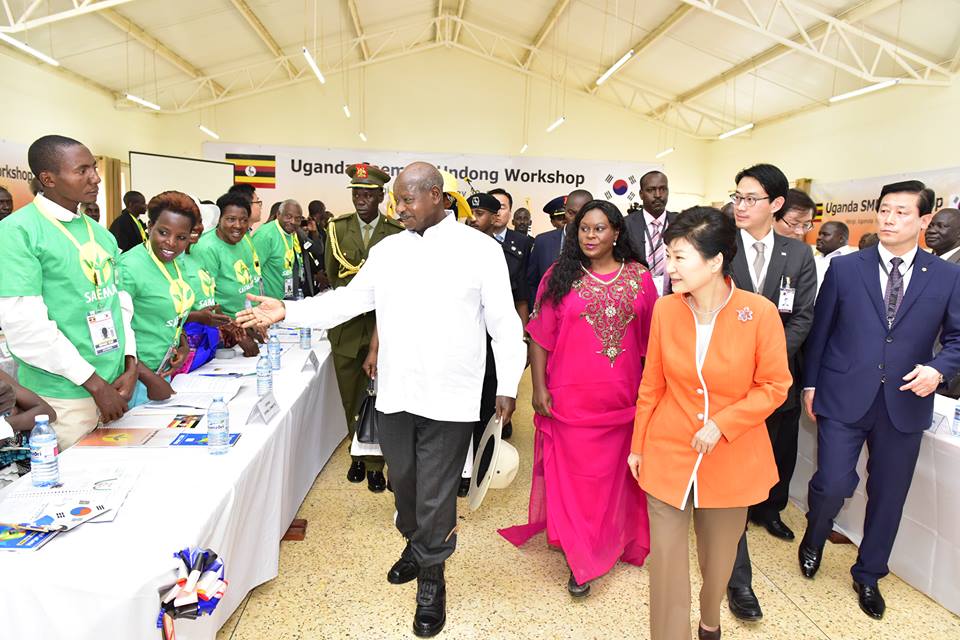
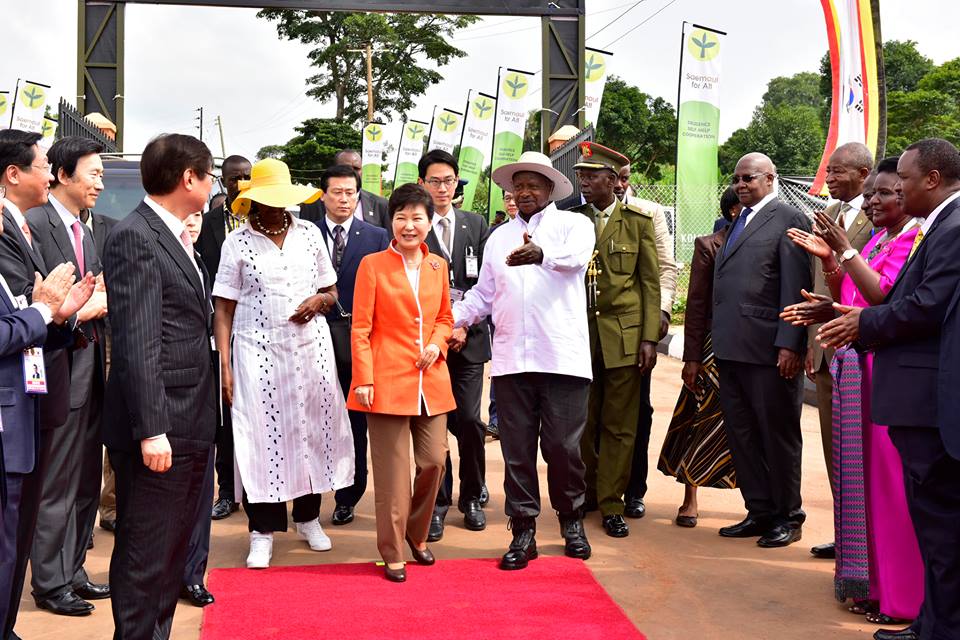
As such, President Museveni on Monday revealed how optimistic he was about the positive impact the freshly launched National Farmers Leadership Centre at Kampiringisa, a Shs9 billion rural project in Mpigi District, would create. He was in the company of visiting South Korean leader Park Guen-Hye who today will be in Kenya.

The centre that is funded by the South Korean government is modelled on the Korean philosophy of ‘Saemaul Undong’ (SMU) that has spurs rural development through mindset change.

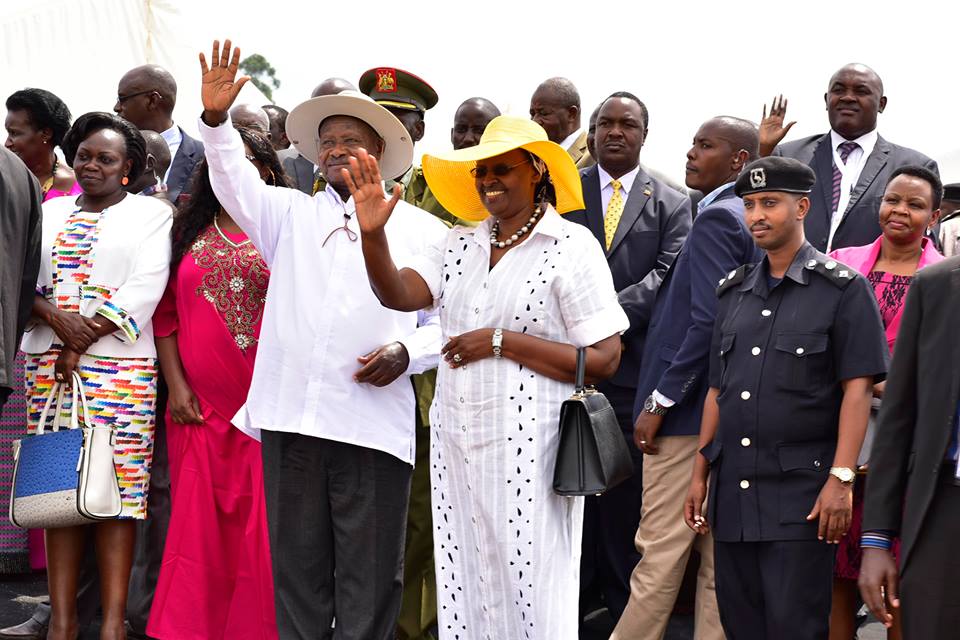
Museveni for three days hosted South Korean leader Park Guen-Hye

Mr. Museveni said: “Many Ugandans are extravagant and ‘are spendthrift when they are poor’ but Koreans are now telling us they got out of poverty because they were economical.”

“The philosophy of South Korean rural development model initiated by President Geun-Hye’s father in the 1970s will train the beneficiaries in hardwork, frugality and communal service. This movement which creates mindset change to transform rural communities has worked well for them.”

He however noted the philosophy is not new to Uganda.

Many of our communities have these beliefs. For example, we have a proverb ‘an unwise man eats seeds on account of hunger and when planting comes, the teeth smile helplessly at the garden,” Mr Museveni said adding: “The lessons for us therefore are; frugality, hard work and unity. The last we already see in our ‘bulungi bwansi’ initiatives.”

Further, the President urged Ugandans not to get carried away the promotion of loose lifestyles.

“Our people should not get carried away by the media that promotes loose lifestyle, profligacy, etc. We should borrow a leaf from South Korea on being economical, working hard and community service,” he said.

Mr Museveni said many Ugandans are extravagant and “are spendthrift when they are poor but “Koreans are now telling us they got out poverty because they were economical”.
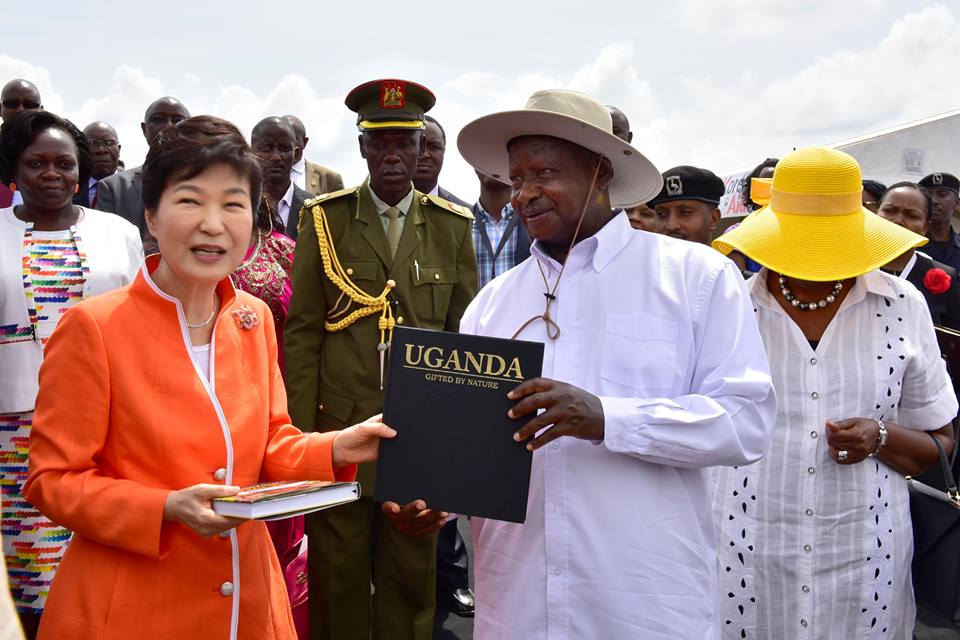
South Korea president Park Geun-hye (Centre) being given a tour around Centre at Kampiringisa by President Museveni and wife Janet Museveni on Monday
South Korea president Park Geun-hye (Centre) being given a tour around the Kampiringisa facility by President Museveni and wife Janet Museveni on Monday
The Kampiringisa programme seeks to lift the Ugandan economy through agriculture into industry.
The Kampiringisa programme seeks to lift the Ugandan economy through agriculture into industry

Ms Guen-Hye will be in Kenya today, the third stop on her African tour after visiting Ethiopia too last week.

NOW READ: Hard work and discipline sharpened South Korea-Museveni

Stories Continues after ad