Stanbic Bank
Stanbic Bank
27.2 C
Kampala
Stanbic Bank
Stanbic Bank
Home Blog Page 2189

Kayihura transfers Kasese officers

Gen. Kale Kayihura
Former IGP Gen Kale Kayihura who is due for retirement in July.

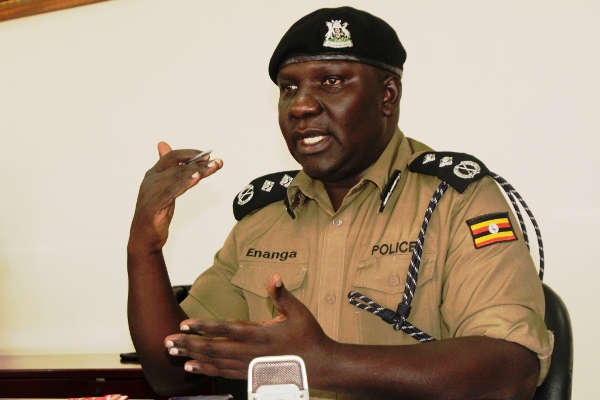
The Regional Police Commander Rwenzori East Senior Superintendent of Police (SSP) Bob Kagarura, Superintendent of Police (SP) Vicent Mwesigye of Kasese Municipal Division and Assistant Superintendent of Police (ASP) Muhammad Kirumira of Bwera Division have been transferred.

SSP Kagarura moves to Sezibwa as RPC; SP Mwesigye moves from Kasese Municipal Division to Bwera as District Police Commander (DPC), while ASP Kirumira moves to Old Kampala Police Station as DPC.

The three officers from the now troubled greater Rwenzori region are part of a group of 9 officers transferred and appointed by the Inspector General of Police (IGP) General Kale Kayihura, on March 16.

Recently, the Rwenzori region has witnessed violent skirmishes, with police and the army engaging in running battles with stone and stick-wielding civilians, resulting in the one death.

Earlier, six people were killed by unidentified people, while just a day ago the Gombolola Internal Security Officer (GISO) of Buhuhira sub county James Mulhumbira was also attacked by yet to be identified people.

Meanwhile, other officers transferred or appointed include Assistant Commissioner of Police (ACP) Deo Obora, who replaces Mr Kagarura as RPC Rwenzori East; SP Sam Odong moves from Luuka to Kasese Municipal Division; ASP Emmanuel Ochamringa and Jackson Maumbe move to Directorate of Operations at police headquarters as Staff Officers; ASP Sam Suubi moves from Lira to Hima as DPC, while Julius Baganzi was confirmed the DPC of Katwe Police Station.

Stories Continues after ad

Uganda named among Africa’s poorest

Despite the NRM government preaching the gospel of wealth creation for years, Uganda has failed to regain its status as one of the wealthiest countries in Sub-Saharan Africa on a wealth per capita basis.

The 3rd Annual Africa Wealth Report says, people living in Uganda are among the poorest on the continent having on average US$900 each. The amount most public servants are earning.  Uganda was recently ranked number 164th on the list of the world’s wealthiest nations; with an annual GDP per Capital of $ 1460 [as of 2014]; just 21 positions from the bottom.

wealthpercapita

Vote rigging, the lack of respect for ownership rights, violence, absence of press freedom are some of the reasons that have been cited for the Uganda’s country’s collapse and ultimate malaise.

Region wise, while the gap between rich and poor is highest in central Uganda, poverty rates in Uganda’s east range from 27% to 62%.

According to calculations in the report, poverty across Uganda declined from 39% in 2002 to 31% in 2005, mainly in central and western regions, but remained particularly severe in the pastoral areas.

The report says that poor pastoral areas such as Soroti have continued to show “little or no progress in terms of poverty reduction over the past 15 years.”

Press freedom has also been at the centre of the Uganda crisis.

On a brighter note however, Uganda’s construction sector will expand throughout our 10-year forecast period up to 2025, recording 7.1% growth in real terms in 2016 and averaging annual growth of 7.9% over the next five according to the report. Infrastructure related to the development of Uganda’s oil reserves will be the primary driver of this expansion, supported by improvements to the national power supply and regional transport links. Potential investors may be discouraged by the dominance of Chinese firms and allegations of government corruption. The report predicts forecasts of 6.8% real growth over 2016, 7.9% over the next five years and 7.7% over our full 10-year forecast period. Oil production and the associated infrastructure will be the main drivers of industry expansion over the short term.

Commercial vehicle sales will grow 6.6% in 2016 outperforming passenger vehicle sales growth due to Uganda’s infrastructure expansion driven economy. Although private consumption will continue to drive passenger vehicle registrations, imported used vehicles will continue to negatively affect new vehicle registrations.

While Uganda is not doing well overall, the Island country of Mauritius is rising. The country saw the wealthiest individuals in Africa with US$21,700 in wealth per person.

The success of Mauritius has been attributed to secure ownership rights that has seen a large number of wealthy individuals moving there over the past decade.

“Low taxes which encourage business formation and appeal to retirees. Company and personal income tax rates are only 15%, with no inheritance or capital gains tax.”

Stories Continues after ad

Museveni Explains The NRM Revolution And Ideology

President Museveni

In the Book of Mathew Chap: 23:23. it says that: “They left undone what they ought to have done and did that they ought not to have done and there is no truth in them”.  In exact quotation it says:“…Woe to you, scribes and Pharisees, hypocrites! For you pay tithe of mint and anise and cummin, and have neglected the weightier matters of the law: justice, mercy and faith.  These you ought to have done, without leaving the others undone”. Verse 24 says: “….. Blind guides, who strain out a gnat and swallow a camel…”.  All this means that you concentrate on peripheral issues but neglect much more fundamental issues.

That was exactly the problem of Uganda and many parts of Africa prior to the rise of the NRM in the 1960s as part of the Student Movement and also the rise of the other Liberation Movements. Prior to 1862, when the first European, Hannington Speke, came to Uganda, this area was under tribal kings and chiefs ruling over the fraternal but divided peoples of this area.  You had the kingdoms of Bunyoro, Buganda, Nkore, Rwanda and the chiefdoms of Mpororo, Busoga, Lango (Bukiri), Buhaya, Acholi (Gani), etc. On many occasions, these kingdoms and chiefdoms were at war fomented by the myopic and ego-centric kings fighting for looting ─ “kunyaga”. There had been, according to mythology and history, some period of peace, prior to 1500 AD, during the time of the Bachweezi, when much of Nkore, Bunyoro, Buganda, Bukiri, etc, had been united.  However, the Bachweezi dynasty had collapsed and had been replaced by the new dynasties of the Kabakas in Buganda, the Babiito in Bunyoro-Tooro, the Bahiinda in Nkore-Karagwe-Buhaya and the Bainginya in Rwanda.  It is these that were promoting wars among our people.

Our peoples are either similar or linked. Certainly, linguistically, all the interlacustrine Bantu speak, more or less, one language with different dialects. These Bantu dialects have linkages with the Nilotic dialects which, more or less, are one language, so do the Bantu dialects have linkages with the Nilo-Hamitic and the Sudanic languages (Ateso-Akarimojong and Lugbara-Madi). Examples: the Madi word for home is “aku”.  What is the Bantu word for home?  It is “eka” for many of the dialects.  The Lugbara word for syphilis is: “oyaa”.

In some Bantu dialects, the word for syphilis is: “ebihooya”.  The word for daughter in Luo is “nyara”.  Those who speak Bantu dialects know what that word means ─ very much connected with daughter-making. The word for anthem in Acholi is “Lubala”.  The word for clan anthems in Luganda is “Mubala”.

One of the first European visitors to come to Africa, was HM Stanley.  In his Book: “Through the Dark Continent Vol II” on page 3, he wrote as follows: “The Wajiji, Wazinja, Wazongora, Wanyambu, Wanya-Ruanda, Kishakka, Wanyoro and Wanyankori, Wasui, Watuusi, Wahha, Warundi and Wazige; all these tribes are related to each other and their language shows only slight differences in dialect”.

On page 366, of his other Book: “The Rescue of Emin Pasha” he further, says as follows:

“By a gradual rise from Amranda southward we escape after a few miles out of the unlovely plains to older land producing a better quality of timber.  Before we were 100 feet above the lake a visible improvement has taken place, the acacia has disappeared and the myombo, a tree whose bark is useful in native cloth and for boxes and which might be adapted to canoes, flourished  everywhere.  At Bwanga, the next village, the language of the Wahuma, which we had heard continually since leaving Albert Nyanza, ceases and the Unyamwezi interpreters had now to be employed, which fact the skeptical Zanzibaris hailed as being evidence that we were approaching Pwani (the Coast)”.  There you are.

This complete stranger, who had only been to this area two times, could quickly notice that the Bantu dialects spoken between the Ituri Forest and Mwanza in Tanzania were, essentially, one language which he called the “Wahuma” language.  Indeed, many Bahima speak different dialects of the same language.  Stanley had noticed what some people, these days, call Runyakitara language.

However, our ego-centric chiefs were promoting tribal chauvinism, division and wars among these fraternal peoples.  When the foreigners, therefore, came, we could not resist them because we were divided.  By 1900, the old arrangement had been defeated and a colonial one was put in place.  In addition to the old tribal chauvinism that had been being promoted by the kings and chiefs, a new pseudo polarization was added ─ that of religious polarization.  This meant Catholic against Protestant and vice-versa, Christian against Moslem and vice-versa.  This was due to importing into Central Africa the nonsensical conflicts of Europe (Catholics vs Protestants) and the Middle East and the Balkans (the Christian crusaders vs the Moslems).  The conflicts between the Protestants and Catholics in Europe had been called the “Thirty years wars” ─ between 1618 and 1648.

The combined sectarianism of tribalism and religion, reinforced by gender chauvinism, was, therefore, the dominant ideology of the opportunistic political elite by the time of Independence in 1962.  It is this sectarianism and gender chauvinism that could not allow our Independence leaders to build a capable State (Army, Police, Judiciary, Civil Service, etc., etc).  They could also not build wide unity to guarantee peace (obusingye) and stability (obutebekana).  Hence, the unstable, unprincipled political arrangement of the coalition government of UPC and Kabaka Yekka of 1962-64.  It was called: “Omukago”.  It reminds me of The Democratic Alliance (TDA). It soon collapsed, with disastrous consequences for Uganda ─ the 1966 crisis, the 1971 coup detat, the killings of 1966 to 1986.  You could even add the Kony wars and the cattle-rustlers of Karamoja.  They all had linkages with these ideological mistakes.

Some of us had belonged to the old political parties: Democratic Party (DP), Uganda Peoples Congress (UPC) and Kabaka Yekka, formed on the basis of religious and tribal sectarianism; DP for Catholics, UPC for Protestants and Kabaka Yekka for Baganda Protestants.

This was a pseudo-ideology trying to base itself on peoples’ identity rather than people’s interests.  Exploiting identity and eclipsing people’s legitimate interests.  This is when the pre-cursors of the NRM ─ the student study groups, USARF (University Students African Revolutionary Front), etc., came in and started rejecting this pseudo-ideology based on the legitimate interests of the people.  What is primary to people’s prosperity and security: identity or interests?  The real most positive element of human interaction is interests ─ especially prosperity. As a Munyankore, who guarantees your prosperity?  Is it the Banyankore that do so or not?  The answer in the pre-colonial, colonial and post-colonial times is categorical, clear and unambiguous. It is not the Banyankore that guaranteed our prosperity but the other communities (tribes) of Uganda, the Great Lakes and East Africa.

In the colonial times and post-colonial times, I went to school because of Baganda money.  How?  It is the Baganda traders ─ Walusimbi and “Bukyenya” ─ that were buying our cattle during the monthly cattle auctions (at Ntungamo, Rubaare or Kagarama).  That is how Mzee Kaguta got money to pay for my school fees.  Later, these traders were joined by a European, known as  Shear, operating out of Ishaka town, who was buying cattle for Kilembe Mines when it started operating around 1956.  Our cow, Mpuuga ya siina, tossed this white man with its horns and it earned a praise-name (ekikubyo) from Mzee Kaguta for that feat.  He refused to sell it.

Today, the mutual support for our people’s prosperity is much clearer.  The Banyankore are prosperous because the other Ugandans and other Great Lakes people buy their milk, beef and bananas.  The international community buy their coffee, their tea, etc.  Even in the pre-colonial times, Banyankore prosperity was assisted by cloth (emyeenda) from the East African Coast, by ebitooma (embugu) from Kookyi and Buhaya, etc.  They would adorn themselves with emiringa (copper bracelets) from Buleega (Congo).

It is parasites who attempt to eclipse people’s interests with the issue of identity: Hutu vs Tutsi, Cattle-keeper vs Cultivator, Northerners vs Southerners, Christians vs Moslems, Whites vs Blacks, etc., etc.  It is parasites who push these lines.  When such parasites push that line, we have no alternative but to deal with it as we did in South Africa, the Sudan, Rwanda-Burundi or here in Uganda.

Otherwise, the legitimate interest of the people is prosperity and that prosperity is, most of the times, supported by inter-tribal linkages rather than the intra-tribal linkages.  It is the different tribes that buy what we produce rather than our own tribes.  With this realization, the NRM, therefore, evolved, quite early, two principles: patriotism and Pan-Africanism.  Patriotism meant unity within Uganda so as to ensure our prosperity and security.  Pan-Africanism was so as to promote unity in East Africa and Africa in order to guarantee the same prosperity and security even better.  The unity of Uganda, the market of Uganda, is not enough to guarantee our prosperity (buying what we produce) and strategic security (to defend our sovereignty against the imperialists).

The unity of East Africa, the unity of Africa can do these two better than the mere unity of Uganda.

Therefore, the two first principles of NRM became patriotism and Pan-Africanism.  However, to benefit from Pan-Africanism and from Uganda’s unity, the society had to undergo a group metamorphosis ─ a socio-economic transformation.

One cause of parochialism and sectarianism of ideology is a stunted society in terms of socio-economic transformation.  The absence of a productive middle class, national bourgeoisie, compounds the problem of ideological bankruptcy.  You either have a bureaucratic bourgeoisie depending on Government salaries who believe in exclusion rather than inclusion because they stand better chances of getting jobs and promotions with the principle of the “fewer the better” or you have the comprador (agent) bourgeoisie who depend on imports for a livelihood, thereby turning our market into a dumping ground for foreign products and ensure a constant hemorrhage of our forex that continues to enrich external interests and cause economic anaemia to our own country.

The comprador  bourgeoisie, by flooding our markets with foreign products, are supporting the prosperity of the foreigners.  The National bourgeoisie (the manufacturers, the farmers, the exporters, etc), tend to be patriotic and also Pan-Africanist because their interests compel them to look for markets in the region and abroad.

The National bourgeoisie will, however, not grow by itself.  This is where our third principle comes in.  This is the principle of socio-economic transformation.  The NRM  and other reformers before it had to trigger socio-economic transformation that would see our mainly peasant society, with a heavy dose of a petty bourgeois class (civil servants, teachers, etc), metamorphose into a middle-class and skilled working class society.  The middle-class should have a high proportion of the National bourgeoisie (the manufacturers, the farmers, the service providers, the infrastructure developers) and not just traders ─ especially not importers of goods and services that can, more economically, be made here.  This is, indeed, the difference between Europe and Africa.  Around 1400 AD, Europe was a three class society:  the feudalists (aristocrats), the peasants (farmers) and the artisans (black smiths, textile people, carpenters, ceramics people, etc).  By the time of the French Revolution (1789) two new social classes had emerged: the bourgeoisie (middle-class) and the proletariat (industrial, farm and services workers).  Africa in 1400 AD was similar to Europe at that time, with feudalists, artisans and farmers (cattle keepers or cultivators).  Unfortunately, Africa did not go through an industrial revolution (invention of machines).  Hence, by 1900 AD, at the dawn of colonialism, Africa was still a three class society: feudalists, artisans and farmers (peasants).  The colonialists destroyed the feudal class because it was competing with the colonialists for political power and also destroyed the artisan class because it was making goods which colonialism wanted imported from outside ─ plates, spoons, hoes (chillington hoes rather the indigenous enfuka), pangas, etc.  It is only the peasants that survived.  They were, later on, joined by small groups of the petty bourgeoisie in the form of clerks and interpreters and later by petty traders.  It is only now that the national bourgeoisie (the Mulwanas, the Madhivanis, the Methas, the Sudhirs, the Mwebesas, etc), are beginning to emerge.  Those add to our economic strength by producing products that we consume or we export; thereby, ameliorating the hemorrhage on our economy where money flows from here to the outside to our detriment.

Therefore, principle number three of the NRM that enables us to understand the anatomy of the society so that we know the elements that are able to strengthen us and those that can weaken us, the need to understand the proportions of social-economic transformation, is very crucial and unique. It is unique because it is only the NRM that understands the importance of this.

What stimuli did we use to encourage this process?  Apart from peace, we used four other stimuli.  These were: education for all (UPE, USE), liberalization of the economy, improved health (especially immunization) and improved infrastructure (roads, electricity, telephone, the ICT backbone, piped water, safe water in the villages etc). As a consequence of these steps, the literacy rate is now 75%, up from 43% in 1986.  The social base for socio-economic transformation has, therefore, been laid.

We are going to use it to transform the society permanently.  We need correct policy stimuli to do so and I will bring those out later.  Liberalization helped the creation of the middle-class by removing the State (Government) from doing business.  The State used to monopolize the business of hotels, transport, imports, etc.  These sectors are now being manned by the private sector.  This creates efficiency and spreads wealth.

The fourth principle of the NRM is the democracy.  Democracy is clear enough. Ugandan’s democracy, the democracy pushed by the NRM, is much richer than anything, anybody, has attempted to do in the world, other than the ancient Greeks who produced direct democracy, in the City States.  We have empowered women, the youth, the workers, the disabled, the soldiers, etc.  I must,  however, condemn in the strongest terms possible those who pollute our democracy by trying to cheat in any election.  Some of the practices in our Primaries were shameful.  I corrected the few cases I had time to attend to.  These were Kanungu and Namutumba.  In a recent article, I analysed those mistakes.  I do not have to repeat here the contents of that article.  It is attached.

The NRM democracy must be kukyenuura-based through production of wealth and jobs creation.  Kukyenuura means to solve a solvable need.

Having seen the four NRM principles, let us cast a glance at the way forward from where we are today. This is where our quotation, the one we started with, comes in handy:  “They left undone what they ought to have done and they did that they ought not to have done and there is no truth in them”.  This is where the political elites of Uganda and Africa let our people down.  Over the last 50 years, the NRM has identified 10 strategic bottlenecks.  Here below, they are restated.

(i)            ideological disorientation;

(ii)           a weak state, especially the army, that needed restructuring;

(iii)          the suppression of the private sector;

(iv)         the underdevelopment of the human resource (lack of education and poor health);

(v)          the underdevelopment of the infrastructure (the railways, the roads, the electricity, the telephones, piped water, etc);

(vi)         a small internal market;

(vii) lack of industrialization;

(viii)       the underdevelopment of the services sector (hotels, banking, transport, insurance, etc.);

(ix)         the underdevelopment of agriculture; and

(x)          the attack on democracy.

As you can see, we have been handling many of the strategic bottlenecks: ideological disorientation, a weak State, emancipating the private sector, the human resource development (education and health), modernizing the infrastructure, integrating the fragmented  markets, etc, etc.   Hence, we have got a better base than ever before.  We are, therefore, in a position to tackle, step by step, the residual problems and convert Uganda into a middle-income country by 2019 and an upper middle-income country by 2040.

In this term, the first step to take is for all of the political class to remember what it says in the Church of Uganda Prayer Book. It says: “Omuntu omubi kwarihinduka, yareka eby’okushiisha ebi yaakozire, yakora ebiragiro kandi ebihikire n’ebishemeire, aryakiza amagara gye kuza  omukufa”.  In English, it is translated as: “But if a wicked man turns from all his sins which he has committed, keeps all my statutes and does what is lawful and right, he shall surely live, he shall not die”.

Therefore, if the political class repent their sins of being estranged from the legitimate interests of the people, they will have their political lives prolonged.

I am a veteran of fighting poverty and working for socio-economic transformation in Uganda. I started this struggle, in earnest, in the Christmas of 1966 in the Butaka area (Rwakitura, Rushere, Naama, etc).  That effort succeeded and, since 1995, I have been drawing the attention of the political class to that living example.  Like the parable of the sower goes, much of the seeds fell on rocky ground and did not germinate.  In that area, we were able to get the society to go through four steps.  Step one, end nomadism.  Step two, go from subsistence farming to commercial farming.  Step three, do so, with ekibaro, cura, aimar, otita, (calculating profitability).  Then step four, stop land fragmentation through inheritance.  The area is now quite prosperous.  The whole exercise was described in detail in my essay entitled: “From Obwiiriza to Amatafaari”.  However, the political class has refused to learn from that lesson in many cases.  The population in the cattle keeping areas have, however, totally changed.

In Nyabushozi, Kazo, Kashoongyi, Bukaanga, Isingiro, Kabula, Ssembabule, Gomba, Ngoma, Kyenkwaanzi, etc, etc., the cattle keeping communities have shifted from the indigenous long horn cattle to the Friesian dairy cattle ─ selling milk and getting money per day.  In the Government Research stations and also working with some farmers, we also worked out a packaging for the crop areas.  In the 1996 Manifesto, as a sequel to my 1995 poverty eradication country ─ wide tour, we worked out the four acres plan.  Have one acre of clonal coffee, one acre of fruits, one acre of pasture for six zero grazing cows and one acre of food crops (bananas, cassava or Irish potatoes).  Add to these, back yard activities of poultry for eggs, pigs, rabbits, etc. and fish farming where there are wetlands nearby.  It is now 20 years plus when the NRM has been telling you about how to get 68% of our households out of poverty through commercial agriculture as far as those families with land are concerned.  Those with smaller pieces of land than the 4 acres, can also earn good incomes from onions, from tomatoes, vegetables, mushrooms, etc. In the Manifesto, I pledged to enhance the wealth funds: NAADS, Youth, Woman, Micro-finance and the Innovation Fund.

This is the medicine for the ones with small pieces of agricultural land.   Those with big pieces of land have much more flexibility.  They can commercially undertake anything they fancy: maize, tobacco, cotton, sugarcane, beef ranching, fruits, coffee or whatever.  On account of scale, whatever they do, will bring in good income.

Agriculture, however, will not be the only path for socio-economic transformation although it will provide raw-materials for a wide spectrum of industries ─ dairy, beef, textiles, fruits, grain milling, coffee, tea, cocoa, sugar, wood products, tobacco, medicinal herbs, etc., etc.  The other industries will be based on minerals.  These will include: cement in Hima, Tororo, Bugisu and Karamoja; fertilizers ─ Tororo; steel – Tororo, Muko and Kanungu; gold ─ Buhweju, Mubende, Busia, etc, etc; petroleum ─ Hoima; marble ─ Karamoja; copper ─ Kilembe; aluminium ─ Busoga; tin ─ Ruhaama; vermiculite ─ Bugisu; coltan ─ Kisoro; uranium-nuclear energy ─ many places; etc., etc.

Apart from industries based on agriculture and those based on minerals, there are also those based on human skills such as the Kiira electric car, the Kayoola electric bus, the multiple computer applications developed by our computer scientists, etc., etc.

The services sectors are already providing important stimuli for modernization ─ tourism, transport, banking, trading, insurance,  professional services, etc., etc.

Therefore, the future is bright.  We, however, need to provide a conducive policy framework to assist this transformation.  Let us, for instance, take the issue of second-hand clothes, second-hand shoes, second-hand vehicles, etc.  These products came in to keep our people going when our industries collapsed under Idi Amin.  We, however, need to review them because they cause huge hemorrhage of our forex and also cause huge loss of jobs to the outside.  When you produce textiles from our cotton, you create 6 levels of jobs: growing the cotton, ginning the cotton, spinning it, weaving it, tailoring it and printing the colours into the fabric.  The total demand of textiles in Uganda, annually, is 226 millions of metres, worth US$270 million.

If all these textiles are manufactured here, we shall need about 400,000 bales of cotton, each weighing 185 kilogrammes.  All these dollars will remain here and we shall create direct employment of 80,000 people.  A vertically integrated leather industry producing shoes for us, will do the same, taking advantage of our millions of skins and hides.  In Ethiopia, the assembling of cars and motor-cycles rather than importing already built cars has created 160,000 jobs.

There are our groups that have made a livelihood out of importing second-hand clothes, second-hand shoes, second-hand cars, second-hand computers, etc.  We need to discuss with them and assist them to re-orient their businesses.  Why don’t you distribute the locally manufactured goods instead of distributing the foreign goods that kill the jobs for your children?  The logic is not that difficult to understand.

The five wealth and job creation funds will assist those who cannot raise their own capital.  These funds are: the NAADS Fund, the Youth Fund, the Women Fund, the Micro-Finance Fund and the Innovation Fund.  These should be interest free or low-interest loans to those who cannot borrow from banks.  These funds will do three things: First, help us to eliminate the 68% “baroreezi” (spectators) of the homesteads that were identified by the 2002 census as being outside the money economy.  Wealth creation is one area where we do not welcome “abaroreezi” (spectators). I am a fan and spectator for Chameleon, Bebe-Cool, Kusasira, etc.  However, with wealth creation, we must all be players.  No spectators.  Many of the 68% of the homesteads will be converted from subsistence farming to commercial, small scale farming.  This will boost greatly agricultural production and provide a huge amount of raw-materials to the agro-based factories.  Milk is already a good example; so is maize.

Secondly, these wealth and job creation funds will assist our youth groups, women groups to enter and progress forward in the activities of cottage industries (wine-making, wood products, cloth weaving, knitting, etc.), small scale industries (maize-mills, fruit processing, etc.), services and internal distribution (produce buying, oxen fattening, etc).

This money can be used to acquire common user facilities for the youth groups, women groups, etc., or any other relevant machinery.  I have assisted some of the youth groups to start maize-milling operations, animal feeds mixing, etc.

Thirdly, these funds will help our scientists to actualize their inventions ─ the Kiira electric car, Kayoola mini-bus, etc.

Through Foreign Direct Investment (FDI) and the activities of the bigger investors, we shall create bigger units ─ factories for sugar, steel, fertilizers, etc.  As already pointed out above, the sky is now the limit.

The market of Uganda, that of the region and the international market access we have negotiated for with the USA, India, China, WTO and EU, will help us to absorb the huge production consequent to these efforts.  We cannot go wrong.  Africa is the epi-centre for the huge socio-economic transformation that is coming next.  Let us not miss the bus again.

There is, however, one problem that must be dealt with.  This is the corruption of public servants ─ judicial staff, medical personnel, staff dealing with licensing projects, etc. as well as some elements of the political class.  This corruption will be eliminated. There will be no equivocation on this issue.  “Enjokyi, ihakuurwa omuriro” (you use fire to tame aggressive bees).  The way we defeated the indiscipline of the army, is the way we are going to defeat corruption.

I thank you.

Kyankwanzi

Stories Continues after ad

Museveni, Mkapa discuss Burundi situation

President Yoweri Museveni, the Mediator of Inter-Burudi Dialogue meets the Facilitator, former Tanzanian president Benjamin Mkapa.

President Yoweri Museveni has today received the former President of Tanzania who is the facilitator for the peace talks in Burundi Mr. Benjamin Mkapa.

The meeting took place at State lodge Kyankwanzi in Kyankwanzi district.

M7-Mkapa2

President Museveni who is the chief mediator on the peace talks In Burundi, was briefed on the progress of the negotiations by Mr. Benjamin Mkapa. He was mandated during the recent East African Community Heads of State Summit in Arusha to act as a facilitator of the peace talks.

M7-Mkapa4

Mr. Benjamin Mkapa reports to President Museveni the chief mediator.

Stories Continues after ad

Speaker Oulanyah addresses EU Parliament

DIVORCE AT LAST: Deputy Speaker Jacob Oulanyah has finally been granted divorce by the High Court.

Below is the Deputy Speaker of Parliament Jacob Oulanyah’s explanation to the European Union Parliament sitting in Brussels on Monday about the just concluded 18th February election.

Thank you Honorable Chair, for giving my delegation an opportunity to participate in this meeting and dialogue with the Honorable Members of the European Parliament.

The Republic of Uganda welcomes dialogue, respect and understanding with the European Union on matters of mutual interest. Regarding the reports being considered by this Committee, my delegation submits the following.

The Electoral Commission of the Republic of Uganda endeavored to prepare a conducive environment to allow for Ugandan voters to participate in the elections held in February and March 2016.

As a young democracy, Uganda as a whole and its institutions are evolving into a stronger and more vibrant democratic nation. Uganda has been undertaking electoral reforms to improve democracy. Most laws on elections have been amended after every cycle of elections to enhance transparency and accountability.

Civil and political rights are guaranteed in the Bill of Rights and the obligations and rights of citizens are further provided in the relevant laws.

In 2005 Ugandans by referendum adopted a Multiparty System of Government as a key addition to holding of regular free and fair elections with constitutional guarantees of the rights of the individual, and separation of powers between the governing party and the three arms of Government (the Executive, the Legislature and the Judiciary).

The Presidential, Parliamentary and Local Council elections laws provide for equitable conditions for all candidates except that the incumbent President has entitlements of the office. The Electoral Commission has the obligation to ensure compliance.

There is continuous discourse between government, political parties and civil society regarding electoral reforms.

The Parliament has the mandate to amend the relevant laws after consensus is reached. Several amendments were undertaken by the Parliament in 2015 prior to the elections of 2016, for example; The Presidential Elections (Amendment Act) No.14 of 2015, The Parliamentary Elections (Amendment) Act No.15 of 2015, The Local Governments (Amendment) Act No.16 of 2015, The National Council For Older Persons (Amendment) Act No.18 of 2015, The National Council For Disability (Amendment) Act No. 19 of 2015 and The National Youth Council (Amendment) Act No. 20 of 2015.

The 18 February 2016 elections were organized in accordance with the laws of Uganda, and were peaceful, free and fair.

However as a developing country a number of un-intended logistical challenges were experienced including late delivery of materials.

In such cases, the Electoral Commission officially apologized and undertook to provide remedies which included extension of the voting time from the statutorily provided time of 16:00 hrs to 19:00 hrs.

It also extended the voting date to the 19th of February in affected areas like Kampala to allow everyone in the queue and those who had not voted to vote.

H.E. President Yoweri Museveni of the National Resistance Movement (NRM) emerged as the winner of the 2016 Presidential Election for a 5-year term, having obtained 60.7% of the total votes cast and the runner-up obtained 35.37%.

We welcome the commendations from Election Observer Missions for example the Commonwealth Observer Group, which commended the Electoral Commission for extending the voting hours.

In the interest of national security which is a legitimate public interest as provided for under the Constitution of the Republic of Uganda in particular Article 29 Clause (1) and Article 43, Clause (1), the Government has a duty and obligation to protect the population and their property by stopping danger to the public.

It should be recalled the significant role that hate media played in a neighboring country. Due to credible information that people were planning to misuse social media to cause violence, mayhem and disruption, all measures were taken to ensure protection of Ugandans including the temporary restriction of social media which is a form of broadcasting, falls under the definition of communications, and is carried over communications channels operated by licensed providers.

Until this threat was established, there was widespread uninterrupted use of social media. The Uganda Communications Commission which has subject matter jurisdiction over all electronic and social media as well as regulatory jurisdiction over licensed providers of communications services, acted in accordance with Section 31 of 2013 Communications Act in order to address the difficulties presented to enforcement of content verification related to national security, and jurisdictional limitations with regard to the people inciting criminal activity.

Uganda is one of the countries where freedom of the press and the media is at the highest levels, and is guaranteed by The Constitution of The Republic of Uganda under Article 29 (1) (a).

There are over 24 daily and weekly newspapers, 26 free to air and 5 pay TV stations, as well as 220 licensed and operational radio stations countrywide.

The media environment is highly pluralistic in Uganda and private sector driven. The Government does neither exercise editorial, content supervision nor censorship and did not do so during the concluded elections.

The Media in Uganda primarily operates under the legal framework of, The Press and Journalist Statute, 1995 (PJS), The Electronic Media Statute, 1996 (EMS) and The Uganda Communications Act, 1997 (UCA) that deals with licensing electronic media. In these statutes, Press and Journalist Statute Section 3 and Electronic Media Statute Section 8, the right to publish or broadcast any content, without undue hindrance, is guaranteed.

The Uganda Police Force (UPF) has a responsibility for law enforcement, property protection, crime prevention, and public order. Within the police force Crime Preventers have existed for a long time and have increased in number.

Crime prevention has been an integral part of Community Policing which since its introduction into the Police Force in 1989 has become popular and gained clarity.

Crime preventers are not a militia but citizens who have volunteered to actively promote peace and stability in Ugandan communities.

They fall under a clear legal framework and due to a high response of volunteers the Government has prepared a Memorandum for the Cabinet to consider with the aim of authorizing a policy and bill to manage them.

It was in October 2014 when the Uganda Police Force celebrated 100 years of existence that the Police witnessed unprecedented large numbers of volunteers joining as crime preventers. The Constitution of the Republic of Uganda provides under Article 212 that the Police are enjoined to cooperate with the Civilian authority and other security organs and with the population generally.

It is in furtherance of this mandate and the national objectives and directive principles of state policy under the Constitution which require all State organs and the people of Uganda to work towards the promotion of national unity, peace and stability, that crime preventers under community policing are identified in this cooperation.

The Uganda Police Force acts lawfully, professionally and conducts itself with restraint even when some members of the public exercise extreme provocation.The Uganda Police Force and other law enforcement bodies do not harass members of the Media.

However regarding isolated incidents that have allegedly taken place, the cases have been taken seriously and are either under investigation, or before the Courts of Law.

It is not true that the UPF, and indeed other security organization harass members of the Media. They have instead been actively closely cooperating and constructively engaging the Media prior to, during and subsequent to the elections.

Contrary to media propaganda, it is only when the Public Order Management Act has been flouted that the police have intervened to maintain law and order, for example by one of the Presidential candidates before and after the elections in a defiant and unilateral effort to paralyze normal activities in the city.

Those who preach defiance of the law, incite violence and disrupt the peace have been requested by the Government of Uganda to stop such actions since they threaten peace and security of the general population.

In this regard the Uganda Police Force is committed to fulfilling its mandate to protect the lives and property of the population in a responsible manner and the Government is doing everything to facilitate any pursuit to legal recourse, access to media and any other interlocutors.

The Electoral Commission is a constitutional body with its independence guaranteed in Article 62 of the constitution of the Republic of Uganda, 1995, (As amended). The members of the Commission are appointed by the President with the approval of Parliament.

The Commission is on record in executing its independence. For example its decision to nominate a presidential candidate in absentia while on remand in the Luzira Maximum security prison (2006 Presidential Elections) despite the opinion of the then Attorney General.

As stated by the East African Community Election Observer Mission ‘the structures of the Electoral Commission have been decentralized at regional and district levels which enhances the management of the electoral process’.

At the time of polling, counting and tallying of ballots, agents and the general public witnessed the process. A copy of the declaration forms was given to the agents of the candidates, a copy posted in a conspicuous place around the polling station and another sealed in a tamper proof envelope for delivery to the Returning Officer.

The election results have been posted on the website of the Electoral Commission and they give a breakdown of the Presidential election results per District and Polling Station. Till this day the Commission website is an important platform, to inform the public of electoral activities and for the publishing of results in a timely way.

Better technology was introduced by the Electoral Commission through the elections to improve election transparency. Biometric voter authentication technology was for example used to validate the identity of voters prior to casting of ballots. The technology enabled faster, accurate and timely declaration of results within 48 hours of closing of the polls.

The results of the Presidential elections have also been posted on the website of the Commission giving a breakdown of the results per district and polling stations. Dispute resolution is provided for through a detailed framework under the law.

As the East African Community Election Observer Mission stated, ‘the Judiciary made necessary preparations for dispute resolution by recruiting and training judicial officers to effectively and expeditiously determine election petitions’ and welcome the Observer Mission’s further statement that it was ‘satisfied with the level of preparedness of the judiciary’.

Currently anyone who has a dispute has been free to take legal recourse to the Courts of law. Any petition before the Courts of law will be handled within the time limit under the law. The Courts of law will determine whether the election results reflected the will of Ugandans.

Any report of any alleged compromise to any case before the Courts of Law will be investigated to determine to who had the motive for the criminal act. The Uganda Police is not involved in compromising any cases before the Courts of law and any suggestion that this is the case is orchestrated to damage the image of the state and the country.

We welcome the observation by the East African Community Election Observer Mission that ‘participation of citizen observers contributed to the transparency of the counting process’.

There are many factors that affect women’s participation during the elections including social, economic, eligibility and personal choice.

These factors affect women all over the world regardless of a country’s human development index but may be aggravated in the poorest countries.

Although Uganda is a relatively less developed country, it is one of the countries that has made women’s participation in politics a priority, along with girl child education, business participation and equal pay for equal work in the public sector among other priorities.

Nomination fees were determined by the Parliament of the Republic of Uganda. The participation of one woman Presidential Candidate is a step in the right direction bearing in mind that in many parts of the world including in some developed countries the concept of a woman presidential candidate is yet to be realized.

We welcome the statement by the East African Community Election Observer Mission that ‘there was increased participation of women in the electoral process, a factor attributed to women empowerment and sensitization of their involvement in politics and governance’, and that ‘in Uganda women’s participation in politics is widely embraced’.

We also welcome the observation by the European Union Election Observer Mission that women played such a major role in the election proceedings.

Efforts are being taken to improve the participation of persons with disabilities (PWDs) and the international communities’ assistance is welcome in this regard.

Conclusion: In conclusion, Honorable Chair, I wish to reiterate the commitment of the Government of the Republic of Uganda to continued dialogue, respect and understanding with the European Union on matters of mutual interest.

Stories Continues after ad

Burundi, Rwanda citizens rank low in happiness – report

Rwanda President Paul Kagame.

Citizens of Burundi and Rwanda, alongside six other African countries are at the tail end of happiness, a report that ranks Uganda as third ‘happiest’ country in East Africa, has indicated.

The report released in Rome today ahead of the UN Happiness Day on March 20, was prepared by the Sustainable Development Solutions Network (SDSN) and the Earth Institute at Columbia University.

The report indicates that the bottom 10 least happy places on earth to live were in Madagascar, Tanzania, Liberia, Guinea, Rwanda, Benin, Afghanistan, Togo, Syria and Burundi.

LEADING THE MOST UNHAPPY PEOPLE IN THE WORLD: Burundi President Pierre Nkurunziza

Meanwhile, this year Denmark has overtaken Switzerland as the world’s happiest place, according to the report that urged nations regardless of wealth to tackle inequality and protect the environment.

The top 10 this year were Denmark, Switzerland, Iceland, Norway, Finland, Canada, Netherlands, New Zealand, Australia, and Sweden. Denmark was in third place last year, behind Switzerland and Iceland. The United States came in at 13, the United Kingdom at 23, France at 32, and Italy at 50.

“There is a very strong message for my country, the United States, which is very rich, has gotten a lot richer over the last 50 years, but has gotten no happier,” said Professor Jeffrey Sachs, the head of the SDSN and special advisor to UN Secretary General Ban Ki-moon.

While the differences between countries where people are happy and those where they are not could be scientifically measured, “we can understand why and do something about it,” Sachs, one of the report’s authors, said in Rome.

“The message for the United States is clear. For a society that just chases money, we are chasing the wrong things. Our social fabric is deteriorating, social trust is deteriorating, faith in government is deteriorating,” he said.

Aiming to “survey the scientific underpinnings of measuring and understanding subjective well-being,” the report, now in its fourth edition, ranks 157 countries by happiness levels using factors such as per capita gross domestic product (GDP) and healthy years of life expectancy.

It also rates “having someone to count on in times of trouble” and freedom from corruption in government and business.

“When countries single-mindedly pursue individual objectives, such as economic development to the neglect of social and environmental objectives, the results can be highly adverse for human wellbeing, even dangerous for survival,” it said.

“Many countries in recent years have achieved economic growth at the cost of sharply rising inequality, entrenched social exclusion, and grave damage to the natural environment.”


Stories Continues after ad

‘Tubonga Nawe’ musicians get police escorts

The singing duo of Moses Nakintije aka Mowzey Radio (RIP) and Douglas Mayanja aka Weasel

Artistes who composed the Tubonga Nawe song have been given armed police escorts.

According to a reliable source the artistes were recently given protection by the government after several people reportedly threatened to harm them for their affiliation with President Yoweri Museveni and the National Resistance Movement (NRM).

As a result, reports doing rounds around town indicate, the ‘Tubonga Nawe’ musicians had abandoned night life after the elections for fear of reprisal from the defiant opposition supporters.

However, EagleOnline has learnt that Moses Nakintije Ssekibogo aka Moze Radio, one of Uganda’s dynamic duo of Radio & Weasel, defied the  ‘rule’ that had seemingly been agreed on by all the composers and partied all Monday night at the Station Road based Club Amnesia, with police escorts though.

Radio and Weasel have just returned from Dubai but sources say their show was shunned by Ugandans there, to show solidarity with the opposition.


Stories Continues after ad

‘Out of bounds’, Board tells embattled NSSF Deputy MD

FIRED? NSSF Deputy MD Ms Geraldine Ssali Busuulwa

Workers House or any other National Social Security Fund (NSSF) outlet is now out of bounds for the embattled Deputy Managing Director, Mrs Geraldine Ssali Busuulwa.

According to a release issued today, the NSSF Board of Directors has suspended Ms Ssali has for ‘gross insubordination contrary to the Fund’s Human Resources Code of Conduct’.

‘Mrs Geraldine Ssali Busuulwa is therefore currently on suspension, effective March 14, 2016, to allow disciplinary proceedings to commence against her. While she is suspended, Mrs. Geraldine Ssali Busuulwa is not allowed to conduct any business on behalf of the Fund’ the release by the Board reads in part.

It further indicates that the decision is in line with the ‘Board’s mandate, the Fund’s Human Resources Manual (Policy & Procedures) and Section 63 of the Employment Act (2006)’.

The board has also assured NSSF members that it is on course in line with its 2015-2025 Strategic Plan.

Meanwhile, a source has intimated to EagleOnline that investigations are going to be conducted into the activities of Ms Ssali while in office.


Stories Continues after ad

Micho names 30-man Uganda squad

Uganda Cranes head coach Milutin ‘Micho’ Sredojevic has announced a 30-man provisional squad to face Burkina Faso in a double header in Group D of the 2017 Africa Cup of Nations qualifiers.
The Serbian tactician, who led the Cranes to the finals of the 2016 edition of the African Nations Championship (CHAN) in Rwanda, called up a majority of foreign-based players, including USA based MLS midfielder Mike Azira.
SC Vipers keeper James Alitho, former Swedish topflight football club Helsingborgs midfielder Mike Serumaga and star striker Ceasar Okhuti are among the 12 locally-based players included in the squad, while Proline FC’s young striker Edrisa Lubega has been handed a maiden senior call-up.
Cranes, who visit Burkina Faso on March 26 before hosting the return leg at Namboole on March 29, lead Group D of the qualifiers with a maximum six points. Botswana and Burkina Faso are tied on three points with Comoros last without a point after two games.
 
Goalkeepers: Dennis Onyango (Mamelodi Sundowns, South Africa), Robert Odongkara (St George, Ethiopia), James Alitho (Vipers, Uganda), Salim Jamal (El Merriekh, Sudan)
Defenders: Denis Iguma (Al Itihad, Lebanon), Isaac Isinde (St George, Ethiopia), Joseph Nsubuga (Bright Stars, Uganda), Joseph Ochaya (KCCA, Uganda), Denis Okot Oola (KCCA, Uganda), Isaac Muleme (SC Villa, Uganda), Murushid Jjuuko (Simba, Tanzania), Hassan Wasswa Mawanda (Al Shorta, Iraq), Timothy Awanyi (KCCA, Uganda), Bernard Muwanga (Bright Stars, Uganda)
Midfielders: Mike Azira (Colorado Rapids, US), Aucho Khalid (Gor Mahia, Kenya), Moses Oloya(Becamex Binh Duong), Yassar Mugerwa (Orlando Pirates, South Africa), Tonny Mawejje (Knattspyrnufélagið Þróttur, Iceland), Ivan Ntege (KCCA, Uganda), William Luwagga Kizito (Feirense, Portugal), Mike Sserumaga (SC Villa, Uganda), Godfrey Walusimbi (Gor Mahia), Farouk Miya (Standard Liege, Belgium)
Forwards: Geofrey Massa (Bloemfontein Celtics, South Africa), Emmanuel Okwi (Sonderjsyke, Denmark), Erisa Ssekisambu (Vipers, Uganda), Hamis ‘Diego’ Kiiza (Simba, Tanzania), Ceasar Okhuti (KCCA, Uganda), Edrisa Lubega (Proline)
Stories Continues after ad

Ten years of IGP Kale Kayihura

Former IGP Gen. Kale Kayihura

In 2005 President Yoweri Museveni appointed then Major General Edward Kale Kayihura, the Inspector General of Police. Following that appointment Gen Kayihura became only the second soldier to serve as IGP under the National Resistance Movement (NRM) government, after having taken over from then Major General Edward Katumba Wamala.

The IGP is appointed to serve a three-year term and so far Gen Kayihura is serving his fourth term, supposed to end in November this year. It is not clear if Mr Museveni will re-appoint him to the top police office but some sources suggest he might name another person, and fingers are pointing to Brigadier Leopold Kyanda, the current Chief of Staff Land Forces.

Reports about Gen Kayihura’s replacement as IGP come at a time when some senior police officers are reportedly disgruntled, with some even petitioning the Inspector General of Government (IGG) over the recent promotions, in which over 400 officers were promoted, while lawyers in the force have also gone to court to sue the Force over salary disparities.

However, any changes that might be made may affect the General substantially, as reports indicate that he ‘replaced’ former Prime Minister John Amama Mbabazi as the President’s most trusted confidant. Which begs the question: if replaced, will Gen Kayihura’s status quo be maintained?

But that notwithstanding, from the onset Gen Kayihura’s period in office while at the helm of the police was not going to be simple razzmatazz, mostly during electioneering periods in between 2005/6, 2010/11 and most recently in 2015/16.

For instance in 2005 he had to engage opposition figure Col Dr Kizza Besigye, who was then returning from exile in South Africa to vie for the presidency, contesting against (Dr Besigye) former Commander-in-Chief Yoweri Museveni. Besigye’s return was momentous, with frenzied crowds swarming the streets of Kampala to show him support. Then, as if on cue, police had to react, using tear gas for the first time to quell politically riotous Ugandans. It was not fun; and for Gen Kayihura that was a baptism of fire of sorts.

It should be recounted that before the re-introduction of multi-party politics in Uganda, the job of IGP was to generally supervise an otherwise subtle force dealing mostly with non-political matters. But this was to change drastically when a re-energised opposition under Besigye and other political actors like Norbert Mao. Gen Kayihura sprung.

A lawyer and academic, Gen Kayihura has both admirers and critics, with the latter saying he has militarized the police, an otherwise erstwhile civil force. But his admirers including the appointing authority President Museveni, have lauded him for a ‘job well done’ and the man from Kisoro is now a full four-star General, rising from the rank of Major in 1987 when the then National Resistance Army (NRA) regularized ranks.

But during his military career that now spans 34 years, there is no single time Gen Kayihura has come under scrutiny than when he has held the office of the IGP, now in the 11th year.

According to his admirers, Gen Kayihura has spearheaded reforms in the police, giving the force ‘visibility’. He has also made sure the budget is raised, and currently stands at about 700 billion Shillings annually. This money, the admirers argue, has helped police increase its fleet, build infrastructure like the police Headquarters and upcountry stations, and also improve on the image of police, including hiring of educated personnel and the promotion of women in the Force.

“Despite the cases of criticism against the police, the IGP has acquitted himself well in areas like welfare of officers, infrastructure development and training of personnel and gender parity,” says one of his admirers.

But critics say the improved budget has instead gone to buy tools of repression including among others armoured cars, new guns and tear gas. They also say not much has been done by way of infrastructure development including housing, while pointing to the dilapidated barracks around Kampala like Naguru and Nsambya plus more in up-country towns.

In fact some even questioned his discretion when the police recently acquired over 20 Toyota Land Cruiser and Prado 4X4s for the Uganda Police Force (UPF) top officers and three choppers, all estimated at several hundred billions of shillings, when the juniors are sleeping in ‘mama ingia pole’, some ramshackle structure that they deem not fit for human habitation.

But it is the political protests, quelled by a not-so-civil police, at times using live bullets against unarmed civilians and randomly tossing tear gas canisters, that will most likely hound and define gen Kayihura’s legacy. After all Ugandans even coined a moniker for him: Afande Teargas.

Another area where Gen Kayihura has come under scrutiny is his handling of Dr Kizza Besigye, mostly this time round, during the electioneering process for the 2016 presidential elections.

Further, Gen Kayihura will be remembered as the one man who has ‘tormented’ the opposition to the Museveni presidency, mostly against Dr Kizza Besigye, a leading contender for the office of the President in all the four elections held since 2001.

But Gen Kayihura’s worst moment is the 2016 elections, in which the police seemed to curtail most Dr Besigye’s freedoms: from pre-election arrests to post-election restricted movement, bordering on house arrest.

It is against such background then that some opposition personalities have even threatened, to drag Gen Kayihura to the International Criminal Court (ICC) in The Hague.

It is not clear if the opposition will be able to pull through with this threat but if they do, (or have they already done so?) he will again become only the second police chief in East Africa to face indictment after Major General Mohamed Ali of Kenya, who was indicted for the post-election violence in Kenya following the 2007 general elections.


Stories Continues after ad