Stanbic Bank
Stanbic Bank
17.5 C
Kampala
Stanbic Bank
Stanbic Bank
Home Blog Page 2207

We switched off Facebook, Twitter and Internet for security-Museveni

Museveni casting his vote

President Yoweri Museveni has cast his vote at Kaaro High School at Rushere and after words addressed the press on what he intends to do for in case he wins elections.

Museveni says he is grateful that for the first time, the country is peaceful and he expects to win with a landslide victory. “The whole country is peaceful and I don’t think they will vote for the opposition, they have been telling lies” Museveni said.

Asked why government had switched off social media and internet, President Museveni said that it was temporary security measure because in the past, people have misused them.

“Those must be steps taken for security but it is temporary it will go away because in the past, people have misused the internet. There will be no violence, they tried to bring violence by Nambooze but we have handled them”

Asked on whether he can work with opposition, the National Resistance Movement (NRM) contender said “No” before he said “If there other contenders are disciplined why not if they are for development”

Mr Museveni also acknowledged that  that political parties and any other citizens can have tally centres but warned that nobody, except the Independent Electoral Commission will announce the results.

Meanwhile in Ntungoma municipality, two rival camps of Independent Gerald Karuhanga  and NRM’s Yona Musinguzi have attacked each other and scores of Mr Karuhanga had been attacked.

Forum for Democratic Change (FDC) party President who hails from Ntungamo is actually calling for the halting of the voting saying the process has been mismanaged by police and other security forces in favour of Mr Musinguzi.

I couldn’t imagine that a private civilian can command forces to arrest of people. They have arrested and kept at the residence of Yona’s  father place.  Four of Karuhanga’s agents have been detained and we call upon EC to shut these elections. An election observer accredited by EC also reported that he had been beaten together with a journalist


Stories Continues after ad
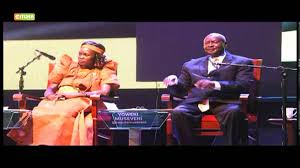
Besigye, Kyalya cast their votes

Forum for Democratic Change flag bearer Kizza Besigye and Independent Maureen Kyalya have cast their votes. Kyalya voted in Jinja while Besigye voted in Rukungiri.

Dr. Besigye casting his vote.

Besigye has contested four times against President Museveni who he served as a doctor during the 1981-86 protracted that brought Mr Museveni in power in 1986.

Ms Kyalya casting her vote.
Stories Continues after ad

Uganda switches off Facebook, Twitter over critical elections

If you have a friend or relative in Uganda, chances of communicating are indecisive as the country authorities have switched Facebook, Twitter and internet in some areas as the country conducts critical elections that will decide the fate of a 30 year ruler and a four time contender.

Uganda Communication Commission (UCC), authorities charged with overseeing the communication sector switched the internet, Facebook and Twitter for fear that the population and more the opposition party Forum for Democratic Change (FDC) would use them to get results from polling stations up-country.

There is also the fear that they would incite the public into protests in case finally results are delayed to be announced.

FDC’s Kizza Besigye, the main challenger to the incumbent Yoweri Museveni two days ago, dispatched communication gadgets to his agents to rely results direct from the polling station to the party tallying centre. The Electoral Commission also banned the use of mobile phones while at polling stations.

This comes after communication giant MTN and Airtel announced that they would be closed today and services like mobile money are not operational or are having difficulty in their services.

How a ban on Facebook, Twitter affects elections

The ban on Facebook, Internet and Twitter leaves only Electoral Commission to announce election results and this could affect both sides, opposition and ruling party as their agents will not be allowed to communicate results in time to their party tallying centres.

Stories Continues after ad

Kiggundu has no powers to ban phones. – candidates

Dr Kizza Besigye at one of his campaign rallies

Forum for Democratic Change (FDC) presidential candidate Rtd Col. Kizza Besigye and his Go Forward counterpart John Patrick Amama Mbabazi have denounced the recent announcement by the Electoral Commission (EC) banning phones at Polling Stations.

At a press briefing held yesterday morning at his home in Kasangati, Besigye argued that the country was past the 1980s and questioned the recent regulation that bars phones from polling stations.
“Kiggundu has no legal background to ban mobile phones. He has no powers to pass a decree through press conferences,” Besigye said.

He noted that camera phones are tools of surveillance that will be used to monitor irregularities in the polls. “Camera phones are great deterrent to those who want to rig polls,” he said.

Reiterating his defiance campaign, he called upon all those with phones to use them at the polls.
“Record and share the results and occurrences at the polling stations,” Besigye urged his supporters.

The FDC flag bearer further called upon EC to clarify about the discrepancies in the register. He observed that the registers they were issued with were not updated and still had the 20,000 ghost voters. “Let EC come out and show us those that were removed and their polling stations,” he tasked the EC

Besigye finalised his 2016 Presidential Campaigns with rallies in Nakawa, Banda and Luzira areas.
This is after police stopped him from holding rallies in the city centre. One person died and over 22 people were imprisoned.
Meanwhile, his Go Forward counterpart Mbabazi had earlier also told his supporters that there is no law that bars anyone carrying a phone to a polling centre, and urged them to ignore the EC directive.
Elections are set for tomorrow, Thursday February 18.

Stories Continues after ad

ICJ’s Sebutinde warns on election violence

ICJ Judge julia sebutinde

International Court of Justice (ICJ) Judge Justice Julia Sebutinde has warned politicians and security operatives against issuing inflammatory statements that could plunge the country into violence during the election period.
Addressing a press conference earlier today Justice Sebutinde, who is in the country ahead of the February 18, urged the security bosses not to get overzealous and also to avoid being partisan. she also asked the politicians to refrain from rhetoric that could lead to violence.

Recently, a number of officials like the Chief of Defence Forces (CDF) General Katumba Wamala and the National Resistance Movement (NRM) Secretary General Justine Kasule Lumumba have made remarks that border on threatening voters.

Similarly, some politicians contesting for the highest office have said some scary words, denting an otherwise peaceful campaign period that begun in November last year.
Meanwhile, in Uganda justice Julia Sebutinde, the no-nonsense international jurist, is most remembered for her tough stance on the behavior of Ugandan police officers, when she chaired a Commission of Inquiry that unearthed a lot of rot in the force.
Sebutinde was appointed to the ICJ in March 2012, becoming the first African woman to serve at the world court.

Stories Continues after ad

IEC flags off first batch of ballot papers

Dr Kiggundu at theballot flag off earlier today

The Independent Electoral Commission (IEC) has today morning flagged off the first batch of ballot papers to the far off regions of the country. Flagging off the exercise at the Commission’s warehouses at Banda on the outskirts of Kampala, the EC chairperson Eng. Badru Kiggundu said the operation was massive and called upon all those responsible for handling the ballots to play their roles right.
“I have talked to the drivers and informed them that what they are doing is on the electoral roadmap and that  they should take due care while transporting the voting materials” he said.
He noted that the ballots will be first distributed to the Karamoja Region and then roll out to the districts of West-Nile and other districts.
In the past elections there have been reports of ballots being delivered late at polling stations, and according to kiggundu, this time the early delivery is aimed at ensuring that ballots reach on time. Elections are set for Thursday, February 18.

Stories Continues after ad
Besigye storms city again

Colonel Dr Kizza Besigye

Forum for Democratic Change (FDC) candidate Dr Kizza Besigye has stormed the outskirts of Kampala, heading to Makerere University where he is scheduled to address a rally.
Earlier in the morning police, after firing tear gas canisters to disperse the crowds, had restricted Dr Besigye’s moves in the city and ‘escorted’ him back to his home in Kasangati.
But as afternoon closed in the retired Colonel, backed by massive chanting crowds, was in Wandegeya, heading to the university. he is also expected to campaign in the Central Business District. including at the Kisekka and Nakasero Markets.
Since his nomination in November last year, Besigye has campaigned on a platform of ‘defiance’, after he said his votes have been stolen twice in the past elections of 2001 and 2006.

Stories Continues after ad
Election Roadmap a success – Kiggundu

Police officers who escorted the ballot papers

The Independent Electoral Commission (IEC) has said that the 2016 Election Roadmap is a success.
Addressing election observers at a briefing held today in Kampala, EC Chairman Eng Badru Kiggundu, noted that the Commission has benefited so much form the roadmap since its incorporation in 2015, and attributed the achievements of the 2016 electoral process to the work plan.
“We are proud of it (roadmap), it received support from all stakeholders. The campaign programme has been paramount in promoting democracy,’ he said, and thanked all stakeholders for the support rendered to the electoral body.
The Commission released the 2016 Election Roadmap in April 2015, with the aim of harmonizing the electoral process including updating data at polling stations and on the national voters register.
Kiggundu refuted claims that the body had conscripted people into the register. “All the data was brought to EC. We went and updated the register to capture those who missed. People were not conscripted, they voluntarily agreed to register at their polling stations,” he said.
He also cited the introduction of the Biometric Voter Verification Devices and Polling Location Slips as some of the successes. “Biometric machines were secured for all polling stations and we even have a buffer in case of emergency. The public tested them,”Kiggundu expressed.
He however, noted that there had been challenges especially regarding the issue nationality for people staying around the border regions of the country, but hastened to add that the Commission was trying to contain the challenges. “We have challenges in border control and countries surrounding Uganda; some of them are green areas. They are being rescreened to see if they are Ugandans.”
The EC boss also urged all observers to be objective and work in harmony with all key players in the electoral process.
Beginning Thursday, over 15 million Ugandans will head to the polls to elect candidates to fill the 63,603 positions, including the President.
And Kiggundu reiterated that presidential results of the February 18 polls will be declared by the IEC Chairman at the national tally center at Namboole Stadium.

Stories Continues after ad

Time to strengthen democratic gains

Today, February 13 is the day for the second and last presidential debate. This debate marks an important step in the democratization process in the country, never mind the gains made so far.
Over the past four months, the country has been involved in electioneering, with campaigns kicking off on November 4, after nomination of the respective candidates.
However, despite some level of maturity exhibited by most of the contestants, there have been sporadic incidences of shame and scare, including isolated cases of violence. Indeed, to date one Christopher Aine is reportedly missing, following police pursuit after he allegedly indulged in electoral violence. This is something regrettable, made worse by the fact that his father sacrificed his life in an effort to liberate this country.
Uganda’s post-Independence history is laced with tales of turmoil. It is those tales of macabre behavior by the leaders that inform the basis for why four of today’s debaters have a history of resisting bad governance and oppression.
General Yoweri Museveni, Colonel Kizza Besigye John Patrick Amama Mbabazi and Major General Benon Biraro have all been part of military efforts to return this country to sanity. It is possibly still premature to know how far the country has come in that respect, but the country cannot forget that the four are part of a group of disgruntled Ugandans who went to the bush in the early 80s to fight against the purported rigging of elections.
However today, 35 years later, the country is still grappling with the challenge of holding an election that is not contested, and this should be sorted out if this country is to make any meaningful progress.
It is worth mention that the Independent Electoral Commission is duty bound to organize and conduct a free, fair and credible election. Anything short of that means the IEC has failed in its responsibility towards Uganda’s democratization process.
Lastly, as the campaigns come to an end, it is worth wishing all the contestants luck in their pursuit to lead the people of Uganda, come February 18. To the victor, you owe all Ugandans responsible leadership. To the losers, there is always another opportunity to serve Ugandans in a different capacity.
May you all have a peaceful and credible vote.
For God and our Country.

Stories Continues after ad
Voter Education: Has Independent Electoral Commission done enough?

A voter casts her vote. Has the IEC carried out enough senstisation?

Kireka is a Kampala suburb, located in Kira sub county Wakiso district. I am standing at a boda boda stage waiting to cross the road, my ears pick up a conversation by a group of five to eight cyclists. A seemingly older one, who appears to be most knowledgeable, asks the rest to listen to him. He tells his colleagues that the new biometric voter identification system that they ‘hear about’ is a move by the regime to deny many Ugandans a chance to vote as, according to him, these machines will not let Besigye supporters cast their votes.
I watch closely as the rest of the group tends to believe what he is saying, another individual adds that the machines are an act of delaying the electoral process past the top election hour of 6:00 pm.
Hearing the mention of 6.00pm, I decide to join the conversation. I ask the cyclists whether they were aware that the time was actually shifted from 6pm to 4pm, and they all turn suspiciously, stare at me and a few seconds of silence ensure until one of them asks me not to lie to them. Their colleague who has been quite all along comes to my rescue; he tells them that what I am talking about is actually true. Next was a big argument over the topic just as I crossed the road.
Under the Constitution, the Electoral Commission is mandated to carry out voter education all over the country. This, according to the Commission officials, has been done ahead of next week’s polls. However what is on ground suggests the opposite.
First, there was an amendment in the electoral law that saw a number of provisions changed including the crucial issue of time but many voters have not known this up to now.
Various innovations have also been carried out by the Commission; the biometric voter identification machines, voter location slips, and the possible need for a national ID to vote, among others.
Credit should be given to the IEC for vigorously using their social media platforms to carry out voter education; in fact in an interview with the spokesperson Mr Jotham Taremwa, he referred me to their website and social media uses internet. But how many Ugandans access internet? According to the Uganda Communications Commission, only 34 per cent of Ugandans use internet.
Mr Charles Mashate, the IEC head of Voter Education and Training informed me that the Commission has actually done its best to educate the masses.
“Voter education is like preparing a meal; we have been preparing this meal from the start,” he said adding: “We started with organizing polling stations, then display of the voters register, nomination of candidates and other political activities.”
Mr Mashate is adamant that the return of these exercises shows that there is an impact and cites the example of many candidates who turned up to vie for different posts all over the country.
“Would they have known the availability of these posts if we were not educating them?” he asked.
However, contrary to his claim, a source at Kira Town Council told me that most of the posts are set to be occupied by the incumbents who are returning unopposed since the ‘availability of these posts was not made known to the world be challengers’. This, the source says, is a move that was orchestrated by the sub county polling officials and the incumbents.
According Mr Mashate, the country was divided into four regions for purposes of voter education and voter education providers have been contracted, the West is handled by Impact Associates, the Central by Balaam marketing, the East by UPIMAC and the North by Strategic Friends Limited.
The Commission says they accredited over 72 civil society organizations to also help in voter education, among which is the Citizens’ Coalition for Electoral Democracy (CCEDU) whose ‘topowa’ campaign which calls for Ugandans to go and vote, has been versatile.
Further, Mr Mashate says that the IEC carried out voter education by issuing documents in local languages, various talkshows, and roadshows with rig vans, media announcements and stake holders’ workshops.
MrTaremwa, the Commission spokesperson, also confirmed training of polling agents around the country, an exercise that is to run up today, Saturday, February 13.

Stories Continues after ad