Stanbic Bank
Stanbic Bank
18 C
Kampala
Stanbic Bank
Stanbic Bank
Home Blog Page 2209

Military joins Uganda, South Sudan border re-demarcation exercise

An illustrative sketch of the disputed border area between Uganda and South Sudan

A team of military officials from Uganda and South Sudan have today joined the joint re-demarcation of the two countries’ common border in Moyo district.

Sources told the EagleOnline that Uganda’s military team to oversee the re-demarcation exercise expected to end on February 12 is led by the Uganda Peoples Defence Forces (UPDF) Chief of Military Intelligence Brigadier Charles Bakahumura and the Army Spokesperson Lt Col Paddy Ankunda.

The political emissaries are led by Uganda’s State Minister for Foreign Affairs Henry Okello Oryem and the South Sudan Minister for Foreign Affairs Benjamin Barnaba Marial.

Last year in December, Uganda and South Sudan signed a memorandum of understanding (MoU) to ease border tension and pave the way for the re-demarcation exercise which started on February 8.

And, available information indicates the two countries carried out sensitization campaigns for their respective citizenry in Uganda and Nimule, South Sudan. The re-demarcation follows a directive by the AU in 2011, for both countries to resolve their border differences by 2017.

There have been sporadic attacks carried out by South Sudanese against Ugandans staying near the border, with the last attack carried out late last year.

Tension at the disputed border area has been going on for decades now, even before South Sudan seceded from the Sudan in 2011. At the time the Sudan government under President Omar Bashir would occasionally drop provocative bombs in Moyo, prompting retaliatory threats from Uganda and also creating an aura of panic among the residents staying near the border.

Stories Continues after ad

Police assures of peaceful elections

One of the armoured vehicles acquired by police last week

As polling date draws nearer, the police has assured Ugandans of peace during and after the elections slated for February 18.

“We would like to give assurance to the public that we shall do our best to ensure peaceful elections” Mr Fred Enanga, the police spokesperson said yesterday while addressing journalists during the weekly press conference at police headquarters in Naguru

He said that to ensure peace prevails ahead of the elections, police has heavily deployed in the 27 regions and 112 districts of Uganda. A number of machinery, mostly vehicles have been procured by the force to help make their work easy, their small officer to civilian ratio notwithstanding, he noted.

Five ambulances, 49 fire Brigade vehicles for municipalities and districts, 6 units of anti-riot armored vehicles, two cars for logistics and engineering and six vehicles for the United Nations and African Union missions, have been purchased.

These purchases follow the recent procurement of about 85 new police patrol vehicles, and according to Mr Enanga, police has been raising money for the said vehicles over the past two years.

“All this is in good faith to see that the Uganda Police work is easy and that Ugandans benefit from the undertaking,” he said.


Stories Continues after ad

URA hands over 24 cars stolen from UK

Interpol officials inspect one of the stolen cars at the URA offices in Kampala

Twenty four posh sports Utility Vehicles (SUVs) and sedans stolen from the United Kingdom and smuggled into Uganda have today been handed over to the British High Commissioner to Uganda Ms Alison Blackburn.

The cars, most fitted with sophisticated tracking applications, were recovered from various places in and around Kampala. However, the smugglers appear to be ‘faceless’ and no mention has been made of their arrest.

At a function held at the Uganda Revenue Authority (URA) headquarters in Kampala, the cars were handed over for onward return to their owners in the UK.

In September last year British detectives tracing a Toyota Lexus established that there were 29 cars including Range Rovers, Audis, Toyotas and  BMWs worth about 1 million Pound Sterling, reported stolen from the UK and brought into Uganda.

As a result, the international police and Uganda police launched an operation early last year to track the cars, most of whose details had been altered by the hitherto unidentified car smugglers.

By press time it was not possible to establish the exact scope of investigations, including the arrest and prosecution of the racketeers.

But an Interpol official said investigations are ongoing and that the culprits would be arrested and brought to book.

Stories Continues after ad

UACE results for Friday

Education minister Jessica Alupo

The results for last year’s Uganda Advanced Certificate of Education (UACE) are to be released by the Uganda National Examinations Board (UNEB) this Friday.

The release of the UACE follows that of the Primary Leaving Examinations (PLE) in mid January and the Uganda Certificate of Education (UCE) in early February.

The early release of last year’s exams, attributed to the February 18 General Elections, will pave the way for most 2015 candidate pupils and students to begin school on Feb 22, just four days after the presidential and parliamentary polls.

Education minister Jessica Alupo is expected to preside over the function, while, as tradition dictates, the UNEB Board Chairperson Professor Mary Okwakol and Executive Secretary David Odongo, will grace the ocassion.

Stories Continues after ad

AU tasks five presidents on Burundi deployments

AU Deputy Chairman Erastus Mwencha

The Africa Union has appointed five heads of state and tasked them with trying to convince Burundi President Pierre Nkurunziza on the importance of the deployment of peacekeepers to his troubled country.

Without giving names, AU Deputy Chairman Erastus Mwencha said that African leaders want to set up a high-level delegation of African leaders to travel to Burundi and meet with officials about sending the AU peacekeeping troops, adding however, that the continental body is not trying to force itself into Burundi. He also said the AU was convinced authorities in Burundi would push for peace.

“We still believe that the government has competence and capacity to change the situation on the ground, and we hope that the signals that they are getting from the international community about the concerns are impetus enough for Burundi to really make sure that peace and security returns, there is reconciliation, and the country returns to normalcy,” Mwencha said, while reacting to opposition claims that the AU has ‘abandoned’ the people of Burundi.

Despite repeated calls from the US, urging the AU to act within its powers and send 5,000 peacekeepers to Burundi, at last week’s AU Summit the leaders failed to nail it home, leading to criticism from various stakeholders including the opposition in the central African country.

Indeed, exiled leader of the opposition Front for Democracy in Burundi (FRODEBU) accused the African Union and the international community of turning their backs on the people of Burundi while people were being killed by the government of President Pierre Nkurunziza.

But Mr Mwencha said the African leaders discussed Burundi in detail and decided to first give the dialogue process a chance before sending the peacekeepers.

“Burundi was indeed actually discussed. Burundi made a case and the Peace and Security Council made its case. Of course government officials of Burundi indicated that they are making progress in all-inclusive talks and that peace and security is improving, and the member states decided to give them the benefit of the doubt,” he said.

Mwencha said he urged Minani to carefully read the communique of the AU summit.

Meanwhile, four people were killed on Saturday night, including a child selling boiled eggs at a bar, when three grenades exploded in the capital Bujumbura, residents said.

At least five people, including security personnel, were killed in separate attacks on Friday. FRODEBU claimed on Saturday its fighters were involved in the Friday killings.

Nine months of violence sparked by President Pierre Nkurunziza’s bid for a third term has left more than 400 people dead in a country that emerged from an ethnically charged civil war in 2005.

Unrest in the country began when President Nkurunziza said he wanted a third term in office which is contrary to the two term limit in the country’s constitution.


Stories Continues after ad
Indisciplined health workers hurting service delivery – Report

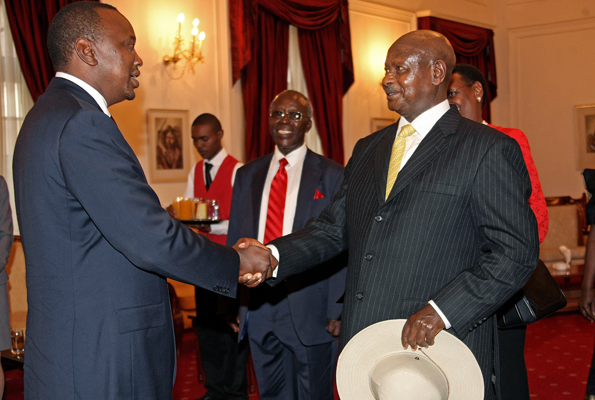
The Speaker of Parliament Rt Hon Rebecca Kadaga Alitwala

Absenteeism and indiscipline among health workers is the leading cause of underperformance in the health sector.

According to the 16th Annual Report of the Health Service Commission that was presented to the Speaker of Parliament Rt Hon Rebecca Kadaga on Monday February 8, 2016, cases of neglect of duty and absenteeism were reported in several districts.

“Some districts reported continued instances of absenteeism and neglect of duty by some health workers. They indicated taking measures ranging from minor to several reprimands but there were no reports on actual numbers,” Professor Pius Okong, the Chairperson of the Commission said.

The report also indicates that the majority of the district and regional referral hospitals in 47 districts visited lacked functional committees to implement sanctions and rewards for the health workers.

Masaka district had no committee while committees in the districts of Kaberamaido, Kumi, Ngora, Kyenjojo, Kiruhura, Mubende and Kabale were not properly constituted, the report indicates. The districts of Buikwe, Mukono, Kayunga, Kotido, Kaabong, Abim, Yumbe and Koboko presented no evidence of minutes of the disciplinary and training committee meetings.

The training of health workers in some districts had been mismanaged with medical personnel granted long term training that is not beneficial to the health institutions.

The Commission reported that Yumbe General Hospital had depleted its workforce by sending three of its four doctors for training at the same time.

The Health Service Commission appealed to Parliament to review the policy on recruitment of health workers to enable all districts have access to health workers.

Health workers in some health centers complained of the lack of uniforms which are provided by the Ministry of health.

Prof Okong told the Speaker that many rural districts had still failed to attract and retain specialized critical medical cadres like Public Health nurses, anesthetic officers, midwives and pharmacists in the district and regional referrals due to resource constraints.

In response the Speaker re-echoed the need for the health sector to review the policy on retirement to retain several of the medical experts that are laid off as soon as they clock the mandatory retirement age of 60 years, amidst the scarcity of doctors.

“I have been to several of the villages but the rate of indiscipline among medical workers is too high. Absenteeism is too much and it seems no one is in control. I am also still concerned that many expert doctors are retired,” she added.

The Speaker confirmed that Parliament will consider the report and its recommendations when it resumes after the general elections.


Stories Continues after ad
Opposition fears elections- Museveni

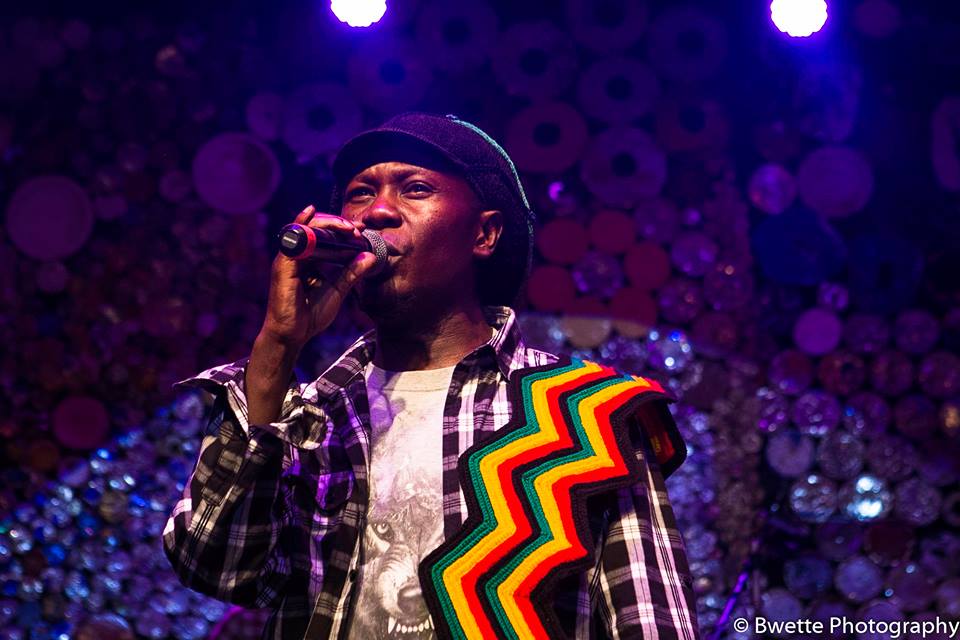
Sounded warning Commander in Chief, Gen. Museveni

President Yoweri Museveni has said those that are opposed to his candidature in February 18, polls are doing so because they likely to lose the forthcoming election and are trying to call for a boycott.

While speaking at 35th anniversary dubbed “Tarehe sita” since he launched the war that brought him to power at Kololo Independence grounds on this afternoon, President Museveni said “the opposition know that they cannot win the elections and have resorted into intimidating people so that they don’t vote”.

Museveni launched the war in 1981 after  “allegations” that the 1980 elections where he participated as a presidential candidate and came third and last had been rigged by Uganda Peoples’ Congress. So the  significance of this day to him and his party is that they have made 35 years after.

“They know how strong the NRM is to be defeated in an election and are now resorting to intimidating you so that you remain home instead of going to vote,”  he told the chanting crowd adding “It is a trick for them to deny you of your right to vote and cause violence.

Gen. Museveni promised that the NRM government is committed to a peaceful election and will do anything possible to stop the violence that is being perpetuated by the opposition.

He called upon the wanainchi (population) to ignore the opposition and vote NRM back to power because of the achievements that have been ushered in.

Clad in a black suit, the president highlighted the achievements of the NRM   in the field of security and economic development.

He hailed the Uganda Peoples’ Defence Force (UPDF) for ushering in peace, security and stability in the country which he said had been mismanaged by the previous regimes.

“We have gone a long way not only in recreating the army but also recreating an enclave of modernity in the economy of Uganda,” he said.

Gen. Museveni told the audience that in 1962, the economy was an enclave of a modern economy in the midst of a substance economy characterized by three Cs and three Ts which are; cotton, coffee and copper and tobacco, tourism and tea respectively.

He said however by 1986 when he came to power, only tobacco existed for the Ts and copper for the Cs.

The President stressed that even import substitution products like sugar, soap, soft drinks, beer had been wiped out and people only relied on magendo (smuggling)

“Our mission is to have a fully monetized, modern and employed economy with emphasis on increased GDP” he noted.

He congratulated the UPDF for ushering in peace at least for the first time in 500 years where all parts of the country are peaceful.

He explained that he was talking of 500 years because even before colonial rule African were fighting each as result of conflicts cause by war chiefs.

He thanked the general public for providing their children for joining the army whenever they are recruiting.

He also assured Ugandan of guaranteed peace and security in the forthcoming election. “As we go to the polls, remain calm, and do not allow yourselves to be intimidated by anybody,” he cautioned.

He warned that if there is anybody who is not satisfied with the outcome from elections, such a person should allow the laws take its course but not to cause violence.

The function was attended by Army chiefs from neighboring countries namely Rwanda, Burundi, South Sudan and Kenya.


Stories Continues after ad
Government denies ‘families fleeing’

Government Spokesperson Ofwono Opondo

Government Spokesman Ofwono Opondo has today denied that families of prominent Ugandans including politicians are fleeing the country before the polls on Feb 18, fearing an eruption of chaos.

Social media has been abuzz with the claims that senior government officials are ferrying their families for fear of post election violence, with one Facebook post indicating that President Yoweri Museveni had ordered all his close relatives to leave the country.

But speaking on Capital Gang today Mr Opondo refuted the assertions, saying the insinuations are ‘social media cynicisms’ that can easily be put off.

“No one has left, I doubt these government officials have the means to fly their families out, they don’t,” he was quoted as saying. He also asked the media to ‘cross check with the relevant offices to see who and how many have left.’

There are fears the polls may turn violent after leading contenders, incumbent Yoweri Museveni of the National resistance Movement (NRM) and Forum for Democratic Change (FDC) flag bearer accused each other of planning to rig.

As a result, the army has said it will assist the police keep tranquility, while the latter has recruited over 30,000 men and women called crime preventers in a bid to maintain peace.

Meanwhile, the FDC has also reportedly mobilised a group dubbed P10 ostensibly to ‘secure the vote’.


Stories Continues after ad
80 pc of Africa has tough anti-gay laws

Samples of the UN LGBT stamps

Forty three out of the 54 countries in Africa including Uganda, representing eighty per cent, have tough anti-gay and lesbian laws, with all seven North African countries of Tunisia, Sudan, South Sudan, Egypt, Libya, Morocco and Algeria providing for harsh penalties including long jail terms or even death.

According to researched data, in East Africa, all the five East Africa Community (EAC) countries have tough laws against LGBT, while in the Horn of Africa it is only Djibouti that has no known laws against gayism and lesbianism. The other Horn countries of Ethiopia, Somalia and Eritrea all have tough anti-gay laws of between three to 10 years imprisonment.

In the south, it is only South Africa, Lesotho and Mozambique which have okayed LGBT, while the others including Botswana, Angola, Malawi, Namibia, Swaziland, Zambia and Zimbabwe outlawed LGBT.

In the Indian Ocean islands of Mauritius, Comoros and Madagascar, it is only in the Comoros where same sex relationships are outlawed, attracting five years imprisonment and a fine.

Interestingly, in French-speaking West Africa all countries except Cameroon have no known laws against LGBT. The countries were same sex relations are not taboo include Central African Republic (CAR), Chad, the Democratic Republic of Congo (DRC), Equatorial Guinea, Gabon, the Republic of Congo and Sao Tome and Principe.

Meanwhile, the African countries that have tough anti-gay and lesbian laws including Uganda might feel let down after the United Nations Postal Administration (UNPA) unveiled a set of six commemorative stamps to promote UN Free & Equal – a global UN campaign for lesbian, gay, bisexual and transgender (LGBT) equality launched and led by the Office of the High Commissioner for Human Rights (OHCHR).

The new stamps, which celebrate the diversity of the LGBT community, mark the first time the United Nations has issued stamps with this theme. The set, which features two in English, two in French, and two in German, will be available beginning today at UN Headquarters in New York, Geneva and Vienna. They can also be purchased online.

In an interview, the artist who designed them said he was very influenced by art from the first quarter of the 20th Century. Sergio Baradat, who is of Cuban background, explained that his style stems from his appreciation for French Art Deco and growing up in Miami.

“One of the stamps represents someone who is transgender,” Mr. Baradat told UN Radio, referring to the stamp that depicts a person with butterfly wings, an image he says represents a person “becoming who they really are, blossoming,” he said.

“We live in a world where even though [developed] nations have embraced marriage equality [and] LBGT equality, we still have a far, far, far way to go, but we are making some strides,” he added.

“There are some countries in the world right now where not only are we not celebrated or respected, but we are beaten and killed. And I thought that it would be a wonderful opportunity using art, to use postage stamps as a vehicle – using art to change hearts and minds.”

He also stressed that LGBT rights are human rights and that all individuals deserve to be treated equally and fairly under the law.

The series is co-sponsored by the permanent missions of Argentina, Australia, Chile, El Salvador, Germany, Israel, Netherlands, Norway, the United Kingdom, the United States, and Uruguay, the delegation of the European Union, in addition to OHCHR and UNPA.

United Nations stamps in United States denominations are valid for postage only if mailed at UN Headquarters in New York. Stamps in Swiss franc denominations are valid for postage only if mailed at the Palais des Nations, Geneva, Switzerland. Stamps in euro denominations are valid for postage only if mailed at the Vienna International Centre, Austria.


Stories Continues after ad
Respect women rights, UN boss advises in light of Zika virus

UN rights boss Zeid al Hussein

Upholding women’s human rights is essential if the response to the Zika health emergency is to be effective, the United Nations High Commissioner for Human Rights said, following the advice to women by some governments to delay getting pregnant due to the possible link between the virus and neurological disorders affecting newborns.

Zeid Ra’ad Al Hussein is calling for the repeal of laws and policies that restrict access to sexual and reproductive health services in contravention of international standards, and pressed for concrete steps to be taken so that women have the information, support and services they require to exercise their rights to determine whether and when they become pregnant.

“Clearly, managing the spread of Zika is a major challenge to the governments in Latin America,” Mr. Zeid said in a release. “However, the advice of some governments to women to delay getting pregnant ignores the reality that many women and girls simply cannot exercise control over whether or when or under what circumstances they become pregnant, especially in an environment where sexual violence is so common.”

In Zika-affected countries that have restrictive laws governing women’s reproductive rights, the UN rights chief said the situation facing women and girls is particularly stark on a number of levels.

“In situations where sexual violence is rampant, and sexual and reproductive health services are criminalized, or simply unavailable, efforts to halt this crisis will not be enhanced by placing the focus on advising women and girls not to become pregnant. Many of the key issues revolve around men’s failure to uphold the rights of women and girls, and a range of strong measures need to be taken to tackle these underlying problems,” he insisted.

The World Health Organization (WHO) has declared a public health emergency of international concern amid concerns of a possible association between upsurges in reported cases of Zika virus disease and of microcephaly in Latin America. A causative link between Zika and microcephaly (babies born with abnormally small heads), and Zika and Guillain-Barré Syndrome (a neurological condition), is still under investigation.

The High Commissioner’s Office (OHCHR) underlined that amid the continuing spread of the Zika virus, authorities must ensure that their public health response is pursued in conformity with their human rights obligations, in particular relating to health and health-related rights.

“Health services must be delivered in a way that ensures a woman’s fully informed consent, respects her dignity, guarantees her privacy, and is responsive to her needs and perspectives,” he said and added. “Laws and policies that restrict her access to these services must be urgently reviewed in line with human rights obligations in order to ensure the right to health for all in practice.”

Drawing on lessons learned from the Ebola outbreak in West Africa in 2014, the High Commissioner highlighted that another crucial element of the response should be the systematic dissemination of accurate information on how Zika spreads, how to prevent it and its health consequences.


Stories Continues after ad