The Lord’s Resistance Army (LRA) rebel force has abducted 217 people since January in the Central African Republic (CAR), a campaign group says.
This is nearly double the number of abductions carried out by the LRA in 2015, LRA Crisis Tracker added.
The abductees, including 54 children, may have been forced to become soldiers or sex slaves, it said.
The LRA appear to be trying to ‘replenish’ its forces because of military setbacks, the group added.
It has been hit by a spate of defections, and arrests since foreign forces began pursuing it in 2011.
The US deployed 100 Special Forces to support thousands of African troops searching for LRA commanders.
The International Criminal Court has issued an arrest warrant for its leader, Joseph Kony, to stand trial for war crimes.
In December, his former bodyguard, George Okot, defected.
for LRA commanders in the forests of CAR
The LRA had lost a ‘large chunk of its fighting force’, and seemed to be trying to rebuild its force through abductions, said Sean Poole of the Invisible Children campaign group, which is part of LRA Crisis Tracker.
The spike in abductions in the first three months of this year signalled a ‘huge change in the modus operandi’ of the LRA, Poole said.
The LRA was formed in northern Uganda nearly over two decades ago, but retreated to CAR and other countries as it came under military pressure.
LRA Crisis Tracker says it is responsible for more than 100,000 deaths, and a similar number of abductions.
The Independent Electoral Commission (IEC) is today conducting elections for councilors for Persons with Disabilities (PWDs), Older Persons and Youths to District Local Government Councils and Kampala City Council Authority (KCCA).
According o the IEC each district local government is expected to elect two councilors from each of the three categories, one in each category being a female.
The process of voting is by secret ballot through the Electoral College system for each of the respective special interest groups, with the electoral colleges comprising leaders and committees of the said groups at local council level.
Members of the respective electoral colleges assembled at the respective District/Kampala Capital City Electoral Commission offices to participate in the elections.
The recent shooting that took place during the elections of the Youth MP western that took place early this week in Fort Portal have left the pie tasting bitter. For, how else can one explain the presence of military personnel at an election involving youthful and ordinary Ugandans like Mwine Mpaka Rwamirama and Amanya Nduhura Tumukunde?
It is worth mention that from February 18 the Independent Electoral Commission (IEC) has conducted elections for several positions including the highest office, the Presidency, and right down to councilor level now. But at all these tiers of elections there is no report of the military directly being drawn in to deal with any electoral matter at a polling venue, not even in the presidential and parliamentary elections!
So, what was so important about the elections of the Youth MP Western? Is it possible that these youthful sons of military officers were regarded as being ‘more important’ than their future colleagues they had sought to join in Parliament? Without delving into the details of the controversial elections, it is sensible to revisit how events panned out in the aftermath, and what lessons are to be drawn from the saga that involved the harming of a General?
First, after Lt Gen (rtd) Henry Tumukunde was harmed, there were frenzied back and forth accusations involving the army and police on one hand and the General on the other, over the nature of weapon used against Gen Tumukunde. But was that unfortunate development necessary more so given the fact that the police have a team of forensic experts who should have helped solve the jinx?
Second, Lt Gen Tumukunde is a retired senior Uganda Peoples Defence Forces (UPDF) officer, so what message does aiming a weapon at him send to the ordinary Ugandan?
That said, given such a disturbing incident there is need armed personnel to revisit their conscience in regard to the use of weapons as part of the concerted efforts to demystify the unsustainable ‘might is right’ theory.
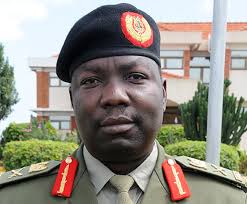
Top commanders of the UPDF are in Bombo, the headquarters of the Land Forces, to elect their 10 representatives to the 10th Parliament.
The spokesperson of Land Forces, Maj Stanley Malisaba said the elections will be conducted by the Independent Electoral Commission (IEC) starting at 3pm.
“The nominees will be presented before the Army Council and thereafter elections will be held,” he said.
President Museveni is expected to chair the Army Council meeting and later read out the names of the nominees before voting begins.
The UPDF has been represented in the 9th Parliament by the Chief of Defence Forces (CDF) Gen Edward Katumba Wamala, Elly Tumwine Tuhirirwe, Gen David Sejusa aka Tinyefuza, Gen Robert Aronda Nyakairima (RIP) Lt Gen Charles Angina, Lt Gen Jim Oweyesigire, Maj Gen Julius Oketta Facki, Brigadier Phinehas Manoni Katirima, Major Sarah Patience Mpabwa and Major Susan Lakot.Gen Elly Tumwine
By press time EagleOnline had not managed to get the names of the new UPDF nominees.
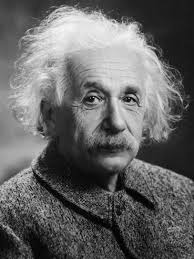
Albert Einstein: his work is known for its influence on the philosophy of science
The Next Einstein Forum (NEF) has launched a global call for support for Africa’s scientific and technological emergence, with the first global forum for science on African soil taking place in Dakar, Senegal from March 8-10, 2016.
The Next Einstein Forum Global Gathering 2016, Africa’s premiere global science and technology forum is convened by the NEF, a global platform that brings together leaders in industry, policy, science and technology. The first edition of this biennial event will set the stage for a vibrant conversation on transforming Africa and the world through a renewed and increased focus on science, technology and innovation. The NEF is an initiative of the African Institute for Mathematical Sciences (AIMS) in partnership with the Robert Bosch Stiftung.
“At more than 700 participants from 80 countries already registered, 52% of them young people and 40% women, we are expecting a truly global forum that discusses opportunities, innovations, and solutions. The NEF Global Gathering will unveil Africa’s global contributions to science and technology and as the forum opens on International Women’s Day, we will specifically acknowledge the contributions and address the challenges faced by female scientists,” said Thierry Zomahoun, NEF Chair and President and CEO of AIMS.
With a truly exciting program that focuses on advances in basic and applied science and technology as well as an innovation pitching competition, a Presidential Panel with President Macky Sall of Senegal and President Paul Kagame of Rwanda and other exciting sessions like Meet and Greets with groundbreaking scientists and inventors, the NEF Global Gathering 2016 will be live-streamed to a global audience.
The NEF Global Gathering 2016 will showcase the innovations and contributions of the NEF’s 15 Fellows –some of Africa’s brightest young scientists who are on the frontline of Africa’s science renaissance. Flying under the radar, these scientists have been tackling some the continent’s most urgent technological and development challenges – from, big data and cybersecurity to hypertension, heart disease, immunology and public health.
In addition, for the first time in history, all 54 African countries will come together to talk science and technology each represented by a NEF Ambassador that will work to raise awareness about science and technology in their countries.
‘A great idea can come from anywhere in the world, and there is no doubt that new and novel scientific ideas to solve global health challenges will come from Africa,’ said Seema Kumar, Vice President, Innovation, Global Health and Science Policy, Johnson & Johnson and Member of the NEF International Steering Committee.
Kumar added: ‘The scientific talent in Africa is outstanding with the potential to produce the next Einstein, Pasteur or Madame Curie. The world needs the best science from across the globe to solve the medical challenges of our lifetime like HIV, TB, and other infectious diseases like Ebola and Zika virus, and non-communicable diseases like hypertension and diabetes’.
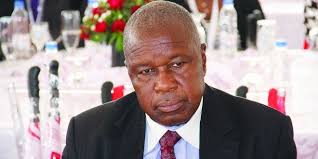
War Veterans Minister Christopher Mutsavangwa/Chronicle.co.zw
Embattled Vice President Emmerson Mnangagwa’s biggest sympathizer, War Veterans minister Christopher Mutsvangwa is facing the boot in today’s politburo meeting following a heavy beat-down by President Robert Mugabe.
The minister, a staunch supporter of Mnangagwa’s assumed presidential bid, was savaged by Mugabe a fortnight ago after he called an unsanctioned war veterans meeting he allegedly falsely claimed would be addressed by the nonagenarian.
The planned meeting, which was scheduled for the City Sports Centre in Harare, was thwarted by the police.
Following the incident, Mugabe had no kind words for Mutsvangwa in a televised speech, with the fuming 92-year-old saying he should explain his actions.
“For him (Mutsvangwa) to have called a meeting about which we knew nothing about, in circumstances in which he had not clearly sought permission from the authorities in violation therefore of the law, and he being a minister, he cannot at the end after the law and order officers have taken action against the meeting and the war veterans, complain that he was ill-treated.
“He must bear the responsibility,” Mugabe thundered, adding ominously that Mutsvangwa would pay for his misdemeanours.
“He has acted in a manner we describe as irresponsible and a manner that brings the name of the party and government into disrepute.
“We regret that they suffered this (police battering) but the man to blame is their minister and of course he has to answer why he did that without authority.”
At the heart of the pummelling, as well as Zanu PF’s worsening factional wars, is the unresolved question of Mugabe’s succession — where the major players are a faction loyal to Mnangagwa, known as Team Lacoste, and the party’s Young Turks, who go by the moniker Generation 40 (G40).
Mutsvangwa is in the same category with some of the alleged VP allies who are currently under the cosh in the ruling party.
These are the provincial leaders of Midlands, Masvingo and Mashonaland East — namely Kizito Chivamba, Ezra Chadzamira and Biggie Matiza respectively — who are also facing the boot.
Among the litany of charges being flung against the trio are those related to their alleged ‘continuing undermining’ of Mugabe and his powerful wife Grace, as well as claims that they are fanning factionalism in the governing party.
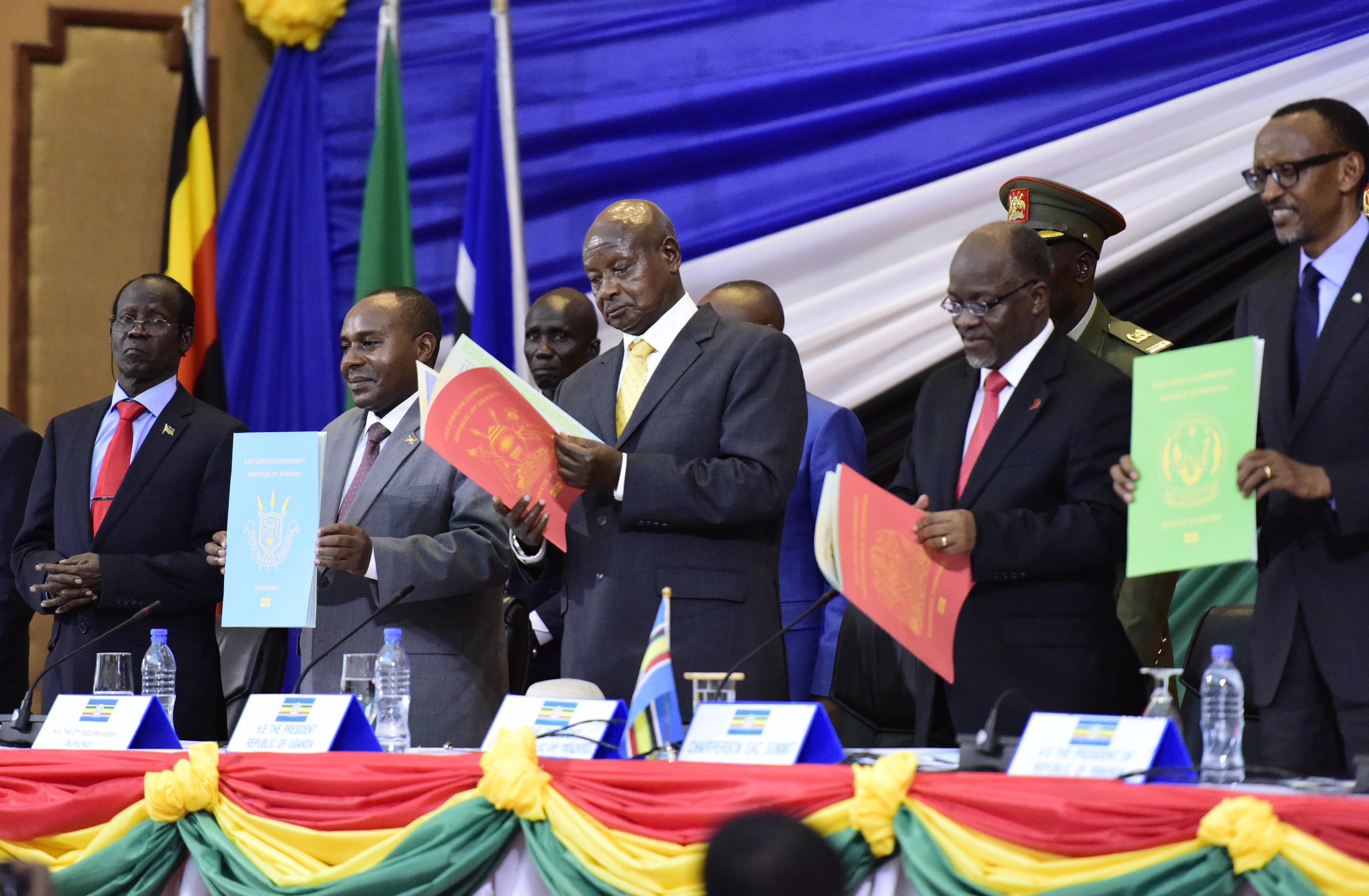
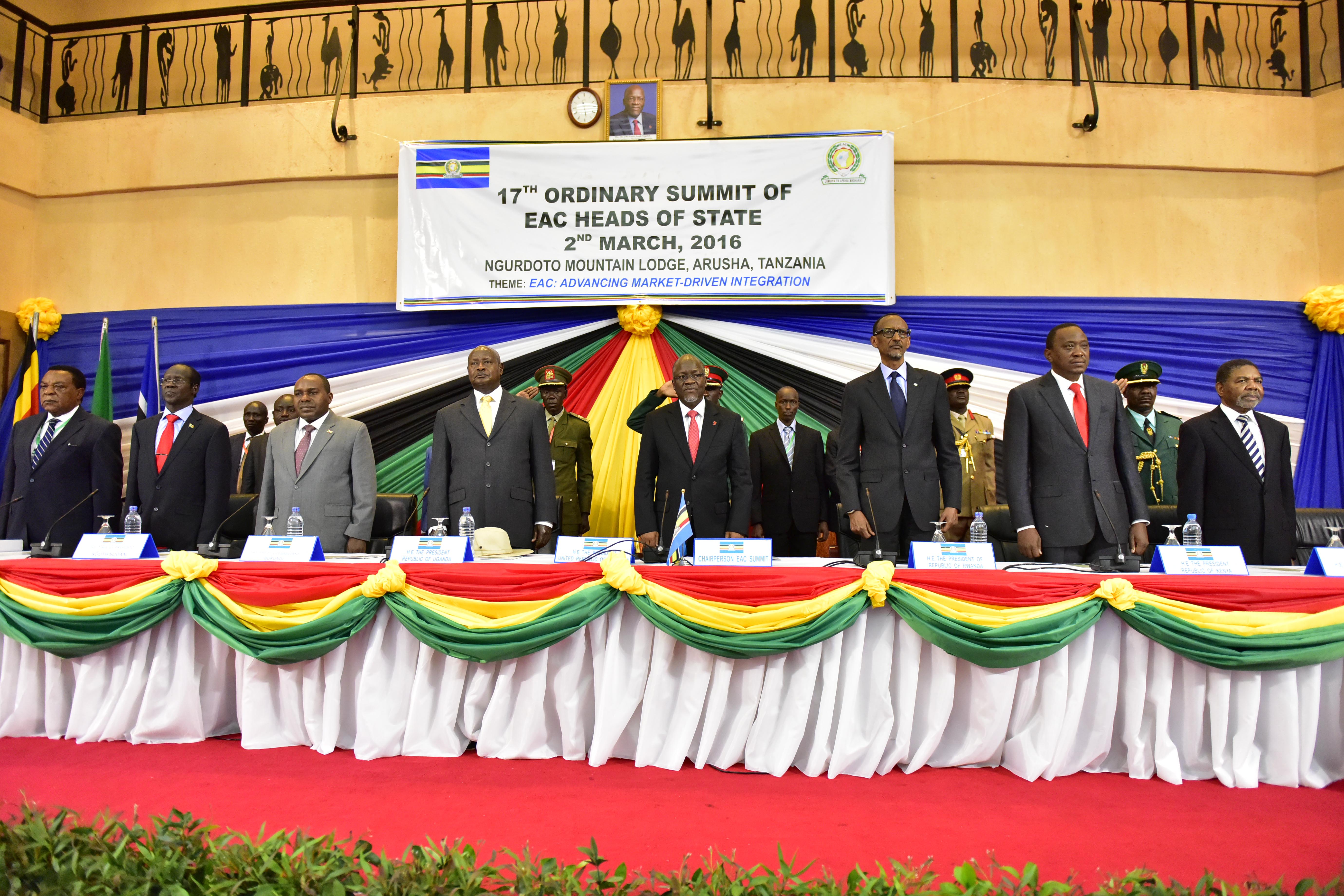
EA SPIRIT? L-R Kenyan President Uhuru Kenyatta, Ugandan President Yoweri Kaguta Museveni , Tanzanian President John Pombe Magufuri and Rwandan President Paul Kagame interact shortly after a group photograph during the 17th Summit of the East African Community in Arusha, Tanzania on 2nd March 2016.
President Yoweri Museveni has hailed the East African Community (EAC) for accepting South Sudan as a member saying this reminds the community of the three purposes of integration mainly; How to survive in a competitive world; how to guarantee prosperity as a region and how to be secure in the modern world.
President Yoweri Kaguta Museveni looks through the dammy E- copy of the East African passport together with other East African Heads of State during the 17th Summit of the EAC on Wednesdsay 2nd March 2016.
Museveni was today speaking during the 17th Ordinary Summit of the East African Community Heads of State at the Ngurdoto Mountain Lodge, Arusha, in Tanzania.
The summit is being held under the theme: EAC: ‘Advancing Market-Driven Integration’.
“On this day when South Sudan joins the East African Community, we need to remind ourselves of the main purpose of our integration in three words; How to survive in a competitive world; How can we guarantee our prosperity. We are prosperous by buring from each other and; How to be secure in this modern world,” he said adding that China, India and the United States of America were highly competitive while Europe defends itself through NATO despite each individual country being strong.
“Here we are scattered. I thank God that he has given me a long life to see all these things. We must ensure means for the survival of the black people,” he said.
He said that we must strive for prosperity as a way forward. He challenged the summit and other leaders to work towards our security in the modern world.
President Museveni said that with South Sudan joining the East African Community, the regional block’s geographical area is now almost the same size as India.
The EAC presidents at the Heads of State Summit today
President John Pombe Magufuli who has retained the EAC chair was pleased to note that the Community has recorded a lot of progress including movement of goods with the transit time for goods from Mombasa to Rwanda reduced from 21 to 6 days and to Uganda by three days. He noted that the region was endowed with abundant resources.
On Industrialization, Magufuli called for industrialization in the region.
“There is a critical factor for industrialization. Today we produce commodities that we do not consume and we consume what we do not produce. This trend must stop,” he said noting that the community was working towards promoting textiles and leather industries in the region. He thanked the East African leaders and other officials for their contribution in promoting the Community.
Magufuli called for tolerance in the East African Community and said that while each country has its own challenges, the community must remain united for development.
Magufuli lashed out at the EAC secretariat over being extravagant saying while it budgeted for US$ 50 per person at the Ngurdoto Mountain Lodge, it would have saved about US$20 dollars if they had held the conference at their headquarters.
He reminded the EAC officials that there was need to save for the sake of the poor people and reminded them that they were there for the benefit of the poor population.
EAC launches new international East African e-Passport
The summit also saw the new Chairman of the EAC President Magufuli lead the launch of the new international East African e – passport that will easy transport in the region and internationally.
Among others, the document is designed to facilitate the fight against international crime.
EAC retains Museveni as Burundi mediator appoints Mkapa facilitator
The EAC 17th EAC Summit also clarified that President Yoweri Museveni is the EAC appointed mediator for Burundi and that it has also appointed former Tanzania President Benjamin Mkapa as lead facilitator. Mkapa will be reporting to President Museveni as mediator.
President Magufuli hailed Museveni for working tirelessly with the people in Burundi to restore peace and called on the people of Burundi to support his efforts so that lasting peace is achieved in Burundi.
The host, Tanzanian President Joseph Pombe Magufuli while addressing the summit as the Chairman paid tribute to President Museveni for working tirelessly to enable the parties in Burundi to resolve their differences. He prayed the East African member country gets lasting peace. He looked forward to improved trade among the EAC members.
EAC Heads of State welcome South Sudan to Community
The 17th EAC summit saw South Sudan join the East African Community as a full member, a move described by South Sudanese Second Vice President James Wani Iga as a historical event for his country. Iga who represented President Salva kiir said this was not just about politics but about Economics and history. “This is where we belong,” he said.
Leader after leader hailed the move by the community for bringing South Sudan into the fold said it will ensure prosperity for the people through a big market.
Ugandan student wins EAC essay competition
A Ugandan student Oscar Azookire of Luyanzi College in Bweyogere emerged fourth with a cash prize of US$ 750 in an EAC essay writing competition among the five east African states. The Competitions launched by President Yoweri Museveni 12 years ago to sensitize the youth about the benefits of the EAC integration and the role of the youth in the process saw all the finalists get certificates and the first prize of a certificate and US$1500 went to Simon Sabaya Nolel from Nzumbe SS in Tanzania, second prize went to Beryl Njoki Mungai of Kerugoya girls in Kenya who won US$1000, third prize went to Iteka Greta of cornerstone Leadership academy of Rwanda while the 5th position went to Irumra Arni Aley of D’Cee Notre Dame De Rohero of Burundi who got US$650.
While handing over the certificates President Magufuli insisted to see the money for the beneficiaries handed to them alongside the certificates. All the winners had presidential handshakes with all the Heads of state.
Magufuli hailed on election, Museveni on re-election, Kagame on referendum
The EAC leaders also congratulated the new Chairman of the EAC President Magufuli upon his recent election to the Presidency of Tanzania and also congratulated President Museveni on his re-election that was described by the East African Business Council’s Dennis Karera as an obvious win. The leaders also congratulated President Kagame upon the successful referendum.
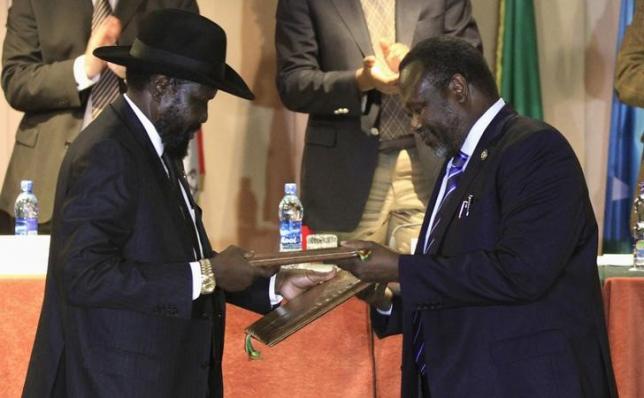
South Sudan's President Salva Kiir (L) and Vice President-designate Riek Machar Teny commander Riek Machar exchange documents after signing a ceasefire agreement during the Inter Governmental Authority on Development (IGAD) Summit on the case of South Sudan in Ethiopia's capital Addis Ababa
At least 50,000 people have been killed in South Sudan’s two-year civil war, a senior United Nations official said, a five-fold increase in the death toll given by humanitarian agencies in the early months of the conflict.
A political dispute between President Salva Kiir and his former deputy, Riek Machar, sparked the war in December 2013, which has reopened ethnic fault lines between Kiir’s Dinka and Machar’s Nuer people.
“Fifty thousand killed, maybe more, 2.2 million refugees and displaced, famine coming and looming in just a few months,” the senior official, who spoke on condition of anonymity, told a small group of reporters. He added that he saw little prospect of implementing an August peace deal.
The United Nations said last month that South Sudan’s warring parties are killing, abducting and displacing civilians and destroying property despite conciliatory rhetoric by Kiir and Machar.
After months of ineffective negotiations and failed ceasefires, both sides agreed in January to share positions in a transitional government, and last month Kiir reappointed Machar to his former post as vice president.
“Where are we on the implementation of the peace agreement? Nowhere,” the senior UN official said. “We see violence spreading along ethnic lines in other parts of South Sudan which had been spared so far.”
A UN panel that monitors the conflict in South Sudan for the Security Council stated in January that Kiir and Machar are still completely in charge of their forces and are therefore directly to blame for killing civilians.
UN peacekeepers are sheltering nearly 200,000 people at six protection sites in South Sudan.
Angola said last week it had proposed that the UN Security Council impose an arms embargo on South Sudan, but veto-power Russia has said it was opposed to such a move as it did not believe it would be helpful.
Last week, US Secretary of State John Kerry said Kiir and Machar would face individual sanctions if they did not deliver on the peace deal, warning of a ‘critical moment for South Sudan’s survival’.
The conflict in South Sudan, whose 2011 secession from Sudan had long enjoyed the support of the United States, has torn apart the world’s youngest country.
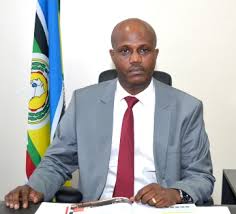
The Heads of State Summit held Wednesday in Arusha, Tanzania, appointed Dr Libérat Mfumukeko as the new Secretary General of the East African Community (EAC).
Mfumukeko, who is expected to assume office in April replacing Dr Richard Sezibera, is Burundian.
He has been the Deputy Secretary General in charge of finance and administration at the regional bloc, a post to which he was appointed last year.
Before joining the EAC, Mfumukeko worked as the Director General of the Burundi’s energy and water utility, REGIDESO and was also the Chairman of the Steering Committee of the East African Power Pool (EAPP).
He replaces Sezibera, who has been the EAC Secretary General since April 2011.
The 17th Ordinary Summit of the East African Community Heads of State also admitted South Sudan to the bloc, joining Rwanda, Uganda, Kenya, Burundi and Tanzania as the sixth member.
President John Pombe Magufuli of Tanzania is the Chairperson of the East African Community.
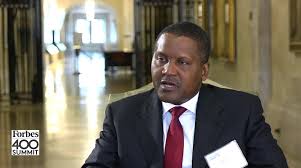
Africa’s richest man, Nigeria’s Aliko Dangote, has risen up the annual Forbes list of world billionaires, with his fortune increasing to $15.4bn (£11bn).
Mr Dangote is ranked 51, compared with 67 in the 2015 list when the magazine put his fortune at $14.7bn.
He is the founder and chairman of Dangote Cement, Africa’s continent’s largest cement producer.
The second-richest African is another Nigerian, Mike Adenua, who is worth $10bn, while South Africa’s diamond mining magnate Nicky Oppenheimer is in third spot with $6.6bn, Forbes says.
The magazine puts Mr Adenua, who built his fortune in the oil and telecom industries, at 103 in the list of world billionaires and Mr Oppenheimer at number 174.