Stanbic Bank
Stanbic Bank
17.8 C
Kampala
Stanbic Bank
Stanbic Bank
Home Blog Page 2246

Pope Francis to act in film

To act in film: Pope Francis 1

Pope Francis will be making his acting debut this year, starring as himself in the upcoming religious movie, ‘Beyond The Sun’.

According to Variety, ‘Beyond The Sun’ is a ‘family adventure based on the Gospels’, and it will be the first time in history that a Pope has appeared in a feature film.

“Pope Francis asked the filmmakers to make a movie that communicated Jesus’ message to children,” they explained.

“Our excitement and gratitude toward His Holiness, Pope Francis participating in this film is beyond words,” said producer Andrea Iervolino. “This is not just a movie for us, it’s a message, and who better to have on your side to deliver an important societal and spiritual message than the Pope.”

Unfortunately, the film’s subject matter suggests that this won’t be a rather random career move for the 79-year-old leader of the Catholic Church.

A bit of a shame, really. After all, I hear the jury is still out when it comes to the next Bond…

“It is a great honor for Andrea and I to have the opportunity to work with His Holiness, Pope Francis, to spread the awareness of his message, through this film,” added co-producer, Lady Monika Bacardi. “We will make a movie everyone involved with can be proud of. Not only will families from around globe enjoy this film and be entertained, but they will be moved.”

According to Bacardi and Iervolino, all profits from the film will be donated to charity – specifically, El Alemendro and Los Hogares de Cristo, which aid at-risk children and young adults.

‘Beyond The Sun’ will begin filming early this year in Italy.


Stories Continues after ad
Gen Sejusa charged with AWOL

Gen David Sejusa.

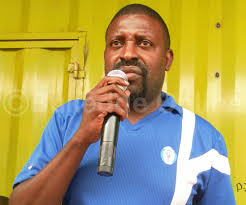
General David Sejusa has been charged with being Absent Without Leave (AWOL) before the Military Court Martial chaired by Major General Levi Karuhanga.
Appearing before court earlier today, Gen Sejusa’s lawyer David Mushabe questioned the jurisdiction of court, arguing whether his client is still a serving officer when all his entitlements were taken away.
Late last year Gen Sejusa filed a case stopping the army from arresting him, pending government response to his request to retire, and President Museveni, weighed in on the matter while meeting Gen Sejusa and his lawyers Mike Mabikke and David Mushabe, and said he had directed the army to retire Sejusa, but that has not happened a year later.
Story still evolving.

Stories Continues after ad

‘No progress’ on S Sudan unity govt

SPLM-IO leader Riek Machar

Talks between President Salva Kiir’s government and senior members of the advance team of the armed opposition faction, SPLM-IO, under the leadership of former Vice President, turned opposition leader, Riek Machar, are not making much progress, despite mounting regional and global pressure on the two sides to break deadlock in order to form a transitional government of national unity in compliance with the peace agreement they signed in August 2015 to end 21 months civil war.

President Kiir has repeatedly called to his office and held face-to-face meetings with the senior members of the advance team of the armed opposition over the past few days in the capital of Juba to make them succumb to 28 states he unilaterally created, but could not make progress.

Dhieu Mathok Diing, Secretary General of the SPLM-IO and a veteran politician charged with overseeing talks aimed at implementing the peace agreement, told Sudan Tribune on Saturday his group remained fully committed to finding a way to break the deadlock if the president and members of his government accepted implementation of peace agreement the way it was signed based on 10 states.

However, Diing said no progress had been made even though they have had several engagements with top government officials including President Kiir himself whom he said had not indicated readiness to move forward.

He said he was hopeful there would be “light at the end of this situation of darkness.”

Peter Mabior Riiny, deputy head of youth league of SPLM-IO described the beginning of the period after the 38 senior members of his group visited their headquarters in Pagak for consultations with the leadership there and returned to the national capital Juba as” laborious” as it was in the proceeding weeks.

“We are not making much progress. Our colleagues in Juba have not reported any progress and what we are hearing is that the government is unable to move forward with the implementation of the agreement. They (government) are proposing inclusion of 28 states in the constitution. They are talking of expanding the advisory team. Our team proposes five (5),” said Riiny.

The armed opposition leader stressed that the issue of advisors was not a big deal, but the issue of 28 states because the agreement was signed on the basis of 10 states and if there is a need to increase the number then this would be done with participation of the citizens as this is not the issue the two parties can decide before peace agreement is implemented.

A presidential aide confirmed separately that President Kiir had convened meetings with senior members of armed opposition without successful story to share with the public after the meeting. The official described the failed dialogue as “lost efforts”, with officials from both sides confirming “no progress” had been made.

“The SPLM-IO members are frustrating efforts of the president each time they are called for meeting with him because members of the international community are pressing him to talk with them but these people are intransigent. They are reciprocating anything. They are squandering the opportunity and people are dying. They have no country in their hearts. They don’t care about the suffering of our people. They only care about their positions and what Riek Machar and their foreign friends tell them,” claimed a presidential aide who has been involved in arranging several meetings between the president and members of the opposition, including members of former detainees in Juba.

Gordon Buay, one of the diplomats promoted to grade 2 as senior Ambassador by Kiir’s presidential decree at the ministry of foreign affairs and deployed to its mission at the United States, said opposition group was making impossible demand.

Echoing views held by most government officials, particularly those who see themselves close or wanting to be close to the president, Buay said “the decision creating more states will never be revoked even if heaven and earth come to an end than cancelling the presidential order.”

“It has to be made clear that the cancellation of 28 states as Riek Machar wishes will never happen. It is better for heaven and earth to end than for the Establishment Order to be revoked,” said Buay on Saturday.

In an attempt to address the main questions confronting the rival sides, President Kiir’s deputy in government and party, James Wani Igga, proposed that they discuss ending the violence and the formation of a transitional government while leaving behind contentious matters to be addressed later.

“The priority of our people now is peace and the current issue now is to arrest this situation and then we can discuss these other things later when there is peace, when our markets are working and when the economic situation has improved. This is what we tell the advance team of members of Riek and the members of the international community who by the way are seeing the importance of these points,” said Igga in a statement to the state owned South Sudan Television (SSTV) on Friday.

Igga however fell short to clarify what he meant to leave behind the issue of 28 states, whether to allow them to operate or to suspend them until another agreement is reached on how many states the country should have.

The East African regional body, IGAD, which mediated the peace agreement, has released a statement on Sunday, calling on President Kiir to “suspend” the 28 states, describing the decision for creating them as “inconsistent” with the peace agreement.

Besides, the two parties have not yet implemented the security arrangements as required before forming a transitional government, with IGAD also calling on the two groups to deploy their joint troops in Juba in the first week of February before the government is formed.

However, senior political and military leaders, including the chief of general staff, Paul Malong Awan, reject implementation of the security arrangements in fear of war resuming inside Juba, throwing doubts whether the government will withdraw its excess forces from the capital and allow 3,000 opposition troops to enter Juba as per the deal.

Stories Continues after ad

Guardiola to replace Pellegrini at Man City

Pep Guardiola

Manchester City football club have announced that Pep Guardiola as the next manager come next season. Guardiola signed a three year contract with the London team.

The 45-year-old, currently in charge at Bayern Munich, will replace Manuel Pellegrini, who will leave on 30 June.

A statement from City said Chilean Pellegrini, 62, was “fully supportive” of the announcement being made.

The club said negotiations with former Barcelona coach Guardiola had been “a recommencement of discussions that were curtailed in 2012”.

Roberto Mancini was City boss at the time, and led them to the domestic title that year.

Pellegrini succeeded the Italian in 2013 and took the club to a Premier League and League Cup double the following season.

He has won 64 of his 99 Premier League games as a manager, a record only eclipsed by Jose Mourinho, who won 73 of his opening 99 league matches as Chelsea boss.

City could yet win four trophies under Pellegrini this season.

They are already through to the final of the League Cup and are second in the league behind Leicester City.

The Blues are also through to the knockout stages of the Champions League and will play Chelsea in the fifth round of the FA Cup.


Stories Continues after ad

Burundi refugee numbers hit 240,000

Incumbent President Pierre Nkurunziza displays his finger after casting his vote.

The total number of refugees escaping violence in troubled Burundi has reached 239,754, whereas the Internally Displaced Persons (IDPs) are now estimated to be 25,081, latest information from Makamba, Kirundo, and Rutana refugee camps has indicated.

According to a report by the United Nations Office for the Coordination of Humanitarian Affairs (UNOCHA), new patterns of human rights violations have also emerged, including cases of sexual violence, increased enforced disappearances and torture.

Since April 2015, Office of the High Commissioner for Human Rights (OHCHR) has reported 439 killings, 262 arbitrary arrests, and 263 cases of torture/ill-treatment.

Last April Burundi was thrown into a cycle of violence after President Pierre Nkurunziza announced he was standing for a third term, triggering off street protests that have almost brought the tiny Central African state to the brink of collapse.

Meanwhile, as of mid-January 2016, heavy rains and floods have continued to affect various parts of the country, resulting in 5,068 houses damaged/destroyed and affecting 30,408 persons.

The Central Emergency Response Fund (CERF) allocated US$13 million for life-saving activities, prioritizing protection, health and food security and nutrition.


Stories Continues after ad

EAC, TMEA deliberate on integration agenda

Amb. Dr. Richard Sezibera, EAC Secretary General (centre), posing in for a group photo with TMEA’s CEO, Mr. Frank Matsaert (4th left) and other invitees from the TMEA, Ministries of EAC Affairs and the Community

The EAC Secretary General Dr Richard Sezibera, has held discussions with TMEA CEO, Mr Frank Matsaert to plan for TMEA’s support for the next phase, 2016-2022.


The meeting took place today at the EAC Headquarters in Arusha, Tanzania, and was attended by Dr. Enos Bukuku, EAC Deputy Secretary General in charge of Planning and Infrastructure, Mr. David Stanton, TMEA Director General, and ministerial representatives from the five Partner States.


With the aim of improving the quality of life of East Africans through competitiveness, value added production, trade and investments, the EAC, through TMEA support, has improved the infrastructure at Mombasa Port; constructed road network between Ntungamo to Mirama Hill in Uganda and Port Reitz to Kipevu West in Kenya; improved on the customs clearance time along the borders and carried out several sensitization campaigns to small cross border traders on the opportunities and facilities of the Integration Process.


“I wish to express my gratitude to TMEA for supporting the Integration Agenda,” said Dr. Sezibera, adding: “As we move more towards monetary and fiscal integration, we need to strengthen institutional capacities, nurture vibrant trade and enhance financial markets within the region.”


Despite the challenges since the re-establishment of the EAC, there is no doubt that Partner States have made considerable progress in their efforts to integrate. Efforts have been made in the harmonization of policies, while improvements have been made in the areas of trade, macroeconomic policies, infrastructure, and ICTs.


The decision by Common Market for Eastern and Southern Africa (COMESA), East African Community (EAC) and Southern African Development Community (SADC) to establish a single free trade zone for the 26 member countries goes a long way to deepen the integration agenda for the Community.


“We are very keen on continuing supporting the Integration Agenda,” said Mr Matsaert, adding: “With strong commitment and guidance from the Secretary General and his team, we will be able to carve out key priority activities to carry out in the next phase.”

Stories Continues after ad

Odinga attacks AU over Burundi violence

CORD leader Raila Amollo Odinga

The Coalition for Reforms and Democracy (Cord) leader Raila Odinga has accused the African Union of endorsing human rights abuse by failure to deploy troops to quell the conflict in Burundi, and instead concentrating on withdrawal from the International Criminal Court (ICC).

In a press release sent to the Nation, Mr Odinga observed that the country is in the precipice of a genocide and all efforts should be directed at restoring peace, democracy and equity.

He said: “The decision not to deploy troops is a decision to stand with the incumbent and his murderous regime, against the helpless citizens of Burundi. The decision by the AU to make withdrawal from the Rome Statute the key issue at its meeting speaks volumes of the hypocrisy that has gotten over the Continent’s leadership.”

He further faulted the AU saying that withdrawal from the international court should be considered only after proper and effective legal infrastructures are put in place, to ensure people responsible for violence in Burundi, Ivory Coast and Darfur.

“For the African Union to leave the ICC before this infrastructure is put up is to expose the population of Africa to marauding tyrants who can now carry out their atrocities in the comfort of the knowledge that they shall never be brought to account for their crimes against humanity,” he said on Monday.

The 26th Ordinary Session for African Heads of State began on January 30 and ended on summit came to an end at AU’s Peace and Security Council in Addis Ababa

Burundi, which was undergoing a rebirth after a 1993-2006 civil war, plunged into anarchy in April 2015 after President Pierre Nkurunziza decided to change the constitution and pursue a third term. So far more than 200,000 have fled.

Earlier, President Nkurunziza, through deputy presidential spokesperson Jean-Claude Karerwa, objected to the 54-member union’s move of sending in a 5,000 peacekeeping troop, threatening it will be considered an “invasion and occupation force.”


Stories Continues after ad

Mwinyi to head EAC election monitoring team

Former Tanzania president Hassan Mwinyi: the head of the EAC Observer team to Uganda

Former Tanzanian President Ali Hassan Mwinyi will lead the East African Community Election Observer Mission team to monitor the general election in Uganda scheduled for February 18.

The 50-member team is due to arrive in Kampala on Tuesday February 9, 2016, to observe the overall electoral environment, pre-election activities, the polling day, the counting and tallying of results

The EAC Observer Mission is a response to the invitation of the Uganda Electoral Commission as well as the decision of the EAC Council of Ministers on observation of elections in the Partner States.

The Mission is preceded by a Pre-Elections Assessment Team  which was deployed from January 31, 2016 to assess the level of preparedness by key stakeholders and prepare a report that will inform the Mwinyi-led Short Term Election Observation Mission.

The members of the EAC Election Observer Mission have been drawn from different but complementary disciplines and includes, members of the East African Legislative Assembly, delegates from four Partner States (Kenya, Tanzania, Rwanda and Burundi), EAC Youth Ambassadors, Mission Leader, Mission Coordinator , One EAC Executive Staff and  technical officers from the Secretariat as well as  EALA.

The exclusion of members from the Republic of Uganda is consistent with the adopted practice on the Principles of Election Observation and Evaluation which precludes nationals of the host country from participating as election observation in their own countries.

The Mission is expected to prepare a report that will be submitted to, among others, the Electoral Commission of Uganda, through the EAC Council of Ministers for consideration and implementation. The Mission will depart Uganda on February 21, 2016.


Stories Continues after ad

Mbabazi security team defect to Museveni

Mbabazi security team

Go-Forward presidential candidate, Amama Mbabazi security team has defected to National Resistance Movement (NRM) party of President Yoweri Museveni.

Most of those that defeated are close associates of Christopher Aine and have been very instrumental in provision of security to the former Prime Minister and blue-eyed boy of President Museveni.  Eagle Online has also established that most of them were part of the group that participated in violence that rocked Ntungamo district when supporters of both Museveni and Mbabaz fought last year.

Stories Continues after ad

Kayihura meets EU ambassadors

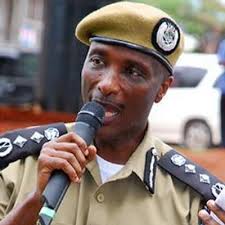
The Inspector General of Police has today met European Union ambassadors to clarify and address concerns raised in the last few weeks by some international observers.

Last week EU Ambassador Kristian Shmidt asked Gen Kale Kayihura to clarify on allegations that the police would not accept any handover of power to the opposition.

But according to a police statement signed today by police spokesperson Fred Enanga, the IGP denied the inflammatory phrase attributed to him by some media houses and assured the ambassadors of the absolute impartiality of police of the Uganda Police Force in the upcoming elections.

“We shall guarantee peaceful, secure ,free and fair elections,” the IGP said adding: ‘’All parties should be rest assured that Uganda Police Force is committed to act  in a non-partisan way in order to ensure equal  rights of all candidates and especially, of the people of Uganda.”

IMG_20160201_175749

The IGP acknowledged that in isolated incidents during the electoral campaigns, especially involving supporters of the opposition, the police could have acted inappropriately in the use of force. In such areas, the police boss confirmed that investigations were carried out and appropriate disciplinary action was taken including removing responsible officers from their positions of appointment. He emphasized, however, that unnecessary use of force was localized and not sanctioned by him or the police high command.

Last week, while passing out crime preventers in Kapchorwa district in Eastern Uganda, Kayihura was quoted to have promised to arm them with guns and also that the government will not hand over power to the opposition. But police denied the assertions, saying that the IGP had been misquoted by the media.

The IGP, who went with two opposition-leaning youth leaders for the meeting, said they had pioneered the crime prevention programme while students at Makerere University, at that the two had acknowledged that the communities appreciated the role of crime preventers.

However, there are some voices of dissent, with Kyambogo University students raising concern last year in October, with claims that the stick-wielding men under the crime preventers unit attacked and beat them during a university protest against  poor hygiene, inadequate seats, and delays in releasing results, and delayed remuneration of faculty and internship allowances.

Stories Continues after ad