Stanbic Bank
Stanbic Bank
25 C
Kampala
Stanbic Bank
Stanbic Bank
Home Blog Page 2247

Zimbabwe to stay out of C’wealth

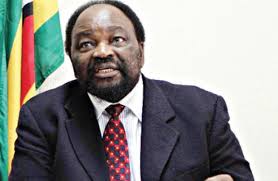
Zimbabwe Foreign minister Simbarashe Mumbengegwi. Photo/Chronicle.co.za

The Zimbabwe government has no plans to rejoin the Commonwealth and anyone lobbying for Harare to be allowed back to the bloc will be working against Zimbabwe’s position, a Cabinet minister has said.

Foreign Affairs Minister Simbarashe Mumbengegwi said Zimbabwe was unjustifiably suspended from the Commonwealth in 2002 after the bloc of former British colonies premised its decision on what they regarded as ‘preponderance of opinion’.

Mumbengegwi said this while giving oral evidence on Monday before the Parliamentary Portfolio Committee on Foreign Affairs chaired by Makonde MP Kindness Paradza (Zanu-PF) regarding Zimbabwe’s foreign policy.

“Since then, there has never been a review of Commonwealth membership by the Government of Zimbabwe. In fact, it is difficult to see any such review taking place in the foreseeable future. Therefore, any parliamentarians who lobby foreign parliamentarians for Zimbabwe to be allowed to join the Commonwealth must know that their efforts are at variance with the Government of Zimbabwe. The Commonwealth is, after all, first and foremost an association of governments,” he said.

Giving some background, Minister Mumbengegwi said Zimbabwe was initially suspended for one year following a report by the Commonwealth Election Observer Mission after they asserted that while Presidential elections had been held professionally they had received complaints from the opposition of violence which allegedly occurred before they arrived in the country.

As a result, he said, a troika of the Commonwealth comprising former South African president Thabo Mbeki, his then Nigerian counterpart President Olusegun Obasanjo and the then Australian prime minister John Howard announced the suspension after a whole day of deliberations.

Minister Mumbengegwi said Zimbabwe was subsequently suspended by President Obasanjo on what he called ‘preponderance of opinion’ in spite of fierce opposition by Sadc and Uganda that the decision undermined the Commonwealth tradition of decision- making by consensus.

“For Zimbabwe to come back, these were the conditions, (that) secretary-general (Donald) McKinnon and chairman Obasanjo must unanimously recommend to a committee of seven foreign ministers, which had been set up, who in turn must unanimously recommend to all members of the Commonwealth who must unanimously agree to lift the suspension of Zimbabwe,” said Minister Mumbengegwi.

He said this coincided with Zanu-PF national people’s conference in Masvingo that subsequently voted to pull out from the Commonwealth.

On re-engagement with the European Union, Minister Mumbengegwi said the Western bloc had failed to substantiate its allegations of absence of democracy and rule of law.

Of late, he said, the United States and the EU had sought to justify their sanctions on the alleged disappearance of journalist and opposition political activist Itai Dzamara.

“I have said to them, look, before the Dzamara issue, why did you impose sanctions in the first place? I asked them to bring evidence of alleged abuse, specific evidence but they have failed,” he said.

Legislators also expressed concern on the state of infrastructure of Zimbabwean embassies which they said was embarrassing.

Minister Mumbengegwi said it was a reflection of the harsh economic environment in the country.


Stories Continues after ad

UN concerned about 85,000 newly displaced persons in Darfur

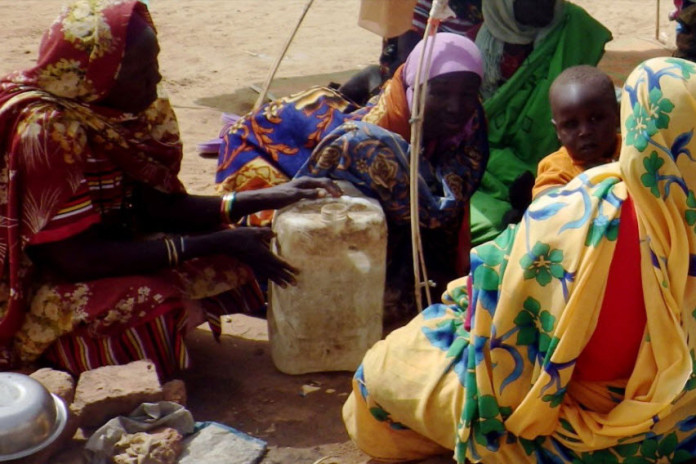
Women and children displaced from Jebel Marra, in North Darfur, due to fighting, take shelter in the Tawilla new arrivals site. Photo: OCHA

The top United Nations humanitarian official in Sudan said today she is deeply concerned about the plight of more than 85,000 newly displaced civilians in North Darfur state who have fled their villages in recent days as a result of an escalation of conflict in the region’s Jebel Marra area.

The UN Resident and Humanitarian Coordinator for Sudan, Marta Ruedas, said in a press release that this past Monday, she visited Tawilla, west of El Fasher on the fringes of the Jebel Marra, where more than 22,000 people, mostly women and children, have gathered in recent weeks next to an existing camp for displaced people.

“Seeing hundreds of women and children in Tawilla and speaking to the local authorities there very much brings it home: that civilians continue to bear the brunt of conflict every day and their protection is our paramount concern,” Ms Ruedas stressed.

The UN, along with international and national organizations, and the Sudanese Red Crescent Society, are delivering assistance to those in need, and more is on the way, but the massive influx of new arrivals in recent days has “put a strain on what was an already logistically complex operation,” the UN official said.

Ms. Ruedas also said an 11-truck convoy left El Fasher with more aid, including food, for Sortony, where there are more than 63,000 newly-displaced people taking refuge next to a UN peacekeeping site.

To date, the United Nations and its partners have not been granted access to key locations reportedly affected by civilian displacement in Central Darfur, despite reports of wide-scale movement of people and potential emergency need.

Calling for immediate access to all people in need so that those affected can receive the humanitarian assistance they require, Ms. Ruedas in particular urged all parties to the conflict to allow the UN and its partners to reach displaced people in Central Darfur.

As of February 20, there are 22,261 newly displaced people in Tawilla, of whom 18,974 are verified, and 63,223 newly displaced people in Sortony, of whom 41,530 have been registered, according to the International Organization for Migration (IOM).

According to the Kebkabiya Smallholder Charitable Society, a non-profit organization, and Oxfam International, there are also 2,018 displaced people in Kebkabiya. This brings the total of displaced in North Darfur State as a result of the recent Jebel Marra hostilities to 87,502, the UN official said.


Stories Continues after ad

Machar troops for Juba on March 1

Troops allied with South Sudan’s Riek Machar, the former rebel leader and rival to President Salva Kiir, will deploy to the capital in March, a regional peace observer said, bolstering a fragile peace accord that ended two years of fighting.

It will be the first time Machar-allied troops will be deployed in Juba since December 2013, when a row between Kiir and his sacked deputy quickly descended into a civil war that often ran along ethnic lines.

Both sides, under pressure from Washington, the United Nations and other powers, signed an initial peace deal in August, and agreed to share out ministerial positions in January.

But that deal has broken down repeatedly, and a U.N. report last month said both leaders qualified for sanctions over atrocities in the conflict.

However, earlier this month, Kiir gave Machar his old job back as deputy leader, raising hopes of a breakthrough after months of troubled negotiations and failed ceasefire agreements.

In a meeting late on Tuesday, signatories of the deal agreed that 1,370 troops from Machar’s SPLM-IO group will be deployed in Juba starting March 1, according to Festus Mogae, chairman of the Joint Monitoring and Evolution Commission (JMEC).

“It was agreed that we will bring first and second stages together and therefore bring 1,370, including 700 of the police, to Juba… as a compromise,” Mogae told reporters in Juba.

A spokesman for Machar confirmed he is expected to return to Juba during “the first week of March.”

Kiir sacked Machar as vice president in 2013, exacerbating a political feud that erupted into fighting between soldiers loyal to both men in Juba.

The fighting has so far killed thousands and displaced 2.3 million people since late 2013. The war has also devastated South Sudan’s economy, slashing the oil production that funds most public spending.

UN Secretary General Ban Ki-moon is in South Sudan today and will hold talks with Kiir.


Stories Continues after ad

Foreign Affairs refutes ‘Kutesa Facebook messages’

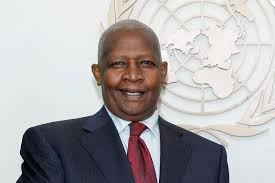
Uganda Foreign Minister Sam Kahamba Kutesa

The Ministry of Foreign Affairs has issued a statement refuting Facebook and Whatsapp messages attributed to Minister Sam Kahamba Kutesa, damaging to the government and the person of the President.

In the February 24 release, the two social media platforms indicated that Kutesa’s right to communicate using public media outlets had been curtailed, and that he also reportedly urged the international community not to recognize President Yoweri Kaguta Museveni (as President-elect).

‘The Ministry wishes to inform the general public and members of the international community that Hon Sam K Kutesa is neither the source nor the author of these messages and the Facebook account purportedly in his name is a poor attempt at impersonation,’ the release indicates.

The release adds: ‘These messages are malicious and intended to cause alarm and discredit the person of the Hon Minister, the President and the recently-concluded elections in Uganda’.

The Ministry urged Ugandans to disregard the messages. ‘The Ministry calls on the general public and the international community to treat theses falsehoods with the contempt they deserve,’ the release concludes.

Stories Continues after ad

Burkina Faso ex-leader Blaise Compaore becomes Ivorian

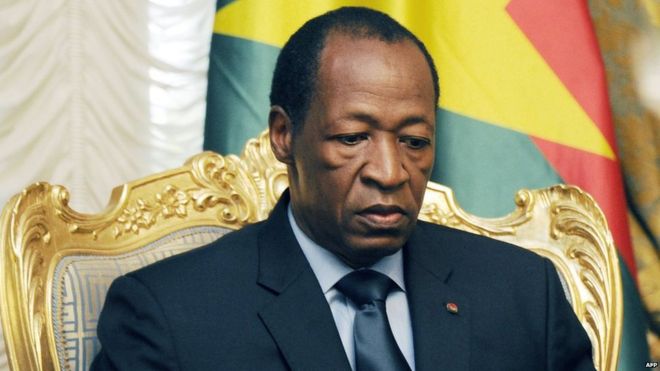
Ousted Burkina Faso President Blaise Campoare

Burkina Faso’s ousted leader Blaise Compaore has been granted Ivorian citizenship, effectively ending the prospect of his extradition to face murder charges back home.

The order was signed by Ivorian President Alassane Ouattara in November 2014, but has only just come to light.

Mr Compaore is wanted over his alleged role in the murder of iconic ex-leader Thomas Sankara in 1987.

His 27-year rule ended in October 2014 after a wave of popular protests.

Mr Compaore, whose wife is Ivorian, has been in exile in Ivory Coast since his overthrow in October 2014.

An arrest warrant was issued for him in December.

Mr Sankara, a left-wing radical seen as ‘Africa’s Che Guevara’, is considered a hero for many Africans and was succeeded by Mr Compaore, who had served as his deputy.

The exact circumstances of his death have remained a mystery.


Stories Continues after ad

BBC Komla Dumor award is back

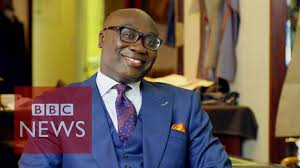
Late BBC Broadcaster Komla Dumor

The British Broadcasting Corporation (BBC) Services has started receiving applications for this year’s Komla Dumor award, established in honour of Komla Dumor, a presenter for BBC World News, who died in 2014 aged 41.

According to a release, this year’s winner will work with teams across BBC News in London for three months, and applications for participation in the prestigious competition close on March 23, 2016.

Last year’s winner is Kenya-based Ugandan journalist Nancy Kacungira, a television anchor for Kenya’s KTN television channel, who was selected from nearly 200 applicants.

“Komla was a much-loved and respected journalist – not only with his colleagues but also with aspiring journalists and audiences across the world,” the BBC’s World Service Group and Deputy Director of News and Current Affairs Fran Unsworth, said.

Unsworth added: “His storytelling was compelling and his enthusiasm was infectious, making him one of Africa’s leading journalists.

According to Unsworth, the BBC is looking for a talented broadcaster who fits the late Komla’s prowess.

“At the BBC, we are committed to continuing Komla’s dedication to this continent by launching this award for the second year running. We are searching for a rising star who displays exceptional talent, someone who embodies the spirit of Komla,” Unsworth said.

Komla Dumor was an exceptional Ghanaian broadcaster who made an impact his home country, in Africa and around the world.

‘He represented a confident, savvy and entrepreneurial side of Africa. Through his tenacious journalism and compelling storytelling, Komla worked tirelessly to bring a more nuanced African narrative to the world,’ the release adds.


Stories Continues after ad

Low turnout for Kampala Local Council elections

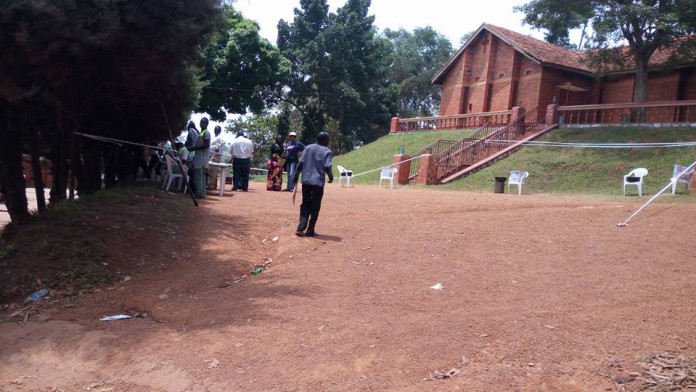
DRY? One of the polling stations in Kampala

Despite the Electoral Commission declaring today a public holiday, there has been poor turnout for local council elections around Kampala today.
When the EagleOnline visited the Makerere and Bwaise areas, voters at polling stations acknowledged that voting materials arrived on time but wondered why people did not turn up in big numbers to choose their leaders.
Indeed, at all the seven polling stations visited in the two areas security was tight with each polling station having about five officers.

“People are calm and few; we don’t expect any chaos at all,” said Livingstone Lule, a voter.
Esau Taremwa, a resident in Makerere noted that people had lost hope in the voting process because they felt their candidates were cheated in the recently concluded Presidential and Parliamentary elections.

“These few numbers came to vote for the Lord Mayor; people are fed up with the electoral process,” Taremwa said.
During the recently concluded elections where Museveni was declared winner, his archrival Col (rtd) Kizza Besigye disputed the results citing irregularities in the process.
Moses Baluku, a resident of Bwaise, shares Besigye’s sentiments. “People are not sure if their choice really matters and are in shock,” he says.
A polling agent, Hosea Mugisha agrees there has been low turnout, something he attributes to voters not being so attached to the contesting candidates. “They will turn out in the village elections because they personally know the people contesting,” expressed Mugisha.
Meanwhile, at Molly Law and Joy  polling station in Kitintale, Nakawa Division  in Kampala, only 30 people had lined up to vote by 11am, reports Steven Mandu.

There were almost similar cases in several other polling stations across Nakawa and Kampala Central where this reporter covered.

According to social media reports there has been a low turnout in most places countrywide.

Elections will close at 4:00pm.

Meanwhile, in Kyankwanzi district the elections for chairperson have been postponed due to errors on the ballot papers.

The candidates contesting for the District Chairperson include the incumbent Mr Leopold Ddamurila Kinene (NRM), and Wilson Konde Busuulwa and John Mpuuga, both independent candidates.
Konde has a radio symbol; Mpuuga has a clock and Kinene has a bus.

However on the ballot paper, Mpuuga was given the symbol of a radio instead of a clock, which prompted the electorate to reject voting.

Consequently, the Electoral Commission decided to postpone the elections to a date that will be communicated.

However, the Kyankwanzi District Returning Officer Ms Harriet Kashagyire said that elections for other posts is ongoing.


Stories Continues after ad

DRC internally displaced bother UN chief

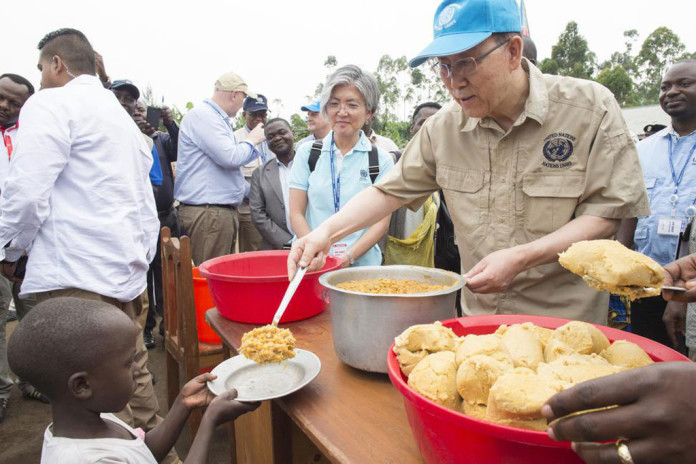
CONDEMNED ELECTIONS RELATED VIOLENCE: Secretary-General Ban Ki-moon visiting an IDP camp in Kitchanga, North Kivu, Democratic Republic of the Cong (DRC). UN Photo

United Nations Secretary General Ban Ki-moon has reiterated his call for support from Member States to resolve global humanitarian issues like the refugee and migrant crisis and ensuring human dignity for all.

Mr Ki-moon said this during a visit to a site hosting internally displaced persons (IDPs) in North Kivu, in the Democratic Republic of the Congo (DRC).

“We have to give hope to young people…  “Particularly, we have to do much more to bring all these children back to school; we have to do much more to protect human dignity and human rights of women and girls to save them, to protect them from sexual violence,” said Mr Ban on the first stop of his two-day visit that includes attending the opening session of the Great Lakes Private Sector Investment Conference in the capital Kinshasa.

Mr Ban is expected to meet with President Joseph Kabila and other senior Congolese Government officials to discuss all these matters today.

He said his visit to IDP camps, meeting so many people, particularly young people, reminded him of when he was six years old in Republic of Korea in 1950.

“When the Korean War broke out, it was a deadly horrible war. There were millions of people killed and tens of millions had been separated, displaced. I was one of them. I had to flee,” he said, adding that the United Nations had been a ‘beacon of hope’ then and had rescued his country ‘from the brink of collapse’.

Now the United Nations are doing the same, despite a lack of resources, to protect the rights of 60 million IDPs and refugees around the world, the highest number since the end of the war.

To that end, he will convene the first-ever World Humanitarian Summit in Istanbul, Turkey, in May, as well as a summit on global migration and refugee issues in September. “We need support from the Member States as the UN cannot do it alone,” he said. “No country can resolve all these issues alone.”

Responding to a question about authorities wanting to close some IDP camps in North Kivu, he said he told the Governor not to close them. The authorities seem to be lacking resources, but the UN will work together with the local and central Governments. “It is important to provide life-saving assistance to those people who need daily humanitarian assistance,” he said.

On a question on efforts to improve security in the areas of origin of IDPs, he said people should be protected from violence, particularly women and girls. But there are clearly limits for peacekeepers to do it all. That is why the UN Organization Stabilization Mission in the Democratic Republic of the Congo or MONUSCO, the Armed Forces of the Democratic Republic of Congo, known by the French acronym FARDC, and the national police are working very closely.

“The protection of civilians is the number one priority for UN peacekeepers,” he said.

Tomorrow the Secretary-General will leave Kinshasa for Juba, South Sudan, where he is expected to meet with President Salva Kiir and visit a Protection of Civilians’ site that is run by the UN mission.


Stories Continues after ad

SPLA fears ‘vacuum after withdraw’

South Sudan Defence Minister koul Manyang Juuk

The general command of the Sudan People’s Liberation Army (SPLA), which is the official army of South Sudan, has warned of security vacuum should its forces withdraw from the national capital, Juba, in implementation of the security arrangements signed with the opposition faction of SPLA-IO.

About 80% of the several thousand troops stationed at the strategic entry points and junction leading out of Juba town withdrew on Thursday morning, according to South Sudanese defense minister.

Addressing a withdrawal ceremony of the forces on Thursday, defense minister Kuol Manyang Juuk commended the soldiers for exhibiting nationalism in defending the country and the constitution.

“The mandate of the army is to defend the country, protect citizens and their properties. You have executed this mandate very well but you need to do more to protect the lives of the people and their properties. The security of this country and the citizens is in your hands,” said Juuk.

Speaking at the same function broadcast by the state owned South Sudan Television (SSTV) on Thursday, SPLA’s chief of general staff, Paul Malong Awan, urged the soldiers to exercise patience wherever they will be deployed and to provide adequate security and protection to the citizens and their properties.

“Be patient wherever you will be deployed. In wherever you will be deployed, there will be a road and this road will be used by public vehicles, it will be used by the civilians, you need to protect them. In wherever you will be deployed, there will be civilians close to you, you need to protect them. Your presence close to them should be source of security. It should not be source of insecurity,” explained Awan, who was known for resisting implementation of the security arrangements in the past.

The announcement of the withdrawal is interpreted as a humiliating setback for senior military officers and senior government officials who have been obstinate and showed unwillingness to accept mounting regional and international pressure to implement the security arrangements as per the October 2015 security deal which the two sides signed in Addis Ababa, Ethiopia.

“Our troops have completed withdrawal in Juba. As you have seen yesterday, they left Juba already. This was supposed to be done when there is a force to take complete control so that there is no security gap. Now this withdrawal of essential units without immediate replacement will create security vacuum,” said deputy chief of general staff for operations, Lt General James Ajonga Mawut, on Tuesday.

General Mawut confirmed that the government troops have withdrawn heavy artillery from the town as required by the security deal, following claims and accusations that the government was procrastinating withdrawal in a clear violation of the security arrangement which is a prerequisite to forming transitional government of national unity.

The government is expected to deploy a total military and police force of over 5,000 in Juba, as part of its joint force with 2,910 from the opposition SPLA-IO.


Stories Continues after ad

Nkurunziza to release political prisoners

Burundi President Pierre Nkurunziza has said he will release 2,000 prisoners detained since protests broke out against his rule in April.

He made the announcement following talks with UN chief Ban Ki-moon in Burundi’s capital, Bujumbura.

About 400 people have been killed and 250,000 have fled to neighbouring states since Mr Nkurunziza announced in April that he would seek a third term.

He survived a coup attempt in May, and won elections in July.

Mr Ban’s visit was the latest in a series of diplomatic initiatives aimed at ending the unrest.

On Thursday, South Africa’s President Jacob Zuma and four other African leaders are due to visit Burundi.

Mr Ban said Mr Nkurunziza’s promise to release the prisoners was ‘an encouraging step’.

Mr Nkurunziza had also given him an assurance that he would hold ‘inclusive dialogue’ with the opposition, Mr Ban said.

“Burundi’s political leaders must be ready to summon the courage and the confidence that will make a credible political process possible,” the UN chief added.

Stories Continues after ad