Stanbic Bank
Stanbic Bank
21.3 C
Kampala
Stanbic Bank
Stanbic Bank
Home Blog Page 2261

Police seals off three beaches over Boxing Day mass deaths

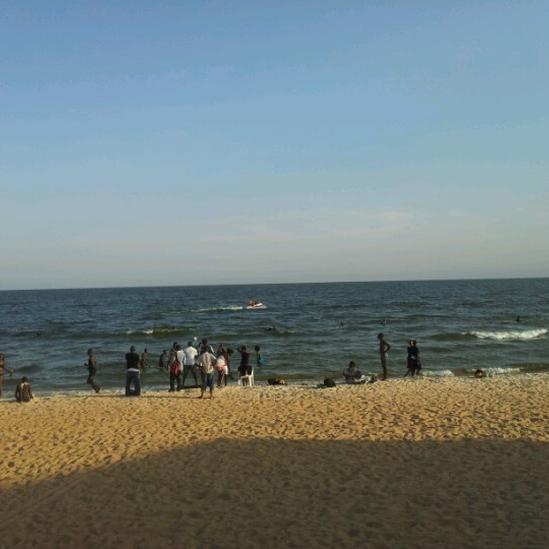
Police have sealed off Aero, Spennah and Lido beaches declaring them scene of crime. 13 bodies were retrieved from the shores of Lake Victoria.

It is believed that 50 are still missing. The bodies are thought to be part of the people, who had gone to the beaches during the festive season, Police publicist, Fred Enanga during the press briefing today said the three beaches are to remain closed as the owners and Entebbe Municipal Council are to help with investigations.

“Entebbe Municipal Council Management will help us find out whether these beaches were compliant with the set guidelines as per their licenses.

Police under the Criminal Investigation and Intelligence Department (CIID) is carryout investigations to find out what exactly happened Enanga also revealed that relatives of 10 people were identified and bodies have been handed over for burial while three bodies are still unclaimed.

Stories Continues after ad

Burundi: consensus needed to build peace

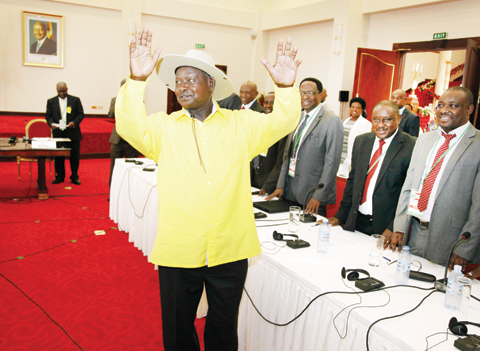
It is refreshing to know that the belligerents from Burundi were meeting in Uganda yesterday for talks aimed at restoring sanity in the tiny central African country, whose countrymen and women have been at war with themselves since it gained Independence from Belgium in 1962.

More interesting, the talks chaired by the EAC appointed mediator President Yoweri Museveni, were graced by four former presidents: Jean Batiste Bagaza, Pierre Buyoya, Sylvester Ntibatunganya and Domitien Ndayizeye, signifying the willingness of the Barundi to be part of the crafted peace process.

With the exception of Ndayizeye, the other three lorded it over an ethnically divided country, with the Hutu and Tutsi not reading from the same script of national unity.

So, seeing the four former presidents huddle in Entebbe alongside other Burundi delegates signifies one of the first steps towards finding that hitherto elusive solution to the spiraling violence that has claimed the lives of over 400 people since April this year.

Unfortunately, the talks reportedly began on a low, with the Government side demanding that ‘coup plotters’ be ejected from the meeting.

It is not clear whether some of the four former presidents are part of the alleged coup plotters but, for obvious reasons this demand by the government side was untenable, because dialogue can only take place between two opposing sides, with the other parties playing the mediatory role. And, in any case, we must accept that the so called coup plotters are part of the opposition, meaning any meaningful talks should have room to accommodate them.

That noted, at this point in time it might be safe to impute that the violence in Burundi has not yet taken on an ethnic dimension; meaning the task for the parties involved in the negotiations, to agree on the political differences, is simpler.

So, as the teams head for another round of talks in Arusha, Tanzania, next year, let focus be fixed on a consensual approach that will re-ignite the spirit of peace, co-existence and national unity in Burundi.

We wish all those involved in the deliberations a Happy New Year.

Stories Continues after ad

Kiir urged to appoint women to cabinet

South Sudan President Salva Kiir


Kiir
Kiir

The leader of the South Sudan opposition Peoples Liberal Party (PLP) Peter Mayen Majongdit has asked President Salva Kiir to appoint women to his new cabinet, expected to be announced early next month.

Majongdit’s reaction comes in the wake of President Kiir appointing 28 men as Governors of all the newly created states, in contravention of a constitutional provision that provides for women to occupy 25 per cent of public offices.

“The selection [of state governors] does not guarantee the constitutional provisions of 25% allocated by both the [transitional] constitution [of South Sudan, 2011] and the ruling party SPLM constitution for female representation in all level of government,” said Majongdit in a press statement.

According to media reports, the outspoken opposition leader called on SPLM party secretary general Jemma Nunu Kumba and other SPLM women caucus members as well as female lawmakers to ‘voice for the rights of woman and ensure that the party constitution is respected by guaranteeing female representation in the new created states’.

“Women must speak for themselves. I know the country has female cadres and leaders that can manage some states,” Majongdit said and urged the SPLM, and the armed opposition SPLM-IO to respect the role women play in peace-building.

Last week, President Kiir appointed governors for the 28 new states he created in October after increasing them from 10, a viewed as a setback to the peace deal signed with the SPLM –IO in August based on the 10 states.

The national alliance of 18 opposition political parties condemned the appointment of state governors, which they described as a violation of the accord to end the conflict.

In a related development the SPLM – IO Secretary for Foreign Affairs has urged President Kiir to rescind his appointment of the Governors, saying it contravened the peace deal signed in the Ethiopian capital Addis Ababa in August.

“Our position has been very clear. We have an agreement signed on the 17thand 26th of August 2015, and the agreement clearly states that there will be only 10 states in South Sudan for the next three years. So creating 28 states is basically not in line with the agreement that we have signed. So we are basically stating clearly that President Salva should stick to the implementation of the agreement which says 10 states for the next three years,” Ezekiel Lol Gatkuoth said.

But Gatkuoth’s assertions have been watered down by South Sudan foreign minister Barnaba Marial Benjamin, who said president Kiir’s move was in line with the constitution.

South Sudan, a country of about 12 million people, got Independence from its northern neighbor in 2011, but just three years into the new government cracks emerged between President Kiir and his vice Riek Machar Teng, culminating in a civil war in December 2013.

Since then tens of thousands have been killed and over two million have been displaced, prompting the intervention of regional stakeholders under the eight-country Intergovernmental Authority for Development (IGAD).

Stories Continues after ad

Another Ethiopian journalist arrested

Getachew Shiferaw

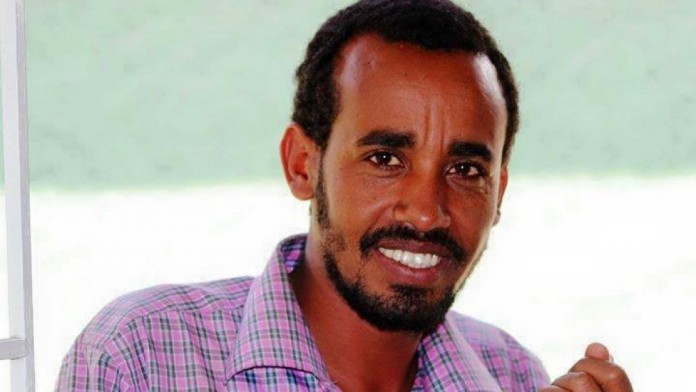
Ethiopian authorities have arrested Getachew Shiferaw, the Editor-in-Chief of online newspaper Negere Ethiopia, a publication allegedly affiliated to the opposition.

The arrest of Shiferaw on Friday follows that of Fikadu Mirkana, a news anchor at the state-run broadcaster Oromia Radio and TV who was arrested last week.

Media reports indicate that the arrest of the two comes in the wake of protests over a plan by the authorities to expand the Ethiopian city Addis Ababa, which campaigners say will displace hundreds of thousands.

 Getachew Shiferaw
Getachew Shiferaw

According to media reports Negere Ethiopia is affiliated with the Blue Party, an opposition movement that has campaigned for greater political openness in Ethiopia. The newspaper was forced to suspend its print edition a year ago, and now is distributed via social media. The outlet covers political trials, including proceedings against opposition politicians and journalists, co-founder of the Zone 9 blogging collective Soleyana S. Gebremichael told CPJ. It reported on calls by the Blue Party and the Oromo Federalist Party for a public demonstration to be held, but for which authorities denied permission.

The arrests have been condemned by the Committee to Protect Journalists (CPJ) which has called upon the authorities in Ethiopia to release the two journalists.

“Ethiopia prides itself on development, but economic growth is a hollow achievement if the public does not enjoy fundamental human rights such as the right to receive and share information and divergent viewpoints,” CPJ’s Africa Program Coordinator Sue Valentine said of Shiferaw. “Authorities should immediately release Getachew Shiferaw, drop all charges against him, and allow journalists to do their jobs,” she added.

Authorities have cracked down on the demonstrators as well as clamping down on critical and independent voices in the press. At least five protestors have been killed and hundreds arrested, according to news reports.

Shiferaw was arrested by federal police on December 25 while walking to his office in Addis Ababa in the morning, and is being held at Maekelawi, the main federal police investigation center, where political detainees have been tortured or ill-treated, according to a 2013 report by Human Rights Watch.

He appeared Saturday in court, where police were granted permission to hold him for 28 days for interrogation, after which he is likely to be charged under the Anti-Terrorism Proclamation.

Ethiopia’s broadly worded anti-terrorism law passed in 2009 criminalizes any reporting that authorities deem encouraging to groups and causes the government labels as terrorists, including banned political opposition groups.

The director general of Ethiopia’s Government Communications Affairs Office, Getachew Reda, did not immediately respond to emailed questions from CPJ.

Separately, authorities in Ethiopia have summoned five members of the Zone 9 blogging group – Soleyana, Abel Wabella, Natnail Feleke, Atnaf Berhane,and Befekadu Hailu – to appear in court on December 30. The bloggers were acquitted of terrorism charges in October, and the prosecution is appealing their acquittal, Soleyana, who was tried in absentia, told CPJ.

Befekadu is still facing charges of “incitement of violence through writing.” The Zone 9 bloggers were honored with CPJ’s 2015 International Press Freedom Award in November.

Ethiopia is the third worst jailer of journalists on the African continent, with at least 10 behind bars on December 1, CPJ’s 2015 prison census shows

Stories Continues after ad

Somali Parliament passes press law


The Federal Parliament of Somalia has passed the Media Bill, eliciting praise from media lobby groups like the National Union of Somali Journalists (NUSOJ).

According to NUSOJ, the passage of the bill is a “landmark achievement for the Somali media”.

“We welcome the approval of media law by (the) Federal parliament of Somalia; it is a milestone achievement for the Somalia media and journalists,” Mohamed Ibrahim, NUSOJ Secretary General said adding that the bill protects the media workers from unwarranted arrest and to freely exercise their freedom.

“A the major political change ahead and upcoming elections, the bill secures the safety of the journalists as well during the election period.” Mr. Ibrahim added.

Representatives from NUSOJ, Somali Independent Media Houses Association (SIMHA), Somali Women Journalists (SWJ) and the Network 2013, Media Association for Puntland (MAP) representing journalists and employers have been widely consulted throughout the process and have repeatedly submitted their concerns to the concerned authorities including the Parliamentary Media subcommittee, all of which were given at most considerations.

“It’s vital for our media and journalists to have a press regulations, in order for us to challenge the punitive criminal code, which criminalizes the work of the journalists,” Mr. Ibrahim said and implored the authorities to implement the law to its letter and spirit.


Stories Continues after ad

Top musician shot dead in bar brawl

Master Blaster

Master Blaster of the ‘Embooko’ fame was in the wee hours of Tuesday morning shot dead in a bar brawl in Eden Service Park, Bwaise, EagleOnline has learnt.

Master Blaster
Master Blaster

According to Bukedde, Master Blaster was fighting with a yet to be identified South Sudanese national. When police tried to intervene and separate them, he was shot ‘accidentally’. Police, however, still holding investigations.

Ebooko became a house hold hit following its release by the deceased in 2007. To some, the late’s ‘Embooko’ hit was just another of those nonsense lyrics and yet to those with pregnant imaginations, Emboko reeks of vulgarity and sexual innuendo. May his soul rest in peace.


Stories Continues after ad

Trillions spent on construction of Health Centres – Museveni

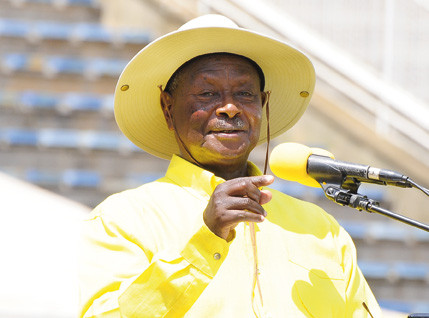
President Museveni

Close to two trillion shillings has been injected in the construction of Health Centre IIIs and IVs in Uganda.

According to President Yoweri Museveni, since the National Resistance Movement (NRM) government came to power in 1986 it has constructed 930 Health Centres III and 193 Health Centres IV at a cost of Shs1.5 billion and 2.5 billion each, respectively.

In effect, the HCIIIs were constructed at a cost of UgShs 1.395 trillion, while the HCIVs cost 482.5 billion, bringing the total cost to 1.877.5 trillion shillings.

Mr Museveni made the revelation in a five-page communication while responding to assertions made following a visit to Abim Hospital by the Forum for Democratic Change flag bearer Dr Warren Kizza Besigye, who decried the current state of the medical facility in Northern Uganda.

‘Basing the Health care at the sub-county and the county (HC IIIs and HC IVs) has caused a Revolution in Uganda.  Infant mortality has declined from 122 to 44 per 1000 live births; life expectancy has risen from 43 years to 58.7 years in spite of the AIDs epidemic.  The immunization takes place, mainly in these Health Centre IVs and Health Centre IIIs not in Abim Hospital,’ Mr Museveni wrote.

Despite the development Mr Museveni said Shs700 million has been earmarked for the annual-phased rehabilitation of Abim hospital, to be carried out alongside the rehabilitation of other hospitals like Kiboga, Bundibugyo, Kitagata, Atutur, Bugiri, Kapchorwa, Kitgum, Itojo.

Mr Museveni also said the government had also strengthened its redevelopment programme of the existing health facilities, with the district hospitals of Kabale, Mbarara, Fort-Portal, Masaka, Hoima, Mubende, Arua, Gulu, Lira, Moroto, Soroti, Jinja, Mbale and Naguru already complete.

Those currently under renovation, he said, include Entebbe, Mityana, Nakaseke, Kiryandongo, Anaka, Nebbi, Moyo, Iganga, Kawolo, Kayunga, Yumbe and Busolwe.

Meanwhile, Mr Museveni said the Health Centres are conveniently located to serve more people and as a result, have led to a reduction in infant mortality and in several diseases and, to increased immunization.

According to Mr Museveni, who is also the NRM flag bearer in the 2016 elections, the new health structure adopted by his government has also seen the population of Uganda grow from 14 million in 1986 to 38 million by 2015.

‘Hospitals, however, have not stopped the improved health status of Ugandans because the majority of the answers were in prevention (immunization, hygiene, nutrition, behavior change, malaria control, vector control – tse tse flies, river blindness fly, etc.).  That is where the NRM started from.  If Dr. Besigye does not know that, I am informing him’ Mr Museveni noted, and also chided Dr Besigye for not taking note of the improved security in the country.

‘Is it not dishonest for Dr Besigye, to zoom around the country, by night and by day, in total peace, yet fail to even mention that?  Did Dr. Besigye see the electricity in Abim?  What did it cost the state to take power there, all the way from Lira?  As he noticed the unrehabilitated state of Abim hospital, surely, as an honest person, he could have also noticed the great improvements,’ Mr Museveni wrote.

Full text below;

RESPONSE TO DR. KIIZA BESIGYE ON THE ABIM HOSPITAL VISIT


As usual, Dr. Besigye is either not honest or not serious in the manner he visited and propagandized about the unrehabilitated state of Abim Hospital.  We all know that a number of the old hospitals are not yet rehabilitated, including Abim.  I have visited Abim Hospital myself several times, the last time being on the 24th of August 2015.


Following the collapse of the economy and the social services of Uganda of 1971-1986, the NRM decided to start with the prevention of diseases rather than waiting to cure them.  Hence, a totally new structure of health care was initiated in the country levels.  This was centered on the brand new Health Centre IVs at the county and Health Centre IIIs at the sub county.    These are 193 Health Centre IVs and 930 Health Centre IIIs (mostly new) in the whole country.  Dr. Besigye, if he was honest or serious, should have visited the 3 Health Centre IIIs in Abim.  These are at: Rwogom in Nyakwai Sub-County, Alerek in Alerek Sub-County and Orwamuge in Notuke Sub-County.  It is these that have carried out the successful immunization programmes for the majority of the 13 diseases.    These are: polio, whooping cough, tetanus, measles, tuberculosis, diphtheria, influenza, Pneumonia/Meningitis, Hepatitis B, diarrhea, cervical cancer, mumps and German measles.  They also carry out curative work for many sicknesses.  Some of the staff have problems of absenteeism and stealing of drugs.  That is why I set up a Health Monitoring Unit, headed by Dr. Atwiine, in my office.  This unit has made 227 arrests of health staff engaged in malpractices that include criminal negligence, including death of patients, stealing of drugs, etc.  The unit, however, is being frustrated by the Judiciary that continues to release the culprits.  I have complained to the Principal Judge and the Chief Justice about this.


Given the chaos in the region, drugs are smuggled to Congo, South Sudan, etc.  Fortunately, earlier on, I had already ordered the embossing of all government drugs (tablets, capsules, bottles etc.).  They are, therefore, easy to track.  That is why I fell out with the former Permanent Secretary, Ms. Nannono.


Basing the Health care at the sub-county and the county (HC IIIs and HC IVs) has caused a Revolution in Uganda.  Infant mortality has declined from 122 to 44 per 1000 live births, life expectancy has risen from 43 years to 58.7 years in spite of the AIDs epidemic.  The immunization takes place, mainly in these Health Centre IVs and Health Centre IIIs not in Abim Hospital.  We spent huge amounts of money in building these Health Centre IVs and Health Centre IIIs.  A Health Centre IV, on the average, costs Ug. Shs. 2.5bn including accommodation for 10 critical medical workers.  A Health Centre III, on the average, costs Ug. Shs. 1.5bn including accommodation for 6 critical medical workers.


I rejected the plans to extend Health Care to HC IIs at the Parish.  Indeed, 2,729 of them had been built in the whole country.  However, that entailed recruiting another 45,000 Health workers which would take too much money.  Instead, we agreed that the Health Centre IIIs should be fully manned with 19 workers and Health Centre IVs with 49 workers each.


It is this new Health structure that has seen the Population of Uganda grow from 14 million in 1986 to 38 million today.  I am always quarrelling with the Ministry of Health about their failure to add a sustained campaign for good nutrition and hygiene, working with the Ministries of Local Government and the Ministry of Information, to this very successful programme of immunization mentioned above.  That would eliminate over 70% of the sicknesses.  They should also consolidate the anti-malaria campaign of distributing treated bed-nets and residual indoor spraying.

As for the district Hospitals, we know which ones have been rehabilitated and those that have not been renovated.  The ones that have been renovated include: Kabale, Mbarara, Fort-Portal, Masaka, Hoima, Mubende, Arua, Gulu, Lira, Moroto, Soroti, Jinja, Mbale and Naguru. These ones have already been completed.


The ones under renovation are: Entebbe, Mityana, Nakaseke, Kiryandongo, Anaka, Nebbi, Moyo, Iganga, Kawolo, Kayunga, Yumbe and Busolwe. 


We also have those ones that have not been rehabilitated but whose rehabilitation process has just begun.  The Ministry of Health is providing a budget of Ugx. 700M to each of these Hospitals every financial year for rehabilitation work in a phased manner.  These include: Abim, Kiboga, Bundibugyo, Kitagata, Aturtur, Bugiri, Kapchorwa, Kitgum, Itojo.  The unrehabilitted Hospitals, however, have not stopped the improved health status of Ugandans because the majority of the answers were in prevention (immunization, hygiene, nutrition, behavior change, malaria control, vector control – tse tse flies, river blindness fly, etc.).  That is where the NRM started from.  If Dr. Besigye does not know that, I am informing him.   It is also not serious for Dr. Besigye to go to Karamoja and not talk about the peace.  When Dr. Besigye left us in 2000 or thereabout, there were 40,000 illegal guns in the hands of the cattle-rustlers.  Kony was still killing people in Northern Uganda.  ADF was killing people in the Rwenzori Region.  The NRM and the UPDF have totally pacified the Country by defeating the terrorists and disarming the cattle-rustlers.  Is it not dishonest for Dr. Besigye, to zoom around the country, by night and by day, in total peace, yet fail to even mention that?  Did Dr. Besigye see the electricity in Abim?  What did it cost the state to take power there, all the way from Lira?  As he noticed the unrehabilitated state of Abim hospital, surely, as an honest person, he could have also noticed the great improvements.


I thank you.

Stories Continues after ad

Louis Van Gaal: Man Utd manager will not quit after Chelsea draw

Manchester United manager Louis van Gaal says he will not resign after his side drew 0-0 with Chelsea on Monday.

United have now failed to win in eight games in all competitions – the first time that has happened since 1990 – and are five points behind fourth place.

416957-louis-van-gaal-epl-wave-700

But Juan Mata and Anthony Martial both hit the woodwork in an improved United display against Chelsea.

Van Gaal said: “When the players give such a performance with a lot of pressure, there’s no reason to resign.”

It has been a testing week for Van Gaal, who before Christmas walked out of a news conference after criticising the media for speculating about his position.

The Red Devils then lost 2-0 at Stoke, while United scarves with the name of recently sacked Chelsea boss Jose Mourinho on them were sold outside Old Trafford before Monday’s game.

Van Gaal, though, is confident he has the support of both the players and the club’s board.

“The crisis here is the environment and you [the media] are part of that,” added Van Gaal.

“The players are willing to fight for every metre. The manager is willing to fight. The members of staff are willing to fight and the board has every confidence in the staff and the manager.”

Stories Continues after ad

Child Asthma rates leveling off, except among poor and older Kids: Study

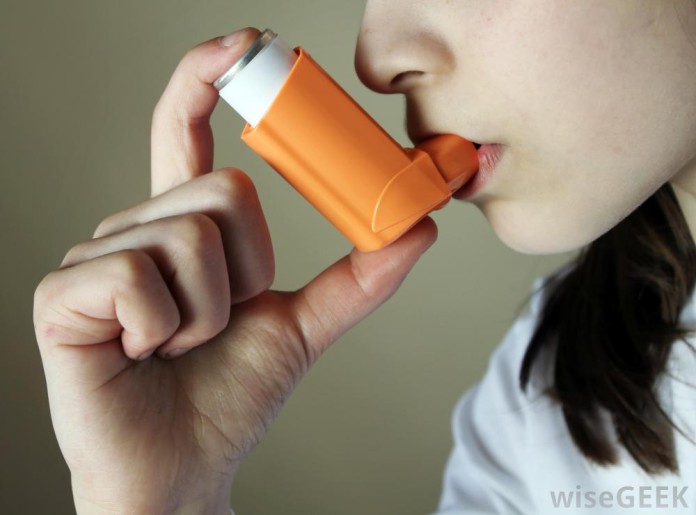
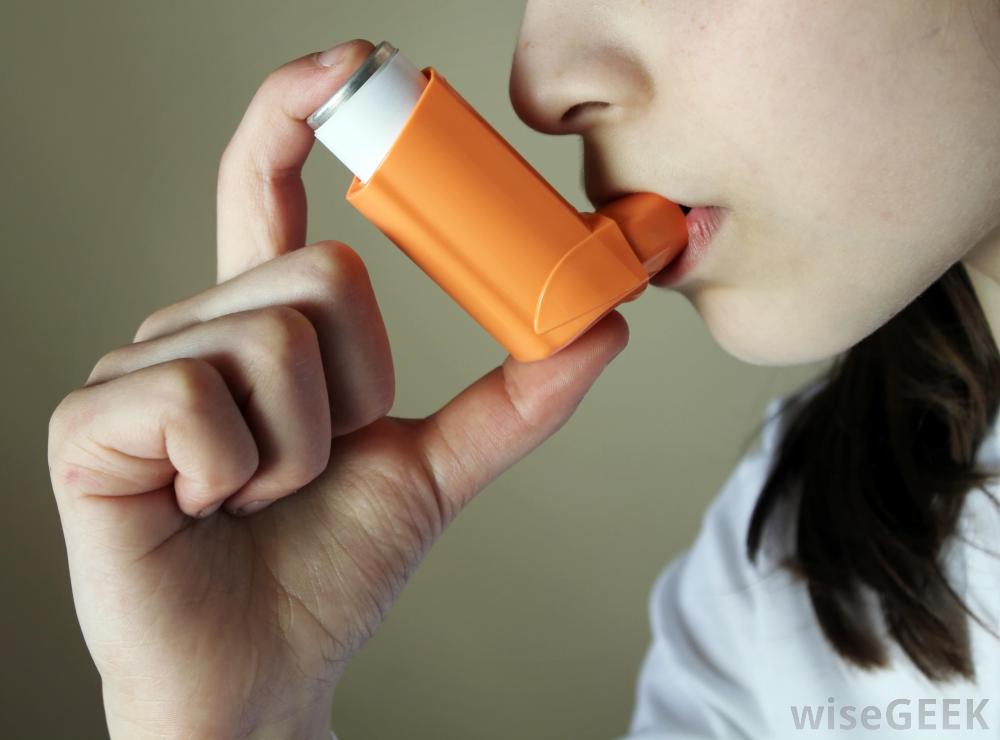
AnAsthma patient having difficulties in breathing.


MONDAY, Dec. 28, 2015 (Health Day News) — Rates of childhood asthma appear to have plateaued, except among the poor and kids aged 10 to 17, U.S. health officials report.

Researchers found that childhood asthma rates increased from 2001 to 2009 — a trend that began in 1982. The rate peaked in 2009 at close to 10 percent, then leveled off before dropping to slightly more than 8 percent in 2013.

“Trends in childhood asthma have recently stopped increasing,” said lead researcher Dr. Lara Akinbami, who’s with the U.S. Centers for Disease Control and Prevention’s National Center for Health Statistics.

“This is mainly due to the leveling off of prevalence among black children, who previously had large increases in the prevalence of asthma,” she said.

“However, more years of data are needed to clarify if asthma prevalence among children will continue to decline, or if it will plateau around current levels,” she added.

The report was published online Dec. 28 in the journal Pediatrics.

For the study, researchers used data from the 2001 to 2013 National Health Interview Survey to analyze the prevalence of asthma in children from birth to the age of 17.

“We found that not all groups of children had the same trends,” Akinbami said.

Among children who are living in families with income below the poverty level and those aged 10 to 17, researchers found that asthma rates increased between 2001 and 2013.

“Trends increased and then leveled out among children aged 5 to 9 years and children living just above the poverty level,” Akinbami added.

Among white and Puerto Rican children, the prevalence of asthma remained the same from 2001 to 2013, Akinbami said. Puerto Rican children had the highest prevalence of asthma compared with all other groups, she said.

These overall findings are good news on two fronts, Akinbami said. First, if asthma rates stop increasing, fewer children are at risk for poor asthma outcomes, such as emergency room visits or even death, she said.

Second, among white and black children, the racial disparity in asthma rates has stopped increasing, Akinbami said. “Previously, asthma prevalence was increasing among black children, but not white children,” she said.

Black children were disproportionately at risk for poor asthma outcomes because they were more likely to have asthma, she said. In 2001, the asthma rate was 30 percent higher among black children than white children. But by 2011, it was over 100 percent higher. This increase in disparity now seems to be stopping, Akinbami said.

“The not so good news is that asthma prevalence still seems to be increasing among children living in poverty,” she said.

These statistics can’t pinpoint the reasons why changes in asthma rates are happening, Akinbami said.

“However, the increase in asthma rates among poor children may be due to their having greater or more persistent exposures to environmental factors that increase the risk for asthma,” she said.

Dr. Jeffrey Biehler, chair of pediatrics at Nicklaus Children’s Hospital in Miami, said, “It’s not unexpected that asthma rates would level off at some point. It’s also not surprising that asthma rates haven’t leveled off among poor children.”

Biehler said that poorer children are often exposed to environmental factors that increase their risk for asthma. These include tobacco smoke, mold and mildew, pet dander, dust mites, cockroaches and smog, he said.

In addition, the stress associated with poverty may increase the risk for asthma, Biehler said.

“We need to continue decreasing environmental exposures and help children at every level to reduce their chances of having asthma,” he added.


Stories Continues after ad

MUBS Don appointed MUST Deputy Vice Chancellor

Prof. Nixon Kamukama has been appointed new Deputy Vice-Chancellor of Mbarara University of Science and Technology (MUST). He has the instruments of power and he assumes his duties in 2016. The new Deputy Vice-Chancellor was appointed by the Mbarara University of Science and Technology Council On December 2015. He replaces long-serving former Deputy Vice-Chancellor Prof. Pamela Kasabiiti Mbabazi.

Prof. Nixon Kamukama

Prof. Kamukama, is currently the Head of Department of Procurement and Logistics Management in the Faculty of Computing and Management Science. The university is one of the eight public universities and degree awarding institution in Uganda.
The Dean faculty of Computing and management Science Assoc. Prof. Moya Mosa said, “I am confident you will continue to hold MUBS flag high along side MUST flag, be MUBS ambassador and MUBS shall remain proud of you”.

Stories Continues after ad