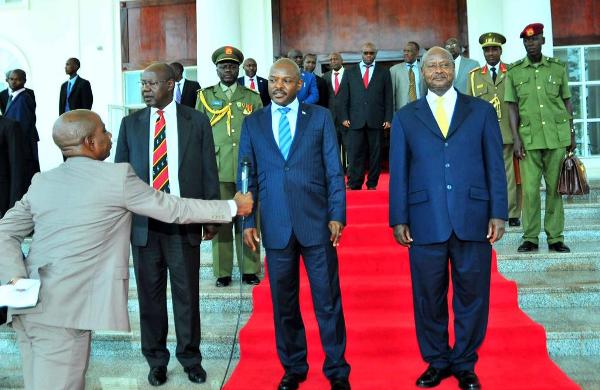
Hajji Wegule being ushered into NRM by President Museveni at Serena Conference hall during the launch of 2011 NRM manifesto.
Hajji Wegule being ushered into NRM by President Museveni at Serena Conference hall during the launch of 2011 NRM manifesto.
Kampala- Hajji Badru Wegulo, the former national party chairman of Uganda Peoples’ Congress is dead.
Announcing his passing on, Sophia Wegulo, the daughter to the deceased said her father passed on at 2am last night at their ancestral home in Kachonga sub-county, Butaleja district.
“Mzee has been battling cancer for some time and as a family we decided to bring him back home since he was on treatment but unfortunately he has gone,” Ms Wegulo said.
In 2010 Wegulo, Henry Mayega and Osinde Wangor crossed from the UPC to the National Resistance Movement (NRM) party during the launch of the 2011 NRM campaign manifesto at Serena Conference Centre and he was afterwards named Presidential Advisor in charge of Eastern Uganda.
Wegulo was one of the few leaders that kept UPC alive while Dr. Milton Obote was in exile in Lusaka, Zambia and as party chairman, together with Dr James Rwanyarere who was Chairman of the Presidential Policy Commission (PPC), oversaw the running of the UPC.
Mr Peter Walubiri, a former colleague on the PPC and now a director of Milton Obote Foundation (MOF) described Hajji Wegulo as a fighter for democracy, ‘despite crossing to NRM’.
“It is so sad that a former colleague has passed on. It is unfortunate that he has died without coming back to the party he built. I know in his heart of hearts, he remains a Congressman and we convey condolences to the family,” Mr Walubiri said.
Lira Municipality Member of Parliament and embattled UPC party leader, Jimmy Akena says no differences can deny Wegulo his role in the politics of the UPC and Uganda at large.
“He was a Congressman and we have to appreciate what he did for the party and the country. Like any other human being, he was disappointed with the UPC politics in 2010 and decided to join NRM but he was a nationalist who wished Uganda well,” Akena said.
A one time UPC diehard, on September 14, 2001 Wegulo rejected a job offer by President Yoweri Museveni as Senior Presidential Advisor on politics.
At the time the President had appointed both Wegulo and Prof. Timothy Wangusa as his advisors.
Prof. Wangusa subsequently accepted the job and to date he is an Advisor on Literary Affairs.
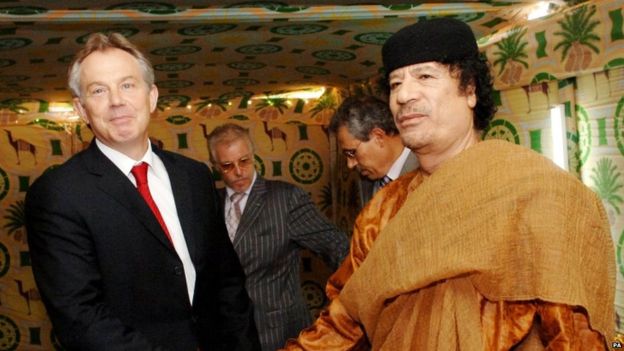
Tony Blair met former Libyan leader Muammar Gaddafi in 2007.
Tony Blair met former Libyan leader Muammar Gaddafi in 2007.
Tony Blair was not trying to “save” Colonel Gaddafi when he spoke to the dictator at the height of the Libyan conflict in 2011, he has told MPs.
The former prime minister confirmed he had “two or three” phone conversations within 24 hours with Gaddafi, having cleared it with David Cameron.
His aim was to get the dictator out of Libya “so that a peaceful transition could take place”.
But he conceded that the Gaddafi regime was “not sustainable”.
He defended his decision as prime minister to bring Gaddafi “in from the cold”, saying it may have prevented so-called Islamic State getting chemical weapons.
As part of the process, Gaddafi renounced weapons of mass destruction, bringing to a halt programmes to develop nuclear and chemical arms.
During his 90-minute appearance before the Commons foreign affairs committee, Mr Blair also said:
Mr Cameron’s decision to intervene in Libya in 2011 was “well-intentioned” and done in “good faith”
The line between intervention on humanitarian grounds and regime change is “pretty thin”
Political evolution is always preferable to revolution because of the “chaos” and instability that tend to follow
He had philosophical discussions with Gaddafi about the “third way,” among other issues, but the dictator’s views on the Middle East peace process were “eccentric”
He told Downing Street in 2011 that Syrian President Bashar al-Assad had to go and it must happen quickly
While in office, the ex-prime minister supported the West’s rapprochement with the regime of Colonel Gaddafi and even visited him in Libya in 2004.
Libya renounced its nuclear weapons programme as part of an international agreement but the West’s more accommodating relationship with the regime, which led to a number of commercial deals, came in for criticism after Gaddafi violently repressed a uprising during the so-called Arab Spring.
‘Huge prize’
Mr Blair said the decision to engage with Gaddafi, who was accused of sponsoring terrorism in the 1980s, had been difficult but he suggested there was a “huge prize” on offer from trying to normalise relations, in terms of security co-operation, and other issues were “not left to one side”.
“When I went to see him, Lockerbie, Yvonne Fletcher, were absolutely in my mind and part of the conversation,” he said.
“But I felt ultimately the game was worth it and I do believe it was worth it but is not to say I approve of what he did before or how he ran his country.”
Libya under Gadaffi
Phone calls
As Libya descended into civil war in early 2011, Mr Blair said he decided to “use his relationship” with Gaddafi to try and persuade him to leave the country but quickly realised he had “no appetite” to do so.
“It has been presented as I was trying to save Gaddafi. I wasn’t trying to save Gaddafi. I was trying to get him to go.”
Asked who initiated the conversation, Mr Blair said he approached the Libyan leader off his own back, having first spoken to Downing Street and the US State Department.
“They (the calls) were all basically saying ‘there is going to be action unless you come up with an agreed process of change, If you don’t do that, they are going to come and get you out’.”
In light of Gaddafi’s subsequent killing, Mr Blair was asked if the UK, France and the US had exceeded the auspices of their United Nations mandate which authorised action to protect Libyan civilians from the risk of a potential massacre in Benghazi.
Mr Blair said he was not willing to criticise David Cameron for acting in the way he did, adding: “Once you engage in a military action to protect people against a regime, the line between that and (regime change) becomes pretty thin at a certain point.”
Instability
Although Parliament backed the UK’s action at the time, MPs are more critical of the intervention now, saying little thought was given to post-conflict planning, to reconciling warring factions and building inclusive institutions after the collapse of the Gaddafi regime.
Libya has been beset by instability since 2011. Since 2014 the country has had two rival parliaments – an Islamist-backed one in Tripoli and an internationally recognised government in the east of the country – amid UN attempts to broker a single government of national unity.
While the current chaos in Libya was a threat to the UK’s national security, Mr Blair said the international community was not wholly to blame, given that post-conflict stabilisation is always “very very tough” and Libya had been deliberately destabilised by radical Islamist groups.
Following Mr Blair’s appearance, the SNP said it would be seeking more “transparency” about the nature of his conversations with Gaddafi.
Libya after Gadaffi
“The lessons of Libya, like Iraq, is that you cannot just bomb somewhere and move on,” said SNP MP Stephen Gethins.
Conservative ministers have defended the Libya intervention, former foreign secretary William Hague recently telling MPs that he would back similar action again while acknowledging that Libya had not turned out as the government had hoped.
Ministers have pointed to closer co-operation with the Libyan authorities on matters of mutual interest in recent years. Earlier this year, a Libyan man was arrested on suspicion of conspiracy to murder PC Yvonne Fletcher outside the Libyan embassy in London in 1984.
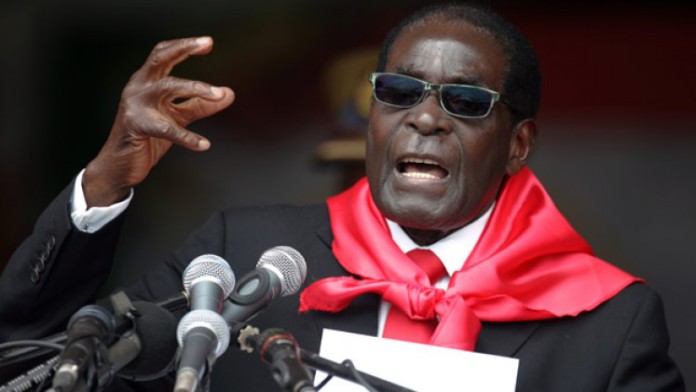
“We had come to a point where there were some in the military, the police and the intelligence services joining factions. Let’s stop that,” President Mugabe told thousands of party delegates in the tourist resort of Victoria Falls.
“Let’s stop that completely, we are ruining the party that way.”
Zanu-PF has always kept tight control of the security forces, and has been accused of using the military to attack opposition supporters during elections. Its officials have denied the charges.
During his speech, Mr Mugabe, who has been in power for 35 years, said that there would not be any leadership changes within the party.
The BBC’s Brian Hungwe in Victoria Falls says there had been talk of replacing one of the two vice-presidents with Mrs Mugabe.
That this has not happened means Mr Mnangagwa’s position is secure for another year, our reporter says.
Ahead of the Zanu-PF conference, Mrs Mugabe held rallies across the country, which many have seen as a sign of her political ambitions.
The 50-year-old first lady took over the ruling party’s women’s league last year after spearheading the expulsion of former Vice-President Joice Mujuru and her supporters from Zanu-PF.
Mr Mnangagwa, 68, is a veteran of the independence struggle and Zanu-PF and also served as the country’s spymaster in the 1980s.
Protests erupted in Burundi against President Pierre Nkurunziza's third-term bid.
Protests erupted in Burundi earlier this year against President Pierre Nkurunziza’s third-term bid.
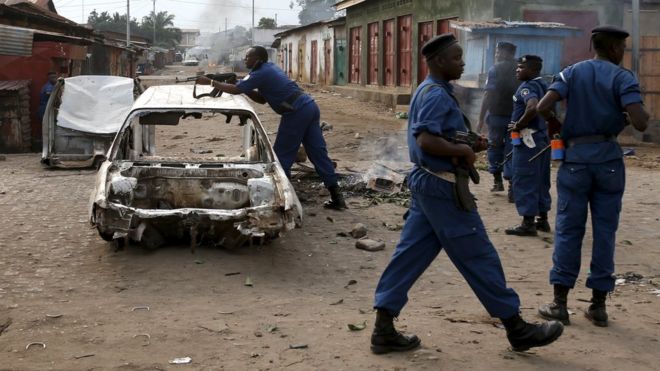
Heavily armed attackers have launched co-ordinated assaults on several army barracks in Burundi.
An army spokesman said in a statement that 12 insurgents had been killed and another 20 arrested.
Witnesses described hearing gunfire and explosions for several hours, in Musaga in the south and Ngagara in the north.
The incident is the worst violence since an attempted coup in May, sparked by President Pierre Nkurunziza’s third-term bid.
UN officials have recently accused both government and opposition figures of stirring up ethnic tension between Hutus and Tutsis, amid fears of a return to genocide.
Earlier reports had said up to five soldiers had been killed, but an army spokesman now says five soldiers were wounded in the attacks.
Residents of the capital, Bujumbura, have taken cover at home and are too frightened to go to work or send their children to school, reports the BBC’s Prime Ndikumagenge from the city.
The attacks are the first on military targets since unrest started in April, he says.
Airlines including Kenya Airways and RwandAir have cancelled flights to Bujumbura due to a lack of airport personnel, though it is not clear if the airport has been officially closed.
The neighbourhoods where the attacks occurred are seen as opposition strongholds, correspondents say.
The attacks are the first on military bases and signal a change in tactics from insurgents in the country.
Even during the attempted coup in May, military bases remained untouched.
There has been a gradual escalation in the violence in Bujumbura since May, with people initially showing dissent through street protests.
But after the government clamped down on the protests, it gradually evolved into an armed insurgency.
Grenades have been launched at police patrols, but not the military – until now.
No-one has claimed responsibility and it remains unclear who is behind the insurgency.
The military previously acknowledged that a number of soldiers have deserted the army and there are suspicions that these soldiers might have joined the insurgents.
The latest attacks look like a further escalation in a situation that has been prevailing for more than six months.
It is not clear who is behind the attacks but a military spokesperson said insurgents wanted to take weapons before freeing prisoners.
A presidential adviser, Willy Nyamitwe, said the insurgents had failed, describing them as Sindjuma, meaning “I am not a slave”.
Witnesses say that artillery fire was heard during the attacks on an army base in Ngarara and the ISCAM Higher Institute of Military Training in Musaga, AFP reports.
An army camp known as BASE, near ISCAM, was also attacked, Reuters reported, citing a soldier.
“After more than two hours of clashes, the army repulsed the southern attack, while virtually all the attackers were killed in the Ngagara base,” a senior army officer told AFP.
Security forces are conducting aggressive search operations following the attacks, reports SOS Medias Burundi, an underground group of independent journalists.
Mr Nkurunziza won a disputed election in July.
At least 240 people have been killed since April. More than 200,000 people have fled to neighbouring countries, the UN says.
In recent months, there have been daily killings of both opposition activists and Nkurunziza supporters.
At least seven people were killed earlier this week, six by men wearing police uniforms.
Mr Nkurunziza is a former leader of a Hutu rebel group, fighting a Tutsi-dominated army.
He has been president since a 2005 peace deal.
This year’s violence has not been along ethnic lines, however there are fears it could take that dimension.
Timeline – Burundi crisis
April 2015 – Protests erupt after President Pierre Nkurunziza announces he will seek a third term in office.
May 2015 – Constitutional court rules in favour of Mr Nkurunziza, amid reports of judges being intimidated. Tens of thousands flee violence amid protests.
May 2015 – Army officers launch a coup attempt, which fails.
July 2015 – Elections are held, with Mr Nkurunziza re-elected. The polls are disputed, with opposition leader Agathon Rwasa describing them as a “joke”.
November 2015 – Burundi government gives those opposing President Nkurunziza’s third term five days to surrender their weapons ahead of a promised crackdown.
November 2015 – UN warns it is less equipped to deal with violence in Burundi than it was for the Rwandan genocide
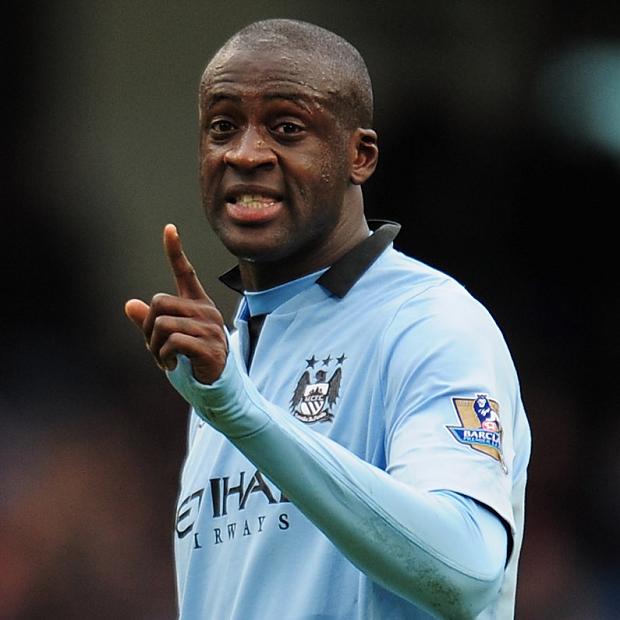
Yaya Toure has been voted the BBC African Footballer of the Year 2015.
The 32-year-old Ivory Coast midfielder becomes only the third player, after Nigerians Nwankwo Kanu and Jay-Jay Okocha, to receive the honour twice.
Football fans voted for Manchester City’s Toure, who first won in 2013, ahead of Yacine Brahimi, Pierre-Emerick Aubameyang, Andre Ayew and Sadio Mane.
“I am very proud. To receive this dedication from the fans is unbelievable,” Toure told BBC Sport.
“Also I want to pay tribute to the other nominees. African football is growing up, becoming much better and we have fantastic young players coming through now.”
Toure described all five nominees as “champions”.
He added: “I am delighted and very happy. And as an African player, I want to lead all my younger brothers to be successful in the future.
“When I was a kid I was always dreaming of being an important player. I have sacrificed a lot.
“I will continue to try to win a trophy every year, I will fight to win a personal trophy.”
Two of the beaten nominees have won the award before, Algeria’s Brahimi in 2014 and Ghanaian Ayew in 2011. Gabon’s Aubameyang was on the shortlist for the third year running, while Senegalese Mane made it for the first time.
Toure has been nominated for the award seven times and his second win ensures his year ends with a trophy, just as it began when he led Ivory Coast to glory at the Africa Cup of Nations.
He captained the team in Equatorial Guinea and opened the scoring in the semi-final to put his side on course for a 3-1 victory over Democratic Republic of Congo.
Toure was a key influence as his country end a 23-year wait for their second Nations Cup title, overcoming Ghana in a penalty shootout in the final.
It was Toure’s first trophy with the national team in his sixth Nations Cup tournament, and having lost in two finals – in 2006 and 2012.
There was less success for Toure with Manchester City, who failed to defend their English Premier League 2014 title and finished second to Chelsea.
But Toure remains a powerful presence in the heart of the midfield and contributed seven goals for City in the calendar year.
Vera Kwakofi, Current Affairs Editor, BBC Africa, said: “Yaya Toure’s leadership for country and club offers an example for many young footballers aspiring to emulate his career.
“We are pleased that as the BBC we are here to celebrate and share in this moment with his fans around the world.”
Yet again another youthful and promising soul has been removed from our midst by the cruel hand of the devil operating on the Ugandan roads.
The Bukomansimbi Woman Member of Parliament Susan Namaganda has today morning passed on at Nakasero Hospital after she was involved in a grisly accident along the Kampala – Masaka Highway last night.
Just a few days ago, about six people lost their lives along the Hoima – Masindi Road after a trailer collapsed on them, while in Pallisa the Uganda Cranes team that was returning from Soroti to meet President Yoweri Museveni was also involved in an accident at Kamonkoli and in the process six lives were lost.
Indeed, it is quite disheartening to note that most drivers, mostly those of commercial commuter omnibuses (taxis), are clueless about road regulations and yet they take to the road like rally drivers, throwing all caution to the wind.
That noted, most blame for road carnage on our roads is attributed to poor roads and a laid back attitude by police to enforce regulations on the roads including drunk-driving, speeding and reckless driving, among other omissions.
However, it would be foolhardy for other Ugandans not to also apportion part of the blame on themselves: they just allow to be led to their graves by maintaining a deadening silence to the speeding antics of some wayward drivers, as if in readiness for an appointment to meet Satan.
In effect therefore, such abhorrent behavior on our roads by both the passengers and drivers is largely responsible for the hundreds of thousands of lives lost, yet we seem to have failed to deal with it decisively.
So, as we go through this festive season, it is only reasonable that we do all in our capacity to nip road carnage in the bud by stressing punitive action against those found to be errant on the roads.
The Democratic Green Party of Rwanda has urged its members to cast a ‘No’ vote in the referendum slated for December 17 and 18.
In a release the DGPR said the party was unable to stop the referendum and therefore, asked its party adherents to vote against the lifting of term limits to allow President Paul Kagame serve another term as president.
‘The Democratic Green Party of Rwanda wishes to inform members of the media and the general public that its planned constitutional referendum no-change campaign will not be carried out due to the one-week short notice given for the referendum to be conducted,’ the party wrote on its website.
The DGPR and its President Dr Frank Habineza have fought pitched battles in Parliament and the courts of law to scuttle the amendment of Article 101 of the Rwanda Constitution, which sets the President’s mandate at a maximum of two seven-year terms.
Also, western powers led by the US and European Union have openly opposed the amendment, prompting President Kagame to tell his third term critics to back off his country’s internal affairs.
The US Assistant Secretary of State for African Affairs Linda Thomas-Greenfield has said President Yoweri Museveni and the East African Community will be blamed if full-scale war breaks out in Burundi.
She said President Museveni is distracted (by elections) from mediating talks between the warring parties yet EAC gave him the crucial assignment to help end violence in the troubled East African country.
“We hope to see dialogue initiated in the very near future,” Ms Thomas-Greenfield remarked. “If it is not, and the crisis deteriorates further, possibly into full-scale war, I fear that President Museveni and the EAC could end up being partially blamed, given the lengthy delays in getting the process started.”
Political tensions within the EAC have also impeded mediation, she said. Competing interests between Burundi and Rwanda and between Rwanda and Tanzania “have caused the EAC to not be as effective as they might have been,” Ms Thomas-Greenfield said in remarks to a US Senate subcommittee on Africa, adding that the African Union should now consider taking over the mediation role from EAC.
Another member of the committee, Senator Jeff Flake, said President Museveni has no credibility to mediate the talks because he has been in power 30 years.
However, in response to Greenfield’s assertions, government Deputy Spokesperson, Col Shaban Bantariza defended President Museveni saying the talks are ongoing and that the two warring parties in Burundi haven’t complained.
“The Burundi matters are delicate ones and therefore, need time to be solved. However, President Museveni appointed Dr Crispus Kiyonga, who is a senior at negotiations and the two warring parties have confidence in him,” Col Bantariza said on phone.
President Museveni was in July this year appointed by the EAC leaders to dialogue with the warring factions in Burundi to find a lasting solution to the current volatile political situation.
The one-day EAC Summit at the time held under the chairmanship of then Tanzanian President Jakaya Kikwete, and attended by President Museveni, Uhuru Kenyatta of Kenya and Paul Kagame of Rwanda also decided to postpone the Burundi presidential election from the earlier communicated date of July 15 to July 30 to allow Mr Museveni engage different political players in Burundi before the elections were held.
The Summit also resolved that whichever party wins the presidential elections in Burundi, should form a government of national unity to include different stakeholders.
However, despite the counsel from the summit and protests from Opposition parties, the AU, United Nations and United States government, the Burundi government held the local, parliamentary and presidential elections, with President Pierre Nkurunziza emerging winner of the controversial poll.
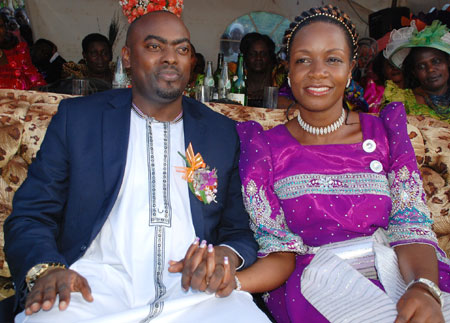
Susan Namaganda and her husband Mukasa Mbidde during her introduction ceremony in 2012.
Susan Namaganda, the Woman Member of Parliament for Bukomansimbi, is dead.
Susan Namaganda and her husband Mukasa Mbidde during her introduction ceremony in 2012.
Namaganda, 31, who was also a wife to East African Legislative Assembly MP Fred Mukasa Mbidde, was yesterday involved in an accident along Masaka Road and died this morning about 11.30am at Nakasero Hospital.
In December 2012 Namaganda introduced Mukasa Mbidde in a traditional ceremony held at her parents’ home in Kisojjo village, Kibinge sub county of Bukomansimbi County.
The deceased MP joined Parliament in 2011 and was until her death a member of the Committee on Science and Technology and that of Agriculture, Animal Industry and Fisheries. She’s survived by the husband and two children.
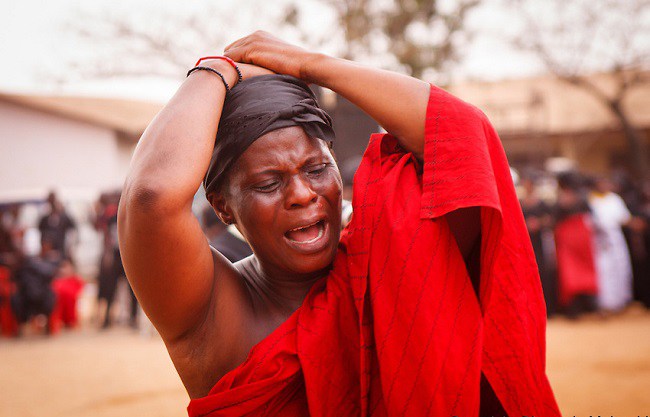
Africa,Ghana,Kumasi, Ashanti woman crying at funeral
Woman Crying at Funeral
The Kumasi Funeral Criers Association (KUFUCA), a body made up of professional and talented criers, has expressed displeasure at the new utility tariffs splashed on Ghanaians by the Public Utility Regulatory Commission (PURC). In view of that, the association has also decided to increase its crying tariffs.
According to a press statement signed by the President of the association, Madam Awo Yaa Donkoh, the association has for the past 5 years maintained its crying rates. This, according to the statement, is not helping the members in any way especially when prices of goods are being increased every day.
“A lot goes into this job of ours. We spend lots of money to rehearse before the D-day. We have lecturers who lecture us on how to cry and gain proper attention at funerals; and we pay all these people,” the statement indicated.
ScrewLife.Com got in touch with the President of the association after receiving the press release to find out from her what their work actually entails.
As claimed by Awo Yaa, they are certified criers who offer their services at funerals. “People hire us to cry at the funeral rites of their dead relatives, friends etc. Some even include in their wills that their family members should contact us after their death. The way we beautifully cry move sympathizers to give out more money to the bereaved families. That’s the main reason people contract us,” she added.
Exclusively, Madam Awo Yaa Donkoh gave us the new crying rates which will take effect from January 1, 2016.
Crying with Swagg – GH₵ 3,000
Deep Wailing & Shouting – GH₵ 2,700
Crying & Rolling on the Ground – GH₵ 3,500
Crying & Walking Around Funeral Ground – GH₵ 2,500
Highly Emotional Crying – GH₵ 3,200
Basic Crying – GH₵ 2,000
Crying & Vomiting – GH₵ 4,000
Chipmunk Crying – GH₵ 2,700
Nonetheless, she said they have a special Christmas package for every family this December so families who have lost their relatives should get in touch as soon as possible before promo ends. Terms & Conditions apply though.