Stanbic Bank
Stanbic Bank
24 C
Kampala
Stanbic Bank
Stanbic Bank
Home Blog Page 2290

Humanitarian crises victims’ messages reach 500.000 social media enthusiasts

More than half a billion Facebook and Twitter feeds were saturated with real-life stories from survivors of humanitarian crises as part of a massive digital storytelling campaign launched by the United Nations and partners in the name of inspiring the world’s humanity.

The campaign, launched last week, leverages the collective power of individuals to inspire a greater sense of global citizenship using the power of social media. Users are asked to turn their social media feeds into storytelling platforms to spread awareness of humanitarian crises in countries like Syria and Afghanistan.

“On this World Humanitarian Day, I urge everyone to show solidarity as global citizens by signing up to the #ShareHumanity campaign,” said UN Secretary-General Ban Ki-moon, at a special event on the eve of World Humanitarian Day, commemorated on August 19.

“By donating your social media feeds for just one day you can promote humanitarian action and help to give a voice to the voiceless by sharing their stories of crisis, hope and resilience,” he added.

At the event, humanitarian leaders, media and celebrities joined together to generate a critical mass of support for #ShareHumanity. Australian singer-songwriter Cody Simpson, Malian-French singer-songwriter Inna Modja, and Colombian music superstar, Juanes, inspired the audience with their performances.
Tonight is also a celebration of the values and principles that drive our actions: the humanitarian instinct to support people in need,” said UN Humanitarian Chief Stephen O’Brien.
The UN Secretary-General also paid tribute to the 120 humanitarian aid workers who lost their lives in 2014 in the service of helping others.

World Humanitarian Day commemorates the day in 2003 when 22 UN workers were killed in a bombing of the UN offices in Baghdad.
In a related development, Humanitarian Outcomes, a team of research and policy experts that advises humanitarian aid agencies and donor governments,

has established that 329 aid workers were victims of violence in 27 countries.

The countries most affected include Afghanistan, Syria, South Sudan, the Central African Republic (CAR) and Pakistan.

Meanwhile, more than 100 million people in countries across the world need urgent life-saving humanitarian aid, with nearly 60 million people now forcibly displaced. This is a crisis of forced migration on a scale not seen in the post-World War era, in which a displaced person will remain, on average, displaced for 17 years.
These growing humanitarian needs and finding better ways to respond to them are the impetus behind the Secretary-General’s World Humanitarian Summit, to be held in Turkey in 2016 – his ambitious global call to action to reduce human loss and suffering from humanitarian crises. He kicked off the official countdown to the Summit by revealing a massive virtual clock at the event and pressing a symbolic button. The global gathering of world leaders from government, business and communities will be held in Istanbul in May – just 278 days away.


Stories Continues after ad

Buganda and Kooki should co-exist in Uganda

The Katikiro of Buganda Charles Peter Mayiga has unveiled plans to travel to Kooki County, for the etoffaali programme.

Under a century-plus old arrangement, Kooki and the Buganda Kingdom are supposed to enjoy fraternal relations, with the former subordinate to Buganda but enjoying semi-autonomous administrative responsibilities.

The Buganda Kingdom had almost similar arrangements with the Baruuli of Nakasongola and the Banyala in Kayunga but persistent suspicions among the above-mentioned groups have cast these relationships in bad light.

Needless to say therefore, there have been times when the country has witnessed uncalled-for verbal exchanges, mostly when officials from Buganda plan to visit those areas occupied by the Bakooki, Baruuli and Banyala.

And indeed, the information seeping through this time round is that the hereditary Chief of Kooki, the Kamuswaga, has distanced his administration from all the activities related to the visit of the Katikiro. And this is worrying. Why?

Because of the bickering taking place ahead of the planned visit, one cannot be sure that the Kamuswaga’s words might not kick off frenzied action among his people, something that will make the Katikiro’s visit untenable even for the security personnel deployed to counter any would-be ugly scenes.

According to the Kamuswaga, he has not been officially informed of the planned visit by the Katikiro and sadly, the Buganda Kingdom Spokesman Dennis Ssengendo just brushes off the concerns raised by the Kamuswaga, with arguments that all that going on is legal.

It is important to realize that Kooki recognizes that it is part of the Buganda Kingdom. Of importance too is the realization that under the laws of Uganda both the Kingdom of Buganda and Kooki are recognized as distinct cultural entities and this means that they must be accorded the respect that accrues to them, as enshrined in the Constitution.

And, this begs the question: what is wrong with officially informing the Kamuswaga if any such move would help sooth the tensions that are being created by two parties?

Both Buganda and Kooki must mutually co-exist in Uganda.

Stories Continues after ad

‘Female Viagra’ approved by US drug agency

Experts have said the effects of the libido-enhancing drug are "modest"
Experts have said the effects of the libido-enhancing drug are “modest”


The US Food and Drug Administration (FDA) has approved a libido-enhancing drug for women that has been dubbed “Female Viagra”.

Flibanserin, a drug produced by Sprout Pharmaceuticals, recently passed an FDA advisory committee meeting.

The pill is designed to assist premenopausal women regain their sex drive by boosting levels of certain brain chemicals.

The drug has been criticised as having marginal effects.

Versions of the pill, which will be marketed as “Addyi”, have been submitted for approval in the past but never passed.

It was rejected by the FDA twice for lack of effectiveness and side effects like nausea, dizziness and fainting.

Women taking the drug reported between half and one more sexually satisfying event per month – results experts admitted were “modest”.

Originally the drug was produced by German company Boehringer Ingelheim. Sprout bought the drug from that company after it was turned down by the FDA.

Documents from the 4 June FDA advisory meeting describe the drug’s purpose as “treatment of hypoactive sexual desire disorder (HSDD) in premenopausal women”.

Women would take it each night.

A doctor would have to determine whether a woman seeking the pill was suffering from a disorder characterised by a lack of sexual fantasies and desire, causing the woman distress.

Currently, there is nothing on the US market approved for treatment of HSDD or another condition, female sexual interest/arousal disorder (FSIAD).

“This condition is clearly an area of unmet medical need,” the FDA documents said.

Sprout only has 25 employees. Large pharmaceutical companies like Pfizer, Bayer and Proctor & Gamble have all studied female sexual desire disorder treatment but abandoned plans to pursue it.

Sprout’s CEO, Cindy Whitehead, told AP they would promote Addyi carefully.

“We would never want a patient who’s not going to see a benefit to take it and tell everyone it doesn’t work,” she said.

Lobbying by Sprout Pharmaceuticals was backed by the women’s rights group Even the Score, which has accused the FDA of gender bias by approving a number of drugs treating erectile dysfunction in men without passing an equivalent for women.


Stories Continues after ad

Athletics: Sebastian Coe elected IAAF president

Lord Coe proposed the creation of an independent panel to address the issue, while Bubka wanted a "very deep study" to look at introducing tougher sanctions for cheats.
Lord Coe proposed the creation of an independent panel to address the issue, while Bubka wanted a “very deep study” to look at introducing tougher sanctions for cheats.


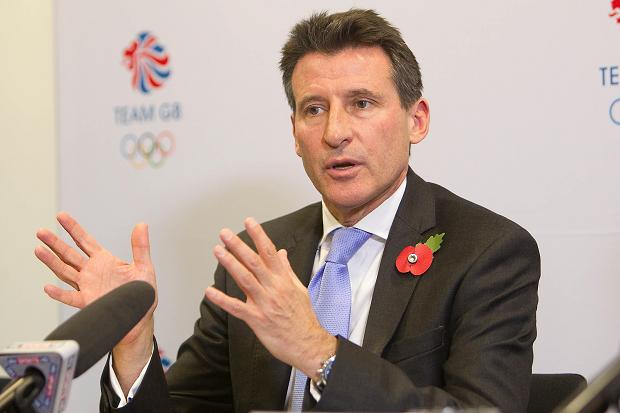
Former Olympic 1500m champion Sebastian Coe has been elected president of athletics’ governing body, the IAAF.

The sport’s 214 federations cast their votes in Beijing to decide who should lead the sport, which is dealing with the fall-out from a series of doping allegations.

The UK’s Lord Coe succeeds Senegalese Lamine Diack, 82, who has led the IAAF for 16 years.

The other contender was Ukrainian Olympic pole vaulter Sergey Bubka.

Lord Coe’s initial term will be for four years.

He won 115 votes from the voting members that make up the International Association of Athletics Federations, with Bubka receiving 92.

The two-time 1500m Olympic gold medallist praised the organisation for how the contest was conducted, saying it was “fought according to sound judgement throughout”.

He said his win was the “second biggest and [most] momentous occasion of my life” after the birth of his children.

“Delighted and humbled by the confidence shown in me by the IAAF family – thank you, now the hard work begins,” he tweeted  shortly after the result.

Both Coe, 58, and Bubka, 51, who won Olympic pole vault gold in 1988, had pledged to reform athletics in their manifestos.

They both said they wanted the sport to appeal to a wider audience and attract younger people.

However, the anti-doping agenda began to dominate the election following a series of harmful allegations.

Lord Coe proposed the creation of an independent panel to address the issue, while Bubka wanted a “very deep study” to look at introducing tougher sanctions for cheats.

Last year, the IAAF launched an investigation into claims that 99% of Russian athletes were doping .

Then earlier this month, The Sunday Times and German broadcaster ARD/WDR alleged an “extraordinary extent of cheating” by athletes after they obtained blood test data from 5,000 athletes between 2001 and 2012.

And the IAAF was accused of blocking a study which indicated a third of top athletes admitted cheating. The governing body later denied obstructing it.

Lord Coe has claimed the reports alleging widespread doping were a“declaration of war” on his sport.

The election was held just three days before the 2015 World Championships get under way in Beijing.


Stories Continues after ad

South Sudan: Sides trade accusations after deal falters

The fate of the peace deal now hangs in the balance.


The fate of the peace deal now hangs in the balance.


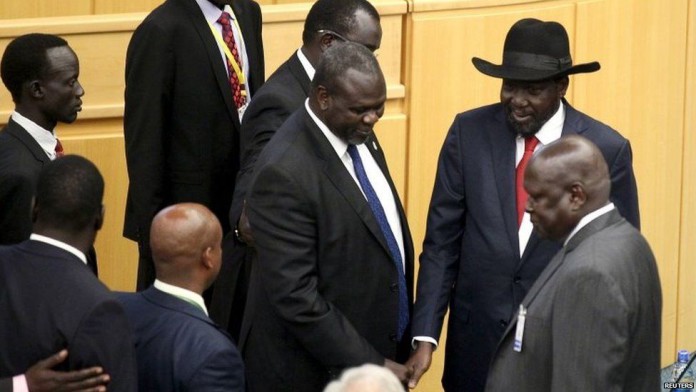
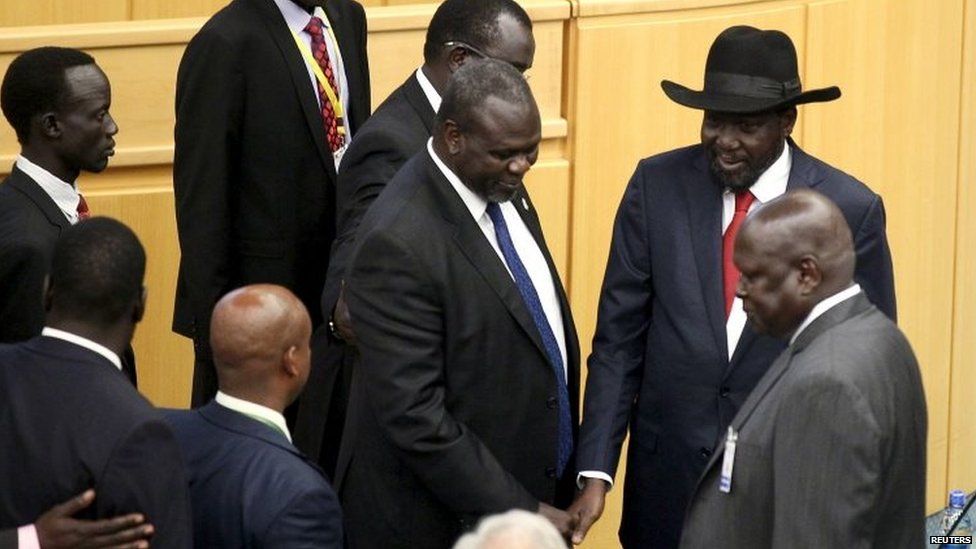
Rebels have accused South Sudan’s government of resuming military attacks, a day after President Salva Kiir failed to sign a peace deal aimed at ending the civil war.

Rebel leader Riek Machar said the government had chosen war over peace.

But Mr Kiir’s chief negotiator said the deal was a sell-out that could not be implemented as the rebels are split.

A key issue is thought to be a proposed power-sharing deal which could see Mr Machar return as vice-president.

The deadline for a peace deal expired on Monday night, and South Sudan’s warring parties may now face international sanctions.

Tens of thousands have died and more than two million have been displaced since fighting broke out in the young state in 2013.

South Sudan’s elusive peace:

  • At least seven ceasefires agreed and broken since conflict started in December 2013
  • Nearly one in five South Sudanese displaced by the current conflict, from a total population of 12 million
  • Former rebel leader Salva Kiir became president of South Sudan, the world’s newest state, when it gained independence in 2011
  • South Sudan has been at war for 42 of past 60 years

Five obstacles to peace in South Sudan

The sides traded accusations about who was responsible for an attack in the town of Pageri, near the border with Uganda, early on Tuesday.

Military spokesman Philip Aguer said rebel accusations were “lies” and blamed them.

At Monday’s summit in Ethiopia attended by regional powers and international mediators, South Sudan’s government initialled a draft agreement, but requested a further 15 days before signing in full. Mr Machar did sign it.

UN Secretary-General Ban Ki-moon urged Salva Kiir to sign up and cease hostilities, saying he was “deeply pained by the horrendous suffering of South Sudanese civilians”.

The US was “deeply disappointed” that President Kiir’s government had “yet again squandered” an opportunity to bring peace by refusing to sign the agreement, a statement from US National Security Adviser Susan Rice said.

“The US deplores this failure of leadership,” it added.

A Ugandan spokesman said his government knew how hard it was to achieve peace “especially when the belligerents have big egos and… put their personal egos above national interests”.

“We can only continue to mediate, to encourage every side to realise that their country is superior to every one of them individually,” Shaban Bantariza said, quoted by Reuters news agency.


Stories Continues after ad

Global media companies seal data deal

GeoPoll, the world’s largest mobile survey platform, and Kantar Media, a global leader in media and marketing insights, announce their collaboration on a joint product, Kantar-GeoPoll Media Measurement (KGMM).  This product builds on GeoPoll’s existing media measurement service by adding Kantar Media’s research expertise and technology tools to GeoPoll’s unique mobile data collection methods.

This announcement comes following the forming of a strategic partnership between GeoPoll, Kantar Media, and TNS Global. This is the first joint product between the three companies, who plan to release additional joint offerings in the coming months.

GeoPoll released its media measurement service in June 2014, becoming the largest provider of overnight audience data for TV, radio, and print in Africa. In the past year, GeoPoll has built on its flagship product by adding tools for media planning and post-campaign evaluation, allowing brands and agencies to assess the performance of their advertisements in almost real-time. The joint product with Kantar Media will refine the mobile data methodology that GeoPoll has used to collect daily audience data.

“We are very pleased to partner on Kantar-GeoPoll Media Measurement. GeoPoll’s method of collecting audience data through mobile surveys, which do not require a data connection, is a big step forward for  audience research in a diverse continent such as Africa. With Kantar Media’s vast experience in research methodology, we believe this new product will change the media planning landscape in Africa,” said Jennie Beck, Global Director, Kantar Media.

James Eberhard, CEO of GeoPoll, added “Over the past year, clients have used GeoPoll’s media data to view audience shifts in real-time, assess the performance of their advertisements, and monitor viewership of one-off events including the World Cup.  KGMM will further disrupt the marketplace by bringing a reliable, real-time solution to audience measurement that has been vetted by researchers at both GeoPoll and Kantar Media.  We look forward to adding extra capabilities to the product and expanding into additional countries in the coming years.”

KGMM is currently available in Ghana, Kenya, Nigeria, Rwanda, Tanzania, and Uganda.  The service runs off of GeoPoll’s multi-modal survey platform, which sends surveys to a database of 200 million users via SMS, voice, and mobile web.


Stories Continues after ad

South Sudan president ‘threatens to kill journalists’

NAMED NEW IGP: South Sudan President Salva Kiir

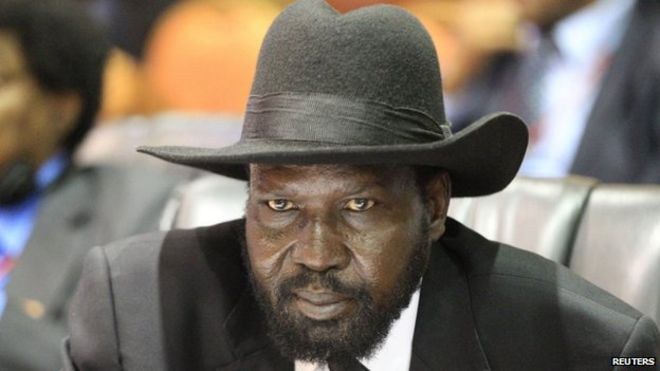
South Sudan President Salva Kiir Mayadit has come under strong criticism, following reports he threatened to kill journalists who report negatively about his country.

The threat comes in the wake of complaints about the South Sudan government’s record of press freedom and according to the Committee to Protect Journalists (CPJ), president Kiir made the remarks at the airport in Juba on Sunday 16, before he left for peace talks with his political nemesis, former vice president Riek Machar Teng in the Ethiopian capital Addis Ababa.

“If anybody among [journalists] does not know that this country has killed people, we will demonstrate it one day, one time. … Freedom of the press does not mean you work against the country,” Kiir was quoted as saying.

‘CPJ condemns statements made by South Sudan President Salva Kiir on Sunday in which he threatened to kill journalists for reporting “against the country,”’ an August 17 release by the CPJ states in part.

It add: “The leader of any country threatening to kill journalists is extremely dangerous and utterly unacceptable,” said CPJ East Africa Representative Tom Rhodes. “We call on President Salva Kiir to retract his comments immediately.”

On Monday Kiir and Machar failed to sign a peace deal brokered by the Intergovernmental Authority on Development, an eight-country trade bloc in Africa, forcing the international community led by the United States to warn the warring parties of sanctions.

“Local journalists said they believe Kiir’s comments were in connection with the media’s criticism of the protracted nature of the peace negotiations and for alleging corruption in the government,” the CPJ release states.

Authorities have cracked down on journalists as pressure mounted to commit to a peace deal and the CPJ says at least five journalists have been killed in direct relation to their work in South Sudan this year.

Meanwhile, early this month security agents closed two privately owned newspapers, the Arabic daily Al-Rai and the English daily Citizen, as well as the independent media outlet Free Voice South Sudan.

Tens of thousands of people have been killed and nearly two million displaced since the civil war started in December 2013, pitting forces loyal to Kiir against those supporting Machar.

Stories Continues after ad

Mao to vie for TDA flag bearer

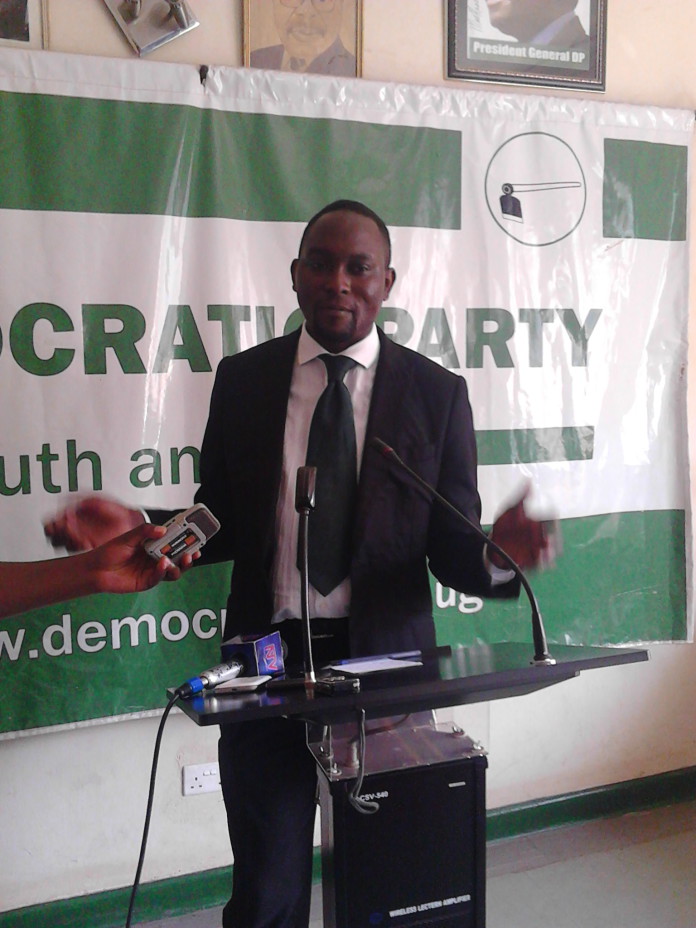
Democratic Party president Norbert Mao is set to hand in a formal request to The Democratic Alliance seeking to be its flag bearer ahead of the 2016 presidential elections.

The party made the announcement during the weekly press conference at the party headquarters in Kampala this morning.

Mr Alex Waiswa Mufumbiro, the DP vice spokesman said that Mr Mao will forward his formal application after September 2, 2015.

“He has all the qualities needed to lead the country, a great political record that all Ugandans know about, we are therefore going to see to it that he leads TDA In 2016,” Mr Waiswa Mufumbiro said.

In a bid to oust President Yoweri Museveni and the NRM government from power, several opposition political parties have joined the TDA, prompting individual opposition figures within the parties to scramble for the apex leadership of the loose alliance.

“All political parties are looking at one thing … and therefore nothing will have to stop us,” Mr Waiswa Mufumbiro added.

Among the political parties that joined TDA is Forum for Democratic Change, the Democratic Party, JEEMA and the Conservative Party.

However, the Uganda People’s Congress has declined to join the alliance, with its president Jimmy Akena saying the TDA has a poor roadmap that may give them no chance against the ruling NRM party.

But the DP mouthpiece brushed aside Akena’s claims, and instead said that the UPC still owes Ugandans an apology for the way it treated them during Obote’s regimes and that by joining TDA UPC would acquit itself.

“UPC had the perfect opportunity for Ugandans to forgive it, however if they want the status quo to remain, it’s up to them, anybody who doesn’t jump onto our band wagon will be left to die,” Mr Waiswa Mufumbiro threatened.

Stories Continues after ad

Minister should act on health sector corruption

At long last a senior cabinet minister has let out his frustration regarding corruption in the health sector.

Confronted by mourners in Bushenyi who had lost a dear one, health minister Dr Elioda Tumwesigye recently conceded that ‘some health officers are born thieves’.

While Dr Tumwesigye should be lauded for his bold declaration, it should not be lost on us that he should at the same time institute measures that will help eliminate corruption in the critical sector he oversees.

The worst form of corruption in the health sector is the pilfering of drugs from health facilities by the staff, and every day, thousands of poor Ugandans die because they cannot access the prescribed drugs, yet the diseases they suffer from can easily be treated if the drugs were availed at an affordable or regulated cost.

Interestingly, some health workers in government hospitals refer the patients to get the drugs from clinics that are linked with them, a deliberate act of impunity!

Some time back government put in place the Health Monitoring Unit under State House doctor Diana Atwine, and also undertook to label all government drugs.

Indeed, Dr Atwine did a good job, and helped expose and prosecute some of the crooks who were benefitting from the misery of patients in Uganda.

But it seems she has since gone ‘mute’, and the health sector hydras are once again rearing their ugly heads, ready to strike hard.

This therefore necessitates the Minister of Health to strike first, crack a few skulls and in the process send a message that wayward behavior in the health sector will not be allowed to gain traction under his watch.

Of course this might be a grueling battle, given the nature of people involved in the drugs’ racketeering.

But we cannot let evil prevail in the health sector, just because a few wayward individuals have decided to condemn a large number of Ugandans to early deaths.

Over to you Dr Tumwesigye.

Stories Continues after ad

Sergio Ramos: Heart with Real Madrid, says Man Utd target

Sergio Ramos


Sergio Ramos
Sergio Ramos


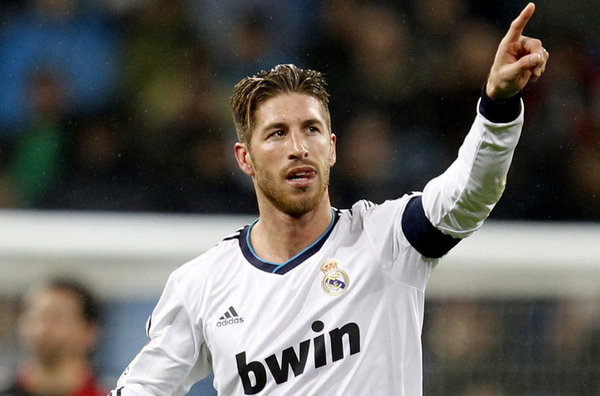
Sergio Ramos says he never wanted to leave Real Madrid, despite interest from Manchester United.

The 29-year-old Spain defender signed a new five-year deal on Monday to keep him at the Bernabeu until 2020.

The Red Devils had a £28.6m bid for the World Cup winner rejected in June as contract talks stalled.

“I know this renewal has taken a while but my heart and head have always been with Real Madrid so I couldn’t be happier,” said Ramos.

United are now unlikely to sign a new defender before the transfer window closes, while goalkeeper David De Gea, a Real target, is expected to stay.

The Old Trafford club have insisted they will only sell the 24-year-old Spain international to the La Liga side for a world-record fee for a goalkeeper, or if Ramos is part of a deal.

The current transfer window closes on 1 September.

Ramos, who scored an injury-time equaliser as Real beat city rivals Atletico Madrid in the 2014 Champions League final, has been made club captain by new manager Rafael Benitez after goalkeeper Iker Casillas left for Porto.

Sitting next to Real president Florentino Perez at a news conference to announce the deal, Ramos said:”My idea was to always be here and I always wanted to retire here if the president would allow it.

“I’m thankful I have a new challenge to be the captain of this team. The priority is always Real Madrid, keeping our fans happy and winning titles.”

He added: “There is nothing like this institution. My own happiness is the priority, in the end that was fundamental.”

Ramos is now the longest-serving player at the Bernabeu after signing from La Liga rivals Sevilla in 2005.

He has 128 caps for Spain, winning two European Championships and the 2010 World Cup.


Stories Continues after ad