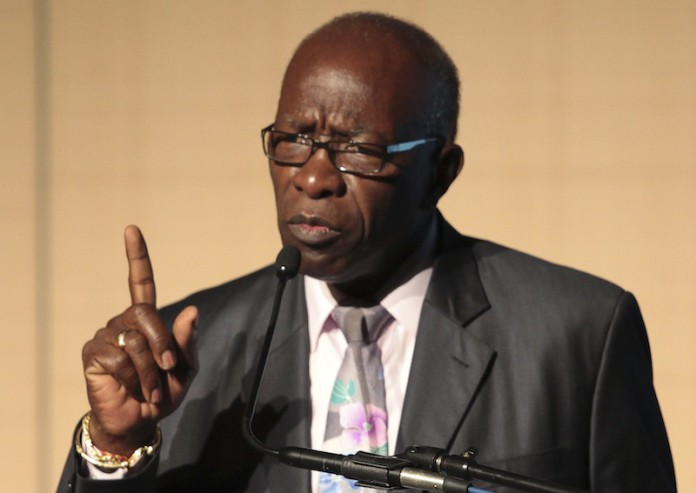
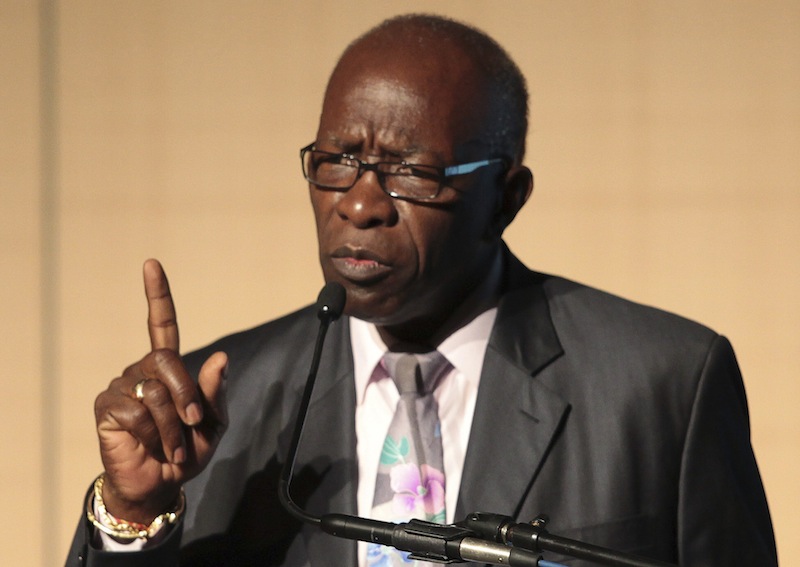
The 72-year-old Trinidadian is the former head of Caribbean and North and Central American football (Concacaf), but quit Fifa in 2011.
He is fighting extradition to the US on corruption charges and denies accepting millions of dollars in bribes.
Warner committed ‘many and various acts of misconduct continuously and repeatedly’ said the football world governing body’s ethics committee.
Fifa’s ruling follows its own investigation into the bidding process for the 2018 and 2022 World Cups, which began looking at Warner’s activities in January 2015.
On Tuesday, Fifa said Warner had been found guilty of violating the organisation’s code of ethics several times.
A statement read: “In his positions as a football official, he was a key player in schemes involving the offer, acceptance, and receipt of undisclosed and illegal payments, as well as other money-making schemes.”
The United States wants to try Warner and 13 other current or former Fifa officials who were indicted in May.
Prosecutors allege that Warner – who was one of football’s most powerful figures whose support was seen as crucial for any World Cup host bid – has been involved in criminal corrupt practices for more than two decades.
In June 2015, a BBC investigation found evidence of bribes paid to Warner.
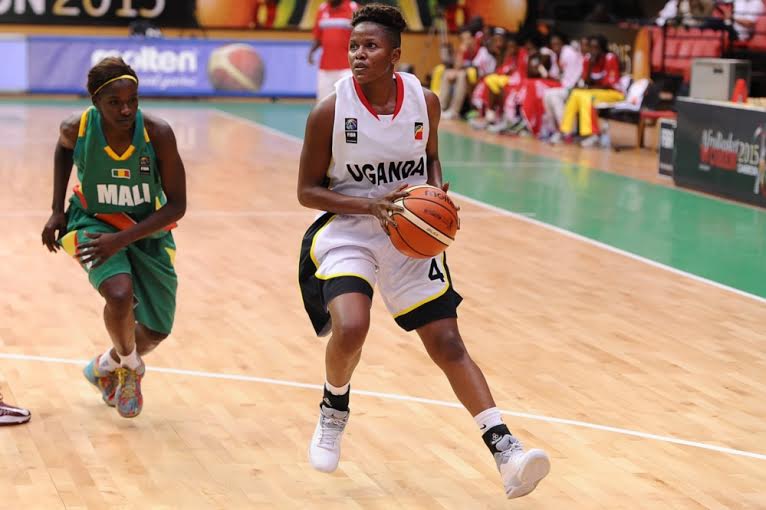
Uganda’s representatives at the ongoing Afro Basket Championships in Yaoundé, Cameroon have been eliminated.
This afternoon Uganda’s Gazelles fell to title contenders Mali at the City Arena by 55 to 73 baskets, with point guard Flavia Oketcho attaining a personal best of 16 points and 5 assists, followed by Peace Proscovia’s 12 points and 12 rebounds and inspiring Judith Nansobya with 9 points.
However, the scores did not deter Mali’s tall and aggressive Konkou Coulibaly, Naignouma Diakite and Fantine Bagayoyo who scored 19, 13 and 12, respectively.
The Gazelles, who needed a win to remain in contention, trailed in the first three quarters of the game by 16:22, 6:17 and 14:15 but managed to save face in the fourth quarter with a 19:19 tie.
Uganda won their first ever game yesterday against the South Africans and lost the other group games to undefeated Cameroon, Gabon and Mozambique.
The team is now expected back in the country tomorrow or on Thursday.
“Whatever the outcome at Afro Basket, Uganda has left the tournament in Yaoundé a far better team in terms of technique, style of play and discipline on and off the field. Although we were far away from title contention, playing against regular giants in Cameroon, Mali, Gabon and Mozambique is a great achievement for the girls and the nation,” Coach Timothy Odeke said after the game.
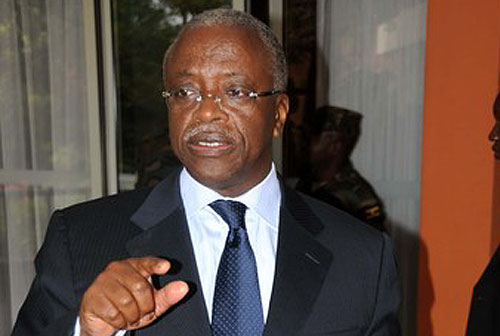
REPORTEDLY DRAFTED ODOI INTO NRM: Former NRM SG John Patrick Amama Mbabazi.
The Democratic Party has said that Amama Mbabazi is the better placed candidate to win the 2016 elections.
Addressing journalist at the DP headquarters in Kampala today, the deputy party spokesperson Mr Kakande Kenneth observed that after The Democratic Alliance (TDA) failed to agree on a joint candidate, eight members of the Alliance zeroed in on Mbabazi, convinced he has the ability to win elections against incumbent President Yoweri Museveni or any other candidate.
“We have made many attempts in various elections and we have not achieved this change; we believe Amama Mbabazi will bring change in our country,” Kakande said, adding that the former Prime Minister brings with him a bag of tricks from the National Resistance Movement (NRM).
“We got all his tricks and now we are going to start blocking all of them,” Kakande said adding: “We believe Mbabazi can change Uganda. He has the key to open that door.”
Kakande also called upon members of the opposition to put their differences aside and aim at change in the country.
“It’s not about sending missiles to each other; we all want to see Museveni leave power,” Kakande said and implored members of the DP to desist from engaging in confrontation with other opposition members.
“The enemy is not them but Museveni. They may even join us to bring change to the country,” he added.
Commenting on allegations that Mao ‘hijacked’ the TDA Spokesperson position from FDC’s Wafula Oguttu, Kakande asserted that the latter was no longer a TDA member and therefore had no right to claim Mao took his position.
“Mao has not hijacked any position; Oguttu is in FDC, they didn’t accept Mbabazi so he couldn’t be spokesperson yet he’s not part of the TDA,” Kakande said.
Amama Mbabazi was declared TDA flag bearer last week by a majority of the members in the Alliance.
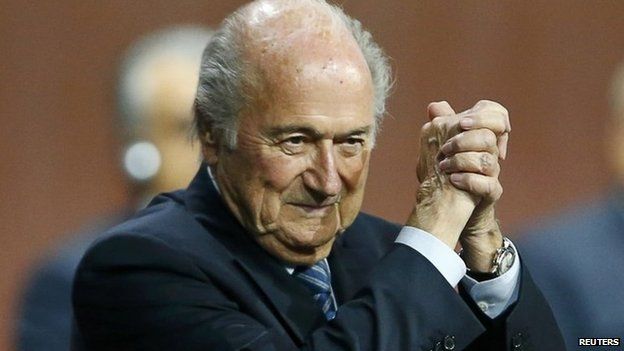
Sepp Blatter was close to tears as he urged the staff to "stay strong"
Fifa president Sepp Blatter will not step down because of the criminal proceedings against him by Swiss investigators.
The 79-year old is suspected of signing a contract that was ‘unfavourable to Fifa’ and making a ‘disloyal payment’ to Uefa president Michel Platini.
Sepp Blatter
Blatter, who had already said he will stand down in February 2016, claimed he ‘had done nothing illegal or improper’, while Platini, 60, has written a letter to Uefa members denying any wrongdoing.
In a statement released through his lawyers, Blatter said a £1.5m payment made to Platini, the head of European football’s governing body in 2011 was ‘valid compensation and nothing more’.
Both men are also facing investigation by FIFA’s independent ethics committee over the payment, which Platini said was for work as Blatter’s technical advisor between 1999 and 2002.
Platini, who was interviewed as a witness by officers from the Swiss Attorney General’s office, stressed that the payment had been ‘fully declared’ to the authorities.
The Frenchman said he was ‘aware that these events may harm my image and reputation’ and released a statement for ‘reasons of transparency’.
The 2011 payment came nine years after Platini’s work for Blatter – and two months before Uefa gave its backing to the Swiss before a presidential election.
That is something that now must be explained, according to Scottish FA chief executive Stewart Regan.
“It is an essential piece of information that still needs to be provided,” Regan said.
The contract – described by Swiss prosecutors as ‘unfavorable to FIFA’ – is thought to refer to a 2005 TV rights deal between FIFA and Jack Warner, the former president of Concacaf, the governing body of football in North and Central America and the Caribbean.
According to an investigation by Swiss broadcaster SRF in September, the deal allegedly resulted in a multi-million pound profit for Warner’s company.
World governing body FIFA, which has been hit by several corruption allegations in recent years, has said it is co-operating with the Swiss investigators.
Earlier this year the United States indicted 14 current and former FIFA officials and associates on charges of ‘rampant, systemic, and deep-rooted’ corruption following a major inquiry by the Federal Bureau of Investigation.
Meanwhile, a separate Swiss investigation is looking into the bidding process for the 2018 and 2022 World Cups, which will be held in Russia and Qatar, respectively.
KCCA’s Executive Director Jennifer S Musisi received ‘The Golden European Award For Quality and Business Prestige’ in the Public Administration Sphere.
She was presented the award at the World Business Assembly Conference of Leaders and Socrates Award Ceremony held in Rome, Italy on September 27 2015.
The WBA is operational in over 35 countries and it gathered business leaders, scientists, and experts in different spheres of administration from Australia, Malaysia, Nigeria, Ghana, India, South Africa among others.
The East African Community Secretariat in collaboration with Kenya’s State Department of East African Affairs and the Ministry of Health is organizing a five-day dissemination workshop on regional health projects and programmes for health sector stakeholders.
The overall objective of the workshop which runs from September 28 to October 2 is to bring on board different stakeholders and policy makers at different levels with the aim of raising the participants’ awareness and uptake of EAC health projects and programmes.
It is expected that the workshop in Nairobi, Kenya will lead to better understanding and improved knowledge about the EAC health sector, its vision, projects and programmes among the policy makers and the general public in Kenya.
The dissemination workshop will be conducted at two levels. The high level government policy makers will briefed on spot visits in their boardrooms on specific EAC Health Programmes and projects. It is expected that each of these sessions will have targeted messages and will last for not more than one hour.
The proposed Ministries to be visited include: Ministry of Health, National Treasury, Ministry of Devolution and Planning, Ministry of Industrialization and Enterprise Development, Government of Nairobi City County, and the State Department of East African Affairs. This will then be followed by a two-day workshop for targeted middle level policy makers and implementers scheduled for October 1 and October 2, 2015 at the Grand Laico Regency Hotel, Nairobi, Kenya.
The EAC Secretariat has developed a Regional Health Sector Strategic Plan 2015-2020, which has a number of projects and programmes aimed at the realization of better health in the region.
These include the Open Health Initiative (OHI); East African Medicines Regulatory Harmonization (EAC-MRH) Programme; Population Health and Environment (PHE) Programme; and the EAC HIV and AIDS, TB and STI Programme whose Strategic Plan and Implementation Framework (2015 – 2020) was approved by the EAC’s policy-making organ, the Council of Ministers.
‘The lack of adequate information on EAC health projects and programmes makes it hard for implementation of various decisions and directives by the EAC Health Ministers at the national levels. This further impacts negatively on the ability by various stakeholders and pharmaceutical manufacturers to take advantage of emerging markets within the EAC region’ a release by the Secretariat states in part.
The International Criminal Court recently unveiled 60 new war crimes charges against the deputy leader of Uganda’s brutal Lord’s Resistance Army, including using child soldiers and keeping sex slaves.
“The prosecution gave formal notice that it intends to expand the scope of the charges against Dominic Ongwen,” the Hague-based court said.
It plans to file the additional charges on December 21 on top of seven initial accusations — meaning he now faces a total of 67 counts.
Ongwen is the first leader of the brutal Ugandan rebel army — led by the fugitive Joseph Kony — to appear before the ICC, which was set up to try the world’s worst crimes.
The charges all relate to attacks carried out on camps housing people who had been forced to flee their homes in the bloody Ugandan rebellion that started in 1987.
More than 100 people — many of them babies and children — died in the attacks on four camps between October 2003 and June 2004.
In one of the attacks at Lukodi camp in northern Uganda “many civilians including children were burnt alive in huts that LRA fighters set on fire,” prosecutors said in court papers detailing the new charges.
“The attackers threw more than 20 babies in the bush” while others were “put in sacks, including children whose necks were broken first, and thrown into the bush.”
Many “victims also had no choice but to submit to rape, enslavement and sexual slavery,” the prosecution said.
“Non-compliance with demands for sex and the performance of domestic tasks would result in harsh beatings or other forms of abuse, as would attempts at escape.”
– ‘White Ant’ –
Known as the “White Ant”, Ongwen was one of the most senior commanders of the LRA, which is accused of killing more than 100,000 people and abducting 60,000 children.
The former child-soldier-turned-warlord has been wanted for war crimes for almost a decade by the ICC.
He surrendered to US Special Forces in the Central African Republic in January, after Washington placed a $5-million (4.4-million-euro) bounty on his head.
US troops have also been leading a campaign to try to flush Kony out of the jungles and bring him to justice.
Ongwen, born in 1975, appeared for the first time before ICC judges shortly after his transfer to The Hague in late January.
But the ICC’s judges — in a bid to bring the court hearings closer to victims who often watch from afar — recommended earlier this month that a hearing to determine whether Ongwen should go on trial, should be held in Uganda.
Ongwen has not been required to enter a plea yet, and will only be asked to do so should his trial get under way.
Ongwen was abducted by the LRA as a child while on his way to school and became a child soldier before rising through the ranks to become one of the LRA’s top commanders.
The ICC also announced it has dropped the case against Ongwen’s fellow LRA leader Okot Odhiambo, after receiving confirmation he had been killed by Ugandan forces in October 2013.
Over the years the LRA has moved across the porous borders of the region, shifting from Uganda to sow terror in southern Sudan before moving to the northeast of the Democratic Republic of Congo, and finally crossing into the southeast of the Central African Republic in March 2008.
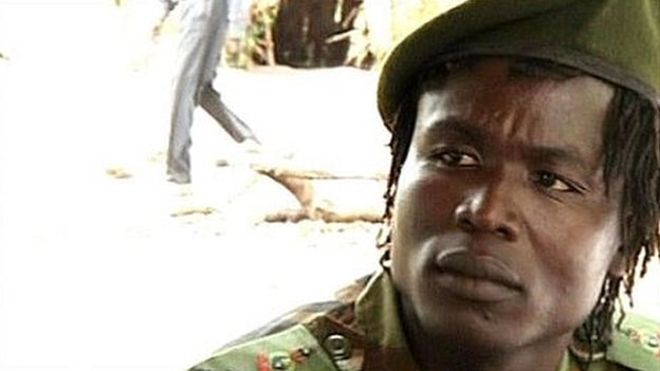
Dominic Ogwen
Combining religious mysticism with astute guerrilla tactics and bloodthirsty ruthlessness, Kony has turned scores of young girls into his sex slaves while claiming to be fighting to impose the Bible’s Ten Commandments.
According to the 2005 arrest warrant Ongwen was member of the “Control Altar” of the LRA, “the section representing the core LRA leadership responsible for devising and implementing LRA strategy, including standing orders to attack and brutalize civilian populations.”
Mr. Ongwen is the only senior figure of the LRA to be captured since the warrants were issued. In 2007, the UPDF reported that the former deputy leader of the group, Vincent Otti, was killed by Kony. However, Otti, like Kony, and Okot Odhiambo, remain wanted by the ICC. Raska Lukwiya, also indicted in 2005, died a year later.
In 2011, the American government sent 100 troops to join Ugandan forces searching for the rebels in the three countries.
As the political tempo rises ahead of the 2016 elections, an academic dinosaur is right in the middle of the NRM party— proving the possession of the minimum A’ level certificate.
The last couple of months have seen Ssembabule Woman MP, Anifa Kawooya, MP hopeful Muyanja Mbabali and Nakifuma legislator Kafeero Ssekitoleko being tossed around NRM’s headquarters at plot 10 Kyadondo over failure to prove that they successfully attended advanced level education.
As the legislators take to the media to prove their education levels, a red flag has been raised on the Deputy Attorney General and junior Justice minister, Mwesigwa Rukutana, too.
Mwesigwa Rukutana
On September 11, Julius Twesigye Kyobwe of Kayonza, Rushenyi wrote to the NRM Electoral Commission boss Dr Tanga Odoi accusing Mwesigwa Rukutana, the party aspiring candidate for Rushenyi County, of using academic documents that are not his.
In a telephone interview yesterday, Mr Twesigye confirmed drafting the petition but declined to comment further. “Please contact my lawyers, I have no comment”
According to Mr Twesigye’s petition, titled “Petition against candidate Mwesigwa Rukutana aka Mwesigwa Barati”, the petitioner says Mr Rukutana has been using papers belonging to another person, Mr Mwesigwa Barati, who is still alive.
“The above-mentioned has been using papers belonging to another person who is still alive and uses his personal names. Mwesigwa Barati is a living person and registered voter whose names the above candidate uses,” the petition reads in part.
The petition is also copied to the Inspector General of Government and the Inspector General of Police, received, and stamped by both offices on September 15.
‘In A-level he used the same names Mwesigwa Barati and at Makerere (University) he used the same names which belong to this other person,” it reads.
The letter that was also received by the Legal Department of the NRM Secretariat.
Dr. Odoi confirmed receiving the petition but said like any other petition, NRM would look through the issues presented by Mr Twesigye with other petitions tomorrow.
“NRM is going to look at all petitions tomorrow including that of Rukutana”
It adds, “He also has a chequered history, in Kigezi High school where he allegedly sat his O-level; he used the names Mwesigwa Barati.
“During the CA he was using his true names Mugasha Francis he has since dropped and he is now using Mwesigwa Rukutana, which is a combination of all the names to cover up.”
Meanwhile, Eagle Online failed to get a comment from Mr Rukutana as he failed to answer his phone and reply texted messages.
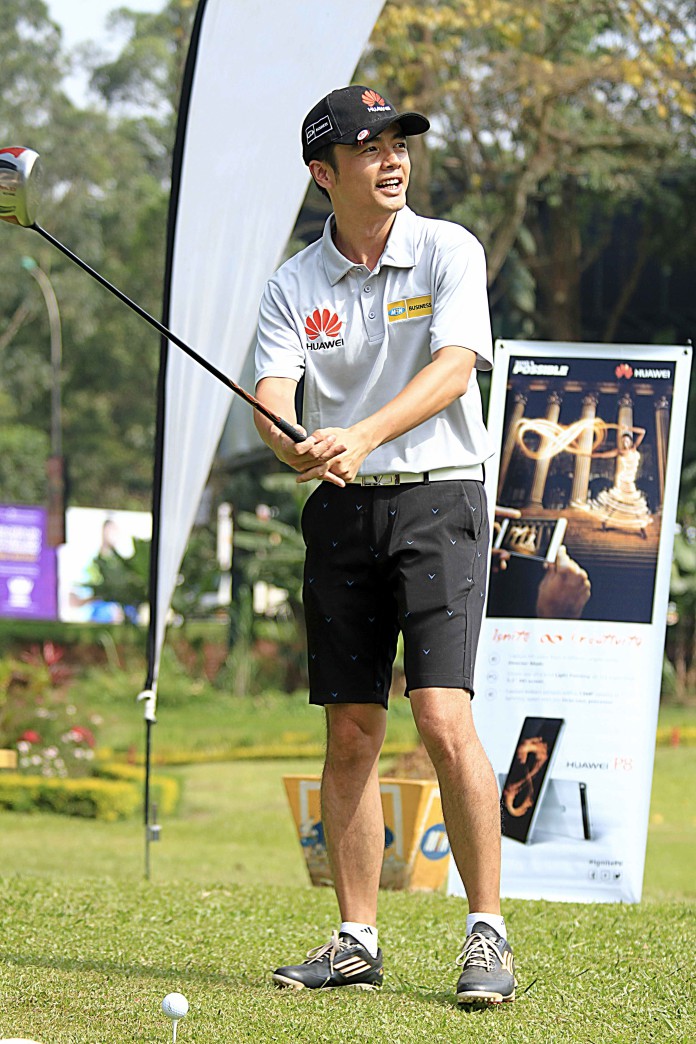
Mr. Stanley Chyn, MD Huawei Teeing off at the course.
Golfers in Kampala won fabulous prizes at the Huawei- MTN Business corporate Golf-Day Invitational tournament that took place on Saturday 26th September at the Uganda Golf Club in Kitante.
The tournament organized by Huawei Uganda and MTN Business featured teams of enterprise customers and staff from both companies as well as golfers from various corporate and Chinese entities such as; Bank of Uganda, Housing Finance, UMEME, CNOOC and so many others.
Brian Gouldie MTN CEO, Henry Rugamba UGC Captain, H.E Zhao Yali- Chinese Ambassador to Uganda, Stanley Chyn MD Huawei Uganda, Edward Kabuchu MD of MSL Logistics.
Up for grabs were four of the recently launched 4GLTE enabled Huawei P8 high-end smartphones, worth a combined 6,400,000UGX, refrigerators, gas stoves, Smart Television sets among other prizes.
Huawei Uganda’s Managing Director, Stanley Chyn expressed delight at the long-standing business co-operation between the two companies that has seen MTN Uganda become the country’s leading operator.
‘The golf tournament was intended to commemorate the great business co-operation and strategic partnership between Huawei and MTN Uganda that existed since 2003; this partnership has seen MTN Uganda become the leading operator in the voice and data market through the launch of 3G in 2010, 4G LTE in 2013 and the recent launch of the Huawei 4G LTE smartphone,’ says Mr. Stanley Chyn the Managing Director of Huawei Uganda.
Mr. Stanley Chyn, MD Huawei Teeing off at the course.
“MTN Uganda is proud of the relationship that has been cultivated with the Chinese business community, we had an opportunity to meet and interact with them as we look back and revel in the successes we have achieved together,” said MTN Uganda’s Chief Executive Officer, Brian Gouldie.
“Our well wishes for the growth of golf in Uganda will continue and we wish the golfers and the entire Chinese business community continued success in every aspect,” he added.
The winners; Bagabo Joseph, Matsiko Moses, Kego Solo, Marvin Kagoro, Azuba Rose, Lydia Mutesi among others were treated to a dinner at the Uganda Golf Club Hotel.
The day also featured the latest MTN enterprise products and solutions including an exciting demonstration of the MTN 4G LTE broadband internet.
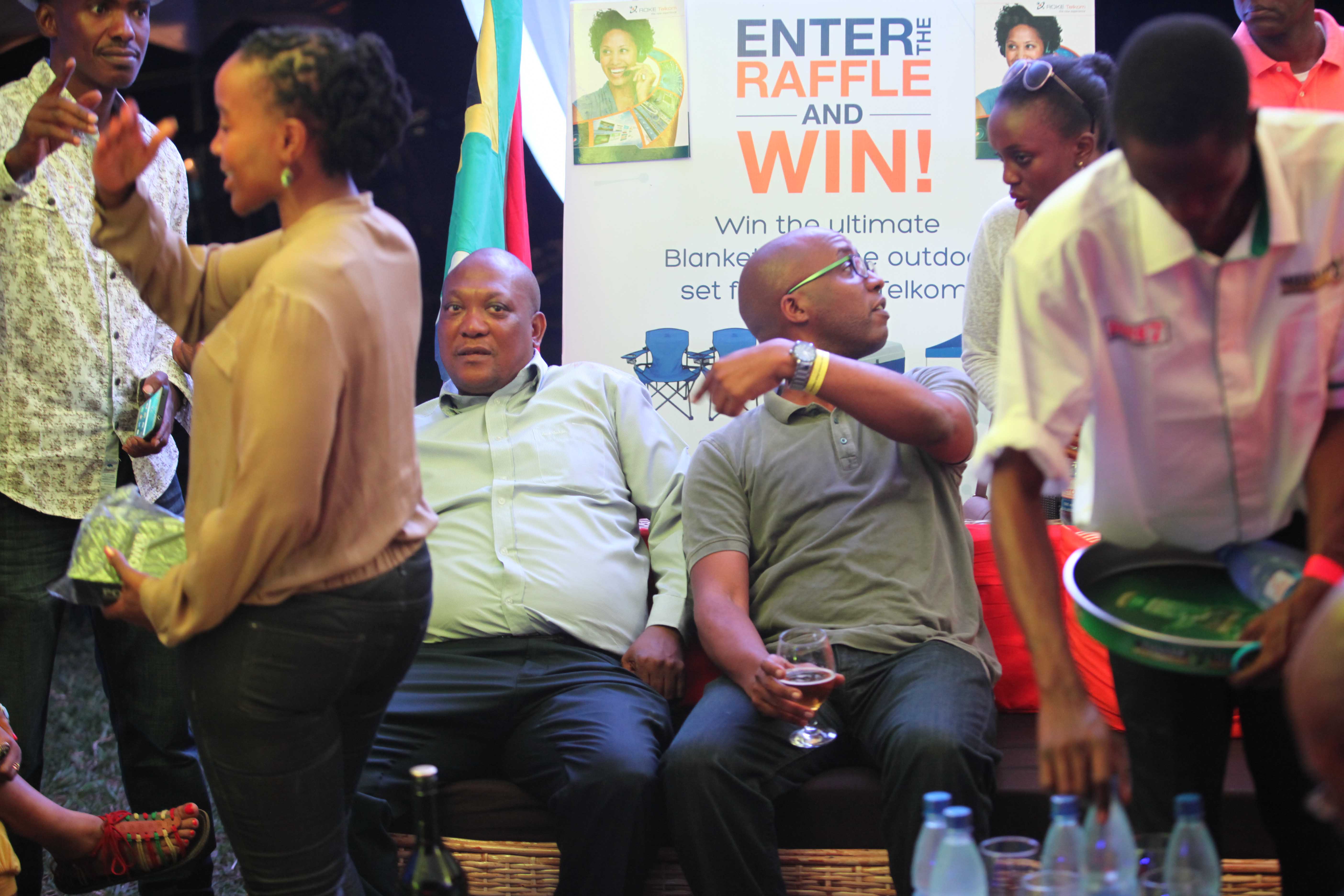
Roke Telkom, one of Uganda’s leading telecommunications services provider last weekend gifted revelers who thronged the blankets and wine event with free wifi for all. The free for all WiFi offers comes on the heels of other innovations and services that Roke continues to unleash in the market.
TheBugolobi based ISP company also had an experiential tent where they hosted among others the evening’s lead artist Zahara, the South African High Commissioner Prof. Major General (Retired) Lekoa Solly Mollo, the Uganda Breweries Managing Director Nyampini-Mabunda as well as the MTN Uganda Marketing Manager Mapula Bodibe who are among the many South Africans resident in Uganda that were hosted at the Roke Telkom experiential tent.
South African High Commissioner Prof. Major General (Retired) Lekoa Solly Mollo, Mapula Bodibe Marketing Manager MTN Uganda chat with Roger Sekaziga the CEO of Roke Telkom
Roke Telkom which set up shop in Uganda in 2006 is among the leading Internet Communications technology companies headed by Mr. Roger Sekaziga who is the Chief Executive Officer. By far, Roketelkom is at the forefront of the ICT services expansion in Uganda and aims to become one of the leading telecom players in the country. The ICT company that has been here for not so long has proved to have become a leading mobile network provider with its business oriented products and services.
Explaining the reasons for offers like the free WiFi, James Byaruhanga the Roke Telkom COO said “In developing countries like Uganda, access to telecommunications can help boost productivity, improve the delivery of basic services and encourage transparency and accountability.It has increasingly become essential that appropriate ICT infrastructure, applications and skills are in place and accessible to the population to close the development gap between Africa and the rest of the world.
He closed it off “ We at Roke Telkom are proud to be associated with blankets and wine and believe that that our free WifFi offer will go a long way in helping revelers have a great time sharing with the world events like these”.