Renowned international gospel artiste Kathy Troccoli has arrived in the country ahead of the much anticipated three-day Phaneroo first anniversary celebrations starting tomorrow.
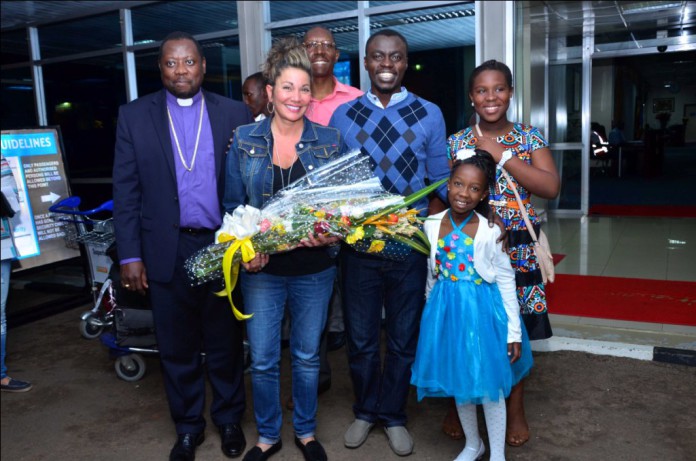
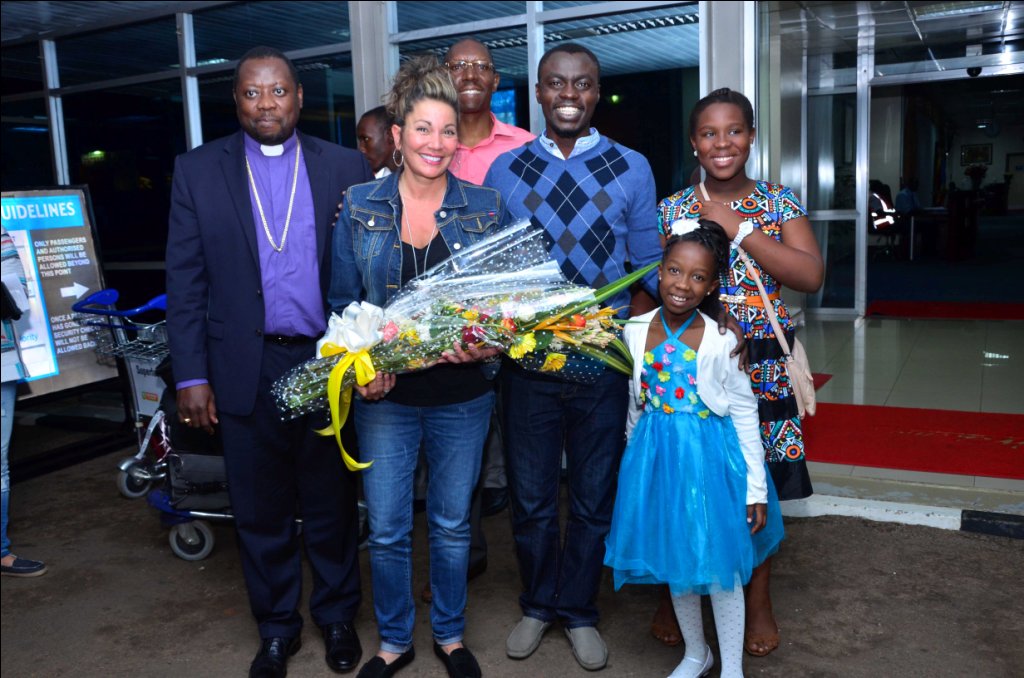
Troccoli, famous for her “Go Light Your World” hit single, touched down last night at 9:45pm at Entebbe airport.
She was welcomed by the Phaneroo and Christ Heart contingent that included the host Apostle Grace Lubega the vision bearer Phaneroo and Bishop Isaiah Mbuga the founder of Christ Heart, among others.
Troccoli expressed gratitude at having been considered to perform at an event of this magnitude and promised a worship evening on Friday, August 14, that will minister to each and everyone in attendance.
“As a minister, my role is ensure that everyone gets to experience God intimately in spite the diversity and varying needs of the congregation. That’s the call upon my life and by the grace of God, I have been able to touch many lives ushering them into the bottomless love of God,” said Troccoli.
Apostle Grace Lubega welcomed to Troccoli to Kampala referring to her as one of the most influential worship ministers of our time whose songs have impacted generations across the world.
Besides “Go Light Your World”, the two time gospel music association dove awards winner, has produced a number of various worship songs that have edified the body of Christ including; Sounds of Heaven, You’re the Heart of Me, Everything Changes, Mission of Love, I Call Him Love and Help Myself to you – her first hit to top the Billboard charts.
Some of the local artistes to grace the stage will include New Testament, Julie Mutesasira, Jackie Senyonjo and the Phaneroo Worship Choir.
The celebrations will start with a grand Phaneroo celebration service tomorrow, followed by the worship evening on Friday, 14 August to be headlined by Troccoli and crowned with the healing service; Healing Chronicles on Saturday August 15, all events will take place at the hockey grounds-Lugogo.
WON CASE AGAINST MUSEVENI: Former UPC leader Olara Otunnu.
Invited.Former UPC leader Olara Otunnu.
Uganda Peoples’ Congress (UPC) has invited former party president Olara Otunnu to attend the National Council meeting that commences tomorrow.
While addressing journalists in Kampala today, ‘new party spokesperson’ Mr. Michael Osinde Orach said Otunnu and his cabinet were invited to discuss dialogue and reconciliation.
Otunnu and UPC president-elect Jimmy Akena are currently locked in a battle over who leads the party, but Osinde said Otunnu would only ‘attend as an observer’ and that he would not participate in any other party activities.
“Not all conflicts are negative, some are positive, that’s what why we want him to be around,” Mr Osinde said, adding that Otunnu’s presence would be a big step towards dialogue. “We need their advice concerning reconciliation.”
However, commenting on the matter ‘former party spokesperson’ Okello Lucima said there was no leadership change in UPC and denied Otunnu had received any invitation. He also said that whatever was discussed wasn’t in the name of the UPC; “it will be in the UPC of Museveni”.
“Otunnu can’t be invited to an organ which he is supposed to call,” Lucima said adding Otunnu hadn’t handed over to anyone.
Commenting about UPC’s position on The Democratic Alliance (TDA), Mr. Osinde said that the party’s stand will be decided by the National Council that sits from August 13 to 15 at Jokas Hotel Bweyogerere.
“We were very clear in the meeting; we are conscious on what members will say and we don’t want to repeat any mistake. TDA is good but the National Council will agree or disagree on that,” he said.
He disclosed that the party’s cabinet had resolved in its first meeting which sat on July 22 to reshuffle members representing UPC in the Interparty Organization for Dialogue(IPOD).
Those dropped include former party spokesperson Mr Okello Lucima, Fr Jacinto Ogwal and Mr Issa Otto.
“IPOD is about party policy and you cannot represent a party when it does not know the views you are going to present,” said Osinde, and advised the three members to attend the NC where more discussions about the matter will be held.
“We wish to urge them to stop and we call upon all donors to take note of this,” he warned.
But Lucima took exception to Osinde’s assertions, saying he was not aware of any changes made in respect to UPC’s representation to IPOD.
“I don’t know about that because it is not Osinde that chose me,” Lucima said.
Meanwhile, Higenyi Hamba, the party’s Publicity Secretary, urged the Council to pay tribute to fallen UPC leaders during the meeting.
Ms Rita Namisango, Makerere University acting Spokesperson.
Ms Rita Namisango, Makerere University acting Spokesperson.
First year students at Makerere University will have to wait for another week before they can report for the first semester of 2015.
This follows a sit down strike organized by non-teaching staff at seven public universities, demanding for increased pay packages.
But in an emergency meeting held on Tuesday, August 11 the University Council resolved to extend the opening of the semester from Saturday August 15 to August 22, while continuing students have their reporting timetable rescheduled by two days, from August 22 to August 24, ostensibly to give more time for negotiations between the government and the striking staff.
“It is true we have pushed the semester for after one week and it’s just to enable the government, public university administration and the non-teaching staff to negotiate,” Ms Ritah Namisango, the Makerere University Public Relations Officer, said.
She said the negotiations between the two parties progressive and that she believes a consensus will be reached soon.
“About the negotiations, I cannot say much but they are going on smoothly and let’s hope for the best. By the end of this week, a communication about them (sic) will be out,” Ms Namisango said.
When contacted for a comment on the progress of the negotiations, the Minister for Education and Sports, Jessica Alupo could neither pick the phone calls nor reply the text messages.
By filing time it was not possible to establish what the other six universities had resolved but contacted, a group of students at Kyambogo University expressed concern at the way events were unfolding ahead of the first semester of 2015.
They said that many who have been in ‘recess’ at the university had to stop as soon as the non-teaching staff started the strike on August 3, 2015.
“We stopped studying because most buildings we use are run by the non-teaching staff. For example the locks of one laboratory that we normally used were blocked with super glue just to prevent us from accessing it,” Rashid Kagoro, a second year student of Information Technology and Computing, said.
Work at the University Senate Building is also at a standstill as one electrician decided to switch off the main power supply when the strike begun, the students said.
On August 3, support staff at the universities of Makerere, Kyambogo, Gulu, Busitema, Muni, Soroti and the Mbarara University of Science and Technology (MUST), went on strike, claiming they had been discriminated against when in the 2015/16 budget government released Shs50billion to cater for the teaching staff increments.
It is said that under the new structure, a professor will now earn about 6 million shillings, up from about Shs4 million, something that has since rubbed the non-teaching staff the wrong way.
First year students at Makerere University will have to wait for another week before they can report for the first semester of 2015.
This follows a sit down strike organized by non-teaching staff at seven public universities, demanding for increased pay packages.
But in an emergency meeting held on Tuesday, August 11 the University Council resolved to extend the opening of the semester from Saturday August 15 to August 22, while continuing students have their reporting timetable rescheduled by two days, from August 22 to August 24, ostensibly to give more time for negotiations between the government and the striking staff.
“It is true we have pushed the semester for after one week and it’s just to enable the government, public university administration and the non-teaching staff to negotiate,” Ms Ritah Namisango, the Makerere University Public Relations Officer, said.
She said the negotiations between the two parties progressive and that she believes a consensus will be reached soon.
“About the negotiations, I cannot say much but they are going on smoothly and let’s hope for the best. By the end of this week, a communication about them (sic) will be out,” Ms Namisango said.
When contacted for a comment on the progress of the negotiations, the Minister for Education and Sports, Jessica Alupo could neither pick the phone calls nor reply the text messages.
By filing time it was not possible to establish what the other six universities had resolved but contacted, a group of students at Kyambogo University expressed concern at the way events were unfolding ahead of the first semester of 2015.
They said that many who have been in ‘recess’ at the university had to stop as soon as the non-teaching staff started the strike on August 3, 2015.
“We stopped studying because most buildings we use are run by the non-teaching staff. For example the locks of one laboratory that we normally used were blocked with super glue just to prevent us from accessing it,” Rashid Kagoro, a second year student of Information Technology and Computing, said.
Work at the University Senate Building is also at a standstill as one electrician decided to switch off the main power supply when the strike begun, the students said.
On August 3, support staff at the universities of Makerere, Kyambogo, Gulu, Busitema, Muni, Soroti and the Mbarara University of Science and Technology (MUST), went on strike, claiming they had been discriminated against when in the 2015/16 budget government released Shs50billion to cater for the teaching staff increments.
It is said that under the new structure, a professor will now earn about 6 million shillings, up from about Shs4 million, something that has since rubbed the non-teaching staff the wrong way.
AIG, a leading global property, casualty and general insurance company has launched the ‘AIG Cyber Edge’ in Uganda.
Speaking at the launch of the first Cyber Insurance product in Uganda, Anna Othieno, the AIG Uganda Managing Director noted that cyber security is crucial now that the internet has become an integral part of all sectors of the economy.
“Cyber exposures are one of the most prominent risk concerns on a business’ radar and in a digital age this trend is set to continue. The threat represented by cyber risks is now as tangible as physical threats to a company’s assets and has serious knock-on effects. It is this kind of chain reaction that Cyber Edge has been designed to help counteract,” Ms Othieno said at the launch.
She explained that managing cyber-attacks, threats and risks is always challenging especially when changes in technology happen rapidly creating potential gaps in highly sensitive company information.
“We are excited to launch Cyber Edge, an insurance product designed to protect against the full potential impact of a cyber-breach; the solution covers financial, legal, investigative and reputation exposures from a single premium,” she added.
According to Ms Othieno, the Cyber Edge product has already proven effective in Europe with policyholders benefiting from leading forensic and legal professionals after a cyber-breach.
Meanwhile, in the recent past, Ugandan commercial organisations, financial institutions and government bodies have suffered from several cybercrime attacks, leading to among others, equipment failure, destruction of intellectual property, physical damage to property and devastating financial loss.
A lawyer, Francis Ayume held several influential posts in the Museveni government, before becoming the Speaker of Parliament, following the demise of James Wapakhabulo. He also served as Minister of State in the President’s Office and Attorney General. Ayume died in an accident in 2005 as he returned from his home in Arua.
Agard Didi
Born in 1944, Agard Didi is a lawyer who also held many influential positions, with stints at the Uganda Airlines and in security in the Museveni government. He was also at one time a Member of Parliament for Moyo West and served as State Minister of Foreign Affairs in charge of Regional Cooperation. He died of heart attack at his home in Luzira in 2009.
Catherine Mavenjina
Catherine Akumu Mavenjina is a lawyer and politician who hails from Nebbi, in the West Nile region of Uganda. She served as a magistrate before joining elective politics as a Constituent Assembly Delegate (CAD), and participated in the Constitution-making process of the 1995 Constitution. She also served as Minister of State for Public Service, after which she worked as a Resident District Commissioner of Moyo district. She also served as Member of Parliament and was the Chairperson of Uganda Women Parliamentary Association. She is a member of the National Resistance Movement (NRM) party.
Onegi Obel Senior
Obel was born on April 4 1932 in the West Nile District of Nebbi and attended Ngetta Catholic Primary School in Lira, St. Aloysius College in Nyapea, Nebbi District and Namilyango College.
He attended university in Canada, graduating with aBachelor of Arts in Economics. He transferred to theUniversity of Toronto where he obtained the degree of Masters of Arts, returning to Uganda in 1965.
He was later to join the Ministry of Finance where he worked as Commissioner for Taxation. In 1968, he was appointed Deputy Governor Bank of Uganda and in 1973 he was elevated to Governor of Bank of Uganda, serving in that capacity until 1978.
In 1994, he was elected to the Consentient Assembly that drafted the 1995 Ugandan Constitution.
He died of natural causes in 2008.
Geoffrey Onegi Obel
The son of Onegi Obel Senior, Geoffrey was born in 1955. His most prominent position was Chairman of the National Social Security Fund (NSSF), a position that also made him run into trouble with the law.
In 2003, he floated a special purpose vehicle called Premier Developments Limited, a 50-50 joint venture between NSSF Uganda and Mugoya Estates Limited. NSSF’s contribution was 400 acres (160 ha) of land that NSSF acquired from former Prime MinisterAmama Mbabazi and businessman Amos Nzeyi at a value of about US$2.75 million (about Shillings 8billion now). However, the project was cancelled by government and corruption charges were preferred against Onegi Obel and others. The case was dismissed, the prosecutors re-filed it a second time but he was cleared all charges.
Engineer Eric Adriko
Eric Adriko hails from Arua, West Nile, and is a holder of a mechanical engineering degree from Queen Mary College, University of London, graduating in 1966. Later Adriko was awarded a Commonwealth Scholarship for a doctorate in Mechanical Engineering at the same university under the system called ‘Fast Track Scheme’ which enabled him to do a PhD without having to do a master’s degree.
Upon completion of studies in 1970, he came back home and founded the Faculty of Technology at Makerere University, where he worked until 1972 later joining private business. While in business, he founded Adrikos, a family business that was involved in making gin and wine.
After 1986, Adriko joined politics and was elected to the National Resistance Council representing Vura County. Subsequently, he was appointed Minister for Industry and Technology, and later rising to the post of Second Deputy Prime Minister. He resigned from active politics in 1996 and in 2004 he was appointed the Chancellor of Kyambogo University. A seasoned and keen golfer, Adriko is currently living a low-profile life, serving as the Executive Chairman of Adriko Group.
Dr Henry Opiote
Dr Henry Opiote was a personal physician to former Ugandan president Dr Apollo Milton Obote. He studied medicine at the Chance University, Prague in Czechoslovakia, graduating in 1977. It is said he recently returned from exile in Zambia, where he had stayed since the overthrow of Obote in July, 1985. He lives a low profile life.
Dr Moses Tako Apiliga
Dr. Moses Tako Apiliga, first rose to national fame when he was appointed as the Minister of State for Supplies under Milton Obote’s government from 1980 to 1985.
Apiliga studien human medicine at the University of Glasgow, Scotland.
A strong UPC apparatchik, Dr Apiliga also served as Principal Special Adviser to Obote on foreign affairs. In 2006 he tried his hand at politics again, contesting against former Ambassador to China and Internal Security Organisation boss Ambassador Philip Idro, for the Moyo west constituency.
Jovino Ayumu Akaki
He is a politician and teacher who resigned his teaching job and joined politics in 1996 as a Member of Parliament for MaruzI County, Apac district.
He was appointed State Minister for Tourism, Wildlife and Antiquities. In 2006 Ayumu Akaki lost the seat to David Ebong Abong.
Prof Shem Masaba
A professor of Zoology, Shem Masaba was the first minister of veterinary and animal industries under the NRM/A government in 1986.
He served for only a year, leaving the Cabinet in 1987 after he criticised fellow ministers for being ‘corrupt’.
“All ministers must be corrupt because they all lived a good life, which could not be financed from their official salary,” Prof Masaba said on the floor of Parliament, eliciting fervent protest from his colleagues who called for his resignation, citing the ‘collective responsibility’ mockery. He then retreated to Makerere before retiring to private work including opening a secondary school in Kapchorwa District.
Wanjusi Wasieba
He joined politics in 1994 when he was elected to the Constituent Assembly to represent Bubulo West. In the same year he was appointed Sate Minister for works. In 1996 he was elected Member of Parliament for Bubulo until he was replaced by the late Kamana Wesonga after of Wanjusi’s nomination was canceled over ‘lack of academic qualifications’. He then went back to school, enrolling Kampala University.
When the former Speaker of Parliament and MP for Mbale Municipality James Francis Wamboga Wapakhabulo passed on in 2004, Wasieba replaced him as MP. In the 2006 elections Wasieba lost the municipality seat to Ambassador Jack Wamai, but was later on appointed the Resident District Commissioner (RDC) for Bududa district.
In 2010 he resigned his position as RDC Bududa, but lost to Tonny Kipoi in the NRM primaries for Bubulo West in Manafwa district and is currently at his home village of Bugobero.
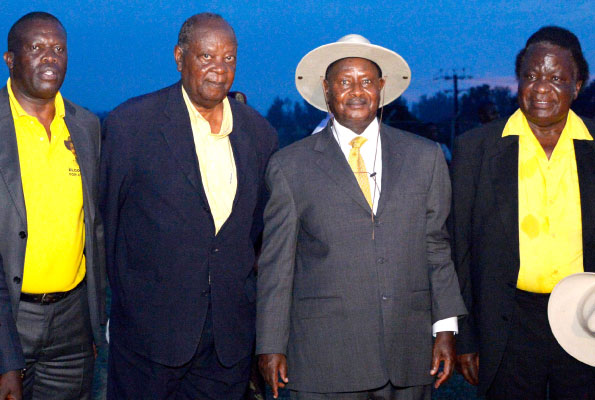
Jack Maumbe Mukwana seen here standing next to President Museveni during the re-union of Former Minister Michael Werikhe and Mbale LCV Chairman Bernard Mujasi.
Jack Maumbe Mukwana
Jack Maumbe Mukwana first rose to national prominence in 1986, when he was appointed the Deputy Minister of Information and Broadcasting. When he left cabinet, he was posted to Tororo as RDC.
However, before that Maumbe’s name was to surface in theMustard Seed, a book written by president Museveni, detailing his political experiences before he assumed power in 1986.
In the book, Museveni talks about a narrow escape from the jaws of death in Mbale, where he had taken refuge in Maumbe’s house in Malukhu Estates.
Today Maumbe Mukwana lives a low-profile life but his wife, a teacher by profession, is now an RDC.
Engineer Abner Nagwale
Engineer Abner Nangwale was born in Bukigai, in present-dayBududa, in 1932 and served as the Minister of Works in the administration of Milton Obote from 1980 until July 1985.
He was elected as an MP of the Parliament for Manjiya County.
Eng Nangwale died at his home in Bududa in January 2013, aged 79.
Seth Edward Mungati Nakhamwa
Edward Seth Mungati is a valuation surveyor who started out as a graduate trainee valuer in London County Council, UK. Born in 1937 in Mbale, Uganda, he worked through the ranks, to become Deputy Minister in the Ministry of Works and Housing, quitting in 1981 to start the East African Consulting Surveyors and Valuers, where he is currently the Managing Director.
Perez Musamali
Perez Musamali was the head of the Uganda Patriotic Movement (UPM) in Mbale and contested on the party’s ticket and lost in the 1980 elections. Musamali was said to be a close ally of Yoweri Museveni during the bush war days, at times reportedly playing host to the then guerilla leader at his home in Buwabwala. He has since passed on.
Aggrey Awori Siryoyi
Born in 1939, Aggrey Awori is a seasoned politician and one time diehard UPC supporter, Aggrey Awori Siryoyi has contested at highest levels in Uganda, for the presidency in 2001.
In 2007 he defected from the UPC and joined the NRM and in a surprise move, and in 2009 he was appointed the Minister for Information and Communications Technology, serving in that capacity until 2011 when he was dropped from the cabinet and replaced by Ruhakana Rugunda.
Earlier in 1996, he had contested for the Samia Bugwe South constituency and won, joining Parliament.
Awori belongs to one of East Africa’s most renowned families, with his brother Arthur Moody Awori a retired prominent politician in neighbouring Kenya, who rose to the position of Vice President.
Early in his life, Aggrey Awori attended Harvard University in the US, where he studied Political Economics. After Independence in 1962, he became the first Director of Television at the then Ministry of Information and Broadcasting. He also served as Uganda’s Ambassador to the US between 1980 and 1985 after which he was transferred to Belgium by the Tito Okello regime in the same year, before being dropped by Museveni in 1987.
An alumni of Nabumali High School and Kings College Buddo, Aggrey Awori was also an outstanding athlete, who represented Uganda at the 1960 and 1964 Summer Olympics in Rome and Tokyo, respectively.
Photo credit. The New Vision.
Boloki Chango Machyo W’Obanda
The late Boloki Chango Machyo W’Obanda was an academic and political activist right from his days as a student in the United Kingdom. He was also incorruptible, blending in very well with the Museveni government’s policies of zero tolerance to corruption. Chango, as he was commonly referred to by many, served as the political head in the ministries of Rehabilitation and, Water and Natural Resources under the Museveni government.
He was also at one time the National Political Commissar of the NRM and at the time of his death in died in 2013, the 86 year-old Chango Machyo was a Senior Presidential Advisor on Political Affairs.
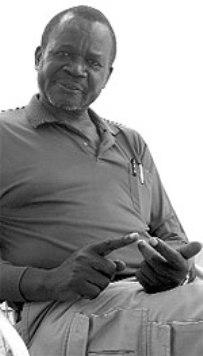
Opio holding a mic
Gabriel Opio
Between 1993 and 1996, he served as a member of the National Resistance Council representing Samia-Bugwe constituency of the then Tororo district. In 1996, he was elected to the Ugandan Parliament, representing Samia-Bugwe South in the newly created Busia District. In 1999, he was appointed State Minister for Finance, responsible for Planning and Investments, serving in that position until 2001 when he lost his parliamentary seat to Simon Mayende.
Between 2002 and 2006, prior to his appointment to the Gender portfolio, Opio served in various capacities, including as Director of National Water Sewerage Corporation, Director of Centenary Bank, and Commissioner of the Uganda AIDS Commission.
In the national election cycle of 2011, he lost his parliamentary seat of Samia-Bugwe South to Julius Maganda, an independent political candidate who is the incumbent MP for the constituency.
Balaki Kirya
Kirya was born in 1924 in Petete in Bukedi currently Pallisa district. He served as a soldier in the King’s African Rifles (KAR) before joining politics under the Uganda National Congress, where he was in charge of the Mbale branch. Kirya, one time an MP representing Bukedi, was also one of the architects of the UPC/Kabaka Yekka Alliance and was rewarded with the cabinet post of Minister without Portfolio immediately after Independence. Two years later Obote appointed him Minister for Water and Mineral Resources but the two were to fall out, with Kirya later being arrested and detained in Luzira prison without trial.
In 1971 he when Amin came to power, Kiirya was released but fled to exile in Kenya when Amin started killing some of Obote’s former ministers.
Unfortunate for Kirya, he was abducted from exile in 1982, and Obote again imprisoned him on allegations of involvement in rebel activities. He was charged with treason and was in prison until the Okellos captured power in July 1985
And when Museveni and his National Resistance Army (NRA) captured power in January 1986, Kirya was appointed security minister in the Office of the President in March 1986. He died in the mid 90s was buried in his home village.
Ambassador Francis Butagira
Born in 1942, Ambassador Francis Butagira is a lawyer, politician and diplomat, who studied at Ntare School before joining Dar es salaam University for a degree in law. After graduation he served as a magistrate and was High Court Judge between 1974 and 1979, prior to becoming a member of the National Consultative Council (NCC) from 1979 to 1980. He was Speaker of Parliament between 1980 to 1985 and also served as the Chairman of the Legal and Security Affairs committee in the National Assembly between 1989 to 1996.
Butagira also served as President of the European Economic Community and the African Caribbean and Pacific (EEC/ACP) group of States, and has held several other diplomatic accreditation. His last posting was as Uganda’s Ambassador to Germany between 2009 and 2012.
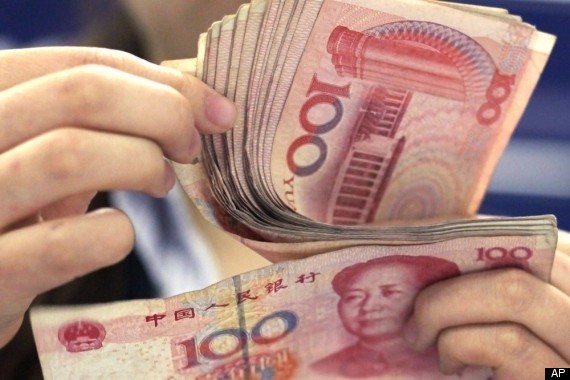
China’s Central Bank has again cut the guiding rate for the national currency, the yuan, a day after Tuesday’s record 1.9% devaluation.
The move sent fresh shockwaves through Asian markets, but the bank has sought to calm fears, saying it was not the start of a sustained depreciation.
This is now the biggest two-day lowering of the yuan’s rate against the dollar in more than two decades.
The commerce ministry said the lower rate would boost struggling exports.
Figures released at the weekend showed Chinese exports fell more than 8% in July, adding to concerns the world’s second largest economy is heading for a slowdown.
There were further signs of weakness on Wednesday, when figures showed industrial production in July rose 6% from the previous year. The rise was smaller than expected and was also below the 6.8% increase seen in June.
Fixed asset investment, a measure of state spending on infrastructure, expanded 11.2% for the first half of the year, also below estimates and at its lowest since December 2000.
However, the action on the yuan has sparked fears of a global and destabilising “currency war”. There has been criticism from the US, where markets fell sharply overnight.
On Wednesday, China’s central bank fixed the “official midpoint” for the yuan down 1.6% to 6.3306 against the dollar.
The midpoint is a guiding rate, from which trade can rise or fall 2% during the day.
Until Tuesday, that rate had been determined solely by the People’s Bank of China (PBOC) itself. But the rate will now be based on overnight global market developments and how the currency finished the previous trading day.
The bank, which had called Tuesday’s 1.9% cut a “one-off” adjustment, sought to reassure financial markets on Wednesday.
“Looking at the international and domestic economic situation, currently there is no basis for a sustained depreciation trend for the yuan,” it said in a statement.
Analysis: Karishma Vaswani, Asia Business Correspondent
But the question we should be asking isn’t how much did China’s devalue its currency by – but why now?
China’s been under international pressure to allow its currency to be driven by market forces as opposed to by the government for years. The US has been its biggest critic – saying that Beijing keeps the currency artificially low to help boost exports.
So in theory, China says it is doing what the US and the international community wants. According to the language of the Chinese central bank – China will now allow the yuan’s value to be more flexible.
Backing from IMF
The International Monetary Fund said the move to make the rate more market-based “appears a welcome step”.
“Greater exchange rate flexibility is important for China as it strives to give market-forces a decisive role in the economy and is rapidly integrating into global financial markets,” the international lender said in a statement.
“We believe that China can, and should, aim to achieve an effectively floating exchange rate system within two to three years.”
The IMF added, though, that the decision would not affects its considerations of Beijing’s hopes for the yuan to be added to the “special drawing rights” (SDR) reserve currencies.
These are currencies which IMF members can use to make payments between themselves or to the Fund.
China has long been lobbying to have the yuan included alongside the dollar, euro, yen and the British pound.
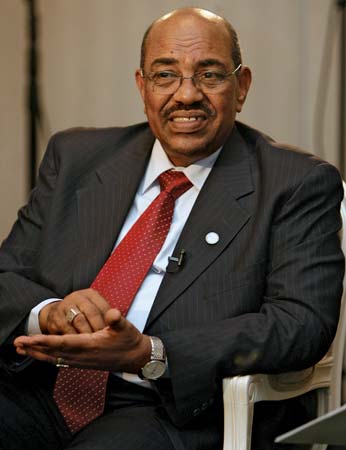
Omar Al-Bashir, failed to travel to Uganda over ICC
Sudan President Omar Al-Bashir failed to travel to Kampala for Inter-governmental Authority on Development over the International Criminal Court indictment.
Bashir who was expected to join fellow East African and Horn of Africa leaders that include Kenyan President Uhuru Kenyatta, Ethiopian Prime Minister Hailemariam Desalegn. The leaders where invited by their counterpart, President Yoweri Museveni and Bashir was due to give a report on the situation on South Sudan.
Bashir recently escaped an arrest in South Africa where Court issued an arrest warrant but South Africa’s government basing on African Union resolution down played the warrant and instead offered protection.
Bashir instead sent his Foreign Affairs Minister Prof. Ibrahim Ghandour with a special message for President Museveni.
The written message was delivered to Museveni by Prof. Ghandour at State House, Entebbe. Prof. Ghandour represented President Al-Bashir at the IGAD meeting at State House Entebbe.
President Kenyatta of Kenya, Ethiopian Prime Minister Hailemariam and Museveni attended the Igad meeting that focused on resolving the conflict in South Sudan.
The Uganda Parliamentary Forum on media (UPFM) has today launched a journalists’ manifesto 2016 as a reminder and commitment by journalists to act professionally come the 2016 general elections.
The six-point manifesto was launched by the Minister of Information and National Guidance, Maj .Gen. Jim Muhwezi at the Munyonyo Commonwealth Resort hotel in Kampala.
According to the manifesto, journalists are required to verify information before broadcasting, publishing or printing; properly handle opinion polls and not to have independent tally centres during vote counting.
Other points are to perform free, fair and balanced reporting, to offer a right to reply to all candidates and to avoid hate speech, inappropriate language and reference to ethnicity.
At the function several MPs and politicians cautioned journalists to desist from unprofessionalism, saying that the media risked being ostracized if they failed to respect other peoples’ rights in their reporting.
“We have a high degree of unprofessionalism in the media today …and this has failed to merge it with politicians, some of these reporters are not objective,” said Onyango Kakoba.
Kakoba, the Buikwe North MP, is himself a former journalist.
But the journalists were not cowed, and they the politicians to work hand in hand with them for the development of the country.
“The role of the media is a national role and as Members of Parliament, you have a role to play so we shall change the way we work if we complement each other,” Florence Apolot, a news producer at Urban TV, said.
Media house proprietors were not spared of criticism; with claims that they poorly remunerate their employees and that some others act unethically.
“The media appointment is poor, some people are said to be appointed on probation but after five years, they remain on probation,” said Joseph Ssewungu, the Kalungu West MP.
He said the committee has plans to name and shame media houses that underpay their workers in the bid to improve the welfare of journalists.
He argued that this is the main reason that brings about lack of professionalism in the media.
Meanwhile, in a statement signed by the UPFM chairperson Mariam Nansubuga, she reflected on the chaos that ensued after the presidential polls of Kenya in December 2007 and interlinked it with the need to have the ‘journalists manifesto’ in Uganda.
“The four reflective dialogues on this campaign and election reporting that took place in the four regions of Uganda were inspired by the events that led to the Kenyan post-election violence of 2007,” Ms Nansubuga, a media practitioner and activist, wrote.
Newly re-elected Democratic Party President Norbert Mao has said that after successfully holding the delegates’ conference the party will now focus on winning The Democratic Alliance flag bearer position for the 2016 presidential elections.
Speaking to journalists at the party offices in Kampala, Mr Mao also urged all members to get back to business, saying the delegates conference held at Kingdom Hotel Katomi ended peacefully.
“The DC is now over and it is time to work, we are not idlers,” he said, in apparent reference to a splinter group led by Erias Lukwago, the embattled Lord Mayor of Kampala.
Mr Mao said the Buikwe trip he had with the area MP Dr Lulume Bayiga, his contender for the top party seat, was a success and that their unity strengthened the party.
“DP is not at the headquarters (City House); it lives in the hearts of the members,” he said adding: “You can come and sit here but you will be seen as an impostor.”
The DP president further revealed that former Buganda Premier, Mr Joseph Mulwanyamuli Ssemogerere is to convene a meeting where all members under the TDA will be invited. Mao says it’s because they ‘anticipated many conflicts’.
He noted that DP will rally behind any member chosen by TDA and advised Lukwago and his group to support him since they have no chance in being welcomed to TDA.
In a related development, the DP National Executive Committee will onAugust 28, vet those that have applied to contest on the party ticket in various constituencies.
Mao says that NEC is empowered by the party Constitution to reject any one’s application without explanation. “Nobody should say they have been locked out, they are free to contest,” he said adding: “NEC will sit and decide what to do for party members that stood as independents.”
The DP leader also warned all those using party colors to stop or face consequences.
“I asked Mr Mukasa Mbidde, the party’s Legal Advisor, to write to the Electoral Commission. The green and white are our colors, EC should inform those using them to stop,” he expressed.
Meanwhile, all newly-elected DP Executive Committee members will be sworn in on August 29 at Kaunda Grounds in Gulu.



 Renowned international gospel artiste Kathy Troccoli has arrived in the country ahead of the much anticipated three-day Phaneroo first anniversary celebrations starting tomorrow.