Stanbic Bank
Stanbic Bank
18.4 C
Kampala
Stanbic Bank
Stanbic Bank
Home Blog Page 2327

International community needs to revisit the South Sudan conflict

Barely a day after South Sudan President Salva Kiir Mayardit appended his signature to a peace deal with the rebel faction of the Sudan Peoples Liberation Movement in Opposition (SPLM-IO), fighting has again reportedly erupted in several areas of Malakal in the Upper Nile region and in the oil-rich Unity State.

Much as this development is deplorable and deserves condemnation, the renewed fighting will not come as a surprise to many of the stakeholders including the US, which had warned Kiir against reservations he held while he dilly-dallied signing the pact that seemed to have had several ‘concessions’ favouring Riek Machar’s SPLM-IO. Indeed, the UN also seemed hard-pressed to believe that the signing was sustainable and a precursor to lasting peace in the world’s newest state, prompting a Fridaywarning to the belligerent parties, of an arms embargo should they fail to adhere to the terms of the peace pact.

That notwithstanding, it is important to note that the South Sudan conflict is a ‘high stakes game’ that encompasses several actors with different interests, that not even the threat of sanctions can deter the warring groups from attacking each other even as the ink on the peace pact has not seen the light of day.

So, against such a background, there is need for the international community to comprehensively revisit the nature of conflict in South Sudan so that an applicable solution can be put in place.

But while pursuing the revised definition, one factor that should be given due attention is ethnicity, as this seems to be one of major underlying problems that is curtailing meaningful dialogue between Kiir and Machar.

Indeed, the two major antagonists, who seemingly represent the Dinka and Luo Nuer interests, are apparently distrustful of each other and seem poised for a ‘supremacy battle’, with either tribesmen egging on their own to maintain or take the reins of government, respectively.

Against such a background, new methods of conflict resolution become an imperative.


Stories Continues after ad

New EALA Counsel takes oath

Dr Anthony Luyirika Kafumbe has been sworn-in as the new East African Legislative Assembly (EALA) Counsel.
Dr Kafumbe’s Oath of Allegiance was administered by the EALA Clerk before the Speaker Dan Fred Kidega at a session in Kampala on August 27.
Hon Dr Kafumbe, who now becomes an ex-officio EALA member, was ushered into the House by Emmanuel Nengo and Dora Byamukama, and took the oath in accordance with Rule 5 of the Rules of Procedure of the Assembly. He was appointed Counsel to the Community (CTC) by the Council of ministers 32ndsitting in Arusha in August this year, and replaces Wilbert Kaahwa, who retired last year.
Dr Kafumbe’s duties include offering legal advice to the EAC, attending and advising Council of Ministers and representing the Community at the East African Court of Justice (EACJ).
Prior to his appointment, Dr Kafumbe, who holds a doctorate from the University of Glasgow, Scotland (2006), was the Principal Legal Officer of the Community, having joined the EAC in July 2008. 
He also holds Masters of Laws from the University of Pretoria, South Africa (2000); a Masters of Business Administration from ESAMI, Arusha, Tanzania (2003); has lectured at Makerere University and also worked as a Senior State Attorney, Ministry of Justice of Uganda.
Stories Continues after ad

Uganda lauded on national IDs

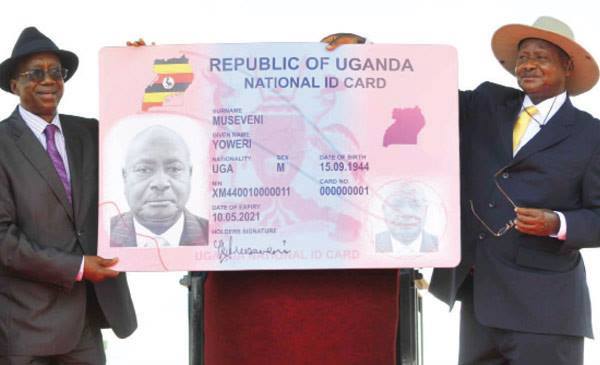
The East African Legislative Assembly has praised the Uganda government for introducing the ‘third generation’ national identity cards.

Through a resolution moved by Ugandan legislator Susan Nakawuki on August 27, the EALA members noted the Uganda had complied with Article 8 of the Common Market Protocol and they urged other partner states to expedite their card issuing finalisation processes.

In the resolution the Republic of Rwanda, which had introduced machine readable ID cards way before the entry of the Common Market Protocol and the United Republic of Tanzania which had also commenced on the exercise of issuing the cards, were also lauded.

“The ID card is to facilitate delivery of national development based on reliable and verifiable data, enable Governments plan properly and provide easy access to social facilities and services like the Health systems. 

It also facilitates school capitation grants based on verifiable identities and data at local level, facilitates transparent and trustworthy business transactions, reduces level of crime in Community and improves security”, part of the Resolution reads.

 All EAC Partner States have embarked on the process of issuing 3rd Generation identity cards including the Republic of Kenya which pioneered national ID systems and is now embarking on the upgrade from 2nd Generation to 3rd Generation IDs.

 During debate, Ms Hasa Mossi called for accuracy in data management. 

“We can achieve this aim when coming up with the third generation cards”, she said.

Abdullah Mwinyi (Tanzania) said getting right data was fundamental in improving the livelihoods of East Africans.  

“It is not just simply measuring, but reliable data can catalyse change”, Hon Mwinyi said.

Ms Valerie Nyirahabineza (Rwanda) said while commenting on the Common Market Protocol, observed the slow pace of implementation. 

“This Resolution is important as it calls on all Partner States to move with the Protocol.  We urge the Council of Ministers to urge Partner States to fervently implement the provisions of the Protocol,” Hon Nyirahabineza said.

Dora Byamukama (Uganda) lauded the Partner States that have Identity cards and said a time should come when there is total free movement of persons.

Stories Continues after ad

Maj Mutale, Lukwago face police summons over militia

Police is set to summon Senior Presidential Advisor on Political Affairs Major Roland Kakooza Mutale and Kampala Lord Mayor Erias Lukwago over the militia groups they formed.

Addressing journalists at the police headquarters this morning, police spokesperson Fred Enanga said that what the two were doing is in breach of the Uganda Constitution and the cop insisted that the mandate to recruit and train such groups is the preserve of certain government departments.

“The Constitution doesn’t allow this; we are monitoring them and who ever associates with them. Constitutionally, the mandate to form such a group or train it is given to an arms government organization,” Mr Enanga said adding: “The police have made arrangements to summon the two and any other person who associates with them.”

According to the promoters, the self styled civilian guards are being trained to monitor the 2016 elections, with both Maj Mutale and Lukwago claiming this will deter the rigging of votes accruing to their respective candidates.

Mutale is currently training militias whose mission, he says, is to ‘eliminate’ anyone who stands in Museveni’s way ahead of the 2016 general elections.

Similarly, Lukwago under his pressure group called Truth and Justice formed the TJ Solida Crew, which he says, is ‘to act as a shield but not the sword to protect the interests of the public’.

Previously, Maj Mutale was infamously linked to the Kalangala Action Plan (KAP), a paramilitary outfit formed in 2001. In 2007, he was also associated with the ‘Kiboko Squad, a ‘vigilante’ group which tried to suppress the riots against the sale of Mabira Forest.

The issue of Maj Mutale’s training of a ‘vigilante’ group has caused a stir in some official circles, with his colleague, one-star General Brigadier Kasirye Ggwanga, threatening to take on the elderly Maj Mutale in the jungles of Luwero. Other personalities who have spoken against Maj Mutale’s trainees include information minister Maj Gen Jim Muhwezi, a two-star General and veteran of the Bush War, and Colonel Shaban Bantariza, another Bush War veteran and current Deputy Director of the Media Centre.

Stories Continues after ad

Kenya athletes’ exploits at the Worlds excite EALA members

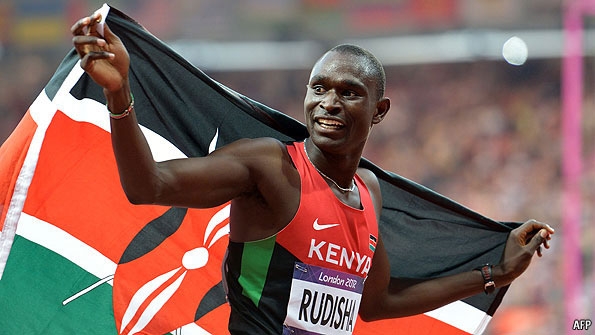
David Rudisha, the 800 metres sprint ‘King’ is back after leading  a number of athletes including another comeback Vivian ‘Pocket Rocket’ Cheruiyot in bagging medals as Kenya made news at the World Athletics Championships, putting the East African nation back on the athletics world map.
 As Kenya’s athletes continued firing from all cylinders, their famous victories also caught the attention of members of the East African Legislative Assembly sitting in Kampala, Uganda, prompting a Motion for Resolution to support the East African athletes from Kenya at the just-concluded World Athletics Championships in Beijing, China. 
 
The Resolution appreciated that Kenya had taken the lead in the Beijing games having amassed a total of 11 medals: six gold, three silver and two bronze.
The Resolution further urged the EAC Council of Ministers to implore partner states to provide more funding and establish the state of art facilities to enable EAC athletes enhance their skills and global dominance.
Article 19 of the Treaty for the Establishment of the EAC which obliges Partner States to promote close co-operation amongst themselves in culture and sports with respect to promotion and enhancement of diverse sports activities. 
EALA also resolved that EAC Partner States should protect sports personalities especially the females who are prone to different forms of abuse.
 
“Our East Africans of Kenyan origin need to be commended for their exemplary performance to uplift the name of Kenya in particular and the EAC region in general in World Athletics Championship,” Martin Ngoga of Rwanda, said.
 Hon Ngoga said it was necessary for the EAC to collectively take pride when one partner state excels. 
There is some excitement this year out of the games. Each medal Kenyans win is out of their sweat”, Hon Ngoga said and added: “We need to recognize the prowess and mention that they are inspiring the young persons.”
 Dr James Ndahiro (Rwanda) termed the Resolution timely and that it was further in line with the enactment of the Culture and Creative Industries Bill, 2015 passed by the Assembly at the Sitting.
Leonce Ndarubagiye (Burundi) said athletes were indeed the pride of Africa, while Mumbi Ngaru said sports was key and mentioned that integration was on-going through sports.  “The EAC Military Games are on-going here in Kampala, Uganda this week and it is in order that I applaud all participants,” she said last week.
 Susan Nakawuki (Uganda) noted that She-Cranes (Uganda) had also performed well in the Netball World Cup as were a number of athletes from Republic of Uganda. She called on the EAC Partner States to establish rigorous infrastructure to effect anti-doping measures in the industry.
 
Mike Sebalu (Uganda) said it was time for the EAC to associate with the celebrities and icons of the region and in that way create awareness, while Sarah Bonaya (Kenya) said the rest of the partner states could learn from the successes of Kenya which has invested heavily in athletics and sports.
 
Abdullah Mwinyi rooted for grassroots’ support.  “It is of critical importance as we broaden base of talent and opportunities at all levels. 
The EAC can think about a further competition. I commend them for organizing debates.  Let us have athletics for example also done,” Hon Mwinyi said.  
 
He lauded Kenyan Julius Yego, the gold winner of Javelin who threw 92.72 metres, setting a new continental and national record.  The Gold winner picked up interest from YouTube videos.   “This is a devastating example of technology allied with determination,” he said.  
 
With the Resolution, the Speaker of EALA, Rt. Hon Daniel F. Kidega adjourned the Assembly Sine die (Indefinitely).
 
At the Kampala Session, EALA passed at total of six Reports, one Bill, three Resolutions and deferred another Bill.  The Assembly also administered the Oath to the incoming Counsel to the Community as an ex-officio of EALA.
Stories Continues after ad

EC boss warns against creation of militia

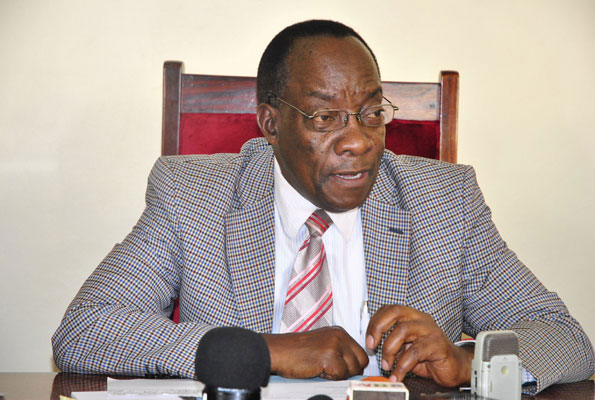
IEC boss Eng. Badru Kiggundu.

The Electoral Commission has warned against the creation of militia groups ahead of the 2016 presidential elections.

The EC boss Eng Badru Kiggundu sounded the warning early today, in the wake of reports that a military officer and a politician are involved in the illegal recruitment of youths.

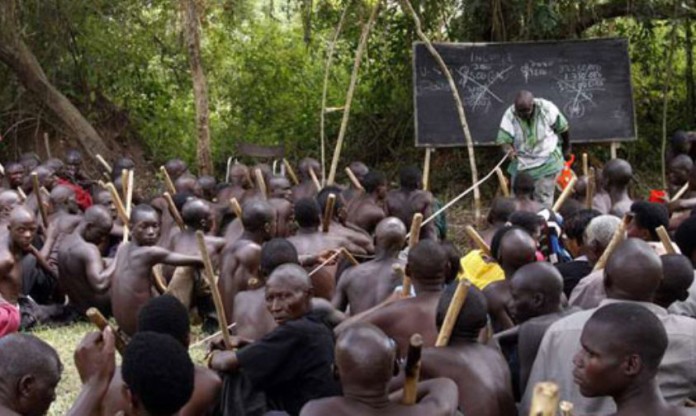
Over the past few weeks Major Roland Kakooza Mutale has been involved in the recruitment and training of youths under the Kalangala Action Plan (KAP), ostensibly to ‘protect’ President Yoweri Museveni’s votes in 2016.

Similarly, some time back the Kampala Lord Mayor Erias Lukwago, also announced the formation of another ‘youth brigade’ code-named Truth and Justice, claiming it is to counter Mutale’s activities during elections.

But while launching a voter education module at Hotel Africana today morning, Kiggundu said enforcement of law and order is a preserve of the Uganda Police and that it is illegal for anyone to recruit militias.

Kiggundu said he would engage the Ministry of Internal Affairs and Police to ensure that such groups are disbanded and those responsible for their promotion prosecuted.

“I have been hearing about formation of youth brigades in the media but now that you have confirmed to me that they truly exist, I am going to engage the Police to ensure that this is handled once and for all,” Emg Kiggundu said at the launch of the 13th module on voter education that was prepared by UPIMAK in collaboration with (CECU).

In his remarks, the UPIMAC CEO Steven Nyabango said there was need for the different stakeholders to carry out voter and civic education in order to enable the citizens make correct decisions.

“As we go for party primaries, we want the people to choose the right leaders who can effectively represent them at different levels,” Mr Nyabango noted, while the Head of Programmes at Democratic Governance Facility (DGF) Ms Helen Mealins applauded UPIMAC for its role in ensuring voter education takes place throughout the country.

Meanwhile, the new National Identity Cards will be used in the coming elections, the EC has said.

“When you get the identity card, please keep it safely because currently there are no replacements and even it is made it will be at a cost,” Eng Kiggundu stressed and hastened to add that all Ugandans who registered will have the IDs by election time next year.

Mr Kiggundu also lauded the civil society organizations for partnering with the Electoral Commission to ensure voter education is carried out and also urged the media to be independent and accurate while covering the election process. He also warned against announcement of results without official clearance by the EC.

The 2016 presidential elections have caused excitement in the country, with many citing the entry of former Prime Minister and National Resistance Movement (NRM) Secretary General John Patrick Amama Mbabazi, into the race.

Similarly, the endorsement of NRM Chairman Yoweri Museveni by his party as ‘sole candidate’ and the return of former Forum for Democratic Change (FDC) boss Col Dr Kizza Besigye has also excited some Ugandans, making the 2016 elections a highly contentious, unpredictable and electrifying poll.

Already, the political tempo has been put to test, with Dr Besigye taking on FDC President Maj Gen John Gregory Mugisha Muntu in a live television debate last night.

The first of its kind in Uganda, the debate saw the two former ‘Bush War’ comrades exhibit both tough and light emotions as they campaigned to become the FDC flag bearer, a position that will be determined this Wednesday.

Stories Continues after ad

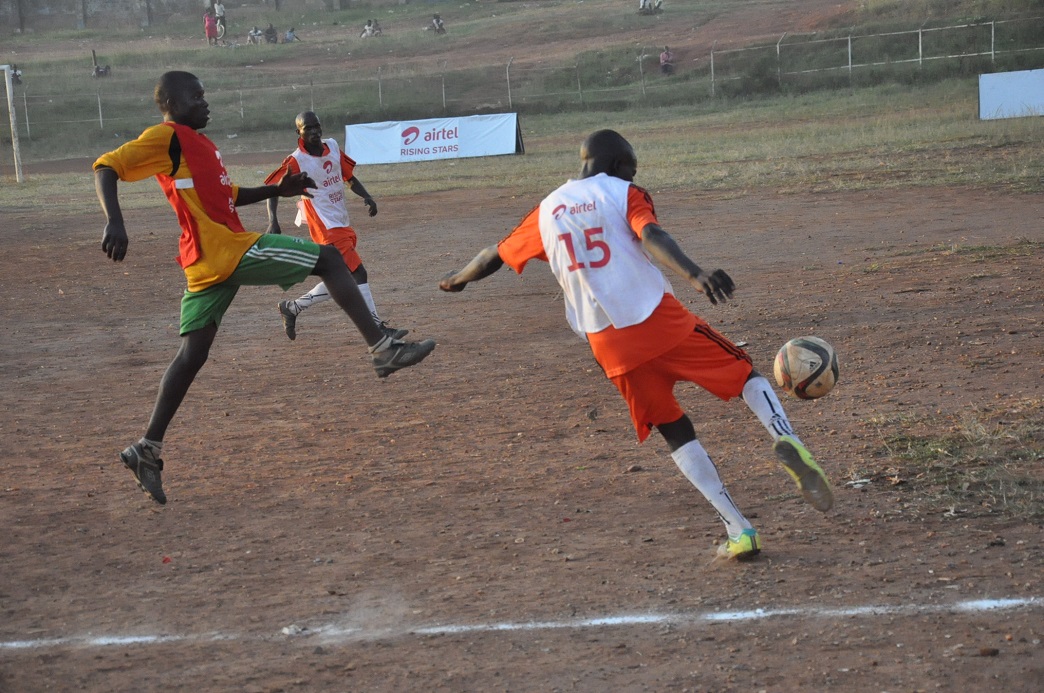
Gulu up next as the Airtel Rising Stars Regional Games wind up in Mbale

Light High School Boys winners of the Airtel Rising Stars finals North East Region

…One region left before the national finals in Mbarara.

The Airtel Rising Stars Eastern and North Eastern regional qualifier games were held in Mbale town over the weekend. The games were played at different venues in Mbale with the finals being held at Mbale Municipal Stadium.

The regional games took place on Friday 29thand Saturday 30thof Augustwith Pallisa United (boys from Eastern region), Highway High School, Sironko (girls from Eastern region) and Light High School (boys from North Eastern region), Olila High School (girls from North Eastern region) emerging as the regions’ champions.

The Winning teams for both boys and girls from the East and North Eastern regions, won trophies, certificates, balls, kits and cash prize of UGX 1,000,000 each. While the boys’ and girls’first runners up, took home trophies, certificates, and a cash of UGX 500,000 each.

Action Picture 2

The boys and girls that exhibited remarkable talent were selected from the different regional teams to represent their regions in the national championships to take place in Mbarara inOctober.

Speaking at the games in Mbale, Airtel Uganda Brands Assets and Properties Executive, Musa Mayanja, said; “Airtel is dedicated to nurturing young talent through the Under 17 grassroots football initiative that enables us to reach out to the youth. It is our desire to see young people live their dream and soccer is one of our major platforms in doing so .This soccer tournament provides this opportunity to the youngsters and creates a great opportunity for the players to engage more in the game.”

The Airtel Rising Stars football initiative is the the biggest Under-17 grassroots tournament on the African continent and aims at identifying talent and nurturing upcoming footballers. This is one of the few football equal opportunity initiatives that targets boys and girls. Over the years, the Airtel Rising Stars initiative has yielded many success stories and has enabled several upcoming soccer talents to join Africa Premier League clubs and their countries’ national teams.

The final regional games will be in Gulu on the 10th and 11th of September, 2015. Airtel, currently the largest supporter of youth football on the continent, has partnered with FUFA to ensure that football regulations are followed in Uganda.

Stories Continues after ad

EALA MPs in disaster preparedness drive

The East African Legislative Assembly has adopted a report on climate change, with calls on the five partner states to promote proactive approaches to preparedness in light of climate change.

 The report is based on recommendations made during an EALA workshop held in the Burundian capital, Bujumbura in March this year.

The objectives of the workshop was to create awareness amongst Members of EALA on the critical cross-cutting subjects of climate change and gender; and to consider existing international and regional policies, strategies and regulatory instruments and frameworks on climate change and gender.

At the same time, the workshop sought to identify the role of Parliamentarians in implementation of Gender Sensitive Climate Change Policies and Practical measures.

Meanwhile, the Report, the Regional Parliamentarians Policy on Climate Change and Gender, that calls for the inculcation of approaches such as early warning systems and modalities for flood and drought management, was presented by the Chairperson of the Agriculture, Tourism and Natural Resources Committee, Christophe Bazivamo during a plenary session held in Kampala.

During debate Abdullah Mwinyi called for demarcation of specific areas for cattle keepers so that enough fodder is realized and sustainability is realised.

“Farmers are predominantly women while cattle keepers are predominantly men”, he said.  “There is need for a region-wide policy to deal with any imminent clashes that may arise”, he added.

Mumbi Ngaru (Kenya) said natural and man-made events both contribute to Climate Change.  “We have the Disaster Risk Reduction Bill pending before the House. It needs to brought forth immediately by the Council of Ministers”, she said.

Susan Nakawuki (Uganda) lauded the City Council of Arusha for greening the city by planting more trees.

‘We should all borrow from the successes of the city’, she said and called on the Partner States to ensure the EAC Climate Change Fund received funding.

Valerie Nyirahabineza (Rwanda) said the Assembly could champion the importance of the Climate Change Fund.  “As an Assembly, we can support the Fund in a symbolic manner”, she said.

Other EALA members including Dora Byamukama (Uganda), Dr. Odette Nyiramilimo (Rwanda) and Sarah Bonaya (Kenya) also supported the report.

In the past, EALA has passed several environmental Bills including Transboundary Ecosystems Management Bill (2010), the EAC Polythene Material Control Bill, 2014. The EAC Disaster Risk Reduction and Management Control Bill (2014) is under consultation, while work has also commenced on the EAC Climate Change Bill and a Climate Change Fund.


Stories Continues after ad

Biometric company gets Africa award

2421-150828d
The biometric installation from DERMALOG has successfully registered over 18 million bank customers in Nigeria

A leading German biometrics manufacturing firm Dermalog has been awarded the ‘2015 African Biometrics Company of the Year Award’.

Dermalog Identification Systems is one of the world’s leading companies for biometric identification, offering its Automated Biometric Identification System services to governments and private organisations in Europe and other major markets like Africa, Asia, Latin America, and the Middle East.

So far Dermalog has delivered 150,000 fingerprint scanners to over 70 countries and also delivered over 130 ‘large ABIS’ installations that have helped in registration and immigration processes for governments around the world.

According to a release, Dermalog was given the award in recognition of its work in 20 African countries including Nigeria, where the Hamburg-based company is carrying out a US$50 million project secured with the Central Bank in 2013 and, also offers services to 23 other commercial banks in the heavily-populated West African country with a history of fraud.

And, since 2013 Dermalog’s ABIS has helped detect over one million individuals attempting to obtain double or multiple identities in Nigeria, thereby preventing fraud and money laundering in the financial sector. The company has also been able to register over 18 million bank customers in the vast African country.

‘Using Dermalog fingerprint scanners and software, all participating banks can ensure that for all transactions, the identity reliably matches the customer because the customer must always be physically present for the registration,’ the release states and adds that in the near future, registered bank customers in Nigeria will also be able to withdraw cash from ATMs and pay at cash machines using their fingerprints.

Other African countries where Dermalog operates include Angola, Ghana, Tanzania, Zambia and in South Africa, where the award issued by consulting company Frost & Sullivan, was handed over.

‘It contributes sustainably and decisively to solving local challenges such as identity theft, corruption, demography, and migration as well as the economic development of these countries,’ the release by Africa Press Organisation (APO) states in part.

Stories Continues after ad

No salary increase this year, Museveni tells varsity support staff

Non-teaching staff at public universities will not get a salary increase this financial year, President Yoweri Museveni has said.

Museveni, made the remarks recently as he met representatives of non-teaching staff of the six public universities at State Lodge, Mbale, and added that the government had prioritized infrastructure development after which it would address other pressing national issues. The delegation was led byJackson Betihamah, the chairperson of the Public Universities Non-teaching Staff Executive Forum (PUNTSEF), following a petition to the President to help them address the issue of salary enhancement and equity.

On August 3 non-teaching university staff from Makerere, Kyambogo, Mbarara, Busitema, Gulu and Muni went on strike, demanding that government enhances their salaries at the start of the new academic year this month.

In response the President assured the delegation members in Mbale that the government will increase their salaries in the next financial year.

“My proposal to you is in principle, we are not against you. We cannot increase salary this year because there are so many things to be done. Ministry of Finance may increase the salaries next year. We are not against the principle of equity but it’s only the timing. We began with the most urgent and later we shall support the rest,’’ he said.


He said while government now collects Shs. 12,000 billion per year, it prioritizes its spending according to the urgency and added that in the past government concentrated on paying salaries to civil servants and supporting the Army and in the process this led to dependency on the donor funding ‘which was too little to support all government developments’.


The President also disclosed that government spending on road repairs had risen to Shs3000 billion, up from Shs3 billion, after his intervention and added that many roads including the Tororo-Mbale-Soroti had been constructed using government funds.

Stories Continues after ad