Stanbic Bank
Stanbic Bank
18.4 C
Kampala
Stanbic Bank
Stanbic Bank
Home Blog Page 2326

Illicit financial flows worry African finance ministers

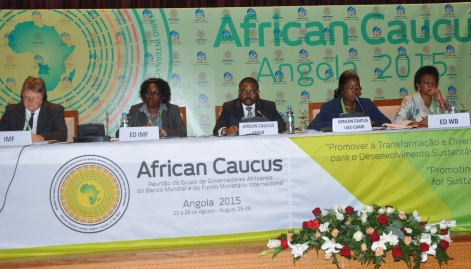
African ministers and Central Bank governors meeting in the Angolan capital Luanda have expressed concern at the illicit financial flows from the continent.

Speaking at the African Caucus forum, the President of the African Group and Minister of Finance of Angola, Armando Manuel noted that savings can be made by reducing on the financial outflows.

“This obliges us to look for other sources of financing including savings that can be made from restricting illicit financial flows from Africa, especially measures that can be taken to radically reduce these mass monetary outflows and guarantee that they are used for development in the African continent,” he noted.

Nineteen African ministers of finance and fourteen Central Bank Governors are meeting in preparation for the annual meetings of the International Monetary Fund (IMF) and the World Bank Group, and emphasis today fell on combatting illicit financial flows to improve the mobilisation of internal resources, a topic addressed by former South African president Thabo Mbeki.

The African Caucus represents 40 African countries including hosts Angola, whose Vice President Manuel Vicente opened the Caucus meeting earlier today ahead of meetings with the Bretton Woods Institutions.

‘The African Caucus was created with the aim of preventing African Governors from presenting in the Annual Meeting of the IMF and WBG the economic and financial problems that affect the respective countries alone,’ a release by Africa Press Organisation (APO), states.

And, speaking at the forum, Vicente underscored the importance of poverty alleviation, saying it leads to sustainable development.

Vicente further noted that African countries must have a more comprehensive outlook, integrating the diversification of the economy based on national and regional value chains in potential competitive sectors.

“In truth, we have to add more value to our resources, whether in the directly productive activities, or through infrastructure and additional or supporting activities such as, transport and telecommunications systems, banking and financial systems generating integrated development hubs, “he said.

Discussion panels for the opening day included regional economic outlooks, economic transformation and diversification, combating illicit financial flows to improve mobilisation of internal resources, environmental and social safeguards and consultations for the governors.
Meanwhile, David Robinson, the Vice-Director of the International Monetary Fund (IMF), and one of the speakers at the African Caucus said that the fall in oil prices is a significant negative shock for the oil exporting countries which have had to make marked adjustments.

Mr Robinson, who presented the theme ‘Africa: Regional Economic Outlooks’  pointed to the following public financial measures:  budget cuts  in the 2015 expenditure, above all in investments, fuel subsidies reform, taxation measures, including tax rate increases, and greater exchange rate flexibility wherever possible.

The representative of the IMF to the African Caucus noted that the oil producing countries have to tackle issues such as the orderly implementation of spending cuts, prioritise social sectors and infrastructure and mobilise non-oil revenues.

“It is necessary to address low liquidity in the foreign exchange markets in countries with flexible arrangements and the absence of foreign exchange instruments in countries whose currency is indexed to the Euro,” the APO release states in part.


Stories Continues after ad

Support for youth innovativeness is a good way to go

Government has pledged to support youth who are creative and innovative, and one sure way of solving the massively high unemployment rate in the country is supporting the youths to start up youth their own businesses.

Indeed, support in form of long term low interest rates and sometimes direct funding must be extended to the young people who engage in business in order to ensure sustainability.

There is also need for technical support in various forms like training in order to improve skills as this would help reduce the burden of our young generation having to rely on government and the private sector for provision of employment after completion of their education.

It would also reduce on the number of the young people who are taken to foreign countries by certain agencies claiming to they are linking them for jobs only to end up in slavery and sexual exploitation.

Special attention ought to be directed to vocational skills like weaving, knitting, carpentry as this is one of the ways of getting the youth occupied and also acquire the skills knowledge and understanding required to transform their lives and contribute positively to the growth of the Ugandan society.

The government must also put in place mechanisms to ensure that market for the products that the youths produce is available and competitive prices negotiated. There is need to focus on the global and international market in order to increase sales, a precursor for massive production.

It is also important for the youths themselves to be financially disciplined in order to put the funding they receive to the proper use, rather than spending it on wasteful activities like drinking and gambling.

Stories Continues after ad

Museveni cautions Kayunga leaders on land

President addresses Kayunga leaders at Entebbe State House

President Yoweri Museveni has cautioned local leaders to handle land matters carefully, in order to avoid mistakes that will discourage investors.

The President, who made the remarks while meeting a delegation of councilors and mobilisers from Kayunga District Local Councils at State House in Entebbe, said the investors pay taxes and create jobs for Ugandans.

He told the leaders that land matters need to be handled with care and that victims in Kayunga land wrangles will be handled by the Office of the Inspector General of Police. He also clarified that public land users are customary and lawful owners as the law clearly stipulates adding that squatters who bought plots from land owners should not leave their land.

President addresses Kayunga leaders at Entebbe State House

“NRM leaders, you should speak the truth about the squatters’ land wrangles so that we can buy land for them and the matter is settled. But all these should be legal,” he said.

Mr Museveni urged the people of Kayunga to desist from land fragmentation saying land which is consolidated is advantageous because one can carry out large scale commercial farming. He called on all Ugandans to appreciate the need for a balanced national economy adding that people should not ignore other important economic sectors like roads, electricity, tourism, education and health.

He commended the Kayunga delegation for their forward looking ideas of nurturing markets not only internally but also at regional and continental levels.

“You are real Africans because you have mentioned the issue of the South Sudan market which is growing. We cannot be prosperous on small markets,” he said.

The President was reacting to remarks by members of the delegation who commended his efforts to bring peace in Uganda and to South Sudan following the recently signed peace deal signed in Addis Ababa and in Juba by President Salva Kiir and Mr Riek Machar. They noted that the peace deal between the leaders in South Sudan had increased market opportunities for Ugandan entrepreneurs.

The Minister of State for Lands who is also Woman MP for Kayunga district, Aidah Nantaba thanked the president for promoting development programmes and for entrusting her with the responsibility of following up on programmes that are aimed at enhancing the development of the people.

Stories Continues after ad

SA envoy presents credentials to EAC

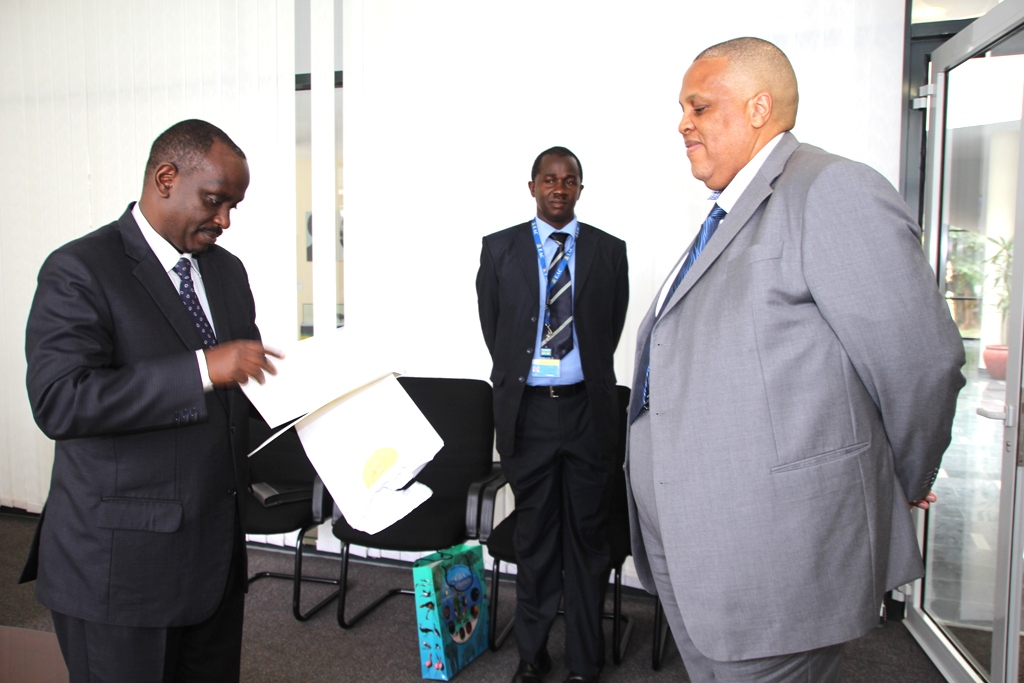
East African Community Secretary General Amb. Dr Richard Sezibera receives credentials from the South African High Commissioner to Tanzania and the East African Community, Amb. Thamsanqa Mseleku (right), at the EAC Headquarters in Arusha, Tanzania.
South Africa’s High Commissioner to Tanzania and the East African Community Thamsanqa D. Mseleku, has said his country was committed to the creation of strong and viable Regional Economic Communities (RECs) across the entire continent, adding that RECs were the surest way to achieve the founding fathers’ dream of Pan-Africanism.
Amb Mseleku said South Africa was keen to ensure that African countries build on the gains made in regional integration, democratisation, economic growth, good governance, security and political stability.
While presenting credentials to the EAC Secretary General Ambassador Richard Sezibera, Amb Mseleku noted that while Africa had made significant gains in these areas, there were still major challenges to be surmounted citing the situations in Burundi, South Sudan, the Central African Republic and Somalia.
East African Community Secretary General Amb. Dr Richard Sezibera receives credentials from the South African High Commissioner to Tanzania and the East African Community, Amb. Thamsanqa Mseleku (right), at the EAC Headquarters in Arusha, Tanzania.
 “On the economic front, there are sudden problems emerging in the world which have a negative impact on African economies most of which are mainly resource based,” he said.
The envoy said his country was open to increased cooperation and partnerships with the EAC, which he described as Africa’s fastest growing economic bloc.
In his remarks, Dr Sezibera hailed Amb. Mseleku on his appointment as South Africa’s High Commissioner to the EAC.
 
“We consider South Africa as a very strong partner of the EAC. South Africa is a strong leader in terms of Pan-Africanism. South Africa’s leadership cuts across regional economic blocs and countries,” said Dr Sezibera.
Dr Sezibera said the EAC was trying to form a Political Federation as its contribution to Pan-Africanism, the realisation of which he said would reverse the negative legacy of colonialism on the continent.
 “We have a Customs Union, a Common Market and are working towards the attainment of a single currency for the region by 2024. We are also working together with the South African Development Community and the Common Market for Eastern and Southern Africa to create a free trade area and to make it work,” said the SG, adding that he looked forward to South Africa providing leadership during the tripartite negotiations.
He said that for regional integration to succeed, big economies must be willing to make sacrifices more because in the end they will be the biggest beneficiaries.
“There will be a temporary loss but big economies like South Africa, Kenya and Egypt will inevitably gain more in the end,” he said.
He also praised South Africa’s efforts in trying to mediate a peaceful resolution to the conflict in Burundi and South Sudan.
Stories Continues after ad

Shs70bn for fallen soldiers’ children

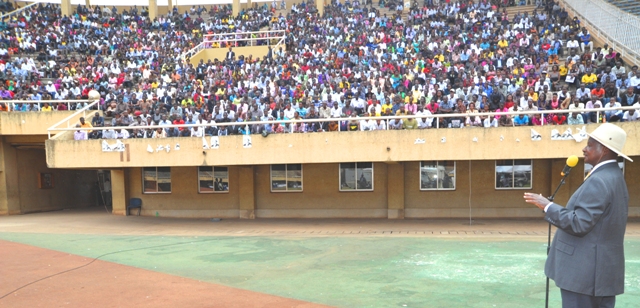
PRESIDENT M7 ADDRESSING CHILDREN OF FALLEN HEROESAT NAMBOLE STADIUM

The government has earmarked 70 billion shillings to help the children of fallen soldiers.

The President was addressing 2000 children of fallen soldiers at Namboole Stadium, whom he assured of support to improve their welfare.

He also said government will ensure that they access the Youth Livelihood funds under Ministry of Gender, Labour and Social Development and directed the Permanent Secretary Mr Pius Bigirimana to explain to them more about the program.

PRESIDENT M7 ADDRESSING CHILDREN OF FALLEN HEROESAT NAMBOLE STADIUM

Mr Museveni further assured the children that government will support them since the Uganda Peoples Defence Forces (UPDF) has the records of their parents.

He also urged them not to squander their lives but utilize the opportunities availed to them to transform their lives.

“The most important thing is that you should look after your life. Don’t drink, don’t involve in promiscuity because your life is wealth. If you are alive, other things will come. Please look after your health, be disciplined and utilise all the opportunities the government will give you and we shall support you,’’ Mr Museveni said.

He said that government would find ways of helping those whose parents did not register ‘as they are all Ugandans’.

The President said he was happy to see that the youth are organized and called on them to work together.

“I’m happy to see that you are organized. If you are organized, it is easy to address your issues,’’ he said.

The State Minister for Defence General Jeje Odongo thanked the President for coming to share with the children of the fallen comrades.

Maj Gen Wilson Mbadi, the Joint Chief of Staff said the UPDF will continue to interact with the children of the fallen comrades through encouraging them to join the forces and added that the army would follow up on payment of the survival benefits to the families and also help them access youth livelihood funds.

Stories Continues after ad

Don’t drag Gov’t into kingdom issues, Museveni tells Bakonzo

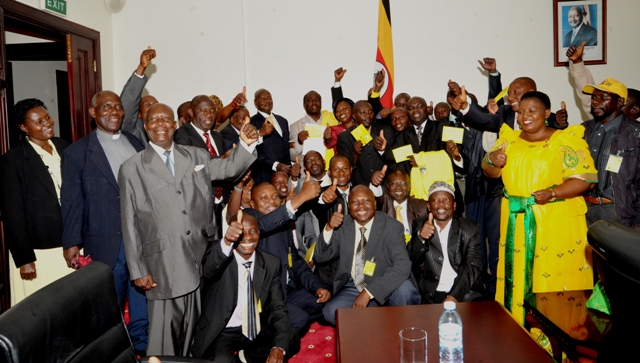
PRESIDENT M7 POSES FOR A GROUP PHOTO WITH THE DELIGATION FROM BUNDIBUGYO AT ENTEBBE STATE HOUSE


PRESIDENT M7 POSES FOR A GROUP PHOTO WITH THE DELIGATION FROM BUNDIBUGYO AT ENTEBBE STATE HOUSE

President Yoweri Museveni has called on the leaders of the Rwenzururu Kingdom in Kasese and Obundhingiya in Bundibugyo to stop dragging the NRM government into kingdom matters.

Mr Museveni also asked the leaders to separate Obusinga issues from administrative units and told them to give time to the government to internalize the matters surrounding requests for Bugendera to be given a district status.

The President was meeting delegations from the two cultural institutions at State House Entebbe, led by Wilson Mutabazi Mukirane and Fulgensio Bamwitirebye of Kasese and Bundibugyo, respectively.

“Rwenzori sub-region is an area whose people actively participated in the protracted people’s struggle. There are three kings who are officially known. The fourth one is not yet recognized. Observe the national Constitution,” he said.

On the issue of land, the President warned that they cannot stop any Ugandan from owning property in any part of the country, and said that Omukama Oyo Kabamba Iguru of Tooro has got the right to visit and access his personal property in Kasese district.

He further warned them against involving Kings in matters of other people’s pieces of land

President Museveni was unhappy to note that many youth in that sub-region who attacked the army were killed. He revealed that the Government granted amnesty to those that survived that conflict but added that the people who killed the Basongora civilian families, would not be forgiven. He stressed that the law would take its course against those who killed civilians.

He said that the NRM Government’s role is to develop infrastructure such as roads and maintain peace and security.

The leader of the Bundibugyo delegation, Mr Bamwitirebye, assured the President that Bamba and Bakonzo communities were currently living in harmony. He thanked the President for government’s support of Shs 200million towards the construction of their palace and for the continued peace and security in the Rwenzori region and the entire country.

During the meeting, the President also took the opportunity to welcome Mr Taban Christopher Kibanzanga and Mr Gideon Mugisa to the National Resistance Movement (NRM).

The two leaders took an oath of allegiance to the NRM before the President and the leaders of Bukonzo and Bwamba.


Stories Continues after ad

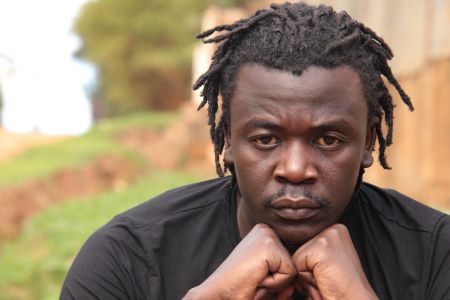
Meet Henry Kirumaganyi aka Henry Tigan as he narrates his musical journey

Henry TiganWhat schools did you attend?

I went to St.Steven Nursery School, Luzira Primary School and Nkumba Primary School in Entebbe, Africana Whiteland for olevel, lubiri high school for A level and in 2005 I joined Kyambogo University for a Bachelors in Adult and Community Education (BACE)

How old are you?

22/11/1984 is my date of birth

When did you join music?

I started singing way back in primary school, where I participated in Music, Dance and Drama competitions, won trophies for my respective classes and houses mostly the one of original compositions.

You went silent (musically) what really happened?

I will select the best. I just decided to give it a break because I felt like wasn’t ready to release any new tracks though I have been recording many of them and from those I am going to select the best.

Are you back in the industry?

I have never quit the industry as I said before because my music is played almost every day; it is just that for so long I have not released any new tracks but Uganda should be warned because I am about to put the nation at stake.

What is that special thing about Henry Tigan?

My music sounds fresh each and every time it’s played plus the positivity message makes my music special. Because I went silent for so long but still my audience didn’t die so I believe I can still make it.

Tigan

When did you release your first track?

I released it in 2005 its called Emilanga.

What are you preparing to prove wrong the people who doubt your stay in the music industry?

Obvisiouly, when I start releasing my new vibes they will have nothing to say because I know I can raise up again. So they should be warned.

Which songs put you on map?

Abogezi and Lwaki onninza put me on map.

Are you married?

No

What do you do apart from music?

I have an organization, the Civilian Barracks; we carry out community reach outs, sensitization and creating awareness among people accordingly. It is a youth organization and by the end of this year we are starting on our farming project.

Do you have a Manager?

Currently, I don’t have a Manager.

What should your fans expect from you this time?

My fans should expect the best of the best.

Which kind of music do you do?

Reggae, though I blend it with Zouk to suit the Ugandan market.

How many songs do have?

So many collabos among these are Pretty Gal featuring Mighty Mystique,  My Country featuring Marlion Usher, Aneganye Bobi Wine, Entallo featuring Born Ugandans amongs others.

I have three albums and so many singles.

Stories Continues after ad

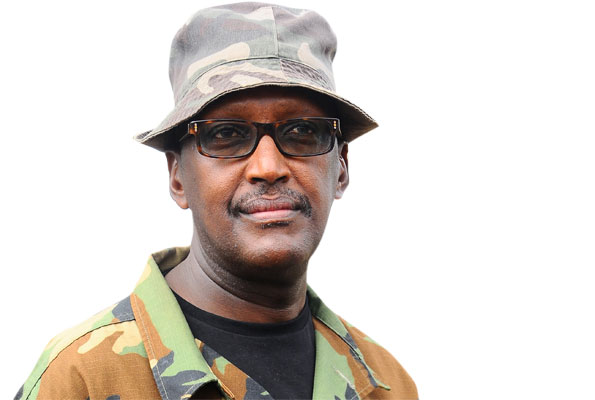
Brig Tumukunde promoted and retired from army

Lt Gen (rtd) Henry Tumukunde
Brig Henry Tumukunde

Brig Henry Tumukunde has been promoted to the rank of Lt Gen and retired from the army.

The army spokesperson, Lt Col Paddy Ankunda confirmed: “Yes, Brig Tumukunde is now a Lt Gen and retired from the army,” he said.
Brig Tumukunde who has been not deployed for the last ten years, jumps the rank of major General in the shocking promotion by president Museveni after he fell out with the regime in 2005.
He was later arrested, charged with spreading harmful propaganda and sentenced to serious caution.
Sources say he has reconciled with the regime and is headed for bigger positions in security agencies.
He joined the army in 1982 after finishing Makerere University where he was involved in the anti-Obote government activities.
Stories Continues after ad

Rwanda to host 2016 Military Games

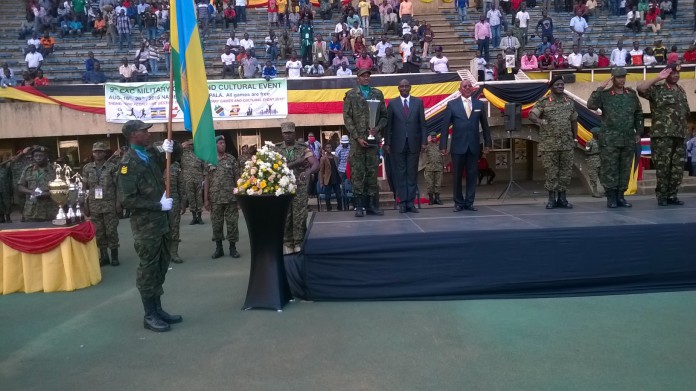
Rwanda is to host the East African Community Military games and Cultural Event next year.
The development follows recommendations made by the partner states Chiefs of Defence Forces (CDFs), who met in Kampala during the just-concluded Ninth Edition of EAC military games staged at Namboole National Stadium, on the outskirts of Kampala city.
The closing ceremony of the 11-day gala was presided over by Uganda’s Minister of State for Defence General Jeje Odong, who noted that the military games were a product of the 1998 Memorandum of Understanding (MoU) on Defence Matters, signed by Uganda, Kenya and Tanzania, the three original but seemingly distrustful members of the then EAC. The MoU was revised in 2001.
“There is no doubt that today the military in our region have made remarkable and exemplary progress in the integration of their operations and if all other sectors could borrow a leaf from the defence sector, we would realize the EAC dreams that we all cherish sooner than later,” Gen Odong said.
 
EAC Secretary General Amb Dr Richard Sezibera said he was inspired by the participants’ commitment towards the greater EAC integration.
 “Their aspirations are for an East Africa that, first and foremost, continues to be peaceful, secure and stable and whose overriding agenda is to raise productivity and savings; and attract foreign investments in order to create wealth and improve the living standards of the people”.
 
The Secretary General commended the Armed Forces for promoting the use of Kiswahili, the lingua franca for the East Africa Community and also for adopting a Regional Counter Terrorism Strategy as adopted by the EAC Council of Ministers, and sharing of Intelligence among themselves.
 
He noted that so far all the Partner States, except one, had ratified the Protocol on Cooperation on Defence and urged that Partner State to expedite the ratification process.
 
He also commended the sector for  agreeing to use Defence Technical Facilities offered for joint utilization by the Partner States namely; Muzinda Engineering Unit in the Republic of Burundi; Defence Technical College (DEFTEC) and the Defence Mobile Field Kitchen (DMFK) in the Republic of Kenya; the Kinyinya Asphalt and Concrete Plant in the Republic of Rwanda; Tanzania Automobile Technical Centre (TATC) Workshop facilities in the United Republic of Tanzania; and Uganda Mechanical Engineering College (UMEC) in the Republic of Uganda.
 
Uganda’s Chief of Defence Forces, General Katumba Wamala, who spoke on behalf of the other CDFs, said the EAC Military Games and Cultural Event was a unifying factor in the regional integration and development process.
General Wamala hailed the EAC Council of Ministers, the Sectoral Committee on Cooperation in Defence and the EAC Secretariat for the support they have continued to give to the defence sector including permission to host the games and cultural event.
 
He commended the performance of the contingents and wondered why the Military was not producing country and international champions in the various disciplines.
 
The East African Community Military Games and Cultural Event is an annual rotating event that started in 2005 when the first edition was held in Kampala, Uganda. Other editions of the games have been held in Nairobi, Kenya (2006), in Zanzibar, Tanzania (2007) and in Kampala (June 2008).
Stories Continues after ad

NRM should emulate us – FDC

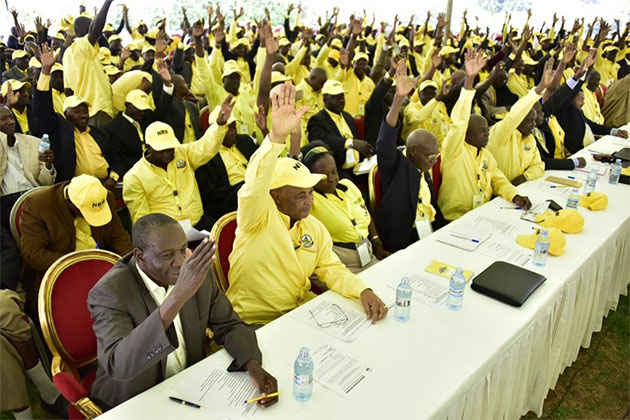
The National Resistance Movement (NRM) party aspirants for various positions will begin picking nomination forms between July 14 and 31.

The Forum for Democratic Change (FDC) has ‘advised’ the ruling National Resistance Movement (NRM) to learn from it on how to carry out free and fair elections.

Addressing the press at the party head offices in Kampala today, DRC spokesman Ibrahim Ssemujju Nganda noted that the party flag bearer campaigns are moving on well and so will the elections.

He disclosed that his party asked the NRM and other political parties to attend the flag bearer elections exercise so that they can ‘learn’ from the FDC.

“We invited the NRM so that they learn that people within the same party can compete and shake hands; we invited political parties so that they can emulate us,” Nganda, who is also the Kyadondo East MP, said.

It was not possible to reach NRM spokesperson Mary Karooro Okurut for comment, but the FDC spokesperson said that the ‘successful national campaigns’ by Col Dr Kizza Besigye and Maj Gen Mugisha Muntu, the party flag bearer candidates show that the party is strong and united.

“Apart from persuading delegates to elect them, they have also marketed the party and engaged supporters,” Ssemujju Nganda said, adding: ‘the intention is not to only build FDC but offer lessons. We congratulate ourselves on the achievement.”

He stressed that the party faces challenges but that they will overcome them and have better elections. “We will capitalize on our weaknesses to make this exercise better; we will deal with them.”

In other developments, the FDC has released a register of 1043 delegates who will vote at the delegates’ conference to be held on September 3. On the same day the delegates will also elect the 17 members of the party’s National Executive Committee (NEC).

Meanwhile, the FDC Electoral Commissioner has said the flag bearer elections process is progressing well.

Handing the election registers to Wilberforce Kyambadde, the team leader of ‘Besigye camp’ and James Kalija, the ‘Team Muntu’ leader, Mr Dan Mugarura said the exercise shows that the party is transparent.

“The registers approved by party Electoral Commission were handed to both teams; both teams agreed so that we share responsibility and these are the authentic documents we will use for the election,” said Mr Mugarura.

The Forum for Democratic Change is set to hold elections on September 3 to choose who will contest for presidency in 2016 against several contestants including incumbent President Yoweri Kaguta Museveni.

Stories Continues after ad