Stanbic Bank
Stanbic Bank
19.6 C
Kampala
Stanbic Bank
Stanbic Bank
Home Blog Page 2333

KCC – Villa ready for part 2 in Uganda Cup Final

Villa’s Steven Bengo (white) and Tom Masiko of (yellow) are set for a midfield battle
illa’s Steven Bengo (white) and Tom Masiko of (yellow) are set for a midfield battle

SC Villa v KCC FC

Another 90 minutes will be required to determine the winner of this year’s Uganda Cup.

After back and forth meetings to reach a settlement to have the abandoned final in Ntungamo, SC Villa and KCC FC agreed to replay the game at Namboole Stadium, Tuesday.

Villa president Ben Misagga had earlier said that his team will won’t play 90 minutes but only 18 minutes, with KCC furious saying they can’t play with a red card awarded to their midfielder Hakim Ssenkumba standing.

However KCC players Hakim Ssenkumba, Joseph Ochaya and Owen Kasule will miss the game after being red carded in the aborted match played in Ntungamo.

According to the match referee report compiled by referee Robert Donney the three players were given matching orders for misconduct.

The federation considered referee’s report to disqualify the three players.

Villa head coach Ibrahim Kirya however said that his team is in good shape and ready for KCC regardless of the fracas which has surrounded the final.

“Since Tuesday last week we have been training. The negotiations haven’t caught us unaware and we think we shall play well. Our target remains the same. We want to win the title,” Kirya said.

“We have been playing good but defending was bitter that is why we conceded goals during the league unnecessarily. This will be another chapter on Tuesday,” said Kirya.

While the absence of Ssenkumba, Ochaya and Kasule might be looked at a disadvantage that weakens KCC FC, their coach, Abdullah Mubiru is confident he has a pool of players who can fill the void left behind by the suspensions to lift the title they last held in 2004.

To tighten the security around the stadium, a security meeting was held on Monday at Central Police Station in Kampala to ensure that there is no more chaos.

Referee Alex Muhabi has been handed the responsibility to handle this game as center referee.

Stories Continues after ad

Jonathan Jaxta quits Record TV

Jonathan Jaxta is set for greener pasture.

Record TV presenter Jonathan Jaxta has thrown in the towel at the Industrial Area based station.

The reason for leaving is still unknown but according to sources close to Jonathan, he quit due to low pay.

“He was loaded with many duties that included production and presentation, yet his salary was low,” the source intimated.

Jonathan is among the many that have trekked away from the station, reportedly due to low payment by the management.

The young personality posted on his Facebook page;

“Wats up Friends its been quite a while no see, I luv to officially announce that my days on Record TV are over. That meanz no more Katogo or Record Tv but I luv to inform all ma friends that Another Tv has harbored me I dont wish to disclose its details for now but ill be hitting yo screen in a week luv s time.

I wish to say thank you all guys for all yo support during my years at Katogo,trust me they were so amazing.U guys gave me a chance that has taken me to places we’ve won awards and so much more..For now my studio is keeping me busy (Heaven Records) ..Feel free to Come and chek on me in Kiwatule..Keep supporting Jaxta, i promise i wont disappoint..24th June New staff on New Tv !!!just watch me!! thanks A lot t i luv u!!!”

Stories Continues after ad

Mbabazi faces police summons over ‘campaign materials’

Former Prime Minister John Patrick Amama Mbabazi faces summons if police establish that he is behind a load of electoral campaign materials found with two men.

Kampala- Former Prime Minister John Patrick Amama Mbabazi faces summons if police establish that he is behind a load of electoral campaign materials found with two men who were arrested this morning.

“We are going to charge them under the urban authority rule after finishing with our investigations,” Mr. Fred Enanga, the Police Spokesperson said adding: “We shall have to establish where they got this material from and if we discover that Mr Mbabazi has a connection to this, we shall call him in for a statement.”

The arrest of the two men, who were found driving a car with several banners, flyers and posters of Mr Mbabazi, follows another arrest earlier this morning of Robert Kabagambe, a resident of Kabale Municipality who was arrested for ‘illegally’ putting up posters of Mr.Mbabazi along the streets of Kabale town.

The campaign material was confiscated and the two men whose names were not readily established are being held at the Special Investigations Division headquarters in Kireka.

These arrests come in the wake of police warnings against ‘the planned demonstration of Mbabazi’s supporters in Kampala’, which was contained in a police statement issued yesterday.

Police said the demonstrations were illegal because they (police) were not informed as it is supposed to be, in line with the Public Order Management Act.

After a year and four months of public speculation, Mr.Mbabazi finally came out this morning to clear the air and announced his desire to stand for presidency in a YouTube video.

A long time ally of President Yoweri Museveni, Mr Mbabazi has served in high-profile government positions since 1986.

He, however, reportedly fell out with his boss at a retreat in Kyankwanzi after he belatedly signed a petition by Northern Youth MP Evelyn Anite, urging for the sole candidature of Mr Museveni as the NRM flag bearer in the 2016 elections.

And now the declaration of Mr Mbabazi’s presidential bid has caused excitement, sending the political tempo in the country to a new high.

Earlier in the week he had also caused anxiety when he delegated his vociferous sister-in-law Hope Mwesigye Ruhindi, to represent him at the formation of an opposition coalition, the Democratic Alliance, a loose coalition that is currently engaged in plans of finding a suitable joint candidate, to take on the National Resistance Movement (NRM) party flag bearer.

Police warns

Meanwhile, police has warned all political aspirants to desist from all forms of early campaigns before the Electoral Commission pronounces itself on the matter.

“The Electoral Commission came up with a clear roadmap and we want all candidates to follow the programme,” Mr.Enanga said adding: “We are asking candidates to get proper campaign plans and managers because we shall go after them when they get out of the line.”

Editorial@eagle.co.ug

Stories Continues after ad

‘The Lion and the Jewel’ play on

Over 3000 literature students will today, June 15, be able to watch one of the most interesting and popular literature plays, The Lion and the Jewel performed live at the Uganda National Theatre.

The 1959 play written by Nigerian writer Wole Sonyika is among the books prescribed by the Uganda National Examination Board (UNEB) as part of the O’ Level literature syllabus.

It will be performed by The Foursum, a theatre group that is dedicated to holding practical life skills workshops and highly interactive theatrical shows in primary and secondary schools since last year.

According to Rogers Williams Mpaata-Otako, an actor and creative director with the Foursum, staging this play will help the students understand the play better.

“Watching it performed live will help the students visualize the text and understand it deeper to enable them answer their final literature exams,” he said.

The play chronicles how Baroka, a wealthy village man fights with Lakunle, a poor but modern teacher over the right to marry a beautiful, yet somewhat egotistical village girl called Sidi, the titular Jewel.

Among the interesting cast are actors Sharon Besige, Joel Okuyo Atiku, Felix Bwanika Baale and Rogers Williams Mpaata-Otako. The play is directed by Louis Muhereza, a script writer with NTV’s Deception TV series. Over 90 schools are expected to attend.

The students will also be given a keynote introduction of the set-play by Patience Itah, a literature teacher at Kings’ College Budo.

Otako urged the public to support theatre because it compliments education.

“The public should know that there is a need to build interests and capacity of Ugandan nationals to start to use theatre as a mode of education. Through this, we will improve on our educational performances in schools.  In the end we shall have not only improved theatre but also individual creativity in schools. Therefore aiding the formation of a holistic student and learner,” he says.

According to Otako, “by engaging in such productions, we create a platform to share theatrical works and trainings in school.”

The play will also be staged at the National Theatre tomorrow and also at the Centre for Performing Arts and Culture (CEPAC) in Jinja.

janejustine.mirembe@gmail.com

Stories Continues after ad

Allow international law take its course

Sudan President Omar Hassan Ahmad al-Bashir is once again in the news, for the wrong reasons. The man who has ruled Sudan for over two decades was indicted by the International Criminal Court (ICC) in The Hague for Genocide, war crimes and crimes against humanity in 2009, for his ruthless activities for over ten years that have led to the death of over 300.000 people in the restive Darfur region in the west of his country.

And now, in a bold move and show of the rule of law, early this week on Sunday a South African court had issued a temporary order, barring the Sudanese President from leaving the Rainbow State. Bashir, the first sitting President to be indicted, was in SA for the African Union Summit and the ICC immediately swung into action, demanding that he be arrested. South Africa is a party to ICC treaty and is bound by the rules to arrest any indictee who sets foot on its soil. But some African leaders and the Government of South Africa are arguing that indicted leaders cannot be arrested while attending the AU summit.

Indeed, a lot about the operations of the ICC has been said by some African presidents, with castigation that it only focuses on ‘unfairly’ arresting African leaders (and some African warlords). There is a degree of truth in that claim. But there is also reason to further interrogate their claim because, as it turns out, majority of the oppressive regimes and leaders are to be found in Africa. Also, it is important that these guys who run ruthless governments that torture and butcher citizens with impunity must be brought to book and punished.

This is not the first time Bashir is tempting the international community in regard to his warrant of arrest and his AU antics. In 2013 human rights lawyers in Nigeria sought his arrest as he was in the country to attend the AU summit. He fled!

But in a show of defiance, and in order to travel, the reclusive leader has since been hiding behind the cover of the AU, something that should not be allowed to gain currency. It is also time the ICC seeks amendments, and strengthens its rules of engagement with members of the Assembly of State Parties (ASP) and make changes, including sanctions, to its enforcement programme.

Stories Continues after ad

Mbabazi declares presidential bid

Former Prime Minister John Patrick Amama Mbabazi has broken the loud silence on his presidential ambitions

Finally. The bombshell.

Former Prime Minister John Patrick Amama Mbabazi has broken the loud silence on his presidential ambitions, and announced that he intends to contest for party leadership in the National Resistance Movement and as its flag bearer in the forthcoming 2016 elections.

Mbabazi’s announcement comes in the wake of rife speculation by Ugandans that the former blue-eyed boy of President Yoweri Museveni had cowed from challenging his long-time political ally.

“ I come before today, to tell you that I will be seeking your vote, first within my party the NRM as its flag bearer; and later on in the whole country for President in the 2016 presidential elections,” he states.

In the typical Mbabazi flamboyance, the former premier released a statement on ‘you tube’ saying the current government under Museveni had become inept, and that the coming elections should mark the turning point in Uganda’s history.

‘It is about breathing new life into our system of government – a system that has become weak and inefficient,” Mbabazi states and adds: “This is the most important election in a generation; as a people we must choose between achieving success in the new global economy or nursing a tired nation – yesterday’s story.”

Mbabazi’s cracks with his boss started surfacing in February last year, when the former Premier hesitantly signed on a petition by Northern Youth MP Evelyn Anite, suggesting that the NRM endorse Museveni as the sole flag bearer for the party in the 2016 elections. Mbabazi, who was then Secretary General, was not impressed; he signed the petition as number 202, sparking off a bitter fall out involving Museveni’s and Mbabazi’s NRM supporters.

The ensuing period was to become one of anxiety, drawing in the two principals, Museveni and Mbabazi. The fallout out also drew in Mrs Jacqueline Mbabazi and her daughter Lanina Mbabazi, both vociferous political activists.

Not surprising then, in September last year Museveni swung the axe, firing Mbabazi from the post of Prime Minister. And in December the same year, Mbabazi was to be humiliated further when the party dumped the former premier as Secretary General, replacing him with Ms. Justin Kasule Lumumba, the then NRM Chief Whip in Parliament.

Not to be outdone, Mbabazi put on a resolute aura, charming crowds with his recalcitrant attitude. A hitherto reclusive man, he now began attending almost all functions he was invited to, sending his political rivals in overdrive, which has now culminated in the NRM threatening to take disciplinary action against him.

Mbabazi, 66, is the Kinkiizi West Member of Parliament, and has been engaged in Uganda’s politics for over four decades, at one time playing ‘hide and seek’ with the post-Independence governments of Iddi Amin, Milton Obote II and Tito Okello Lutwa. And when the NRM came to power in 1986, he was to become the first Director General of the External Security Organisation. A lawyer, previously Mbabazi has also served in cabinet, first as State Minister for Regional Cooperation, Attorney General, and later for Defence; as the first ever Minister full Minister of Defence in Yoweri Museveni’s government and, later as Minister for Security. It is from Security that Mbabazi was made Prime Minister after the 2011 presidential elections.

“As most of you know, I have dedicated many years of my life to serving the people of Uganda. My loyalty is absolute. It is to the people and Constitution of Uganda. It is to the founding principles of the NRM and the values for which I fought as a young man and for which many lost their property, liberty and even their lives,” Mbabazi, states.

It is not entirely clear when Museveni, Mbabazi and the NRM started parting ways, but in the not so distant past the former Secretary General played a leading role in trying to purge rebellious members from the party, notably making him cross paths with Lwemiyaga county MP Theodore Ssekikubo, Buyaga MP Barnabas Tinkasimiire, Kampala Central MP Muhammad Nsereko and Kinkiizi East MP Dr Chris Baryomunsi. Dr Baryomunsi has since been ‘rehabilitated’ and was recently named State Minister for Health in Charge of General Duties in the last cabinet reshuffle on March 1.

According to Mbabazi, there are eight pillars on which his presidential aspirations are hinged; reviving democracy, economic transformation, promoting equitable development, creating jobs, ensuring accountability, respect for rule of law and security of person and property, providing good health care and, enhancing quality education.

He also says that much as a lot has been gained since independence in 1962, and there is need to consolidate those gains.

“We have too much to be proud of to allow anyone to belittle those gains,” he states, in apparent reference to the leaders and system which he served for 43 years.

Mbabazi timeline

Born January 1949 in Mparo village, Rukiga County in Kabale district. He is 66 years old

Went to Makerere University and graduated with a Bachelors Degree in Law (LLB) in 1975 and later joined the Law Development Centre (LDC) for his post-graduate diploma in law obtained in 1976.

Married Jacqueline Ruhindi Mbabazi, a daughter to Canon Ruhindi and together they have six children

Worked as State Attorney during Iddi Amin’s regime

Served in Cabinet under different portfolios from 1990s to 2014

Member of Parliament for Kinkiizi West in Kanungu District

Stories Continues after ad

Mbabazi set to declare presidential bid

Ex-premier Amama Mbabazi

Kampala-Former Prime Minister Patrick Amama Mbabazi is to address a press conference this morning at Kampala Serena Hotel.
Mbabazi  is expected to launch his presidential bid but is likely to commence with the bid for the post of National Resistance Movement NRM party Chairman to challenge President Yoweri  Museveni who was endorsed as a sole candidate at Kyakwanzi by his party’s Parliamentary caucus last year.
Mr Mbabazi was dropped last year after he was accused of habouring presidential ambitions. However, Mr Museveni told the BBC in London that he sacked Mr Mbabazi because he was a divisive person causing divisions in the party.

Stories Continues after ad

Fourth Annual Progress Report on the Implementation of the National Programme of Action for the period July 2011- June 2014

President Museveni and the Uganda delegation.

Your Excellencies, Heads of State and Government,

The APR Panel of Eminent Persons,

Distinguished Ladies and Gentlemen,

At this 23rd Summit of the African Peer Review Mechanism Forum, Uganda presents its Fourth Annual Progress Report on the Implementation of the National Programme of Action for the period July 2011- June 2014”.  This is in line with the APRM objectives and processes. Since its inception 12 years ago, this mechanism has reviewed 17 countries. I, therefore, would like to take this opportunity to congratulate the Heads of States for their commitment to this home grown initiative.

Colleagues, during this period, Uganda has been Peer Reviewed three times and remarkable governance reforms have been adopted. To take one example, the APRM Programme of Action has now been integrated in our Uganda Vision 2040 and the National Development Plans. Three Annual reports have so far been presented to this Forum.

Your Excellencies, my commitment to this APRM process, therefore, remains unequivocal.

Your Excellencies, allow me to comment briefly on Uganda’s Fourth Annual Progress Report on the Implementation of the APRM Programme of Action for the period July 2011 and June 2014. In this report, the APRM National Governing Council (NGC), identifies areas of notable achievements, best practices and highlights some of the remaining governance challenges. Some of the key issues include:

1.0  Democracy and Political Governance

Achievements

  • Uganda has ratified and domesticated protocols that protect children’s rights and those promoting women rights.
  • A draft National Civic Education Policy is now in place awaiting to be approved by Cabinet.
  • The Anti-Corruption Division (ACD) of the High Court maintained an outstanding performance, completing 76.7% of the cases before it during the period 2013/14.

Challenges

  • There is still need for harmonization and strengthening of the laws and institutions that fight corruption including the Leadership Code Tribunal; there is also need for mind-set change because society, to a large extent, still glorifies the corrupt.
  • Comprehensive civic education as envisaged by the Constitution has not yet been realized.

2.0  Economic Governance and Management

Achievements

  • Uganda has focused on compliance with the COMESA and EAC protocols with a very busy schedule on the legislative calendar to harmonize national laws to the EAC protocols.
  • Macroeconomic management remained on course with inflation reducing from a high of 30.6% in November 2011 to 2.9% in June 2014 and, eventually, averaging at 12.1%. This is despite the fact that the world economy was going through the credit crunch during this reporting period and our economy remained resilient. The Economic growth rate averaged 4.1% against target of 7.2% for the National Development Plan.

Challenges

  • The absence of strong anti-counterfeit legislation in Uganda, is leading to flooding of the Ugandan market with counterfeit goods, which undermines the efforts towards manufacturing.
  • Domestic government borrowing has cut back lending by banks for private investment in favour of safer alternatives of investing in government securities.

3.0  Corporate Governance

Achievements

  • Uganda continues to register progress in attracting Foreign Direct Investment (USD 1,134 million in 2013).
  • Uganda has benchmarked a number of internationally accepted corporate governance best practices and codes and standards which auger well for making the country an attractive investment destination.

Challenges

  • There is limited access to finance for investment due to high interest rates.  This is due to factors that are not clear to me because inflation has been low all these years.

Some years ago, the IMF came and gave me a lecture that the interest rates were high in Uganda because our Government Commercial Bank, UCB, which was making profit that time, was corrupt and inefficient. Why was it so? It was so because, according to them, UCB was giving improperly evaluated loans which end up not being paid. Those that pay, therefore, end up paying for the ones that do not pay. That is why the interest rates end up being high. I was a good student and I privatized the UCB. However, the interest rates are still high as the report says in spite of the inflation rate being low all these years. We are, therefore, looking for a new medicine for the interest rates. The IMF medicine has not worked.

4.0  Socio Economic Development

Achievements

  • Investment in rural electrification has been intensified with connection of district headquarters to the national grid prioritized.
  • The volume of paved roads increased from 16% in 2011/12 to 18.1% in 2013/14. In 2012/13, a total of 205.6 was done and another 305km in 2013/14.

Challenges

  • The absence of a body to oversee the implementation of key strategic projects contained in the Uganda Vision 2040.
  • The share of commercial bank loans to agriculture remains low which makes transformation of the rural economy difficult to achieve.
  • Ugandan youth remain uncompetitive because of the low number of years they stay in school and lack of appropriate industry skills.
  • Best Practices
  • Uganda’s exemplary role in helping to stabilize the region, including its role in Somalia and South Sudan;
  • Uganda’s handling of refugees it hosts from the region has been hailed as exemplary.  We handle the refugees well because we do not believe in the colonial borders. We cannot accept that the French, the English, etc. could come and say these are Congolese, these are Ugandans, these are South Sudanese, these are Tanzanians, these are Kenyans, etc. Yes, we recognize that reality but we also know that these people are our relatives. They are Africans. They are part of the Bantu groups that are found in Uganda. They are part of the Nilotic groups that are found in Uganda. They are part of the Cushitic groups that are found in Uganda. Uganda, therefore, is their home.
  • Community policing being implemented by the Uganda Police Force contributing to peace and security.
  • Government’s commitment to a tight monetary policy and wealth creation programmes has seen Uganda’s income poverty levels reduce from 22% to 19.7% in the reporting period.
  • The management of the oil and gas process so far, such as setting up institutions to manage production and revenue utilization; building Ugandan capacities from policy, analysis, technical skills and deliberate effort to collaborate with non-state actors. The report is praising our petroleum and gas policy because we have said that our oil money will never be used to import perfumes and wines. We have told our daughters and our wine consumers that they will have to use other monies for those purposes but not the oil money. The oil money will be for infrastructure (the electricity, the railways, etc.) and for scientific research and innovation.
  • The establishment of a gender e-Resource Centre in 2012 and having it hosted by the National Women’s Council under the Ministry of Gender, Labour and Social Development is a good practice.
  • Recommendations

Excellencies, the Report makes some of the following recommendations:

  • Government is urged to complete the process of ratification and domestication of the outstanding protocols. Where these conflict with national values, Uganda should present its case to the APRM Forum for further deliberation.
  • To enhance professional journalism and media reportage, Government should put in place an institute for training journalists beyond the university courses, particularly in investigative and financial reporting and to practice responsible journalism. As of now, somebody just declares himself a journalist and starts writing without any skills.
  • In order to promote macro-economic policies that support sustainable development, government should take a deliberate effort to plan and implement the widening of the tax base in line with the needs for financing the national development plans.
  • The Government is urged to put in place strong and enforceable anti-counterfeit legislation to promote and protect domestic manufacturing.
  • Government is urged to intervene over the high interest rates and spread between what commercial banks offer as interest on savings and the interest they charge on loans.
  • The government is urged to urgently put in place a mechanism to oversee the implementation of key strategic projects contained in Vision 2040 as some are regional in nature and require high level coordination across government and Non-State Actors.
  • The moratorium on creation of new districts and constituencies should remain. The panelists do not understand my problems. I create districts and constituencies, sometimes, so as to effect internal emancipation of some of our peoples. The colonialists, who did not understand our society, would lump certain tribes together in one administrative unit. Since our people, sometimes, do not vote politically but ethnically, it means the smaller tribes will be marginalized in politics, administration, etc. Hence, these administrative and representation units. They are for internal emancipation.

Policies and plans in Uganda are aimed at social-economic transformation of Uganda from a traditional, quasi-feudal, pre-industrial society to a high income, middle class and skilled class society, eventually, evolving into a high technology knowledge society. Right from the outset, we identified ten strategic bottlenecks:

  • Ideological disorientation (sectarianism of tribe and religion as well as gender chauvinism).
  • The mistake of interfering with the private sector like when Idi Amin uprooted the Indian Community from Uganda in 1972; yet these were the entrepreneurial class. Some people wonder why the Asian countries such as South Korea, Singapore, etc., which had no resources, developed faster than the African countries such as Uganda which had everything. Persecuting the private sector was one of the reasons.
  • The problem of an under-developed infrastructure (electricity, roads, the railway, the telephone, the ICT back bone etc.).
  • The problem of a weak state, especially the Army, the Police, etc.
  •   The under-development of the human resource (lack of education and poor health).
  • The problem of a fragmented African market on account of colonialism – when you produce a product but nobody buys or you do not get enough buyers, you cannot prosper and expand your business.
  • Lack of industrialization – the modern slavery of exporting raw-materials where we get only 10% of the products we sell and export jobs to other continents.
  • The under-development of services sector (banking, insurance, tourism, etc.).
  • The under-development of agriculture; and
  • The attack on democracy.

Therefore, when Uganda is being reviewed by our peers, it is important to see how far Uganda has gone in eliminating these bottlenecks. Out of the 10, the following bottlenecks have been seriously tackled:

  • Ideological disorientation – we treat with contempt and do not tolerate for a moment those who promote sectarianism and gender chauvinism; that is why Uganda’s record on women emancipation is excellent and there is peace in the whole Country.
  • The private sector has been emancipated from interference by the state; that is why our economy has been growing at the rate of 6.6% per annum for the last 29 years, the bottlenecks notwithstanding; the private sector has played a crucial role in that recovery.
  • Working with our brothers and sisters in the EAC and COMESA areas to end the fragmentation of the African market to that extent; our entrepreneurs have a bigger market to sell to and we can negotiate more credibly with other partners in the World.
  • The massive free education programme for Primary and Secondary Schools, the expanding of tertiary and University education, massive immunization programmes have produced a more educated and healthier generations; the literacy rate is now 75%; the struggle now is to skill these educated people and create jobs for them.
  • On account of defeating the ideological disorientation, we have been able to create a strong State, starting with a revolutionary Army, the UPDF, that has even contributed to peace in the neighbouring countries.
  • Democracy was restored even when we were still in the resistance.
  • We have been lagging behind in the area of infrastructure because, initially, we depended on external financing for infrastructure development; since 9 years ago, however, we created the Government funded Energy and Road funds; these have enabled us to catch up on infrastructure development; for the first time in the history of Uganda, Uganda is under taking massive road and electricity development; the aim of this effort is to lower costs of doing business in Uganda; on this, we are adding a modern Standard Gauge Railway.
  • On the issue of ending slavery of exporting raw materials, we are beginning to achieve progress in the area of value addition and industrialization by either implementing plans to add value to milk, meat, coffee, cotton, tea, minerals, etc. or having such plans in the pipeline.
  • On the side of agriculture, the problem has been so many of our people continuing to engage in just subsistence farming – growing only food crops or rearing livestock for subsistence; we are now in the process of universal commercialization of agriculture (small, medium and large scale).
  • The services sector is growing at the rate of 10.2% per annum.

Therefore, Uganda is finally waking up to embrace and understand the purpose of our vision. Uganda will become a lower middle income by 2020 and a high middle income by the year 2040. The policies we pursue are not the end in themselves. Policies are a means to an end. The end is the total social-economic transformation of Uganda to become a first World country in the next 3 decades if not earlier.

Colleagues, the details of the progress on implementation can be found in the copies of Uganda’s Fourth Annual Progress Report that has been distributed to you.

I pledge my government’s commitment to ensure that issues identified in this report are addressed within our existing legal framework and available resources. We are also keen to learn the best practices from member countries. Finally, I would like to inform you that we have started the process of the Second Cycle of the Country Self-Assessment.

I thank you.

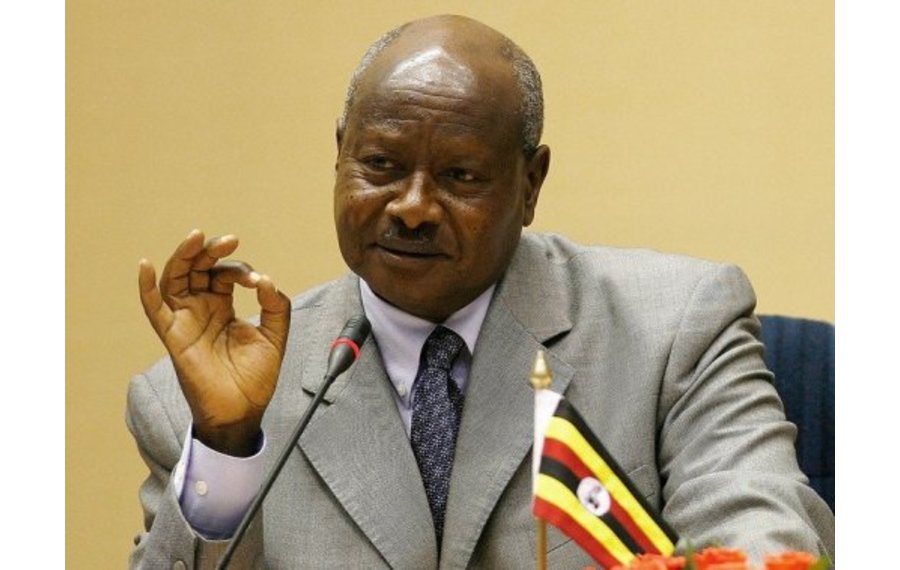
Yoweri Kaguta Museveni

PRESIDENT OF THE REPUBLIC OF UGANDA
Johannesburg, South Africa
13th June 2015

Stories Continues after ad

To gain the people’s trust parties must show signs of political maturity

Forum for Democratic Change (FDC) meet

The National Delegates Conference of the Forum for Democratic Change (FDC) can be described as a success, given the level of maturity and tolerance exhibited by those who contested for party positions yesterday.

In the past the FDC elections have been a show of intolerance, back-stabbing and malice, making the biggest opposition party in Uganda a disreputable organization, unable to provide alternative guidance to the voters. World over opposition parties are supposed to hold the respective governments accountable to the people and also act like a government-in-waiting, initiating policies that are relevant to the electorate. This therefore, means that their personnel should be above reproach, while the party’s integrated activities are supposed to be credible.

But before the just-concluded FDC elections what we have been seeing is the opposite; internal in-fighting and lack of party cohesion at almost all levels of top leadership of the Official Opposition, almost culminating into stagnation of the party activities.

Indeed, to better understand the problems that dog Uganda’s opposition parties, a sneak peek into the recent elections of the Uganda Peoples Congress will reveal the rot that characterizes most other parties. Even before the UPC delegates conference, there were obvious divisions, with the most vile pitting former president Dr Olara Otunnu against president-elect Jimmy Akena and party stalwart David Pulkol.

In the Democratic Party, the situation is no better; there are in-fights at almost all levels of leadership, with claims that the party leader Norbert Mao had to abandon office

Also, the once-bitter-but-now-receding divisions in the ruling National Resistance Movement (NRM) party that pitted the Chairman against his erstwhile Secretary General should be of concern to the populace since it is the organization in charge of the day-to-day affairs of state.

Such scenarios beg the questions: How can a party with a Constitution to boot fail to resolve internal differences? Secondly, how can party members simply look on as individual egos derail the activities of a party?

It is only genuine answers to these questions that can provide a glimmer of hope for political pluralism in Uganda.

Stories Continues after ad

Bebe Cool gets MTV MAMA nomination

Bebe Cool
CHIDED? Musician Bebe Cool
Bebe Cool
Bebe Cool

Ugandan Singer Bebe Cool has received a nomination in the Video of the Year category for his song “Love You Everyday’’,

The revelation was made by MTV Base at the 2015 MTV MAMA nomination list at a star-studded reception in Johannesburg last night.

Celebrating the extraordinary evolution of African achievement, this year’s MAMA recognises contemporary artistes and trailblazers in a range of music and lifestyle categories including Song of the Year, Video of the Year, Best Collaboration and Personality of the Year.

A total of 70 nominees were unveiled at the event, to vie for awards in 13 different categories. Nominees for additional categories, including the MTV Base Leadership Award and Best International Act, will be revealed at a later date.

Other competitors in the Video of the Year category include Davido Ft Uhuru & DJ Buckz – The Sound South Africa Nigeria, Prime Circle – Doors / South Africa, Riky Rick – Nafukwa South Africa, Seyi Shay Ft Wizkid – Crazy / Nigeria.

Meanwhile, an elated Bebe Cool posted on his Facebook thanking the media and fans who made it possible for him to receive the prestigious nomination.

‘’To the glory of Allah and his mercy, today is a great morning for me and my fellow East Africans, who were nominated in Africa’s most prestigious awards,MAMA.I would like to congratulate my fellow East African artistes…Sauti Soul, Diamond Platinum,Vanessa Mdee upon this height.
I therefore call on all East Africa’s music fans, media houses, artistes, to combine into one musical army Team East Africa to vote for all our nominated artistes in their categories because we all r in different categories and it would make a lot of sense to have the four accolades come to East Africa.
Gagamel family let’s lead by example and start voting for all nominated East Africans.#TeamUganda,#TeamKenya,#TeamTanzania,#TEAMEASTAFRICA
I would also like to call upon all Ugandan artists and their teams to join me in the fight to bring this accolade back home as we have had Blue 3,Navio,Radio n Weasel nominated before but they did not bring the accolade back home because we did not combine forces for the good of the Ugandan music industry.
Today hard work gives us another chance, let’s go Uganda. follow this link http://mama.mtv.com/voting/to vote for Love you Everyday in category of Video of the Year at MTV Africa music awards 2015 n other East African artistes that av been nominated.
FOR GOD N MY CONTINENT.’’

Stories Continues after ad