Matthew Willsher, Chief Executive Officer, Etisalat Nigeria.
Fiction writers across Africa stand a chance to win US$15,000, the biggest prize on offer for the Etisalat Prize for Literature 2015.
According to a release, the first-ever prize to celebrate debuting African writers of fiction is sponsored by Nigerian telecommunications giant, Etisalat.
Entries for the competition, now in its third year, began on June 18 and will close on August 27 and
, says the prize for Literature is a platform to discover ‘new creative writing talents out of the African continent’.
According to Willsher, the first two editions were largely successful, with Ms NoViolet Buluwayo winning the maiden one while Songoziwe Mahlangu won the second edition after penning the novels We Need New Names and Penumbra, respectively.
English Professor Ato Quayson, and writers Molara Wood and Zukiswa Wanner are the judges and the trio will develop a list of nine novels and shortlist three, from which the winner will be determined.
Quayson is also the first Director of the Centre of the Diaspora Studies at the University of Toronto, while Ms Wood and Wanner are journalist and author, respectively, with the latter having written a novel, the Madams and Men of the South.
The winner will receive a ‘three-city book tour’ and a fellowship at the University of East Anglia under the mentorship of award-winning author, Professor Giles Foden, while two other shortlisted writers will receive a sponsored two-city book tour to promote their books.
‘The Etisalat Prize for Literature also supports publishers by purchasing 1000 copies of the shortlisted books for distribution within the continent,’ the release states and adds ‘Entries must be a writer’s first work of fiction of over 30,000 words, and published within the last 24 months’.
South African-President Jacob Zuma was discharged from hospital today Sunday July 19, 2015 after undergoing a scheduled procedure the previous day to remove gallstones, the presidency said.
“Doctors are pleased with the outcome of the operation. The President will spend the next few days resting and recuperating at home,” a statement from Zuma’s office said.
The presidency said on Saturday the gallstones were discovered about two months ago during a routine medical check-up.
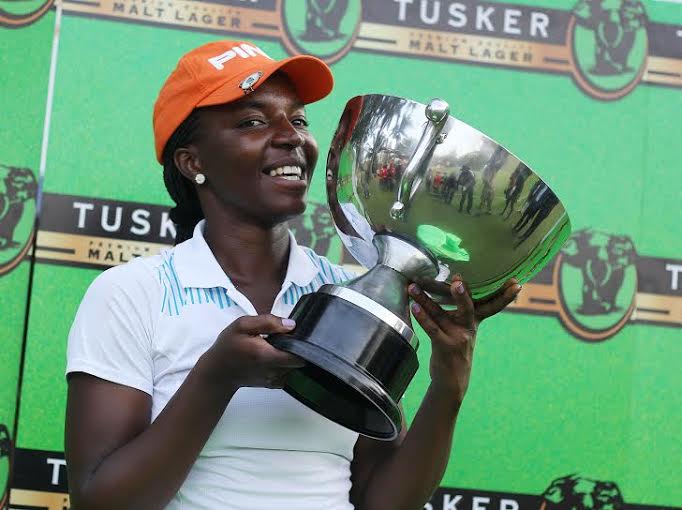
With the setting sun’s rays striking through tress to the 18th fairway, a finely poised Flavia Namakula neatly putted to not only defend but also seal her fourth Tusker Malta Uganda Ladies Golf Open title at par-72 Kitante course on Saturday.
Having trailed eventual runner-up Eva Magala on Day One and leveled on Day Two, the victory broken a lot of sweat from the 29-year-old. No wonder Namakula first jubilation was a right-hand fist pump.
“It wasn’t easy, I had to keep clam; Eva played well,” a blissful Namakula said.
Taking a one-shot lead on the back-9, Namakula’s lead was under threat from the 10th hole shot as she settled for bogey. Eva Magala who was breathing down her neck sunk her shot for par to level the scores.
The par 4 11th was just was disastrous for Namakula who conceded a drop shot and with it a double bogey. Ea Magala did not do her chase and chance any favours; she settled for a bogey that putt her just one shot behind.
The 12th hole would offer Namakula’s no reprieve as her tee shot landed into the trees on the left of the fair way. Her approach on the green was not so close to the pin. She settled for bogey as Magala run through with ease for Par.
Namakula however recovered at the 13th; sinking a birdie, with her closest challenger, Magala faulted on the fairway for bogey, as the latter took a two-shot lead which she maintained until the 15hole where she pulled away with par.
Magala bogeyed and whispers in the gallery crowned the UPDF sergeant champion as two-horse race was over as a contest
“She just upped the ante on the 16th, 17th, and we couldn’t stay with her,” said Magala, the runners-up.
Namakula being every pundit’s favourite, the handicap one golfer wasn’t in the best form. She played second fiddle to Irene Nakalembe at the Entebbe Ladies Open (March 7) and South Africa Amateur Open Ladies Championship in Glendower (April 19).
She also finished a distant fourth at the Zambia Ladies Open in Lusaka three weeks ago.
Up next is the highly billed 73rd Amateur Open that has also attracted 27 new entries raising its participation to 90 golfers with the official practice on Tuesday before teeing off on Wednesday (July 22-25).
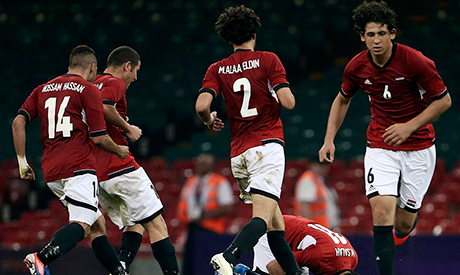
Uganda Kobs faces an uphill task coming into the return leg of the third round for the CAF U-23 Championship qualifier after a first leg 4-0 loss to Egypt at the Al Borg El Arba stadium in Alexandria on Saturday night.
Kobs fell to an early strike from Arab Contractors’ forward, Muhammed Salem just after 9 minutes and never recovered.
The Ugandan head coach Milutin ‘Micho’ Sredojevic sensing danger called for the first change of the game – introducing Erisa Ssekisambu for an ineffective Tadeo Lwanga minutes after the half hour mark.
Egypt had a change themselves with Shokry Nagiub replacing goal scorer, Salim Muhammed after the latter pulled a ham string with three minutes to end of the opening half.
ENPPI winger, Ahmed Refaat replaced Anderlecht target Mahmoud ‘Trezeguet’ after 65 minutes.
Refaat’s impact was immediately felt as he assisted in the Young Pharoah’s goals.
Ahly duo of Ramadan Sobhy and Mahmoud Trezeguet combined for the second.
John Ssemazzi was later introduced for the towering forward Hassan Fahad Muhammed but the visitors’ quest for the break through fell on dead end.
The Pharaohs further punished the Kobs’ reluctance with another well taken strike to give the Ugandans a mountain task coming into the second leg, Saleh Gomaa chipped for Muhammed Kahraba who rounded off the advancing Salim Jamal (goalkeeper) and slotted the ball into an empty net.
The return leg shall be played after a fortnight on August 1, 2015 at Nakivubo stadium.
A tattoo on the knuckles of a Klansman reads “Love” as he participates with members of the Nordic Order Knights and the Rebel Brigade Knights, groups that both claim affiliation with the Ku Klux Klan, in a cross lighting ceremony on a fellow member’s property in Henry… REUTERS/JOHNNY MILANO.
A Ku Klux Klan chapter and an African-American group plan overlapping demonstrations today Saturday 18,2015 outside the South Carolina State House, where state officials removed the Confederate battle flag last week.
Governor Nikki Haley, who called for the flag’s removal from the State House grounds after the killing of nine African-Americans in a Charleston church last month, urged South Carolinians to steer clear of the Klan rally.
“Our family hopes the people of South Carolina will join us in staying away from the disruptive, hateful spectacle members of the Ku Klux Klan hope to create over the weekend and instead focus on what brings us together,” Haley said in a statement posted to her Facebook page.
The Charleston shooting rekindled a controversy that has long surrounding the Confederate flag. A website linked to suspected gunman Dylann Roof, a 21-year-old white man, contained a racist manifesto and showed him in photos posing with the flag.
Opponents see its display as a painful reminder of the South’s pro-slavery past, while supporters see it as an honorable emblem of Southern heritage.
The Loyal White Knights of the Ku Klux Klan, a Pelham, North Carolina-based chapter that bills itself as “the largest Klan in America,” expects about 200 people to attend its demonstration, planned from 3 p.m. to 5 p.m.
Calls to the chapter, one of numerous unconnected extremist groups in the United States that have adopted the Klan name, were not immediately returned.
The Klan, long known for its conical hats and cross burnings, traces its roots back to the years after the South’s defeat in the American Civil War of 1861-65. In general, modern chapters are stridently opposed to racial integration.
A voice message on the chapter’s phone line said its members are “standing up for our Confederate history and all the Southerners who fought and died against federal tyranny. Our government is trying to erase white culture and our heritage right out of the pages of our history books.”
A Jacksonville, Florida, group called Black Educators for Justice expects a crowd of about 300 for its rally, planned for noon to 4 p.m. The group is run by James Evans Muhammad, a former director of the New Black Panther Party.
The Black Educators group wants to highlight continuing racial inequality, which Muhammad says endures despite the Confederate flag’s removal.
“The flag coming down is not progress. It is an illusion of progress,” he told the State newspaper in Columbia.
Muhammad said his group would not interfere with the Klan rally during the hour the two groups occupy the north side of the Capitol building.
A Ku Klux Klan chapter and an African-American group plan overlapping demonstrations today Saturday 18,2015 outside the South Carolina State House, where state officials removed the Confederate battle flag last week.
Governor Nikki Haley, who called for the flag’s removal from the State House grounds after the killing of nine African-Americans in a Charleston church last month, urged South Carolinians to steer clear of the Klan rally.
“Our family hopes the people of South Carolina will join us in staying away from the disruptive, hateful spectacle members of the Ku Klux Klan hope to create over the weekend and instead focus on what brings us together,” Haley said in a statement posted to her Facebook page.
The Charleston shooting rekindled a controversy that has long surrounding the Confederate flag. A website linked to suspected gunman Dylann Roof, a 21-year-old white man, contained a racist manifesto and showed him in photos posing with the flag.
Opponents see its display as a painful reminder of the South’s pro-slavery past, while supporters see it as an honorable emblem of Southern heritage.
The Loyal White Knights of the Ku Klux Klan, a Pelham, North Carolina-based chapter that bills itself as “the largest Klan in America,” expects about 200 people to attend its demonstration, planned from 3 p.m. to 5 p.m.
Calls to the chapter, one of numerous unconnected extremist groups in the United States that have adopted the Klan name, were not immediately returned.
The Klan, long known for its conical hats and cross burnings, traces its roots back to the years after the South’s defeat in the American Civil War of 1861-65. In general, modern chapters are stridently opposed to racial integration.
A voice message on the chapter’s phone line said its members are “standing up for our Confederate history and all the Southerners who fought and died against federal tyranny. Our government is trying to erase white culture and our heritage right out of the pages of our history books.”
A Jacksonville, Florida, group called Black Educators for Justice expects a crowd of about 300 for its rally, planned for noon to 4 p.m. The group is run by James Evans Muhammad, a former director of the New Black Panther Party.
The Black Educators group wants to highlight continuing racial inequality, which Muhammad says endures despite the Confederate flag’s removal.
“The flag coming down is not progress. It is an illusion of progress,” he told the State newspaper in Columbia.
Muhammad said his group would not interfere with the Klan rally during the hour the two groups occupy the north side of the Capitol building.
A Ku Klux Klan chapter and an African-American group plan overlapping demonstrations today Saturday 18,2015 outside the South Carolina State House, where state officials removed the Confederate battle flag last week.
Governor Nikki Haley, who called for the flag’s removal from the State House grounds after the killing of nine African-Americans in a Charleston church last month, urged South Carolinians to steer clear of the Klan rally.
“Our family hopes the people of South Carolina will join us in staying away from the disruptive, hateful spectacle members of the Ku Klux Klan hope to create over the weekend and instead focus on what brings us together,” Haley said in a statement posted to her Facebook page.
The Charleston shooting rekindled a controversy that has long surrounding the Confederate flag. A website linked to suspected gunman Dylann Roof, a 21-year-old white man, contained a racist manifesto and showed him in photos posing with the flag.
Opponents see its display as a painful reminder of the South’s pro-slavery past, while supporters see it as an honorable emblem of Southern heritage.
The Loyal White Knights of the Ku Klux Klan, a Pelham, North Carolina-based chapter that bills itself as “the largest Klan in America,” expects about 200 people to attend its demonstration, planned from 3 p.m. to 5 p.m.
Calls to the chapter, one of numerous unconnected extremist groups in the United States that have adopted the Klan name, were not immediately returned.
The Klan, long known for its conical hats and cross burnings, traces its roots back to the years after the South’s defeat in the American Civil War of 1861-65. In general, modern chapters are stridently opposed to racial integration.
A voice message on the chapter’s phone line said its members are “standing up for our Confederate history and all the Southerners who fought and died against federal tyranny. Our government is trying to erase white culture and our heritage right out of the pages of our history books.”
A Jacksonville, Florida, group called Black Educators for Justice expects a crowd of about 300 for its rally, planned for noon to 4 p.m. The group is run by James Evans Muhammad, a former director of the New Black Panther Party.
The Black Educators group wants to highlight continuing racial inequality, which Muhammad says endures despite the Confederate flag’s removal.
“The flag coming down is not progress. It is an illusion of progress,” he told the State newspaper in Columbia.
Muhammad said his group would not interfere with the Klan rally during the hour the two groups occupy the north side of the Capitol building.
A Ku Klux Klan chapter and an African-American group plan overlapping demonstrations today Saturday 18,2015 outside the South Carolina State House, where state officials removed the Confederate battle flag last week.
Governor Nikki Haley, who called for the flag’s removal from the State House grounds after the killing of nine African-Americans in a Charleston church last month, urged South Carolinians to steer clear of the Klan rally.
“Our family hopes the people of South Carolina will join us in staying away from the disruptive, hateful spectacle members of the Ku Klux Klan hope to create over the weekend and instead focus on what brings us together,” Haley said in a statement posted to her Facebook page.
The Charleston shooting rekindled a controversy that has long surrounding the Confederate flag. A website linked to suspected gunman Dylann Roof, a 21-year-old white man, contained a racist manifesto and showed him in photos posing with the flag.
Opponents see its display as a painful reminder of the South’s pro-slavery past, while supporters see it as an honorable emblem of Southern heritage.
The Loyal White Knights of the Ku Klux Klan, a Pelham, North Carolina-based chapter that bills itself as “the largest Klan in America,” expects about 200 people to attend its demonstration, planned from 3 p.m. to 5 p.m.
Calls to the chapter, one of numerous unconnected extremist groups in the United States that have adopted the Klan name, were not immediately returned.
The Klan, long known for its conical hats and cross burnings, traces its roots back to the years after the South’s defeat in the American Civil War of 1861-65. In general, modern chapters are stridently opposed to racial integration.
A voice message on the chapter’s phone line said its members are “standing up for our Confederate history and all the Southerners who fought and died against federal tyranny. Our government is trying to erase white culture and our heritage right out of the pages of our history books.”
A Jacksonville, Florida, group called Black Educators for Justice expects a crowd of about 300 for its rally, planned for noon to 4 p.m. The group is run by James Evans Muhammad, a former director of the New Black Panther Party.
The Black Educators group wants to highlight continuing racial inequality, which Muhammad says endures despite the Confederate flag’s removal.
“The flag coming down is not progress. It is an illusion of progress,” he told the State newspaper in Columbia.
Muhammad said his group would not interfere with the Klan rally during the hour the two groups occupy the north side of the Capitol building.
A Ku Klux Klan chapter and an African-American group plan overlapping demonstrations today Saturday 18,2015 outside the South Carolina State House, where state officials removed the Confederate battle flag last week.
Governor Nikki Haley, who called for the flag’s removal from the State House grounds after the killing of nine African-Americans in a Charleston church last month, urged South Carolinians to steer clear of the Klan rally.
“Our family hopes the people of South Carolina will join us in staying away from the disruptive, hateful spectacle members of the Ku Klux Klan hope to create over the weekend and instead focus on what brings us together,” Haley said in a statement posted to her Facebook page.
The Charleston shooting rekindled a controversy that has long surrounding the Confederate flag. A website linked to suspected gunman Dylann Roof, a 21-year-old white man, contained a racist manifesto and showed him in photos posing with the flag.
Opponents see its display as a painful reminder of the South’s pro-slavery past, while supporters see it as an honorable emblem of Southern heritage.
The Loyal White Knights of the Ku Klux Klan, a Pelham, North Carolina-based chapter that bills itself as “the largest Klan in America,” expects about 200 people to attend its demonstration, planned from 3 p.m. to 5 p.m.
Calls to the chapter, one of numerous unconnected extremist groups in the United States that have adopted the Klan name, were not immediately returned.
The Klan, long known for its conical hats and cross burnings, traces its roots back to the years after the South’s defeat in the American Civil War of 1861-65. In general, modern chapters are stridently opposed to racial integration.
A voice message on the chapter’s phone line said its members are “standing up for our Confederate history and all the Southerners who fought and died against federal tyranny. Our government is trying to erase white culture and our heritage right out of the pages of our history books.”
A Jacksonville, Florida, group called Black Educators for Justice expects a crowd of about 300 for its rally, planned for noon to 4 p.m. The group is run by James Evans Muhammad, a former director of the New Black Panther Party.
The Black Educators group wants to highlight continuing racial inequality, which Muhammad says endures despite the Confederate flag’s removal.
“The flag coming down is not progress. It is an illusion of progress,” he told the State newspaper in Columbia.
Muhammad said his group would not interfere with the Klan rally during the hour the two groups occupy the north side of the Capitol building.
A Ku Klux Klan chapter and an African-American group plan overlapping demonstrations today Saturday 18,2015 outside the South Carolina State House, where state officials removed the Confederate battle flag last week.
Governor Nikki Haley, who called for the flag’s removal from the State House grounds after the killing of nine African-Americans in a Charleston church last month, urged South Carolinians to steer clear of the Klan rally.
“Our family hopes the people of South Carolina will join us in staying away from the disruptive, hateful spectacle members of the Ku Klux Klan hope to create over the weekend and instead focus on what brings us together,” Haley said in a statement posted to her Facebook page.
The Charleston shooting rekindled a controversy that has long surrounding the Confederate flag. A website linked to suspected gunman Dylann Roof, a 21-year-old white man, contained a racist manifesto and showed him in photos posing with the flag.
Opponents see its display as a painful reminder of the South’s pro-slavery past, while supporters see it as an honorable emblem of Southern heritage.
The Loyal White Knights of the Ku Klux Klan, a Pelham, North Carolina-based chapter that bills itself as “the largest Klan in America,” expects about 200 people to attend its demonstration, planned from 3 p.m. to 5 p.m.
Calls to the chapter, one of numerous unconnected extremist groups in the United States that have adopted the Klan name, were not immediately returned.
The Klan, long known for its conical hats and cross burnings, traces its roots back to the years after the South’s defeat in the American Civil War of 1861-65. In general, modern chapters are stridently opposed to racial integration.
A voice message on the chapter’s phone line said its members are “standing up for our Confederate history and all the Southerners who fought and died against federal tyranny. Our government is trying to erase white culture and our heritage right out of the pages of our history books.”
A Jacksonville, Florida, group called Black Educators for Justice expects a crowd of about 300 for its rally, planned for noon to 4 p.m. The group is run by James Evans Muhammad, a former director of the New Black Panther Party.
The Black Educators group wants to highlight continuing racial inequality, which Muhammad says endures despite the Confederate flag’s removal.
“The flag coming down is not progress. It is an illusion of progress,” he told the State newspaper in Columbia.
Muhammad said his group would not interfere with the Klan rally during the hour the two groups occupy the north side of the Capitol building.
A Ku Klux Klan chapter and an African-American group plan overlapping demonstrations today Saturday 18,2015 outside the South Carolina State House, where state officials removed the Confederate battle flag last week.
Governor Nikki Haley, who called for the flag’s removal from the State House grounds after the killing of nine African-Americans in a Charleston church last month, urged South Carolinians to steer clear of the Klan rally.
“Our family hopes the people of South Carolina will join us in staying away from the disruptive, hateful spectacle members of the Ku Klux Klan hope to create over the weekend and instead focus on what brings us together,” Haley said in a statement posted to her Facebook page.
The Charleston shooting rekindled a controversy that has long surrounding the Confederate flag. A website linked to suspected gunman Dylann Roof, a 21-year-old white man, contained a racist manifesto and showed him in photos posing with the flag.
Opponents see its display as a painful reminder of the South’s pro-slavery past, while supporters see it as an honorable emblem of Southern heritage.
The Loyal White Knights of the Ku Klux Klan, a Pelham, North Carolina-based chapter that bills itself as “the largest Klan in America,” expects about 200 people to attend its demonstration, planned from 3 p.m. to 5 p.m.
Calls to the chapter, one of numerous unconnected extremist groups in the United States that have adopted the Klan name, were not immediately returned.
The Klan, long known for its conical hats and cross burnings, traces its roots back to the years after the South’s defeat in the American Civil War of 1861-65. In general, modern chapters are stridently opposed to racial integration.
A voice message on the chapter’s phone line said its members are “standing up for our Confederate history and all the Southerners who fought and died against federal tyranny. Our government is trying to erase white culture and our heritage right out of the pages of our history books.”
A Jacksonville, Florida, group called Black Educators for Justice expects a crowd of about 300 for its rally, planned for noon to 4 p.m. The group is run by James Evans Muhammad, a former director of the New Black Panther Party.
The Black Educators group wants to highlight continuing racial inequality, which Muhammad says endures despite the Confederate flag’s removal.
“The flag coming down is not progress. It is an illusion of progress,” he told the State newspaper in Columbia.
Muhammad said his group would not interfere with the Klan rally during the hour the two groups occupy the north side of the Capitol building.
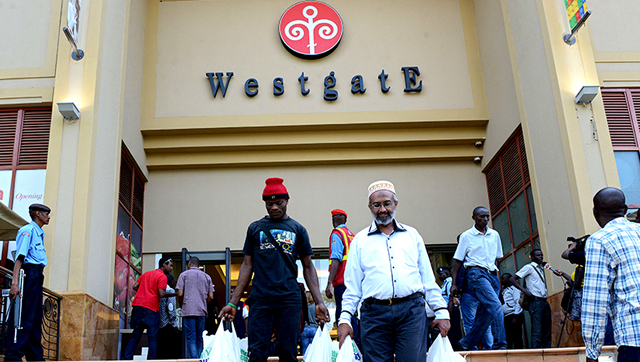
Business resumed well today as the mall opened up for business.
Business resumed well today as the mall opened up for business.
The Westgate shopping mall in Nairobi, in which 67 people were killed in an attack by al-Shabab militants, has reopened.
In September 2013, gunmen entered the mall and fired on shoppers, leading to a siege over four days.
About half the shops are opening again after an extensive refurbishment.
The reopening comes a week before US President Barack Obama visits Nairobi – a sign, the city’s governor said, that the capital was safe.
“Exactly 22 months ago we had one of the saddest days in Kenyan history,” Governor Evans Kidero said.
“As a nation we cried, we mourned, but Westgate is back.”
“Today we are excited because we are back on our feet, and we can convince the world that terrorism is not bringing us down,” said Ben Mulwa, one survivor of the siege.
But Sunil Sachdeva, an orthodontist who ran a practice inside the mall with his wife, told the BBC he could not return to work there.
“I didn’t leave the country but going back to Westgate – in my opinion, you know, to me it is a graveyard,” he said. “So many people met their death there.”
Somali Islamist group al-Shabab said it carried out the attack in response to Kenya’s military operations in Somalia.
CCTV footage showing terrified shoppers fleeing the gunmen and cowering behind counters. Many were shot as the attackers walked down the aisles of a supermarket.
A security personnel at the when when it was under siege two years ago.
All four gunmen are believed to have died during the assault.
Parts of the mall were badly damaged by fire and remained off-limits as journalists toured the building earlier in the week. It is not clear if those sections are reopening.
It was one of the boldest attempts by the armed militants to target foreign nationals as well as Kenyans.
A promised inquiry never happened and a parliamentary committee criticised what it called the laxity and unresponsiveness of security services.
Some uniformed officers were captured on CCTV footage looting shops as the siege dragged on.
And although there are still many unanswered questions about the exact identities of the attackers, and how they were able to smuggle weapons in, the complex management says security has been dramatically improved.
Our correspondent says al-Shabab is increasingly recruiting within Kenya.
Earlier this week, the US State Department issued a travel warning to its citizensthat extremists could target a summit in Nairobi in late July, which will be attended by Mr Obama.
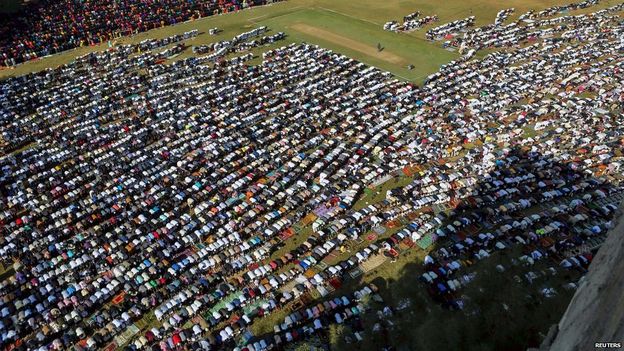
Eastleigh, a suburb of Kenya's capital Nairobi, has a large Somali population. Muslims gathered at a local school with women praying separately at the back.
Africa has a large Muslim population, who have been gathering to celebrate Eid al-Fitr, the end of the holy fasting month of Ramadan.
Kenya
Eastleigh, a suburb of Kenya’s capital Nairobi, has a large Somali population. Muslims gathered at a local school with women praying separately at the back.
Kenya
A closer look shows the many different colours worn by Eastleigh’s women.
Kenya
In another part of the same city, Muslims prayed at the Sir Ali Muslim club.
Ivory Coast
In Abidjan, Ivory Coast, worshippers filled out the streets.
Senegal
In Senegal, as elsewhere, people buy new clothes for Eid, known locally as Korite. As often happens, the country’s different Muslim sects are celebrating on different days
Cote D’ivoire
They prayed in front of the Adjame mosque.
Somalia
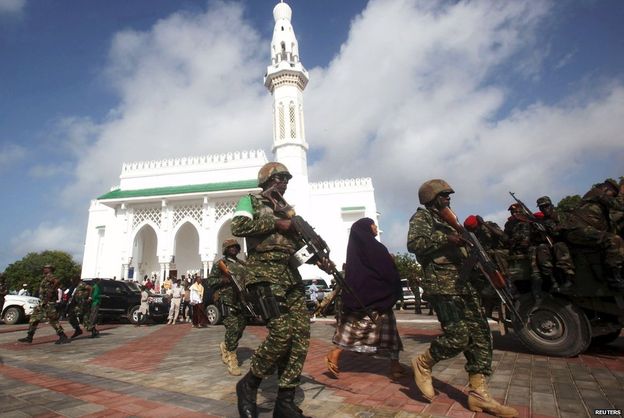
In Somalia’s capital Mogadishu, African Union soldiers were patrolling outside this mosque in case of an attack by al-Shabab, which stepped up attacks during Ramadan.
Nigeria
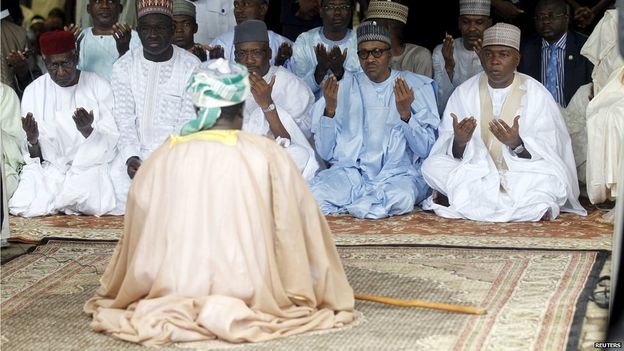
Among the continent’s leaders photographed praying is Nigeria’s President Muhammadu Buhari (second right).
Uganda
President Museveni in group pic, Eid-El-Fitr celebrations.
Egypt
Meanwhile in Egypt’s capital Cairo, these girls took a moment to capture the moment.
Tunisia
And a moment of calm in El-Abidine mosque on the outskirts of Tunisia’s capital, Tunis.
Andrew Alli, President & Chief Executive Officer, AFC.
Andrew Alli, President & Chief Executive Officer, AFC.
Through partnering with the Green Climate Fund, AFC will have access to valuable resources to support investments across a variety of green projects
LAGOS, Nigeria, July 17, 2015-Africa Finance Corporation (AFC) has been accredited as a partnering Institution to the Green Climate Fund (GCF), making it the fund’s first African development finance institution.
AFC was invited by the GCF to consider becoming an accredited institution, and following submission of its application in early 2015, AFC has this month attained full accreditation. Accreditation by the GCF enables AFC to access GCF’s committed capital of US$9.3 billion; a pool of funds for climate change projects to be utilized by members for on-lending, grants, lines of credit, guarantees and other fiduciary functions.
AFC intends to use the fund’s capital to further its investment in renewable energy, a priority sector for the corporation. AFC is the lead investor in the award winning Cabeolica project, a USD90 million, 26MW landmark renewable energy wind power project in Cape Verde and the first commercial scale public private partnership wind farm in Sub-Saharan Africa providing over 20% of Cape Verde’ power needs.
The GCF, with headquarters in Songdo Republic of Korea, is a fund operating within the United Nations Framework Convention on Climate Change (UNFCCC). GCF’s objective is to promote the paradigm shift towards low-emission and climate-resilient development pathways by providing support to developing countries to limit or reduce their greenhouse gas emissions and to adapt to the impacts of climate change, taking into account the needs of those developing countries particularly vulnerable to the adverse effects of climate change.
Over time, the GCF is expected to become the main multilateral financing mechanism to support climate action in developing countries. With a total of 20 accredited entities, the fund is governed by a Board of 24 members and is initially supported by an Interim Secretariat.
Andrew Alli, President & Chief Executive Officer, AFC commented on the announcement: “This is very positive news as it reinforces AFC’s status as a multilateral financial institution. Through partnering with the Green Climate Fund, AFC will have access to valuable resources to support investments across a variety of green projects, making a significant contribution to the global efforts to combat climate change”.
Athletes set for a two-day battle at Namboole Stadium
Last-chance meets are typically the most exciting meets of the year in track and field as select athletes attempt to qualify for a major championship.
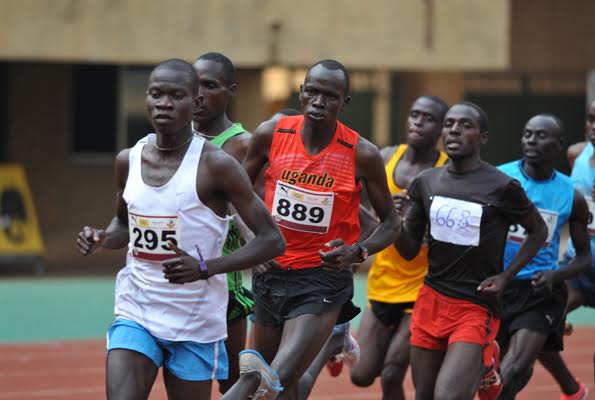
And so, the Uganda Athletics Federation’s national track and Field 2015 season that comes to a climax this weekend (Friday and Saturday) at Mandela National Stadium will offer a last chance for athletes vying to qualify for the 15th IAAF World Championships and All Africa Games.
With not many local athletes having the financial autonomy and managers to facilitate international meets in a bid to qualify.
The Uganda scene will therefore have no any other national competition on the 2015 calendar for athletes to qualify for two prestigious events with the alternative being international competitions elsewhere.
August 10th is deadline for final entry of qualifiers for the World Championship due August (22nd -29th) in Beijing, China, while August 4th is the cut-off date for the CAA All African Games due September (3rd –19th) in Congo Brazzaville.
“We expect the numbers to double; so many athletes are close to hitting qualification mark, so it should be some two days of thrilling action,” said Faustino Kiwa, the federation head of technical committee.
Counting one month to the Beijing World meet, only seven athletes have hit the qualification standards for athletics biggest event on the planet.
The biggest number of qualifiers hails from marathon led by World reigning marathon champion Stephen Kiprotich, Abraham Kiplimo, Jackson Kiprop and Solomon Mutai.
The others who have hit the world mark include Ronald Musagala (1500m) alone, woman Juliet Chekwel and Moses Kibet in the 10,000m respectively.
Fame Athletics Club’s Agnes Aneno and Ndejje University’s Shida Leni should light up the women’s sprints.
New kid on the block Solomon Obuto (Busitema University) will be the other runner to watch, he has already given the likes of Ali Ngaimoko, Godwin Byamukama (Police) and Musa Isabirye (Prisons) a bloody-nose.
Middle and Long distance events (800m, 1000m, 1,500m, 3,000m Steeplechase-women, 5000m and 10,000m) should offer sparkles as athletes to battle for the available slots, with men trying to get the two extra spaces available for the Beijing IAAF World Championships.
Kampala- Eva Magala had a plan for the 62nd Tusker Malt Ladies Open golf championship, and it’s working better than she imagined.
The Pinnacle Security sponsored player leveled the 18th hole yesterday to take a one-shot lead over defending champion Flavia Namakula heading into today-two (Friday) at the par-72 course, Kitante.
“It’s always nice when your plan pans out, my drive and putting are on but let’s wait for the final cut tomorrow,” Magala told the media after putting the 18th.
Magala, a Uganda Golf Club member led from the last group that was composed of two Zambians Tinah Nawa and Moono Mwila.
While Namakula had Zimbabwe’s Loyce Shingona, Entebbe Golf Club’s Irene Nakalembe and Palm Valley Golf club’s Melon Kyomugisha, a group that swung the field into action.
“I am glad for the day one scores. Initially, the pressure was too much to handle but I managed to play on,” Namakula stressed. “Coming into the second day of action, I will need to better my putting.”
Entebbe Club’s Irene Nakalembe is 8 over par 78 with Gloria Mbaguta and 18 year old Zambian Tina Nawa are fourth and fifth with scores of 9 over par 79 and 8 over par 80 to close up the top five of the leader board.
This year’s edition has attracted lady golfers from Kenya, Zambia, Burundi and South Africa.