Stanbic Bank
Stanbic Bank
26.7 C
Kampala
Stanbic Bank
Stanbic Bank
Home Blog Page 2340

Trade integration key to reduce poverty-DHL boss

Charles Brewer, Managing Director of DHL Express Sub-Saharan Africa.


Charles Brewer, Managing Director of DHL Express Sub-Saharan Africa.

CAPE-TOWN, South-Africa-Africa continues to remain vastly unexplored, and making Africa’s most remote regions accessible for trade will not only promote prosperity in those regions, but also elevate the continent’s continued growth path.

commenting on the role of trade in ending poverty (all statistics sourced from report, jointly written by the World Bank group and World Trade Organisation and explaining the role that international trade plays in development and poverty reduction in Africa, the report states that the value of trade is measured by the extent to which it delivers better livelihoods, measured through higher incomes, greater variety of choice and a more sustainable future, among others.

“While countries need to continue to establish better trade relations with international partners, enabling trade routes within the continent can yield numerous benefits for the region and its people,” adds Brewer.

Having entered the African market in 1978, when the continent was still relatively ‘unknown’, Brewer says that DHL has explored the remotest of regions in Africa and witnessed these areas transform; both economically and socially, simply due to access to new services. He points to Cape Verde, situated off the northwest coast of Africa, as a good example of this. “Cape Verde is a small country consisting of 10 islands, and as a result, the quickest and most reliable way of transporting goods to and from the country is by air.

“Currently, there are three commercial airlines operating in the area and given that commercial airlines offer priority to passenger baggage, offloading of cargo from these planes was a regular occurrence. In order to better service the area, we introduced a DHL flight which operates between Senegal and Cape Verde weekly. This dedicated flight route provides various trade opportunities and greatly improves connectivity in the region.”

To effectively reduce poverty, growth needs to be inclusive, and poor people aren’t often located where growth takes place. The World Bank and The World Trade Organization estimate that one billion (15 percent) of the world’s population remain in extreme poverty, and that of this number, 415 million are concentrated in Sub-Saharan Africa. The report states that extreme poverty in many countries is predominately a rural phenomenon, and that an estimated 75 percent of the extreme poor in Africa live in rural areas.

Dr Jim Yong Kim, World Bank President says that beyond expanding trade, more must be done, such as building roads that connect farmers to markets: “We must always connect the poorest to trade opportunities.” 2

Brewer says that connecting rural areas to trade opportunities is a key focus for DHL Express in Sub-Saharan Africa. “We have made great progress in making the global market and the world at large more accessible and connected by increasing the number of points where customers can access DHL and our global network. We now have over 4,500 retail outlets across Sub-Saharan Africa offering DHL services. This allows anyone – from a student to a small business –access over 220 countries and destinations that we serve.”

The report paints trade as a key enabler of facilitating growth in developing countries and highlights that lower trade costs and fewer barriers between countries is vital to eliminating extreme poverty.

“Trade plays an essential role in driving private sector-led growth and job creation and can be a powerful force in reducing poverty and increasing incomes,” says Dr Kim (World Trade Organization has already implemented measures to facilitate trade by approving a US$100 million Development Policy credit to help the governments of Burkina Faso and Cote d’Ivoire reduce trade and transport transaction costs.

“There needs to be a collaborative effort between the public and private sector to work together to ease doing business across borders. We work very closely with the government and custom authorities in each country on solutions to make doing business easier. There is ongoing progress with a number of successful trade blocs in place focusing on better connecting the region, and we look forward to seeing Africa continue on its growth path in years to come,” concludes Brewer.



Stories Continues after ad

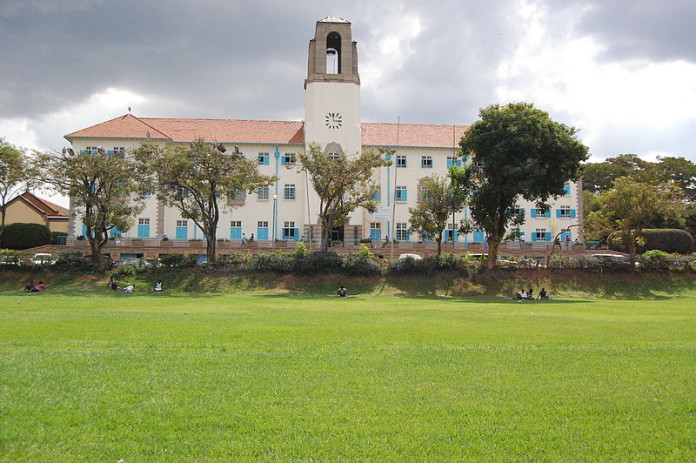
Central region dominates as Makerere admits 17,000 students on private


Makerere University main building.

Makerere University this afternoon July 16,2015 has released a list of students admitted on private scheme for academic year 2015/2016.

The university has admitted 37,055 students on this scheme is like to bag over Shs50 billion from the freshers. Central region dominated the admission to Uganda’s oldest university. Dominant schools are St. Mary’s SSS Kitende, Uganda Martyrs SSS Namugongo, Gayaza High, Seeta High, King’s College Buddo and Makerere College among other.

Click Here to View Admission List

Stories Continues after ad

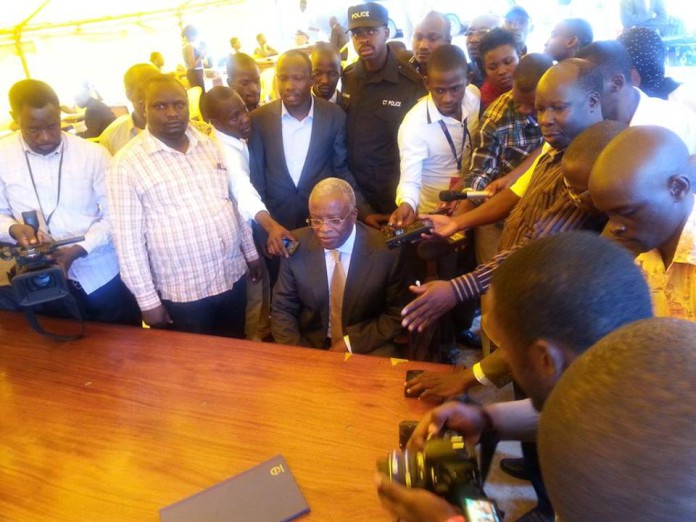
Mbabazi snubs NRM EC guidelines on nomination fees

Mbabazi at Kyayondo
Mbabazi at Kyayondo
Mbabazi at Kyayondo

Presidential aspirant John Patrick Amama Mbabazi has refused to pay Shs20million, a fee that paves the way for any member to contest for party chairmanship and presidential flag bearer under the National Resistance Movement (NRM) party.

Early today Mbabazi raided the Kyadondo Road-based NRM Secretariat and told the party Electoral Commission officials that the fee is illegal and that he would not pay up. The NRM EC is headed by Dr Tanga Odoi, an academic-turned politician who is mostly remembered for his activist role while he served as Chairman of the Makerere University Academic Staff Association (Muasa).

And this morning it is Odoi who told the former NRM Secretary General that he has to abide by the rules or face sanctions including non-clearance to run for the two positions.

“Even at university students’ first pay before they are given admission forms,” Odoi told Mbabazi. But the former Prime Minister shot back, telling Odoi that “universities are guided by statutory instruments.”

But Odoi held his ground, telling Mbabazi that the rules being used were part of the former Secretary General’s handiwork.

“You were a member of the Central Executive Committee (CEC) that set the guidelines so we are just implementing them,” Odoi replied, shortly before Mbabazi leaving without picking the nomination forms.

Of recent Mbabazi has come under fire from his colleagues in the NRM who think he too has ‘jumped the queue’ and sought to dislodge his boss from both the topmost state and party positions.

In 2001 Mbabazi told Col (rtd) Dr Kizza Besigye, then a senior colleague in the NRM that he had ‘jumped the queue’. This was after Besigye penned a dossier, indicating that the party leadership had strayed from the original ideals of the NRM.

After Kyadondo, Mbabazi posted on his facebook page that he had left the process of reviewing the guidelines to CEC while telling his supporters to remain calm.

“This morning I spoke with my comrade Chairman NRM Electoral Commission, Tanga Odoi about the nomination process. I believe that before you pay for something, you must know what it is you are paying for. The nominations within NRM are a welcome step and I have confidence that Dr Odoi is handling the process.” Mbabazi said in his post.

Adding “He assured me that the Central Executive Committee would today sit and review the rules and regulations governing the internal elections and issue new guidelines. I therefore, believe that our concerns were heard and I ask that we remain patient as CEC reviews the process”


Stories Continues after ad

Mbabazi is his own enemy

Gen.Kahinda Otafiire

Severino Kahinda Otafiire is the Justice and Constitutional Affairs Minister. The controversial retired Major General does not mince words, and when words alone cannot work, he turns to his gun, at least history shows so. We caught up with Gen Ota to try and see if the maverick minister would explain his latest bytes when he told the parliamentary Public Accounts Committee grilling him that “I don’t think I am stupid as I appear. With all due respect, you are insulting my intelligence.” We wanted to know if the New Vision quoted him right and much more.

Frying Pun: Gen Otafiire, thanks for accepting to sit with…

Otafiire: Please, go straight to the point. You can reserve your ‘thanks’ to your toilet paper [bursts out laughing]

Frying Pun: Well, why do you say those things, speaking like that all the time. Don’t your children feel awkward?

Otafiire: My friend, Kahinda Otafiire is a serious man, very serious man. You want to speak with Otafiire, bring up serious issues, not those cheap things. “Thank you,” so what? What is ‘thank you’? Do I look like a diver who just saved a drowning baby to be thanked like that?

Frying Pun: No, you don’t look like a diver, but you look very much like what you said.

Otafiire: Huh?

Frying Pun: You said “I don’t think I am stupid as I appear.” Isn’t that what you told PAC?

Otafiire: What exactly is your point, young man?

Frying Pun: Don’t you sometimes feel embarrassed by your utterances?

Otafiire: I am a General, not a pauper.

Frying Pun: Not even when you drew your gun on the deceased former wife of your Cabinet colleague at a party?

Otafiire: Why are you taking me there? Listen, Otafiire is a very busy man, you don’t call Otafiire here to talk about things that happened or did not happen in the past. This is 2015, not 1990s. Please, when you find better things to talk about than to insult Otafiire, the son of Ruhinda, then call me again and we shall see how to schedule another…

Frying Pun: Oh, you have a love-hate relationship with Amama Mbabazi. Why is it that almost all the former bush war soldiers do not feel Mbabazi? Do you guys envy him?

Otafiire: Wait, did you actually say envy? What is there to envy in that scheming man?

Frying Pun: A lot, including the fact that he was closer to the President than many of you who fought in the bush with Museveni can ever be. But then you just called him a schemer… with disdain if I read your tone right, eh?

Otafiire: Mbabazi is clever, calculative… an opportunist. But hate? I don’t hate him. Envy? Never. Otafiire does not envy anyone. What do I lack to envy anyone? Mbabazi is now outside and my people in Ruhinda have a saying that you don’t follow a man who has just left the dining table to go wander outside. You continue eating and that is what Otafiire is doing.

Frying Pun: So the NRM is about eating?

Otafiire: Use your brain.

Frying Pun: And Mbabazi did not leave the chicken table to go wander outside, he was pushed out by those young chaps without umbilical cords who are now pretending to be bigger than their own brains.

Otafiire: Whether he was pushed or not is of little import. What matters is that he is outside..

Frying Pun: Outside and peeing inside and that is dangerous. They say it is better to have a man shout from inside than one who pees through your window, no?

Otafiire: We have pee-absorbers [laughs]. In any case, when Mbabazi plays within our rules and works out well, we shall get him back and work with him. Ours is not politics of hatred, envy and such things but about shaping the destiny of this country.

Frying Pun: If you had one chance to advise Museveni and that he must accept your advice, what would you tell him?

Otafiire: I would ask him to look within his heart and tell me if he still feels like driving the yellow bus. If his answer is yes, then I would tell him to continue with the transformation of this country.

Frying Pun: But the country is stagnant. What transformation is there to talk home about apart from the past? The only thing synonymous with the past in our country today is the brutality of the Police. You know that too well. The regime is more repressive than the previous ones.

Otafiire: Let me see… yes, the Police have some stupid human waste in their system for sure. I read of Brig. Kasirye Ggwanga questioning this other guy, Fred Manyanga [Enanga, the Police spokesperson]. I don’t know where these people come from… terrible, terrible officers. I think these guys are not given enough ration so they must be eating all the drugs they seize from drug traffickers. Only this can explain how they behave. However, rest assured that the NRM government will fix them once and for all.

Frying Pun: General, be careful what you say. The other day, these Police captains arrested a four-star General in public like they were picking toothpicks in Owino Market.

Otafiire: I don’t know what is happening to this country; sincerely… how can those low lives even dare lay their hands on a General? True, they are breathing and passing wind down there but that is only because they haven’t yet touched Kahinda Otafiire. A Police captain to touch Otafiire? My friend, that will be the end of him.

Frying Pun: I don’t doubt your words. I know how you nearly wrote off a journalist with your gun in Mbuya after some frisk accident at 3am…

Otafiire: Oh, that Alika… was that the name… Isa something [Isa Aliga], that guy exaggerated things. In any case, a soldier is a soldier at all times. A soldier won’t stand still when some funny lights flash in his face at 3am, no. A real soldier reacts with his gun and that’s what happened. In any case, what was that New Vision journalist doing there at 3am when everyone was trying to push the car and he was there playing with my life?

Frying Pun: What should I tell Mbabazi as coming from his Cabinet colleague of many years?

Otafiire: ‘Former Cabinet colleague’… Tell him that I talked to you [laughs]


The Frying Pun is a parody column


Stories Continues after ad

Burundi leaders agree to continue with negotiations-Museveni

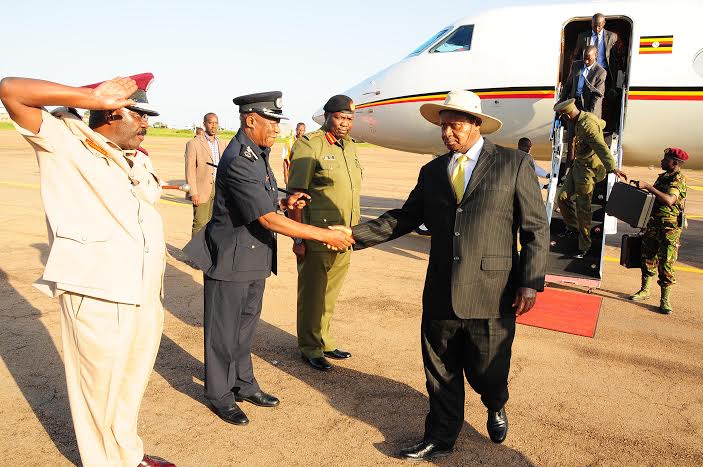
President Museveni being received back home by the Commissioner General of Prisons Dr Johnson Byabashaija, the Deputy Inspector General of Police Okoth Ochola, and the Deputy Chief of Defence Forces (DCDF) Lt. Gen. Charles Angina.


President Museveni being received  back home by the Commissioner General of Prisons Dr Johnson Byabashaija, the Deputy Inspector General of Police Okoth Ochola, and the Deputy Chief of Defence Forces (DCDF) Lt. Gen. Charles Angina.
President Museveni being received back home by the Commissioner General of Prisons Dr Johnson Byabashaija, the Deputy Inspector General of Police Okoth Ochola, and the Deputy Chief of Defence Forces (DCDF) Lt. Gen. Charles Angina.

President Yoweri Museveni has assured the people of Burundi and the EAC that the government, opposition political party leaders and civil society organizations have all agreed to continue with the negotiations unconditionally and expeditiously in order to reach an agreement on issues affecting the political situation in the troubled central African country.

Other stakeholders who attended the meeting included three former Presidents of Burundi namely Mr Domitien Ndayizeye, Mr Sylivestre Ntibantunganya and Mr Jean Baptiste Bagaza.

The President who has returned home after a two-day working visit

to Burundi told the closing session this afternoon, that Uganda’s Minister of Defence Dr Crispus Kiyonga will, in this regard, arrive in Bujumbura tomorrow Thursday July 16 July to continue facilitating the talks as requested by the East African Community Summit.

The high level dialogue that opened yesterday under the auspices of the East African Community was hosted and facilitated by the EAC Secretariat. The meeting was a follow up of the mandate given to Museveni by the 3rd Extra-Ordinary Summit of the East African Community in Dar-es-Salaam on July 6, 2015; to lead and facilitate the dialogue at the highest level in a bid to find a lasting solution to the current political situation in Burundi.

The EAC leaders also decided to postpone the Presidential election in the country which was slated for July 30, to allow for this process.

After the meeting, Museveni was seen off this evening at Bujumbura International Airport by his host, President Pierre Nkurunziza and received back home by the Commissioner General of Prisons Dr Johnson Byabashaija, the Deputy Inspector General of Police (DIGP) Okoth Ochola, and the Deputy Chief of Defence Forces (DCDF) Lt. Gen. Charles Angina.


Stories Continues after ad

Sejusa apologises to Kyengera Muslims

Gen David Sejusa.


The nonsense Gen. David Sejusa.

The former Coordinator of Intelligence Services Gen. David Sejusa has apologized to the Muslims of Kyengera for comments he made about their early Morning Prayer session, Adhan.

Today July 15, 2015, evening the maverick army general visited the Kyengera Mosque, where he delivered his apologies, telling the Muslim community there that at the time he was feeling powerful.

In December 2002 Sejusa, then living in Kyengera, told the Muslims that he and some other residents were perturbed by the blaring loud speakers during the morning prayer session, something that later made him abandon his plush home for Naguru, an upscale residential area on the outskirts of Kampala.

However, in January 2003 the then Imam Sheik Abdul-Hakim Ssenfuka wrote to the Gen.Sejusa then Tinyefuza urging him to return to his house saying the issue had been resolved.

“We have accepted to lower the volume of the speakers. It is now down to level one from level four, which we think will be convenient for you and other residents,” the media quoted Sheikh Ssenfuka as saying then. However, Sejusa did not go back.


Stories Continues after ad

Ugandan gov’t tables 39 constituencies to be created

DENIED CONTENTS OF REPORT: Defence Minister Adolf Mwesige


Local Government Minister, Adolf Mwesige tabled the motion.

Government this evening July 15, 2015, through Local Government Minister, Adolf Mwesige, presented the motion to Parliament seeking to create more electoral areas in form of counties and constituencies. Mr Mwesige read out the list of 39 proposed areas and below is the list. The Ugandan Parliament comprises 238 constituency representatives,112 district woman representatives, 10 Uganda People’s Defence Forces representatives, five  representatives of the youth, five  representatives of persons with disabilities, five  representatives of Workers, and 13 ex officio Members bringing the number to 388. So the increment of more 39 seats means the number will increase to 427. However, this comes with cost implications.

1Agago North County (New) consisting of:
i Wol;
ii) Parabongo;
iii) Omiya Pacwa;
iv) Paimol;
v) Lapono; and
vi) Kalongo Town council.
Agago County (Old) remains with the following sub-counties;
i) Kotomor;
ii) Arum;
iii) Lamiyo;
iv) Lira Palwo;
v) Omot;
vi) Patongo;
vii) Lokole;
viii) Adilang;
ix) Agago Town Council; and
x) Patongo Town Council.
2. Orungo County (New) consisting of:
i) Akeriau;
ii) Morungatuny;
iii) Ogolai; and
iv) Orungo.
Amuria County (Old) remains with the following sub-counties;
i) Abarilela;
ii) Apeduru;
iii) Asamuk;
iv) Wera;

v) Willa;
vi) Kuju; and
vii) Amuria Town Council;
3. Lutseshe County (New) consisting of:
i) Bushiyi;
ii) Bulucheke;
iii) Bumayoka;
iv) Bubiita;
v) Bukalasi;
vi) Buwali; and
vii) Nalwanza.
Manjiya County (Old) remains with the following sub-counties;
i) Bukigai;
ii) Nabweya;
iii) Bushiribo;
iv) Bushika;
v) Nakatsi;
vi) Bududa;
vii) Bukibokolo;
viii) Bumasheti; and
ix) Bududa Town Council.
4. Kachumbala County (New) consisting of:
i) Kachumbala Sub County.
Bukedea County (Old) remains with the following sub-counties;
i) Bukedea;
ii) Kidongole;
iii) Malera;
iv) Kolir; and
v) Bukedea Town Council.
5. Bukomansimbi South County (New) consisting of:

i) Butenga; and
ii) Kibinge.
Bukomansimbi North County (Old) remains with the following sub-counties;
i) Bigasa;
ii) Kitanda; and
iii) Bukomansimbi Town Council.
6. Elgon County (New) consisting of:
i) Bulegeni;
ii) Kamu;
iii) Sisiyi;
iv) Simu;
v) Lusha;
vi) Bulaago;
vii) Bumugibole;
viii) Buginyanya;
ix) Masira;
x) Namisuni;
xi) Bumasobo;
xii) Buluganya; and
xiii) Bulegeni Town Council.
Bulambuli County (Old) remains with the following sub-counties;
i) Bukhalu;
ii) Muyembe;
iii) Nabbongo;
iv) Bwikhonge;
v) Bunambutye; and
vi) Bulambuli Town council.
7. Dokolo South County (New) consisting of:
i) Adeknino;
ii) Kangai;

iii) Kwera;
iv) Okwongodul; and
v) Dokolo Town Council.
Dokolo North County (Old) remains with the following sub-counties;
i) Adok;
ii) Agwata;
iii) Amwoma;
iv) Bata;
v) Dokolo; and
vi) Okwalongwen.
8. Gomba West County (New) consisting of:
i) Maddu;
ii) Kabulasoke;
Gomba East County (Old) remains with the following sub-counties;
i) Kyegonza;
ii) Mpenja; and
iii) Kanoni Town council.
9. Kilak North County (New) consisting of:
i) Attiak; and
ii) Pabbo.
Kilak South County (Old) remains with the following sub-counties;
i) Amuru;
ii) Lamogi; and
iii) Amuru Town council.
10. Ik County (New) consisting of:
i) Kamion Sub County.
Dodoth East County (Old) remains with the following sub-counties;

i) Kaabong West;
ii) Lolelia;
iii) Loyoro;
iv) Sidok;
v) Lodiko;
vi) Kathile;
vii) Kalapata;
viii) Kaabong East; and
ix) Kaabong Town Council.
11. Bulamogi North-West County (New) consisting of:
i) Nawaikoke Sub-County.
Bulamogi County (Old) remains with the following sub-counties;
i) Gadumire;
ii) Namwiwa;
iii) Namugongo;
iv) Bumanya; and
v) Kaliro Town Council;
12. Kabweri County (New) consisting of:
i) Kadama;
ii) Kirika;
iii) Kabweri;
iv) Kagumu; and
v) Bulangira.
Kibuku County (Old) remains with the following sub-counties;
i) Tirinyi Sub-County;
ii) Buseta Sub-County;
iii) Kasasira Sub-County;
iv) Kibuku Sub-County; and
v) Kibuku Town Council.

13. Kashongi County (New) consisting of:
i) Kashongi; and
ii) Kitura.
Nyabushozi County (Old) remains with the following sub-counties;
i) Kanyaryeru;
ii) Kenshunga;
iii) Kikatsi;
iv) Kinoni;
v) Nyakashashara;
vi) Sanga;
vii) Sanga Town Council; and
viii) Kiruhura Town Council.
14. Kibanda North County (New) consisting of:
i) Mutunda;
ii) Kiryandongo;
iii) Kiryandongo Town Council; and
iv) Bweyale Town Council.
Kibanda South County (Old) remains with the following sub-counties;
i) Kigumba;
ii) Masindi Port; and
iii) Kigumba Town Council.
15. Chua East County (New) consisting of:
i) Mucwini;
ii) Nam Okora;
iii) Omiya Anyima; and
iv) Orom.
Chua West County (Old) remains with the following sub-counties;
i) Kitgum Matidi Sub-County;

ii) Labongo Akwang Sub-County;
iii) Labongo Amida Sub-County;
iv) Labongo Layamo Sub-County;
v) Lagoro Sub-County; and
vi) Kitgum Town Council.
16. Kole North County (New) consisting of:
i) Aboke Sub-County; and
ii) Alito Sub-County.
Kole South County (Old) remains with the following sub-counties;
i) Akalo;
ii) Bala;
iii) Ayer; and
iv) Ayer Town council.
17. Kanyum County (New) consisting of:
i) Kanyum; and
ii) Mukongoro.
Kumi County (Old) remains with the following sub-counties;
i) Atutur;
ii) Kumi;
iii) Nyero;
iv) Ongino; and
v) Kumi Town Council.
18. Butemba County (New) consisting of:
i) Bananywa;
ii) Butemba;
iii) Kyankwanzi;
iv) Nsambya; and
v) Butemba Town Council.

Ntwetwe County remains with the following sub-counties;
i) Nkandwa;
ii) Wattuba;
iii) Mulagi;
iv) Gayaza;
v) Ntwetwe; and
vi) Ntwetwe Town Council.
19. Kyaka South (New) consisting of:
i) Mpara;
ii) Rwentuuha;
iii) Ruyonza; and
iv) Kyegegwa/Kabweza
Kyaka North County (Old) remains with the following sub-counties;
i) Hapuuyo;
ii) Kakabara;
iii) Kasule; and
iv) Kyegegwa Town Council.
20. Mwenge Central (New) consisting of:
i) Bugaaki;
ii) Katooke;
iii) Kyarusozi;
iv) Katooke Town Council; and
v) Kyarusozi Town Council.
Mwenge North County (Old) remains with the following sub-counties;
i) Bufunjo;
ii) Kyembogo; and
iii) Nyankwanzi
21. Luuka South (New) consisting of:
i) Bukanga;

ii) Nawampiti;
iii) Waibuga; and
iv) Irongo.
Luuka North County (Old) remains with the following sub-counties;
i) Bukooma;
ii) Bulongo;
iii) Ikumbya; and
iv) Luuka Town Council.
22. Maracha East County (New) consisting of:
i) Nyadri;
ii) Oleba;
iii) Yivu;
iv) Tara; and
v) Maracha Town Council.
Maracha County (Old) remains with the following sub-counties;
i) Kijomoro;
ii) Oluvu; and
iii) Oluffe Sub-County.
23. Kashari South County (New) consisting of:
i) Bukiro;
ii) Bubaare;
iii) Rwanyamahembe; and
iv) Rubaya.
Kashari North County (Old) remains with the following sub-counties;
i) Rubindi;
ii) Kagongi; and
iii) Kashare Sub-County.

24. Ruhinda North County (New) consisting of:
i) Kanyabwanga;
ii) Kiyanga; and
iii) Bitereko.
Ruhinda County (Old) remains with the following sub-counties;
i) Mitooma;
ii) Katenga;
iii) Mutara;
iv) Mayanga;
v) Rurehe;
vi) Kabira;
vii) Kashenshero;
viii) Kashenshero Town Council; and
ix) Mitooma Town Council.
25. Tepeth County (New) consisting of:
i) Katikekile; and
ii) Tapac.
Matheniko County (Old) remains with the following sub-counties;
i) Nadunget;
ii) Rupa;
iii) North Division; and
iv) South Division.
26. Aruu North County (New) consisting of:
i) Angagura;
ii) Atanga;
iii) Laguti;
iv) Lapul;
v) Latanya;
vi) Pajule; and;
vii) Acholibur

Aruu County (Old) remains with the following sub-counties;
i) Puranga;
ii) Awere;
iii) Pader;
iv) Ogom; and
v) Pader Town Council.
27. Buyamba County (New) consisting of:
i) Kagamba;
ii) Ddwaniro;
iii) Kacheera; and
iv) Lwamaggwa.
Kooki County (Old) remains with the following sub-counties;
i) Kiziba;
ii) Kyalulangira;
iii) Byakabanda;
iv) Lwanda; and
v) Rakai Town Council.
28. Mawogola North County (New) consisting of:
i) Lugusuulu;
ii) Mijwala; and
iii) Sembabule Town Council.
Mawogola South County (Old) remains with the following sub-counties;
i) Lwebitakuli;
ii) Mateete; and
iii) Mateete Town Council.
29. Dakabela County (New) consisting of:
i) Arapai;
ii) Tubur; and
iii) Katine.

Soroti County (Old) remains with the following sub-counties;
i) Gweri;
ii) Kamuda;
iii) Soroti; and
iv) Asuret.
30. Ora County (New) consisting of:
i) Zeu;
ii) Kango;
iii) Warr; and
iv) Atyak.
Okoro County (Old) remains with the following sub-counties;
i) Paidha;
ii) Nyapea;
iii) Jangokoro;
iv) Paidha Town Council; and
v) Zombo Town Council.
31. Kibale County (New) consisting of:
i) Kibale; and
ii) Opwateta;
Butebo County (Old) remains with the following sub-counties;
i) Butebo;
ii) Kabwangasi;
iii) Kakoro;
iv) Kanginima; and
v) Petete.
32. Tororo North County (New) consisting of:
i) Mollo;
ii) Merikit; and
iii) Mukuju.

Tororo South County (Old) remains with the following sub-counties;
i) Kwapa;
ii) Mella;
iii) Malaba; and
iv) Osukuru.
33. Kibale East County (New) consisting of:
i) Bihanga;
ii) Nkoma;
iii) Bwizi; and
iv) Biguli.
Kibale County (Old) remains with the following sub-counties;
i) Kamwenge;
ii) Kabambiro;
iii) Kahunge;
iv) Busiriba; and
v) Kamwenge Town Council.
34. Aringa North County (New) consisting of:
i) Kei;
ii) Midigo; and
iii) Kerwa.
35. Aringa South County (New) consisting of:
i) Ariwa;
ii) Drajini;
iii) Lodonga; and
iv) Odravu.
Aringa County (Old) remains with the following sub-counties;
i) Apo;
ii) Kuru;
iii) Kululu;

iv) Kochi;
v) Romogi; and
vi) Yumbe Town Council.
36. Kigorobya County (New) consisting of:
i) Kigorobya; and
ii) Kigorobya Town Council
Bugahya County (Old) remains with the following sub-counties;
i) Buhanika;
ii) Kyabigambire;
iii) Buseruka;
iv) Kitoba;
37. Koboko North County (New) consisting of:
i) Ludara;
ii) Abuku
Koboko County (Old) remains with the following sub-counties;
i) Lobule;
ii) Midia;
iii) Kuluba;
iv) Dranya; and
v) Kaboko Town Council.
38. Bukuya County (New) consisting of:
i) Bukuya;
ii) Makokoto; and
iii) Kitumbi.

Kassanda County (Old) remains with the following sub-counties;
i) Kassanda;
ii) Kalwana;
iii) Kiganda;
iv) Manyogaseka;
v) Nalutuntu; and
vi) Myanzi.
39. Adjumani East County (new) consisting of the Sub-counties of:
i) Itirikwa;
ii) Ofua;
iii) Pakele
iv) Arinyapi; and
v) Dzaipi.
Adjumani West County remains with the following sub-counties;
i) Adjumani Town Council;
ii) Adropi;
iii) Pacara;
iv) Ciforo; and
v) Ukusijoni.

Stories Continues after ad

Makerere to release private admissions tomorrow

Makerere University main building, the seat of authority at Uganda's oldest institution of learning.
Makerere University main building.


Makerere University will tomorrow release a full list of all students admitted to the institution for the academic year 2015/2016.

The University in May this year opened up for  applications from students in Uganda, East Africa, S. Sudan and other international applicants, for  undergraduate programmes under the private sponsorship scheme for the 2015/2016 Academic Year.

Eligible applicants were required to have the Uganda Certificate of Education (UCE) with at least five passes, or its equivalent and at least two principal passes at Advanced Level (UACE) obtained at the same sitting. For day programmes, only candidates who sat A’ Level in 2014, 2013 and 2012 were eligible to apply.

For the evening, afternoon, and external programmes, candidates were not restricted on the year of sitting A ‘Level.

All applicants for the Bachelors of Laws must have sat and passed the Pre-Entry Examinations set by the University. The Academic Registrar in May released the results for the Bachelor of Law Pre-Entry Examination 2014-2015 sat on Saturday 3rd April 2014.

The results showed that only 397 of the 2082, S.6 leavers who sat the exam achieved the 50 percent pass mark to select those who qualify for admission to law school.

In May, a list of over 2,097 students admitted under government sponsorship was released, with Makerere taking the lion’s share of about 1,326 students.

In a similar development, one of the local newspapers announced in March this year that the University planned to phase out six diploma programmes, which included Library and Information Studies, record and Archives management, Project Planning and Management, Youth in development network, Performing Arts and Civil engineering Survey.


Stories Continues after ad

Leave the elephants alone!

Yesterday, the Aviation police in Entebbe recovered a huge consignment of ivory that was being smuggled into the country. According to media reports, this is the fourth time such a haul of contraband is recovered this year.

In Africa illegal ivory trade has led to diminishing numbers of elephants in the wild and according to reports, in the ten years between 1979 and 1989, the population of the African elephant had gone down from 1.3 million to 600.000.

Much as the world is up in arms against poaching and dealing in illegal trade of ivory, in Uganda some cartels still find it easy to connive with mid-level personnel involved in the protection of endangered species and these then evade the law enforcement agencies, something that has had adverse effects on the careers of some personalities.

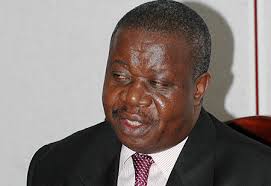
For instance, last year, the Executive Director of the Uganda Wildlife Authority Dr Andrew Sseguya was sent on forced leave after about 3000 kilogrammes of ivory disappeared from the vaults.

Dr Sseguya is one of the few experts this country has produced, whose involvement in the conservation of fauna and flora is not in question. He has also had a distinguished career right from his days at the Uganda Wildlife Educational Centre in Entebbe, and it would have been unfortunate if the country had lost his services because of some unscrupulous mid-level officer.

That noted, as the country steps up its efforts to combat the illegal dealing in ivory, there is need for all stakeholders to stick to their work ethics, something that will help reduce on the ivory trafficking vice.

That is why the Airport Police deserve commendation for a job well done!


Stories Continues after ad

UK to host Africa science, industrial development conference

rof_-Sandy-Tickodri-Togboa,represented Uganda.

rof_-Sandy-Tickodri-Togboa,represented Uganda.

Prof. Sandy Tickodri-Togboa, represented Uganda.

African ministers of science and technology are to meet in the United Kingdom to chart a way forward on the continent’s technology progress, with exploring the linkages between science and industry top on the agenda.

According to a release by Africa Press Organisation (APO) the event at Ravensbourne University in London will be hosted by Lord Paul Boateng and Dr Alvaro Sobrinho, Trustee and Chairman of Planet Earth Institute (PEI), respectively.

Prof. Sandy Tickodri-Togboa, Minister for Higher Education, Science and Technology of Uganda, will lead the Ugandan delegation to the conference that will be opened by multiple award-winning technology guru Dr Ameenah Gurib Fakim, who is also the new President of Mauritius.

“Mauritius has a proud history of investing in scientific excellence and creating research. Going forward, science and technology and sustainable development will be the key to create wealth and jobs for our young people, both in Mauritius and across the mainland African continent.   I look forward to joining this important event hosted by the Planet Earth Institute and to contributing to the continued pursuit of Africa’s scientific and technological advancement,” President Gurib Fakim was quoted as saying.

In June, Dr Gurib-Fakim won multiple awards for her scientific work, including the African Union ‘Women in Science’ award in 2009, while the Uganda delegation leader

was the Deputy Vice Chancellor of Makerere University and he is famed for the development of the Kira Electric Vehicle (KEV), a prototype car made by students of the University.


Other delegates include South African minister of Science and technology Prof Naledi Pandor, the Ethiopian minister of Education Shiferaw Shigutie, Senegalese minister of Higher Education and Research Prof Mary Tew Niane and representatives from PEI partnering businesses like IBM Africa, Elsevier, TAAG Angola Airlines and Banco Valor

According to the release, the conference will also bring together over 200 science and technology experts from Africa, who will, through sessions, workshops and interactive working groups, deliberate on industrial relevance, support to start-up business and entrepreneurship and, funding and investment for science and innovation.

Speaking ahead of the event dubbed: ‘Africa’s scientific independence: no more business as usual’, PEI Chairman Dr Sobrinho noted that Africa had made remarkable strides in science and technology, capable of producing world class professionals.

“While Africa continues to make economic progress at a rapid pace, the focus on investing in educational excellence for our future generations should never be overlooked. Excellence in science and technology can equip Africa with a workforce ready to compete in the 21st century, where we can lead the world as scientists, engineers and innovators, and the role of industry is absolutely crucial,” Dr Sobrinho was quoted as saying.

‘Partnership for Skills in Applied Sciences, Engineering and Technology (PASET)’ programme, which recently launched a new Scholarship and Innovation Fund for Africa, led by the Governments of Senegal, Rwanda and Ethiopia, supported by the World Bank and the PEI. The Scholarship and Innovation Fund for Africa will contribute to 10,000 African PhDs in ten years, with a close focus on linkages to industry,’ the release adds.


Stories Continues after ad