Stanbic Bank
Stanbic Bank
25 C
Kampala
Stanbic Bank
Stanbic Bank
Home Blog Page 237

Ruto, Samia Suluhu congratulate Kagame’s presidential victory

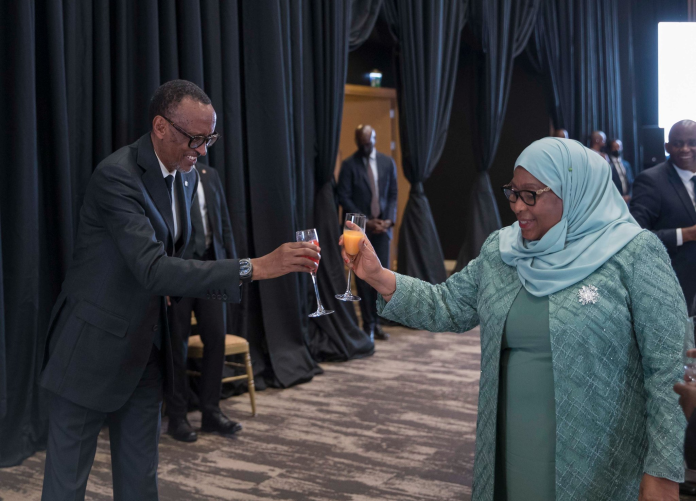
The Kenyan President William Ruto and Tanzanian President Samia Suluhu Hassan have congratulated their counterpart Paul Kagame for his fourth term victory as the president of Rwanda.

President Ruto praised Kagame’s leadership and his role in promoting stability and development in Rwanda. He highlighted the strong bilateral relations between Kenya and Rwanda and expressed confidence that these ties would continue to flourish under Kagame’s continued presidency.

“On behalf of the people and Government of Kenya, I have the pleasure to convey warmest congratulations upon your re-election to serve a further term as President of the Republic of Rwanda,’ Ruto said.

He added, “We celebrate with you the sovereign choice of the people of Rwanda and wish you success as you continue steering your country in the path of peace, stability and posterity.”

Ruto said that he looks forward to continuing working with Kagame in regional and Pan-African affairs in strengthening the bonds of solidarity and fraternity between the peoples of Kenya and Rwanda.

President Suluhu also extended her congratulations, emphasizing the importance of regional cooperation and unity. She commended Kagame’s efforts in fostering economic growth and regional stability and expressed her hope for continued collaboration between Tanzania and Rwanda.

“On behalf of the Government and the People of the United Republic of Tanzania, I extend my heartfelt congratulations to His Excellency Paul Kagame, on being re-elected as the President of the Republic of Rwanda,” Samia said.

Samia Suluhu also looks forward to continuing working with Kagame in fostering the relations between our two countries and in the pursuit of East Africa’s unity and prosperity.

Paul Kagame won the presidential election with 99% securing the fourth term in office. He has been the country’s leader since 2000, and his victory continues his long-standing leadership.

Stories Continues after ad

Makerere University, EACOP partner to promote local content in oil and gas

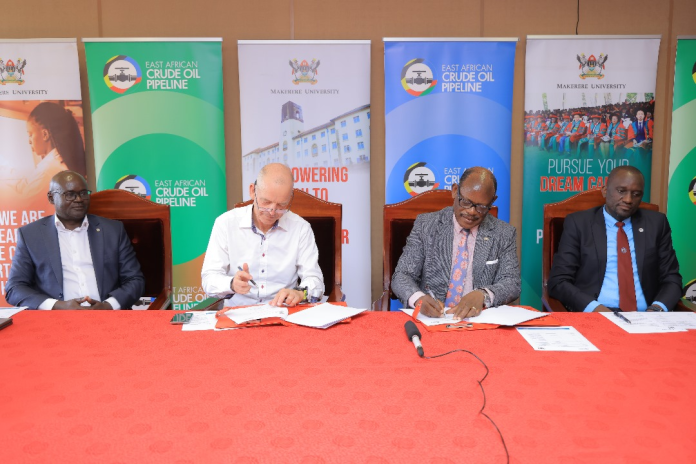
The East African Crude Oil Pipeline (EACOP) company Limited has signed a Memorandum of Understanding (MoU) with Makerere University to guide collaboration between the two parties towards the realization of the National Content Capacity Building initiatives and other Corporate Social Responsibility (CSR) initiatives and projects.

EACOP is a project company set up to develop, build and operate a pipeline system which will transport crude oil from the inlet flange at Kabaale in Uganda to the port of Tanga in Tanzania.

Among the commitments made by Makerere in the MoU is to work with EACOP to support knowledge and build capacity among Ugandan fresh graduates, technicians and instructors, professors, and lecturers from tertiary and vocational training institutions.

Makerere University Vice Chancellor Prof Barnabas Nawangwe and EACOP Managing Director Martin Tiffen on Tuesday signed the MoU.

“We are delighted to formalize our collaboration with Makerere University through this Memorandum of Understanding. This partnership highlights our commitment to fostering local talent and enhancing capacity-building initiatives in Uganda. By working closely with Makerere University, we aim to equip recent graduates, technicians, and educators with the necessary skills and knowledge to contribute effectively to the East African Crude Oil Pipeline project and beyond,” EACOP MD Martin Tiffen said.

These commitments will be realized through the implementation of two key Capacity Building initiatives. The first is Internship/ Graduate Training programs where graduates or existing students from the institution will be offered training and work exposure with EACOP’s suppliers and contractors on various scopes of the project according to their disciplines. The duration and location of the internships varies between the different contractors/suppliers.

The second is to the Trainer programs, which will be delivered by EACOP’s contractors and suppliers and will seek to share knowledge on their different scopes of work on the project as they relate to various engineering disciplines and vocational skills.

To date, Tiffen said EACOP has signed MoUs with Uganda Petroleum Institute Kigumba (UPIK) as well as with professional bodies such as the Institute of Surveyors of Uganda to support the onboarding of graduate trainees with our contractors/suppliers and of interns with EACOP’s internal departments.

Stories Continues after ad

Presidential systems breed violence in Africa

David Matsanga

By Dr David Matsanga in Africa

The
events of last few days in America must teach Africa a big lesson – Africa must change its governance systems -The residential system does not and will not work for Africa. It breeds violence where losers never accept.

I can tell you that American democracy has two components – violence and money. That is what Americans are good at. They laugh with you while the other informal sectors are funding rebellion. Africa cannot afford this type of democracy. That is the trouble of continent.

I find plenty of evidence of violence and its existence in USA democracy and politics. The system most African states have copied. A violent system that causes violence after elections. In 1963, Kennedy was assassinated. In 1981 there was an attempted assassination on Ronald Reagan.

Now in 2024 an attempted assassination on Donald Trump. More original assassinations of other Presidents is a long list. I tell you frankly that the USA politics is toxic. It is the question of who has the money and this brings divisions within fragile states.

I studied USA politics in Thames Valley College in Tooting before joining London Guildhall University and I found out that in USA guns are more liked than human life. A friend of mine told me that a quick death is found in USA because guns are like walking sticks.

Many assassins bullets in USA have a long and dark history in the United States, taking the lives of four presidents and wounding a further three. In Africa we have had few assassinations mainly from military coups.

I took part in the IRA negotiations of Northern Ireland. In Britain I witnessed the Brighton Hotel bombing, which came extraordinarily close to killing Margaret Thatcher.

What is killing Africa today is wrong systems of governance. Presidential systems are for the rich not for the developing countries like those in Africa. Ethnicity has played a key role in creating chaos and conflicts in Africa.

The Presidential systems create high anxiety in the populace and sharpens hatred that is embedded in our African political systems. Quick look at all elections conducted in Africa in the last 20 years will prove my point.

I believe a parliamentary system that gives the masses more powers to choose their leaders helps in stability and brings issues out better than the presidential systems. In parliamentary systems the citizens can quickly sack or recall their MP.

The type of system in South Africa brings hope to the people of Africa. The South Africa model creates peace because the quarrels are in parliament not in the streets.

I speak my mind. I have no regrets. The only thing I fear is that Africa will suffer more if the leaders don’t listen and change the systems of governance. The implications of presidential systems in Africa are many. It is up to countries that are venerable to chaos to change their systems.

The future of our countries with presidential systems is uncertain. African countries must live in a new normal when it comes to political threats and violence, that comes from presidential systems of governance. I have done my best to point out the dangers.

Lastly in a play of Julius Caesar the killer Brutus says. “Men at some time are masters of their fates,” he says. “The fault, dear Brutus, is not in our stars, /But in ourselves, that we are underlings.” The fault is as Africans trusting American presidential system that brings us violence.

It is up to the African leaders each of them to assess whether presidential systems can work nicely or parliamentary systems are the best for developing countries in Africa. The violence awaiting us ahead must be avoided.

Thanks

The writer is a Pan Africanist based in London, Political scientist & International Relations expert, studied conflict Resolution, a member of Royal African Society (RAS) Founder /Chairman Pan African Forum (UK)Ltd @MatsangaDr

Stories Continues after ad

Finance Ministry releases Shs5.8tn for first financial quarter

The Ministry of Finance, Planning and Economic Development has released Shs5.899 trillion for government expenditure in the first quarter of the new financial year (2024/25).

The Shs5.899 trillion represents 21.3% of the discretionary budget and it comprises Shs1.990.28 trillion for wages, Shs3.371.91 trillion for non-wages, Shs337.53 billion for GoU Development, and Shs199.3b for arrears.

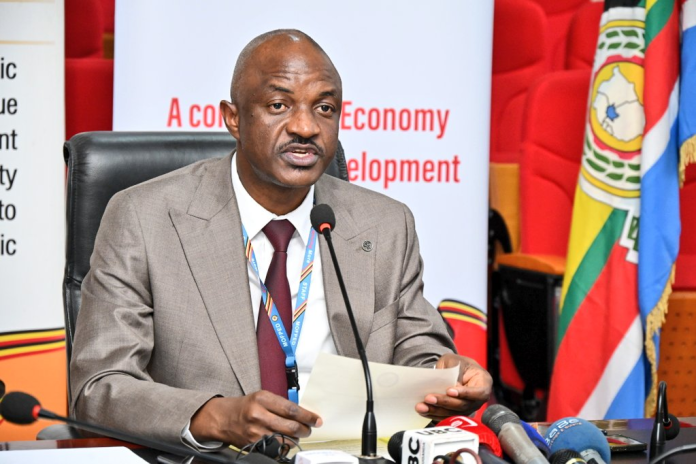
Speaking at the release of the funds in Kampala on Tuesday, Finance Permanent Secretary and Secretary to the Treasury Ramathan Ggoobi said Shs 323.50 billion is for Pension and Gratuity, Shs 308.75 billion will to Local Governments, including Education Capitation Grants (Shs. 112.28 billion) to cater for Third Term of the school year; Shs 95.26 billion to all Public Universities, Uganda Management Institute and Law Development Centre in line with the semester requirements.

Ggoobi said Shs43.77 billion for examination bodies i.e. Uganda National Examination Board (UNEB) and Uganda Business and Technical Examinations Board (UBTEB); while all missions abroad have been allocated Shs100.58 billion (representing 50% of their Annual Budget).

The National Council of Sports has been allocated Shs 124.63 billion, which included payment of AFCON commitment fees, equivalent to USD 30 million;

Referral Hospitals have been allocated Shs 22.58 billion; Uganda Cancer Institute – Shs12.31 billion; Uganda Heart Institute – Shs7.06 billion; and Uganda Blood Transfusion Services (UBTS) – Shs 4.1 billion.

A total of Shs 21.85 billion has been allocated for medical interns’ salaries; while Shs 173.68 billion has been released to National Medical Stores (NMS) for the purchase of essential drugs and medicines.

The Ministry of Defense and Veteran Affairs has been given Shs 253.30 billion, Uganda Police Force – Shs 56.43 billion, Uganda Prisons Services – Shs 44.79 billion, ISO – Shs 28.08 billion; and ESO – Shs 19.44 billion.

Parliament has been allocated Shs 153.60 billion, Judiciary – Shs 47.40 billion, Auditor General – Shs 10.11 billion, Science Technology and Innovation – Shs 124.63 billion; and Uganda National Oil Company (UNOC) – Shs 124 billion for Equity acquisition in the East African Crude Oil pipeline (EACOP).

Domestic arrears amounting to Shs 199.83 billion have been catered for, and the International Court of Justice (ICJ) award to DRC of Shs 247 billion is also included.

Contract staff salaries have got Shs 21.76 billion; URA – Shs 14.34 billion; KCCA – Shs 22.67 billion; MoFPED Shs 14.53 billion to cater for Resource Enhancement and Accountability Programme (REAP) and Uganda Intergovernmental Fiscal Transfers Programme (UGI FT); while Local Government grants  of Shs 229.27 billion, representing one third of the development grant allocations; have been allocated.

Ggoobi stressed that the release is in line with the government’s continued effort of fiscal consolidation through coordinated fiscal and monetary policy.

He said all Accounting Officers must ensure that they pay salaries, pensions and gratuity by the 28th of every month.

“There should be a display of the payrolls for salaries and monthly pension on Government institutions’ notice boards every month. Accounting Officers must prioritize payment of service providers on time and clearance of domestic arrears to avoid further accumulation of arrears and penalties,” Ggoobi said.

“I wish to emphasize this —there should be no creation of arrears; NO recruitment should be done without clearance from the Ministry of Public Service after ascertaining availability of adequate wage from this Ministry,” he added.

Ggoobi said all Accounting Officers are required to ensure that every promotion and re-deployment of staff made to a different cost center should be backed up by adequate wage provision.

He said all Government operations this financial year will underpin fiscal discipline, budget credibility, commitment to service delivery and timely project execution.

Stories Continues after ad

Museveni condemns assassination attempt on Donald Trump

President Yoweri Museveni has condemned the attempted assassination on America’s former President, Donald Trump over the weekend at a campaign rally in Butler, Pennsylvania, citing the act as a despicable and cowardly attempt.

“I learnt of the assassination attempt on His Excellency Donald Trump’s life on Saturday, July 13, 2024, during a campaign rally in Butler, Pennsylvania. On behalf of the Government and people of Uganda, and on my own behalf, I wish to convey our deep and heartfelt sympathies to His Excellency,” Museveni said.

Museveni’s condemnation reflects his stance against political violence, emphasizing the importance of peaceful political processes globally. This sentiment aligns with the international reaction to the incident, which has drawn widespread attention and concern

Museveni noted, “I condemn this despicable and cowardly assassination attempt that put his life and that of his supporters at risk.”

Museveni also extended his deepest condolences to the family that lost their loved one.

He added, “As freedom fighters and peace-lovers, we condemn political violence because it threatens democracy wherever it manifests. I wish His Excellency and all those injured a speedy recovery. Our thoughts and prayers are with them.”

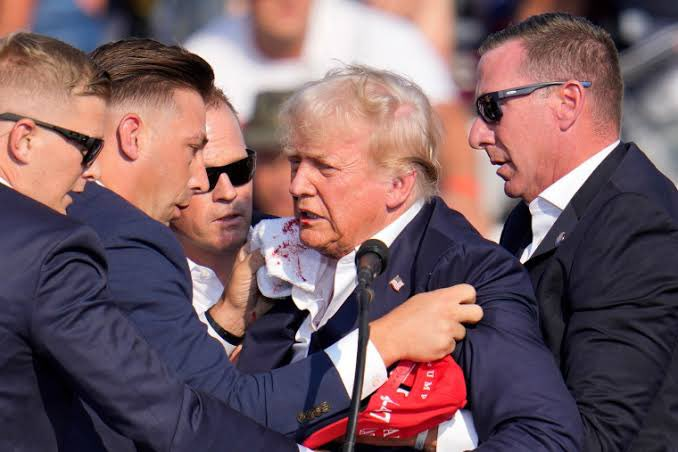
Trump was targeted days before he was to accept the Republican nomination for a third time. He was shot on the ear and whisked off the stage at a rally in Butler, Pennsylvania after gunshots rang through the crowd.

Trump’s campaign announced Monday that the former president was doing “fine” after the shooting, which he said pierced the upper part of his right ear.

The shooter was identified as Thomas Matthew Crooks, 20, who was fatally shot by secret service operatives.

Stories Continues after ad

Uganda-South Sudan electricity sharing agreement to receive $300 million funding

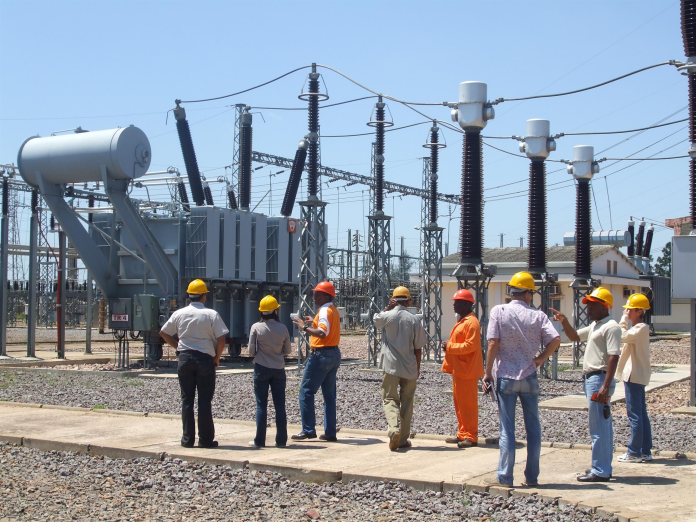
The Uganda-South Sudan electricity sharing agreement is set to receive over 300 million- US-dollar funding from international development partners to fund the project.

South Sudan has the world’s lowest electricity access rate – with only 7 percent of its 13 million population having access to electricity power, according to global data and business intelligence platform, Statista.

The power transmission agreement is expected to boost South Sudan’s electrification, create development and employment opportunities in the country.

Dr. Isaac Arikwe, the Program Coordinator of Nile Equatorial Lakes Subsidiary Action said South Sudan will receive about 100 million US dollars from the European Union, 59 million US dollars from the African Development Bank, and 148 US dollars will be given as a loan to Uganda by the AfDB.

“South Sudan is going to be given a grant. One portion of the grant will come from the European Union which is going to provide a grant of about 100 million, then the AfDB will give a grant of about $59 million,” Arikwe said.

Dr. Arikwe underscored that South Sudan will have to account for the deficit of about 25 million US dollars as a sign of ownership of the mega power sharing project between the two countries.

Arikwe said the project will boost South Sudan’s economic development and industrialization which will open job and business opportunities to the nationals.

“Electricity access in South Sudan is still at a very low level, this transmission line connecting the two countries will help improve electrification in both urban and the rural areas.”

“This will contribute, of course, to economic, socio-economic development including industrialization opening up job opportunities, business opportunities for the communities in South Sudan and even the revenue for South Sudan itself.”

In May 2024, the Ugandan government negotiated with a Chinese company a 180- million US dollars deal to build a hydro power transmission line to Juba.

Many businesses and households in South Sudan depend on diesel-powered generators to operate, and the main electricity supplier Juba Electricity Distribution Company (JEDCO) – hardly covers all residential areas of the capital.

The South Sudan government is scrambling between options of importing hydroelectricity from the region and building dams in a bid to find solutions to its energy problems.

In September 2023, South Sudan activated an agreement with Russia for the construction of a hydropower plant in the country.

The cooperation agreement reportedly signed in 2018, was revisited in a meeting in Moscow, a day after President Kiir met his counterpart, Vladimir Putin.

It came on the heels of uncertainties over the position of downstream countries like Egypt and Sudan, who have conflicted with Ethiopia over a newly built mega-dam.

South Sudan also signed an agreement in 2022 with Ethiopia to import 100 megawatts of hydroelectricity power for three years. The deal is yet to be implemented.

Stories Continues after ad

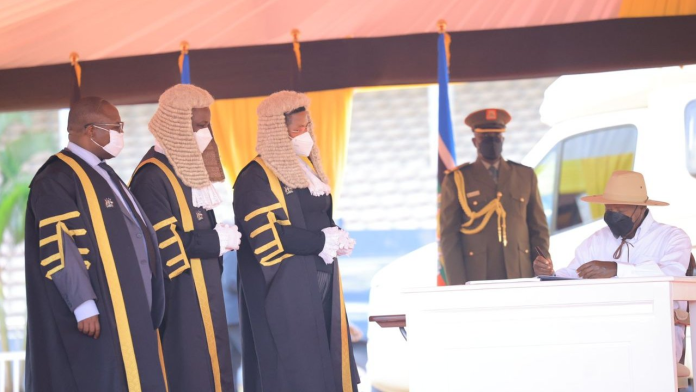
Museveni signs 19 bills into law

President Yoweri Museveni has signed into law 19 bills thus imposing a Shs1550 per litre levy on fuel, while Shs.500 has been imposed on each 50 kg of Lime, adhesive and Grout levy.

1. The Uganda Wildlife Authority (Amendment) Act 2024

2. The Uganda Registration Services Bureau (Amendment) Act 2024

3. The Registration of Persons (Amendment) Act 2024

4. The Uganda Trypanosomiasis Control Council (Repeal) Act 2024

5. The Agricultural Chemicals (Control) (Amendment) Act 2024

6. The Children (Amendment) Act 2024

7. The National Youth Council (Amendment) Act 2024

8. The Persons with Disabilities (Amendment) Act 2024

9. The National Women’s Council (Amendment) Act 2024

10. The National Council for Older Persons (Amendment) Act 2024

11. The Non-Governmental Organisations (Amendment) Act 2024

12. The National Library (Amendment) Act 2024

13. The National Planning Authority (Amendment) Act 2024

14. The National Population Council (Repeal) Act 2024

15. The Physical Planning (Amendment) Act 2024

16. The Value Added Tax (Amendment) Act 2024

17. The Tax Procedures Code (Amendment) Act 2024

18. The Stamp Duty (Amendment) Act 2024

19. The Income Tax (Amendment) Act 2024

President Museveni has also backed the imposition of Shs50 per litre of mineral water, bottled water and other water purposely for drinking. He has also approved a 0.5% levy on cash withdrawals on new payment systems, like Chippa cash, Wave, but agent banking has been exempted from the same.

President Museveni’s decision to sign into law the Value Added Tax Amendment Act 2024, will give Uganda Revenue Authority (URA) powers to collect VAT on donated goods or services given by an employer to an employee. The President also approved the move to increase the threshold for claiming for refund of overpaid tax from Shs5, 000,000) to Shs10M.

The government had initially proposed the threshold to be increased to Shs50M, but MPs rejected the rate, saying it would negatively affect businesses.

However, the National Commission for UNESCO (Amendment) Act 2024 and the Higher Education Financing (Amendment) Act 2024 were returned unsigned.

President Museveni’s decision to sign into law the Income Tax Amendment Bill 2024 means that Government’s initial proposal to impose a 5% gains tax on sell of land in cities or municipalities, except the principal place of residence; and rental property that is subject to rental tax, has finally been dropped.

The Uganda Registration Service Bureau Amendment Act 2024 and the Registration of Persons Amendment Act 2024 signal the transfer of mandates to conduct civil marriage and registering other marriages to NIRA. The government argued that the move would allow URSB to focus on its core role of business registration.

Stories Continues after ad
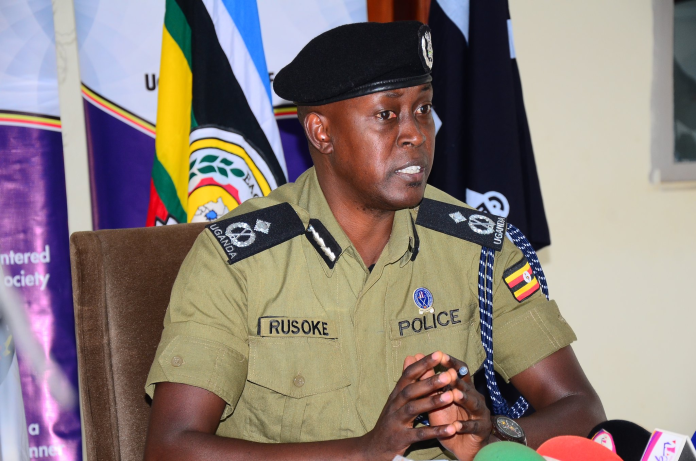
Police warns against planned anti-corruption march to Parliament

Police Publicist Kituuma Rusoke.

Uganda Police has warned a section of unidentified Ugandans planning to march to Parliament on July, 23 in the protest of corruption by the legislators.

Police Spokesperson, Kituuma Rusoke revealed that they are aware of the mobilization efforts, but however, time of commencement and organizational details are unclear.

“Uganda Police is reliably informed of ongoing mobilization efforts on social media calling for people to march to parliament. Unidentified organizers have circulated placards urging people to gather on all Kampala streets on Tuesday, July 23, 2024 but the time of commencement and organizational details are unclear.

He added that given the lack of transparency and potential for disorder, the police strongly warn against proceeding with this match.

“Uganda Police Force is issuing a clear warning against attempts to incite violence or breach public order through uncontrolled demonstrations,” Rusoke said.

He noted that the right to a peaceful protest will be respected, but police will not tolerate attempts to incite public disorder.

“UPF urges persons who wish to exercise their rights such as the right to assembly and demonstrate to always work collaboratively with it to ensure that they don’t aid persons of ulterior motives to hijack these expressions to accomplish criminal intentions,” he guided. 

Stories Continues after ad
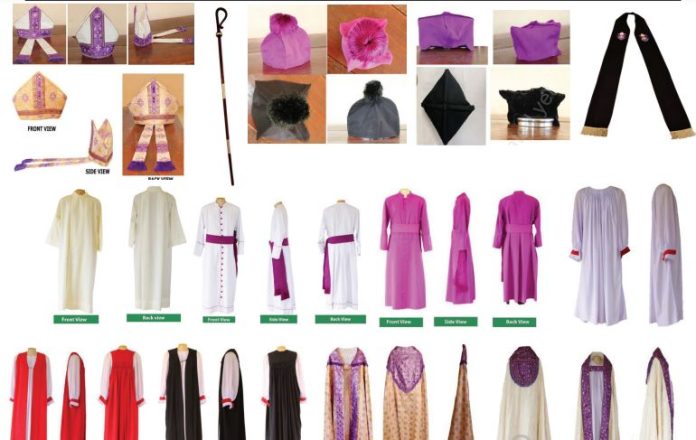
Church of Uganda warns against unauthorized use of registered trademarks for bishops’ vestments

Church of Uganda Vestments.

Church of Uganda has warned religious leaders in different sects and the general public against the use of its religious vestments (clothing) that are duly registered trademarks for 42 bishops of the Church of Uganda.

The vestments that are fully registered by the Uganda Registration Services Bureau (URSB) are protected under the Intellectual Property Laws of Uganda and only bishops of the Church of Uganda are permitted to `don these registered vestments.

In a joint statement issued by the bishops of the Church of Uganda, any unauthorized use of these vestments is an infringement of the Church of Uganda trademark rights.

According to the Provincial Chancellor, Naboth Muhairwe, individuals or entities found wearing or utilising these vestments will be prosecuted by the Church of Uganda for trademark infringement.

It has become a trend for clerics, especially from Pentecostal churches (born again) to wear Anglican liturgical vestments for Bishops and the Archbishop. The latest incident was when Dr. Joseph Sserwadda, the head of Ndeeba Victory Church, and Pastor Nathan Ibrahim Turyamureeba appeared dressed like Anglicans during a consecration event.

The two drew strong criticism on social media for wearing the Anglican vestments as well as rings.

This led to the formulation of a committee to investigate the misuse of the church liturgical vestments (official attire) by clerics from different denominations. The committee recommended the registration of church of Uganda vestments with URSB.

Stories Continues after ad

M-Cash Uganda wins prestigious PayTech for its innovative E-Voucher system

M-Cash’s CEO and Founder, Mrs. Edith G. Kutesa, during an event held at Merchant Taylor’s Hall in London recently.

M-Cash Uganda has been awarded with the prestigious PayTech award for the Best Contribution to Economic Mobility in Payments, with the innovative E-Voucher system.

The PayTech Awards, organised by Fintech Futures, are dedicated to recognising and celebrating outstanding achievements in the payments industry.

The award was received by M-Cash’s CEO and Founder, Mrs. Edith G. Kutesa, during an event held at Merchant Taylor’s Hall in London recently.

Ms Kutesa said: “This is a reward for our efforts. This recognition is a significant milestone for our community, and we are incredibly proud of this achievement.”

“Winning this award is a testament to the hard work, dedication, and passion of our entire team, and symbolizes M-Cash’s unwavering commitment to delivering the latest technologies and innovative financial services to the last mile,” she added.

The M-Cash E-Voucher system was created to provide a simple payments platform for local governments and impact partners to offer transparent subsidies to developing communities. The system, built by M-Cash developers, was first implemented in 2019-2022 for the Agriculture Cluster Development Program(ACDP), led by the Government of Uganda in partnership with the World Bank.

 The M-Cash E-Voucher system was implemented to help farmers access subsidized quality Agro-inputs, to boost productivity as well as foster financial inclusion.

“Our E-Voucher system also addressed challenges like lack of real-time fund visibility, delayed Agro-dealer payments, and lack of traceability,” M-Cash says.

Additionally, it featured e-KYC for quick enrolment, an e-commerce platform, e-wallet accounts, a reporting module, and modern technologies like AI for face detection, cloud computing, and instant voucher redemption.

Within the subsidy program, M-Cash E-Voucher served 210,000 farmers with 49% female enrolment, onboarded 221 Agro-dealers, and achieved over 170,000 successful redemptions across 57 districts.

M-Cash trained over 198,000 people on system use and 88,000 on financial literacy. The system improved productivity, financial inclusion, gender equality and access to genuine inputs for small-scale farmers.

Despite challenges like poor network connectivity and database issues, M-Cash maintained a 99% system uptime which furthered the project’s success. The E-Voucher system fostered new internet users and integrated ICT in agriculture, benefiting farmers by providing easy access to Agro-inputs and financial services.

Stories Continues after ad