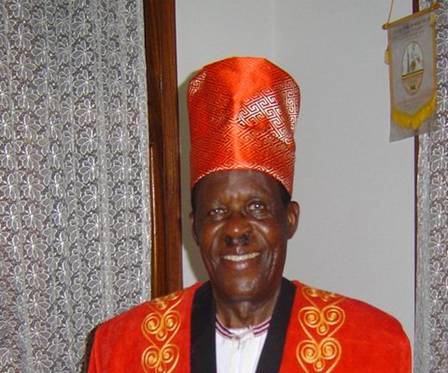
Kampala-The Acting Prime Minister of the Adhola Cultural Institution, Thomas Okoth Nyalulu has written to Members of Parliament from Tororo district opposing the move by the district council to divide Tororo County into two.
According to Mr Nyalulu, creating Tororo North and Tororo South would cause disunity and disadvantage some communities in the district.
He further asserts that the move relegate the people of West Budama ‘to beggars on their own ancestral land’.
“On behalf of Tieng Adhola, the Padhola cultural institution, I thank you for the work you are doing in representing our people. We have reliably learnt that government is proposing to add one or more constituencies to Tororo district and in particular to split Tororo County into two.” Mr Nyalulu wrote on May 16, 2015.
He added: “As cultural institution we have no objection to splitting Tororo County into two and creating more sub-counties. However, we have received bitter compliant from our subjects in West Budama that Tororo County, smaller in geographical area and population, would have more (14) sub-counties against (12) sub-counties in West Budama. And more sub-counties means more councilors in the district council making the interests of the people of West Budama seriously compromised and thirdly, people of West Budama would be grossly underrepresented in Parliament.”
Nyalulu says as a cultural institution, they have been promoting unity and harmony among the people of Tororo district, being cognizant of the cosmopolitan nature of the district, and based on the principle that no person or group of persons deserves to be treated unfairly under whatever circumstances.
He however, warns of the likely consequences should the Japadhola from West Budama be ignored.
“Hence the reason for writing to you MPs is to alert you of possible negative outcomes of this inconsideration of the fears of our subjects in West Budama. The subjects are not prepared to just watch when they are being relegated to beggars on their own ancestral land,” he said.
On May 18, 2015, the Minister of Local Government Adolf Mwesige wrote to the district Chairman of Tororo indicating to him that the ministry had received a district council resolution requesting for the creation of Tororo County North and Tororo County South.
However, Mwesige also said that he had dismissed claims by a delegation led by the district Speaker that had told him the council minutes asking for the creation of another county in Tororo had been rescinded.
“Henceforth, it was unanimously agreed that the earlier decision of the council to subdivide Tororo County into Tororo County North and Tororo County South stands however, there was a strong urge from all the leaders to create another county out of the current West Budama County,” Minister Mwesige wrote.
The issue of sub divisions in Tororo is a prickly matter and in June, 2005, a man in Molo sub-county stunned crowds including President Yoweri Museveni who was in the area at the time, when he (the man) ate a rat to demonstrate the community’s desire to get a new district
Facts about Tororo.
Tororo district has two rural counties which include West Budama and Tororo Counties and 15 rural sub-counties and one in town. The Municipality, which forms the third County, has two divisions; Western Division and Eastern Division.
Tororo has a total population of 402,621 with sex ratio of 94.99 for every 100 females. The population growth rate is at 2.7 percent and 90.9 percent of the population lives in the rural area whereas only 9.1 percent live in urban areas.
As the country commemorates Heroes Day on June 9, it is important to also look back at other Ugandans who have made contributions to Uganda since Independence in 1962.
And, in serialized episodes of Powerful Voices’ the eagleonline will review 100 of the prominent and powerful players on Uganda’s socio-economic and political scene, some, dead or living, beginning with the 1960s.
Kabaka Fredrick Mutesa II
1. Kabaka Fredrick Walugembe Mutesa II
The Kabaka of Buganda, Edward Frederick David William Walugembe Luwangula Mutebi Mutesa II was the first President of independent Uganda. King Freddie, as he was affectionately referred to, led Uganda from 1963 to 1966, when he was forced to flee the country after falling out with the then Prime Minister, Milton Obote. He died in exile in London in 1969 aged 45, and his remains were returned and buried in Uganda after Iddi Amin overthrew the government of Milton Obote, Uganda’s second president. Mutesa II reportedly had 12 wives and 21 children, among them the reigning Kabaka of Buganda, Ronald Muwenda Mutebi.
Dr Apollo Milton Obote
2. Apollo Milton Obote
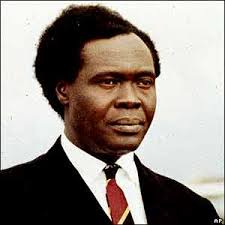
The first post-Independence Prime Minister of Uganda in 1962, Obote was one of the founders of the Uganda Peoples Congress (UPC). Commonly known as AMO by the ‘Congressmen’, he is so far the only man to rule Uganda as Prime Minister and later President. He is also the only man who has ruled Uganda twice, from 1962 to 1971 and from 1980 to 1985. Both his regimes were ended by military coups orchestrated by his serving Army Commanders, Major General Iddi Amin and Lieutenant General Tito Okello Lutwa, respectively.
In 1971 Obote was overthrown as he attended the Commonwealth Summit in Singapore and lived his first exiled life in Tanzania, while on his second exile life he lived in Zambia.
The Patriarch of a political family, Obote’s wife Miria and son, Lira Municipality Member of Parliament Jimmy Akena have also at some time led the UPC, with the latter becoming party president just last week. Born in 1925, Obote studied at Busoga College Mwiri and later at Makerere College (University), where he was reportedly expelled for his radical ideas against colonialism.
He died aged 80 while undergoing treatment at a South African hospital in 2005 and was accorded a State Funeral. He was later buried at his ancestral home in Akokoro, Apac district. Obote is survived by the widow, Miria Kalule Obote, and five children.
Yusuf Kironde Lule
3. Professor Yusuf Kironde Lule
He was the third President of Uganda, and ruled the country for 68 days, from April to June 1979. Lule, an academic-turned-politician replaced Iddi Amin. He was overthrown in a ‘palace coup’ by the National Consultative Council (NCC), the de facto post-Amin parliament which comprised of prominent Ugandans like Professors Edward Rugumayo, Omwony Ojok among others.
After his ouster, Lule was to form a rebel organization, the Uganda Freedom Fighters (UFF) but was later to join forces with current President Yoweri Museveni’s Peoples Resistance Army (PRA) in 1981, to form the National Resistance Movement/Army (NRM/A), and at one time becoming the Chairman of the organisation. He died in London aged 73, and was buried at Kololo, in the Heroes Corner.
4. Godfrey Lukongwa Binaisa Kayitiro (QC)
Binaisa
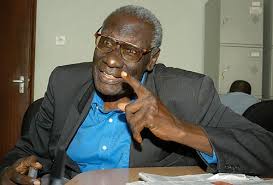
Born in 1922, Binaisa was the fourth president of Uganda for only 11 months, from June 1980 to May 1981. A lawyer, Binaisa was the first and only Ugandan to acquire the title Queens Counsel (QC), and was also the first indigenous Attorney General, from 1962 to 1968. He is most remembered for the ‘Pigeonhole Constitution’ of 1966 and also for his gaffe of sending then military strongman, Army Chief of Staff Brigadier David Oyite Ojok to Algeria as Ambassador in 1981. It is this move that led to his ouster. Binaisa died in 2010 at the age of 90, but this was not before he married an internet acquaintance, Japanese Tomoko Yamamoto. He had earlier lost his first wife, Irene Marjorie Kabamori from Tooro.
6. Benedicto Kiwanuka
5. Benedicto Kagimu Mugumba Kiwanuka
Was the first indigenous pre-Independence Prime Minister of Uganda in 1961. Born in 1922, Kiwanuka, a British-trained lawyer, was the leader of the Democratic Party (DP). After the overthrow of Apollo Milton Obote by Iddi Amin in January 1971, Kiwanuka was made Chief Justice. He was to be killed by Amin in 1972, aged 50. One of his children, Maurice Kagimu Kiwanuka, was once a Member of Parliament representing Bukomansimbi constituency. The younger Kiwanuka is currently Uganda’s Ambassador to Nigeria.
William Wilberforce Nadiope III
6. William Wilberforce Kadhumbula Nadiope III
The second Kyabazinga of Busoga, William Wilberforce Kadhumbula Nadiope III became Uganda’s first Vice President under Milton Obote, from 1963 to 1966.
At home in Busoga, he was elected Kyabazinga twice, serving between 1949 to 1955 and between 1962 to 1966.
As Kyabazinga, Nadiope III is remembered for ending the colonial practice, where his subjects were required to supply rat tails to the colonialists to prove that they had killed a rat. This was in an effort to curb the onslaught of smallpox. His Kyabazingaship was cut short when kingdoms were abolished by Milton Obote in 1966.
His grandson, William Wilberforce Kadhumbula Gabula Nadiope IV, who was born in 1988, is the current Kyabazinga of Busoga.
Henry Waako Muloki
7. Henry Waako Muloki
Like Kadhumbula Nadiope III, Henry Waako Muloki was twice the Kyabazinga of Busoga, first between 1955 and 1966 when the Prime Minister Milton Obote abolished kingdoms, and then from 1995 until he passed on in 2008, aged 87.
Brigadier Shaban Opolot
8. Brigadier Shaban Opolot
The first indigenous Commander of the Uganda Army, Brigadier Shaban Opolot joined the military in 1945, under the then Kings African Rifles (KAR). Brig Opolot is best remembered for taking a tough stance against Milton Obote’s intentions to abolish the Kingdoms in Uganda, and then particularly for refusing to lead an attack on Mmengo establishment at the Lubiri. He died in 2005 aged 86.
Grace Ibingira
Grace Ibingira
Born in 1932, Grace Ibingira was one of the founding members of the Uganda Peoples Congress. He was a member of the pre-Independence parliament, the LEGCO and also a Member of Parliament representing Ankole West constituency after Independence.
As the Minister of Justice in the first post-Independence government, Ibingira is largely remembered for designing the current Flag of Uganda. He was one time UPC Secretary General and is also remembered for attempts to topple Apollo Milton Obote from both party and national leadership, after the two fell out over the Gold Scandal.
Akena Adoko
Akena Adoko
A pompous cousin to former President Apollo Milton Obote, Dr Naphlin Akena Adoko was the first indigenous head of the spy agency, the dreaded General Service Unit (GSU). A lawyer by profession, Akena Adoko was one time the President of the Uganda Law Society.
After the overthrow of his cousin Obote in 1985, Akena Adoko fled to the United Kingdom and set out on a tricky career journey as an advocate yet the Law Society (UK) had not cleared him to practice in that country. He passed on in exile in the UK in the 2000s.
Daudi Ochieng
Daudi Ochieng
The son of an Acholi chief, Daudi Ochieng was once a Member of Parliament representing the Kabaka Yekka party, a loose alliance formed to champion the interests of Buganda in the greater Uganda.
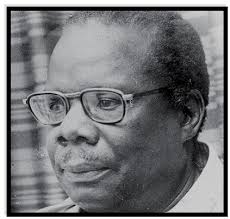
Born in 1925, Ochieng enjoyed a special relationship with Kabaka Mutesa II, the first President of Independent Uganda, and as a result he was made a member of the Buganda parliament, the Lukiiko. He was the one who moved the Gold Scandal motion in the Uganda Parliament, alleging that then Prime Minister Milton Obote and Army Commander Colonel Iddi Amin, were engaged in smuggling gold from the Congo Kinshasa, current Democratic Republic of Congo (DRC) in the 1960s. A Wales-trained Agriculturalist, Ochieng died under mysterious circumstances in 1966 aged 41.
Abu Mayanja
Abu Mayanja
Born in 1929, Abu Mayanja is one of the most prominent Ugandan politicians and he held influential offices in almost all post-Independence governments. He was also at one time a Minister of Education in the Buganda government, having earlier participated in the formation of Uganda National Congress (UNC), a pre-Independence political organization that also had big names like Ignatius Musaazi Kangaave and Milton Obote. He studied law at the University of Cambridge in the United Kingdom after being expelled from Makerere University College for engaging in political agitation to bring colonialism in Uganda to an end. He was also a pan-Africanist.
Mayanja died in 2005 aged 76 and is survived by wives and several children.
Eric Otema Allimadi
Eric Otema Allimadi
Born in 1929, Eric Otema Allimadi was the second Prime Minister of Uganda from 1980 to 1985, during Milton Obote’s second regime. Earlier, between 1979 and 1980 he had served as Foreign Minister. He died in 2001.
Adoko Nekyon
Adoko Nekyon
A cousin to former president Milton Obote, Al Haj Ali Akbar Adoko Nekyon was the first post-Independence Minister of Information, Broadcasting and Tourism in the 1960s. He also served as Minister for Health and Minister of Rehabilitation and Social Services between 1988 and 1980, under the NRM government.
Alex Ojera
Was a Minister of Information serving under the Obote 1 regime. He was killed in 1972 by Iddi Amin.
Basil Bataringaya
Basil Bataringaya
He was the internal affairs minister at the time Milton Obote was overthrown in 1971. A former Secretary General of the Democratic Party in the 1960s, Bataringaya also served as Minister for Local Government in the first self-governance regime of Benedicto Kiwanuka. He led the first cross-over of Parliamentarians, taking with him six other DP MPs to join the Uganda Peoples Congress, after falling out with DP party leader Kiwanuka. One of the earliest victims of regime change, Bataringaya was killed during Iddi Amin’s reign in 1972.
Boniface Byanyima
In his 90s, Boniface Byanyima is a retired politician who was a Democratic Party Member of Parliament in the 1960s, representing Ankole. Mzee Byanyima currently stays at his rural home in Ruti, Mbarara and is the father of another former fiery politician and current Oxfam International Executive Director Winnie Byanyima. Opposition stalwart Col. (rtd) Dr Kizza Besigye marries Winnie and together they have one son, Anselm.
John Babiiha
At the time of Obote’s ouster in January 1971 John Babiiha was the Vice President.
He was the second Vice President of Uganda, serving from 1967 to January 1971. Nothing much is remembered about him, however, a road in Kamowokya, a city suburb, is named after him.
Shaban Kirunda Nkutu
Shaban Kirunda Nkutu
Born in 1930, Shaban Nkutu served as Minister of Works, Transport and Communications in the first post-Independence cabinet of the Milton Obote government, and later worked as Minister of Health between 1966 and 1967, during which time government constructed several referral hospitals across the country.
He was later to be killed during Iddi Amin’s regime in 1973, aged 43. He was reportedly related to one of Amin’s wives but this did not deter the latter from killing him. Nkutu belongs to one of the royal clans of Busoga
Nkutu’s remains were recently exhumed and given a decent burial at his ancestral home in Bugweri County.
Paulo Muwanga
Paulo Muwanga
Born in 1921, Paulo Muwanga was the Vice President of Uganda between December 1980 and July 1985. Earlier, between May and December 1980, Muwanga was the Chairman of both the Presidential Commission and the all-powerful Military Commission, the de facto presidency, where he was deputized by current Ugandan President Yoweri Museveni. The two men were later to fall out after Muwanga supervised an election which Museveni said was rigged.
In a surprise move, after the overthrow of Obote in 1985, Muwanga, immediate former Vice President at the time was named Executive Prime Minister by the ruling military junta of Tito Okello Lutwa and Lt. Gen. Bazilio Olara Okello.
Muwanga also worked with the Foreign Service in several Ugandan missions abroad including France, where he reportedly sold off all Embassy property during the Amin reign in the 70s and fled to the United Kingdom.
He died in 1991 aged 70.
Mustafa Adrisi
Mustafa Adrisi
Born in 1922, Gen Mustapha Adrisi was the third Vice President of Uganda, serving under Iddi Amin between 1978 and 1979. Until his death in 2013, Gen Adrisi was living a quiet life in his home town of Arua. He is reportedly survived by several wives and children.
Luke Kercan Ofungi
Luke Kercan Ofungi
Born in Okoro County, Nebbi District in 1934, Luke Kercan Ofungi joined the Uganda Police in 1954 as a Police Constable but rose through the ranks, thrice becoming the Inspector General and serving under four Presidents: Iddi Amin, Apollo Milton Obote, Tito Okello and Yoweri Museveni. He also served as the Deputy Inspector General of Police during the 11 month government of Godfrey Lukongwa Binaisa, the second President in the post-Iddi Amin era.
Possibly one of the most decorated IGPs, Ofungi died in 1990 aged 56 and was accorded a state funeral.
Interestingly, after his death he was accorded a 24-month retrospective posthumous contract to serve as IGP for the ‘fifth term’, effective 1989.
Joseph Mary Mubiru
Joseph Mary Mubiru
An Economist, in 1966 at only 37 years Joseph Mary Mubiru was the first Governor of the Bank of Uganda, having worked with the United Nations at the beginning of his career. He also worked with the defunct Uganda Commercial Bank (UCB) as its Chief Executive. He was also instrumental in establishing the African Development Bank (ADB) in 1964. Mubiru lost his job at the central bank when Iddi Amin took over government in 1971, and it is believed he was later killed on the orders of the former president.
Today, his legacy still lives on and he is remembered through the annual Joseph Mubiru Memorial lectures, organized by the Bank of Uganda.
John Robert Elangot
An Economist, John Robert Elangot served in various capacities in the 1960s and 1970s, rising to become the Governor of the Bank of Uganda. Before that he had also worked as the Deputy Governor. He is now retired.
Leo Kibirango
An Economist also, Leo Kibirango served as the Governor of the Bank of Uganda from 1981 to 1986. After leaving the central bank, Kibirango had a stint with the Capital Markets Authority, as Chief Executive.
Charles Kikonyogo Nyonyntono
An Economist, Charles Kikonyogo Nyonyintono was a Governor of the Bank of Uganda in the late 70s, immediately preceding Leo Kibirango.
KAMPALA: East African presidents on Saturday signed a cyber-security that will bond regional efforts to fight cyber-crime especially terrorism.
This will see Uganda, Kenya, Rwanda and South Sudan form a joint intelligence center in Nairobi to help fight terrorism.
The pact is part of East African Northern Corridor integration projects being undertaken by the four East African countries that are now known as “coalition of the willing” after Tanzania opted to go slowly on some proposed EAC projects.
Presidents Paul Kagame of Rwanda and Uhuru Kenyetta of Kenya were in Uganda for summit on East African northern corridor integration projects and South Sudan was represented by its defence minister.
The East African states are undertaking various infrastructural projects including building standard gauge railway, east African single visa and removal non-tariff barriers and oil refinery.
The leaders also signed another agreement on the total liberalization of labour and services in the four countries that include; Uganda, South Sudan, Kenya and Rwanda.
The agreement will see Uganda finally giving waiver of the work permit fees on Rwandan and Kenyan professionals to follow Kenya and Rwanda which had given the waiver to the workers from the region.
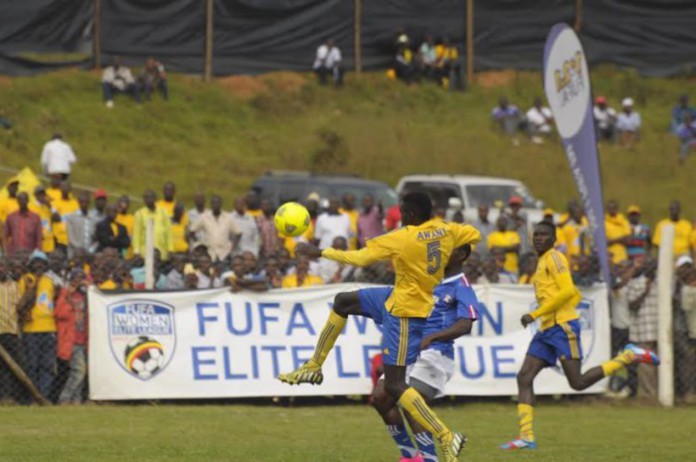
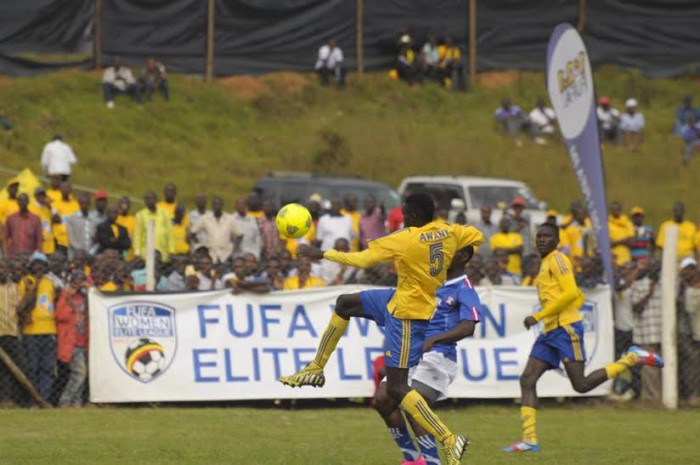
KCC’s defender Awanyi clears ball during the Uganda Cup final
KCC’s defender Awanyi clears ball during the Uganda Cup final
SC Villa 1-0 KCC (Abandoned After 72 Minutes)
What started as a rosy evening ended in total confusion and shame for Ugandan Football as the Uganda Cup final descended into chaos as KCC FC took on SC Villa at the Kyamate sports ground in Ntungamo on Saturday.
With 72 minutes played, the game ended prematurely after pitch invasion by a section of KCC fans after Villa took the lead through a controversial penalty that was converted by Erisa Ssekisambu in the 68th minute.
Center referee, Robert Donney, whose appointment was questionable and debated, awarded a penalty on 64th minute after ruling that defender Joseph Ochaya had fouled Chriszetom Ntambi, which was clearly outside the forbidden area and with assistant referee Robert Makwali already calling for an off-side on Ntambi.
Fans invade the pitch at Kyamate sports ground in Ntungamo
KCC players, joined by the entire bench bitterly protested the decision. After a 5 minute scuffle, the penalty was taken, as Ssekisambu sent KCC goalkeeper Yasin Mugabi the wrong way.
As SC Villa players celebrated the goal, disgruntled KCC fans and players continued with the protests.
Play resumed, but KCC fans invade the pitch after midfielder Hakim Ssenkumba fouled Abdul Karim Kasule, a foul that referee Donney rewarded with a straight red card.
Kampala City Executive Director, Jenifer Musisi walked across the playing turf to try clam the supporter who never listened to her peal.
Police’s efforts to calm the situation fell on deaf ears thus forcing abandonment.
By press time, FUFA Executive and FUFA Competition committee were involved in an emergency meeting at Ntungamo Resort Hotel.
“A decision shall be communicated after the FUFA Executive meeting” Ahmed Hussein, FUFA’s spokesperson told the media.
This was the 41st Uganda Cup final; both SC Villa and KCC have won the trophy 8 times apiece with Express the record winners on 10.
S.C Villa XI: Nicolas Ssebwato (G.K), Derrick Walulya, Isaac Muleme, Fahad Kawooya, Hassan Wasswa, Isaac Kirabira, Erisa Ssekisambu, Augustine Nsumba, Victor Emenayo, Denis Kamanzi, Chrizestom Ntambi
KCC XI: Yasin Mugabi (G.K), Saka Mpiima, Joseph Ochaya, Timothy Awanyi, Ayubu Kizza, Ivan Ntege, Owen Kasule, Hakim Ssenkumba, Herman Wasswa, Michael Birungi, Tom Matisko
Defense, momentum and elite players delivering top performances mean everything.
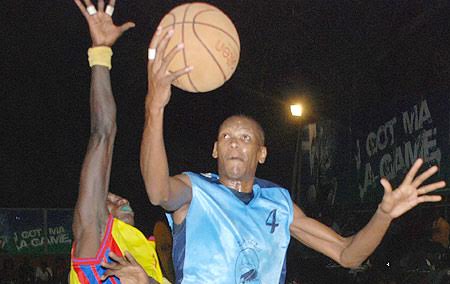
Kampala International University (KIU) Titans had all three working for it Friday night, along with a firm belief to subdue Stanbic Warriors 82-75 in the Airtel National Basketball League at indoor stadium, Lugogo.
“We need resilient performances, Warriors are top team with proven players, this is a big win for momentum,” Hamza Nyambogo, the head coach said.
Warriors edged the first half, 11-13 (1st quarter) and 17-all (2nd quarter) inspired by new signing Josh Johnson who dropped a game high 24 points in an ineffectual effort.
Norman Blick (20) team high, Henry Malinga (12) and Chris Omanye (12) help KIU suppress Warriors 27-21 (3rd quarter) and 27-24 (4th quarter) as the University side continue to make a statement of intent for this year’s title.
“KIU were better today,” admitted coach Gad Eteu. “We never executed on defense,” he added.
Mark Okidi (16), Jude Ochen (14) and Joshua Etalu (12) points were futile as the Warriors suffered their second defeat in a space of three days to another University side.
Muhayimina dropped 18 points for KCC Leopards
In the ladies category; Namuwaya Muhayimina (18) a game high, Martha Soigi (13) and Joy Chemutai (10) points spurred KCC Leopards 56-46 win over Nkumba Lady Marines to remain unbeaten.
Barbara Gimbo (15) team high and Stellah Nikuze (14) points weren’t enough for Nkumba Ladies.
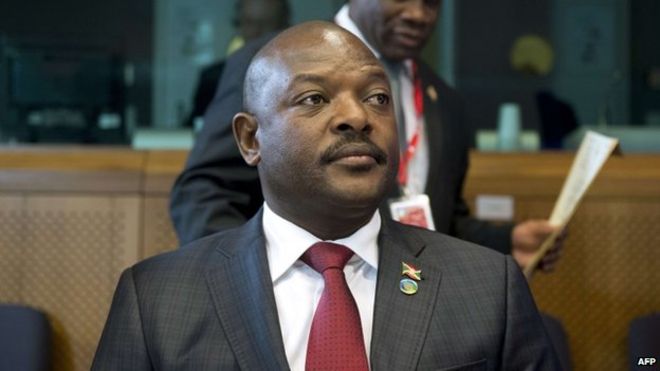
Burundi’s government has postponed parliamentary and presidential elections that were due this month.
Burundi has been hit been by deadly protests and a failed coup since President Pierre Nkurunziza announced his bid for a third term in April.
Mr Nkurunziza has been under pressure from both African and Western governments to postpone elections.
Burundi’s Foreign Minister Alain Nyamitwe told the BBC that elections would be held by 26 August.
This is when the constitutional limit of the government ends, he said.
‘No security’
One of Burundi’s main opposition leaders, Agathon Rwasa, told BBC’s Newsday programme that Mr Nkurunziza was a “dictator” who should step down.
Elections could not be held until security improved, a neutral electoral commission was appointed and a crackdown on private media ended, he said.
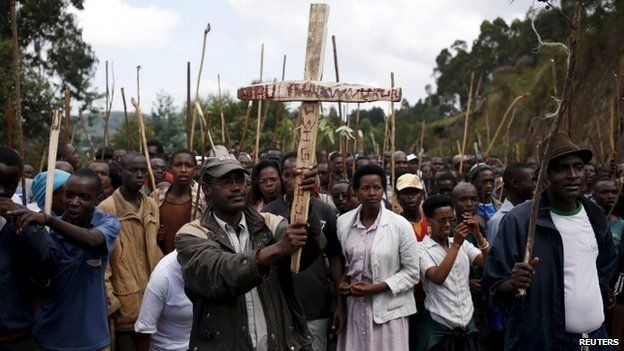
Protesters are demanding that the president quit
The international community needed to get involved to help “secure conditions for good elections”, Mr Rwasa added.
“We are calling for democracy and not for a dictatorship,” he said.
The parliamentary elections had been scheduled to take place on Friday and the presidential poll on 26 June.
Some protesters have carried crosses with “Death to the president” written on them
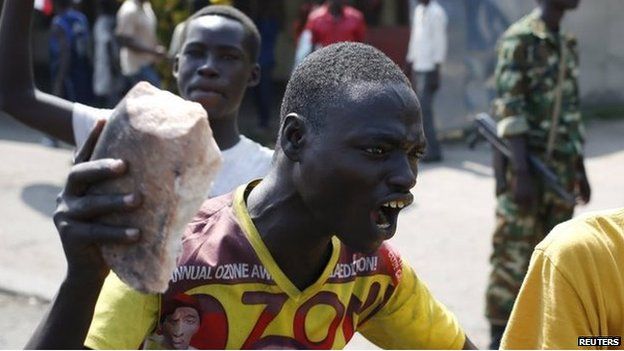
The government has accused the demonstrators of being “terrorists”
BBC World Service Africa editor Richard Hamilton says it looks as though Mr Nkurunziza has finally bowed to outside pressure to postpone these controversial elections – certainly from regional leaders if not Western governments.
However, the move is unlikely to stop the protests which have killed more than 20 people, he says.
Last weekend, regional leaders meeting in the Tanzanian city of Dar es Salaam called for both the delay and an end to the violence.
Opposition parties in Burundi said earlier on Wednesday they would be prepared to resume talks with the government on the crisis.
The opposition says the 51-year-old Mr Nkurunziza’s bid to extend his 10-year rules contravenes the constitution, which states a president can only serve two terms.
But Mr Nkurunziza argues that he is entitled to another term because he was first elected by parliament in 2005 – not voters. The Constitutional Court has ruled in favour of the president.
Earlier in May, he survived a coup attempt while he was in Dar es Salaam for talks with regional leaders on the crisis.
The coup was launched by Maj Gen Godefroid Niyombare, a former ally of the president.
Kampala-The Inspector General of Government, Justice Irene Mulyagonja has directed for the removal of Malaba Town Council chairman, George Alfred Obore from office.
Justice Mulyagonja in her June 2, 2015, letter to the Minister of Local Government Adolf Mwesige, she notes that following the criminal conviction in the Anti Corruption Court at Kololo and her earlier directives to Mwesige’s office, she requested that Mr Obore to be out of Office for ten years. However, Mr Obore filed an application in High Court challenging the ruling in 2013 for judicial review. The IGG’s letter is also copied to the Speaker, Town Clerk of Malaba town council as well as the Chief Administrative Officer.
“Reference is made to the above matter and our letter dated June 11, 2013. The Resident Judge of Mbale, Justice Henry I. Kawesa among others held that section of the Anti Corruption Act applies to a convict like Mr Obore. The applicant is disqualified from holding a public office for another ten years.” Ms Mulyagonja wrote
She added “This is to request you to take immediate action on the Court order and my previous communication. (Copies of our letter and Court order are sent herewith for ease of reference.” Mr Obore’s started when the IGG implicated him in a corruption scandal.
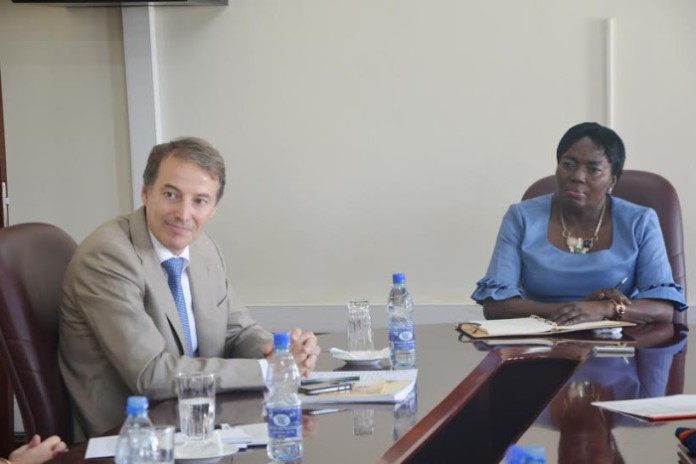
Meeting between EU Ambassadors and Speaker of Parliament, Rt. Hon. Rebecca Kadaga
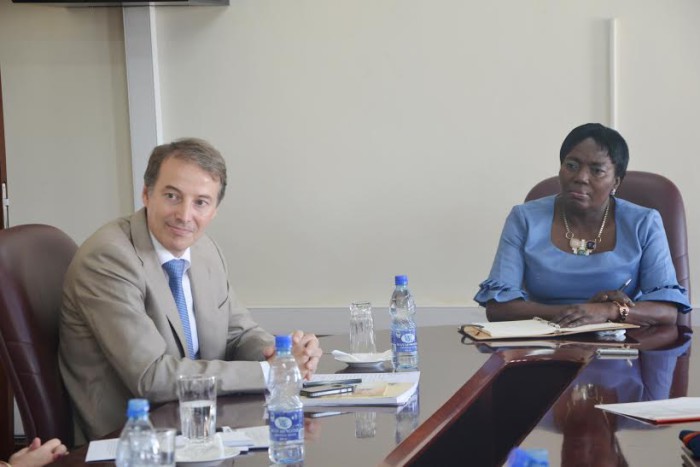
Meeting between EU Ambassadors H.E Kristian Schmidt and Speaker of Parliament, Rt. Hon. Rebecca Kadaga
Kampala-The European Union delegation to Uganda has expressed reservations about the ability for the recently tabled Constitution (Amendment) bill, 2015 to provide tangible reforms ahead of the general elections scheduled for 2016.
The delegation led by EU Ambassador H.E Kristian Schmidt today, June 5, 2015, met the Speaker of Parliament Rebecca Kadaga to discuss proposed electoral reforms and the Non Government Organisation bill, 2015, which seeks to provide a conducive and an enabling environment for the NGO sector.
“We see this as a missed opportunity. The [electoral reform] issue is becoming divisive with some sections of the public saying they’re not being taken seriously,” said H.E Kristian Schmidt.
The Constitution (Amendment) bill, 2015 intends to amend the Constitution and change the name of the Electoral Commission (EC) to the Independent Electoral Commission; prescribe the procedure for the removal of its Commissioners; increase retirement age for judges and justices; and for related matters.
“The Constitution (Amendment) bill did not meet our expectations, but we are outsiders. The civil society, clergy and public made a number of very good suggestions, which were ignored… the reforms presented are cosmetic and do not address substantial issues,” he added.
The delegation met the Speaker at her Boardroom and included the British High Commissioner, Alison Blackburne; Ambassador of Ireland, Donal Cronin; Ambassador of Italy, Domenico Fornara and the Germany Ambassador, Peter Blomeyer.
The ambassadors said the bill still gives powers to the President to appoint and dismiss Commissioners of the Electoral Commission.
“What we believe is the objective criteria in selection of Commissioners. They should be screened by the Judicial Service Commission or another independent body,” said Amb. Schmidt.
He also said that the EU is considering the President’s and Prime Minister’s request for an EU Election Observer Mission because of Uganda’s strategic location in a politically turbulent region. . However the EU wants to see a clear commitment by the government to conduct free and fair elections, he said.
On the NGO bill, Amb. Schmidt said that it is disappointing that the draft bill is not in line with the Ugandan NGO policy.
The delegation asked for enough time to be given for consultations of both the Constitution (Amendment) bill and the NGO bill in order to include a wide variety of views.
“You have the powers to steer the House; we entrust this to you, you have our full support,” said Amb. Schmidt.
Kadaga, said she was disappointed that the Constitution (Amendment) bill was presented towards the end of the 4th Session giving Parliament only a few months for its consideration.
“The bill should have been presented at the start of the 4th Session or during the 2nd or 3rdSession; [2015] is a political year, I do not see serious work done this year,” said Kadaga.
The 2nd Session of the 9th Parliament commenced in June 2012 ending May 2013, while the 3rdSession commenced in June 2013 to May 2014. The 4th Session commenced in June 2014 ending in May 2015. The term of the current Parliament will end at the end of the 5th Session in May 2016.
Political parties as well as the Electoral Commission have scheduled various activities leading up to the presidential and parliamentary elections scheduled for early next year.
Kadaga however said that civil society and political groups still have the opportunity to present their views to the Committee on Legal and Parliamentary Affairs which is now considering the Bill.
She also highlighted despite claims that the Constitutional (amendment) bill presented by government was shallow; the opposition MPs had not moved any Private Members bill to reflect their wide ranging proposals on electoral reforms.
Members in the meeting with Speaker of parliatment
On Tuesday next week Uganda will celebrate the Heroes Day, an annual event held to remember and recognize the gallant sons and daughters who have done this country proud through their unrelenting efforts.
In most countries heroes are celebrated for their valour in accomplishing either political, economic and social landmarks and it is good Uganda has taken up this issue as a matter of national importance, according those people who have excelled in particular fields, some living, others dead, a Public Holiday on June 9.
As a country Uganda has since Independence in 1962 encountered several challenges, brought about by numerous factors including political greed and debauchery, corruption, state-orchestrated murders and violence, to mention but a few. This needs reversal if we are to achieve our national objectives.
The National Resistance Movement (NRM) was the first government to come up with the idea of naming the various gallant children of Uganda, as we know them through the years. For that the NRM scored highly and deserves to be lauded for the notion because earlier, the Heroes Day, celebrated on July 27, was attributed to only one man, Apollo Milton Obote, the day being the one on which he returned from exile in Tanzania. It was a shame!
But that anomaly notwithstanding, the list of Uganda’s Heroes is supposed to be long. Unfortunately, every time the issue of these people comes up, there are murmurs of favouritism, in respect to the ruling government.
So, in order to disprove the skeptics and as we continue to recognize our heroes, there is need to effectively disseminate information about the procedures through which one is named a hero, and why one is named a hero. Against this background, arguments of political bias in naming of the heroes will become a thing of the past.
Indeed, when that happens Ugandans will not scratch their heads to remember that the good men and women were with us and the temperance, frugality, sincerity, justice, humility, honesty and integrity exhibited by our Heroes will be panacea for the rest of the citizenry, in respect to the challenges they face and expect to surmount.
However, Ugandans will forget the ‘bad’ men and women who had ‘almost everything’ but lacked virtues.
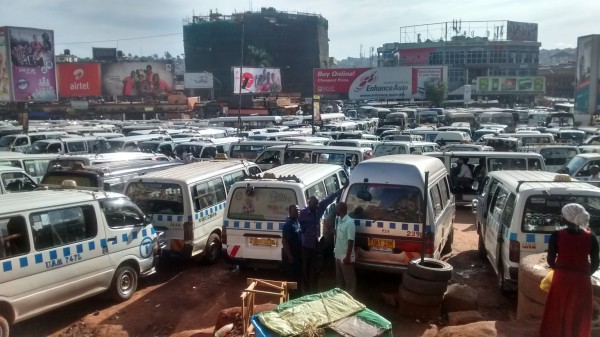
Uganda Passengers Protection Association (UPPA) has asked government to consider public transport as a budgetary component in the next financial year.
In an interview with eagleonline earlier today, the UPPA National Coordinator, Mr Badru Nyenje pointed out the importance of public transport enhancement ahead of the National Budget reading on Thursday, June 11.
“Public transport is the backbone of the country’s economy; we need more money to be allocated to this sector,” Mr.Nyenje said, adding: “We have been advocating for this since 2013 but they (government) have turned a deaf ear; we urge them to comply now.”
According to UPPA, the government has paid lukewarm attention to matters of passenger safety; bad roads (leading to several accidents); and equipping referral hospitals (especially along highways) to effectively treat accident victims.
UPPA further tasked government to teach its citizens on public transport and safety rules including available compensation in case of accidents, through the Motor Third Party insurance scheme.
“Most people are ignorant about the Motor Third Party Insurance and many insurance companies use it as an advantage to avoid the compensating victims of accidents,” Mr Nyenje noted.
Started in 2013, the Uganda Passengers Protection Association is an organization that advocates for the safety and rights of passengers in the country.
According to Mr Nyenje, the organisation works in collaboration with Uganda Passengers Protection Centre to lobby the government to strengthen existing regulations, improve aviation infrastructure and enhance other safety standards and policies that address the rights and needs of passengers.