Stanbic Bank
Stanbic Bank
21.4 C
Kampala
Stanbic Bank
Stanbic Bank
Home Blog Page 248

Court sets date to deliver its ruling against former LRA commander Thomas Kwoyelo 

Kwoyelo in the dock.

The International Crimes Division (ICD) of the High Court has set the date for delivering its ruling former Lord’s Resistance Army (LRA) commander, Thomas Kwoyelo.

The panel of judges led by Andrew Bashaija, Stephen Mubiru, Michael Elubu, and Duncan Gaswaga will deliver their ruling on July 12, following the hearing of the matter.

Kwoyelo, who emerged as the first witness, revealed that the top commanders of the rebel group were soldiers of former President Tito Okello, whom President Yoweri Museveni ousted.

He told the court that the former soldiers were in charge of training abductees and planning attacks. The abducted children did so because they would not consider escaping or recall directions to return home.

According to Juliet Harty Hatanga, the ICD deputy registrar, the closure of the defense hearing is a significant milestone. She noted that the defense will submit their written submission on May 25 ahead of the court ruling.

Kwoyelo’s trial resumed on April 17, 2023, at the International Crimes Division of the High Court (ICD) sitting at Gulu High Court in Gulu City, Northern Uganda; however, it stalled due to a lack of funds.

Having commenced the trial on September 24, 2018, the court had its first prosecution witnesses testify in March 2019, and since then, trial sessions have been held periodically between Kampala and Gulu.

Kwoyelo is grappling with 78 of the 93 counts of murder, aggravated robbery, extensive destruction of property, causing serious injury to body or health, and inhumane treatment, rape, and torture, among others, that he is alleged to have committed against the civilian population of northern Uganda, southern Sudan, and the northeastern regions of the Democratic Republic of the Congo (DRC).

Kwoyelo was abducted by the LRA on his way to school in 1987, remained in captivity, and later became a colonel.

The worst attack of the paramilitary group that was under the leadership of Joseph Kony occurred in Haute-Hele Province (DRC) in December 2008, the so-called Christmas massacre, where over 200 people were killed and over 800 houses razed down.

The rebels split up into groups to attack the villages of Faradje, Batande, Duru, Bangadi, and Burgi. They waited until people had gathered for Christmas festivities, then surrounded and killed them with axes, machetes, and clubs.

In March 2009, Kwoyelo was injured during hostilities between the Ugandan army and the LRA in the DRC and brought into Uganda for medical treatment and subsequently into custody.

His trial, however, commenced in July 2011. Before ICD, a division of Uganda’s High Court Constitutional Court resolved that the suspect’s trial should stop as it found grounds for the failure by the DPP and the Amnesty Commission to act on Kwoyelo’s application. In 2015, the Supreme Court decided that Kwoyelo’s trial should resume.

Stories Continues after ad

Minister Bahati tasks banks to lower interest rates for manufacturers

Minister David Bahati and some of the bankers executives.

State Minister for Trade, Industry, and Cooperatives David Bahati has appealed to commercial banks to reduce interest rates and facilitate affordable financing for Uganda’s manufacturing sector. Despite government support of over Shs1.3 trillion, the cost of capital remains a significant obstacle for manufacturers.

“The cost of capital is a significant obstacle hindering the growth of manufacturers in Uganda. We urge commercial banks to provide cheaper capital to manufacturers and support the development of industrial parks to boost industrial growth,” said Bahati.

“We are asking banks to provide cheaper capital because we believe this will boost the sector’s growth and contribute to Uganda’s economic development. The government is committed to supporting the growth of the manufacturing sector and will continue to provide incentives and support,” Bahati added.

Executive Director of Diamond Trust Bank (DTB), Godfrey Ssebaana, echoed Bahati’s concerns, citing the high lending cost of 17-20% as untenable for the manufacturing sector. “The high lending cost is a challenge for manufacturers. We need transparency to access sustainable finance options, which helps manufacturers access cheaper capital pools. Banks are prepared to assist manufacturers in accessing cheaper capital pools if they meet our sustainability criteria,” said Ssebaana.

Ssebaana emphasized the importance of transparency and proper financial structuring for manufacturers. “Manufacturers need to understand existing taxing strategies and seek expert advice on taxation, especially before purchasing machinery. This will help them avoid currency mismatches and reduce their financing costs,” he added.

The symposium brought together stakeholders in the manufacturing sector to discuss financing options and strategies to boost industrial growth. The event highlighted the need for cheaper credit and transparency to support the growth of the manufacturing sector in Uganda.

Stories Continues after ad

eTranzact Global Ltd, a digital payment solutions provider opens market in Uganda

eTranzact Global Limited, a leading provider of innovative payment technology solutions, has announced its expansion into Uganda, acquiring an operational license from the Central Bank of Uganda (BoU).

This strategic move marks a significant milestone for eTranzact Global Limited as it solidifies its presence in the East African market and demonstrates its commitment to driving financial inclusion and digital transformation in the region.

The BoU issued two licenses to eTranzact Global Limited under the brand name eTranzact Platform Limited, Uganda, in the categories of Payment Systems Operator and Payment Service Provider Class A. This enables the company to offer its robust and secure suite of payment solutions and services, including digital payment platforms, mobile banking solutions, and electronic fund transfers, to businesses and consumers in Uganda.

Group Chief Executive Officer and Founder of eTranzact Global Limited, Dr. Valentine Obi, stated that this expansion reinforces the company’s mission to empower individuals, businesses, and governments by enabling secure, seamless, and convenient financial transactions that are affordable.

“We are thrilled about acquiring the operational license from the Central Bank of Uganda. This achievement signifies our commitment to expanding our footprint globally and deepening financial inclusion on the continent,” Dr. Valentine Obi stated.

With its industry-leading payment solutions based on cutting-edge technology, eTranzact Global Limited aims to empower businesses with the convenience and security they need in today’s digital era. The company’s expansion into Uganda aligns with the government’s ‘Digital Uganda Vision’ to promote sustainable development and poverty eradication through digital innovation.

eTranzact Global Limited, a multiple award-winning technology organization, has been on an expansion agenda to extend its dominance in the digital financial infrastructure spectrum across the globe. Headquartered in the United Kingdom (UK) and publicly listed in Nigeria, the company has a presence across multiple African countries, including Ghana and South Africa. In recent years, it has increased its footprint across Africa with incorporations across Cameroon, DRC Congo, and Liberia.

The African Continental Free Trade Area (AfCFTA) has created a framework for technology-led companies like eTranzact Global Limited to scale across the continent, impacting various sectors such as digital infrastructure, logistics, and energy. eTranzact Global Limited and its subsidiaries across Africa are well-positioned to build technology solutions linking to the Pan African Payment and Settlement System (PAPSS) and other initiatives to accelerate the adoption of use cases that PAPSS supports, such as intra-Africa instant payment, embedded finance, and remittances services.

Stories Continues after ad

FDC urges gov’t to prioritize addressing flooding issues in lowlands 

The Forum for Democratic Change (FDC) party has tasked the Government prioritize the plight of Ugandans who are affected by floods and also put in place measures to mitigate floods in Uganda’s lowlands while considering watershed management, Flood-resistant infrastructure, Early warning systems, Climate-smart agriculture and community education.

This comes as thousands of people have been displaced and hundreds of homes destroyed by the floods, food crops and plantations gardens submerged which have also caused significant damage to infrastructure while the government has been very slow in providing relief supplies and assistance to affected communities, leading to frustration and anger among many affected areas.

“These strategies will help protect and restore wetlands, forests, and water sources to reduce runoff and absorb excess water. The flood-resistant infrastructure will lead to building flood-resistant homes, roads, and bridges to minimize damage,” FDC wrote in a statement.

FDC added that the government should also implement policies that prioritize flood risk management and climate change adaptation. And more so promote farming practices that adapt to changing weather patterns and reduce soil erosion.

Last week, heavy rainfall caused devastating mudslides in Kasese and Bunyangabu Districts in Western Uganda.

FDC noted that the mudslides have resulted into the tragic death of 7 people and displaced hundred from their homes. The victims were mostly women and children. Four women from the same family in Bunyangabu’s Buruma village Katebwa Sub county lost their lives when their house was completely buried by mudslide.

However, 2 weeks ago, heavy rains and hailstorm devastated the people of Kituntu Sub county and Kayabwe Town Council all in Mpigi District, where two children from the same household lost their lives as a result of the heavy rains and hailstorm that blew off rooftop of the house.

Equally, in Kalungu District, two weeks ago, heavy rains destroyed people’s houses, several acres of farm land leaving several crop gardens submerged and roads and bridges were washed away. Areas that were affected are; Nabutongwa, Lwabenge, Lukaya Town Council among others.

In Dokolo District, two weeks ago, torrential rains, coupled with the high rising levels of water from Lake Kwania are causing havoc in sub counties of Adeknino, Kwera,Kanga, Okwongdul  and Agwata Town Councils where hundreds of people living on shores of Lake Kwania were displaced by floods. Some roads in the area are impassable while many people have abandoned their farm land.

“We in the FDC commiserate with the families of Ugandans who were affected especially those who lost their lives in the countrywide mudslide. We are concerned with the way the Government is handling the recent floods in different parts of the country,” FDC noted.

The party added, “The government through the Office of Prime Minister being slow to respond to the disaster and failing to provide adequate support to affected communities. The government’s response to the floods has been inadequate and ineffective and that the President Museveni’s government has been “missing in action” during the crisis.”

FDC believes that the government is not doing enough to prevent the floods, despite warnings from meteorologists and other experts. Adding, “We in the FDC think that by Implementing these measures can help reduce the impact of floods in Uganda’s lowlands and protect communities and ecosystems.

Stories Continues after ad

URA commits to pushing for a review of digital stamp costs 

John Musinguzi Rujoki, the URA Commissioner General.

The Commissioner General of Uganda Revenue Authority (URA), John Musinguzi, has pledged to push for a review of the costs of digital tax stamps.

Musinguzi said this at the launch of digital tamps on manufacturers in Uganda.

“The cost of implementing DTS is designed to be manageable and is outweighed by the benefits of improved tax compliance and the reduction of illicit trade. Our primary challenge is not the system’s expense but ensuring that all businesses comply with these necessary regulations,” he noted.

This statement counters claims from Coca-Cola Beverages’ Simon Kaheru, who argues that the costs of DTS are prohibitively high and burden manufacturers.

Since its introduction in 2019, DTS has significantly broadened Uganda’s tax base, with a notable increase in registered manufacturers and importers. 

The system has been pivotal in curbing tax evasion and enhancing supply chain transparency across various sectors. However, resistance to full compliance in certain sectors continues to undermine its potential benefits.

“We have observed a significant improvement in sectors where compliance is high.” the CG noted.

URA statistics underscore that DTS not only serves as a regulatory tool but also stimulates economic activity by leveling the playing field among businesses.

During the discussion, the acting Commissioner Internal trade for the Ministry of Trade, by Zackey Kalega highlighted Government’s efforts to manage illicit trade. 

“We are trying to operationalise a committee on illicit trade and we are working very closely with some of the companies I see here: BAT, UBL and others.” 

Since the introduction of DTS in 2019, URA has conducted numerous workshops and training sessions to help businesses understand the importance of DTS and integrate it effectively into their operations.

Nonetheless, non-compliance remains a significant hurdle. 
 Agnes Ssali, Legal Director and Company Secretary for Uganda Breweries Limited emphasized the need for digitization to achieve the full potential of DTS.

“We have 65% of illicit trade in the alcohol sector, and it has been exacerbated by DTS misuse, including under declaration. Moving towards digitization is the solution.”

As Uganda continues to navigate the complexities of modernizing its tax system, the role of DTS remains crucial. The focus is now on enhancing compliance across sectors, including Kombucha products, ensuring that the benefits of DTS can be fully realized and thereby supporting Uganda’s broader economic goals.

Stories Continues after ad

Makerere University protests gov’t decision on budget cuts

Mr Kiranda (Middle) protested budget cuts at Makerere.

Yusuf Kiranda, the Makerere University Secretary has protested government’s decision to implement Shs25.9 billion budget cuts on the institution’s budget, saying the decision is likely to affect the quality of services the University will offer in 2024/25.

Kiranda made the remarks while interfacing with MPs on Parliament’s Public Accounts Committee (PAC) at the University premises, where he appealed to MPs to ensure that the decision is reversed because most of the items whose budget was reduced are those directly consumed by students.

His remarks were ahead of discussions on the December 2023 Auditor General’s report on Makerere University.

“Part of the funding for which the budget was cut was for services for which students pay tuition or functional fees like; graduation, internship, industrial training and when the money is cut, it means we will not be able to give our students value for money for the fees they pay to us. But it is also affecting other activities including utility bills like water, electricity and internet. Unless these budget cuts are addressed, and reversed, we can no longer guarantee high quality training for which Makerere University is known for,” said Kiranda.

Kiranda warned that if the decision on budget cuts is not reversed, the subsequent audits may report underperformance on the side of Makerere University due to having a significant part of the University’s budget taken away noting, “I am not aware of any other public University that has suffered budget cuts as Makerere University.”

In 2023/24 Makerere University was allocated Shs372.186 billion but, the University’s budget is expected to drop to Shs353.99 billion in 2024/25 of which, Wages will cost Shs208.970 billion, non-wage She129.642 billion, while the Development budget is to a tune of Shs15.372 billion.

Stories Continues after ad

Uganda Prisons flags off its team for East African Netball Club Championship in Tanzania

Uganda Prison team.

Uganda Prisons Service has flagged off its Netball Club to the East African Netball Club Championship, set to take place in Dar Es Salam City, Tanzania.

The team was flagged off by Mr. Frank Baine, SCP (Deputy Director CCA/Service Spokesperson) at Prisons Headquarters in Kampala.

Mr. Baine, speaking on behalf of the CGP Johnson Byabashaija emphasized the importance of discipline, teamwork and consistency both on and off the court.

He urged the coaches to adopt a game-by-game strategy to win and pave the way for the team to emerge victorious.

Mr. Baine cautioned them to avoid making simple mistakes that could cost them, as they did in the previous encounter in Nairobi last year where they lost to bitter rivals NIC. He pledged Uganda Prisons continued support for development of sports at domestic and international levels.

Team Captain, Christine Namulumba Kango assured that the team is prepared both mentally and physically to compete in the upcoming campaign and extended gratitude to the top leadership of Uganda Prisons for their continuous support of the netball team.

Christine pledged that the players will compete at the highest level to emerge victorious despite the tournament pulling tough opponents from many countries

The team is seeking to build on their recent success in the National Netball League where they emerged champions for a fourth time.

Team Manager, Ms. Florence Amono, ASP expressed the team’s readiness for the tournament, citing their extensive training in all technical aspects of the sport. She thanked the CGP for the timely facilitation and unending support throughout their quest for glory.

The Prisons Netball Club has a rich history of success, having won the Uganda National Netball League four times and East African Netball Club Championship twice. The team is determined to add to their trophy cabinet and make a mark in the contingent.

Stories Continues after ad
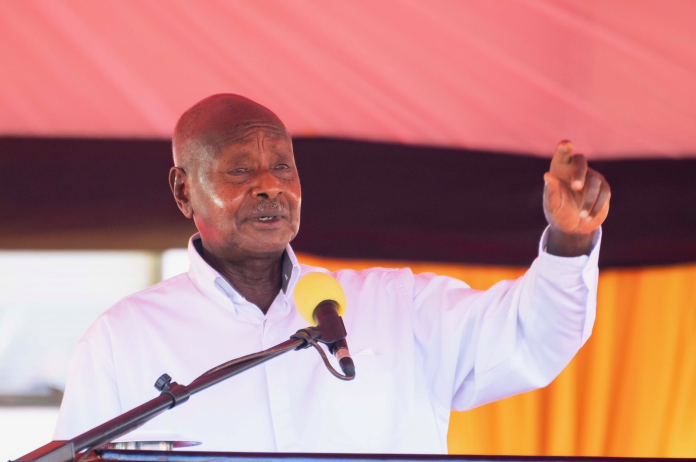
 NCBA Bank, NFA partner to embark on tree planting campaign

NCBA Bank Uganda has partnered with the National Forestry Authority (NFA) to embark on an environmental sustainability journey to plant 20,000 trees in 2024, equivalent to 30 hectares. This campaign, under the bank’s “Change the Story” initiative, aims to restore degraded parts of the Jubiya Forest Reserve in Masaka district.

Tom Okello Obong, Executive Director of NFA, noted that Uganda has seen a significant loss in forest cover, with approximately 41.6% lost since 1900, primarily due to human and economic activities such as agriculture, wood fuel, and animal grazing. Despite efforts to plant trees, about 80% of Ugandans still rely on wood fuel for cooking. Uganda’s forest cover has seen a severe decrease from 4.9 million hectares (24%) to 2.5 million hectares (12.4%) over the last 25 years.

“Uganda has experienced a notable decline in its forest area, with around 41.6% lost since 1900, mainly attributed to human activities like farming, harvesting wood for fuel, and grazing animals”. – Tom Okello said.

To address this situation, the Ministry has launched a nationwide tree planting campaign called “Running Out of Trees” (ROOTs), which aims to plant and nurture 40 million trees annually. The campaign focuses on indigenous and fruit trees for their ecosystem and nutritional value, promoting forest protection, tree growing, reforestation, and afforestation across different landscapes.

NCBA Bank Uganda is taking proactive steps to address these pressing issues through its “Change the Story” initiative. One of the key pillars of this initiative is minimizing direct impact on the climate and amplifying tree planting programs.

According to Mark Muyobo, CEO of NCBA Bank Uganda, the bank is dedicated to sustainability, extending beyond emissions reduction to include tree planting activities that deliver tangible and lasting benefits, such as carbon appropriation, employee engagement, and community empowerment.

Muyobo said that through strategic partnerships, direct financial support, and rigorous monitoring and evaluation, NCBA Bank Uganda aims to plant 10 million trees by 2030, making a lasting impact on the environment and communities. The bank has also eliminated single-use plastic from its operations, reflecting its dedication to reducing its environmental footprint and fostering a culture of sustainability within the NCBA community.

Muyobo added that the bank is committed to reducing its direct emissions by more than 50% by 2030, to be achieved through transitioning to renewable energy sources and exploring various system improvements.

Stories Continues after ad

Museveni clears the implementation of EFRIS

President Yoweri Kaguta Museveni delivers his speech while meeting traders of Kampala and other parts of the country at the Kololo Ceremonial Grounds.

President Yoweri Museveni has cleared the implementation of Electronic Fiscal Receipting and Invoicing Solution (EFRIS).

Museveni said this while meeting city traders under the umbrella bodies of the Kampala City Traders Association (KACITA), Uganda Cargo Consolidators, and Kampala Rice Traders at Kalolo ceremonial grounds.

URA started implementing EFRIS in 2021 to address tax administration challenges relating to business transactions and the issuance of receipts. The system helps URA assess the right taxes using accurate and authentically generated information. It also enables businesses to thrive with improved record-keeping and monitored stock and sales, among others.

The implementation of EFRIS will ensure not just equity in tax collection, especially VAT, but also transparency. The system is expected to double total VAT collections from Shs3.5 trillion to about Shs7 trillion.

Tanzania and Rwanda adopted EFRIS over 10 years ago. These countries collect 33% and 30%, respectively, of their total tax revenue through VAT. Uganda is currently collecting about 15% VAT of its total tax revenue, and this amounts to Shs3.5 trillion.

Earlier, city traders decried over taxations and penalties arising from failure to remit VAT and the Chinese invasion of the local markets.

“We tax imports to encourage Ugandans to buy more Ugandan-made products and allow imports for items that we cannot effectively manufacture domestically. Your first claim is that there are too many taxes in Uganda. This is not true. The policy of the government on taxes is deliberate. We normally don’t tax what builds Uganda,” Museveni said.

He noted that the government abolished tax on export of coffee and other products yet when NRM came into power that was the tax that was used to support the government.

“I don’t see anything or danger in paying VAT because it is not too much to pay and it is paid by the final consumers. It brings in more revenue and protects local manufacturers. Therefore, it is not double taxation because you don’t pay what others pay,” he said.

 “I propose that you don’t have to pay VAT immediately, you can pay when you get money or at the end of the financial year. I don’t think you should oppose VAT and the EFRIS system because Uganda needs to stand on its own through taxation, manufacturing and exporting to other countries,” he said.

He urged URA and leaders in the business community to iron out some issues because EFRIS doesn’t define who paid cash, took products on credit or hawking because it is programmed that every buyer pays cash. He abolished all the penalties against traders who defaulted on paying VAT.

He noted that the argument that the government doesn’t support local investors is a lie. Over 315 of the 450 companies in Namanve are owned by Ugandans like Gaster Lule Ntake, Prudence Kasibante Ukkonika and others.

“The issue I am going to follow up on is about the Chinese, but they are not bad people. They have set up factories and saved Uganda $40 million by importing products such as tiles. Countries like America have developed because they welcome investors and we should do the same,” he said.

Stories Continues after ad
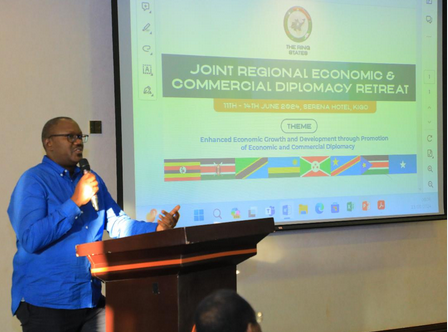
Speaker Among welcomes Japanese Ambassador to Uganda, calls for infrastructural development support from Japan

Speaker of Parliament Anitah Among and His Excellence, Sasayama Takuya, the new Japanese Ambassador to Uganda.

Speaker of Parliament Anitah Among has welcomed His Excellence, Sasayama Takuya, the new Japanese Ambassador to Uganda, saying his appointment comes at the time Uganda is grappling with the devastating effects of climate change, where floods have washed away roads & bridges, thus creating the need for infrastructural development support from Japan.

“Thank you for coming in at the time we need you most. This is the time we need you most, we have challenges in terms of climate changes where the roads have been swept off by water, where we need roads to be worked on, the schools to be worked on but because you have come in at the right time, we will be able to work together,” said Among.

She added, “Just yesterday, we talked about the Karuma Bridge in Northern Uganda, the bridge has had a problem but we know with your support, we will be able to support and see that the country you have been posted to and you will work in is going to be the country that will enjoy the benefits coming from Japan. We will continue collaborating in terms of trade, technological development and exchange, we know you are so far away in terms of technology, we would want to tap something from Japan in terms of technological development.”

Among also called for better collaboration between the Parliament of Japan and Parliament of Uganda in legislative matters where the two institutions can even enter into a Memorandum of Understanding so that the respective MPs can exchange knowledge in legislation and foster the continued development between the two nations.

“When you look at socio-economic development, most of the cars we use in Uganda come from Japan. Japan gets the market for cars in Uganda because we believe it is the Japanese cars that are good for our roads here in Uganda. We want to thank the appointing authority for sending you over to Uganda and as Parliament, we will give you unwavering support in the execution of your work while you are in Uganda. Uganda is a country you will never want to leave, when you come here, you will always want to live here,” Among said.

Japanese Ambassador to Uganda, His Excellence, Sasayama Takuya thanked Ugandans for the warm reception he received since coming to Uganda two months back and promised to ensure that the aid development from Japanese people to Uganda is evenly distributed across the country, as opposed to limiting it to Northern Uganda as has been in the past.

He also thanked the Speaker for the Parliamentary resolution that was recently passed, thanking Japan for the socio-economic development they have extended to Uganda through their body, Japan International Cooperation Agency (JICA).

“I have already spent 2months here and I found the nature wonderful, kind people, and the friendship, I felt it already. And you have wonderful seasons in the year. Our assistance extended to our friend Uganda in various areas include; economic development, infrastructure, education, agriculture, medical, refugees, that we want to see not in one area but also balanced. You have an abundance of resources which are the young people who will reassure your country and hope for the next generation to come. My Government and my people would like to invest for the future generation as well,” said Takuya.

Stories Continues after ad