Stanbic Bank
Stanbic Bank
21.4 C
Kampala
Stanbic Bank
Stanbic Bank
Home Blog Page 249

West Nile regional ICT Innovation Hub launched at Muni University

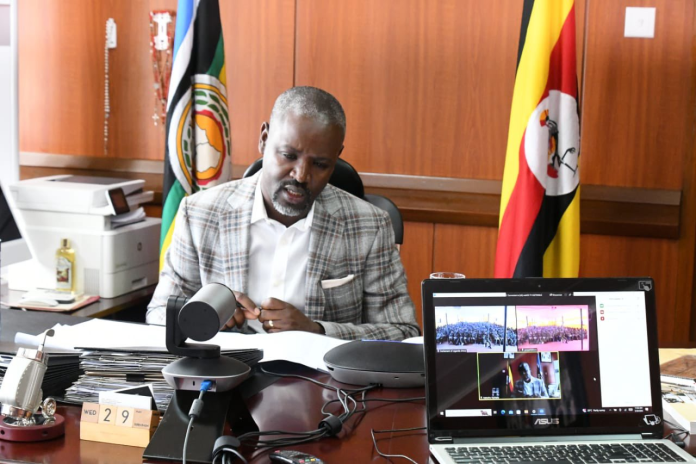
Government of Uganda through the Ministry of ICT & National Guidance has launched the West Nile regional ICT Innovation Hub at Muni University in Arua city.

The launch that was presided over by the Permanent Secretary of the Ministry of ICT and National Guidance, Dr. Aminah Zawedde took place on Friday, 3rd May, 2024.

Dr. Zawedde said as a ministry, we are now focusing on infrastructure; setting up connectivity, hubs, data centers and also computer labs, and making sure that people have equipment such as computers and other affordable devices to support digital transformation.

The ICT hub launched was graced by the Area MP for Ayivu East Division, Hon. Feta Geofrey along with three (3) ICT Parliamentary committee members who included Hon. Leku Joel- MP Terego west, Hon. Ezama Siraji Brahan- MP Aringa constituency and led by Hon. Dr. Noah Musa- MP Koboko North County.

Dr. Noah Musa while addressing the congregation appealed to the government of Uganda to consider reducing taxes on Information and Communication Technology (ICT) devices. He also encouraged the youth to embrace ICT in their day-to-day activities and businesses such as livestock farming.

“We can do all these investments but if the end users do not have the gadgets to use the ICT investments we have put in place, then our investments will be in vain and one of the bottlenecks that we are experiencing as a country is the cost of the end-use ICT devices,” Dr. Musa remarked

The need for a regional ICT innovation hub stemmed from the challenges faced by West Nile entrepreneurs in accessing critical resources, getting guidance and internship required as they expand their businesses.

According to Prof. Robert Kajobe, the Director Graduate Training, Research and Innovation, Muni University is just a host of the regional hub which is going to help in addressing the problems entrepreneurs face such as lack of meeting/training venue, work spaces, fast internet connectivity and cloud storage system among others.

Prof. Simon Anguma Katrini, the Muni University Vice Chancellor also noted that in the year 2020, Muni University requested for support through the National ICT Support Initiative program for establishing an innovative ICT hub at the University to accelerate the growth of the ICT eco-system in Uganda.

Prof. Anguma confirmed that a total of UGX. 250 million was released to Muni University by the Ministry of ICT and National Guidance which money was appropriately utilized to set up the regional ICT innovation hub.

“The Hon. MP Musa talked about the need for us to reduce the cost of devices, those are some of the policy issues we are looking in to see how do we ensure that the cost of these devices are brought down or how do we ensure that we bring into this country and the various regions may be assembling plants for computers. If these computers are manufactured here or smart phones are manufactured and assembled in the country, they would be more affordable,” PS, Dr. Zawedde said.

As she concluded, Dr. Aminah Zawedde shared the five pillars of the digital transformation that include ICT infrastructure and connectivity, digital skilling, e-services, cybersecurity and data privacy along with innovation and entrepreneurship. She encouraged the young people to take advantages of the ICT hub and the opportunities that come along with it in order to develop solutions for challenges they face in their region.

Stories Continues after ad

Bujagali Energy ltd tax waiver extended amidst Auditor General warning

Parliament has passed the Income Tax Amendment Bill 2024, further extending Bujagali Energy Limited tax waiver for another year, despite warning by Auditor General, John Muwanga about the Shs1.417Trn haemorrhage Uganda lost through tax exemptions in 2022/23 alone.

In his December 2023 audit report, Muwanga noted that Uganda’s foregone taxes through tax waivers amounted to Shs1.417Trn, with Parliament leading the dishing out of tax waivers worth Shs1.293Trn, while the Ministry of Finance waived taxed amounting to Shs118.5Bn and John Musinguzi, Commissioner General of URA also caught the exemption craze by exempting taxes worth Shs5.575Bn.

In March 2023, Parliament initially rejected the Bujagali 5years tax waiver extension but kept on extending the waiver for a year and the latest approval means the company has earned 3years off its initial request, despite Parliament’s own report revealing that Bujagali owes Ugandans US$342,198,189 about (Shs1.293Trn) it received in excess power tariffs it charged Ugandans, through fictitious tariffs computation methods Parliament claimed the company used.

However, Opposition warned Parliament against extending Bujagali’s tax waiver even for a week, revealing that between 2018-2021, Uganda has foregone revenue worth Shs388.70Bn through this tax exemptions & the foregone revenue translates to 353 Health Centre IVs each constructed at Shs1.1Bn, 2950 secondary school classroom blocks each constructed at Shs131.75 million, and 3070 primary school classroom blocks each constructed at Shs126.60M as of 2022.

Jane Avur (Pakwach DWR) rejected an argument fronted by Gov’t that the Auditor General had delayed to complete the forensic audit into Bujagali as earlier requested by Parliament stating, “We need to provide a timeframe within which the Auditor General should report back. The public is looking at us like we are playing games. Every year we come up with extensions and the excuse is that tariffs will go up without any proof of how high it will go, it is just subjective, they aren’t even being objective from what rate to what rate?”

Muwanga Kivumbi (Butambala County) noted, “I think enough is enough, let tariffs go high, after all, we have a lot of power on our grid, let us take leverage of the dams which we have built and refuse this extension of Bujagali because what is happening is becoming impunity, they take this Parliament for granted, they don’t respect processes, last minute they sneak a ka letter. Let us refuse and see what is happening in this country.”

However, Henry Musasizi, Minister of State for Finance who had earlier brought Bujagali request through a letter as opposed to having it included in the tax bills, asked to have the waiver extended for a year and assured MPs that the anticipated audit would be complete within six months.

Stories Continues after ad

Dr Pamela Kalyegira appointed director of Law Development Centre

Dr. Pamela Tibihikirra-Kalyegira has been appointed as Director, Law Development Centre (LDC). Her appointment was confirmed by Justice Paul Mugamba, the Chairperson of the LDC Management Committee.

She replaces Frank Nigel Othembi, whose tenure as director ended in April 2024 after 12 years of committed and impeccable service.

“We appreciate Mr. Othembi’s contribution to the growth and development of LDC and wish him well in the pursuit of his professional career,” Justice Mugamba said.

He said Dr. Tibihikirra’s proven leadership and transformative approach will undoubtedly steer the Law Development Centre towards greater success in legal education. We have full confidence in her ability to drive innovation and expand our vision and mission.

She brings to LDC a wealth of experience in legal education, training and the administration of justice. She served in various capacities, for example, as Dean of the Faculty of Law at Uganda Christian University, Director of Quality Assurance and Accreditation at the National Council for Higher Education and most recently, Chairperson of the Uganda Law Reform Commission.

She holds a Bachelor of Laws (Hons) from Makerere University, Diploma in Legal Practice from the Law Development Centre, a Master of Laws in Public International Law (Merit) from the London School of Economics and a Doctorate in Juridical Science (SJD) from Indiana University, Maurer School of Law, Bloomington, Indiana, USA, where she studied as a Fulbright Scholar.

She was enrolled as an Advocate of the High Court of Uganda in 1999 and she has practiced commearcial law in Uganda. She is the recipient of the Best Female Academician Lawyer, Women in Law Awards, Uganda Law Society, 2016.

She is part of the LDC family, having served as a member of the LDC Management Committee from 2010 to 2016.

Dr. Pamela Tibihikirra-Kalyegira has been appointed as Director, Law Development Centre (LDC). Her appointment was confirmed by Justice Paul Mugamba, the Chairperson of the LDC Management Committee.

She replaces Frank Nigel Othembi, whose tenure as director ended in April 2024 after 12 years of committed and impeccable service.

“We appreciate Mr. Othembi’s contribution to the growth and development of LDC and wish him well in the pursuit of his professional career,” Justice Mugamba said.

He said Dr. Tibihikirra’s proven leadership and transformative approach will undoubtedly steer the Law Development Centre towards greater success in legal education. We have full confidence in her ability to drive innovation and expand our vision and mission.

She brings to LDC a wealth of experience in legal education, training and the administration of justice. She served in various capacities, for example, as Dean of the Faculty of Law at Uganda Christian University, Director of Quality Assurance and Accreditation at the National Council for Higher Education and most recently, Chairperson of the Uganda Law Reform Commission.

She holds a Bachelor of Laws (Hons) from Makerere University, Diploma in Legal Practice from the Law Development Centre, a Master of Laws in Public International Law (Merit) from the London School of Economics and a Doctorate in Juridical Science (SJD) from Indiana University, Maurer School of Law, Bloomington, Indiana, USA, where she studied as a Fulbright Scholar.

She was enrolled as an Advocate of the High Court of Uganda in 1999 and she has practiced commearcial law in Uganda. She is the recipient of the Best Female Academician Lawyer, Women in Law Awards, Uganda Law Society, 2016.

She is part of the LDC family, having served as a member of the LDC Management Committee from 2010 to 2016.

Stories Continues after ad

Gov’t exempts electric vehicles from Stamp Duty

Companies manufacturing electric vehicles, electric batteries, or electric vehicle charging equipment or fabricator of a frame and body of an electric vehicle; and employ 80 percent of Ugandans will not pay Stamp Duty in the 2024/2025 financial year.

The exemption is part of the amendments in the Stamp Duty (Amendment) Bill, 2024 passed by Parliament chaired by Speaker Anita Among on Monday, 6 May 2024.

To qualify for the exemption however, the companies shall have the capacity to use at least 80 percent of the locally produced raw materials, subject to availability.

The Chairperson of the Committee on Finance, Amos Kankunda, who presented the committee report on the Bill, said that the company is required to have a minimum investment capital of US$10 million in case of a foreigner; US$300,000 in case of a citizen; or US$150,000 in case of a citizen who invests up country.

“This is intended to promote investment in an environmentally friendly transport system in Uganda,” Kankunda said.

Nathan Nandala Mafabi (FDC, Budadiri County West) said that Uganda is endowed with herbs and hence, promoting their use by manufacturers is a move in the right direction.

Pian County Member of Parliament, Remigio Achia, said that the exemption is timely since youths are increasingly investing in science and innovations.

“Young people are engaged in innovations and it is very good,” said Achia.

Karim Masaba (Ind., Industrial Division, Mbale City) welcomed the exemption, saying that by employing 80 percent of Ugandans in such companies, government would be protecting the citizenry.

The Shadow Minister of Finance, Hon. Ibrahim Ssemujju, however dissented from the committee, presenting a Minority Report, arguing that according to the Auditor General, out of the 36 companies that obtained tax incentives and exemptions, 22 were performing below the 50 percent threshold, thereby failing to achieve the desired employment levels.

“The Auditor General is advising us to stop tax exemptions because they are not serving the purpose. You may not listen to the Opposition but at least listen to the Auditor General,” he said.

He added that tax exemptions cost the government Shs1.4 trillion, annually.

Butambala County MP, Muhammad Muwanga Kivumbi called for comprehensive study of the companies that are considered for tax exemptions, saying that some of them lobby so as to avoid taxes.

“We do not have revenue and we are exempting without specific studies to inform our exemptions. We can exempt but let us be very elaborate with studies,” he said.

The lawmakers also approved a proposal of stamp duty exemption on shares or other securities by an investor in a private equity or venture capital fund regulated under the Capital Markets Authority Act.

Minister of State for Finance, Planning and Economic Development (General Duties), Hon. Henry Musasizi said that this will stimulate the economy’s growth.

He added that taxing private equity and venture capital has pushed potential investors into neighboring countries such as Kenya and Tanzania.

“It is a new area and in order to attract capital, we need to exempt them from stamp duty tax,” said Musasizi.

HoDicksons Kateshumbwa (NRM, Sheema Municipality) supported the Minister, saying that based on the nature of equity and venture capital investments, it is prudent that tax is waived until profits are realised.

“When someone [Investor] is coming in, we should reduce our appetite to tax where there is no interest yet,” Katesumbwa said.

Relatedly, legislators passed the Tax Procedures Code (Amendment) Bill, 2024 whose objective is to ensure that a taxpayer who intends to claim a deduction of or credit for goods destroyed informs the Uganda Revenue Authority’s Commissioner General before destruction of goods.

Stories Continues after ad

Police arrest Chinese national operating a shop with army uniforms

The territorial Police at Kampala Metropolitan North carried out a coordinated intelligence led operation on the 3rd May 2024, that resulted in the apprehension of a Chinese national, JIN YUNGUNG, aged 33, residing in Ganda, Nansana Municipality, Wakiso.

Luke Owoyesigyire, Deputy Police Spokesperson, Kampala Metropolitan said that Mr. YUNGUNG was found operating a shop involved in the illegal sale of government property, specifically army uniforms, shoes, and gloves. His shop, located at Kasaga Shop No.14, was targeted following intelligence reports.

Owoyesigyire added that during the operation, significant quantities of military equipment were seized from Mr. YUNGUNG’s premises, including uniforms resembling those of the UPDF and SFC.

“Investigations revealed Mr. YUNGUNG’s collaboration with an individual known only as Frank, purportedly affiliated with the Special Forces Command (SFC), who provided both the business idea and financing. Mr. YUNGUNG admitted that some uniforms were sourced from Somalia,” Owoyesigyire said.

He further noted that it was discovered that Mr. YUNGUNG entered Uganda as a tourist, renewing his visa periodically by traveling to neighboring countries.

Stories Continues after ad

UPDF warns civilians, private security companies on possessing military attires

The Uganda Peoples Defence Forces- 4Infantry Division Headquarters has noted with deep concern of augmenting number of civilians and private security companies in Acholi and west Nile sub religion dressed in Military outfits bearing UPDF imprint that are a conserve of the security forces such as warm suits, jackets, ranger boots, berets, capes, porches, weapon slings and backpacks.

Capt. Kato Ahmad Hassan, UPDF 4Infantry Public Information Officer, warned that the UPDF Act, of 2005 Section 160 part 2 prohibits none members of the security forces using such costumes mentioned above.

“Whilst the Uganda Gazette under General notice No 1013 of 2019 dated 18th Sept 2019 issued a notice describing and prohibiting members of the public from wearing military materials and decorations or so nearly resembling them,” Capt. Kato said.

He added, “We wish to warn these individuals in their various capacities to stop putting on these items listed above as soon as possible and to hand them over to the Uganda Police Force and the UPDF for further management.”

Capt. Kato further noted that futility to comply with these admonitions will invite an indictment to the violators. Adding, “UPDF desires to restate its commitment to maintaining law and order in our community.” 

Stories Continues after ad

Stanbic black pirates hijack rhino’s journey to semifinals

Stanbic Black Pirates survived the charging Rhinos to qualify for the semifinal playoffs in the Nile Special Rugby Championship at Kings Park Arena.

It was a tale of two halves as Rhinos came out swinging and laid down an early marker in the first half by scoring two tries courtesy of Arthur Ocen and Godwin Abwang.

Ivan Kirabo was handy with the boot as he helped the Rhinos race to a 21-0 first half score. The performance from the visitors was breathtaking but it also highlighted where the Stanbic Black Pirates were letting themselves down.

Stanbic Black Pirates brought in reinforcements like Timothy Kisiiga, Haruna Muhammad and Desire Ayera to save the situation. Muhammad was the orchestrator of the comeback as he played a vital role in some decisive and eye-catching rugby.

“It took belief and trust in ourselves. We had a game plan among ourselves and that’s what it took for us to overcome Rhinos,” said Muhammad.

It was rather disappointing for Rhinos to see what had been a solid campaign come to an end like this but coach Martial Tchumkam remained proud of his team.

“It was unfortunate that we took a 21-0 lead in the first half and in the second half we gave it away. I am very proud of my team and today showed that I have depth because I have five starters out,” said Tchumkam.

For Rhinos, it is the end of the season but for Stanbic Black Pirates they have a date with the Jinja Hippos who defeated the Buffaloes 12-5 but went through on aggregate score after their 40-21. Kobs will take on Heathens in a two-legged semifinal after they overcame the Plascon Mongers while Heathens defeated the Walukuba Barbarians.

Rhinos is one of the oldest rugby clubs in Uganda and was founded around 1993 by a group of rugby players.

Results:

Nile Special Rugby Men’s Championship – Full Quarterfinal Results:

KOBs 51-16 Mongers (Agg. 68-29)

Heathens 28-16 Walukuba (Agg. 53-16)

Buffaloes 12-05 Hippos (Agg. 33-45)

Pirates 30-27 Rhinos (Agg. 40-34)

Nile Special Rugby Championship Semifinals Fixtures:

Semifinal 1: KOBs vs Heathens

Semifinal 2: Hippos vs Pirates

Stories Continues after ad

Ubos expresses its readiness to conduct a national census

Dr. Chris Mukiza.

The Uganda Bureau of Statistics (Ubos) has expressed its readiness ahead of the national housing census.

The technologically driven National Population and Housing Census (NPHC) 2024 will be carried out from May 10–19, 2024. The first day of enumeration, which is set for May 10, 2024, was approved a Census Public Holiday by the Cabinet and declared by the President to ensure easy recall of the Census Night during the period of enumeration.

The National Population and Housing Census was last conducted in 2014. At that time, Uganda had a population of 34 million people. The census is carried out every 10 years, and this year’s exercise was expected to take place on August 24 and 25, but it was postponed due to the delayed procurement of tablets.

Speaking during the training of trainers of the enumerators, Mukiza said after the census, 30000 tablets will be given to the National Identification Registration Authority (NIRA) for mass registration of people and verification of voters by the Electoral Commission.

According to Albert Byamugisha, Chairman of the Board of Directors (UBOS), he urged Ugandans to stay at home on Friday, as it has been gazetted as a public holiday by the government.

“The public is encouraged to stay home for a smooth census exercise. During the exercise, there are a few questions that will be posed to the respondents. The questions include, how many are you in the household,” he said.

He noted that the UBOS secured over 12,000 tablets required for the conduct of the census exercise, trained officers, assistant district census officers, district information and technology officers, and district technical officers.

Of the 12,000 tablets, 38,000 are enhanced with special features for verification and fingerprints that will be required for mass registration of people by the National Identification Registration Authority (NIRA) and verification of voters by the Electoral Commission, while others will be retained by local governments for picking data for community information systems. This will later be picked up by UBOS for the generation of statistics for better planning for the country.

He said that Pads have been dispatched to various districts ahead of the national census. The first batch of iPads were flagged for six districts, including Gulu district, Gulu city, Apac, Albatong, Amolata, and Otuke.

Stories Continues after ad

NEMA introduces national standards and regulations for air quality

Barirega Akankwasah, Executive Director of the of the National Environment Management Authority.

Uganda has established National Standards and Regulations for Air Quality ahead of Air Quality Week, Barirega Akankwasah, Executive Director of the of the National Environment Management Authority (NEMA) said.

Barirega said the guidelines have been established for the first time since Uganda ever existed and were gazetted last month. The guidelines are scheduled to be unveiled later this week.

According to the guidelines, all industries will be required to install scrubbers, electrostatic precipitators and fabric filters to reduce industrial emissions.

Industries will also be required to install automated air quality monitors that transmit data automatically to the central database. Industries that emit above allowable standards will require permits and will be required to pay for excess emissions. This way, industries that use green technologies will save money and those using old technologies will have to be penalized. After the grace period, certain technologies will be declared banned in line with the regulations.

He said NEMA will restrict engine technologies and age in line with the new standards, encourage timely servicing of vehicles, and ensure good fuel quality.

He noted that Uganda is this week commemorating air quality week under the theme “Knowing Your Air to Protect Human Health and the Environment’’.

“The purpose of Air Quality Awareness Week is to raise public awareness about the importance of air quality to human health and the environment and what we can do to continuously improve air quality around us.” he noted

Air pollution, including fine particulate matter (PM2.5) and tropospheric ozone and their precursors, is the leading environmental risk to human health, with 99% of people worldwide exposed to air pollution levels that exceed the WHO guidelines.

It is quite clear that air quality-related death is unrivalled by any other known cause of death in every single year at the global scale, yet the attention and investment in air pollution control remain minimal, if at all. In Uganda, compromised air quality increases disease burden, with close to 31,600 people dying from air pollution-related diseases annually, especially in urban areas.

Studies on sources of pollution conducted in Kampala City revealed that transport is the leading cause of air pollution, followed by domestic and biomass burning. Other sources of air pollution are industrial emissions and dust released from untarmacked roads.

“Our air quality monitoring data, especially around Kampala, indicate an increase in air pollution from an annual average of 39.5µg/m3 in 2019 to 3 41µg/m3 in 2024. This is about eight times above the annual average recommended guideline of 5 µg/m3 by the World Health Organisation (WHO). This means that our air is increasingly polluted and we must take deliberate measures to address the factors causing the pollution,” he stated.

To address the problem, Barirega encouraged all people living in Uganda to green their compounds, farmlands, land boundaries, pathways, road reserves, school compounds, name it.

Stories Continues after ad

Regional states agree to boost Standard Gauge Railway development through shared funding

Regional Transport Ministers.

The Northern Corridor Integration Projects (NCIP) partner states, comprising Kenya, Uganda, Rwanda, and the Democratic Republic of Congo, have agreed to jointly mobilize funds to fast-track the development of the Standard Gauge Railway (SGR) project.

The transport ministers reaffirmed their commitment to expediting the completion of the remaining SGR sections from Naivasha in Kenya to Uganda, Rwanda, South Sudan, and DRC. Specifically, Kenya has committed to resume the construction of the Naivasha-Kisumu-Malaba and Kisumu-Malaba SGR sections starting in July and September 2024, respectively. Uganda is also expected to start the construction of Malaba-Kampala in September, subject to the availability of resources, and is in the final stages of negotiations with the proposed contractor, Yapi Merkezi, with the contract expected to be signed by the end of May 2024.

Fred Byamukama, Uganda’s State Minister for Transport, representing Gen. Edward Katumba Wamala, Minister of Works and Transport of Uganda and Chairperson of the Joint Ministerial Committee on SGR, emphasized the ministers’ commitment to the project.

“We have agreed to source funds jointly because this railway line doesn’t stop in one country. Once we source funds jointly and also use the same contractors, work will move smoothly,” he said.

“We are committed to fast-tracking the development of the SGR project to enhance regional transport integration and promote economic growth. This project will have a transformative impact on our region’s economic development, and we are committed to ensuring its successful implementation.”

As the chair of the infrastructure cluster meeting of the NCIPs, Uganda played a key role in facilitating the ministers’ agreement. Mr. Kipchumba Murkomen, Kenya’s Cabinet Secretary of Roads and Transport Ministry, said they are in discussion with the private sector and the EXIM Bank to shoulder part of the financing. The remaining stretch from Naivasha-Kisumu-Malaba line is estimated to cost the country around $5.3 billion.

“The dream of SGR is on. As Kenya, we will leverage on the private sector now, and I know that the project we have from Naivasha to Malaba, including the improvements around Kisumu Port, will cost the country around $5.3 billion,” said Kipchumba.

“We are in discussion with the private sector to see if we can structure an arrangement for them to take the large burden at very reasonable and concessional terms so that we can continue with the project.”

The ministers welcomed the commitments of partner states to commence construction of various SGR routes, including Naivasha-Kisumu-Malaba, Malaba-Kampala, Kampala-Bihanga-Kasese-Mpondwe leading into DRC, Bihanga-Mirama Hills leading into Rwanda, Tororo-Gulu-Nimule leading into South Sudan, and Gulu-Pakwach-Vurra leading into DRC, after securing financing for the Malaba-Kampala SGR section.

Jimmy Gasore, Rwanda’s Minister of Infrastructure, emphasized the need to keep SGR as a regional project, explaining that Kenya will not benefit from the full potential of the project given the heavy investment involved if the project is not extended all the way to Uganda, Rwanda, and other countries within the corridor.

“We have reiterated our need to coordinate and package this project as a regional project so that we develop in harmony. It will, for example, not help us to develop our section, that is Kigali-Mirama Hills, if the Naivasha to Malaba and Malaba-Kampala-Mirama Hills is not developed,” said Mr. Gasore.

The ministers noted progress made so far, including the completion of the Mombasa-Nairobi-Naivasha SGR section, which is fully operational, and the harmonization of technical specifications and standards for SGR by Kenya and Uganda.

According to Amb. Richard Kabonero, Coordinator of the NCIPs for Uganda, the SGR is a critical artery at the heart of the region’s efforts to reduce transport costs and make East Africa competitive. “We are working hard towards the 15th Summit of the Heads of State to revive the momentum that we had in the past,” he added, noting that the SGR project is one of the most ambitious projects.

The European Union delegation in Uganda has been supporting Uganda’s Ministry of Foreign Affairs under the NCIPs coordination efforts.

The ministers also agreed to establish a framework for cross-border maintenance of SGR assets and facilities, harmonize planning and development of inland water transport infrastructure, and fast-track the review of the Tripartite Agreement on water transport on Lake Victoria. According to the joint communique, the Democratic Republic of Congo has committed to assent and ratify the existing SGR protocol and SGR Tripartite Agreement.

Stories Continues after ad