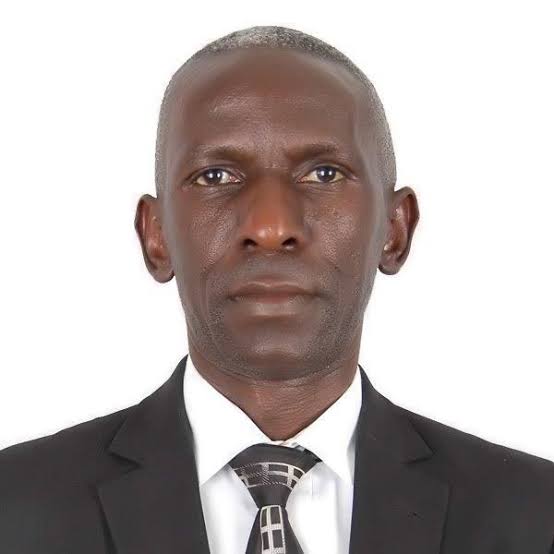
Uganda Airlines has received approval from the UAE Civil Aviation Authority to operate direct flights from Entebbe to Abu Dhabi, subject to fulfilling necessary formalities.
This milestone was achieved after a meeting between the Uganda Embassy in Abu Dhabi, led by Ambassador Zaake Kibedi, and the Director-General of the UAE Civil Aviation Authority.
“Uganda Airlines is expected to commence operating direct flights from Entebbe to Abu Dhabi, a move that will boost trade, tourism, and cultural exchange between the two nations,” said Amb. Kibedi.
He added that the airline is working diligently to complete the required formalities to start operations soon.
Uganda Airlines, which currently operates flights to several destinations in Africa, including Nairobi, Kenya; Mogadishu, Somalia; Juba, South Sudan; and Dar-es-Salaam, Tanzania, is expanding its reach to the Middle East.
Uganda Airlines is also scheduled to meet with the top management of Etihad Airlines to discuss possibilities of signing a codeshare agreement. This partnership would enable both airlines to expand their regional and global reach, offering more options and convenience to passengers.
The direct flights between Entebbe and Abu Dhabi will not only reduce travel time but also increase economic and tourism ties between Uganda and the UAE.
Uganda Airlines’ expansion into the Middle East market is a strategic move to tap into the growing demand for air travel and cargo transportation.
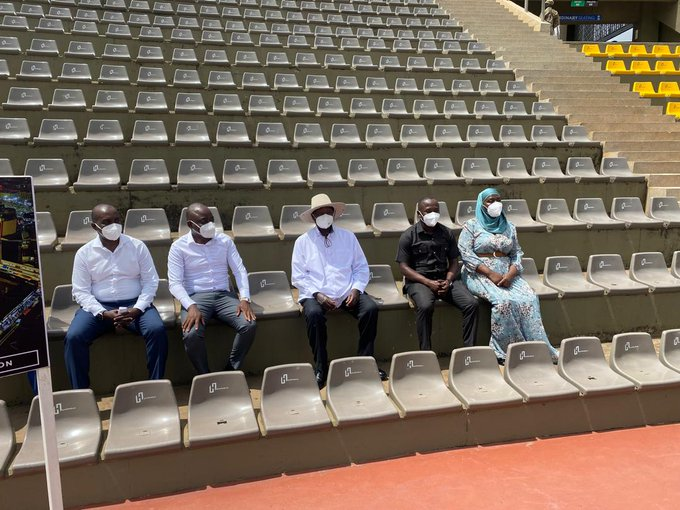
President Museveni, businessman Hamis Kiggundu, State Minister for Sports Petter Ogwang and Kampala Minister Minsa Kabanda during the opening of Nakivubo Stadium.
President Museveni Kaguta has commissioned Nakivubo stadium which has been redeveloped by businessman Hamis Kiggundu under a Public Private Partnership deal since 2017.
The stadium has a seating capacity of 25,000 spectators, making it an ideal venue for various sports activities such as athletics, netball, bodybuilding, basketball, and volleyball. The stadium also features state-of-the-art amenities, including a gym, medical facility, restaurants, and other facilities.
The redevelopment of Nakivubo Stadium is a significant milestone for Uganda’s sports sector, and it could boost the country’s chances of co-hosting the 2027 Africa Cup of Nations finals with neighboring Tanzania and Kenya in the Pamoja AFCON joint hosting.
Notably, the commissioning of Nakivubo War Memorial Stadium comes just days before Namboole Stadium hosts a test match in the UPL between Vipers and Bul, and KCCA and Villa on of May 1, 2024 as preparations for the AFCON 2027 intensify. Initially projected to take four years, the redevelopment process was slowed down by the Covid-19 pandemic.
However, the completion of the project marks a significant achievement for the government and the contractors.
President Museveni is welcomed by Speaker ASnita Among, Chief Justice Owinyi Dollo, Deputy Chief Justice Richard Butera, Justice Minister Nobert Mao, Director of Public Prosecution Jane Francis Abodo at the 7th Joan Kagezi memorial lecture at Kololo ceremonial grounds.
Speaker of Parliament Anita Among has praised the slain former state prosecutor, Joan Kagezi as a beacon of justice, a guardian of rule of law and a fearless warrior who diligently handled very serious cases before her assassination in 2015.
At the time of her death, Kagezi was the lead prosecutor of suspects of the 2010 twin bombings in Kampala.
Speaker Among made the remarks during the 7th memorial lecture of the former acting Assistant Director of Public Prosecutions (DPP), which was presided over by President Yoweri Museveni on Thursday, April 25, 2024 at Kololo Ceremonial Grounds.
This year’s Joan Kagezi memorial lecture is celebrated under the theme: “Prosecution of transnational organised crimes to foster security and socio-economic development: the linkage between terrorism, human trafficking, and smuggling of migrants.”
She urged President Museveni to support proposals by arms of government to enhance their budgets, to facilitate smooth running of the government.
“Your Excellency, you, being the finance minister of this country, it’s just prudent enough that you find it necessary to support Judiciary and Office of DPP. If we support all other arms of government then running this country will be easy and effective,” she said.
In an affirmative response, Museveni said he will ensure that all heads of arms of government are actively involved in the budgeting processes.
“When we are budgeting, I will invite the Speaker and the Chief Justice so that we budget together because there is nothing to hide,” he said, before paying tribute to late Kagezi as a freedom fighter who died on duty.
The Ministry of Gender, Labour and Social Development has pledged to improve labour justice in Uganda, with a focus on protecting workers’ rights and promoting decent work for all.
Speaking at the official opening of the 2nd Annual Labour Convention and Expo 2024, Minister Betty Amongi emphasized the importance of access to labour justice and its impact on the economy.
“Inadequate protection of workers, non-deduction and non-remittance of social security contributions, failure to compensate workers who get injured or incur scheduled diseases in the course of employment, and unfair conditions of work for persons with disabilities, among others, greatly reduce our journey towards productive employment and decent work,” Minister Amongi said.
She emphasized the importance of access to labour justice and its impact on the economy, noting that the government of Uganda is committed to securing the future of Ugandans through job creation and inclusive development.
“We need to see improvements in delivery of labour justice to persons affected in employment relations. This means that all matters connected with unemployment and employment relations are critical and need to be addressed in a way that can promote good industrial relations,” Minister Amongi added.
The Minister announced that the Ministry plans to strengthen the capacity of labour offices and the Industrial Court to enable speedy conclusion of employment relations disputes and reduce the case backlog. She also encouraged support for Government flagship programs aimed at improving the incomes and lives of Ugandans.
“I want to ask all of you to support all the Government flagship programmes that are aiming at improving the incomes and lives of Ugandans,” Minister Amongi said.
The Ministry of Gender Permanent Secretary, Aggrey David Kibenge said in a world where economic growth and social justice are increasingly intertwined, it’s crucial that conditions under which our workforce operates are addressed.
“Ensuring access to labour justice not only upholds human dignity but also significantly boosts productivity. Labour justice encompasses a wide range of rights and protection for workers. It involves ensuring fair wages, reasonable working hours, safe working conditions, non-discrimination, and freedom from exploitation. It also includes mechanisms for resolving disputes between employers and employees in a fair and timely manner. When workers feel valued and protected, they are more likely to be engaged and motivated, positively impacting their productivity,” Kibenge said.
He said that research has consistently shown that workplaces with high levels of labour justice tend to have higher productivity.
He, “This connection can be explained through high employee morale and engagement, reduced workplace conflicts and industrial action, increased attraction and retention of talent, better health and safety at the workplace as well as heightened innovation and creativity.”
The 2nd Annual Labour Convention and Expo 2024 brings together key stakeholders in labour and employment matters to discuss important issues related to decent work and employment promotion, including diversity, equity, inclusion, and justice.
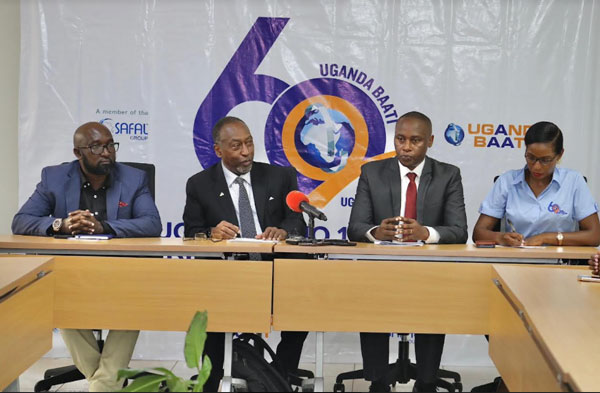
Board of Directors Chairperson, Dr. Alan Shonubi and other Baati officials during the press conference.
Uganda Baati has launched its 60th anniversary campaign at a media event held in Kampala. Founded in 1964, Uganda Baati has been at the forefront of the steel manufacturing industry, introducing numerous advancements and achieving many firsts in Uganda and the region. It was the first company in the East African region to set up an ultra-modern Continuous Galvanizing line.
As one of the leading manufacturers and suppliers of quality building solutions in the country, officials said they are proud to mark six decades of excellence, innovation, and quality in Uganda’s steel manufacturing industry.
The Board of Directors Chairperson, Dr. Alan Shonubi recounted the history of Uganda Baati’s journey since 1964. The press launch was held at their head offices on Mulwana Road in Bugolobi.
“Our journey goes back to the 1960’s, in Tororo, as a business entity called Steel Works Company. The steel and aluminum industry was so lucrative then with minimal competition to the point where demand for aluminum and steel products was greater than the supply. This led to the introduction of the first steel roll machine in the company where we manufactured and supplied different aluminum and steel products which even included saucepans,” Shonubi said.
“This went on for a while, before the setback in early August 1972 when the former President of Uganda Idi Amin ordered the expulsion of the Indians, giving the Asians 90 days to leave the country leaving several businesses and properties to be redistributed amongst the locals. As the events turned out, Idi Amin was overthrown and H.E Yoweri Kaguta Museveni invited the expelled Asians to return bringing back the vibrancy of the once-booming businesses in Uganda,” he explained.
He added: “We were the first in the East African region to install an ultra-modern Continuous Galvanizing line, a testament to our commitment to technological innovation and excellence. We became the first to introduce the ZincAL coating technology for all its roofing sheets to give the consumer the benefit of the product.”
Amon Aruho, the head of human resources at Uganda Baati said, “There are several factors, that have kept us in business for this long some of which is the support of our shareholders, government, stakeholders, and customers,” Aruho said.
All these have played a crucial role in ensuring that we uphold our standards and commitment to providing a sustainable roof over each household in Uganda, he added.
The company has navigated through economic fluctuations, changing government policies, shifts in consumer preferences, and other global challenges like the recent pandemic.
The 60th anniversary celebrations will be phased out in four themes during the year; Uganda Baati in the past, community, economy, and the future.
“We shall be collaborating with various stakeholders and engaging in various activities as we continue to tell our story, celebrate our history, and highlight our impact and contributions,” Aruho said.
Uganda Baati officials say their impact extends beyond the provision of trusted building solutions; it has been instrumental in job creation, with hundreds of Ugandans employed directly and thousands more benefiting indirectly through its extensive distribution network. Furthermore, through strategic partnerships and technological advancements, the company has consistently pioneered new products and services, setting benchmarks in the steel manufacturing sector.
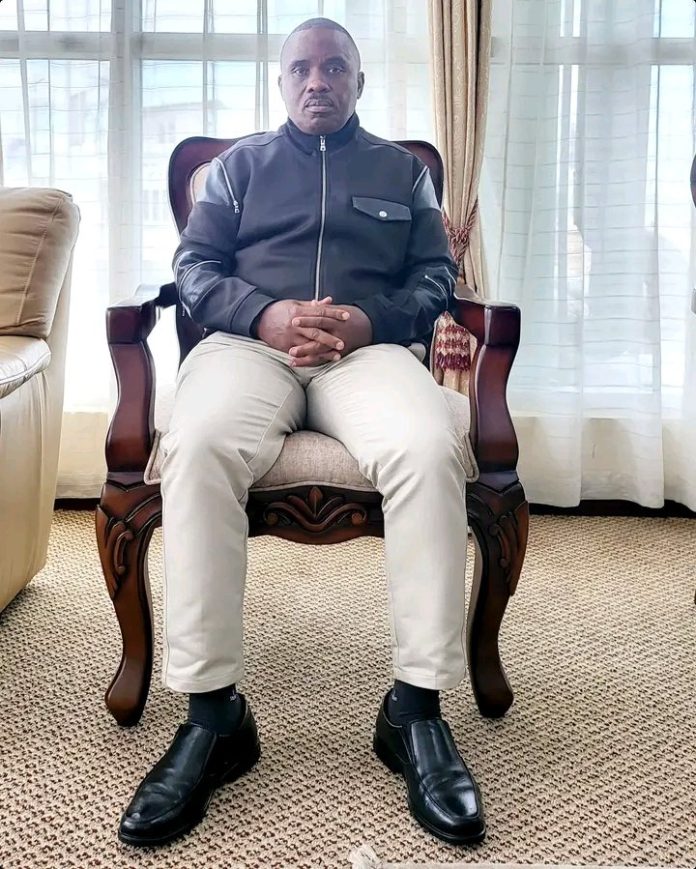
The Lord Mayor, Erias Lukwago, has travelled to India for treatment of a herniated disc that has caused him pain for some time.
The frail and ailing politician has been nursing excruciating upper limb and back pain for two months.
“Following MRI scans at Nakasero and Nairobi Hospitals, respectively, that demonstrated significant C6-7 discopathy, doctors-initiated treatment including neuropathic drugs, physiotherapy and other conservative methods with minimal relief,” Lukwago said.
Accordingly, physicians from the aforementioned facilities and Mulago National Referral Hospital recommended specialized anterior cervical disc and fusion (ACDF) surgery, and with the approval of the Uganda Medical Board, he was referred to India.
According to Lukwago, after several tests, doctors recommended surgery. The Lord Mayor has been wearing a neck brace for some weeks now.
The government of the People’s Republic of China has provided funding to the United Nations World Food Programme (WFP) for the provision of school meals to over 165,000 children in Karamoja region in Northeastern Uganda.
This contribution will enable WFP to procure maize, beans, and vegetable oil locally, benefiting school children and smallholder farmers alike, thereby stimulating the local economy. WFP’s Home-Grown School Feeding initiative, which emphasizes local procurement and nutritious meals, has already made significant strides in boosting food security and stimulating economic growth in Karamoja.
WFP registered a fivefold increase in the local procurement of food from smallholder farmers in Karamoja (from 414 metric tonnes in 2022 to 2,345 metric tonnes in 2023), injecting $1.9 million into the local economy.
Karamoja has the highest rates of food insecurity and malnutrition in the country. According to WFP’s Fill the Nutrient Gap analysis, 84% of households in Karamoja cannot afford a nutritious diet daily. These hardships often compel parents in Karamoja to pull their children, particularly older girls, out of school to assist with household responsibilities. Karamoja also has the lowest literacy rate in the country, with only 31% of the population over the age of 18 being literate, compared to a national average of 68%.
“This contribution is part of China’s commitment to improving food security and nutrition, developing human capital, strengthening people’s livelihoods, and boosting the local economy in Uganda,” said H.E. Zhang Lizhong, Ambassador of the People’s Republic of China to Uganda.
“We are grateful for the contribution of the Government of the People’s Republic of China supporting our efforts to provide school meals to children,” said Abdirahman Meygag, WFP Country Director and Representative in Uganda.
“We have witnessed children who have benefited from school meals programme become senior government officials, doctors, and entrepreneurs. By providing school meals, WFP aims to address these challenges and create a pathway to a brighter future for Uganda.” he said.
Research demonstrates that providing daily school meals serves as a powerful incentive for impoverished families to enroll their children in school.
These meals enable students to concentrate on their studies, leading to sustainable increases in school enrolment and lower dropout rates. Studies indicate that school meal programs can boost enrolment by an average of nine percent and reduce anaemia prevalence in girls by up to 20 percent. Harvard University has found that every $1 invested in school meals yields an average return of $9 in economic benefits.
The Director General, National Agricultural Research Organization (NARO), Dr. Yona Baguma has commended the organisation’s collaboration with the Korea Partnership for Innovation of Agriculture (KOPIA) for driving Uganda’s agricultural sector towards transformational growth.
Speaking at a high-level policy workshop celebrating the 15th anniversary of KOPIA in Seoul, South Korea Dr. Baguma noted that the collaboration was driving sustainable growth, improving livelihoods, and fostering economic development across the country.
He cited the impressive results among citrus farmers in Teso sub region who have experienced a substantial increase in both yield and income over the past few years following the implementation of the Citrus Model Village.
“Farmers annual yield increased greatly by 210% in the first year (2021) and continued to increase by 194% in the second year while annual incomes increased by 208% between 2020 and 2021, and 32.7% between 2021 and 2022” Dr. Baguma revealed.
Similarly, he added, NARO and KOPIA had successfully developed and disseminated fast maturing and high yielding aromatic rice varieties such as KAFACI-39 and NARO-Rice 1, which has scaled up the production of rice in Uganda.
He further revealed that through innovative approaches like polyvinyl mulching technology, potato seed production has been boosted, leading to a considerable increase in both seed supply and farmers’ incomes.
“The supply of quality potato seed increased from less than 150 metric tons to over 500 metric tons, while the potato farmers’ average annual household income has increased to $5,573 (about Shs21 million)” he said.
Dr. Baguma reechoed the government’s commitment to prioritize agriculture as a key driver for improving the well-being of its population because 80% of the Ugandan workforce is engaged in agriculture, mainly comprised of subsistence farmers, and the sector contributes up to 24% to the country’s Gross Domestic Product (GDP).
He emphasized that with 39% of households still entrenched in the subsistence economy, according to the Uganda National Household Survey of 2017, the government of Uganda has instituted multiple strategies to catalyze agrifood systems transformation.
He enumerated the Uganda Vision 2040, the Third National Development Plan (NDPIII), and initiatives like agro-industrialization and the Parish Development Model (PDM), aimed at boosting productivity, increasing exports, and generating wealth and employment at the grassroots level.
He said NARO’s research agenda is aligned with these strategic objectives, focusing on four key result areas: niche market expansion, research product diversification, technology adoption, and institutional support for agro-industrialization.
Looking ahead, Dr. Baguma outlined areas for additional technical cooperation between NARO and international partners, including the Korea Food Research Institute (KFRI). He said the collaborations should aim to enhance value addition, provide specialized training, establish technology hubs, and ensure the long-term conservation of genetic resources.
Also, on the delegation to South Korea is the NARO Deputy Director General in charge Research Coordination, Dr. Swidiq Mugerwa.
The 8th edition of the Pearl of Africa Tourism Expo (POATE) 2024, East Africa’s premier tourism event will take place at brand-new venue, Speake Resort and Convention Centre, Munyonyo in Kampala.
The event to be held under the theme “Responsible Tourism” will occur May 23-25, 2024, and is expected to attract a high number of participants.
Why Attend POATE 2024
POATE serves as a global platform for meaningful B2B meetings, fostering connections between industry leaders, insightful Seminars and Workshops, exquisite exhibitions and breathtaking familiarization Trips (Fam Trips).
The public is urged to POATE2024 and be part of a transformative experience that celebrates responsible tourism, fosters collaboration, and paves the way for a sustainable future of tourism.
POATE is an annual tourism and travel trade show that is organised by the Uganda Tourism Board (UTB). Each year, the expo brings together tourism value chain actors and stakeholders under the Business to business and Business to Consumer formats, for networking opportunities, business deals.
For the eighth time, Uganda’s doors will be open to 70 hosted buyers, over 5,000 trade visitors and consumers during the three-day expo in the heart of Kampala. Both Leisure and MICE tourism will blend seamlessly, with a direction skewed towards global emerging trends.
In an exhilarating display of sportsmanship and savvy, Mr Oscar .O, a local sports fan from KAMPALA, Uganda, turned a modest 2,500 UGX bet into an astounding 227 million UGX at 22Bet, a premier online betting platform. This incredible win has not only changed Oscar’s life but also highlighted the thrilling possibilities at 22Bet.
Oscar’s remarkable victory came from a bold bet slip involving 30 games with the unique challenge of predicting no penalties in any of the matches, a betting option exclusive to 22Bet. This extraordinary choice not only demonstrated Oscar’s deep understanding of the games but also his strategic acumen.
The win, which came against the staggering total odds of 90,938.11, highlights 22Bet’s commitment to offering diverse and rewarding betting opportunities to its users. It showcases the platform’s unique markets and competitive odds, making it a favourite among betting enthusiasts.
In celebration of Oscar’s win and to share the joy, 22Bet Uganda also hosted a special raffle on Twitter, giving away a total of 13.5 million UGX to 135 lucky participants, awarding each 100,000 UGX.
22Bet has consistently demonstrated its commitment to the Ugandan community not only by providing excellent betting services but also through engagement in local community projects and events that resonate with local values and interests.
As 22Bet continues to grow and celebrate significant winnings like Oscar’s, it remains dedicated to enhancing its services and offering the best possible experiences to its customers. This event not only marks a significant achievement for Oscar but also for 22Bet as a leading and trustworthy platform in the sports betting industry.
About 22Bet:
22Bet is a premier online betting company recognized for its wide range of betting options, high odds, and firm commitment to customer satisfaction. Established in Uganda, 22Bet strives to offer both thrilling sports betting environments and fruitful engagements with the local community.
For more information about 22Bet and to start your betting journey with an attractive welcome offer, visit https://22bet.ug/.