Stanbic Bank
Stanbic Bank
18.3 C
Kampala
Stanbic Bank
Stanbic Bank
Home Blog Page 269

Driving Renewable Energy Access and Innovation: A Conversation with UECCC’s Roy Nyamutale Baguma

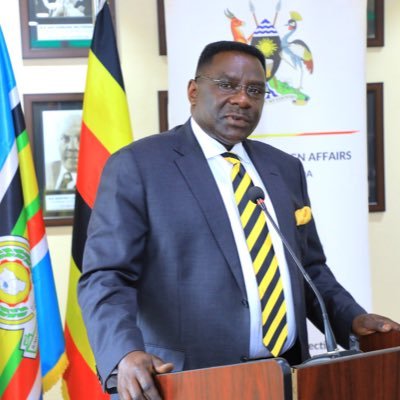
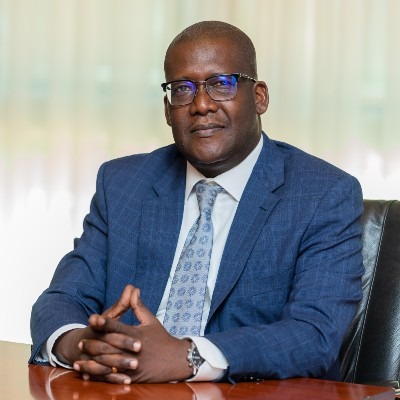
Roy Nyamutale Baguma

When Roy Nyamutale Baguma, the recently appointed Managing Director of the Uganda Energy Credit Capitalisation Company (UECCC), discusses Sustainable Energy solutions, it’s evident that his enthusiasm for his role is profound. With a distinguished career in development finance spanning 28 years, Baguma possesses the insight, passion, and leadership necessary to seamlessly transition into his new role.

“After having served for 15 years propelling rich entrepreneurs to access big loans and gain more profit, I wanted to join a development finance aspect that would be able to assist in eradicating poverty, and also assist in climate change mitigation and adaptation measures,” says Baguma.

“So that is what attracted me to come and work for UECCC. I served as the Manager of Transaction execution and was subsequently promoted to become Director of Transaction Execution. I served in that position for 13 years, and after that, the board appointed me to become the Managing Director for Uganda Energy Credit Capitalisation Company with effect from April 1, 2024.” Baguma states.

Baguma’s appointment comes at a time when electrification in the rural areas of Uganda is approximately 50% and 95% of Ugandans use solid biomass fuels for preparing meals and live without clean cooking solutions.  With the Energy Transition plan by the Ministry of Energy and Mineral Development now in place, Uganda hopes to expand low-emissions electricity across the country to deliver Universal energy access by 2030. Key to the realization of the Energy Transition Plan’s goals is Uganda Energy Credit Capitalisation Company amongst other Government Agencies in the energy sector.

“Uganda Energy Credit Capitalisation Company is in place to catalyze financing towards renewable energy development and access programs. So, we are an enabler, a facilitator, a catalyst, and we partner with financial institutions and energy service companies to be able to address the challenges of the key parties that can bring in financing for clean and modern energy services. So, in very simple terms, we are here to address the challenges that financial institutions have in extending financing to households and enterprises to access clean energy solutions for access to electricity, clean cooking and productive uses of energy for income generation,” Baguma reiterates. 

 Currently, UECCC is also involved in developing nine mini-hydroelectric power stations (Orio Mini Hydro Power Project) in the country within the framework of the Uganda Energy Capitalisation Trust. UECCC accessed a Grant of up to $13.1 million from the Government of the Netherlands to implement the project across seven districts in Uganda. Hoima, Kabarole, Bundibugyo, Bunyangabu, Kasese, Mitooma, and Bushenyi will be the beneficiaries of the project that hopes to deliver a 288km distribution network and 71,081 last-mile connections.

“These nine sites were carefully selected. They are not attractive to the private sector. Their generation capacities are low, but they are very important for those areas with challenging topography and deliver a stable and reliable source of power for rural electrification which mitigates the challenges of wheeling power over long distances,” Baguma adds. 

Beyond the Orio-Mini Hydro Power Project, UECCC’s collaboration with over 21 financial institutions has facilitated up to 14,000 loans and energy connections, benefiting households, commercial enterprises, and institutions. The company’s efforts have resulted in over 1.4 million Ugandans accessing electricity especially in the in the rural and underserved areas.

Furthermore, UECCC is at the forefront of the Electricity Scale-Up Project supported by the World Bank, which is a comprehensive effort to increase electricity access across Uganda, targeting households, commercial enterprises, industrial parks, and public institutions. Mr. Baguma reiterates that their role within this project involves providing end-user- demand side financing and supply side financing for Energy Service Companies dealing in solar systems for lighting and charging, clean cooking solutions powered by solar, ethanol, briquettes, liquified petroleum gas, biogas and productive use of energy equipment such as water pumping, irrigation, refrigeration and cooling, water heating, and grain milling.

“In 2017, the Electricity Connection Policy came into place. The government-pronounced a policy which ensures that every household will access a single pole and no pole service, it’s going to be free. And these are the connections that are going to be given under the on-grid component of the Electricity Access scale-up project being implemented by the Ministry of Energy and Mineral Development,” Baguma quips in.

Baguma emphasizes that UECCC’s work is about coming up with innovative financing solutions and technical assistance programs that facilitate players in the energy sector to promote and deliver clean energy technologies to the public.

“We are here to serve as a market maker in the financing industry. If the financial institutions feel that energy service companies lack collateral as they access working capital, we are there to be able to discuss and come up with an instrument that can facilitate energy service companies to access working capital from the financial institutions. If the financial institutions have challenges in understanding renewable energy project applications, we are there to be able to provide technical assistance so that they can understand it better,” Baguma adds. “UECCC is the administrator of the Uganda Energy Capitalisation Trust, which is a framework for pooling resources from development partners and government and to channel the same towards Renewable Energy Development and increased access to clean and modern energy services”. More specifically the Company is mandated to facilitate private sector participation in financing of renewable energy development through provision of financial and technical support that addresses barriers inhibiting effective private sector participation.

Beyond UECCC, Baguma has a life that props up his ability to deliver on the job. He is a family man   with four children, his life mantra is “the pursuit of money has no end but being able to do something that you are passionate about, which changes other people’s lives, is more satisfying.” While he is passionate about the environment and sustainability, the last book he read “The Monk Who Sold his Ferrari” by Robin Sharma, suggests that Baguma’s life is rooted in a life of passion and purpose.

Hot Takes:

Recently awarded as the best ‘Government Renewable Energy Agency of the Year’ during the 10th Visionaries of Uganda Award Ceremony, the Uganda Energy Credit Capitalisation Company (UECCC) was established to provide financing options to facilitate investment in renewable energy projects and access to clean and modern energy services. The key implementing partners are Financial Institutions (commercial banks regulated by Bank of Uganda and Microfinance Institutions, SACCOs regulated by the Uganda Microfinance Regulatory Authority) and Energy Service Companies.

Stories Continues after ad

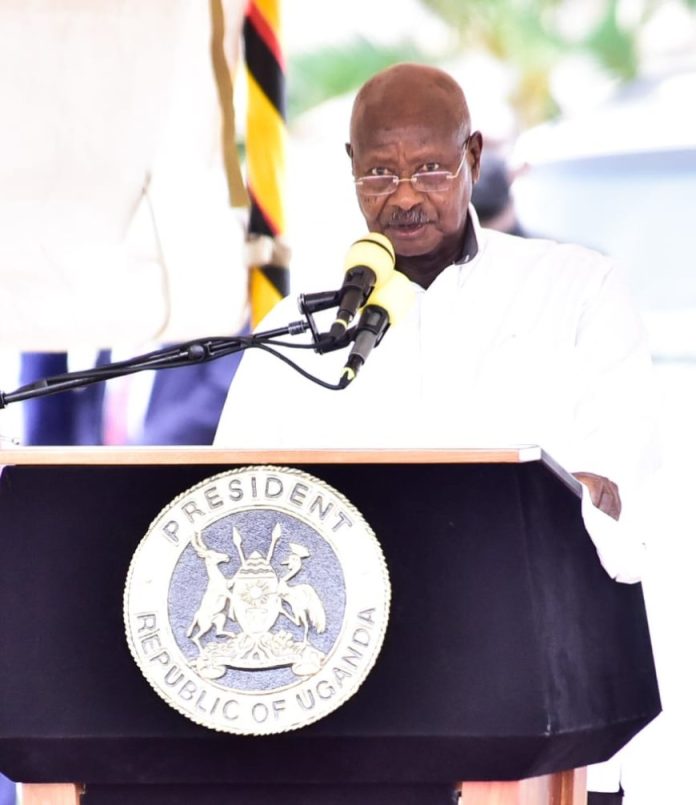
Museveni to address nation in June ahead of national budget reading

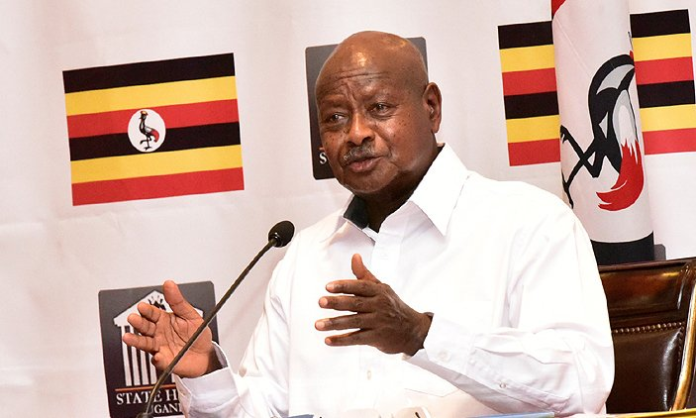
President Museveni during last year's budget.

Speaker Anitah Among has revealed that President Kaguta Museveni will give State of Nation Address on June 6, 2024 and then the 2024/25 national budget will be read to the nation on June 13, 2024.

“This morning, I got the confirmation from President Museveni on the State of Nation Address. The State of Nation Address will be on 6th June 2024 and the budget reading will be on June 13, 2024 and after that the President will open the next parliament session,” Among said.

Among also promised to hold talks with Special Forces Command (SFC), the elite Force offerings security to the Presidency, to end the practice of confiscating phones and iPads of MPs, and also end compulsory #Covid tests for MPs whenever they are meeting President Museveni, after some MPs said that such actions inconvenience lawmakers.

“The State of Nation Address is your function, it is a parliament function. We are only inviting the president to address us and start the next session of our sitting and we can agree that we are waiving off Covid- testing after all, the President will be sitting far, but it will look bad for you not to come for your own function. We will request SFC that our MPs don’t use papers we gave them iPads which they use day to day and we are also not comfortable with #Covid-19, we will talk to them, I mean, they are human beings,” Among said.

Her remarks followed concern raised by Joseph Ssewungu (Kalungu West) who wondered why MPs are still being forced to take Covid-tests whenever they are to meet President Museveni, and also have their iPads and phones confiscated, saying that is the reason why some MPs choose to stay away from such state functions.

“Why are we still going to such functions and we have to test for Covid-19, pluck my nose, I also want to know the results of the President before he tests me. Because how can we have one person in the country that everybody must be tested for Covid before going close to him. Denying us our gadgets, iPad, phones, I can’t be part of that,” Ssewungu remarked.

In March, the Government presented a Shs58.34 trillion national budget for the 2024/2025 financial year, intended to focus on ‘full monetisation of the Ugandan economy through agriculture, industrialisation, expanding and broadening services, digital transformation and market access’.

The Minister of State for Finance (General Duties), Henry Musasizi, who presented the budget also listed investments in wealth creation initiatives, investments in social sectors like education, health and water, as well as manufacturing, as the other priority areas.

The new budget estimates indicate a rise by Shs5.64 trillion compared to the 2023/2024 budget that amounted to Shs52.7 trillion.

The proposed budget was accompanied by five tax bills including the Excise Duty (Amendment) Bill, 2024, the Stamp Duty (Amendment) Bill, 2024, the Tax Procedures Code (Amendment) Bill, 2024, the Value Added Tax (Amendment) Bill, 2024 and the Income Tax (Amendment) Bill, 2024.

Stories Continues after ad

Thanks President Museveni for giving Supreme Court of Uganda and Court of Appeal homes

Amb. Henry Mayega.

By Amb Henry Mayega

The proprietary responsibility of the Yoweri Museveni administration to, among others and since 1986, restore the rule of law, deepen the role of the judiciary in dispensing justice as well as distinctively bring the third arm of government to the fore of national building couldn’t have been on display more than when this President inaugurated the twin homes for the Supreme Court of Uganda (SCOU) and Court of Appeal (COA) on April 18, 2024.

The restoration of Uganda into the international files of honour by this administration has, since 1986, ensured many judicial related benefits amongst others – forget about the grim reapers’ unpalatable suggestions against the country’s best President since independence.

Firstly, this administration established the SCOU in 1987 and entrenched the COA/Constitution Court via the 1995 Constitution – an intermediary between the SCOU and the High Court. Two other positions were simultaneously created namely: Deputy Chief Justice and Principal Judge in order to further smoothen judicial serviceability.  Those actions, in essence, epitomized the roles of those three layers of the temples of justice and brought with them incalculable amounts of national joy, pride as well as completeness of the judicial structure in the country.

That completeness as authored by this administration is the reason for the elimination of the pre-1986 judicial gridlocks that pitted the position of Chief Justice against the High Court head – a matter that was often an inscrutable smirk for the regimes that ruled Uganda before its renaissance in 1986.

Secondly, like all other arms of government, Uganda’s judiciary was affected by the insecurities of the 1970s and part of the 1980s. The crème de la crème of legal minds left the country in droves either to seek for greener pastures or escape the butchery during, most especially, Idi Amin’s regime of the 1970s. That meant a couple of things among them: one, the escape stifled the recruitment of the best into the judiciary and furthermore, therefore, the arm still-birthed as a result. That haemorrhage was repudiated after 1986. The judiciary has now fully rebounded.

The country will never forget the gruesome murder of Ben Kiwanuka, the then Chief Justice but also formally Uganda’s first Prime Minister by the Idi Amin regime in September, 1972. Pogroms were the order of the day targeting most especially the political elite even for lack of sympathy for the regime let alone its reign of terror.

Thirdly, whereas both the colonizers and the immediate post-independence rulers of Uganda kneecapped their heretics many times through draconian legal entrapments, this administration, with enough gas in its tank to thoroughly disappoint its critics, cured an endemic anomalous situation where the executive, in the pre-1986 looked at the judiciary with disdain and suspicion and employed antiquated pieces of legislation on our law books to target the opposition. The President would, in the pre-1986 period, also solely appoint judicial officers.

This administration put in place the Judicial Service Commission in accordance with the 1995 Constitution whose mandate it is to recruit and regulate the conduct of judicial officers. 

Fourthly, the Yoweri Museveni administration, through the 2006 Local Government Courts Act, created the Local Council Courts in Uganda at the village (LC1), parish (LC2), town (LC3), division (LC4) and sub-county (LC5) levels. Those courts are overseen, in terms of functioning, by the Ministry of Local Government and supervised by the Chief Magistrate Courts on behalf of the High Court.

The Local Council Courts breathed new life into the judicial system most especially at grassroot level by debasing the old feudal as well as the oppressive colonial chief-led courts that had been bedevilled with bias, corruption and favouritism. They served another purpose as well by simultaneously bringing services nearer to ordinary folks where small-time cases backlogged perennially; they winnowed down to hitherto not-easy-to-reach places dispensing justice in a timely fashion.

The LC Courts have helped to repudiate the chaotic cosplay on display at the peripheral levels of Uganda’s judicial structure.

Fifthly and lastly, by this administration affording permanent places of abode to both the SCOU and COA, removes the voodoo of homelessness from the duo; citizens should remember that both the executive and the legislative top leaderships have had theirs.

The Neanderthal opposition oligarchs may not agree with the above postulations because they are existential threats to their political posturing.

The President, while officiating at the inauguration of the two buildings spoke of prioritization; his suggestion was informed by the long-held economic dictum that wants are many but resources are limited. And so, to compare us with the wealthy countries that have had permanent homes for their temples of justice wouldn’t be an apple-to-apple comparison.

Amb. Henry Mayega

Consul General

Uganda Consulate General

Dubai, UAE 

Stories Continues after ad

Museveni confirms date for budget speech and the state of the nation address

President Museveni.

President Yoweri Museveni has confirmed the date for the state of the nation address and presentation of the 2024–2024 financial year budget. The revelation was made by speaker Anita Among.

“I received confirmation from His Excellency the President that he will deliver his Address on the State of the Nation on June 6, 2024, in accordance with Article 101 (1) of the Constitution of the Republic of Uganda 1995,” She said.

“I would like to inform you that the budget speech will be delivered on June 13, 2024. Please take note of these important dates,” Among said.

Last month, the Minister of State for Finance (General Duties), Henry Musasizi, presented a Shs58.34 trillion national budget for the 2024–2025 financial year. The budget is intended to focus on ‘full monetization of the Ugandan economy through agriculture, industrialization, expanding and broadening services, digital transformation, and market access.

The new budget estimates indicate a rise of Shs5.64 trillion compared to the 2023–2024 budget, which amounted to Shs52.7 trillion.

The budget also listed investments in wealth creation initiatives, investments in social sectors like education, health, and water, as well as manufacturing, as the other priority areas. The key priority areas include peace and security, road maintenance and construction of a few strategic roads and the construction of the standard gauge railway, electricity transmission, and utilisation of existing energy stock.

The proposed budget was accompanied by five tax bills, including the Excise Duty (Amendment) Bill, 2024, the Stamp Duty (Amendment) Bill, 2024, the Tax Procedures Code (Amendment) Bill, 2024, the Value Added Tax (Amendment) Bill, 2024, and the Income Tax (Amendment) Bill, 2024.

Equally, during the state of the nation address, the president is expected to discuss security, investments, and wealth creation.

Stories Continues after ad

Nsambya Hospital to receive Shs1b for construction of radiation bunkers

Speaker Anitah Among has revealed that Parliament will contribute Shs1 billion towards the construction of the radiation bunkers at Nsambya Hospital Cancer Unit, saying the donation is intended to complement the government’s efforts towards decongesting other institutions offering similar treatment across the country.

“The President of Uganda gives us money for donation anyway, he is the one that gives Parliament money for donation, we will make a contribution and even when I was coming here, my younger brother Muhoozi Kainerugaba promised to support the project but on behalf of the father, you know for us Catholics we believe in the name of the Father, Son and Holy Spirit, on behalf of Parliament of Uganda and the father, we will contribute in the 2024 Cancer Run, Shs1Bn,” Among said.

The Speaker made the pronouncement during the launch of the 13th Cancer Run and site visit for the radiation bunkers at Nsambya hospital where she defended the donation.

She noted, “We are making this contribution for the good of the people of Uganda, we live in this country for humanity and where we are able to help one or the other, we will always be grateful and that is where some of us gain our pride from.”

“I get proud when I have helped somebody and they can give a smile back. And as Parliament of Uganda, the people centered Parliament, we will support the completion of the bunker. We will generously support the completion of the banker and when you need the next run next year, we shall still contribute, but we should be able to finish this banker as soon as possible. And I want to assure you that once this banker is completed, it brings a smile to Nsambya Hospital, it brings a smile to all the runners, it brings a smile to all the Rotarians,” Among added.

Among also urged the administrators of Nsambya Hospital to ensure that the cancer services offered are at the subsidized price because the Cancer unit had been built using funds raised through donations.

“What we require from you is create awareness, sensitize people about the very beautiful facility that is here that people can be able to get treatment at subsidized prices because you have said you haven’t put a penny and because so many people have put a brick, and when you create a brick somewhere, you are creating happiness in people’s families and lives. I want to wish Nsambya Hospital all God’s blessings for touching people’s lives,” she remarked.

Stories Continues after ad

MPs reject proposal to transfer UNRA to Works Ministry

Members of Parliament have rejected the proposal by the government to transfer the Uganda National Roads Authority (UNRA) and roles to the Works Ministry.

Parliament’s Physical Infrastructure Committee in its report on Tuesday warned MPs against abolishing UNRA, saying this would lead to delays in the execution of projects and that the Authority should be retained because it has served the mandate for which it was created and thus, still relevant in Uganda.

Dan Kimosho (Kazo County) defended the position of Parliament’s Physical Infrastructure Committee, arguing that Uganda still requires to undertake major national road projects such as tolled expressways and managing toll operations, dualling of major road corridors, flyovers and long span bridges (such as the Nile Bridge).

He said all these projects require more specialist skills and efficient management than even what UNRA has currently and UNRA should rather be enhanced instead of mainstreaming it.

“Government is likely to suffer a setback of delayed project implementation and completion of such important and strategic road infrastructure because of the shocks that come with the rationalization process. Further, aware of the challenges that may currently exist at UNRA such as the bloated structure, inadequate stakeholder management as well as other governance challenges, UNRA has served the purpose of its creation and it is still relevant given the importance attached to the development of the national roads network,” added Kimosho.

The Physical Infrastructure Committee also rejected the government argument that UNRA’s existence has imposed a financial drain on state resources, citing the Shs75 billion UNRA collected in toll revenues from the Kampala-Entebbe Expressway which is deposited into the Consolidated Fund after operational and maintenance costs have been catered for and this revenue is expected to increase upon the completion of Busega-Mpigi Expressway.

The Committee also defended UNRA’s purported bloated wage bill noting that one of the objectives for the creation of the Authority with attractive remuneration was because the Ministry had failed to attract highly skilled staff due to low salaries.

“The same Ministry cannot at this point be indicating that attractive remuneration offered by UNRA is a problem. Furthermore, the issue of salary disparities is not only limited to UNRA and it cuts across the entire Public Service,” said Chairperson Dan Kimosho

Kimosho also said taxpayers would have to dig deeper into their pockets and raise Shs227.24 billion as payment of compensation to all UNRA staff that will be laid off, if the decision to abolish the agency is upheld by MPs.

“The Certificate of Financial Implications, Shs11.562 billion had been mentioned as terminal benefits for UNRA staff, yet from the interactions, it became apparent that UNRA would require Shs227.24 billion as severance package for staff. This is a huge cost which would erode the stated savings from the merger. It is also inappropriate to incur this unjustified cost amidst accumulated contractor debts that have to be paid,” he said.

Works and Transport Minister Gen Katumba Wamala claimed that abolishing of UNRA will see government save Shs39 billion monthly in wages, paid to the current bloated human resource structure of the Authority, and have this money used to construct roads in order to relieve Ugandans of potholes.

But the MP could have none of it. “Let UNRA stay because it is handling critical work. If it wasn’t for UNRA, we who come from Western Uganda would be cut off,” Naboth Namanya (Rubabo County) said.

With a majority of MPs backing the plan to retain UNRA, Katumba Wamala asked for more time to table fresh amendments to the Uganda National Roads Authority Amendment Bill 2024.

Stories Continues after ad

Inside Uganda’s Sporting Mosaic: Exploring Diversity and Tradition

Uganda boasts a rich tapestry of culture, tradition and diversity. Among its myriad cultural facets lies a vibrant sporting scene that reflects the nation’s eclectic mix of ethnicities, traditions and customs; from ancient pastimes deeply ingrained in tradition to modern sports gaining popularity, Uganda’s sporting mosaic offers a fascinating glimpse into its societal fabric.

Traditional Sporting Heritage 

In Uganda, traditional sports play a vital role in culture, offering both recreation and demonstrations of skill. One such example is “Lugogo,” a traditional wrestling game practised across ethnic groups. Originating from folklore, Lugogo embodies cultural values like honour and community bonding. For those curious about Uganda’s sporting heritage or modern athletics and seeking to enhance their spectatorship with wagers, an excellent website for betting promo codes and tips in Uganda offers valuable insights and resources.

The Resurgence of Royal Sports

In recent years, there has been a resurgence of interest in royal sports, particularly among the Baganda people, Uganda’s largest ethnic group. “Bulungi Bwansi,” a traditional form of archery practised by the Baganda royals, has experienced a revival, with competitions attracting participants and spectators alike. This revival preserves cultural heritage while enabling a sense of pride and identity among the Baganda community.

From the Pastures to the Pitch 

While traditional sports continue to thrive, modern sports have also gained traction in Uganda. Football stands out as the most popular sport in the country, captivating the hearts of millions and transcending social and cultural barriers. The Uganda national football team, fondly known as the “Cranes,” embodies the nation’s sporting aspirations and serves as a source of unity and pride for its citizens.

Celebrating Diversity in Athletics 

Uganda’s sporting landscape is as diverse as its people, with athletes excelling in a range of disciplines on the international stage. From long-distance running to boxing, athletes like Joshua Cheptegei and Irene Nakalembe have brought acclaim to Uganda through their remarkable achievements. Their success showcases the nation’s athletic prowess and highlights the potential for excellence across various sporting domains.

Cultural Festivals and Sporting Spectacles 

Sporting events in Uganda often coincide with cultural festivals, creating a unique blend of athleticism and tradition. The “Imbalu” festival, celebrated by the Bagisu people, features traditional circumcision rituals alongside competitive sports such as wrestling and athletics. These festivals showcase Uganda’s cultural diversity and provide platforms for athletes to demonstrate their skills while honouring age-old traditions.

Challenges and Opportunities

Despite its vibrant sporting culture, Uganda faces challenges in infrastructure, funding, and grassroots development. Limited resources and access to training facilities pose obstacles to aspiring athletes, particularly those from marginalized communities. However, initiatives by government bodies, NGOs, and private enterprises aim to address these challenges by investing in sports infrastructure, talent identification, and development programs, paving the way for future generations of athletes.

Conclusion

Uganda’s sporting mosaic reflects the nation’s rich tapestry of culture, tradition, and diversity. From ancient pastimes rooted in history to modern sports embraced on the global stage, Uganda’s sporting landscape is a testament to its people’s resilience, passion, and ingenuity. As the nation continues to nurture its sporting heritage and talent, it celebrates its cultural identity. It strives for excellence on the world stage, embodying the spirit of unity, diversity, and tradition.

Stories Continues after ad

Brig Gen. Michael Kabango presides over hand and takeover ceremony of 204 Anti-Aircraft command

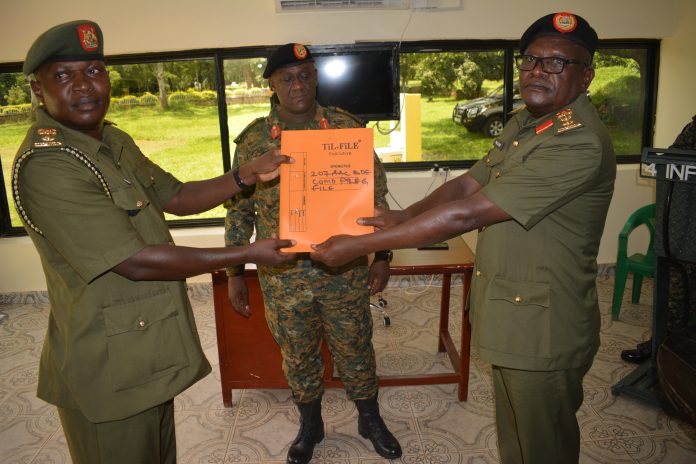
(R) is Col Tom Musoke-outgoing commader handing over office files to incoming Lt Col Moses Kaggwa as Brig Michael looks on.JPG

The 4th Infantry Division Commander Brigadier General Michael Kabango presided over the handover and takeover of 204 Ant AirCraft (AAC) Command between the outgoing Brigade Commander, Col Tom Musoke and the incoming, Lt Col Moses B Kaggwa. The function was held at the 4Infantry Division Headquarters in Gulu on Tuesday April 23, 2024.

The Presiding Officer-Brigadier Micahael Kabango congratulated both the incoming and the outgoing upon their tour of duty.

He re-echoed that transfers are normal phenomenons in the army. Noting, “I therefore urge you Officers and Men of 204 AAC Brigade to cooperate and support the incoming commander while in office adding that the AAC unit is very significant in any warfare in all militaries across the globe “AAC is a critical component in any Tactical Military Operation.”

Kabango implored the commanders of AAC to record and keep AAC’s tactical and operational history of the Air Defence unit from its onset so that later AAC personnel will appreciate it.

Brigadier Kabango then thanked the outgoing Commander Colonel Tom Musoke for the job well-done and also requested him to take the same spirit of work and comradeship to his new place of work.   

Col Tom Musoke Buwembo is now the 201 AAC Brigade Commander under first Division HeadQuarters in Kakiri, Wakiso District in the Central Region.

Taking over as the new 204 AAC Brigade Commander, Lt Col Moses Kaggwa in his acceptance remarks thanked the strategic and operational UPDF leadership for entrusting him with command of 204 AAC Brigade. He promised not to water down achievements made by his predecessor but to keep his legacy alive.

“I will command and lead my subordinates professionally with moral so that the brigade meets the expectations of the high command. He later thanked his precursor for the good comradeship, cooperation, excellent mentorship and parental support that he rendered to the unit during his tenure in office.

He then expressed his profound gratitude to the Army leadership for giving him the opportunity to command 204 AAC Unit at a Brigade level and lauded the outgoing Commander for the job well done while still in office.

Speaking at the ceremony, the outgoing commander Col Tom Musoke congratulated the incoming Commander upon his new appointment as 204 AAC Brigade Commander.

He further commended the army leadership for giving him the opportunity to serve AAC Brigade Command for a period of three years.

“It gives me a sense of pride and pleasure to command the AAC Brigade in the first place as the Brigade Operations and Training Officer (BOTO) from 2018-2020 and now Brigade Commander twice,” he said.

The instruments of power that were handed over to the incoming Commander consisted of Office stamps and office files among other items. The function was also attended by the Commanding Officers from AAC unit Brigade, 4Infantry Division Headquarter Staff Officers and Men.

Stories Continues after ad

Housing Finance Bank engages Gulu customers in drive to enhance customer experience

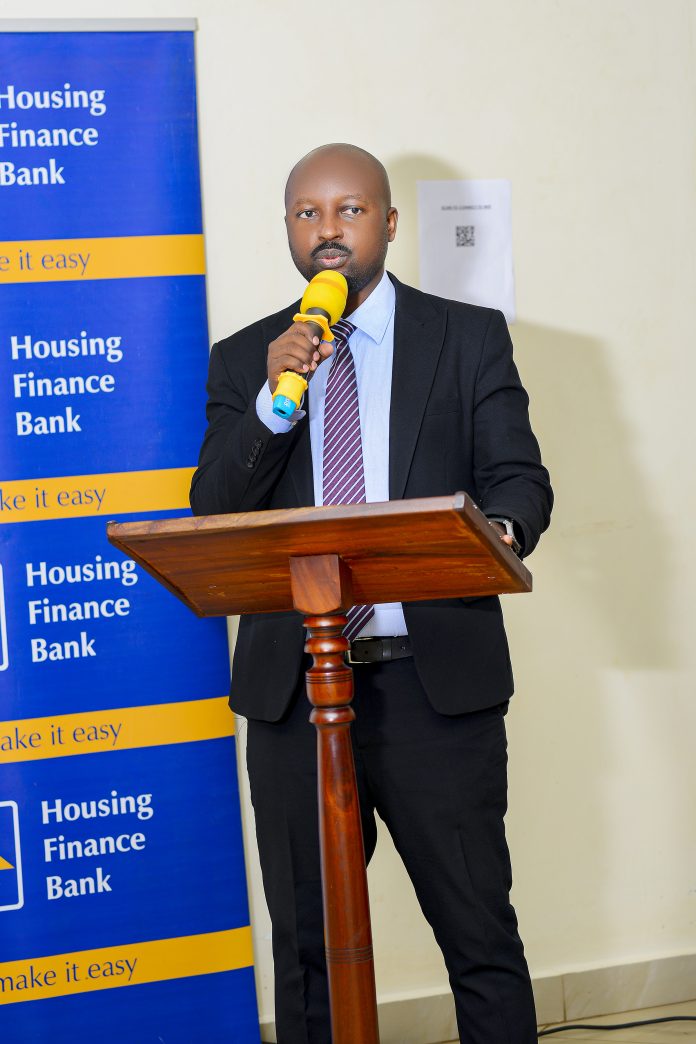
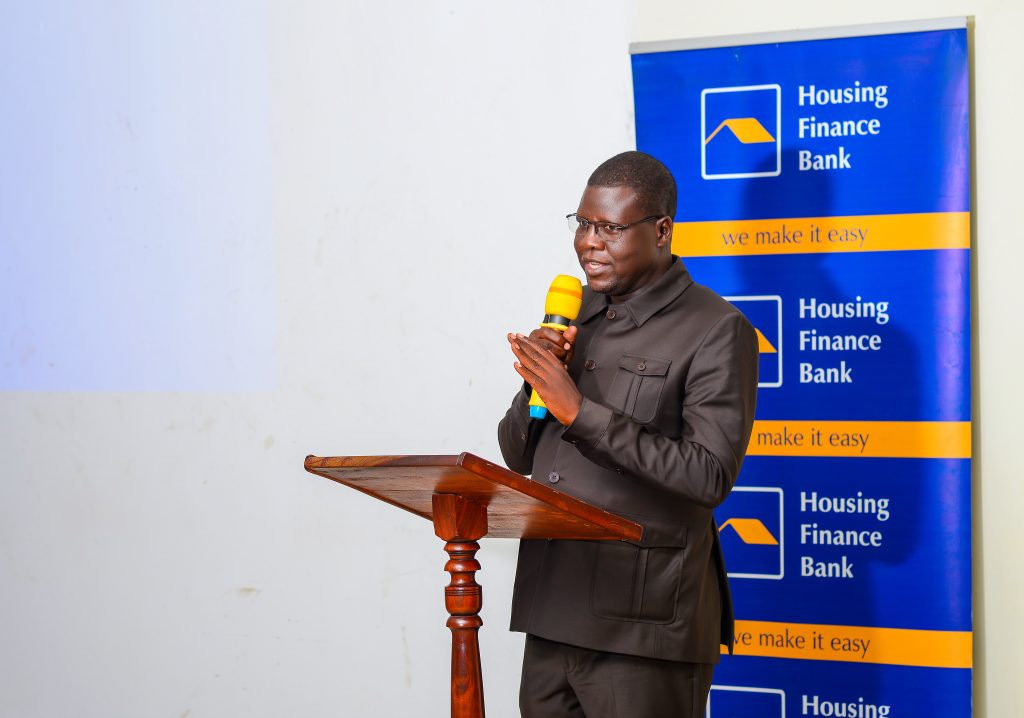
Gulu – Housing Finance Bank recently convened a Customer Service Forum at Boma Hotel for retail, mortgage and business customers across Gulu city as part of continuous efforts to enhance customer experience. The gathering served as a strategic platform for valuable customer feedback, a cornerstone of the Bank’s strategy to enhance its service standards and exceed customer expectations.

Led by a team comprising Mr. John Baptist Kaweesi, Head of Mortgages and Consumer Banking, and Ms. Carolyn Agudo, Head of Customer Experience, Vicky Shunks Ayimaru, Branch Manager – Gulu and Joylydia Apolot, Communications Officer, the customer service forum facilitated comprehensive discussions on the usage, effectiveness and impact of Housing Finance Bank’s suite of financial solutions entailing but not limited to onboarding , transaction, investment and lending geared toward enhancing customer satisfaction and convenience.

Ms. Carolyne Agudo, Head of Customer Experience, expressed gratitude to customers for their loyalty and trust in Housing Finance Bank. She reiterated the bank’s dedication to enhancing customer experience through active listening and proposing optimal solutions to their financial needs. “Customer feedback is pivotal to our success. We highly value the input and suggestions from our customers, as they enable us to tailor our products and services to better serve their financial needs. That’s why we’ve established a 24-hour contact center, ensuring we’re always ready to listen, day or night, at our customers’ convenience,” she said.

Mr.  John Baptist Kaweesi, Head of Mortgages and Consumer Banking, emphasized the paramount importance of the Bank’s customers. “We are delighted to host this year’s first customer service forum in portrayal of our ongoing commitment to ensure they are fully satisfied with our products and services. Today, our objective is to actively listen to our customers, gain insights into how our products support them, and offer advice on the most suitable products and services to positively impact their lives,” he said.

Sharing his journey as a customer, His Worship Alfred Okwonga, Lord Mayor of Gulu city, expressed gratitude to Housing Finance Bank for facilitating his dream of becoming a successful business owner. “When I joined Housing Finance Bank, I was earning a salary of Shs250,000, yet I aspired to establish a school. Despite encountering challenges in accessing credit, the Bank entrusted me with Shs150 million, kickstarting my journey of establishing schools and higher education institutions. Today, I am proud to own four educational establishments, including Gulu School of Health Sciences, Layibi High School and Gulu School of Nursing and Midwifery.”

Housing Finance Bank as a financial institution is steadfast in its commitment to elevating customer service excellence and harnessing customer feedback for service enhancements. The Bank’s customer-centric approach and personalized solutions have solidified its reputation as a trusted financial partner. As Housing Finance Bank continues to empower sustainable home ownership and economic independence for the people of Uganda, it remains dedicated to meeting and exceeding customer expectations. 

Stories Continues after ad

EQUITY BANK AGAIN: Police arrest two security guards over attempted robbery in Soroti

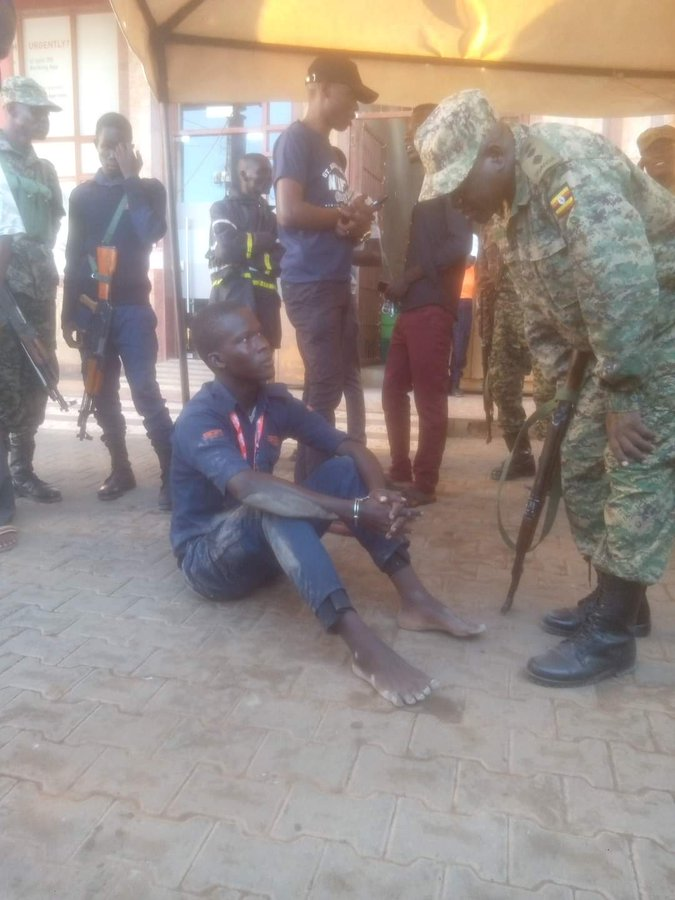
Police in Soroti are holding two security guards attached to SGA Security Company in connection with an attempted robbery at Equity Bank Soroti branch.

The raid is said to have happened in the early morning hours when thieves allegedly tried to use a ladder to enter the bank, but security was called in and foiled the attempt.

Police and security agencies have secured the area after arresting the guards. Kyoga East Police regional Spokesperson Edison Obukulem said detectives later discovered one of the two guards who were supposed to be on duty did not report for work.

The two suspects in police custody are a security guard and his supervisor attached to a private security firm.

Police spokesperson Fred Enanga said: “Our prior investigations indicate that the suspects escaped from the scene after failing to access the banking hall. No one was hurt, and no property or money was stolen. A security guard and his supervisor are being interrogated as part of our investigations.”

Enanga added that the bank is safe, and its operations are back to normal. The general security situation in Soroti city has remained peaceful and calm. More updates will be communicated in due course.

The management of Equity Bank has said that normal business has resumed. Francis Erumu, the manager of Equity Bank Soroti, says that everything at the bank is intact.

“No property or lives were damaged or lost during the incident. Security agents led by local authorities are currently investigating the incident. Normal banking services have resumed,” Equity Bank said in a brief statement.

This comes at the time when the bank is being investigated for internal money laundering by its employees. Recently an internal racket of employees were arrested over Shs65 billion theft.

Stories Continues after ad