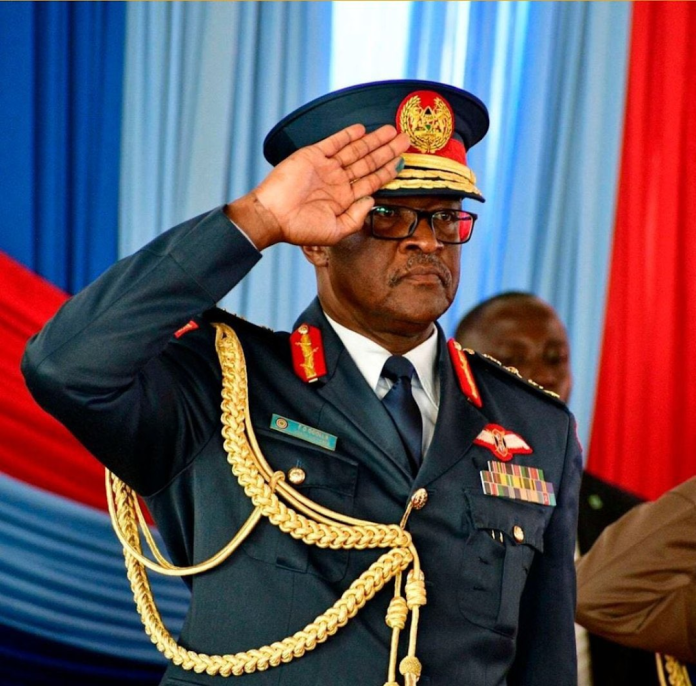
Lujja Bbosa Tabula, the prime suspect in the murder of Eng. Bbosa.
Daniel Bbosa Murder: Police doubles cash rewards against prime suspect Lujja Bbosa Tabula
The Criminal Investigations Directorate (CID) has increased the reward against the prime suspect implicated in the gun down of Daniel Bbosa, the former Ndiga Clan leader.
Bbosa was fatally shot on February 25, 2024, by assailants as he was approaching his residence in Kikandwa Zone, Lungujja Parish, Lubaga Division. The assailants, riding on a motorcycle, opened fire at Bbosa’s motor vehicle, bearing registration number UAH 637X, resulting in his immediate demise.
Earlier this month, the police put up a Shs10 million cash prize for anyone who will lead to the arrest of Lujja Bbosa Tabula, the prime suspect.
“CID has increased the reward offered for the arrest or credible information that can lead to the arrest of Lujja Bbosa Tabula, aged 38, who is wanted for alleged masterminding the murder by shooting of Eng. Daniel Bbosa, a businessman and former “NDIGA” clan leader, from Shs10 million to Shs20 million,” police spokesmen Fred Enanga said.
Last week, Mwanga II Magistrate Court remanded five suspects to Luzira prison over the murder of the former esteemed leader of the indigo clan.
The five suspects include Noah Lugya, Harriet Nakabale Nakiguli, Ezra Mayanja Ezra, Milly Naluwenda, and Joseph Nakabale.
Uneven development progress is leaving the poorest behind, exacerbating inequality, and stoking political polarization on a global scale. The result is a dangerous gridlock that must be urgently tackled through collective action, according to a new report released today by the United Nations Development Programme (UNDP).
The 2023/24 Human Development Report (HDR), titled “Breaking the Gridlock: Reimagining Cooperation in a polarized world”, reveals a troubling trend: the rebound in the global Human Development Index (HDI) – a summary measure reflecting a country’s Gross National Income (GNI) per capita, education, and life expectancy has been partial, incomplete, and unequal.
The HDI is projected to reach record highs in 2023 after steep declines during 2020 and 2021. But this progress is deeply uneven. Rich countries are experiencing record-high levels of human development while half of the world’s poorest countries remain below their pre-crisis level of progress.
Global inequalities are compounded by substantial economic concentration. As referenced in the report, almost 40 percent of global trade in goods is concentrated in three or fewer countries; and in 2021 the market capitalization of each of the three largest tech companies in the world surpassed the Gross Domestic Product (GDP) of more than 90 percent of countries that year.
The widening human development gap revealed by the report shows that the two-decade trend of steadily reducing inequalities between wealthy and poor nations is now in reverse. Despite our deeply interconnected global societies, we are falling short. We must leverage our interdependence as well as our capacities to address our shared and existential challenges and ensure people’s aspirations are met,” said Achim Steiner, head of the UN Development Programme. “This gridlock carries a significant human toll. The failure of collective action to advance action on climate change, digitalization or poverty and inequality not only hinders human development but also worsens polarization and further erodes trust in people and institutions worldwide.”
The report argues that advancing international collective action is hindered by an emerging ‘democracy paradox’: while 9 in 10 people worldwide endorse democracy, over half of the global survey respondents, express support for leaders that may undermine it by bypassing fundamental rules of the democratic process, as per data analysed in the report. Half of people surveyed worldwide report having no or limited control over their lives, and over two-thirds believe they have little influence on their government’s decisions.
Political polarization is also a growing concern with global repercussions. Along with a sense of powerlessness, report authors say, it is fueling inward-turning policy approaches – starkly at odds with the global cooperation needed to address urgent issues like the decarbonization of our economies, misuse of digital technologies, and conflict. This is particularly alarming in light of 2023’s record-breaking temperatures, which emphasize the immediate need for united action to tackle the climate crisis, or in the advent of artificial intelligence as a new and fast-evolving technological frontier with little or no regulatory guard rails.
The report highlights that deglobalization is neither feasible nor realistic in today’s world and that economic interdependence remains high. It points out that no region is close to self-sufficiency, as all rely on imports from other regions of 25 percent or more of at least one major type of goods and services.
In a world marked by increasing polarization and division, neglecting to invest in each other poses a serious threat to our well-being and security. Protectionist approaches cannot address the complex, interconnected challenges we face, including pandemic prevention, climate change, and digital regulation,” Steiner added. “Our problems are intertwined, requiring equally interconnected solutions. By adopting an opportunity-driven agenda that emphasizes the benefits of the energy transition and of artificial intelligence for human development, we have a chance to break through the current deadlock and reignite a commitment to a shared future.”
The report emphasizes how global interdependence is being reconfigured and calls for a new generation of global public goods.
The Secretary-General of the National Resistance Movement (NRM), Richard Todwong, has revealed that the just concluded exercise of the party membership register update was successful across the country.
The exercise was launched by NRM National Chairman and President of Uganda, Yoweri Kaguta, at the party headquarters last month. The update and registration ran from March 13, 2023, to March 17, 2024 in all 72,000 villages.
“I have monitored the display and updating of our membership register, and I can confidently declare that it has ended peacefully with a few concerns,” Todwong said.
Todwong also revealed that the updated ‘Yellow Books’ would later undergo a thorough review at zonal centers before data is fed into the digital bank.
He said that in some areas where there was low turnout, the party leadership would review the process and offer guidance.
Todwong assured the members, especially students currently in school, that there would be another opportunity for them to register in the holidays before “we embark on preparing for internal elections.”
Uganda’s National Action Plan is one of the first high impact plans in the world to address Women, Peace and Security issues related to climate change and health outbreaks /pandemics.
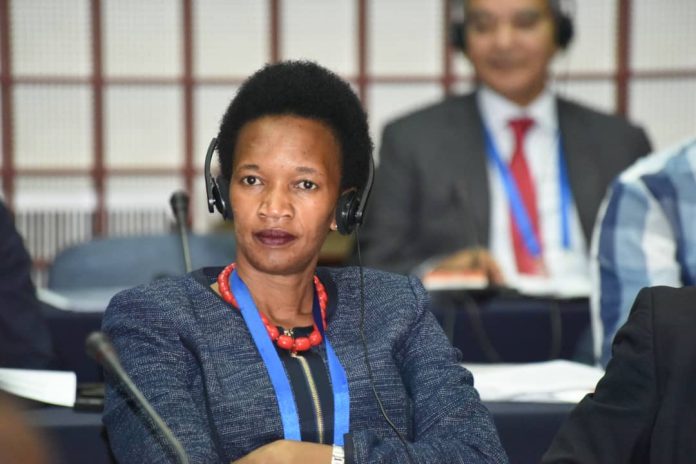
The Minister of Gender Labour and Social Development Betty Amongi Ongom told the United Nations Security Council that the overall goal of the National Action Plan III is to promote sustainable peace and security through enhanced meaningful participation of women in peace and development processes.
Using the example of the two decades’ brutal war waged by the Lord’s Resistance Army in Northern Uganda, the Minister underscored the role grassroots women in the local areas of Acholi, Lango and Teso played to persuade their sons/husbands to end the insurgency. She said efforts by women through the Uganda Women’s peace coalition played a central role in the peace process which ended the brutal LRA campaign.
The Minister also underscored the role Women played in the post conflict recovery through the women’s National taskforce for a gender responsive peace, Recovery and Development Plan (PRDP)
Amongi was speaking during an open debate on “Promoting conflict prevention –Empowering all actors including women and youth” under the “Peace building and sustaining peace” agenda item at the United Nations in New York.
The session was convened by Japan who hold the presidency of the Security Council for the month of March. In her address Amongi stressed that Peace and Security is fundamental and crucial in achieving sustainable development. She called upon members of the security council to reflect on the original purpose for the United Nations and work to resolve man made conflicts and global insecurity through cooperation, diplomacy and peaceful means.
The Minister told her audience that Uganda has continued to work with regional partners to support and advance peace, stability and security initiatives in the region and beyond so as to eliminate terrorism, mistrust and other conditions that breed conflict.
She singled out Uganda’s active involvement in regional initiatives, particularly those under the African Union (AU), the Inter Government Authority on Development (IGAD), East African Community(EAC), and the International Conference on the Great Lakes Region (ICGLR).
The Minister told members of the security council and Uganda’s involvement is based on the fundamental values of multilateralism. She argues that as the International Community we must be steadfast in our resolve to support dialogue and the peaceful resolution of conflicts wherever they occur around the world.
3rd Deputy Prime Minister Lukia Nakadama who represented the First Lady.
First Lady and Minister of Education and Sports Mrs Janet Kataha Museveni, has underscored Uganda’s commitment to ending harmful practices that still affect young girls from achieving their education dreams and curtail them from achieving a full potential.
She was speaking during the launch of a new global campaign to end child marriages during the ongoing Commission on the Status of Women (CSW68) currently underway in New York United States of America.
Uganda has featured prominently owing to its achievements in ending child marriages reflected in the policies already in place to end the vice. Spearheaded by the United Nations Children Education Fund(UNICEF) and United Nations Fund for Population Activities (UNFPA) the initial campaign was launched in 2016 with the aim of ending child marriages by 2030. Uganda was beneficiary to the campaign and has significantly reduced child marriages thanks to policies already in place and the advocacy around the subject.
The New campaign dubbed Phase III of UNFPA-UNICEF Global programme to end child marriages is expanding with the latest to join being the United States of America.
Verina Winder chief of staff Secretary of state office of Global women’s issues at the Department of State United States of America said the United States of America sees value in collaborative efforts.
“No child should be forced to marry: nobody should, child marriage is both a driver and sustainer of poverty” Merina during the event at the UNICEF headquarters.
The initial phase of the campaign by UNICEF and UNFPA was in partnership with the Governments of Belgium, Canada, Italy, the Netherlands, Norway, the United Kingdom, the European Union and the Organisation Zonta International as a 15-year Global Programme to End Child Marriage by 2030.
Sharon Armstrong the Director general for Social Development Bureau, Global Affairs Canada says the intended impact of the programme is for adolescent girls to fully enjoy a childhood free from the risk of marriage and to experience healthier and more empowered life transitions, including making choices about their education, sexuality, relationships, marriage, and childbearing.
Uganda had a high-level representation during the launch at the UNICEF headquarters in New York during the ongoing conference of the Commission on the Statues of Women.
Whereas the First Lady made a recorded statement at this high level meeting Uganda had a high level representation by the 3rd Deputy Premier Lukia Isanga Nakadama, Minister for Presidency Milly Babalanda, Minister for Gender Labour and Social Development Betty Amongi Ongom, Minister of state for Gender and Cultural Affairs, Peace Mutuzo Regis, Ministry of Gender Permanent Secretary Aggrey David Kibenge and the Permanent Secretary Ministry of Lands Mrs. Dorcas W. Okalany as well as other technical officials from government and representatives of the civil society and development partners. They are in the United States of America to attend several meeting and sessions at the United Nations, Commission on the Status of Women.
Ugandan delegation enjoying their moments.
The latest report on child marriage indicates that while prevalence of the vice has decreased globally over the past decade, from 23 per cent to 19 percent, the decline has been uneven globally, and no region is on track to eliminate the practice by 2030, as required by the Sustainable Development Goal 5.3 target.1
Sheena Sen Gupta Director for Child Protection at UNICEF says, it is estimated that up to 10 million more girls will likely be married as children globally by 2030 due to the effects of the #Covid-19 pandemic.
UNFPA, UNICEF and other global partners were instrumental in securing global commitments on elimination of child marriage and have worked over the past 40 years to implement programmes to reduce harmful practices based on gender inequality and human rights violations of the girl child.
The objectives of the event at UNICEF headquarters in New York during the Commission on status of women were to continue raising the visibility of child marriage as a global issue, to highlight the importance of partnerships and investments in delivering on SDG 5.3 and to Issue a call to action on ending child marriage which is core to Phase III of the Global Programme.
Uganda National Oil Company has denied allegations that its former board wasn’t dropped due to recruitment irregularities.
This website broke the news of the board being dropped by the president due to recruitment of a senior personnel.
It was revealed that a daughter to a minister in government was fronted at the expense of oil experts due to her connections.
“It has come to our attention that an article published by Eagle News on March 14, 2024, titled “Museveni Drops UNOC Board over Recruitment Irregularities” contains inaccurate and malicious information regarding the purported removal of the Uganda National Oil Company (UNOC) Board of Directors”. UNOC statement reads
“It is crucial to clarify the legal framework governing the appointment and tenure of the UNOC Board of Directors. As stipulated by Section 44(1) of the Petroleum (Exploration, Development and Production) Act, the President of Uganda, with the approval of Parliament, is empowered to appoint the UNOC Board of Directors. Furthermore, the UNOC Board can only serve for a maximum of two terms, each lasting four years. The current Board was reappointed for their second and final non-renewable term in February 2020, and their tenure lapsed in February 2024, in line with the law and UNOC’s governing documents”.
UNOC said in the statement that remains committed to upholding the highest standards of transparency, integrity, and accountability in all its operations. We urge media outlets and the public to verify information from credible sources before disseminating or acting upon it.
It is said UNOC placed adverts for the position of Chief Operating Officer (COO) which many respondents responded to and as all these was ongoing, the Chief Executive Officer of UNOC was on leave. However, what surprised many at UNOC was that one of their colleagues who is also a daughter to a minister in government was handed the job amidst resistance from the Human Resources department head.
UNOC is a limited liability company wholly owned by the Government of Uganda. Our overall function is to handle the Government of Uganda’s commercial interests in the petroleum sector and to ensure that the resource is exploited in a sustainable manner.
The National Unity Platform (NUP) has resolved to recall the former Leader of Opposition in Parliament (LoP), Mathias Mpuuga as the Parliamentary Commissioner.
Mpuuga is accused of engaging in acts of corruption and abuse of office when he reportedly, together with the NRM Parliamentary Commissioners irregularly allocated themselves Shs1.7 billion Service Awards in a meeting chaired by Speaker Anita Among.
According to rule 95 of the Parliamentary Commissioner rules of procedure, a parliamentary Commissioner may be removed from office on grounds of incompetence; misconduct; or failure or refusal without justifiable reason to execute the duties of the Office of Commissioner.
The rules indicated that a motion for a resolution for the removal of a Commissioner shall be initiated by a notice in writing to the Clerk, signed by not less than one third of all the voting Members of Parliament, indicating their intention for moving the motion for the removal.
A motion for the resolution under this rule shall be placed on the Order Paper, fourteen days from the date on which notice to remove the Commissioner shall have been communicated to the Clerk. A Parliamentary Commissioner shall later be removed upon the vote of at least half of all voting Members of Parliament.
Dr. Lina Zedriga Wáru, the acting Principal of NUP, the National Executive Committee of the party convened earlier today to consider the response by Mpuuga to the accusation that he engaged in acts of corruption and abuse of office.
“Although he responded to NEC’s request to show cause why he should not be recalled from the Parliamentary Commission, he did not provide any satisfactory explanation for engaging in this grave action which goes against the mission, values and objectives of the Party. In particular, he did not make any attempt to respond to the specific accusations leveled against him” she said.
“NEC has resolved to recall Mathias Mpuuga from the Parliamentary Commission on account of corruption, dishonesty and abuse of office, and to notify Parliament of the same. NEC further resolved to nominate Zaake Francis Butebi as Parliamentary Commissioner,” she said.
Zaake was i was illegally removed from that role in March 2022 in order to pave the way for investigation on his conduct.
The Speaker of Parliament, Anita Among, has revealed that she will not respond to the issues raised in the ongoing parliament exhibition.
Currently, there is an ongoing parliament exhibition led by social media activists led by Dr. Spire Ssentengo and journalist Agatha Atuhaire. The leaked documents show the alleged exorbitant sums of months pocketed by the speaker, Anita Among, in the name of per diem, cooperation, social responsibility, and others.
The funds were being deposited in various accounts of the parliamentary staff. The exhibition revealed that several MPs claimed per diem for the same activity from Parliament and the National Council of Sports.
It further showed that the speaker received over Shs2.4 billion in a space of 39 days. The money that was received by Daniel Adilo and Emmanuel Okwi Emuron was reportedly meant to cater to field mobilization activities, her outreach activities, community consultation activities, and others.
It also showed that she pocketed, per diem, Shs2.6 billion for the eight trips she made out of the country between September 2023 and January 2024. She also received a per diem of Shs646 million between July 2022 and July 2023.
In a period of four days from October 11, 2023, to October 16, 2023, Shs2,673,000,000 was put into a personal bank account, which included that of Chris Obore, the Director of Communications at Parliament.
Speaking during the plenary earlier today, Among said, “I will never give you an answer to hearsay and rumour-mongering. We are not going to run this house on rumour-mongering.”
Among them, MPs agreed that they should have evidence-based debates. That is what we are saying: bring evidence, lay it on the table, and let us debate on it.
The Speaker said after Lwemiyaga County MP Theodore Ssekikubo said they can’t debate other things and lay papers when the credibility of this house is under challenge. We cannot sit here as if nothing has happened.
“I am a member of this Parliament, and once this house is tarnished the way it is being done, I can’t sit comfortably, and we say we move on to other items. Can we have clarification about the allegations in the media?” he said.
Ugandans must have read, with consternation, the story carried by the New Vision of March 5, 2024 wherein the so called “experts” resurrected the debate about the presidential and parliamentary systems’ suitability in Uganda. One of them, Professor Fredrick Ssempebwa, was so passionate about the parly and I am glad NRM’s Treasurer, Rose Namayanja replied him most appropriately that the NRM was ready for the ensuing debate anyway.
First, the parliamentary systems in Europe and beyond are riddled with plenteous temporariness; regimes in that part of the world can change rapidly and menacingly due to incessant coalitional dog-fights as well as lamblike central control. The last time Uganda (and indeed innumerable African countries) had a parliamentary system was in the early 1960s; when, in the case of our motherland, the political climate saw Ben Kiwanuka, Kabaka Edward Mutesa and Milton Obote toss power until the later, through the pigeon constitution introduced the Presidential modus operandi after the 1966 crisis. Such political luxury is permissible in the west with time-tested political institutions not in Uganda with a dearth of them. Most recently, the UK archipelago’s premiership rapidly switched from David Cameron to Theresa May to Boris Johnson to Liz Truss and finally to Rishi Sunak; a particularly mindboggling escapade.
Secondly, the parliamentary system as suggested by Ssempebwa would rob our citizenry of definitively voting into power a president of their choice – hence re-smuggling indirect elections into our electoral methodology and apparatus. In other words, members of parliament would have usurped one of the most cardinal national obligations of the voter. To arrogate themselves that role, MPs would have done a bloodless coup detat by other means against full blown democracy. No one should ever usurp our role of regularly and predictably choosing our multi-layered leaderships. Those actions belong to the 1960s when the British colonizer left behind a caricature of their own political institutions that didn’t work here.
Thirdly, by bad luck, if the MPs ganged and entrenched themselves as the ultimate electors of the president, they would create a water-tight political establishment with the potential to coopt, or in the worst-case scenario, conscript members of the other arms of government and everyone thereby resulting into a seemingly big democratic dictatorship whose ramifications have a potential to make us cringe politically into an unpredictable and arduous future. The temptation to amass power by legislatures is an alure that is irresistible; that co-option amongst the arms of government would as a matter of fact undermine the revered principle of power separation in Uganda’s fledgling democracy.
A parliamentary system is, clearly, an unpreferred option for Uganda’s nascent democracy that was birthed only after the plebiscite of 2005.
The ever-increasing intrusive nature of the westerly lecturers on democracy into the political affairs of the developing world makes it an urgency that Uganda should have in place a robust and burly presidential system like the one we have in President Yoweri Museveni to head off such over-reach.
A parliamentary system would provide unexacting passageways through which the marauding lecturers on democracy would subvert our political institutions with far reaching consequences. Uganda’s democracy is still fledgling, so nascent and as such subjecting ourselves to precedented political experiments would be a terrible calculus with the potential of re-plunging our country into chaotic scenes akin to the 1960’s.
Fourthly, yes, the presidential system may not be 100% angelic but with it we have had the country united thanks to President Yoweri Museveni’s safe pair of hands; we can’t afford the luxury of ceding our fissiparous political canvass to some with a cognitive deficit and intent who have considered forming what they have forbiddingly called “Yira republic” and the “Nile republic.” Both innuendos connote secessionist tendencies by hair-brained dregs amidst us.
Fifthly, the presidential system has, as compared to the parliamentary system which caused ruination after 1966, not failed as some would want us to believe.
With it, we have had regular and predictable bouts of elections every five years and anyone is free to take part in them without any hindrance. Governments that run using a parliamentary system are incessantly collapsing due to its inherent problems unlike the US presidential system that has survived the test of time. Adopted over centuries ago, the US’s presidential system has withstood the labour pains of that country’s civil war, two world wars and scores of other political rapids.
A parliamentary system, given its inherent hiccups, would knock out our very young democracy of nineteen years since the referendum (which some Bagisu humerously called “rufu rwe ndemu” – a very bad disease that kills a snake) of 2005.
Seasoned Journalist Julius Mucunguzi has been appointed Spokesperson of the Electoral Commission.
Mucunguzi, is a former communication specialist at Office of the Prime (OPM) under Dr. Ruhakana Rugunda era. He replaces Mr. Paul Bukenya who has been Acting Spokesperson since the departure of Jotham Taremwa.
His appointment comes at the time when the electoral body is recruiting new staff to replace those that have retired on moved on as it positions for 2026 polls.
Mucunguzi has previously worked as spokesperson for Africa at the Commonwealth Secretariat, an international interstate agency responsible for 53 countries formerly colonies of Britain. Before joining the Commonwealth Secretariat in 2006, he was a senior communications officer at World Vision Uganda and also taught journalism at Makerere University Department of Mass Communication. He started his journalism journey at The Monitor newspaper in the early 1990s.